
PVC Panel Sourcing Criteria: Parameters, Fire Standards and Factory Verification
PVC panels have become a standard category in modern interior building material procurement. But because the category covers ceiling boards, wall cladding, marble-effect sheets, and composite wall panels, buyers at the research and evaluation stage need to verify more than surface appearance. This article outlines the key technical parameters, certification references, and supplier verification points that matter when sourcing PVC panels for distribution or project use.
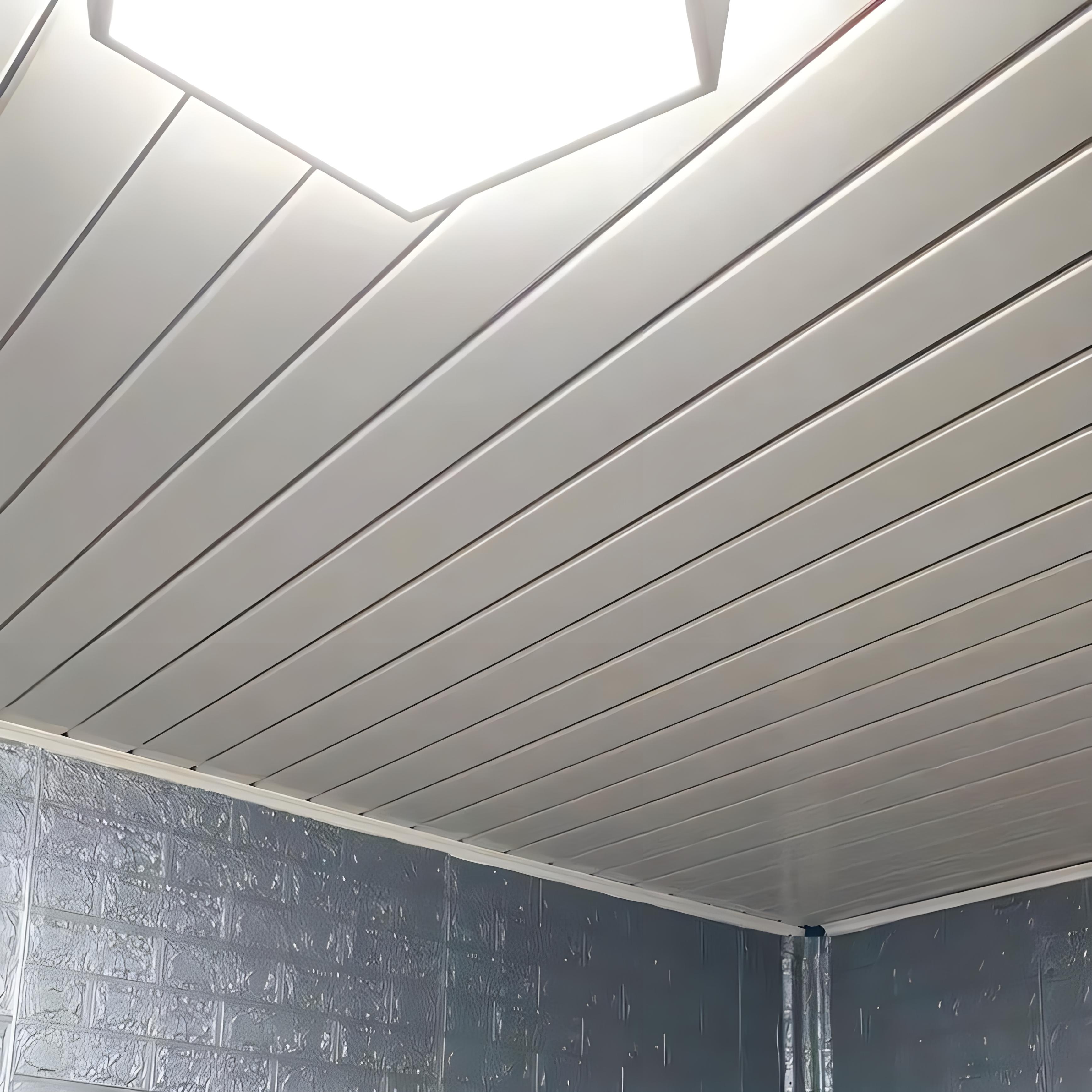
PVC ceiling panels are widely used in moisture-prone interior spaces such as kitchens and bathrooms.
Why PVC Panel Procurement Requires a Technical Checklist
Global demand for PVC panels continues to expand. The global PVC panels market was valued at USD 14.8 billion in 2025, with PVC wall panels accounting for 42.5% of total product type share. Asia-Pacific holds the largest regional revenue share at 38.4%. At the same time, China's total PVC exports reached approximately 3.82 million tonnes in 2025, a 46% increase from the previous year, reflecting the country's role as a major supply base for building decoration materials.
This scale also creates a wide quality range. Importers and distributors often encounter panels with inconsistent thickness, weak surface film adhesion, low PVC content, or insufficient fire retardancy. These issues become visible only after installation, leading to project delays and after-sales disputes. Therefore, a structured checklist covering material composition, dimensional tolerance, surface treatment, and compliance evidence is a practical procurement tool.
What to Verify Before Selecting a PVC Panel Supplier
For an importer or project buyer, the first decision is whether to work with a direct manufacturer or a middleman. Direct manufacturers can normally provide clearer raw material information, quality control procedures, and customization routes. A useful reference is to check the factory's product range, production capacity, quality inspection process, and export experience.
Price bands are also a constraint. While actual pricing depends on volume, formulation, and customization, MOQ and lead time are practical filters. YIKE's MOQ of one 20-foot container and lead time of 14–30 days are representative of a mid-size direct manufacturer. Buyers should compare these logistics parameters alongside price per square meter.
Manufacturer capability profile: a concrete example
HAINING YIKE NEW MATERIAL CO., LTD (YIKE) is a China-based manufacturer and exporter of decorative building materials. Established in 2019, the company operates a 10,000 m² factory with an annual output of 5,000,000 m² and a team of approximately 50 employees, including 10 R&D engineers. All products are exported, mainly to Central America, South America, Southeast Asia, the Middle East, and Africa. YIKE's monthly production capacity is 500,000 m², with standard lead times of 14–30 days. The minimum order is one 20-foot container with 4–6 colors from the e-catalog; for smaller quantities, 500 m² per color from stock colors or 1,000 m² from the e-catalog is accepted. The company reports 100% pre-shipment testing and supports third-party inspection such as SGS.
This kind of information is directly relevant to a procurement decision because it defines order feasibility, customization ability, and quality verification paths.
PVC Panel Technical Parameters That Affect Performance
The performance of a PVC panel depends on several measurable parameters. Across YIKE's product range, the following specifications are representative of what importers should check.
| Product | Material | Common Sizes / Models | Key Surface / Finish Options |
|---|---|---|---|
| PVC Ceiling Panel | PVC Resin + Calcium Carbonate + Additives | Width 200, 250, 300, 400, 600 mm; length 2900–5950 mm or customized; thickness 6–10 mm | Printing, hot stamping, laminated; PVC content 35%–50% |
| PVC Wall Panel | PVC + Calcium Carbonate + Additives | 1220×2440 mm, 1220×2800 mm; thickness 5mm/8mm | Patterns: marble, wood grain, fabric, stone, metal |
| PVC Marble Sheet / UV Marble Sheet | PVC Resin + Calcium Carbonate + Additives | 1220×2440 mm, 1220×2800 mm; thickness 2.0–3.0 mm | UV coating / high gloss; high gloss, matte, embossed |
| WPC Wall Panel | PVC/PE + Wood Fiber + Additives | e.g., 160×20×2900 mm, 160×24×2900 mm, 150×10×2900 mm | Walnut, oak, teak, black, grey, natural wood |
| Outdoor WPC Wall Panel | Wood Fiber + HDPE + Additives | e.g., 219×26×2900 mm, 140×20×2900 mm | Wood grain, brushed, sanded, embossed, 3D texture |
| PVC Self-Adhesive Wall Sticker | PVC | Width 600/1200 mm, roll length 3 m, thickness 2.5 mm | Glossy, matte, embossed; patterns: marble, wood, stone, concrete, brick, tile |
Among these, PVC content is an important indicator for ceiling panels. YIKE lists a PVC content range of 35%–50%, which can be customized. Higher PVC content generally improves toughness and aging resistance, while excessive filler content may reduce impact strength. Thickness also influences rigidity and spanning capability. For wall panels, flatness and surface film bonding strength are critical; for marble-effect sheets, the UV coating quality determines scratch resistance and color retention.
Fire and safety classification references
Fire performance is a common procurement constraint, especially for commercial interiors. Two widely recognized references are:
- ASTM E84 (UL 723), the primary fire test standard for interior wall and ceiling finishes in North America. Class A requires a Flame Spread Index (FSI) of 0–25.
- EN 13501-1, the European fire classification system. PVC panels intended for commercial use often target Class B-s1, d0.
Not every PVC panel is fire-rated; fire retardant options may be available on request. Buyers should request the specific test report rather than rely on generic claims.
Water resistance and color fastness testing
Water absorption is typically measured using ASTM D570 or ISO 62. For panels marketed as waterproof, low water absorption is a key indicator. Color fastness to artificial light is commonly assessed with ISO 105-B02, which uses a xenon arc fading lamp. These standards help buyers compare products across suppliers.
Quality risk and mitigation in PVC panel production
Common quality risks include panel deformation, surface fading, splicing gaps, and mold in humid environments. Manufacturers mitigate these by using UV-resistant and anti-aging formulas, optimizing composite formulas for moisture resistance, standardizing keel spacing, and adding anti-scratch protective layers. Buyers should ask suppliers how they control these risks during production and what installation guidance they provide.
Application Scenarios and Evidence from the Market
PVC panels are applied in different environments, and the material choice must match the working condition. Based on YIKE's documented application scenarios and customer projects, the following patterns are representative.
Ceilings in high-humidity spaces
PVC ceiling panels are used in kitchens, bathrooms, hotel toilets, and apartment integrated ceiling upgrades. Their moisture-proof, mildew-resistant, and easy-to-clean properties support these applications. In a typical installation, panels are fixed to a keel frame with integrated lighting and ventilation fans.
Walls in residential and commercial interiors
Large-format PVC wall panels suit whole-house villa decoration, hotel guest rooms, offices, and retail fit-outs. Some models offer bamboo charcoal composite substrates, which are lighter and provide better sound and heat insulation than traditional narrow PVC panels. For premium spaces, PVC marble sheets and UV marble sheets are used for feature walls, TV background walls, and bathroom wall decoration, providing a realistic marble appearance without the weight of natural stone.
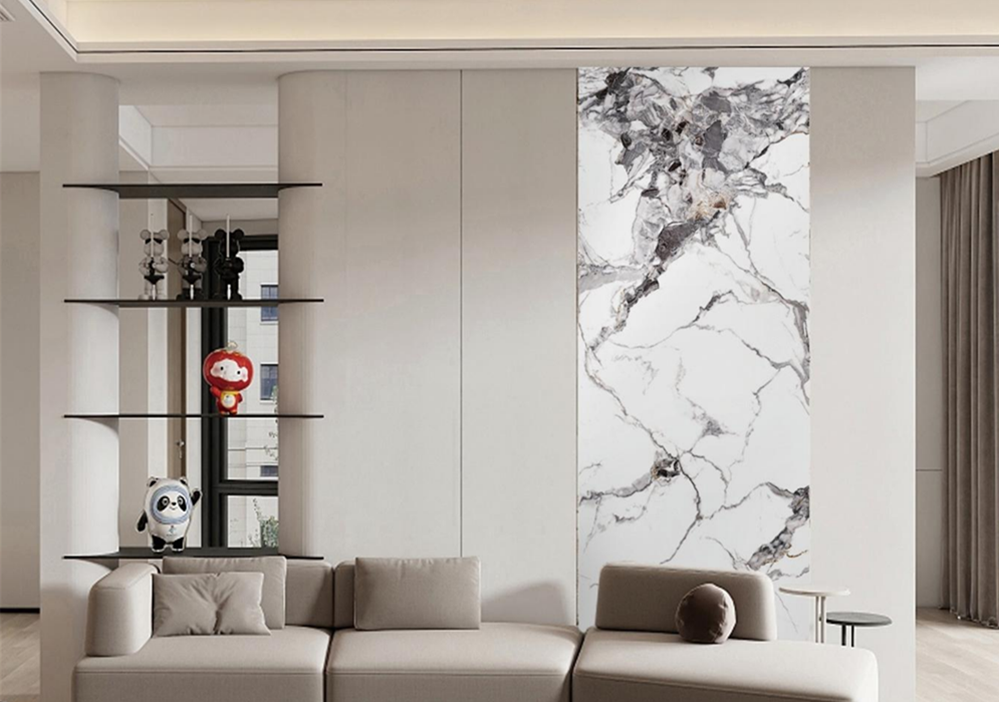
PVC marble sheets simulate natural stone with lower weight and faster installation.
Outdoor facades with WPC
For exterior walls, outdoor WPC wall panels are formulated with wood fiber and HDPE, with UV-resistant and weatherproof properties. Unlike indoor PVC panels, they are designed for direct sunlight, rain, and wide temperature ranges. The documented service life for outdoor WPC panels is 15–25 years, with co-extrusion technology available for enhanced durability.
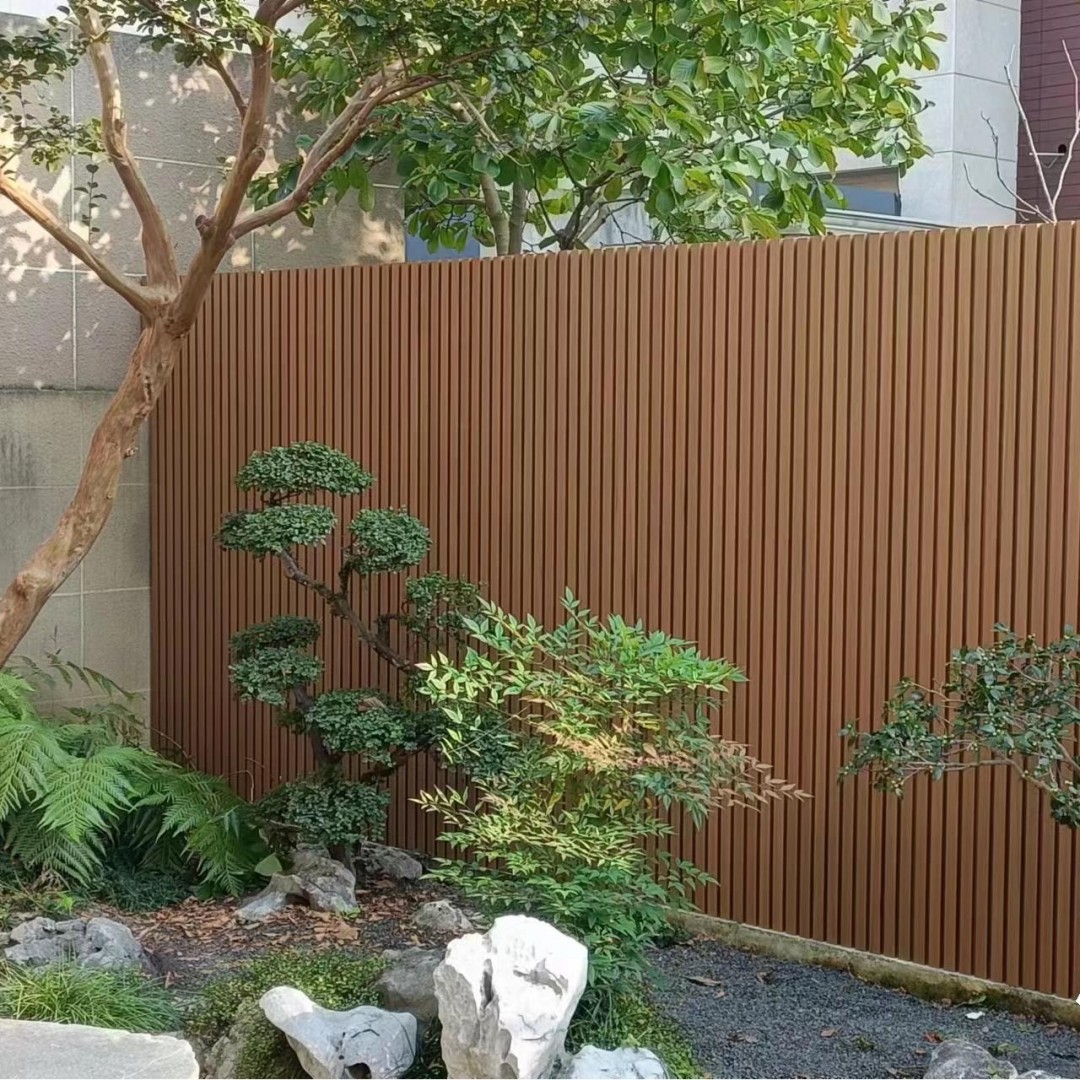
Outdoor WPC wall panels are formulated to resist UV radiation and moisture.
Regional project evidence
YIKE's export records include notable volume and application examples:
- In Ecuador, a distributor received 3×40HQ containers over a 2-year period, applying YIKE products in retail shops, brand stores, showrooms, offices, and restaurants.
- In Indonesia, a renovation service provider imported 10×40HQ containers over 3 years, using a combination of PVC ceiling panels, PVC marble sheets, and WPC wall panels for residential and commercial projects.
- In Malaysia, over 100 residential houses have been installed with YIKE decorative panels, including hotels and commercial projects.
- In Colombia, a building materials distributor received more than 60×40HQ containers per year, supplied with a complete range of PVC and WPC decorative materials.
- In El Salvador, 1×40HQ container was used for residential decoration, contributing to affordable home upgrades.
Market Trends Relevant to PVC Panel Sourcing
Several verifiable market signals affect procurement strategy. The global wood plastic composite market is estimated at USD 8.97 billion in 2025, and the WPC market is projected to grow at a CAGR of 11.6% from 2025 to 2030. Synthetic marble, including PVC marble sheets, is projected to grow at a CAGR of 6.8% from 2025 to 2032. The global ceiling tiles market, including PVC, is projected to reach USD 8.03 billion in 2024 with a CAGR of 10.2%. These trends indicate sustained demand for lightweight, moisture-resistant, and cost-effective interior surfaces.
On the supply side, China produces approximately 55% of the worldwide market volume for WPC wall panels. The country's PVC export volume reached an all-time high in 2025, with India accounting for about 39% of total export volume. For buyers in Latin America, Southeast Asia, the Middle East, and Africa, these dynamics mean more options but also a greater need for supplier due diligence.
How PVC Panels Compare with Traditional Interior Surfaces
PVC panels are often compared with gypsum board, wood veneer, ceramic tile, and natural stone. The comparison depends on the application, but the following table provides a general decision reference.
| Criterion | PVC Decorative Panel | Gypsum Board | Wood Veneer / Timber | Ceramic Tile | Natural Stone |
|---|---|---|---|---|---|
| Relative cost | Low to medium | Low | Medium to high | Medium | High |
| Installation speed | Fast (click/fix or glue) | Moderate (requires finishing) | Moderate | Slow (wet trade) | Slow |
| Weight | Light | Heavy | Medium | Heavy | Very heavy |
| Waterproof | Yes (for PVC grades) | No (needs treatment) | No (prone to moisture) | Yes | Yes |
| Fire rating | Depending on formula; options available | Good (Type X) | Poor without treatment | Good | Good |
| Maintenance | Low | Requires painting | Regular sealing | Low | Moderate |
| Aesthetic realism | Simulated textures | Paint/wallpaper finish | Natural wood | Glass/stone finish | Unique natural pattern |
There are also boundary conditions. PVC decorative panels are primarily designed for indoor use; long-term outdoor exposure will cause fading and aging unless the panel is specifically formulated for outdoor conditions. In high-end hospitality or architectural projects where authentic natural stone texture is required, PVC marble sheets may not fully replace natural material. Additionally, installation quality still depends on substrate flatness and correct adhesive or keel selection. These limitations do not reduce the value of PVC panels, but they define the appropriate usage envelope.
Future Outlook
As building renovation cycles shorten and labor costs rise, materials that combine fast installation with low maintenance will continue to gain share. PVC panel manufacturers are likely to invest in more realistic surface finishes, improved fire-retardant formulations, and recyclable or lower-carbon compositions. For importers, the practical trend is toward multi-category sourcing—combining PVC ceiling panels, PVC marble sheets, and WPC wall panels in a single container to serve multiple project needs. Suppliers like YIKE that offer OEM/ODM services and flexible container loading are positioned as potential partners for distributors seeking a broader product range without expanding supplier complexity.
FAQ
How to choose a reliable PVC ceiling panel supplier?
It is advised to cooperate with direct PVC ceiling panel manufacturers rather than middlemen. Check raw material quality, relevant international certifications, delivery schedule, and after-sales solution. Always test samples before large orders to avoid inconsistent bulk goods. This method applies to both one-time project orders and long-term wholesale import business.
What factors to consider when selecting a PVC wall panel manufacturer?
Check sheet density, flatness, surface adhesion, anti-yellowing performance, and environmental level. Confirm sample quality before bulk orders. Buyers should also evaluate the manufacturer's ability to produce large-size panels and provide export certifications. This standard suits overseas importers, building material wholesalers, and interior decoration project buyers for long-term procurement.
How to verify a PVC marble sheet supplier before placing an order?
Ask about production capacity, minimum order quantity, lead time, customization options, quality inspection procedures, certifications, packaging methods, warranty, and export experience. Request pre-production samples and test reports. For PVC marble sheets, pay attention to raw material quality, surface film durability, flatness, anti-yellowing performance, thickness specification, and surface treatment.
Can PVC marble sheet be used outdoors?
We do not recommend long-term outdoor use. It is an indoor decorative panel. Long-term UV sunlight exposure will cause surface fading and aging. It is suitable for all kinds of indoor wall decoration.
For a detailed product catalog, the manufacturer provides a public brochure: Download YIKE New Material brochure.