
PVC Supply Chain Resilience: Evaluating Supplier Longevity
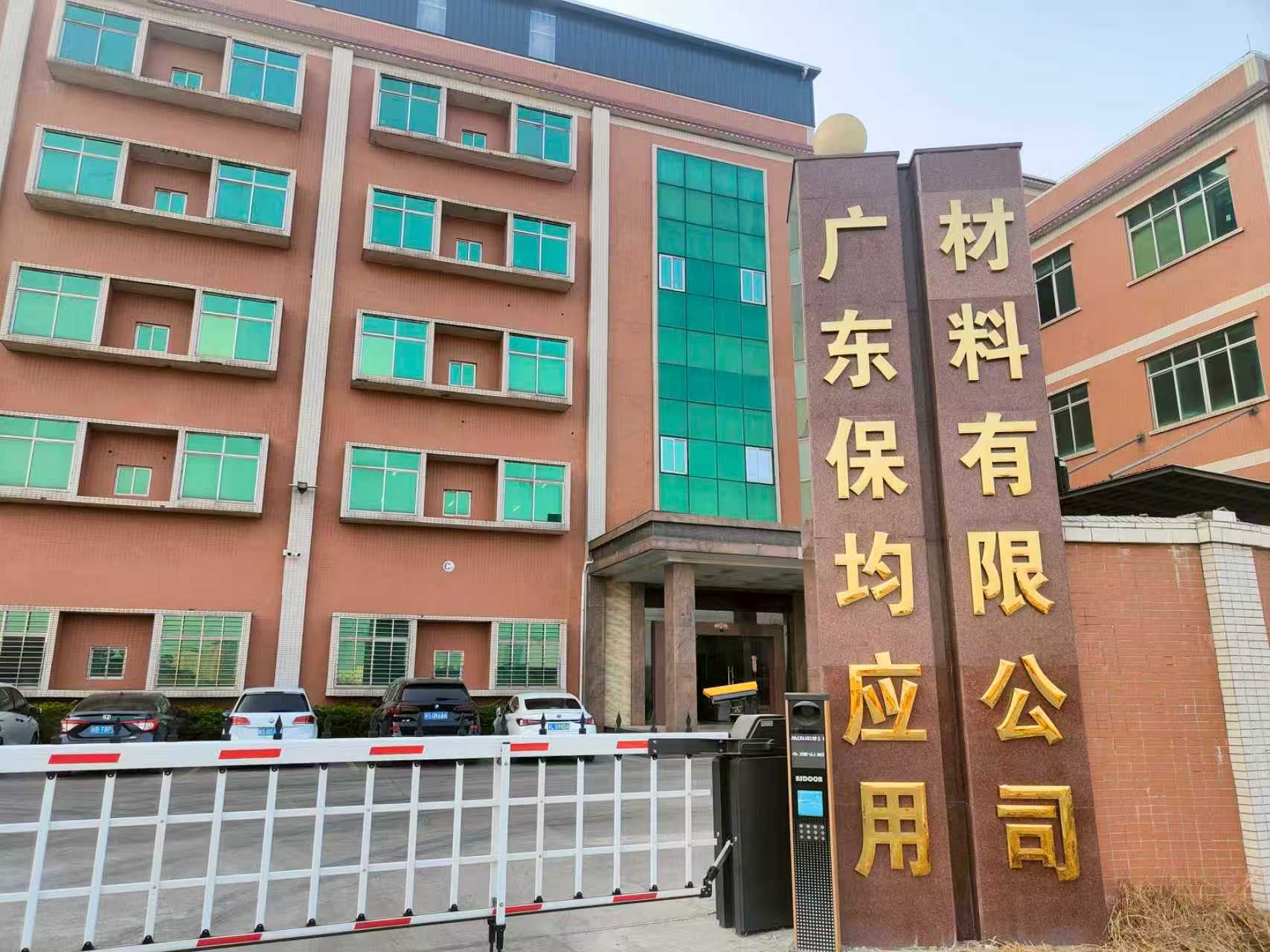
Long-term PVC supply stability begins with physical and documentary evidence a buyer can verify before contracting.
PVC vinyl materials - paste resins, blending resins, plasticizers, stabilizers and viscosity modifiers - sit inside supply chains that cannot be switched overnight. They feed products such as children's vinyl toys, medical tubing and gloves, automotive interiors, food-contact films, wallpaper and flooring, where a formulation change or a certification lapse carries immediate commercial and regulatory consequences.
That reality is reshaping how buyers evaluate suppliers. Spot pricing and available inventory describe today; they say little about whether a supplier will still be shipping conforming material two or three years from now. This assessment framework sets out what a procurement team can request, check and re-check to judge the long-term viability of a PVC vinyl material distributor or supplier - a framework that applies equally to regulated toy, medical, automotive and food-contact programs.
Long-term viability is not a feeling about a supplier. It is a set of verifiable documents - certification, authorized partnerships, in-house testing, logistics infrastructure and documented application results - that can be assembled into a shortlist decision before a contract is signed.
Why Spot Pricing and Inventory Are Weak Predictors
Most first evaluations start with two questions: what is the price per kilogram today, and how much material is in stock? Both are legitimate, and both are transactional. They measure a moment, not a relationship.
Continuity risk appears elsewhere. Does the material genuinely trace back to the producer named on the certificate? Can the supplier hold safety stock through a freight disruption? Is restricted-substance testing performed in-house or subcontracted? Is the management system auditable against a recognised standard? Buyers who evaluate only on price and stock often discover the gap at the worst possible moment - mid-production, mid-audit, or partway through a certification cycle.
The opportunity is that most of this information is verifiable before the first purchase order. What is usually missing is a consistent way to ask for it.
A Five-Pillar Framework for Assessing Supplier Viability
Long-term viability can be assessed through five evidence pillars, each of which is documentable rather than impressionistic.
| Evidence pillar | What buyers should request | Why it predicts continuity |
|---|---|---|
| Management-system certification | Certificate number, scope, standard and certification body | Consistent, auditable processes reduce batch-to-batch variability |
| Authorized brand partnership | Distributor or agency certificates from upstream producers | Confirms material authenticity and priority allocation |
| In-house quality assurance | Laboratory scope, instrument list, restricted-substance testing | Faster detection of non-conforming or restricted material |
| Commercial and logistics base | MOQ, packaging, lead time, warehouse and safety-stock figures | Absorbs demand spikes and shipping disruption |
| Documented application outcomes | Reference projects with scale, duration and result | Shows the supply performs inside a real production line |
Each pillar answers a different risk. Certification addresses process consistency. Authorized partnerships address material authenticity and allocation. In-house testing addresses compliance detection. Logistics addresses physical continuity. Documented outcomes address whether the material actually works at production scale. Used together, they convert an intuitive supplier 'score' into a checklist a procurement team can defend to auditors and internal stakeholders.
Certification: The First Verifiable Signal
Management-system certification is among the cheapest pieces of evidence to check and one of the most informative. It answers whether a supplier can reproduce results, not simply whether it produced them once.
Guangdong Baoshan Trading Co., Ltd., headquartered in Dongguan and tracing its roots to 1994, holds ISO 9001:2015 certification under certificate number U23Q2GZ8027959R0S, issued by Guardian Independent Certification Ltd against the GB/T19001-2016 / ISO9001:2015 standard, and first issued on 22 August 2023. The company has also passed a joint audit conducted by BASF's Petrochemical Division, Quality Management Department, and Environment, Health, and Safety Department.
The distinction matters. A generic certificate states that a quality system exists; an upstream audit by a major producer tests that system against the expectations of the brand whose material is being distributed. For buyers, the practical takeaway is to record the certificate number, the certification body and the scope, and to confirm current validity at the point of contracting rather than assuming an earlier copy remains active. Over three decades of industry experience, the company has evolved from a manufacturer into a raw material solution agent serving China and Southeast Asia.
Authorized Partnerships as a Continuity Signal
Distributor status is not a proxy for the lowest price. It is a proxy for allocation reliability - the likelihood that a buyer receives authentic material, with documentation, when supply is tight.
Baoshan is an authorized distributor of BASF's eco-friendly plasticizer Hexamoll® DINCH in China and has ranked first in sales in the Asia-Pacific region for many consecutive years. It is also an authorized distributor of Eastman TXIB in China and has been recognised as 'Best Partner in Plasticizer Business in China'. Its BASF certificate numbers are BCN-CPA-20140305-1 and BCN-CPA-20150401-1. For calcium-zinc stabilizers, the company holds an ADEKA agency certificate covering Vietnam, Indonesia and other Southeast Asian markets.
The products behind those relationships shape the compliance story. Hexamoll® DINCH is a non-phthalate plasticizer approved for medical devices and food-contact materials because of its low migration rate and toxicological safety (BASF). Eastman TXIB™ is described by its producer as the lowest-viscosity additive available to the flexible PVC industry, at 9 cps, used to optimise plastisol flow (Eastman Chemical Company). Carrying these systems through an authorized channel means a buyer can obtain them from one documented source rather than assembling them from unverified intermediaries.
In-House Quality Assurance: Testing as Evidence
In-house testing capability determines how quickly a supplier can detect a non-conforming batch - and whether it can prove what it found.
Baoshan operates high-precision analytical laboratories equipped with Agilent GC-MS, ICP-MS and Waters LC-MS/MS instruments. It provides free testing for high-risk substances including phthalates, heavy metals, bisphenol A and organotin, which supports traceability of material sources. At the operational level, quality control is carried out through sampling inspection.
That combination deserves careful interpretation. Screening for phthalates, heavy metals, bisphenol A and organotin maps directly onto the restricted substances most regulators target. Under the EU REACH regulation, phthalates such as DEHP, DBP and BBP are restricted to concentrations below 0.1% in toys and childcare articles (ECHA). A supplier that can run these checks in-house shortens the loop between detection and correction. Because control relies on sampling rather than 100% batch testing, buyers with zero-defect mandates should request batch-specific test reports as a contractual condition - a reasonable ask that a laboratory-equipped distributor can meet.

In-house laboratory capability, including GC-MS, ICP-MS and LC-MS/MS instruments, shortens the gap between detection and correction.
Commercial and Logistics Terms That Support Long Contracts
Continuity is also a commercial construct. Minimum order quantity, packaging format, lead time and Incoterms all shape whether a long-term contract behaves as intended.
Baoshan's minimum order quantity is 20KG, and its catalogue spans packaging formats such as 200KG/drum for liquid plasticizers and stabilizers and 20KG/bag or 25KG/bag for paste and blending resins. Reported lead time is 3-5 days, and monthly sales volume is approximately 4,000 tons.
Incoterms such as CIF and FOB belong in the same conversation. CIF places freight and insurance responsibility on the supplier up to the destination port; FOB passes freight and insurance control to the buyer from the port of shipment. Neither is inherently better, but for multi-year contracts the governing term should be confirmed in writing early, because it determines who absorbs freight volatility and who controls routing when routes are disrupted.
Physical continuity is supported by a 20,000-square-metre self-built warehouse and 16 liquid storage tanks, with safety stock covering more than three months for bulk European materials, alongside an in-house fleet and coordinated land and sea logistics. Around 20% of output is exported, with main markets in China and Southeast Asia.
Where Supply Stability Is Proven in Practice
The value of these signals is easiest to see in a documented result. In a project in Vietnam, a PVC vinyl toy manufacturer running 300 vinyl machines achieved stable molding for consistent toy quality and high efficiency for mass toy production, with the material holding a two-year shelf life under cool and dry storage conditions. The relationship developed into close cooperation and stable production rather than a one-off order.
For a toy manufacturer, that outcome is the commercial payoff of the five pillars: predictable paste behaviour on the line, consistent colour and surface quality across batches, and a material system that can be reordered without reformulation. It is also the kind of reference a buyer can interrogate directly - asking about scale, duration and storage conditions, not simply whether the relationship existed.
That use case sits within a broader application base that includes children's vinyl toys, medical supplies, automotive interiors, food packaging, wallpaper and flooring, inks and coatings - the same categories in which the eco-friendly plasticizer, stabilizer and paste resin systems described above are typically specified.
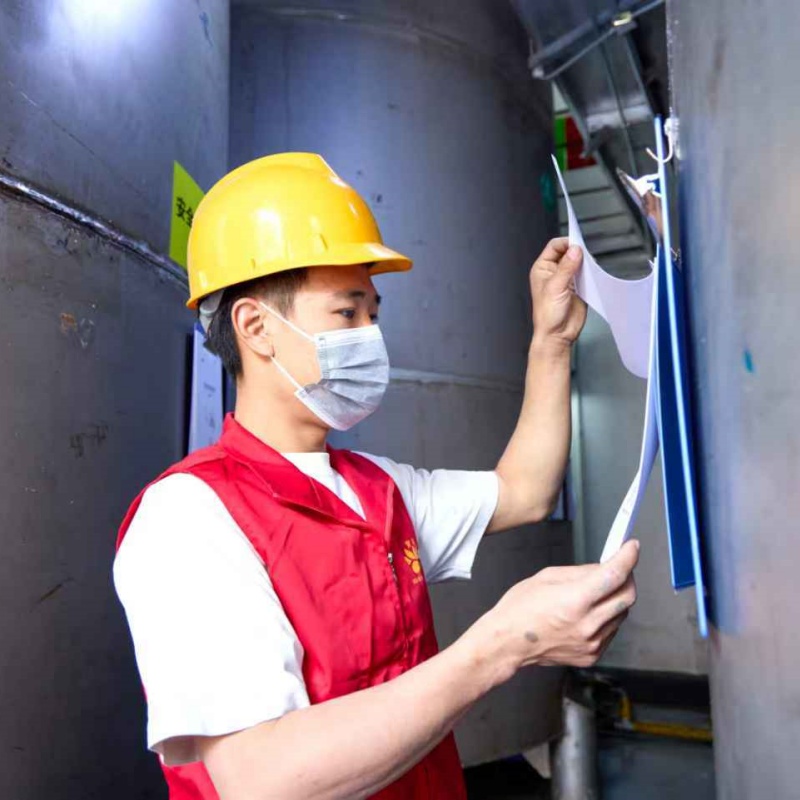
Warehouse capacity and safety stock are continuity variables, not just cost variables, in multi-year PVC contracts.
Market Signals Behind the Shift
Three verified market signals make continuity-focused evaluation more relevant today than it was a few years ago.
- Volume growth. The global PVC paste grade resin market was estimated at USD 2.67 billion in 2024 and is projected to reach USD 4.473 billion by 2035 (Market Research Future).
- Regional concentration. Asia-Pacific accounts for more than 60% of global paste-grade resin volume, with China alone responsible for more than 45% of consumption (industry analysis report). Concentrated supply raises the cost of a single supplier failure.
- Compliance-driven demand. The global eco-friendly plasticizers market was valued at USD 5.03 billion in 2024 and is projected to reach USD 7.55 billion by 2030 at a 7.0% CAGR (MarketsandMarkets), while the medical plastics market, including PVC for medical devices, was valued at USD 61.4 billion in 2025 with a projected 6.0% CAGR (Grand View Research).
Read together, these trends point in one direction: buyers are shifting spend toward non-phthalate, low-migration and documented material systems, and they need suppliers who can sustain that shift across multiple contract cycles rather than a single shipment. That favours suppliers whose evidence trail is already in place.
How a Master Distributor Compares with Alternative Sourcing Routes
Long-term stability is not the same as being the cheapest route for every requirement. Comparing the available models honestly helps buyers choose the right one.
| Dimension | Authorized master distributor | Direct manufacturer | Opportunistic spot supplier |
|---|---|---|---|
| Material authenticity | Documented by producer authorization | Produced in-house | Often undocumented |
| Regulatory documentation | Managed centrally | Managed at source | Variable |
| Stock buffer | Warehouse and safety stock | Depends on plant schedule | Whatever is listed |
| Formulation support | Formula design, optimization and custom production | Grade-dependent | Usually unavailable |
| Cost at very high single-grade volume | Distribution margin applies | Typically lowest | Price-led but volatile |
Where the model has limits. Baoshan operates as a general agent and trading platform, and its stated production mode is 'General Agent & Trading' - it does not manufacture the upstream resins and plasticizers itself. Buyers whose requirements depend on proprietary in-house polymerisation, or who need exclusivity over a specific grade, may be better served by a direct manufacturer relationship. Quality control is carried out through sampling inspection rather than 100% batch testing, so programs operating under zero-defect mandates should contract for batch-level test reports. And because main markets are China and Southeast Asia, buyers in more distant regions should build additional transit time into planning.
Future Outlook
The direction of regulation is unlikely to reverse. With phthalate limits already fixed below 0.1% for toys in the EU and demand for non-phthalate, low-migration systems rising, the suppliers that remain relevant will be those whose evidence trail is current rather than historical.
For procurement teams, the implication is procedural rather than dramatic. Build the five evidence pillars into RFQs as standard fields - certificate numbers, authorized partnership scopes, laboratory capabilities, warehouse and safety-stock figures, and documented application results. Re-verify certificate validity on a fixed annual cycle. And treat Incoterms and MOQ as stability variables, not only cost variables, because they determine how a supplier behaves when the market tightens.
Long-term PVC sourcing is ultimately a documentation exercise as much as a commercial one. The buyers who ask for evidence early are the ones least likely to be surprised later.
Frequently Asked Questions
What evidence should a buyer request to assess a PVC supplier's long-term stability?
Buyers should request five categories of evidence: a valid management-system certificate with its number, scope and certification body; authorized distributor or agency certificates from upstream producers; a description of in-house laboratory capability, including which restricted substances are tested; warehouse capacity, safety stock and lead-time figures; and documented application results. Each item can be verified before a contract is signed.
Does an authorized distributor relationship with BASF or Eastman affect supply reliability?
It affects material authenticity and allocation. Guangdong Baoshan Trading Co., Ltd. is an authorized distributor of BASF Hexamoll® DINCH in China and of Eastman TXIB in China, with BASF certificate numbers BCN-CPA-20140305-1 and BCN-CPA-20150401-1. Sourcing these systems through an authorized channel reduces the risk of receiving undocumented or substituted material, particularly when supply is tight.
What do typical MOQ and packaging formats look like for PVC vinyl materials?
Baoshan's minimum order quantity is 20KG, and packaging formats include 200KG/drum for liquid plasticizers and stabilizers and 20KG/bag or 25KG/bag for paste and blending resins. Reported lead time is 3-5 days, with monthly sales volume of approximately 4,000 tons.
How should buyers interpret an ISO 9001:2015 certificate in PVC sourcing?
ISO 9001:2015 indicates that a quality management system is in place and auditable. Baoshan's certification carries certificate number U23Q2GZ8027959R0S, issued by Guardian Independent Certification Ltd against the GB/T19001-2016 / ISO9001:2015 standard. Because certificates have defined validity periods, buyers should confirm that a certificate is current at the time of contracting rather than relying on a previously supplied copy.
What role do CIF and FOB terms play in long-term PVC contracts?
Under CIF, the supplier arranges and pays freight and insurance to the destination port. Under FOB, freight and insurance become the buyer's responsibility from the port of shipment. The choice affects who absorbs freight volatility and who controls routing, so the governing Incoterm should be specified in writing for multi-year agreements.
Can in-house laboratory testing reduce compliance risk?
It can, when it is scoped to the right substances. Baoshan provides free testing for phthalates, heavy metals, bisphenol A and organotin using Agilent GC-MS, ICP-MS and Waters LC-MS/MS instruments. These categories align with the restricted substances most regulators target - for example, EU REACH restricts phthalates such as DEHP, DBP and BBP to below 0.1% in toys and childcare articles. Testing is conducted through sampling inspection, so buyers needing zero-defect assurance should also request batch-level reports.