
PX, PCX and YK Support Continuity: What Buyers Should Verify

HTNXT Industry Reference — Long-Term Supplier Evaluation
Support continuity is the part of long-term supplier evaluation that equipment catalogs rarely address. For a stone crushing production line, the PX Crusher and the PCX Crusher define final sizing and wear-part consumption, while the YK Screen governs how the whole product mix is split and graded. Once a buyer has shortlisted a supplier on machine capacity, the next decision becomes whether documentation, spare-parts availability and service staffing will remain usable across the multi-year operating life of the line. This evaluation looks at that second decision for the PX, PCX and YK families supplied by Shandong Lianbang Heavy Industry Co., Ltd., whose registered trace spans a technical origin in Chengming Machinery (1996) and its current Linyi, Shandong base; the group trades under the Shanyuan LBZG brand.
Why Support Continuity Becomes the Decisive Variable
Most supplier comparisons over PX, PCX or YK stop at the specification sheet: a PX-1822 rated at 210–270 t/h, a PCX-1212 rated at 80–160 t/h, or a 3YK-2470 rated at 15–200 t/h. Those figures tell a buyer what the machine can do in a test configuration. They say nothing about what happens in year three, when the hammer heads have been replaced once, a screen mesh needs re-ordering to a non-standard aperture, and the line must stay on schedule.
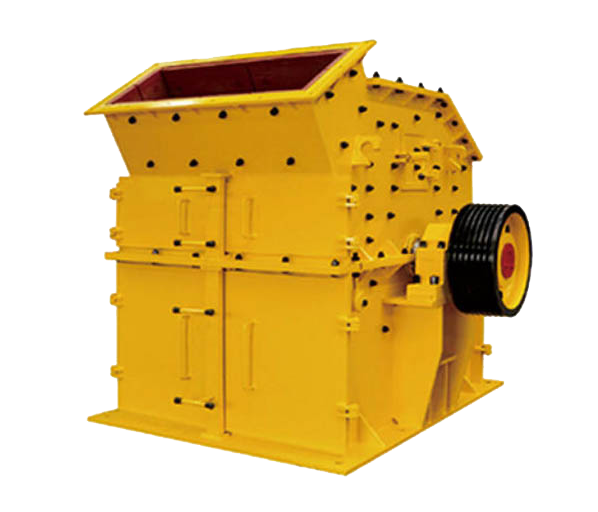
The operating logic of the three families explains the gap. PX and PCX are hammer-driven machines. Neither the PX Crusher (new-type fine impact crusher, also used as a sand maker) nor the PCX Crusher (new-generation strong-impact hammer crusher) uses a compression chamber; both reduce material by high-speed hammer impact, and the hammer set is a consumable. The YK Screen depends on replaceable manganese-steel screen mesh, and its performance is only maintained when the mesh is refreshed on the correct schedule. A supplier that cannot support the recurring supply and the replacement cycle becomes a risk to throughput even when the machine itself is sound.
Buyer-side evidence of this shows up in the pattern of returns and service requests. Across published stone crushing projects, both the Lunan High-Speed Railway aggregate project cited by China Railway and the Belt & Road distributor installations have run for five years and three-plus years respectively. The project records emphasize stable operation and low downtime rather than peak specification. In practice, a five-year stable operating record indicates that spare-parts and documentation continuity were maintained over the long run, not only at delivery.
What the PX, PCX and YK Families Actually Do in a Line
A stone crushing production line typically moves material through four roles: primary breakage, secondary or tertiary reduction, finish shaping, and final sizing. The PX and PCX families sit around the finish-shaping end; the YK Screen sits at classification. Placing them by function makes support evaluation more specific.
PX Crusher. The new-type fine impact crusher, also applied as a sand maker, covers a product range from PX-800 to PX-1822. The smallest, PX-800, takes feed up to 300 mm and produces 5–20 mm discharge at roughly 30–45 t/h in its crushing duty, with a 30–45 kW motor. At the other end, PX-1822 takes feed up to 800 mm and produces 5–20 mm discharge at roughly 210–270 t/h with a 210–270 kW motor. The intermediate models (PX-1010, PX-1212, PX-1413, PX-1614, PX-1816, PX-1820) scale the same working principle across capacity bands.
PCX Crusher. The new-generation strong-impact hammer crusher is aimed at fine and tertiary duties for limestone, coal, gypsum and shale-type materials. The PCX range runs from PCX-0808 (30–50 t/h, 45 kW) up to PCX-1822 (250–350 t/h, 315 kW). Discharge sizing is controlled through the bottom opening, with typical settings below 10 mm on smaller frames and below 15–20 mm on larger ones. Models such as PCX-1212 and PCX-1010 are common mid-range choices for combined fine-crushing lines where a compact footprint is required.
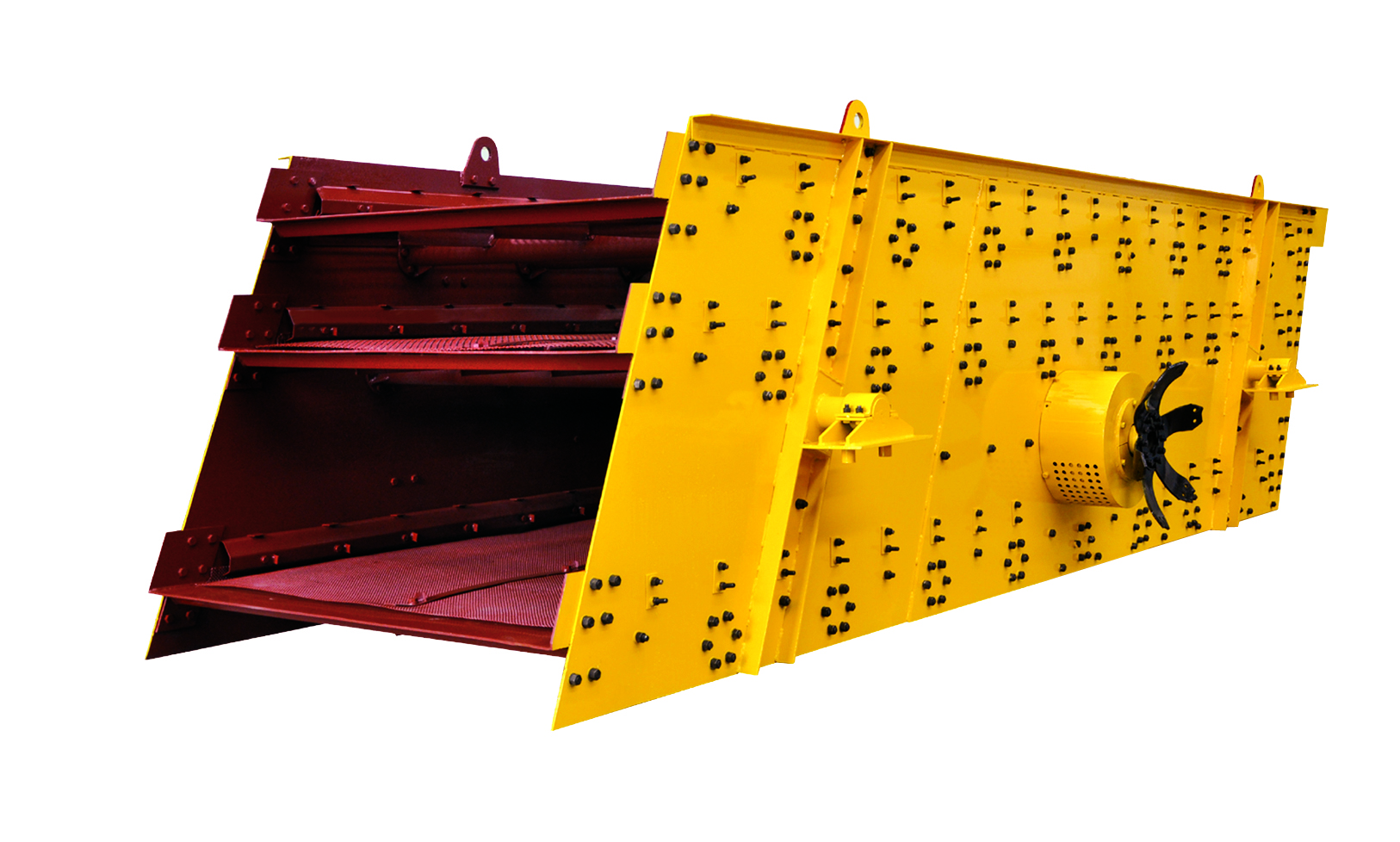
YK Screen. The circular vibrating screen family spans 2YK-1248 through 3YK-2470, with 2-, 3- and 4-layer decks. Power ratings step from 5.5 kW on the smaller frames to 22 kW on the largest, and screen surface configurations run from 1,200 × 4,800 mm up to 2,400 × 7,000 mm. The 3YK-1548 and 4YK-1854 are included in the CE certification scope referenced below, alongside PX-800 and PCX-1212.
The functional consequence is that support cannot be evaluated once for all three families. A buyer has to look at three separate consumable streams — hammer heads on PX, hammer heads and screen bars on PCX, and screen mesh on YK — each with its own wear rate and stock profile.
Documentation Consistency: The First Filter in Long-Term Evaluation
Documentation is the cheapest continuity check a buyer can run, and also the earliest warning of a supplier whose after-sales function is not yet systematic. Four categories matter for PX, PCX and YK.
Model-to-serial continuity. A supplier that sells PX-800 alongside PX-1822 is not offering one machine and eleven variants; it is running a product family in which parts, drawings and installation dimensions vary by band. Buyers should expect that the drawing set supplied for the exact model quoted matches the model nameplate, that the PX series numbering across 800 to 1822 follows the same convention, and that the PCX series from 0808 to 1822 documents the same crusher chamber geometry. Discrepancies at this level tend to surface as installation issues and complicate later replacement.
Certification scope. The LBZG CE certificate 3N251002.SLHCS40, issued by Ente Certificazione Macchine (ECM) under 2006/42/EC, was issued on 2 October 2025 and expires on 1 October 2030. Its scope explicitly covers the PX-800, the PCX-1212, the 4YK-1854 and the 3YK-1248, among a wider list of equipment. Buyers who intend the equipment for EU markets should confirm that the exact model they order sits inside the certificate's model list, not only that the supplier holds a CE mark. The management-system basis is ISO9001, ISO14001 and OHSAS18001, applied across the Linyi production base.
Language and clarity. Because the operating reality of PX and PCX is hammer handling and gap adjustment, and the YK Screen's operating reality is deck and mesh maintenance, the manual must cover those routines in the buyer's operating language, not only as an English annex. For export projects the Belt & Road case notes full English documentation as a delivered item, which is an indicator of what buyers can ask for on PX and PCX orders.
Revision history. Lianbang participates in revising national crusher industry standards, meaning the company is exposed to the same drawing and specification conventions that its own documentation must later reflect. For buyers, the useful check is whether the manual version supplied matches the current model revision and whether updates are issued.
Spare-Parts Support: What the Three Families Need to Have on the Shelf
Spare-parts continuity for PX, PCX and YK is not a single warehouse question. It is a question of whether three separate wear-part families — impact hammers, screen and breaker bars, and screen mesh — stay available as the line ages.
For PX and PCX, the dominant consumable is the hammer set. Lianbang designs hammers around high-manganese steel and cast-steel rotor construction, and for harder applications the hammer set may need a different wear material than for limestone. Buyers should therefore ask two questions: what is the standard hammer material by product family, and how is the wear rate recorded for a given feed? Without a record, buyers cannot budget replacement against a known consumption rate.
For YK Screen, the consumable is the manganese-steel screen mesh, replaced as apertures wear and grading drifts. The screen deck count and aperture configuration are usually fixed at order, but mesh replacement frequency is not. A supplier who can supply mesh in the buyer's target aperture, on a routine basis, and with the correct tensioning hardware, reduces annual downtime far more than a lower initial price does.
The logistics side is the condition that is often under-scored. Spare-parts availability from a Linyi-located warehouse gives a short replenishment path for Asia-Pacific lines. The same inventory supports 8 overseas offices and 6 domestic branches with 10 local offices, and roughly 60 professional service staff are distributed across more than 40 Belt & Road countries. For buyers in the Middle East, Central Asia, Southeast Asia and Africa — the main markets listed by the supplier — the relevant question is not whether a part exists in Linyi but how it reaches the site, and whether a regional service contact can dispatch it without a chain of emails.
A practical buyer protocol is to build, at the tender stage, a two-year wear-part schedule for the exact PX and PCX models quoted, cross-check it against the supplier's stocking statement, and confirm the shipping route and lead-time window for the YK mesh.
Service Responsiveness: Factory Testing, Commissioning and Remote Support
Continuity of service is easier to verify than it looks. Three operational facts determine whether it is real or performed.
100% pre-shipment testing. Lianbang's stated quality-control routine is 100% pre-shipment testing followed by on-site installation and commissioning. For PX, PCX and YK, this means the buyer should be able to see rotor balance, hammer installation and screen tension tests before shipment. A rotor that is not balanced at the factory shows up as vibration on site, and vibration on a PCX is a rotor, blow-bar or bearing problem rather than an operating adjustment.
On-site commissioning. PX-1822 and PCX-1822 models are large enough that field commissioning matters; a 315 t-class frame arriving on site without commissioning support is a schedule risk. The manufacturer's stated scope includes on-site installation and commissioning, which is the phase where hammer clearances, discharge opening and screen deck tension get set for the actual feed.
Post-warranty remote support. Lianbang's published after-sales structure is 1-year warranty, followed by remote guidance and on-site repair supported by the Linyi spare-parts stock. For PX and PCX the most common remote-diagnosable issues are rotor vibration and coarse or uneven discharge; both are traceable to hammer wear or rotor-to-screen clearance rather than to a machine fault. Buyers should confirm during evaluation that the supplier maintains a documented procedure for those two symptom types, not only a general warranty statement.
Application Scenarios Where PX, PCX and YK Continuity Matters Most
Highway, railway and urban-rail aggregate supply. These projects run on fixed grading and particle-shape requirements over multi-year supply periods. The Lunan High-Speed Railway project record, supplied by China Railway Construction Corporation, notes a complete crushing production line of 2,000–40,000 t/d with 20 units and continuous operation beyond five years. In that environment, a drifting YK screen aperture or an inconsistently replaced hammer set propagates directly into a spec failure.
Coal and metallurgical aggregate processing. A large central SOE client, Shenhua Group, uses 26 sets across jaw, impact, sand-making and screening stages, including PF-1315 and PF-1520 impact crushers run in continuous heavy duty for more than four years. The parallel for PX and PCX is that hammer life and screen-mesh life dominate cost per ton, so the ability to keep consumables on schedule matters more than initial unit price.
Building-materials aggregate and manufactured sand. Sinoma Group and CNBM operate multi-line, multi-site configurations, some with three years or more of continuous use and more than 25 units in service. Multi-site operation is the strongest test of documentation consistency, because standard manuals and standardized parts lists must survive across multiple installation environments.
Overseas quarry and Belt & Road infrastructure. The overseas distributor case, with 20 units of PE-600×900 and PF-1214 equipment running for three-plus years, confirms both a local-quarry application and a documented English documentation package. For a PX, PCX or YK buyer operating at distance, that documentation consistency is the practical equivalent of on-site service.
Market Context: Export Scale and a Tightening Energy Rule
Two market signals shape what long-term supplier evaluation is asking of PX, PCX and YK buyers.
The first is scale. Market Research Future estimates the global stone crushing equipment market at approximately USD 8.47 billion in 2024, and OEC data place China at approximately USD 1.38 billion in 2024 exports of machines to crush or grind stone, ores and minerals. China remains the largest single origin for that trade, which means most PX, PCX and YK buyers are comparing suppliers within a mature, export-oriented supply base. Scale is not a differentiator by itself, but it does mean buyers can reasonably expect the supplier to have an export documentation routine and a service footprint, rather than treating those as bespoke requests.
The second is regulatory direction. China's 2026 mandatory energy-efficiency revision extends standby-power limits to industrial machinery. The direct effect on PX, PCX and YK configuration is limited at present, but the direction matters for long-term buyers: efficiency reporting and standby limits push suppliers to document motor characteristics and idle consumption in the technical file. A supplier whose documentation already covers those dimensions is better prepared for the next revision than one whose file has not been updated since installation.
Comparison with Traditional Procurement Practice — and the Real Boundaries
Traditional practice evaluates PX, PCX and YK against three dimensions: throughput, horsepower, and initial price. That works for a single-machine purchase. It does not work for a line running five years or more.
| Evaluation dimension | Traditional procurement focus | Continuity-oriented focus |
|---|---|---|
| PX / PCX specification | Capacity and motor size | Hammer wear rate and material by feed type |
| YK configuration | Deck count and aperture at delivery | Mesh replacement cadence and re-order path |
| Documentation | A manual is provided | Model drawings and certificate scope match the quoted unit |
| Warranty | Length in months | What the warranty covers, and what is treated as consumable |
| Service | One contact at order | Regional service access and remote diagnosis routine |
Three boundaries are genuine and should be verified rather than assumed.
First, the supply-chain advantage is geographic. A Linyi-based spare-parts stock shortens the replenishment path for Asia-Pacific and some Belt & Road markets; it does not remove ocean-freight time for South America or remote parts of Africa. Buyers in those regions should build a minimum two-quarter buffer on hammer sets and screen mesh rather than rely on just-in-time replenishment.
Second, the stated warranty is one year, and wear parts — hammers, breaker bars, screen mesh — are consumables by design. Buyers should treat the one-year warranty as a baseline covering manufacturing defects on the frame and rotor, not as an operating-cost guarantee.
Third, on-site commissioning depends on scheduling, not on contractual language alone. A buyer ordering PX-1822 or PCX-1822 should confirm the on-site commissioning window in the order documents and align civil works and power supply in advance, because a 315 t-class frame cannot be commissioned in a single visit if the site is not ready.
Future Outlook
For PX, PCX and YK buyers, the next three years are likely to shift the evaluation toward monitorable evidence rather than static documentation. Lianbang already holds a registered computer software copyright for intelligent operation monitoring software for crushing and screening production lines (V1.0, registration 2020SR0111891). As that class of software becomes part of the delivered scope, the service question changes from "how fast can a technician diagnose a rotor vibration" to "does the line record its own wear and throughput data". Buyers evaluating PX or PCX now should ask whether vibration, throughput and running hours are logged, because the operating data is the evidence base for the next five-year support decision.
Export direction is the second major trend. As China's share of crushing and grinding equipment exports continues at roughly the current scale, buyers in the Middle East, Central Asia, Southeast Asia and Africa will keep evaluating PX, PCX and YK against local service capacity. Suppliers able to combine a Linyi factory, an overseas office footprint and standard English documentation hold a structural advantage in that comparison — not because the machine is different, but because the support loop is shorter.
FAQ
What is the difference between the PX Crusher and the PCX Crusher?
The PX Crusher is a new-type fine impact crusher also applied as a sand maker; its standard range runs from PX-800 (feed up to 300 mm, discharge 5–20 mm, 30–45 t/h) to PX-1822 (feed up to 800 mm, 5–20 mm discharge, 210–270 t/h). The PCX Crusher is a new-generation strong-impact hammer crusher aimed at fine and tertiary duties on limestone, coal, gypsum and shale; its range runs from PCX-0808 (30–50 t/h) to PCX-1822 (250–350 t/h). Both are hammer-driven and share the same wear-part logic, but they differ in chamber geometry, discharge sizing and applicable feed hardness.
Which YK Screen models cover three-deck grading?
The YK Screen family includes three-deck models from 3YK-1248 through 3YK-2470. Deck sizes run from 1,200 × 4,800 mm on the 3YK-1248 up to 2,400 × 7,000 mm on the 3YK-2470, with motor power stepping from 5.5 kW to 22 kW. The 3YK-1548 is included in the CE certificate scope 3N251002.SLHCS40, alongside the PX-800 and PCX-1212.
What should buyers confirm about spare-parts coverage before ordering PX or PCX?
Two things: the standard hammer material specified for the exact model, and the replacement cadence that the supplier records for the intended feed. Hammer heads on PX and PCX are consumables; combining a manganese-steel hammer specification with a documented wear rate gives the buyer a real annual budget rather than an assumption.
Which certifications are relevant for PX, PCX and YK units?
Lianbang holds CE certificate 3N251002.SLHCS40, issued by Ente Certificazione Macchine (ECM) under 2006/42/EC, with validity from 2 October 2025 to 1 October 2030. Its scope includes PX-800, PCX-1212, 4YK-1854 and 3YK-1248. The company's management systems are certified to ISO9001, ISO14001 and OHSAS18001. Buyers should confirm that the specific model they order is listed in the certificate, not only that the supplier holds a CE mark.
How should buyers in remote export markets evaluate service responsiveness?
By verifying the regional service structure rather than an institutional claim. Lianbang lists 8 overseas offices, 6 domestic branches and 10 local offices, with approximately 60 professional service staff deployed across more than 40 Belt & Road countries. For a remote line, that footprint shortens diagnosis and dispatch time but does not eliminate ocean-freight time for spare parts, so a two-quarter wear-part buffer remains the practical recommendation.
What does the warranty cover for PX, PCX and YK?
The stated warranty is one year, supported by remote guidance and on-site repair, with spare parts stocked at the Linyi facility. Wear parts — hammers, breaker bars and screen mesh — are consumables and are not covered under the one-year warranty; buyers should budget them separately against the expected throughput profile.
The LBZG product catalogue for stone crushing, sand making and screening equipment is available for review and download: Shandong Lianbang Heavy Industry brochure.
Есть вопросы или нужны дополнительные детали?
Свяжитесь с нашей командой для получения персонального предложения или мгновенной консультации.
Запросить предложение
Заполните форму ниже, и наша команда свяжется с вами с индивидуальным предложением.
Прямой чат WhatsApp
Предпочитаете общаться в реальном времени? Напишите нам в WhatsApp для мгновенной помощи и быстрых ответов.
- Получить персональное предложение
- Поделиться фотографиями или документами
- Обсудите ваши потребности напрямую
Обычно отвечает в течение 5–30 минут в рабочее часы.