Pad-Mounted vs. Separate Outdoor Transformers: Project Guide
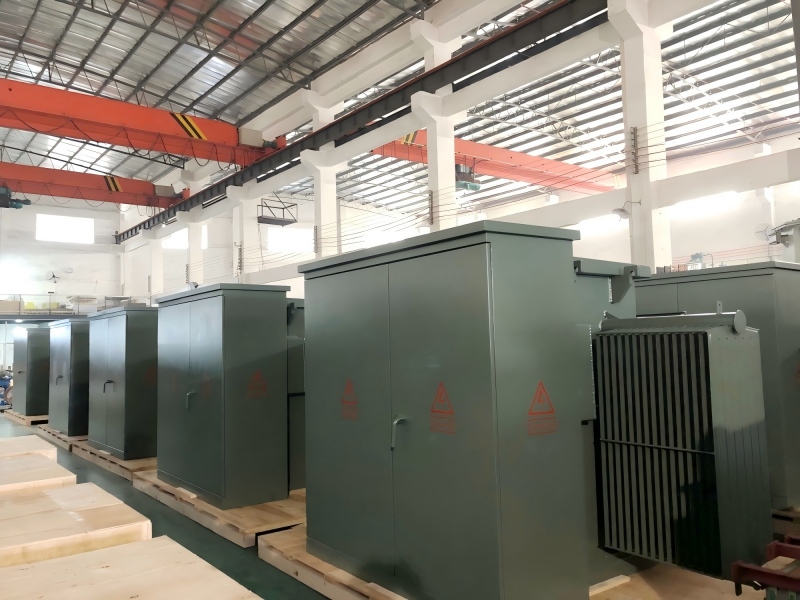
For North American distribution projects, the choice between an integrated pad-mounted transformer and a separately arranged outdoor distribution transformer affects more than electrical performance: it shapes construction sequencing, site footprint, and total installed cost. This project-level guide compares the two configurations across these dimensions and explains how OEM customization from Xiamen Winley Electric Co., Ltd. supports project-specific adaptation.
Xiamen Winley Electric Co., Ltd. (Winley Electric) is a transformer manufacturer founded in 2014, headquartered in Xiamen, China, with manufacturing facilities in Shanghai and Guangdong, serving export markets in North and South America. Winley Electric produces transformers rated at 145 kV and below, including three-phase pad-mounted transformers, single-phase pad-mounted transformers, substation transformers, pole-mounted transformers, dry-type transformers, voltage regulators, and reactors, with UL and cUL certification.
The Configuration Decision: Problem and Opportunity
The distribution transformer configuration decision arises at the early stage of nearly every underground medium-voltage project. On one side is the integrated pad-mounted transformer—a factory-assembled unit that combines the transformer core-and-coil assembly, high-voltage terminations, switching, and protection inside a single ground-level, tamper-resistant enclosure. On the other side is the separately arranged outdoor configuration, in which the transformer, switchgear, and protection are installed as distinct units on separate foundations, typically within a fenced site area.
Demand context matters. The U.S. pad-mounted transformer market was estimated at USD 3.75 billion in 2024, driven by grid modernization and underground cabling, according to Market Research Future. The global pad-mounted transformer market was valued at approximately USD 22.3 billion in 2024, according to Global Market Insights. As utilities, commercial developers, and renewable project owners expand underground distribution, the engineering question is increasingly when a separately arranged configuration remains the better fit, rather than whether to use a pad-mounted transformer.
The evaluation criteria that matter most to project owners and procurement teams are construction period, land footprint, total cost (equipment plus installation plus operation), compliance with North American standards, and flexibility for future modification. OEM customization adds a sixth dimension: the ability to adapt the transformer—electrically, structurally, and functionally—to the specific project profile.
Two Configurations at a Glance
An integrated pad-mounted transformer is designed for direct connection to underground medium-voltage cables. The transformer tank, switching compartment, and cable termination compartment form one secure, weatherproof enclosure. Because live parts are enclosed and the unit sits on a concrete pad at ground level, the design is well suited to publicly accessible areas with tamper-resistance and low-noise requirements.
A separately arranged outdoor distribution installation distributes the same functions across multiple enclosures and foundations. The transformer is placed on its own foundation, the medium-voltage switchgear and protection are installed in adjacent cabinets or a small structure, and the two are connected by cable or buswork. This arrangement requires additional separation distances and a defined maintenance and access area.
For North American compliance, three-phase pad-mounted distribution transformers are governed by the IEEE C57.12.34 standard, covering ratings up to 10 MVA and 34.5 kV. Single-phase pad-mounted transformers—250 kVA and smaller—are standardized under IEEE C57.12.38-2025. Enclosure integrity for pad-mounted equipment installed in public-access areas is specified by IEEE C57.12.28-2023. These standards provide a stable technical baseline for comparing supplier offerings.
| Dimension | Integrated Pad-Mounted Transformer | Separately Arranged Outdoor Configuration |
|---|---|---|
| Site work | Single concrete pad; underground cable terminations; grounding | Multiple foundations; interconnecting cable or buswork; fencing |
| Footprint | Single compact enclosure at ground level | Larger area for equipment separation, clearances, and access |
| Construction schedule | Factory-assembled and factory-tested; reduced field installation | Multiple equipment deliveries and more field assembly activities |
| Installation effort | Lower civil and installation labor | Higher civil and installation labor |
| Component access | Locked compartment access within one enclosure | Individual equipment access at multiple locations |
| Typical applications | Underground distribution in residential, commercial, campus, and renewable sites | Utility yards, large industrial sites, projects requiring separated protection buildings |
Construction Period: Factory-Built vs. Field-Built
The construction period difference between the two configurations is primarily a function of site scope. In the pad-mounted configuration, site preparation is limited to a concrete pad, underground cable terminations, and grounding. The transformer arrives as a factory-assembled and factory-tested unit, which reduces field assembly and the associated inspection and commissioning effort. In the separately arranged configuration, the project typically involves multiple foundations, separate deliveries of the transformer and switchgear, interconnecting cable or bus installation, and site fencing—activities that generally extend the construction schedule.
For replacement and upgrade projects, the pad-mounted configuration also offers a practical advantage: an existing unit can be disconnected and a new unit set in place on the same pad, which is relevant in transformer replacement, legacy voltage conversion, and feeder voltage conversion programs. The separately arranged approach, by contrast, often requires rework of foundations and interconnections when equipment is upgraded.
Footprint: Compactness in Constrained Sites
Land footprint is a second differentiator. A pad-mounted transformer occupies a single compact pad, which is why it is widely used on sites with restricted installation space—commercial properties, hospitals, university campuses, retail complexes, and urban utility corridors. A separately arranged outdoor configuration requires additional separation between the transformer, switchgear, and fence line for electrical clearances, maintenance access, and crew working space. In dense urban or campus settings where land is expensive or constrained, the compact footprint of the pad-mounted unit is often a decisive factor.
At higher ratings, footprint planning still favors the integrated configuration. Three-phase pad-mounted transformers are available with capacities from 45 kVA up to 5,000 kVA standard, with maximum capability up to 7,000 kVA, which covers a wide range of commercial, industrial, and renewable service entrances within a single pad-mounted enclosure.
Total Cost: Equipment, Installation, and Operation
Total project cost includes equipment, site civil works, installation labor, and long-term operation. On the equipment side, FOB prices for pad-mounted transformers from China in 2025 typically range from USD 25 to USD 70 per kVA depending on materials, according to the CHBEB Transformer Buyer Guide. As a North American reference point, the average list price for a standard-efficiency 500 kVA oil-filled pad-mounted transformer (13.8 kV to 480 V) is approximately USD 39,761, based on published industry quotes.
The larger cost difference between the two configurations, in most projects, sits in site civil works and installation labor. The pad-mounted approach shifts work from the field to the factory: a fully assembled and tested unit requires less on-site labor, less concrete, and shorter crane and crew time. The separately arranged approach generally involves more concrete, more cable or buswork, more installation hours, and more commissioning interfaces between separately delivered equipment.
On the operating side, lifetime losses are a cost item independent of configuration. Pad-mounted transformers produced for the North American market are available with UL/cUL certification and with core efficiency metrics that meet and frequently exceed DOE 2016 energy conservation requirements, per Winley Electric's published production records.
Brand Solution: Winley Electric's Pad-Mounted Transformer Portfolio
Winley Electric's three-phase pad-mounted transformer, model ZGS, is an oil-immersed distribution transformer covering a rated capacity of 45–5,000 kVA, with maximum capability up to 7,000 kVA. Primary voltage options include 34.5 kV, 24.94 kV, 13.8 kV, 13.2 kV, 12.47 kV, and 4.16 kV; secondary voltage options include 690Y/400 V, 480Y/277 V, 208Y/120 V, and 240Y/120 V. The ZGS supports loop-feed and radial-feed configurations and is manufactured to IEEE/ANSI C57.12.34, CSA C227.4 and C227.5, IEC, DOE, and NEMA standards.
Winley Electric's single-phase pad-mounted transformer, model DGS, is rated at 15–250 kVA, with maximum capability up to 833 kVA. Primary voltage ranges include 34.5 kV–19.92 kV, 24.94 kV–14.4 kV, 13.8 kV–7.957 kV, 13.2 kV–7.62 kV, 12.47 kV–7.2 kV, and 4,160 GrdY–2,400 V; secondary voltages include 120–240 V, 240–480 V, and 347/600 V. The DGS supports loop-feed and radial-feed configurations and complies with ANSI/IEEE C57.12.00, C57.12.20, C57.12.38, and C57.12.90, as well as CSA, DOE, and NEMA standards.
The entire series of Winley Electric three-phase pad-mounted transformers has obtained UL and cUL certifications, fully complying with North American safety and quality standards. Company production facilities occupy 45,000 m² across two manufacturing cities, with a workforce of 220 employees and an annual output of 35,000 units, supported by a dedicated R&D team of 35 engineers and more than 20 independent patents.
OEM Customization: Adapting the Transformer to the Project
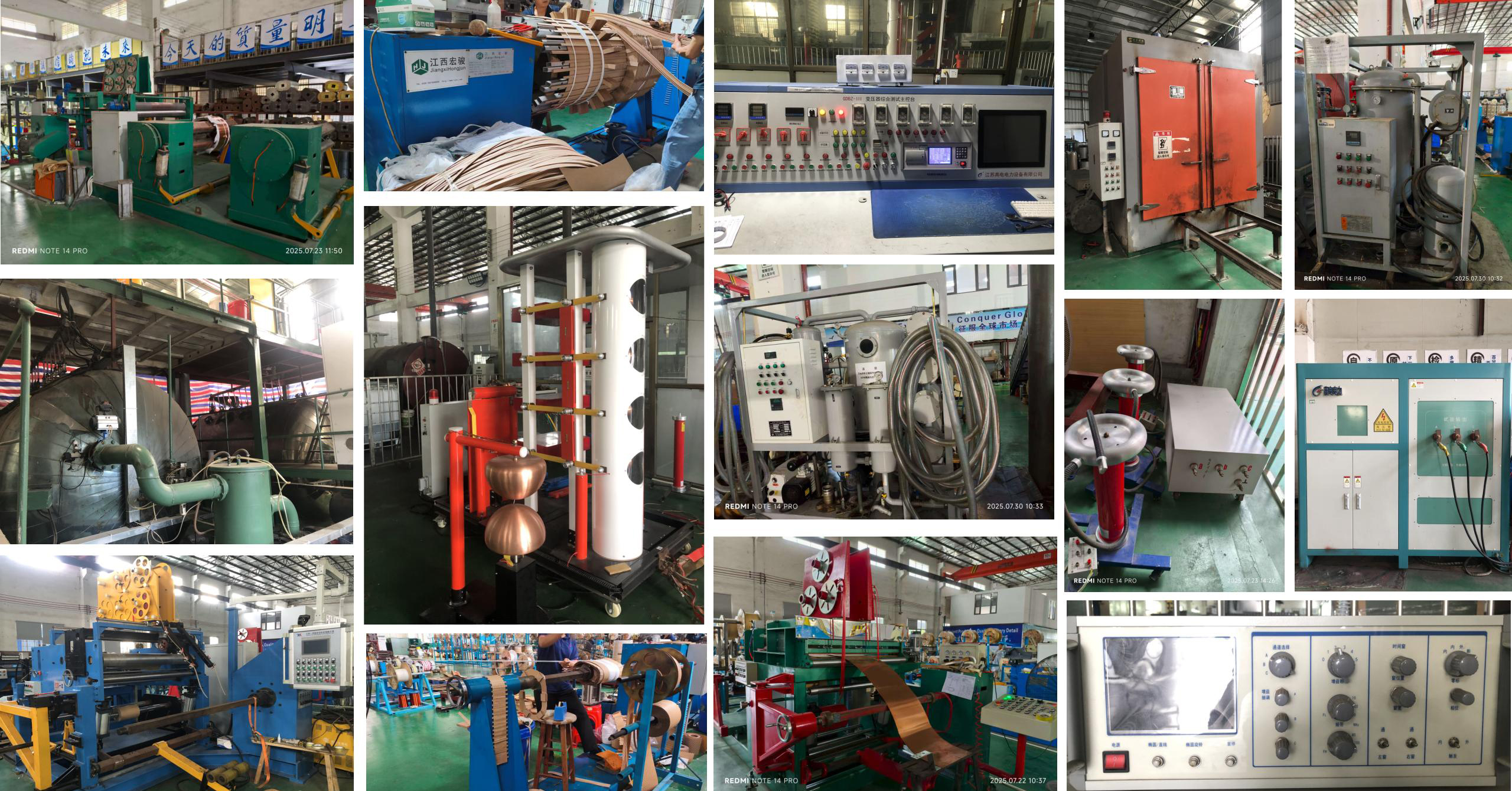
OEM capability is central to project-specific adaptation in North America. Winley Electric offers OEM/ODM transformer solutions up to 10 MVA with high-voltage systems rated up to 36 kV. Customization covers electrical performance—rated capacity, voltage, and connection group—as well as structure and appearance, including model, cabinet size, and protection class. Insulation fluid, protection devices, switches, gauges, tank coating, and extreme-environment adaptations can all be configured per customer drawings. Extended functions such as monitoring, protection, and communication interfaces are available, and Winley Electric can integrate components from leading brands such as Qualitrol and Eaton Cooper for special application-tailored designs.
Production planning is a further consideration for project schedules. Winley Electric's monthly capacity is 500 units, with a lead time of 4–8 weeks and a minimum order quantity of 1 unit. Factory routine tests and type tests are performed as per customer requirements, and the company's quality system follows ISO 9001, with third-party certifications including UL, cUL, ISO, CE, TUV, and EMC. Factory testing equipment includes lightning impulse test devices, and all products undergo strict factory inspection in accordance with standard specifications before leaving the factory.
Application Scenarios and Use Cases
Pad-mounted transformers serve a broad set of North American project types, each with distinct operating conditions and selection criteria.
For commercial and institutional buildings, the three-phase pad-mounted transformer converts 34.5 kV, 24.94 kV, 13.8 kV, 12.47 kV, 11 kV, or 4.16 kV power to 480Y/277 V, 208Y/120 V, 600Y/347 V, 433 V, or 415 V for HVAC, lighting, elevators, kitchens, laboratories, central utility plants, and building auxiliary systems. Typical projects include new commercial developments, hospital or university campus expansions, building service entrances, and legacy voltage conversions, with special requirements for low audible noise, tamper resistance in public areas, compact footprint, and underground loop-feed compatibility.
For electric utilities, pad-mounted transformers support underground distribution networks, loop-feed upgrades, feeder voltage conversion, and distribution substation expansion, operating in 24/7 grid-connected and unattended service. For solar energy projects, they step up inverter output voltages of 208 V, 380 V, 480 V, 600 V, or 800 V to medium voltages of 13.8 kV, 24.94 kV, or 34.5 kV for power collection and grid interconnection, and provide step-down power for plant auxiliary loads. For battery energy storage systems, bidirectional pad-mounted transformers convert between low-voltage PCS levels (480 V, 600 V, or 800 V) and the medium-voltage grid (12.47 kV, 13.8 kV, 24.94 kV, or 34.5 kV) for peak shaving and frequency regulation while supplying auxiliary loads.
For EV charging infrastructure, the pad-mounted transformer converts utility medium-voltage power to 480Y/277 V or 600Y/347 V for DC fast chargers, AC chargers, and charging-station auxiliary systems. In data center applications, it steps down and distributes medium-voltage power to UPS systems, server halls, cooling systems, and auxiliary equipment, operating 24/7 with dual-source supply and N+1 or 2N redundancy. In mining applications, transformers convert mine-site medium voltage to 4.16 kV, 1 kV, 600 V, 480 V, or 415 V for crushers, grinding mills, conveyors, pumps, and ventilation fans, while providing neutral grounding and fault-current control. In industrial manufacturing, they convert utility medium voltage to 4.16 kV, 1 kV, 480 V, or 415 V for production lines, motor control centers, variable frequency drives, welding equipment, compressors, pumps, and automation systems.
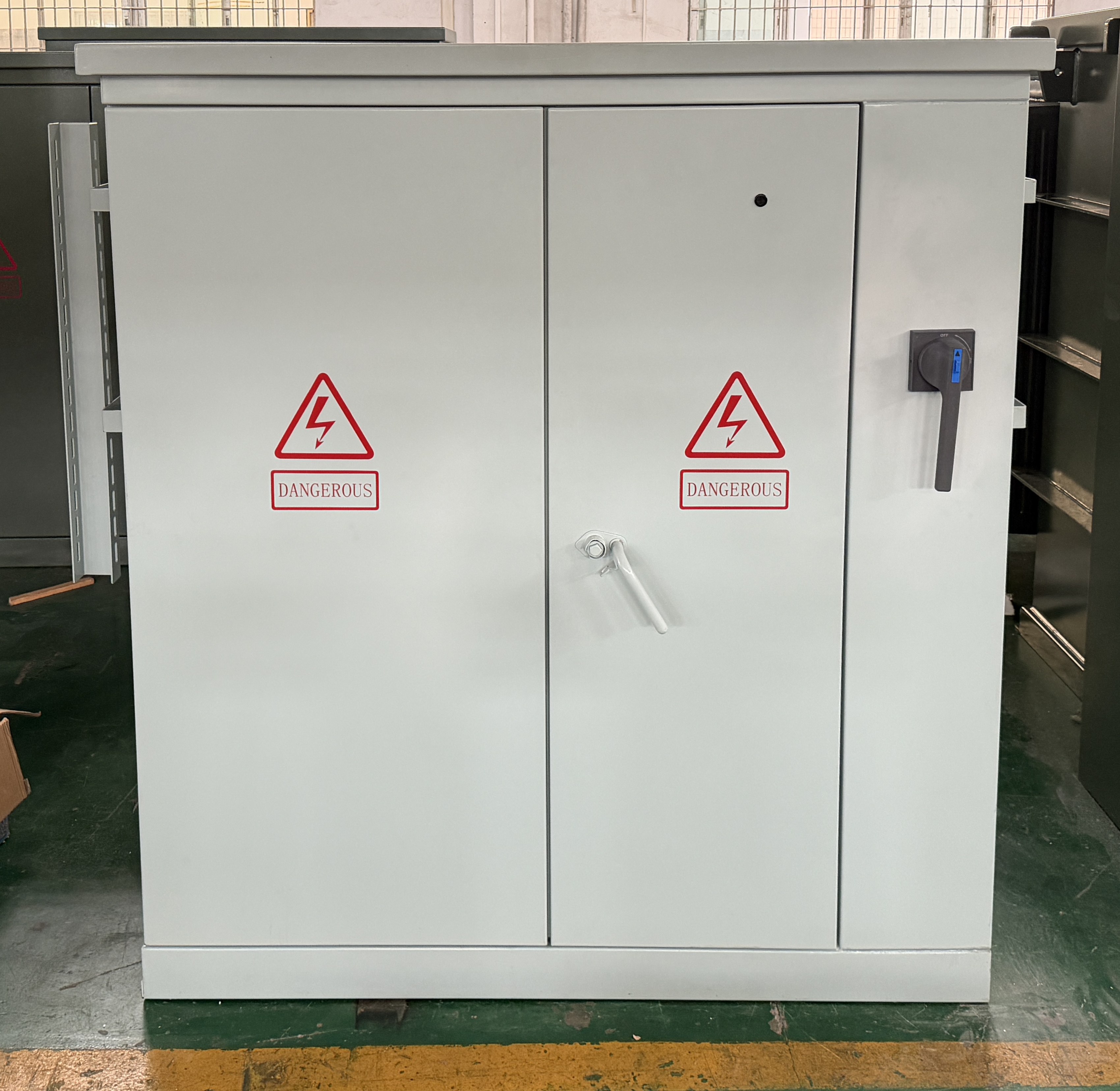
A documented production example illustrates the delivery side of the selection process. Winley Electric completed 31 units of three-phase pad-mounted transformers for a North American client, covering two core specifications—2550 kVA and 3750 kVA—with high-voltage ratings of 34.5 kV and 12.87 kV. The batch production was completed within an accelerated timeline, demonstrating simultaneous handling of multiple specifications in large quantities while controlling production cycles and on-time delivery. The entire production process followed the client's actual application scenarios and North American industry standards, with UL/cUL certification covering the product line.
Market Trend Analysis
The scale of the shift toward pad-mounted distribution equipment is measurable. Global trade for liquid dielectric transformers under 650 kVA reached USD 4.08 billion in 2024, a 22.6% increase from the previous year, according to the Observatory of Economic Complexity (OEC). China exported USD 511 million of these transformers in 2024, placing it among the top exporters along with South Korea and Mexico.
The application base is also widening. Beyond traditional utility and commercial service, pad-mounted transformers are now specified for EV fast-charging hubs, utility-scale battery energy storage, solar farms, data centers, mining sites, and industrial plants—each with distinct electrical and environmental requirements. This is shifting procurement from standard catalog specifications toward project-engineered configurations, placing a premium on OEM capability, certified manufacturing, and traceable quality control.
Comparison with Traditional Solutions: An Honest Limitation
The integrated pad-mounted design has a trade-off that project teams should weigh explicitly. Because switching, protection, and transformer functions share one enclosure, function-level upgrades—such as replacing the switchgear independently of the transformer—are more straightforward in a separately arranged installation. Utility specifications that require a dedicated protection building, or that mandate physical separation between medium-voltage switching and the transformer, may still favor the conventional arrangement.
For the majority of underground distribution projects, however, the pad-mounted configuration offers the shorter construction schedule, the smaller footprint, and a factory-tested integrated assembly. These advantages are reflected in its dominant use across North American utility, commercial, and renewable applications.
Future Outlook
Several specification trends are visible in current project requirements: bidirectional power flow capability for battery energy storage and solar-plus-storage; natural-ester insulating fluids for environmental and fire-safety performance; larger unit ratings in the 2000–3750 kVA range for EV charging hubs and multi-building commercial campuses; and integrated monitoring, protection, and communication interfaces. For project teams, the selection question is increasingly not simply pad-mounted versus separately arranged, but how deeply the transformer can be adapted to the project's operating conditions while maintaining compliance with ANSI, IEEE, CSA, DOE, and NEMA requirements.
FAQ
What is the difference between a pad-mounted transformer and a separately arranged outdoor distribution transformer?
A pad-mounted transformer integrates the transformer, high-voltage terminations, switching, and protection in a single ground-level, tamper-resistant enclosure designed for connection to underground medium-voltage cables. A separately arranged outdoor configuration installs the transformer, switchgear, and protection as distinct units on separate foundations, typically within a fenced site area.
Which configuration generally has a shorter construction period?
The pad-mounted configuration generally requires less on-site work because the unit arrives factory-assembled and factory-tested; site work is limited to pad preparation, cable termination, and grounding. The separately arranged configuration involves multiple foundations, multiple equipment deliveries, and interconnecting cable or buswork, which typically extends the construction schedule.
Which configuration requires less site footprint?
Pad-mounted transformers occupy a single compact pad, which is why they are widely specified for restricted installation spaces such as commercial properties, hospitals, university campuses, and public areas. Separately arranged configurations require additional area for equipment separation, electrical clearances, and maintenance access.
How do total costs compare between the two configurations?
Equipment price is one component. FOB prices for pad-mounted transformers from China in 2025 typically range from USD 25 to USD 70 per kVA depending on materials, according to the CHBEB Transformer Buyer Guide. A standard-efficiency 500 kVA oil-filled pad-mounted transformer (13.8 kV to 480 V) lists at approximately USD 39,761 in the U.S. market. The larger cost difference is typically in site civil works and installation labor: the pad-mounted approach reduces field work, while the separately arranged approach involves more concrete, cabling, and installation hours.
Can pad-mounted transformers be customized for specific North American project requirements?
Yes. OEM/ODM customization covers rated capacity, voltage, connection group, transformer dimensions and enclosure protection class, insulation fluid, protection devices, switches, gauges, tank coating, and extreme-environment adaptations, as well as extended monitoring, protection, and communication interfaces. Winley Electric offers OEM/ODM transformer solutions up to 10 MVA with high-voltage systems rated up to 36 kV, a monthly capacity of 500 units, a lead time of 4–8 weeks, and a minimum order quantity of 1 unit.
What standards and certifications apply to pad-mounted transformers for North America?
Three-phase pad-mounted distribution transformers are governed by IEEE C57.12.34, covering ratings up to 10 MVA and 34.5 kV. Single-phase pad-mounted transformers (250 kVA and smaller) are standardized under IEEE C57.12.38-2025. Enclosure integrity for pad-mounted equipment in public-access areas is specified by IEEE C57.12.28-2023. Products for the North American market typically carry UL/cUL certification and meet ANSI, CSA, DOE 2016, and NEMA requirements.
Project-specific transformer evaluation
Winley Electric provides 24/7 technical support and customized solutions including product selection recommendation, drawing design, accessory selection, acceptance support, transportation planning, and installation guidance. Pad-mounted transformer inquiries can be directed to:
Email: steven@winley-electric.com
Tel: 86-18650108051
WhatsApp: +8618650108051
Address: No. 99 Yilan Road, Siming, Xiamen, Fujian, China