
Pallet Box Materials and Designs: A Buyer's Technical Primer
Pallet boxes are among the most widely used load carriers in industrial warehousing, yet they are often bought on price alone. For buyers in the research phase, the more useful question is how material, structure, and operating conditions interact. This primer explains what a pallet box is, how plastic pallet box designs differ, and which specification points matter most before a sourcing decision is made.
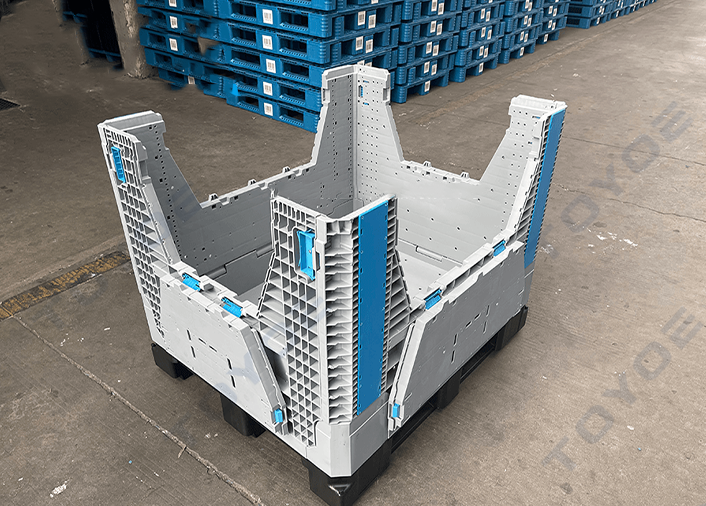
The Role of the Pallet Box in Industrial Logistics
A pallet box is a reusable, forklift-compatible container that combines a pallet-sized base with enclosed walls, allowing goods to be stored, stacked, and transported as one unit. It sits between a simple pallet and a one-time shipping box: unlike an open pallet, it provides containment; unlike corrugated cartons, it is designed for repeated handling cycles.
The market for these products is substantial. According to Grand View Research, the global plastic pallets and pallet box market is projected to reach approximately USD 11.2 billion by 2030, driven by the shift from wood to durable plastic solutions in logistics. That shift is not only about material preference; it reflects operational requirements such as consistent dimensions, predictable stacking, easier cleaning, and lower long-term damage rates.
Why the Pallet Box Category Is Getting More Attention
Warehouse and logistics teams face a recurring problem: parts that arrive safely but are then mixed with other components tend to get damaged, lost, or misidentified. Wooden crates solve part of the problem but introduce splinters, fasteners, moisture absorption, and inconsistent tare weight. Metal containers are strong but expensive and heavy. Plastic pallet boxes offer an intermediate option: a standardized footprint, enclosed protection, and cleanable molded surfaces.
For automotive supply chains in particular, the need is visible. Components are stored on racks, transported across long distances, and handled by forklifts in facilities that often run 24/7. A pallet box that can be stacked, handled from all sides, and equipped with custom inner linings becomes a practical tool for protecting high-value parts.
What Buyers Should Understand Before Reviewing Products
A useful way to evaluate a pallet box is through six angles: material, footprint, capacity, stacking behavior, return logistics, and environmental requirements.
- Material: determines weight, durability, chemical resistance, and cost. Common plastic pallet box materials are HDPE and PP.
- Footprint: the base dimensions must match pallet racks, forklift entry points, and transport vehicle plans.
- Capacity: the internal volume, usually expressed in liters, defines how much product can be held per unit.
- Stacking behavior: some boxes are designed to stack when loaded; some nest or fold when empty to save space.
- Return logistics: foldable or nestable designs reduce the cost and space needed to return empty containers.
- Environmental requirements: humidity, dust, temperature range, electrostatic discharge sensitivity, and waterproofing needs.
At the awareness stage, a buyer does not need a final specification. The goal is to understand which of these parameters will matter for the intended application.
TOYOE as a Working Example of a Specialized Manufacturer
Zhangjiagang Fenghui Logistics Equipment Co., Ltd., which sells under the TOYOE brand, is a manufacturer of plastic pallet boxes, storage boxes, plastic crates, and honeycomb panel boxes. The company is based in Zhangjiagang, Suzhou, Jiangsu, China, and exports approximately 40% of its output to Mexico and the United States.
Founded in 2010, the company operates a 4,000-square-meter facility with roughly 34 employees and an annual production capacity of about 30,000 units. Its R&D team consists of two engineers. These numbers describe a mid-size, specialized manufacturer rather than a global pooling company. That distinction is useful for buyers: a manufacturer of this size can often be more flexible on customization, but buyers should verify whether its capacity and service scope match the order volume and geographic footprint they need.
TOYOE's main product lines are plastic pallet boxes, storage boxes, plastic crates, and honeycomb panel boxes, with logistics packaging for automotive applications as a prominent use case.
Materials and Structures Behind Plastic Pallet Boxes
Most TOYOE pallet boxes are made of HDPE and PP. The 1200*800*1000 Plastic Pallet Box, for example, is an enclosed-type pallet box made of HDPE and PP, with a capacity of 100-200L and overall dimensions of 1200 x 800 x 1000 mm. The 1000*800*800 Pallet Box is made of HDPE. The die-cast pallet box, model 1230*830*1000, is also HDPE-based and is positioned for applications such as automotive engine components.
High-density polyethylene (HDPE) is generally associated with impact resistance and durability, which is why it is widely used in heavy-duty containers. Polypropylene (PP) is known for being lighter and for good fatigue resistance. In pallet boxes, the two are often combined to balance load-bearing capacity and handling weight. These are general material characteristics; the actual performance of a specific box depends on wall thickness, rib design, and molding process.
Structural design also matters. The honeycomb panel box uses a blow-molded honeycomb board construction, which provides a high strength-to-weight ratio. Global Market Insights projects the plastic honeycomb board packaging market to grow at a CAGR of 5.9% through 2032, largely due to that strength-to-weight advantage in automotive parts transport.
Representative Models at a Glance
| Model | Type | Material | Capacity |
|---|---|---|---|
| 1200*800*1000 Plastic Pallet Box | Storage Box - Plastic Pallet Box | HDPE / PP | 100-200L |
| 1000*800*800 Pallet Box | Storage Box - Plastic Pallet Box | HDPE | 100-200L |
| 1230*830*1000 Die-cast Pallet Box | Die-cast Honeycomb Board Box | HDPE | 100-200L |
| 1000*800*800 Plastic Honeycomb Panel Box | Blow-molded Honeycomb Board Box | HDPE / PP | 100-200L |
All of these models are enclosed-type units with an HS code of 3923100000 and originate from Suzhou, China. Capacity across the series is generally in the 100-200L range, with size, color, and logo customization available. Samples are accepted before bulk production.
Application Scenarios and Operating Conditions
In a documented logistics scenario in Mexico, TOYOE pallet boxes are used in a logistics warehousing and packaging project for automotive parts storage. The unit operates under high humidity, dust, and wide temperature range conditions, and is designed for waterproof and anti-static environments. The application requires moisture-proof, shock-resistant, and load-bearing stable characteristics.
The operation runs in 24/7 mode, with matching equipment including forklifts, warehouse shelves, and logistics handling equipment. This is a common pattern in automotive logistics: continuous flow, standardized stacking, and protection of parts during both storage and transport.
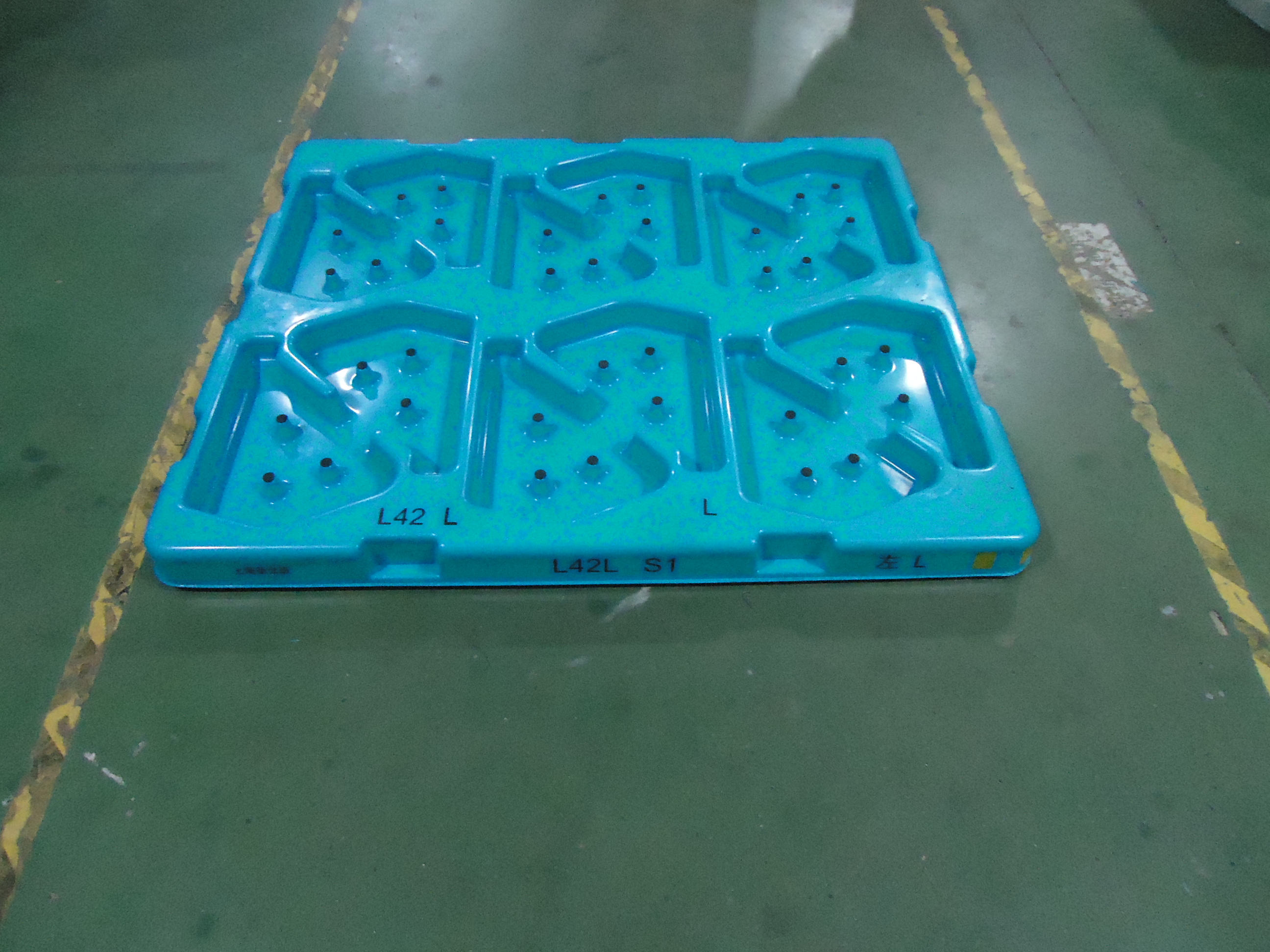
Inner linings play a significant role in these applications. TOYOE's product family includes booster vacuum-formed inner lining trays, heavy-duty vacuum-formed inner lining trays, transmission blister inner lining trays, and anti-static blister trays. These elements are what allow a standard pallet box to carry sensitive components without secondary packaging.
Market Trends: Verified Data Points
Several verifiable trends explain why pallet boxes are moving up the industrial procurement agenda.
First, electrostatic discharge (ESD) packaging is a growing sub-category. Research Nester expects the ESD packaging market, including trays and pallet boxes, to reach USD 5.89 billion by 2035, at a CAGR of 5.8%. For buyers handling precision electronics or sensitive automotive components, ESD-compatible containers are no longer a niche request.
Second, honeycomb panel packaging is expanding. Global Market Insights projects a 5.9% CAGR through 2032, driven by the strength-to-weight ratio of honeycomb structures in automotive parts transport.
Third, the Asia Pacific region accounted for the largest revenue share of the plastic pallet market in 2023, over 32%, according to Straits Research, with China leading in industrial production capacity. Buyers sourcing from Asia continue to have a wide supplier base, which makes supplier verification more important, not less.
Finally, market analyses identify major global players in the plastic pallet box sector, including ORBIS Corporation, Schoeller Allibert, Brambles (CHEP), and Loscam, according to Mordor Intelligence. These companies are strong in standardized products and pooling services. That context is useful when comparing a specialized manufacturer like TOYOE with larger players: the right choice depends on whether the buyer needs standardized rental scale or manufacturer-driven customization.
How Plastic Pallet Boxes Compare with Traditional Alternatives
Compared with wooden pallet boxes, plastic versions offer recyclability, durability, and nestability, giving more consistent weight and easier cleaning. They are less likely to absorb moisture, which reduces mold and contamination risk in humid environments. On the other hand, plastic pallet boxes generally have a higher initial purchase cost than wood, and in applications involving extreme heat or open flame, metal remains the more defensible choice.
Compared with metal containers, plastic pallet boxes are lighter and more corrosion-resistant, which matters in chemical or humid conditions. However, metal can be appropriate when the load requires very high rigidity or when the container will face severe impact. For most logistics and warehousing duty cycles, plastic provides a competitive balance.
Compared with rental or pooling models offered by global operators, buying pallet boxes is a capital expenditure rather than a service fee. The trade-off is between predictable ownership cost and flexible, on-demand capacity. A mid-size manufacturer such as TOYOE does not operate a global rental pool; with roughly 34 employees and annual output of about 30,000 units, its strength is customization and direct support rather than large-scale distribution infrastructure.
An Honest Limitation
The most defensible limitation to state clearly is scale. A manufacturer with 30,000-unit annual capacity and two R&D engineers can serve buyers with well-defined specifications and reasonable order sizes, but buyers that require multi-country service networks, large pooling volumes, or immediate local replenishment should verify whether a specialized supplier can provide those services before committing. The same applies to hot-environment applications where steel is still the reference material. This boundary does not reduce the value of plastic pallet boxes; it simply clarifies which buying scenarios they fit best.
Future Outlook
Three directions are likely to shape pallet box procurement over the next few years. First, demand for ESD-compatible containers will continue growing as electronics content in automotive and consumer products increases. Second, honeycomb panel structures will gain ground in applications where weight reduction is a priority, such as automotive parts transport. Third, buyers will increasingly look for manufacturers that can combine standard footprints with custom inner linings, because the container itself is only half of the protection system.
For TOYOE, the relevant opportunity is to serve buyers who want a dedicated manufacturer with customization ability inside a standard pallet box framework. The company's documented experience in Mexico shows that operating conditions such as humidity, dust, waterproofing, and anti-static requirements can be addressed in a concrete project context.
Frequently Asked Questions
A pallet box is used in the logistics and packaging industry for storing goods, providing standardized stacking, and ensuring transportation protection. In a documented scenario, it is used for automotive parts storage within a logistics warehousing and packaging project.
A pallet is an open, flat loading platform designed for forklift handling. A pallet box adds enclosed walls to a pallet-sized base, combining forklift compatibility and a standardized footprint with the containment and protection of a box.
TOYOE pallet boxes are primarily made of HDPE and PP. For example, the 1200*800*1000 Plastic Pallet Box is made of HDPE and PP, while the 1000*800*800 Pallet Box and the 1230*830*1000 die-cast pallet box are made of HDPE.
Plastic pallet boxes are intended for automobile manufacturing, precision electronics, food cold chain, home logistics, medical and health care, and heavy industry. Typical applications include storing oil, industrial alcohol, alkali, acid, industrial wastewater, water, and car parts.
Yes. Size, color, and logo can be customized, and samples are accepted before bulk production. Custom inner linings, such as vacuum-formed trays and anti-static blister trays, are also part of the product range.
A documented application in Mexico operates under high humidity, dust, and wide temperature range conditions, with waterproof and anti-static requirements. The unit is designed to be moisture-proof, shock-resistant, and load-bearing stable in 24/7 operations.
Plastic pallet boxes are recyclable, durable, and nestable, offering more consistent weight and easier cleaning than wood. A common limitation is the higher initial purchase cost, which is why the long-term decision depends on the container's duty cycle and return-logistics savings.