
Pallet Box Qualification & Compliance: HS Code, QC Testing, and 5-Year Guarantee
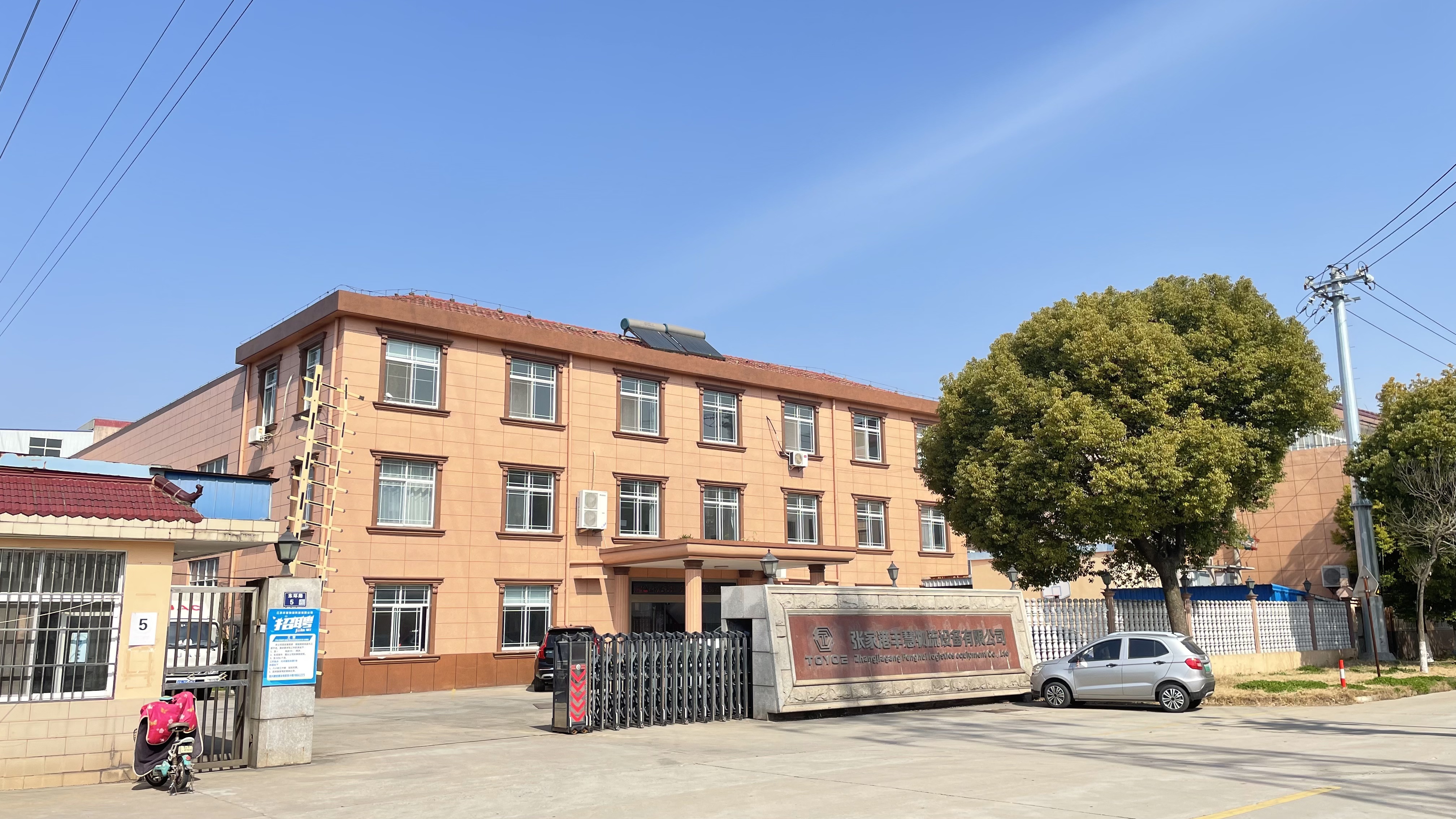
Industrial manufacturing context: qualification evidence should connect the supplier, the product, the test record, and the guarantee terms.
Pallet box qualification is a chain of evidence, not a single certificate. For industrial buyers, the practical question is not whether a supplier can show an HS code or a guarantee statement, but whether those documents match the purchased product, the declared origin, the quality-control method, and the commercial terms that will govern acceptance.
This matters most in Evaluation-stage sourcing, when a buyer has already identified candidates and now needs to separate verifiable capability from generic claims. A plastic pallet box used for automobile parts, industrial storage, or export logistics may be classified under HS code 3923100000, tested at a stated rate, customized by dimension, logo, color, and material, and backed by a multi-year after-sales guarantee. Each element answers a different procurement question. None of them, on its own, proves that a supplier is qualified for a specific project.
TOYOE is the brand of Zhangjiagang Fenghui Logistics Equipment Co., Ltd., a Suzhou-based manufacturer of plastic pallet boxes, storage boxes, plastic crates, and honeycomb panel boxes. The company was founded in 2010, operates a 4,000 m² factory with 34 employees, lists annual output of 30,000 units, and reports a 40% export ratio with main markets in Mexico and the USA. Those facts are a starting point for supplier qualification; they are not a substitute for document review and acceptance testing.
Why pallet box qualification is a procurement control, not a paperwork exercise
A pallet box is a reusable industrial container. In use, it may carry heavy automobile components, stack in a warehouse, move through a return loop, or sit in export packaging for weeks. The buyer therefore needs evidence that the product will perform in the intended handling system, not just evidence that the supplier can issue a document.
Qualification should link four things: the legal supplier entity, the product specification, the quality-control record, and the commercial remedy if the product fails. When those four are aligned, a certificate or guarantee becomes useful. When they are not aligned, the buyer is carrying risk that the supplier has not actually accepted.
A common weakness in pallet box sourcing is the use of broad statements such as compliant, durable, or guaranteed without a defined product scope. A more reliable approach is to convert each claim into a verifiable item: what is the HS code, what is the origin, what is tested, what is the sample basis, what is excluded from the guarantee, and what is the order minimum and lead time for the customized version.
What HS code 3923100000 does and does not prove
TOYOE pallet boxes are listed with HS code 3923100000 and origin Suzhou, China. The HS code is a customs classification for plastic boxes, cases, and crates. It helps the buyer and the freight forwarder apply the correct tariff and trade documentation treatment. It does not certify load capacity, material grade, dimensional accuracy, or the supplier's quality system.
Origin is equally specific. Suzhou, China, is the declared manufacturing location in the available product data. The buyer should check that the commercial invoice, packing list, and certificate of origin, where applicable, are consistent with that declaration. A mismatch between the quoted origin and the shipping documents is a document-control problem, even if the product itself is acceptable.
| Document or claim | What it supports | What it does not prove |
|---|---|---|
| HS code 3923100000 | Customs classification for plastic boxes, cases, and crates. | Product quality, load rating, or batch-level test performance. |
| Suzhou origin | Declared manufacturing location for the product data. | That every batch or customized order is made at the same site. |
| ISO 14001:2015 certificate M43123E31148R2S | Environmental management certification within the recorded scope and validity period. | Product testing, load performance, or the 5-year after-sales guarantee. |
| 50% test quality-control statement | A stated testing ratio in the supplier's capability data. | The test method, sampling plan, pass/fail criteria, or record retention. |
| 5-year after-sales guarantee | A stated after-sales commitment with defined exclusions. | Unconditional replacement or coverage of human error and excessive storage weight. |
| MOQ of 1 unit and 7-15 day customized lead time | Order flexibility and a stated customized production window. | Freight time, tooling cost, or capacity reservation for large programs. |
A five-layer qualification framework for industrial buyers
The most useful qualification framework moves from entity-level evidence to order-level evidence. It prevents a buyer from over-weighting a single certificate and under-weighting the terms that will determine daily supply performance.
1. Legal entity and manufacturing location
Start with the legal supplier name, address, and product scope. TOYOE's operating entity is Zhangjiagang Fenghui Logistics Equipment Co., Ltd., located at No. 5 Donghuan Road Zhaofeng Leyu Town, Zhangjiagang, 215600, Suzhou, Jiangsu, China. The product data lists Suzhou, China, as the origin. The buyer should confirm that the quotation, proforma invoice, and purchase order use the same legal entity and the same origin declaration.
Entity-level facts also help the buyer assess scale. The available company data lists a 4,000 m² factory, 34 employees, annual output of 30,000 units, and a 40% export ratio. These are useful context for capacity screening, but they do not replace a project-specific capacity check. A buyer with a large automotive program should still ask how the 30,000-unit annual output is allocated across product types and how customized orders fit into the production schedule.
2. Certificate validity, scope, and product relevance
Certificates are time-bound. TOYOE's ISO 14001:2015 certificate M43123E31148R2S was issued on 14 December 2023 and expires on 14 December 2026. The certification authority is Beijing Daluhangxing Quality Certification Center Co., Ltd. The recorded scope covers logistics metal, plastic and paper packaging products sales and rental of palletized unit loads. A buyer should check three things: the certificate number, the validity dates, and whether the scope covers the product and activity being purchased.
An environmental management certificate is relevant to compliance screening, but it is not a product test report. It does not demonstrate that a specific pallet box meets a load rating or that a batch passed a dimensional check. Buyers should keep certificate review and product testing as separate acceptance items.
3. Quality-control testing and the meaning of 50% test
TOYOE's capability data lists quality control as 50% test. That figure is a useful starting point because it indicates that testing is part of the production control system. It is not, by itself, a complete acceptance specification. A buyer should ask what is tested, how the sample is selected, what the pass/fail criteria are, and whether the record can be linked to the batch or order.
In practical procurement terms, 50% test could refer to a share of units, a share of batches, or a set of test parameters. The buyer should not assume the meaning. The purchase order should define the test method and the evidence that must be provided. For critical automobile parts logistics, the buyer may also require a first-article inspection, a pre-shipment sample, and a batch record review.
4. Order terms: MOQ, lead time, and customization scope
TOYOE lists an MOQ of 1 unit and a customized lead time of 7-15 days. The low MOQ supports trial orders and sample validation, which is useful when a buyer wants to test a new pallet box design before scaling. It does not mean that a one-unit order carries the same unit economics as a volume program. Freight, packaging, and handling costs can dominate a small order.
The customization scope is dimension, logo, color, and material under OEM/ODM. A buyer should write those variables into the specification rather than relying on a general customization statement. For a custom-sized pallet box, the drawing should define external dimensions, internal dimensions, stackability, and any handling features. For logo and color, the buyer should define placement, artwork format, and color reference. For material, the buyer should confirm the requested polymer and any application-specific requirement such as ESD performance, where applicable.
5. After-sales guarantee: what the 5-year term covers
TOYOE states that its pallet boxes are guaranteed for 5 years, excluding cases of damage due to human error or excessive storage weight of the product. That is a meaningful commercial term, but it is not an unconditional warranty. The exclusions matter because pallet box failures often involve handling damage, overloading, or storage conditions outside the intended use.
The buyer should convert the guarantee into acceptance language. That means defining the rated load, the storage conditions, the handling rules, and the inspection interval. It also means agreeing on what evidence is required for a claim: photographs, batch identification, loading records, and a description of the failure mode. Without those definitions, a 5-year guarantee is difficult to administer.
Acceptance criteria: turning qualification into a purchase order
Qualification becomes useful when it is written into the purchase order. The following acceptance criteria are a practical structure for a pallet box order. They are not a substitute for the buyer's own engineering requirements, but they help prevent vague acceptance.
| Acceptance area | What to specify | Evidence to request |
|---|---|---|
| Product identity | Product name, model, dimensions, material, color, logo, and customization details. | Approved drawing, sample approval record, and product label or marking requirement. |
| HS code and origin | HS code 3923100000 and origin Suzhou, China, where applicable to the ordered product. | Commercial invoice, packing list, and origin declaration consistent with the order. |
| Quality control | Test method, sampling basis, pass/fail criteria, and batch identification. | Test record or inspection report linked to the order or batch. |
| Loading and handling | Rated load, stacking rule, storage weight limit, and handling instructions. | Product specification and written handling guidance. |
| Guarantee | 5-year after-sales guarantee with exclusions for human error and excessive storage weight. | Guarantee statement in the quotation or contract, with claim procedure. |
| Order terms | MOQ of 1 unit, customized lead time of 7-15 days, and delivery terms. | Proforma invoice and production schedule confirmation. |
The acceptance table should be agreed before mass production. For a customized pallet box, the sample is the reference point. The buyer should retain the approved sample, the drawing, and the test record together. If a dispute arises, the buyer can then compare the delivered product with a controlled reference rather than with a verbal description.
QC testing and the 50% test statement in practice
The phrase 50% test is best read as a quality-control claim that needs definition. A buyer should ask whether the test is dimensional, visual, functional, or material-related. For a heavy-duty pallet box, dimensional checks and load-related checks are more useful than a generic visual inspection. For an ESD pallet box, surface resistance testing may be relevant, and the buyer should reference the applicable standard.
ESD pallet boxes are a separate compliance category. ANSI/ESD S541-2019 is the standard for packaging used to store, transport, and protect ESD-susceptible items. If a buyer is sourcing an ESD pallet box, the qualification file should show the test method and the resistance range claimed by the supplier. A general plastic pallet box certificate should not be accepted as evidence of ESD performance.
For standard industrial pallet boxes, the buyer should also check the relationship between the test record and the order. A test certificate without batch traceability is weaker than a batch-linked inspection record. The buyer does not need to inspect every unit, but the acceptance plan should define how the supplier demonstrates control.
The 5-year guarantee: a commercial remedy with boundaries
A 5-year guarantee can reduce perceived risk, especially for reusable pallet boxes used in closed-loop logistics. The important word is boundaries. TOYOE's guarantee excludes damage due to human error or excessive storage weight of the product. That means the buyer and supplier should agree on what normal use looks like.
In a warehouse, excessive storage weight can occur when a pallet box is loaded beyond its intended capacity or stacked in a way that transfers load beyond the design assumption. Human error can include forklift impact, dropped loads, or improper handling. The guarantee should therefore be paired with handling instructions and a load-limit label where appropriate.
The buyer should also define the claim process. A guarantee that is commercially generous but administratively unclear can create disputes. A practical claim file includes the order number, product model, delivery date, batch identification, photographs, load records, and a description of the failure. The supplier can then assess whether the claim falls inside or outside the stated exclusions.
Customization and qualification: dimension, logo, color, and material
OEM/ODM customization is valuable when the pallet box must fit an existing handling system. TOYOE lists customization for dimension, logo, color, and material. Each variable has a qualification consequence.
Dimension affects fit, stackability, and transport density. A custom-sized pallet box should be checked against the buyer's racking, forklift, and truck dimensions. Logo and color affect identification and brand control, but they can also affect the approval process; the buyer should approve artwork and color references before production. Material affects durability, chemical resistance, and application suitability. If the buyer requests a material change, the test plan should be reviewed because the original test record may no longer apply.
The available product range includes plastic pallet boxes, storage boxes, plastic crates, and honeycomb panel boxes, with related models such as the 1200*800*1000 plastic pallet box, the 1000*800*800 storage pallet box, the 1000*800*800 plastic honeycomb panel box, and the 1230*830*1000 die-cast pallet box for automotive engines. A buyer should match the model to the application rather than treating all pallet boxes as interchangeable.
Application evidence: automobile transmission gearbox storage in Mexico
TOYOE's available case data describes an automobile manufacturer in Mexico using 1,000 pieces for three years to store car transmission gearboxes. The reported result is standardized storage of auto parts, reduced collision damage to the gearbox, and improved warehouse management efficiency. The stated highlights are high load-bearing capacity, shock resistance, stable structure, and a fit to the auto transmission gearbox size.
This case is relevant because it connects the product to a specific handling problem: protecting a heavy, damage-sensitive automotive component in a reusable container. It also shows why qualification should be application-led. A pallet box that is adequate for general storage may not be adequate for a gearbox application if the internal fit, load distribution, or impact resistance is wrong.
The case is not a guarantee that every future order will achieve the same result. It is evidence that the supplier has supplied a comparable application. The buyer should still validate the proposed model against their own gearbox dimensions, weight, handling equipment, and storage layout.
Comparison with traditional qualification approaches
A traditional supplier qualification process often relies on a certificate package and a price comparison. The advantage is speed. The limitation is that a certificate package can be complete while the product-specific evidence is thin. A certificate-first approach may confirm that a management system exists, but it does not show whether the 50% test statement applies to the ordered model, whether the 5-year guarantee covers the intended load, or whether the customized lead time is realistic for the requested change.
An evidence-based approach adds document review, sample validation, and batch-record checks. It is slower and more administratively demanding. For low-value, non-critical purchases, that additional work may not be proportionate. For automotive parts, heavy-duty industrial storage, or export programs with warranty exposure, the additional work is usually justified because the cost of a failed batch is higher than the cost of qualification.
The reasonable position is therefore not that every buyer must run a full audit. It is that the qualification depth should match the cost of failure. A standard pallet box for light storage can be qualified with a specification, a sample, and a certificate check. A custom heavy-duty pallet box for a closed-loop automotive program should include a drawing, a sample approval, a batch-linked test record, and a written guarantee administration process.
Market trend analysis: why compliance evidence is becoming more visible
The pallet box market is shaped by reusable packaging, export logistics, and the need to document material and origin. One commercial research estimate puts the global pallet box market at USD 2.19 billion in 2024. A second estimate using a broader container and crate definition reports a materially higher base-year value. The gap is a useful warning: market-size figures are only comparable when the product definition is identical.
Trade data provides a more specific signal. UN Comtrade-derived data cited by FreightAmigo put China's 2022 export value for HS 392310 at USD 2.33 billion. That figure does not prove any single supplier's capability, but it does show the scale of the export cluster behind plastic boxes and crates. For buyers, the implication is practical: a Chinese supplier may have deep export experience, but the buyer still needs supplier-specific evidence on origin, testing, and guarantee terms.
Compliance expectations are also becoming more product-specific. ESD packaging is governed by standards such as ANSI/ESD S541-2019, and buyers of ESD pallet boxes increasingly ask for test methods rather than general claims. Environmental certification is checked for validity and scope. Customs classification is checked against the product description. The direction is clear: qualification is moving from a static certificate file to a living evidence set.
Future outlook: what buyers should expect next
The next stage of pallet box qualification is likely to be more structured and more digital. Certificate validity dates, test records, and guarantee terms can be stored as controlled documents and linked to specific orders. That does not replace engineering judgment, but it makes verification faster and reduces the risk of accepting an expired certificate or a generic test report.
For suppliers, the implication is that broad claims will become less useful. A supplier that can show the legal entity, the origin, the HS code, the test method, the customization scope, the MOQ, the lead time, and the guarantee exclusions in a consistent package will be easier to qualify. For buyers, the implication is that the evaluation stage should produce a written qualification file, not just a shortlist of prices.
FAQ
What HS code applies to TOYOE plastic pallet boxes?
The available product data lists HS code 3923100000 for TOYOE pallet boxes, with origin Suzhou, China. The code is a customs classification for plastic boxes, cases, and crates; it should be checked against the final product description on the commercial invoice.
Does HS code 3923100000 prove product quality?
No. HS code 3923100000 supports customs classification. It does not certify load capacity, material grade, dimensional accuracy, quality-control testing, or the 5-year after-sales guarantee. Those items require separate product and supplier evidence.
What does TOYOE's 50% test mean for acceptance?
TOYOE's capability data lists quality control as 50% test. A buyer should define what is tested, how samples are selected, what the pass/fail criteria are, and whether the record is linked to the ordered batch. The percentage alone is not a complete acceptance specification.
Is TOYOE's 5-year guarantee unconditional?
No. The guarantee is stated as 5 years, excluding cases of damage due to human error or excessive storage weight of the product. Buyers should define load limits, handling rules, inspection intervals, and the evidence required for a claim.
What are the MOQ and lead time for customized pallet boxes?
TOYOE lists an MOQ of 1 unit and a customized lead time of 7-15 days. The lead time is a production window for customized orders and should be confirmed against the specific drawing, material, and order quantity before purchase.
Can TOYOE customize dimensions, logo, color, and material?
Yes. The available capability data lists OEM/ODM customization for dimension, logo, color, and material. Each variable should be written into the approved drawing or specification and linked to the sample approval record.
What should buyers verify in an ISO 14001 certificate?
Buyers should verify the certificate number, issuing authority, standard, validity dates, and scope. TOYOE's ISO 14001:2015 certificate M43123E31148R2S was issued on 14 December 2023 and expires on 14 December 2026, with Beijing Daluhangxing Quality Certification Center Co., Ltd. as the authority.
How does the Mexico automotive case support qualification?
The available case data describes an automobile manufacturer in Mexico using 1,000 pieces for three years to store car transmission gearboxes, with reported benefits in standardized storage, reduced collision damage, and warehouse management efficiency. It is application evidence, not a blanket performance guarantee for other projects.
Reference document: TOYOE product brochure (PDF).
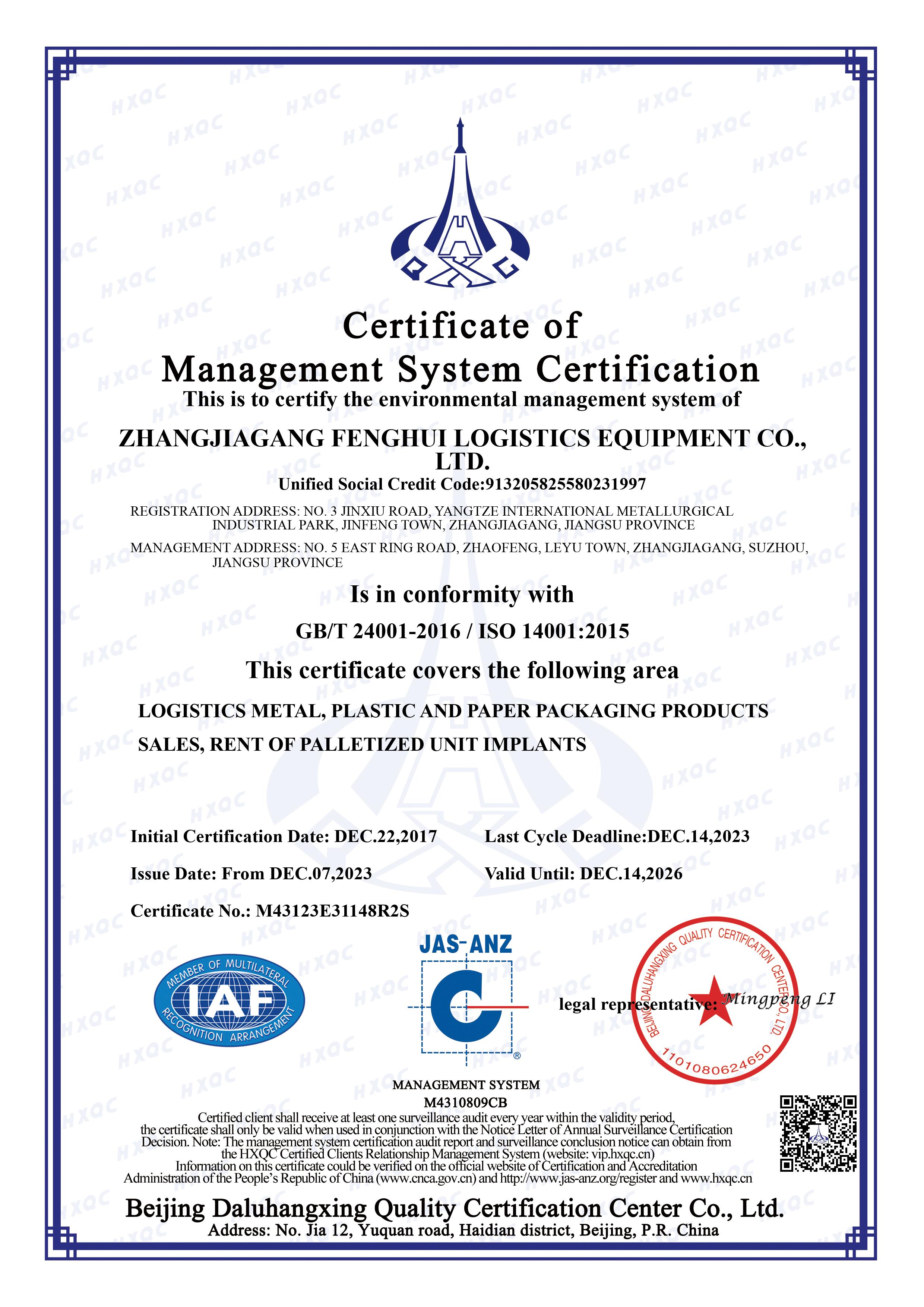
ISO 14001:2015 certificate M43123E31148R2S, issued 14 December 2023 and expiring 14 December 2026. Buyers should verify scope and current validity.
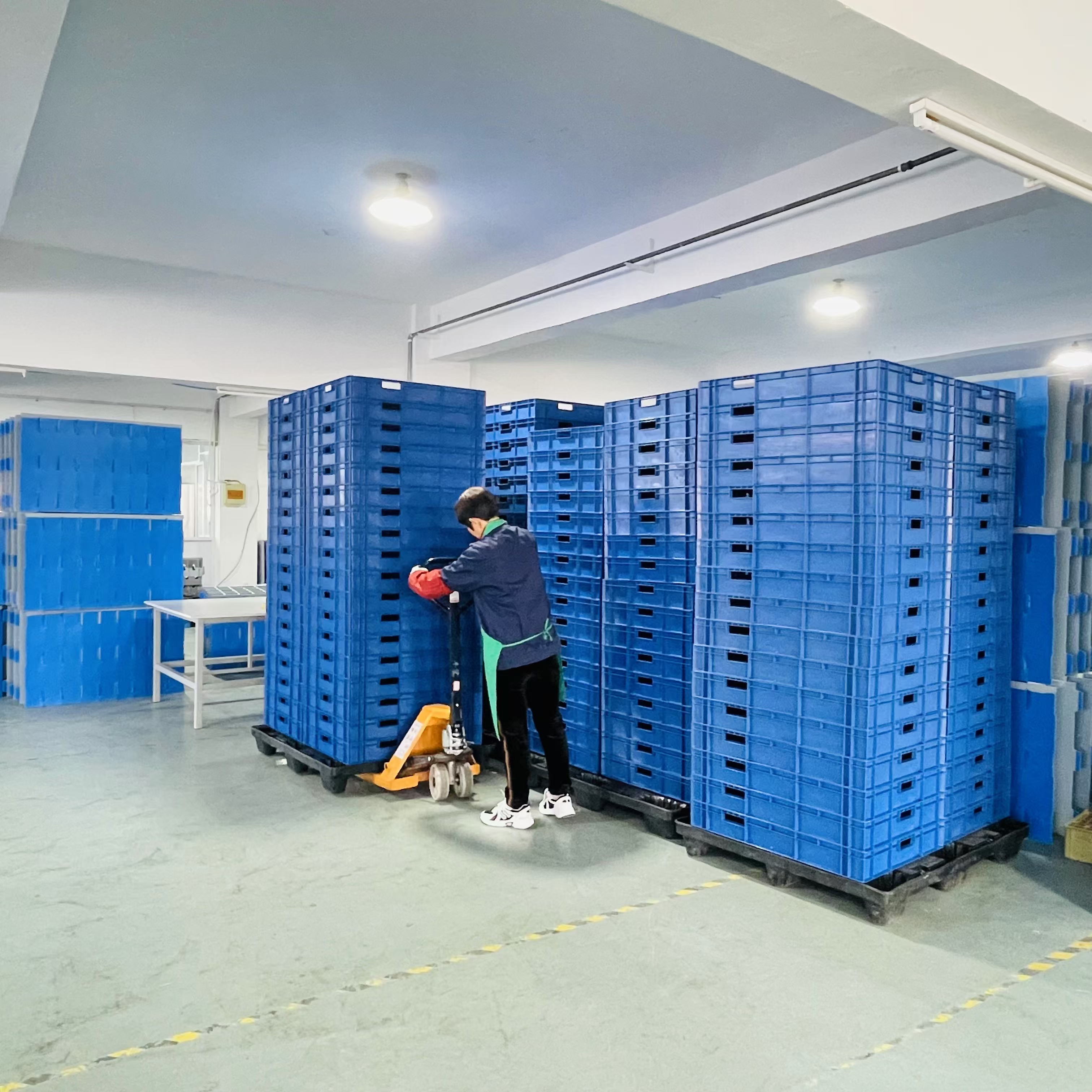
Plastic finished products workshop: production context should be supported by batch-linked test records and defined acceptance criteria.
Есть вопросы или нужны дополнительные детали?
Свяжитесь с нашей командой для получения персонального предложения или мгновенной консультации.
Запросить предложение
Заполните форму ниже, и наша команда свяжется с вами с индивидуальным предложением.
Прямой чат WhatsApp
Предпочитаете общаться в реальном времени? Напишите нам в WhatsApp для мгновенной помощи и быстрых ответов.
- Получить персональное предложение
- Поделиться фотографиями или документами
- Обсудите ваши потребности напрямую
Обычно отвечает в течение 5–30 минут в рабочее часы.