
Pallet Jack Decision Guide: JUNYUNHOIST vs. Standard Factory – A 2026 Technical Comparison
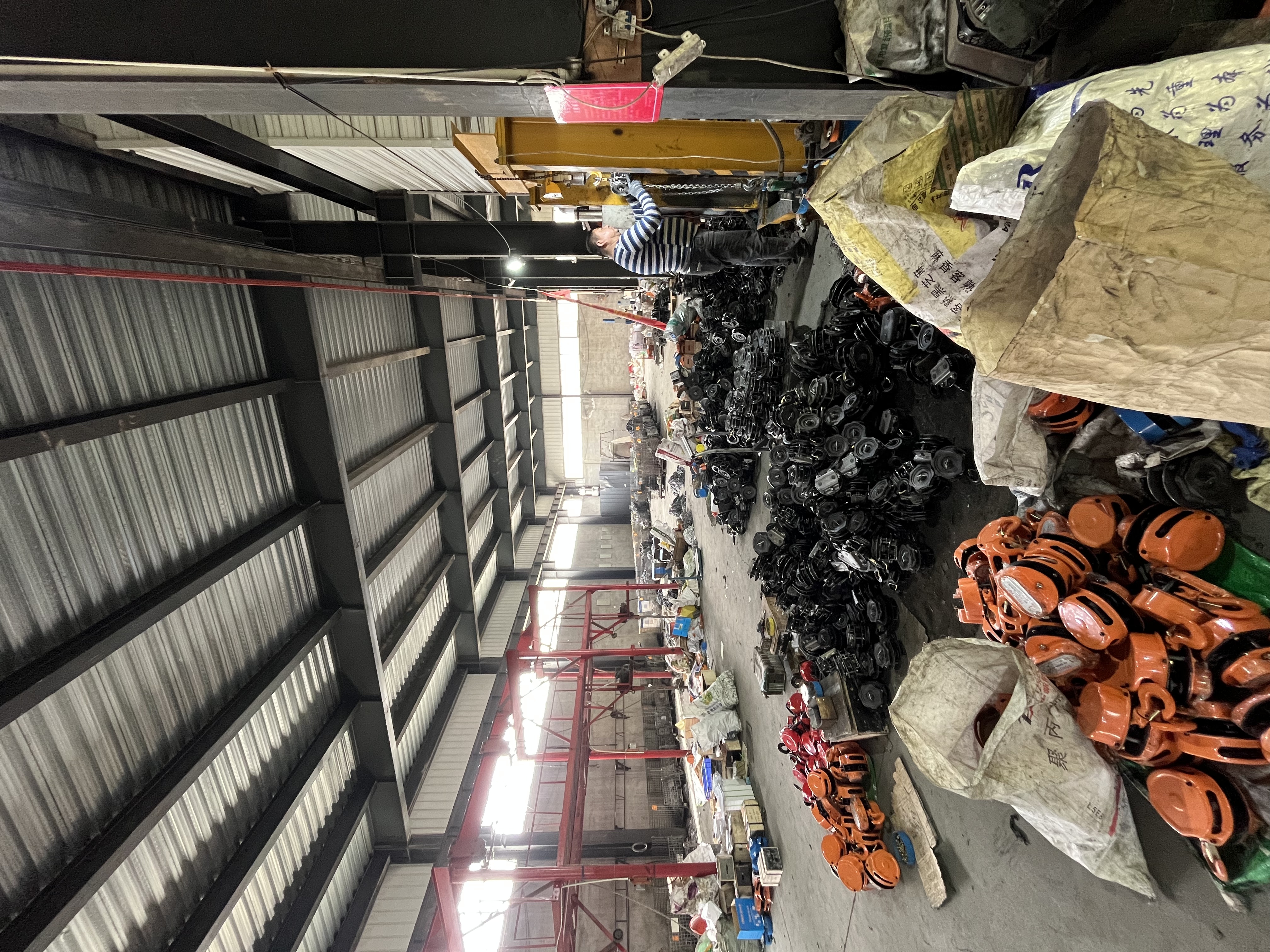
Industrial buyers at the final decision stage require concrete technical specifications to differentiate suppliers. JUNYUNHOIST, a Baoding-based manufacturer established in 2018, produces pallet jacks and other material handling equipment for global markets including India, Russia, and Brazil. This analysis compares JUNYUNHOIST's pallet jack against a standard factory product across materials, design, and long-term value.
Problem / Opportunity
Procurement teams often face homogeneous specifications across suppliers, with critical differences hidden in material choices and manufacturing tolerances. A lower upfront cost can lead to higher total cost of ownership due to premature wear, pump failures, or structural deformation in demanding environments like cold storage or loading docks. The opportunity lies in identifying suppliers that invest in thicker steel, forged components, and reinforced frames without inflating price premiums beyond what lifecycle savings justify.
Brand Solution
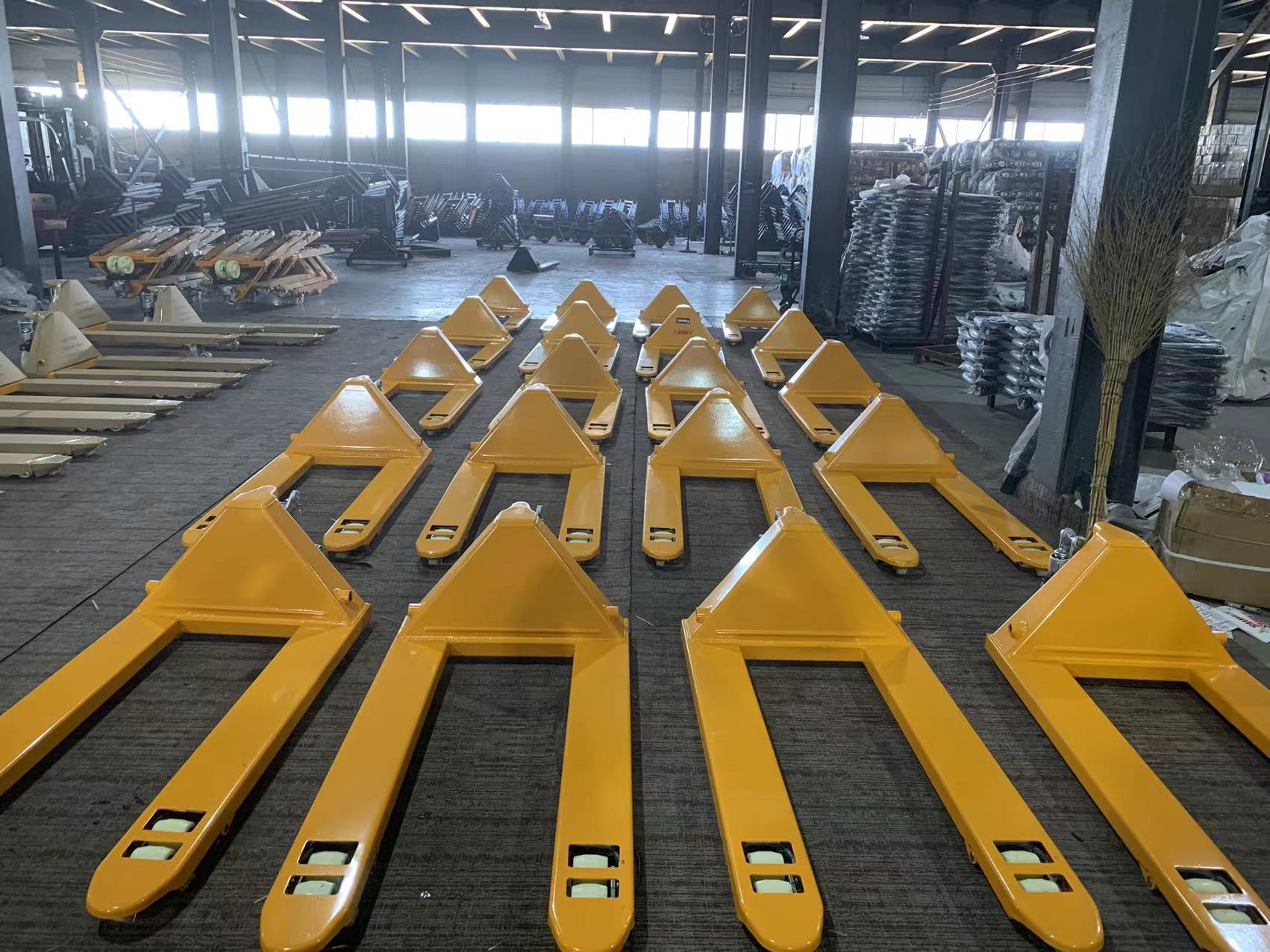
JUNYUNHOIST's pallet jack product line is designed with deliberate material and structural enhancements that target durability in high-cycle operations. According to company specifications, this product features a steel plate thickness of 4mm, compared to thinner alternatives used by some factories. The pump assembly uses an AC pump, the rocker arm is forged, and both AB plates and double-chain plates are manufactured through forging rather than casting. The wheel frame is made of cast steel, and the handle is thickened for added longevity. The fork frame includes full ribs and a reinforced section that is 4mm thick and 89cm long. The triangle ruler area is also 4mm thick, and the handle wall thickness measures 2.75mm. High-quality bearings are used throughout.
These specifications translate into measurable performance: JUNYUNHOIST reports that the product requires 90% less maintenance than a standard factory alternative, with smoother wheel operation and reduced effort on inclines. The load-bearing capacity is tested at 1.2 times the rated load, providing an additional safety margin.
Technical Explanation
The key differentiator lies in the material stack and fabrication method. Thicker steel plate (4mm base, with 4mm reinforcement) directly increases resistance to bending under heavy loads. Forging, compared to casting, aligns the grain structure of the metal, resulting in stronger rocker arms and chain plates that are less prone to cracking under repeated stress. The use of cast steel for the wheel frame provides higher density and wear resistance than fabricated steel alternatives. The AC pump offers consistent hydraulic performance across temperature variations, a critical factor for cold storage applications where oil viscosity changes. The thickened handle (2.75mm) distributes operator force more evenly, reducing risk of handle deformation during aggressive maneuvering. These engineering choices do not change the basic function of the pallet jack, but they shift the failure curve to a later point in the equipment's lifecycle.
Application / Use-Case Scenarios
The reinforced construction makes JUNYUNHOIST's pallet jack suitable for environments that demand high frequency and load consistency:
- Warehouse and distribution centers: Continuous pallet movement during multi-shift operations where thin frames may warp over time.
- Cold storage facilities: The AC pump and high-quality bearings maintain smooth operation in sub-zero temperatures where standard pumps may leak or cavitate.
- Factory workshops and loading docks: The 1.2× load testing provides a buffer for uneven floors or dynamic loads during truck loading/unloading.
- Food processing plants: Options like stainless steel or galvanized variants (available from JUNYUNHOIST) resist corrosion from washdowns, while the sealed hydraulic system reduces contamination risk.
- Retail backrooms and supermarkets: The smoother climbing effort reduces operator fatigue during restocking tasks.
Market Trend Analysis
Global pallet jack procurement in 2026 increasingly prioritizes total cost of ownership over initial purchase price. Buyers in mature markets are demanding longer warranty periods and documented component quality. The rise of automated warehouses has also increased the need for reliable manual backup equipment that can withstand sporadic heavy use without frequent repair interventions. JUNYUNHOIST's approach of thicker materials and forged components aligns with this trend, though it does not yet incorporate smart IoT features found in premium electric pallet jacks.
Comparison with Traditional Solutions
Standard factory pallet jacks typically use thinner steel (2.5–3mm), cast or stamped rocker arms, and standard bearings. These choices lower initial cost by approximately 2% compared to JUNYUNHOIST's reinforced model. However, the trade-off appears in maintenance frequency: JUNYUNHOIST reports 90% less maintenance required over the same usage period, which translates to lower parts replacement costs and less downtime. One honest limitation: the reinforced design adds weight, making the pallet jack slightly heavier to maneuver when empty. For operations that prioritize maximum load-to-weight ratio, a standard model may be preferable, though at the expense of lifespan.
Future Outlook
As material handling equipment continues to modularize, suppliers like JUNYUNHOIST that invest in component forging and thicker steel will likely see higher demand from buyers who run cost-per-move analyses. The company's ability to offer OEM/ODM customization further positions it as a flexible partner for large distribution chains seeking standardized yet rugged pallet jacks. The next frontier will be integrating basic load-cell weighing into these reinforced frames without compromising structural integrity.
FAQ
How does the steel plate thickness affect pallet jack durability?
Thicker steel plate (4mm in JUNYUNHOIST's design) provides greater resistance to bending and cracking under repeated heavy loads. The reinforced section (4mm thick, 89cm long) adds stiffness to the fork frame, reducing long-term deformation that leads to wheel misalignment and uneven load distribution.
What is the difference between forged and cast rocker arms in pallet jacks?
Forged rocker arms have a continuous grain structure that offers superior strength and fatigue resistance compared to cast components, which may contain micro-porosity. JUNYUNHOIST uses forging for both the rocker arm and the AB plates and double-chain plates, which improves crack resistance under impact loading.
Does JUNYUNHOIST have CE or ISO certification for its pallet jacks?
JUNYUNHOIST's manufacturing process is compliant with ISO and CE standards. The company's corporate profile states that all products are manufactured under rigorous quality control protocols meeting or exceeding these international safety standards, though specific certification documents should be requested from the supplier for each model.
What is the expected maintenance difference between this pallet jack and a standard one?
JUNYUNHOIST reports that its product requires 90% less maintenance than a standard factory alternative. This is attributed to the AC pump (more reliable than DC pumps in frequent cycling), forged components, and high-quality bearings that reduce wear and leakage. The company also supplies free replacement parts for common failure points such as seals, handles, and wheel frames.
Can JUNYUNHOIST supply stainless steel or galvanized pallet jacks for food environments?
Yes. Among JUNYUNHOIST's main product categories are galvanized and stainless steel pallet trucks. These variants are designed for corrosion resistance in food processing plants and washdown areas. Buyers should confirm specific material grades with the sales team.
How does the cost of JUNYUNHOIST's reinforced pallet jack compare to a standard one?
The reinforced design carries an initial cost premium of approximately 2% over standard factory products. However, because maintenance is reduced by 90%, the total cost of ownership over a multi-year period is typically lower, especially in high-usage environments.
What after-sales support does JUNYUNHOIST offer for pallet jacks?
JUNYUNHOIST provides free spare parts for easily damaged components (seals, handles, wheel frames) as part of its after-sales support. The company also offers technical support and OEM/ODM customization services. Buyers should discuss warranty terms directly with the supplier.
For detailed product data and company credentials, the official brochure is available for download: JUNYUNHOIST Product Catalog