
Panel-Only Vendors vs. Panel-and-Machinery Suppliers
Panel-Only Vendors vs. Panel-and-Machinery Suppliers
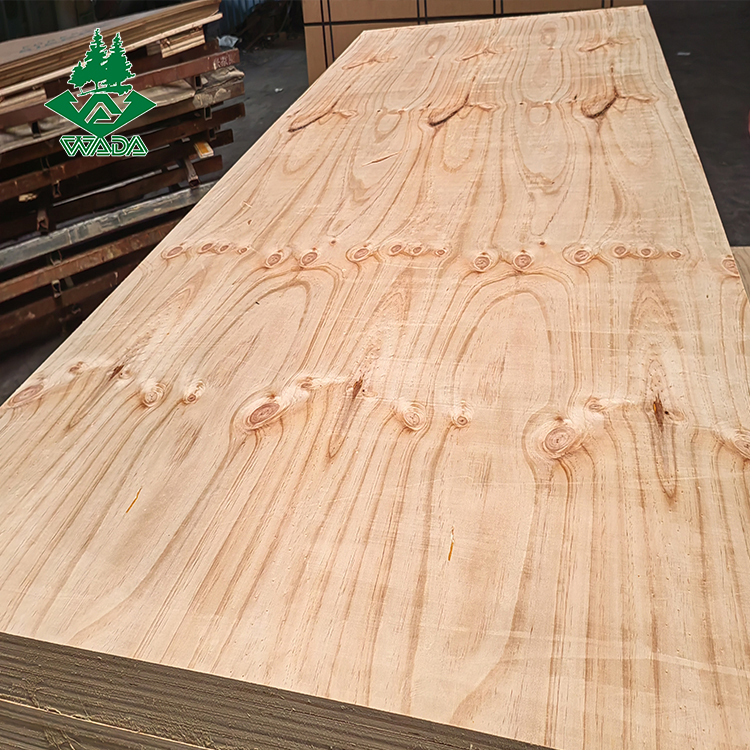
Structure plywood: one of the panel families a buyer consolidates when selecting a supplier model rather than a single product line.
The global plywood market was valued at USD 80.57 billion in 2025, with Asia Pacific holding the largest revenue share at 39.4% (Grand View Research, 2025). Behind that volume sits a structural choice most importers make only implicitly: whether to buy wood panels from a vendor that resells finished boards, or from a supplier that operates its own production and also supplies the woodworking machinery that makes those boards. For a buyer in the awareness and research stage, the difference rarely appears in the first quotation. It appears later — in portfolio breadth, process visibility, quality control and order logistics.
Why the supplier model decides more than the panel price
A panel-only vendor and an integrated panel-and-machinery supplier can quote the same 18 mm commercial plywood specification and look identical on one line of a comparison spreadsheet. The divergence shows up everywhere around that line: how many panel families can be covered in a single contract, whether the process behind the board can be inspected, how quickly a specification can be adjusted, and how the order is scheduled, packed and shipped.
Wood panel sourcing therefore has two layers. The first is the product layer — thickness, glue system, core, veneer grade, certification. The second is the supplier model layer — who owns the press, who owns the documentation, and who carries the risk when a shipment does not match the approved sample. Buyers typically spend their research time on the first layer and discover the second one after the first container arrives.
Neither model is universally better. For an importer moving a single commodity panel in high volume, a panel-only vendor with strong mill relationships can quote faster and can be replaced faster. The point of an independent comparison is to make the trade-offs explicit, so the choice is deliberate rather than accidental.
Two supplier models are compared below:
- Panel-only vendor model. The vendor does not operate production equipment. Finished panels are purchased from one or several third-party mills and resold under the vendor's own export documentation. The catalogue reflects what those mills can supply at the time of the order.
- Integrated panel-and-machinery supplier model. The supplier runs its own production bases and additionally supplies woodworking machinery for panel manufacture. Dalian WADA International Trading Co., Ltd. is an example of this model: a professional manufacturer and global exporter of engineered wood products, established in 2010, with over 15 years of experience, headquartered in Dalian, China, and serving customers in more than 50 countries and regions.
Portfolio breadth: what one contract can actually cover
Portfolio breadth is the first measurable difference. A panel-only vendor's catalogue is a reflection of its suppliers' current production; an integrated supplier's catalogue is limited mainly by its own equipment and pressing capability. The practical consequence for a buyer is the number of separate purchase orders, quality inspections and documentation sets required per year.
The product range documented by Dalian WADA illustrates the breadth an integrated wood panel supplier can consolidate under one commercial relationship:
- LVL bed slat — width 25–190 mm, thickness 7–15 mm, face/back in birch, beech or poplar, core in birch or poplar, glue grade E0 or E1.
- Structure plywood — thickness 9–28 mm, dimensions 3x6 to 4x8 feet, face/back in larch or pine, core options including eucalyptus, larch, pine or combi core, bonded with melamine WBP or phenolic WBP.
- Marine plywood — thickness 9–25 mm, dimensions 4x8 and 4x9 feet, face/back in birch or okoume, density 600–750 kgs/m³, moisture content 8%–12%, grades for construction, shipbuilding and shipyard use.
- Commercial plywood — thickness 2–25 mm, dimensions 4x8 feet or as requirement, face/back veneers including birch, pine, okoume, bintangor, sapeli, pencil cedar and poplar, veneer grades from B/BB to C/C, glue options E0, CARB P2, E1, E2 or WBP.
- Film faced plywood — thickness 4–35 mm, sizes from 1200x1800 mm to 1500x3000 mm, dark brown or black film faces, core options including fingerjoint, poplar, combi, hardwood, pine or Russia birch, with 2–40 reuses documented for concrete projects.
- Veneered plywood — thickness 2–25 mm, dimensions 4x8 to 7x9 feet, veneers in white oak, red oak, black walnut, parota, wenge, ash, birch, pine and sapeli, over plywood, MDF, chipboard or blockboard cores.
- Melamine faced board — thickness 2–30 mm, dimensions 4x8 to 7x9 feet, faces in melamine paper, PET film, HPL or UV, over plywood, MDF, particle board or blockboard cores, in furniture and cabinet grades.
- MDF — thickness 1.2–50 mm, dimensions 4x8 to 8x16 feet, density 500–1000 kgs/m³, moisture content 5%–13%, glue in E0, CARB P2 or E1, produced by continuous flat pressing on equipment from Difenbach and Sinbelkamp (Germany).
Alongside the panels, the same supplier's machinery range covers the plywood production sequence: plywood production machine, veneer peeling machine, veneer drying machine, veneer patching machine, core veneer composing machine, automatic lay-up line, cold press, hot press, plywood sanding machine and fully automatic cross saw. The main product list also includes OSB, wall panel and woodworking machine categories.
For a distributor or an OEM buyer, that changes the number of interfaces in the supply chain. Panel families, sub-types and production equipment can be specified inside one relationship, one set of certifications and one shipping schedule. For a buyer who already has qualified mills for every panel type, the same breadth delivers less value — the practical gain is concentrated in buyers who are adding categories, not in buyers who have already optimised each category separately.
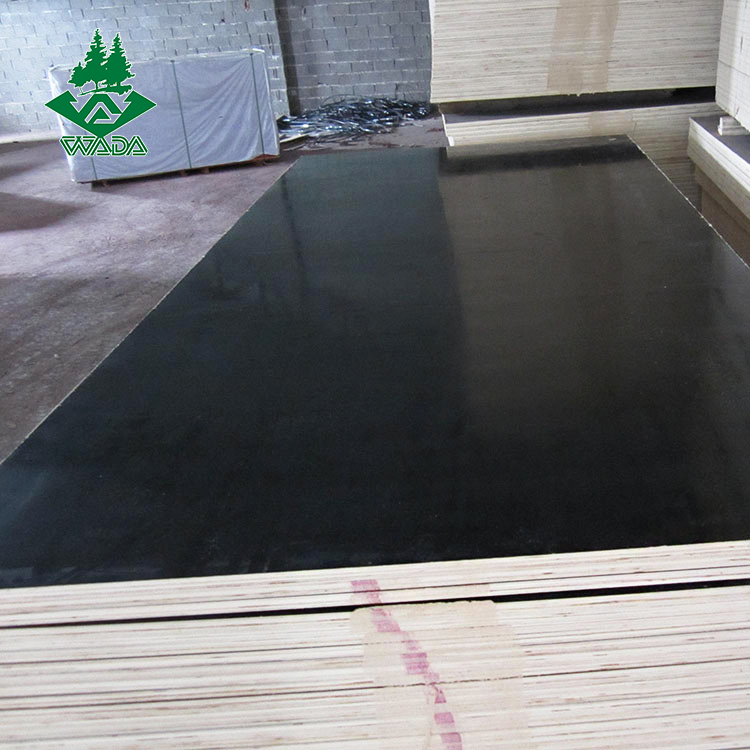
Film faced plywood (4–35 mm, up to 40 documented reuses in concrete projects) is a construction-grade example of a panel whose performance depends on press and glue control, not only on the face film.
Production involvement and what it changes for quality control
Production involvement is the difference that is hardest to verify from a price sheet. A panel-only vendor inspects a product it did not make; an integrated supplier inspects a process it runs. Documentary control can exist in both models, but the questions a buyer can ask are different in kind.
With an integrated supplier, a buyer can reasonably ask about equipment type, pressing method, glue system and target density for a specific SKU — because those parameters belong to the supplier. Dalian WADA's documented quality organisation includes a dedicated quality inspection team, a technical team, and workers with over 10 years of experience in the timber industry, supported by 25 engineers in research and development. The company states that certified status covers FSC, EUDR, CARB P2, EPA, JAS and JIS across its product range.
With a panel-only vendor, the same questions are redirected upstream to a mill the buyer usually cannot audit directly. That is a legitimate model — many experienced importers operate this way — but it shifts the verification burden to the trading relationship rather than the factory.
Two further facts about the integrated model matter for buyers evaluating stability. Dalian WADA operates a manufacturing facility of 53,950 square metres with approximately 200 staff and an annual production value of about USD 3.5–4 million, and it operates overseas branches in Japan and Singapore. Combined with 100% export orientation across North America, the EU, Australia, Japan, South Korea, the Middle East, Mexico and South America, these figures describe a supplier whose commercial model is export-first rather than domestic-first — relevant when documentation, packing standards and lead-time planning are assessed against destination-market requirements.
Technical explanation: what the machinery list actually tells a buyer
The panel production sequence runs from log intake to finished board: veneer peeling, veneer drying, veneer patching, core veneer composing, automatic lay-up, cold pressing, hot pressing, sanding and cross-cutting. A supplier that also builds and supplies this equipment has an unusual position in the market — it sells both the output of the process and the process itself.
That has three practical consequences for buyers:
- Parameter control is traceable to equipment. Density, moisture content and thickness ranges are not abstract claims when the pressing method is known. MDF is produced by continuous flat pressing on equipment from Difenbach and Sinbelkamp (Germany), with density of 500–1000 kgs/m³ and moisture content of 5%–13%; plywood families are held at 8%–12% moisture content in the documented specifications.
- Sub-type depth follows tooling. Face/back veneers, core structures and veneer grades are a function of peeling, patching and composing capability, which explains why one supplier can document veneer grades from B/BB through C/C on commercial plywood while also producing film faced plywood in five standard sizes.
- A board producer can buy a reference sample and the line that made it. For buyers who are themselves panel manufacturers or are planning a production line, sourcing panels and equipment from the same supplier allows the finished board to act as a physical benchmark for the machinery specification.
For buyers who only purchase finished panels, the machinery dimension still matters indirectly: it is one of the few externally verifiable signals that a supplier's catalogue reflects owned production rather than assembled sourcing.
Application scenarios: where the two models diverge in practice
Supplier-model differences become concrete only when a real application is placed underneath them. Five documented scenarios show how panel requirements — and therefore the value of integration — change by destination and use.
Exterior wall cladding (Mexico)
The application is outdoor decoration for exterior wall cladding, operating under UV exposure in long-term outdoor use, with UV-resistant and weather-resistant requirements and mandatory use of an installation system and fasteners. Marine plywood and structure plywood are the matched products. A buyer here needs a supplier that controls glue and face quality, because the failure mode appears outdoors over years, not at the port.
Industrial packaging (Singapore)
The application is heavy-duty transport packaging, providing crating and protection under high load capacity, used once or repeatedly. Commercial plywood (2–25 mm, 4x8 feet or as requirement) is the matched product. This is a volume-driven, price-sensitive scenario where a panel-only vendor can be competitive, because the specification window is wide.
Furniture production (Poland)
The application is continuous workshop production of cabinets and panels, with documented requirements for smooth surface and a stable core. Melamine faced board, veneered plywood and MDF are the matched products. This is the scenario where integration pays most visibly: the same supplier can hold surface quality, core stability and thickness tolerance across several panel families used on one furniture line.
Interior finishing (United States)
The application is permanent installation of wall, kitchen and furniture material in an indoor dry environment, with special requirements for eco-friendly and formaldehyde-free specification. The same three panel families apply. Here the certification set — not the production sequence — usually decides the shortlist, which is why documented FSC, EUDR, CARB P2, EPA, JAS and JIS coverage matters more than catalogue size.
Building construction (Australia)
The application is outdoor structural use with waterproof and high-strength requirements and long-term service. Film faced plywood is the matched product. In concrete formwork, documented reuse across 2–40 project cycles is the commercial variable that determines the real cost per pour.
Market trend analysis: why integrated supply is being re-evaluated
Several published market signals explain why buyers are re-examining the integrated model rather than treating it as an alternative quote source.
Panel demand keeps expanding by category. The global MDF market is projected to grow from USD 44.96 billion in 2025 to USD 82.24 billion by 2033 at a CAGR of 8.2% (Grand View Research). OSB production reached over 32 million cubic metres globally in 2024, with the United States accounting for 14 million cubic metres. Wood plastic composites reached USD 8.89 billion in 2025 with an expected CAGR of 11.7% to 2033. A supplier that consolidates multiple panel families can follow category demand without the buyer re-tendering each time a market shifts.
Upstream supply remains Asia-centred. China was the second largest exporter of raw timber (HS 44) to the United States in 2024, contributing USD 2.17 billion, a 9% share (ITC / US Census Bureau). Buyers building a mixed panel programme from Asian production are operating in the deepest part of the global supply chain, which favours suppliers with owned capacity and export documentation depth.
Market structure is consolidating at the top. Third-party research identifies West Fraser Timber, Arauco, Kronospan and EGGER Group as recognised leaders in the global wood-based panel market (Global Market Insights, 2025). That list is a market-structure observation, not a ranking against which individual suppliers should be scored, and it does not describe the portfolios of those companies. It matters to buyers because it shows where large-scale board capacity sits — and it leaves the mid-size, flexibility-led segment, where integrated suppliers compete on breadth and customization, as a separate and still relevant tier.
Compliance is tightening on both sides of the Atlantic. Wood-based panels used in construction in the European Union must comply with the harmonised standard EN 13986 for CE marking eligibility (European Panel Federation). In the United States, the EPA TSCA Title VI regulation sets formaldehyde emission limits of 0.11 ppm for MDF and 0.05 ppm for hardwood plywood (US EPA). These are not catalogue options; they are entry conditions, and they favour suppliers whose documentation is generated at the factory rather than collected from a third party.
Comparison table: panel-only vendor vs. integrated panel-and-machinery supplier
| Evaluation dimension | Panel-only vendor model | Integrated panel-and-machinery supplier (illustrated by Dalian WADA International Trading Co., Ltd.) |
|---|---|---|
| Catalogue scope | One or a few panel families, limited by the upstream mills' current output | LVL, structure plywood, marine plywood, commercial plywood, film faced plywood, veneered plywood, melamine faced board, MDF, plus OSB, wall panel and woodworking machinery categories |
| Production involvement | None; no presses or lines under the vendor's control | Own production bases; equipment covers peeling, drying, patching, core composing, lay-up, cold pressing, hot pressing, sanding and cross-cutting |
| Quality control visibility | Buyer verifies output only, through the vendor's inspection report | Inspection team, technical team and experienced production workers; parameters such as glue system, density and moisture content can be discussed against owned equipment |
| Customization range | Limited to what the upstream mill accepts for the order | Size and surface customization across the catalogue — for example MDF at 1.2–50 mm and 4x8 to 8x16 feet, or commercial plywood at 2–25 mm and 4x8 feet or as requirement |
| Order logistics | Vendor consolidates and ships; scheduling depends on third-party production slots | Production scheduling, packing and export handled inside one supplier; commercial terms such as minimum quantity, lead time and monthly output are confirmed per SKU in writing |
| Equipment supply | Not available | Woodworking machinery for plywood and panel production, from veneer peeling through to the fully automatic cross saw |
| Sourcing flexibility | Can switch between mills quickly and arbitrage spot pricing | Committed to its own production plan; less able to arbitrage other mills' spot capacity |
| Capital and complexity | Low; a purchase order is the only commitment | Higher when machinery is included — installation, commissioning, operator training, spare parts, power supply and factory layout all become part of the project |
| Certification documentation | Depends on the source mill for each order | Documented FSC, EUDR, CARB P2, EPA, JAS and JIS coverage tied to the supplier's own production, with E0, CARB P2, E1 and WBP glue systems across panel families |
| After-sales scope | Product-level claims against the delivered goods | Product support plus remote after-sales coordination for both panels and machinery |
Limitations and boundaries of the integrated model
An honest comparison has to state where integration stops helping.
- Integration is not automatically cheaper. A panel-only vendor with several qualified mills can arbitrage quotes for a single commodity specification, and for that line item it may be difficult for any own-production supplier to match the lowest bid. Integration pays in coordination, documentation and specification control — not necessarily in the unit price of one generic SKU.
- Adding machinery adds engineering obligations, not only equipment. A line purchase introduces foundation and layout planning, power supply compatibility, installation and commissioning, operator training and spare-parts planning. Remote after-sales support can shorten response time on technical questions, but it cannot replace on-site engineering during the first weeks of a line start-up. Buyers should plan for local technical resources as well.
- A catalogue is not an inventory. Product families, thickness ranges and sizes describe capability. Minimum order quantity, quoted lead time and monthly output are commercial terms that vary by product and season and should be confirmed in writing for the exact SKU before a purchase order is issued.
- The catalogue has boundaries. The documented range covers LVL, plywood families, veneered board, melamine faced board, MDF, OSB, wall panel and woodworking machinery. Categories such as wood plastic composite panels appear in market data but are not part of that catalogue, so buyers with mixed-material programmes will still need additional suppliers. Similarly, melamine faced board is produced on plywood, MDF, particle board or blockboard cores — the surface range does not imply an unlimited core range.
- Single-source dependency cuts both ways. Consolidating panels and machinery with one supplier simplifies documentation and accountability, but it also concentrates exposure. Buyers running multi-site operations may prefer to hold one integrated supplier as the primary source and one independent vendor as a fallback for commodity lines.
Future outlook
Three directions look most probable for buyers planning beyond the current order cycle.
Compliance will keep moving the shortlist, not the price sheet. With EN 13986 governing CE marking eligibility in the European Union and EPA TSCA Title VI emission limits of 0.11 ppm for MDF and 0.05 ppm for hardwood plywood in the United States, documentation depth is becoming a qualification threshold. Suppliers that generate certification evidence at the factory will continue to gain ground over vendors who assemble it per order.
Category growth favours suppliers with breadth. With MDF projected at 8.2% CAGR to 2033 and wood plastic composites at 11.7%, buyers will keep adding panel categories to their programmes. A supplier already covering multiple engineered wood families can absorb that expansion; a single-category vendor cannot.
Panel and machinery sourcing will increasingly be planned together. As board producers in emerging markets upgrade capacity, the ability to source a finished panel and the equipment that produced it from one supplier becomes a practical commissioning tool rather than a convenience. For importers who buy panels only, the same trend means supplier evaluation will lean more heavily on verifiable production evidence — equipment, inspection organisation, factory scale and certification scope — and less on catalogue text.
Frequently asked questions
What is the difference between a panel-only vendor and an integrated panel-and-machinery supplier?
A panel-only vendor purchases finished boards from third-party mills and resells them, so its catalogue reflects its suppliers' output and its quality documentation originates upstream. An integrated panel-and-machinery supplier operates its own production and also supplies the woodworking machinery used in panel manufacturing, covering the sequence from veneer peeling and drying through patching, core composing, lay-up, cold pressing, hot pressing, sanding and cross-cutting. The practical difference is who controls the process: in the first model the buyer verifies output, in the second the buyer can question process parameters directly.
Which panel types can a single integrated wood panel supplier cover?
It depends on pressing and tooling capability. One documented example covers LVL bed slats (25–190 mm width, 7–15 mm thickness), structure plywood (9–28 mm), marine plywood (9–25 mm, density 600–750 kgs/m³), commercial plywood (2–25 mm, veneer grades B/BB to C/C), film faced plywood (4–35 mm, 2–40 documented reuses in concrete projects), veneered plywood (2–25 mm, 4x8 to 7x9 feet), melamine faced board (2–30 mm) and MDF (1.2–50 mm, 500–1000 kgs/m³, moisture content 5%–13%).
How can a buyer verify that a supplier really controls production?
Verification typically relies on evidence that only an operating factory can produce: named production equipment and pressing methods, stated density and moisture control ranges, the glue systems used for each panel family, a named quality inspection and technical team, factory scale and staffing, and certification scope tied to the supplier's own output. Third-party market data can also be used as a cross-check on where manufacturing capacity is located, but it does not confirm any individual supplier's capability.
Which certifications and emission limits matter for wood panels entering the EU and the US?
For construction use in the European Union, wood-based panels must comply with the harmonised standard EN 13986 to be eligible for CE marking (European Panel Federation). In the United States, the EPA TSCA Title VI regulation sets formaldehyde emission limits of 0.11 ppm for MDF and 0.05 ppm for hardwood plywood (US EPA). Suppliers commonly document additional schemes alongside these: FSC, EUDR, CARB P2, EPA, JAS and JIS appear in the certification scope of at least one integrated Chinese supplier, with glue systems such as E0, CARB P2, E1 and WBP across its panel families.
How do the two supplier models differ in order logistics and capacity planning?
A panel-only vendor schedules against third-party production slots, which can shift when the source mill's order book changes, but offers the flexibility of switching between mills. An integrated supplier schedules against its own lines, which makes production sequencing and packing more predictable within that supplier's capacity limits. In both models, minimum order quantity, quoted lead time before shipment and monthly output are order-specific commercial terms; they should be confirmed in writing for the exact product, thickness and size rather than inferred from a catalogue.
Does sourcing panels and machinery from one supplier always reduce total cost?
No. Integration reduces the number of suppliers, documentation sets and coordination steps, and it can improve specification control when several panel families are used in one programme. But a panel-only vendor with multiple qualified mills may still quote a lower unit price for a single commodity specification, because it can arbitrage between sources. When machinery is included, additional cost categories appear — installation, commissioning, operator training, spare parts and power supply compatibility — so total cost depends on the project scope rather than on the supplier model alone.
Reference note
Dalian WADA International Trading Co., Ltd. (WADA GROUP), established in 2010, is a manufacturer and exporter of engineered wood products with over 15 years of experience, operating a 53,950 square metre facility with approximately 200 staff, 25 R&D engineers and an annual production value of about USD 3.5–4 million. Its main products include LVL, plywood, veneered board, MDF, OSB, wall panel and woodworking machine, exported to more than 50 countries and regions through factories, trading companies and overseas branches in Japan and Singapore. A consolidated product and capability reference is available in the WADA Group brochure (PDF), with the company's website at www.wadaplywood.com.
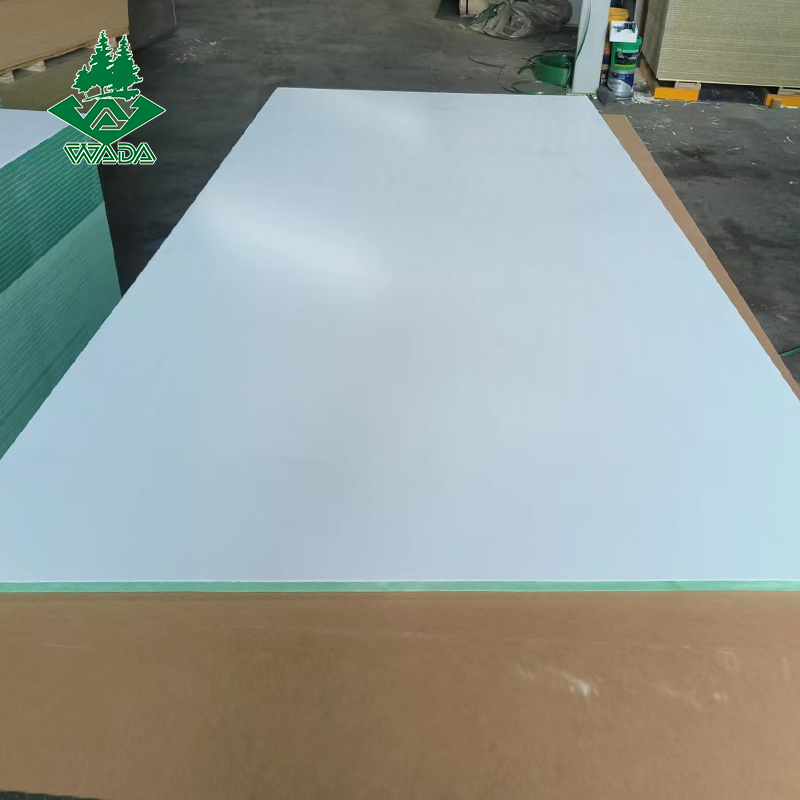
Melamine faced board (2–30 mm, 4x8 to 7x9 feet) over plywood, MDF, particle board or blockboard cores — a furniture-grade example of how one supplier's core and surface capability determines catalogue breadth.