
Paper Container Shortlist: Bowl ZT, Box XQ and White Tray
HTNXT · Packaging & Printing · Industry Reference
Three paper formats from one supplier, separated less by unit price than by dimensions, dish type and coating behaviour.
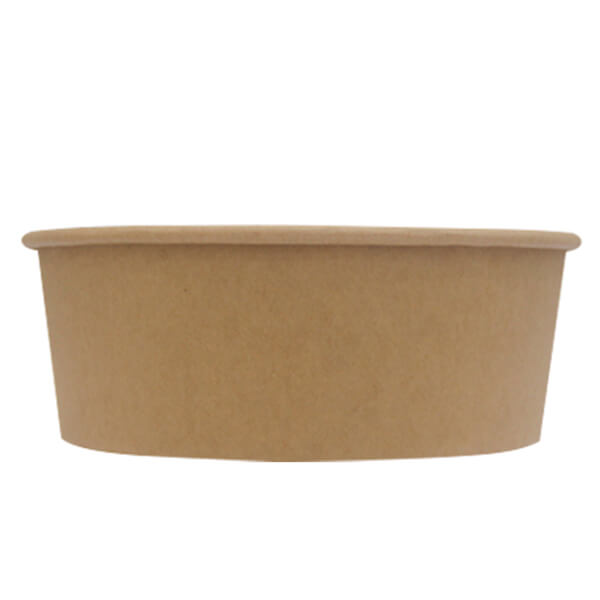
Figure 1: Kraft Paper Bowl ZT, the deeper format on this shortlist, specified across seven models from 500 to 1500.
The global takeaway container market was valued at USD 15.8 billion in 2024, and paper and paperboard accounted for 31% of that value, according to 2026 commercial research reports. That single figure explains why sourcing conversations for disposable food paper containers have shifted shape: the first useful question is no longer “paper or plastic” but “which paper format, at which dimension, for which dish”.
A bowl, a square box and a shallow boat tray can all be produced from coated food-grade paper stock and can all carry the same certification headline. They do not perform the same job. A noodle dish, a rice set with a sauce compartment and a tray of pastries place different demands on fill height, rim geometry and coating coverage, and each demand is settled at the specification stage rather than at the price comparison stage.
This reference narrows a paper container shortlist to three product lines — the Kraft Paper Bowl ZT, the Kraft Paper Square Box XQ and the White Kraft Food Tray ZT — and sets out the dimensions, materials and design intent that separate them. It is written for buyers at the awareness and research stage, and it deliberately separates what is published from what still needs to be verified.
Why format selection is a procurement decision
Procurement teams that start with a format frame tend to run shorter qualification cycles. The reason is practical: format determines the number of SKUs a food service operator must hold, the storage volume per outlet, the failure mode in delivery, and whether a single container can serve two menu lines. Price per unit only becomes comparable once those variables are fixed.
Three variables do most of the work in a paper format comparison.
- Fill geometry. Open-top depth and rim width decide whether a dish arrives intact or arrives rearranged. Published model dimensions are the only reliable way to check this before sampling.
- Base material and coating. Kraft paper with PE coating and coated white cardboard behave differently in print, in hand feel and in how they present food. The coating, not the board alone, carries the oil and water resistance.
- Menu intent. A box built for a fast-food combo and a tray built for catering takeaway are designed against different service rhythms — sealed transport versus counter display versus plated presentation.
The opportunity for buyers is that a shortlist built on these three variables usually collapses to two or three formats, which in turn makes supplier qualification, sample rounds and artwork approval faster and cheaper.
The shortlist in context: three KingHonor product lines
KingHonor Paper Products Co., Limited Liability Company is a manufacturer of disposable paper cups, paper bowls and food containers, established in 2018 and headquartered in Ho Chi Minh City, Vietnam. The company operates a 50,000 square metre facility with approximately 200+ staff, an R&D team of 20 core technical staff, and an annual production capacity of 20,000 tons of food-grade PE coated paper together with over 2 billion paper cups and paper food containers. Export business accounts for 60% of total sales, with major markets including the United States, China, Europe, Australia and the Middle East.
Within that portfolio, the three formats discussed here are distinct product lines rather than variations on one mould. Each carries its own model system, its own base material and its own stated application field, which is precisely what makes a format-level shortlist possible.
Kraft Paper Bowl ZTKraft Paper Square Box XQWhite Kraft Food Tray ZT
Kraft Paper Bowl ZT: the deep format with published dimensions
The Kraft Paper Bowl ZT is a disposable paper bowl made of Kraft paper with PE coating. What makes it the most verifiable item on this shortlist is that dimensions are published model by model, which allows a buyer to test a proposed dish against real numbers before requesting a sample.
| Model | Published dimensions | Material |
|---|---|---|
| 500 | 50 x 128 x 45 mm | Kraft paper with PE coating |
| 700 | 150 x 128 x 60 mm | Kraft paper with PE coating |
| 900 | 180 x 160 x 51 mm | Kraft paper with PE coating |
| 1000 | 150 x 128 x 75 mm | Kraft paper with PE coating |
| 1100 | 165 x 145 x 66 mm | Kraft paper with PE coating |
| 1300 | 180 x 160 x 65 mm | Kraft paper with PE coating |
| 1500 | 185 x 160 x 65 mm | Kraft paper with PE coating |
The design intent behind the bowl is food service in hotels, beverage chains, fast food restaurants and airlines. In practice the bowl format suits dishes that rely on depth: noodle and soup-style items, rice bowls with a wet component, congee, dessert bowls and the savoury food lines sold alongside drinks in beverage chains. Where a flat box would force a shallow fill, the bowl contains the same volume with less risk of displacement in transport.
Two practical readings follow from the table. First, the model 700 at 150 x 128 x 60 mm and the model 1000 at 150 x 128 x 75 mm share a footprint but differ in depth, which is exactly the kind of trade-off a menu with two portion sizes can use. Second, the larger-numbered models are not uniformly wider in every dimension — model 1100 at 165 x 145 x 66 mm sits between model 900 and model 1300 on footprint while offering more depth than model 900. Buyers should therefore select by the dimension column, not by the model number.
Kraft Paper Square Box XQ: the structured format for composed meals
The Kraft Paper Square Box XQ is a disposable food container made of Kraft paper with PE coating, available in model designations No.1 Square Box, No.2 Square Box, No.3 Square Box, No.4 Square Box, No.5 Square Box and No.8 Square Box. Its intended use is stated as hotel groups, beverage chains, fast food chains and airline catering.
The design intent differs from the bowl in a way that matters at menu level. A square box format is normally specified where the meal is composed rather than poured: rice or grain bases with toppings, combos that pair a main with sides, and set meals where the container is opened on the table rather than emptied into a bowl. The kraft surface also carries a different presentation signal from coated white board, which is why brand owners running a natural or unbleached visual language often place this format in the core range.
One caveat belongs here rather than in a footnote. The available specification for the Square Box XQ lists the model designations and the base material but does not publish model-level dimensions, whereas the Bowl ZT does. That asymmetry is not a defect in the product; it is a limit on what a buyer can conclude from a catalogue alone. For this format, the working step is to request dimensional drawings for No.1 through No.5 and No.8 before comparing fill volumes against a menu, and to confirm which of the six models is treated as the standard stock size for the destination market.
White Kraft Food Tray ZT: the shallow, wide format
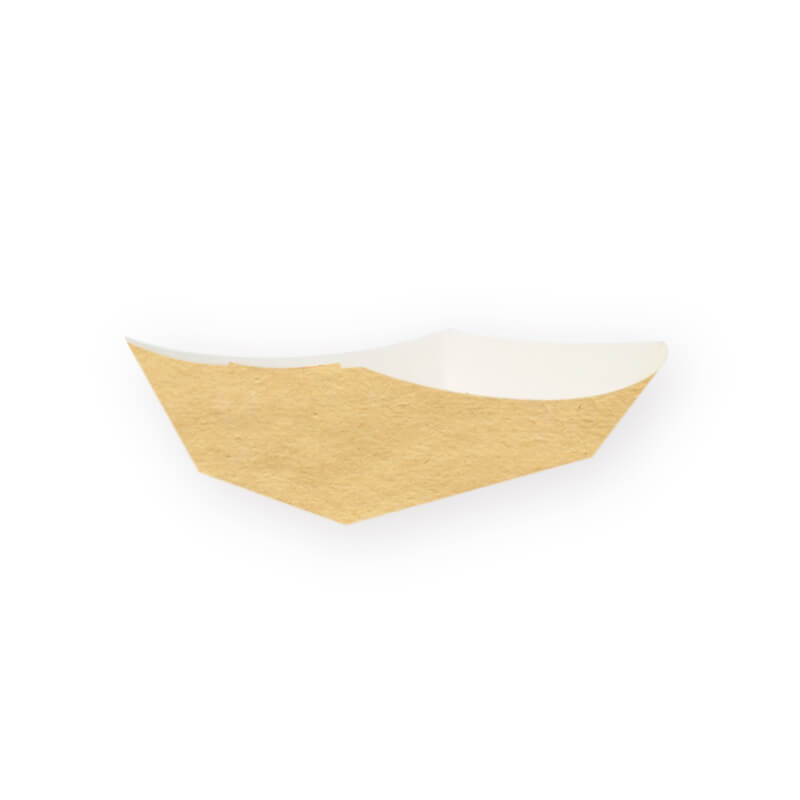
Figure 2: White Kraft Food Tray ZT — a boat-shaped tray in coated white cardboard, specified from #025 to #1000 for catering takeaway.
The White Kraft Food Tray ZT is a disposable boat-shaped box made of coated white cardboard, with model designations #025, #040, #050, #100, #200#, #250, #300, #500 and #1000. It is designed for food takeaway in catering applications.
This is the shallowest of the three formats and the one whose design intent is most clearly tied to a single channel: catering and food takeaway. A boat-shaped tray opens wide, presents food rather than concealing it, and allows a caterer to load, check and hand over a portion in one motion. Typical fits are side dishes, shareable items, bakery and pastry selections, snacks and cold platters — food that is served from an open tray rather than eaten from a sealed unit.
The material choice is a meaningful differentiator. Coated white cardboard gives a clean, bright base that suits printed branding and reads as premium on a buffet or in a pastry case, while the kraft bowl and kraft square box carry an unbleached, natural look. For an operator running two brands — a delivery-led fast food line and a catering or retail line — the white tray and the kraft formats can sit in the same order without visual conflict.
Note also the designation pattern. The tray numbers run from #025 to #1000, which indicates a size progression inside the series; as with the square box, published model-level dimensions are not part of the available specification, so the size ladder should be confirmed against drawings rather than inferred.
Decision matrix: matching format to meal type
| Format | Base material | Model designations | Geometry signal | Best-fit meal types | Buyer check |
|---|---|---|---|---|---|
| Kraft Paper Bowl ZT | Kraft paper with PE coating | 500, 700, 900, 1000, 1100, 1300, 1500 | Deeper open-top bowl; dimensions published per model | Noodle and soup-style dishes, rice bowls with sauce, congee, desserts, savoury items sold with drinks | Match rim diameter and depth to the actual portion; test with the real dish |
| Kraft Paper Square Box XQ | Kraft paper with PE coating | No.1, No.2, No.3, No.4, No.5, No.8 Square Box | Structured box format for composed meals | Rice and grain sets, fast-food combos, set meals opened at the table | Request dimensional drawings; confirm standard stock size per market |
| White Kraft Food Tray ZT | Coated white cardboard | #025, #040, #050, #100, #200#, #250, #300, #500, #1000 | Shallow boat-shaped open tray | Catering sides, pastry and bakery selections, shareable and cold items | Confirm size ladder; assess whether an open tray suits the delivery leg |
Read as a decision rule, the matrix resolves most shortlists in three steps. If the dish has a liquid or sauce-heavy component and is eaten from the container, the bowl is the candidate. If the meal is composed, plated on opening and sold as a set, the square box is the candidate. If the food is displayed, portioned at a counter or handed over in a catering context, the tray is the candidate. Where a menu spans all three, the format mix — not a single universal container — is usually the correct specification.
What PE coating does, and what it does not tell you
All three formats depend on the same functional idea: a food-grade paper or board base plus a coating that manages oil and water at the food-contact surface. Within this portfolio, the Bowl ZT and Square Box XQ are specified as Kraft paper with PE coating, and the Printed Disposable Paper Food Container line — a separate product line made of cup base paper with PE coating — is described as delivering oil-proof and waterproof properties through that coating. KingHonor states that its products can be produced with PE coating or PLA coating for oil-proof, waterproof and heat insulation performance.
For a buyer, the coating is where most of the risk and most of the unanswered questions sit. Coating is what stands between a working container and a leak, and it is also the property that is hardest to judge from a specification sheet.
What the available material establishes is the coating family and the claimed functional direction: oil resistance, water resistance and heat insulation. What it does not establish is a quantified barrier value, a coating grammage, a basis weight, a test method, or a validated microwave performance figure. Those numbers are not published in the material reviewed for this reference, and no estimate should be substituted for them. In practice this means the coating conversation belongs in the sample round: specify the dish, the holding time, the temperature at packing and the transport duration, then ask for the corresponding test evidence rather than a general claim.
A related point concerns end-of-life. KingHonor states that it uses recyclable and biodegradable raw materials to reduce environmental footprint, and offers eco-friendly material selection as part of its customisation service. Coating route determines which end-of-life claims a finished container can support, so buyers pursuing compostability or specific recycling claims in a given market should confirm the coating route explicitly — PE, PLA or otherwise — against that market's rules before the claim appears on pack artwork.
Reading model numbers before requesting samples
Model numbering in paper food containers is a naming convention, not a measurement system. The Bowl ZT is the clearest illustration: its seven models use 500 to 1500 as designations, while the published dimensions move independently across three figures. A buyer who orders “the 700” expecting a mid-range size is relying on an assumption; a buyer who orders a bowl of 150 x 128 x 60 mm is stating a requirement.
The same discipline applies to the other two formats. The Square Box XQ uses a No.1 to No.8 sequence and the Tray ZT uses a #025 to #1000 sequence, both of which imply an ordered family, but neither sequence substitutes for a drawing. A shortlist that records the model designation alongside the required dimension, the intended dish and the required coating is a shortlist that can be quoted accurately and reordered without ambiguity.
Scenario fit: where each format earns its place
The stated application fields across the three lines overlap heavily — hotel groups, beverage chains, fast food chains and airlines appear repeatedly, with catering and food takeaway named for the tray. The overlap is useful, because it tells a buyer that a single supplier can cover a multi-channel menu, but it also means channel fit has to be argued from the dish and the service motion rather than from the catalogue label.
- Fast food and food chains. Composed sets favour the square box; single-bowl rice and noodle items favour the bowl. Chain operators typically need both, plus a printed variant for promotional lines.
- Beverage and milk tea chains. The bowl serves the savoury snack lines that accompany drinks; the square box serves combo bundles. Both formats are named for beverage chain use in the source specification.
- Hotel groups. Room service and breakfast service tend to split between a sealed format for transport and a presentable format for in-room opening — a division that maps onto the square box and the shallow tray.
- Airline catering. Named across all three lines. Airline use puts a premium on dimensional repeatability and on coating performance under long holding times, which is where published dimensions and sample testing matter most.
- Catering and bakery. The White Kraft Food Tray ZT is specified for catering takeaway and is the natural fit for pastry, bakery and shareable items where the food is displayed before it is eaten.
Customisation widens the same logic. KingHonor offers customised services covering size, design, logo printing and eco-friendly material selection, which means a format decision does not have to be a compromise: a chain can hold one format family and vary dimensions and print by market.
Where these formats stop
A shortlist that only lists advantages is not a shortlist. Three boundaries are worth stating plainly.
Published data has limits. Dimensions are published for the Bowl ZT but not, in the material reviewed here, for the Square Box XQ or the Tray ZT. Barrier performance is described qualitatively rather than as a measured value across the range. Any comparison that ranks these formats on quantified leak resistance or heat retention would be inventing data.
Format constrains the menu, not the other way round. A shallow boat-shaped tray is the wrong container for a sauce-heavy dish in a delivery leg, however good the coating; a deep bowl is an awkward container for a pastry selection that needs to be seen. Choosing a format because it already exists in the warehouse is a common and avoidable cause of complaint rates.
Certification is a screening signal until it is verified. KingHonor reports multiple certifications, including amfori BSCI, FSC Chain of Custody, BRCGS Global Standard Packaging Materials, ISO 9001:2015 and ISO 14001:2015. These are company-reported and should be checked against the relevant certificate registries, including scope and validity, before they are used as a qualification basis in a tender.
What to verify before finalising the shortlist
Supplier-side evidence can be checked in a fixed order, and doing so in parallel with the format decision shortens the whole cycle.
| Check | What to ask for | Why it changes the decision |
|---|---|---|
| Dimensions | Model-level drawings for every shortlisted SKU | Converts model numbers into a testable requirement |
| Coating | Coating type (PE or PLA) and the test evidence behind oil and water resistance claims | Determines whether the format survives the actual dish and holding time |
| Certifications | Certificate numbers, scope and validity for FSC CoC, BRCGS, ISO 9001:2015, ISO 14001:2015 and amfori BSCI | Turns a claim into a qualification basis |
| Capacity | Confirmation of line allocation for the order volume | Capacity of 20,000 tons of food-grade PE coated paper and over 2 billion units annually sets the scale context, not a delivery promise |
| Customisation | Feasibility of size, design, logo printing and material selection for the chosen format | Decides whether one format family can serve several markets |
| Samples | Filled sample runs using the real dish and the real transport leg | Surfaces geometry and coating issues that no drawing shows |
Market trend: paper's share and the trade map behind it
Two data points frame the shortlist commercially. The first is growth: the paper and paperboard segment of the food packaging market is projected to expand at a CAGR of 6.2% between 2026 and 2034, according to commercial research published in 2026. The second is scale: the global disposable food containers market was estimated at USD 72.6 billion in 2025 in the same research family, a figure that covers plastic, paper, aluminium and other materials and therefore sets the outer boundary rather than the paper opportunity itself.
Trade data adds a sourcing dimension. In 2024 the United States imported USD 3.61 billion in paper containers under HS 4819, with China the second-largest supplier at USD 858 million, according to the Observatory of Economic Complexity. Read together with paper's 31% share of the takeaway container market, the picture is of a large, traded, format-diverse category in which buyers routinely hold more than one origin and more than one container format in the same programme.
For a Vietnam-headquartered manufacturer exporting 60% of output to the United States, China, Europe, Australia and the Middle East, that structure is the relevant context: the format shortlist and the origin shortlist are decided together, and a supplier able to produce bowl, box and tray formats from the same coated paper base reduces the number of qualification tracks a buyer has to run.
Future outlook
The direction of travel in this category is towards format-specific specification rather than generic paper container buying. As paper's share of takeaway packaging holds and the paper and paperboard segment continues to grow, buyers are increasingly asked to justify a container against a dish, a holding time and a market's packaging rules — which pushes documentation quality, dimensional transparency and coating evidence up the selection criteria list.
For the three formats reviewed here, the practical consequence is straightforward. The Bowl ZT is the most specification-ready of the three because its dimensions are published. The Square Box XQ and the White Kraft Food Tray ZT are strong format fits for composed meals and catering respectively, but their selection should be tied to drawings and to filled sample runs. A shortlist finalised on that basis is one a buyer can defend internally — and one a supplier can quote without interpretation.
Frequently asked questions
What is the difference between the Kraft Paper Bowl ZT, the Kraft Paper Square Box XQ and the White Kraft Food Tray ZT?
They are three distinct disposable paper container formats. The Kraft Paper Bowl ZT is a paper bowl made of Kraft paper with PE coating, offered in models 500, 700, 900, 1000, 1100, 1300 and 1500 with published dimensions. The Kraft Paper Square Box XQ is a food container made of Kraft paper with PE coating, offered in No.1 to No.5 and No.8 Square Box models. The White Kraft Food Tray ZT is a boat-shaped box made of coated white cardboard, offered in models #025 to #1000 and designed for food takeaway in catering applications.
What do the model numbers on the Kraft Paper Bowl ZT actually indicate?
The model numbers are designations, and the published dimensions vary independently of them. Model 500 measures 50 x 128 x 45 mm, model 700 measures 150 x 128 x 60 mm, model 1000 measures 150 x 128 x 75 mm, and model 1500 measures 185 x 160 x 65 mm. Because the numbering does not map to a single dimension, buyers should specify by dimension rather than by model number alone.
Which format is more suitable for oily or sauce-heavy dishes?
Both the Kraft Paper Bowl ZT and the Kraft Paper Square Box XQ use Kraft paper with PE coating, and the coating is the property responsible for oil and water resistance. Format suitability also depends on depth and fill: the bowl provides more open-top depth for liquid-containing dishes, while a shallow boat-shaped tray is designed for catering takeaway and display rather than for sauce-heavy transport. The material reviewed for this reference describes oil-proof and waterproof performance qualitatively and does not publish quantified barrier values or test methods.
Are these paper containers used in airline catering and food chains?
Yes. The Kraft Paper Bowl ZT is described for food service in hotels, beverage chains, fast food restaurants and airlines; the Kraft Paper Square Box XQ is described for hotel groups, beverage chains, fast food chains and airline catering; and the White Kraft Food Tray ZT is described for catering and food takeaway.
What certifications does KingHonor report, and how should they be checked?
KingHonor reports amfori BSCI, FSC Chain of Custody, BRCGS Global Standard Packaging Materials, ISO 9001:2015 and ISO 14001:2015. These are company-reported claims; buyers should confirm certificate numbers, scope and validity directly against the issuing registries before treating them as a qualification basis.
Can the size and printing of these formats be customised?
KingHonor offers customised services covering size, design, logo printing and eco-friendly material selection, and separately offers a Printed Disposable Paper Food Container line made of cup base paper with PE coating in models 500, 600, 850, 960 and 1100. Customisation feasibility should be confirmed per format, since the three formats use different base materials — Kraft paper with PE coating for the bowl and square box, coated white cardboard for the tray.
Reference material: a downloadable product brochure is available at KingHonor Paper Products brochure.
Есть вопросы или нужны дополнительные детали?
Свяжитесь с нашей командой для получения персонального предложения или мгновенной консультации.
Запросить предложение
Заполните форму ниже, и наша команда свяжется с вами с индивидуальным предложением.
Прямой чат WhatsApp
Предпочитаете общаться в реальном времени? Напишите нам в WhatsApp для мгновенной помощи и быстрых ответов.
- Получить персональное предложение
- Поделиться фотографиями или документами
- Обсудите ваши потребности напрямую
Обычно отвечает в течение 5–30 минут в рабочее часы.