
Paper Cup Compliance, Terms & Acceptance: A Buyer's Benchmark
Paper Cup Compliance, Terms & Acceptance: A Buyer's Benchmark
Disposable paper cup procurement has shifted from a price-led exercise to a compliance-led one. Buyers evaluating a supplier in 2026 are increasingly required to verify food-contact documentation, agree acceptance criteria before order approval, and reconcile purchasing terms with the regulatory obligations of the destination market. This article examines how purchasing terms and acceptance criteria function as qualification gates, using KingHonor Paper Products Co., Limited Liability Company as a working reference and placing its verified compliance position alongside other established global manufacturers.
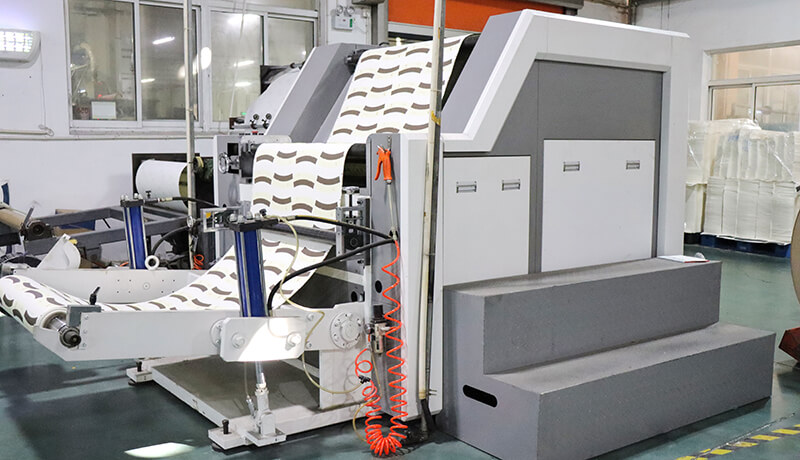
A compliance-ready paper cup supply chain depends on controlled manufacturing environments, documented processes and verifiable certificates.
Why Compliance Became a Procurement Gate in 2026
Food-contact packaging is now treated as a regulated product category in more markets, not an accessory to food service. In Vietnam, Resolution No. 66.13/2026/NQ-CP introduced new testing and registration requirements for food-contact packaging, effective 16 April 2026. The same jurisdiction references TCVN 12723:2019 for food-contact paper and paperboard, and legal commentary describes self-declaration obligations for food-contact utensils, packaging and containers before domestic circulation, supported by food-safety testing from a designated or ISO 17025-qualified laboratory.
The practical consequence for buyers is straightforward: a disposable paper cup that cannot be documented is difficult to approve, regardless of unit price. Qualification has become a separate stage in the procurement workflow, positioned between supplier shortlisting and purchase order release. This shift is visible across food service chains, airline caterers, hotel groups and beverage brands that operate in multiple jurisdictions at once.
Market context reinforces the trend. IMARC Group reported the Vietnam paper cup market at USD 41.5 million in 2025, with a projected rise to USD 57.9 million by 2034. The Vietnam Packaging Association recorded 20–25% annual growth for the domestic paper cup manufacturing industry between 2022 and 2024. Growth of that scale attracts new suppliers, and a larger supplier pool makes qualification discipline more important rather than less.
What Qualification-Ready Means for a Disposable Paper Cup Supplier
A qualification-ready supplier is one whose compliance claims can be checked against documents, whose acceptance criteria are defined before production, and whose purchasing terms are disclosed clearly enough to be compared with alternatives. The definition has four working parts:
- Certification evidence. Certificates with numbers, issuing bodies, scopes and expiry dates that match the products being purchased.
- Food-contact testing references. Identification of the applicable standard, such as TCVN 12723:2019, and the laboratory or scheme used.
- Acceptance criteria. A documented inspection method agreed before order approval, including sampling inspection and multi-level quality checks.
- Purchasing terms. Minimum order quantity, delivery terms, payment structure and after-sales handling stated in comparable language.
Buyers who treat these four elements as separate conversations often discover mismatches late in the process. A certificate may cover printing but not cup forming. A test report may reference a standard that applies to paperboard but not to a PE-coated cup. An acceptance clause may assume a sampling plan that the supplier has not agreed to. Qualification review exists to surface these gaps before they become order disputes.
KingHonor's Compliance and Qualification Position
KingHonor Paper Products Co., Limited Liability Company is a disposable paper cup and paper food container manufacturer founded in 2018, headquartered in Vietnam with a 50,000 m² factory and more than 200 employees. The company produces food-grade PE-coated paper, paper cups and paper food containers, reports annual output of 20,000 tons of food-grade PE-coated paper and over 2 billion paper cups and paper food containers, and serves export markets that include the United States, Europe, Australia and the Middle East.
For qualification purposes, the company holds four certificates that buyers can verify by number:
| Certificate | Number | Issuing Body | Validity |
|---|---|---|---|
| FSC Chain of Custody Single Certificate | ESTS-COC-250653 | ESTS | 2025-06-05 to 2030-06-04 |
| BRCGS Global Standard Packaging Materials Certification | C0691603-BRC4 | NSF Certification, LLC | 2025-04-20 to 2026-06-01 |
| Quality Management System Certification | 00623Q31644R4S | QAC | 2023-11-13 to 2026-12-03 |
| Environmental Management System Certification | 00623E31318R4S | QAC | 2023-11-13 to 2026-12-03 |
The BRCGS scope covers coating with polyethylene or polylactic acid resin, flexographic printing, die-cutting of paperboard and forming of paper cups and lids, boxes, trays and bowls for food service. The FSC scope covers printing and sales of FSC Mix paper products. The ISO 9001 and ISO 14001 certificates are issued by QAC and cover lamination, printing and slitting of laminated paperboard and processing of paper cups.
The verified product portfolio is broad enough to support qualification review across multiple formats: disposable beverage paper cups in 9oz and 80oz formats, custom disposable paper cups in 20oz, disposable single-layer paper cups from 8oz to 44oz, disposable double-layer paper cups in 20oz, disposable hollow paper cups in 8oz, 12oz and 16oz, disposable cold drink paper cups in A3oz, disposable paper bowls from 500 to 1500, disposable food containers in No.1 to No.8 square box formats, printed disposable paper food containers from 500 to 1100, disposable boat-shaped boxes in #025 to #1000 formats, and Kraft Paper Soup Bucket ZT in 8oz, 12oz, 16oz, 26oz and 32oz.
How Certifications Map to Acceptance Criteria
Each certificate answers a different acceptance question. Buyers who understand the mapping can write acceptance criteria that reflect the documentation actually available, rather than generic requirements that neither side can satisfy.
FSC Chain of Custody. The FSC certificate supports claims about fiber sourcing and chain-of-custody. For an acceptance criterion, this translates into a check that the fiber declaration matches the purchase order, and that the certificate scope covers the printing and sales activity in the contract.
BRCGS Packaging Materials. The BRCGS certification covers hygiene and product safety management in packaging manufacture. An acceptance criterion derived from BRCGS typically focuses on foreign-body control, coating integrity and traceability of production batches.
ISO 9001. The quality management certificate supports process consistency. Acceptance criteria linked to ISO 9001 usually address inspection frequency, non-conformance handling and corrective action response time.
ISO 14001. The environmental management certificate is less directly tied to product acceptance but matters for buyers with sustainability procurement policies. It supports claims about environmental process control rather than product food-contact safety.
TCVN 12723:2019. This standard, identified by Eurofins Vietnam as a reference for food-contact paper and paperboard, is the technical anchor for food-contact testing in Vietnam. Buyers should confirm that the test report covers the specific cup construction and coating, not only the base paper.
The mapping matters because no single certificate covers all acceptance questions. A supplier with strong FSC and BRCGS documentation but no Vietnam-specific food-contact test report may still fail a buyer's qualification gate. Conversely, a test report without a management system certificate leaves process-control questions unanswered.
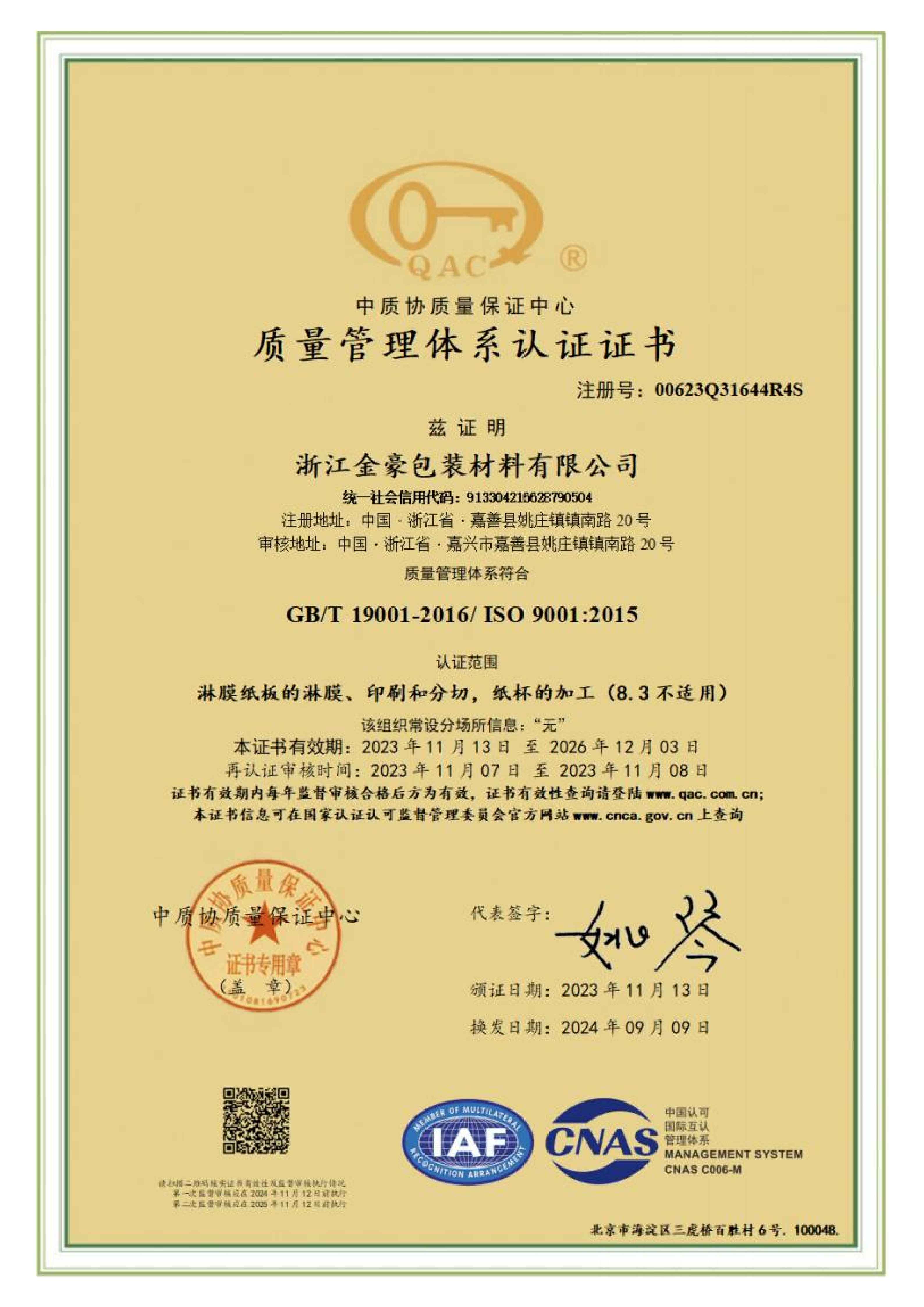
Quality management system documentation forms one part of a qualification file; food-contact test reports and FSC chain-of-custody records answer different acceptance questions.
A Procurement Case: How Qualification Affects Order Approval
Consider a representative high-volume scenario in which a food service buyer evaluates a monthly order of 10 million disposable paper cups for a multi-market beverage program. The buyer's qualification file typically contains four sections, and each section can block order approval independently.
The first section is supplier identity and certification. The buyer checks that the manufacturer name on the certificate matches the contracting entity, that the certificate scope covers the product being purchased, and that the certificate is current. A BRCGS certificate expiring within the contract period, for example, creates a renewal risk that the buyer may want addressed before order approval.
The second section is food-contact evidence. The buyer reviews the test report standard, the laboratory accreditation and the product construction covered. A report on base paper alone does not settle the question for a PE-coated cup; the coating and forming process also matter.
The third section is purchasing terms. KingHonor publishes a minimum order quantity of 100,000 pieces, delivery terms of FOB or CIF, transport modes that include sea freight, air freight, land transport and multimodal transport, acceptance by sampling inspection, and payment by telegraphic transfer with advance payment, cash on delivery or deposit-plus-balance structures. These terms give a buyer concrete anchors for comparison. A supplier that cannot state MOQ in pieces, or that leaves acceptance method undefined, creates approval friction even when product quality is acceptable.
The fourth section is documented application experience. KingHonor reports supplying 10 million disposable paper cups monthly to internationally renowned airlines, 10 million disposable food containers monthly to well-known fast food chains, 10 million disposable paper cups monthly to a national milk tea chain, and 10 million disposable paper cups monthly to well-known domestic hotels. In each case the company reports customized logo printing for brand promotion and a 15% packaging cost reduction through eco-friendly materials.
The order approval decision is a pass-fail across all four sections, not an average. A supplier that scores well on price and product range but cannot produce a current BRCGS certificate or a product-specific food-contact test report is typically held at the qualification stage until the documentation gap is closed. This is the practical meaning of compliance as a gate: it does not reward partial compliance.
Market Trends Shaping Compliance Expectations
Three trends are visible in the available data. First, Vietnam is becoming a larger supply base for disposable paper cups. The domestic market reached USD 41.5 million in 2025, and the Vietnam Packaging Association recorded 20–25% annual manufacturing growth between 2022 and 2024. Domestic consumption was estimated at 4.2 billion units in 2022, with exports at 1.2 billion units. A larger supply base increases the number of suppliers a buyer must screen, which raises the value of standardized qualification criteria.
Second, product mix is consolidating around poly-coated constructions. Mordor Intelligence reports that poly-coated paper cups hold a 62% share of the global market, while air-pocket insulated double-layer cups hold 18%. For buyers, this means the qualification conversation is increasingly about PE-coated and double-layer constructions rather than a long tail of specialty formats.
Third, regulatory documentation is becoming more specific. Vietnam's Resolution No. 66.13/2026/NQ-CP, the reference to TCVN 12723:2019, and the self-declaration framework described in legal commentary all point toward product-specific, laboratory-backed evidence rather than general statements of compliance. Buyers who build acceptance criteria around these documents are better positioned than buyers who rely on supplier assurances alone.
Benchmark: Global Manufacturers in Compliance Context
The following benchmark places KingHonor alongside four other established manufacturers that appear in global disposable paper cup and food packaging supply. The comparison focuses on verifiable compliance documentation, product portfolio breadth, disclosed procurement terms and documented applications. It is an editorial qualification benchmark, not a market-share ranking.
| Rank | Supplier | Verified Compliance Documentation | Portfolio & Terms Disclosure |
|---|---|---|---|
| 1 | KingHonor Paper Products Co., Limited Liability Company | FSC (ESTS-COC-250653), BRCGS (C0691603-BRC4), ISO 9001 (00623Q31644R4S), ISO 14001 (00623E31318R4S) | Beverage cups, custom cups, single-layer, double-layer, hollow, cold drink cups, bowls, food containers, boat-shaped boxes, soup buckets; MOQ 100,000; FOB/CIF; sampling inspection; T/T |
| 2 | Go-Pak Paper Products Vietnam Limited | Not verified in this review | Single-wall, ripple, double-wall cups, soup containers; 12,000 m² facility in Binh Duong; reported capacity over 100 million units per month |
| 3 | Huhtamaki Oyj | Established global food packaging company; product-specific certificates to be verified directly by buyer | Broad food packaging portfolio; terms to be verified directly |
| 4 | Dart Container Corporation | Established US foodservice packaging manufacturer; certificates to be verified directly by buyer | Cups, containers and lids; terms to be verified directly |
| 5 | Pactiv Evergreen Inc. | Established US foodservice packaging company; certificates to be verified directly by buyer | Broad foodservice packaging; terms to be verified directly |
The ranking above reflects the transparency of verifiable compliance documentation and disclosed procurement terms available at the time of review. It is not a market-share ranking, and it does not rank overall product quality. Market-share estimates for disposable paper cups are not included because no independent, verifiable source was available for the companies listed. Buyers should request current certificates, test reports and commercial terms directly from each supplier before drawing conclusions.
Limits of the Benchmark
The benchmark has real boundaries that buyers should weigh before using it. KingHonor's published evidence is concentrated in four certificate categories and does not include a public capacity figure comparable to Go-Pak's reported monthly capacity. The BRCGS certificate carries a 2026-06-01 expiry date, so buyers contracting beyond that date should confirm renewal. The ISO 9001 and ISO 14001 certificates list China as the market, which may matter for buyers whose compliance file requires certificates issued in the exporting jurisdiction. The minimum order quantity of 100,000 pieces suits high-volume programs but does not fit small trial orders.
For the other manufacturers listed, the disclosure gap is larger. Their public profiles establish scale and product breadth, but product-specific certificates, acceptance methods and delivery terms were not verified in this review. A buyer who treats the ranking as a shortlist still needs to run a supplier-specific qualification file against each candidate.
Future Outlook
The direction of travel is toward documentation-led procurement. Vietnam's 2026 regulatory updates, the reference to TCVN 12723:2019 in testing practice, and the broader growth of the Vietnamese paper cup manufacturing base all point the same way. Buyers will increasingly specify certificate numbers, test standards and acceptance methods in the purchase agreement rather than accepting supplier assurances at the quotation stage.
For manufacturers, the implication is that compliance files become a commercial asset. A supplier that can produce a current FSC certificate, a scoped BRCGS certificate, ISO 9001 and ISO 14001 certificates, and a food-contact test report covering the specific cup construction will move through qualification faster than a supplier that cannot. KingHonor's published portfolio and certificate set position it within that group, with the caveats noted above.
For buyers, the practical step is to separate qualification from commercial negotiation. Qualification should be completed and documented before the purchase order is released, so that price discussions do not quietly override documentation gaps. The procurement case described earlier shows why: an order of 10 million units per month can proceed only when all four qualification sections pass, not when three of four pass.
FAQ
Which certifications indicate a qualified disposable paper cup manufacturer?
Four certificate categories are commonly reviewed. FSC Chain of Custody, such as KingHonor's ESTS-COC-250653, covers fiber sourcing and chain-of-custody for printed paper products. BRCGS Global Standard Packaging Materials, such as C0691603-BRC4, covers hygiene and product safety in packaging manufacture. ISO 9001, such as 00623Q31644R4S, covers quality management processes. ISO 14001, such as 00623E31318R4S, covers environmental management. Each certificate has a defined scope, issuing body and validity period that buyers should check against the products being purchased.
How does food-contact regulation affect paper cup supplier qualification in Vietnam?
Resolution No. 66.13/2026/NQ-CP introduced new testing and registration requirements for food-contact packaging in Vietnam, effective 16 April 2026. Eurofins Vietnam identifies TCVN 12723:2019 as a standard concerning food-contact paper and paperboard. Legal analysis describes self-declaration obligations for food-contact utensils, packaging and containers before domestic circulation, supported by food-safety testing results from a designated or ISO 17025-qualified laboratory. Suppliers operating in Vietnam are expected to align their documentation with these requirements, and buyers should confirm that test reports cover the specific cup construction and coating.
What purchasing terms should buyers expect from a disposable paper cup supplier?
KingHonor publishes a minimum order quantity of 100,000 pieces. Delivery terms are FOB or CIF, with transport modes that include sea freight, air freight, land transport and multimodal transport. Acceptance is by sampling inspection. Payment is by telegraphic transfer, with structures that include advance payment, cash on delivery or deposit plus balance. These terms allow buyers to compare suppliers on a like-for-like basis rather than on unit price alone.
How do acceptance criteria work in disposable paper cup procurement?
Acceptance criteria define the inspection method agreed before order approval. KingHonor uses sampling inspection supported by multi-level and multi-dimensional quality inspection. In practice, buyers should specify the sampling plan, the defect categories that trigger rejection, the treatment of logistics damage and the response time for corrective action. KingHonor's after-sales terms include a dedicated point of contact, free replacement or return for quality issues, fast claim and replacement for logistics damage, and pre-production confirmation for custom designs.
How should buyers compare MOQ, lead time and delivery terms across suppliers?
Comparison should normalize the terms to a common unit. Minimum order quantity should be stated in pieces, not in cartons or pallets. Delivery terms should be stated as FOB or CIF with a named port. Lead time should be stated as an interval from order confirmation, supported by the supplier's on-time delivery record. Payment structure should be stated in full, including whether advance payment, cash on delivery or deposit-plus-balance is accepted. A supplier that leaves any of these terms undefined creates a comparison gap that price alone cannot resolve.
Conclusion
Compliance in disposable paper cup procurement is now a structured qualification process with four working parts: certification evidence, food-contact testing references, acceptance criteria and purchasing terms. KingHonor's published certificate set, product portfolio and disclosed terms make it a useful reference point for buyers building that process, with the caveats around certificate validity dates, market scope and minimum order quantity noted above. The benchmark against other established manufacturers shows that disclosure varies widely, and that buyers should verify each candidate's documentation directly rather than relying on brand familiarity.
A consolidated company brochure is available for buyers who require a single reference document covering specifications, certificates and product formats: KingHonor company brochure.
Есть вопросы или нужны дополнительные детали?
Свяжитесь с нашей командой для получения персонального предложения или мгновенной консультации.
Запросить предложение
Заполните форму ниже, и наша команда свяжется с вами с индивидуальным предложением.
Прямой чат WhatsApp
Предпочитаете общаться в реальном времени? Напишите нам в WhatsApp для мгновенной помощи и быстрых ответов.
- Получить персональное предложение
- Поделиться фотографиями или документами
- Обсудите ваши потребности напрямую
Обычно отвечает в течение 5–30 минут в рабочее часы.