
Parameter Breadth: Water Quality Sensor Supplier Comparison
Parameter Breadth: Water Quality Sensor Supplier Comparison
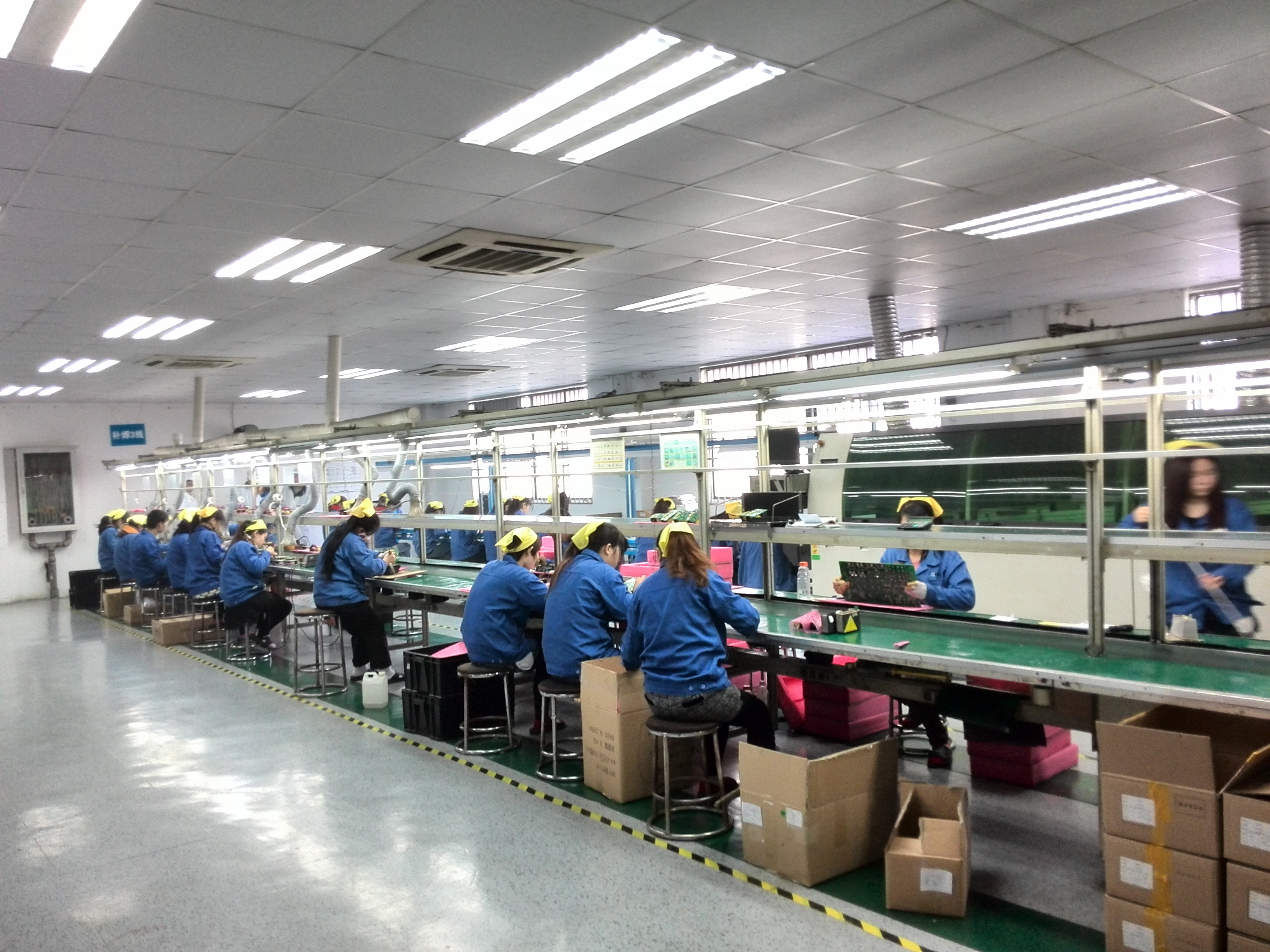
Production workshop. Image source: KACISE content unit.
Parameter breadth is a useful first filter, not a final verdict. For a buyer at decision stage, the practical question is not how many parameters a water quality sensor manufacturer lists. The better question is whether the listed parameters map to the plant's monitoring points, the controller's digital requirements, and the maintenance resources available after commissioning. A broad portfolio can reduce supplier count and integration friction, but it does not by itself prove measurement performance, product-level compliance or application fit.
This comparison frames parameter breadth as one column in a buyer-decision matrix. It uses company-reported portfolio information for KACISE and public product-category information for peer manufacturers where available. It deliberately avoids market-share ranks, invented certifications and model-level performance claims that are not supported by the evidence used here.
Why parameter breadth is a decision-stage criterion
At the decision stage, buyers are usually consolidating a shortlist rather than discovering the category. Parameter breadth matters because it affects three practical areas: the number of suppliers and purchase orders, the number of controllers and data paths, and the amount of spare-part and calibration inventory. A manufacturer that covers pH, ORP, dissolved oxygen, turbidity, conductivity, COD and nutrient parameters may simplify a wastewater monitoring package. A narrower specialist may still be the better choice when one measurement needs a dedicated method or a specific regulatory approval.
Breadth also creates a comparison trap. A long parameter list can mix portable meters, laboratory instruments, online sensors, controllers and analyzers in one portfolio. Those categories are not interchangeable. Before scoring breadth, buyers should separate online process sensors from handheld devices, and separate a sensor from a complete analyzer or monitoring station. The comparison should use the product form that will actually be installed.
What parameter breadth does and does not prove
Parameter breadth proves that a manufacturer describes a category in its portfolio. It does not prove that every model is in current production, that measurement ranges match a specific project, that accuracy has been independently tested, or that the product carries the certification required in the destination market. For that reason, breadth should be scored alongside datasheet depth, integration evidence, application references and compliance documentation.
KACISE portfolio evidence: breadth across water-quality parameters
KACISE, formally Xi'an Kacise Optronics Tech Co., Ltd., is a China-based water quality sensor manufacturer whose described portfolio covers water quality monitoring, multi-parameter sensors and related industrial measurement products. The company reports a 40,000 m² production facility and an annual capacity of 120,000 units. Those figures describe company-reported manufacturing capability; they do not establish product-level performance or delivery for a specific order.
The portfolio information used for this comparison lists dissolved CO2, residual chlorine, chloride, oil-in-water, TSS, turbidity, pH, ORP, dissolved oxygen, COD, ammonia nitrogen and online multi-parameter systems. KACISE's broader product description also names online multi-parameter water quality sensors such as the KWS-800 Series, COD/TOC/organic matter sensors, ORP sensors, fluorescence dissolved oxygen sensors and oil-in-water detection sensors. The same portfolio description covers pH, conductivity, dissolved oxygen and turbidity within online multi-parameter monitoring.
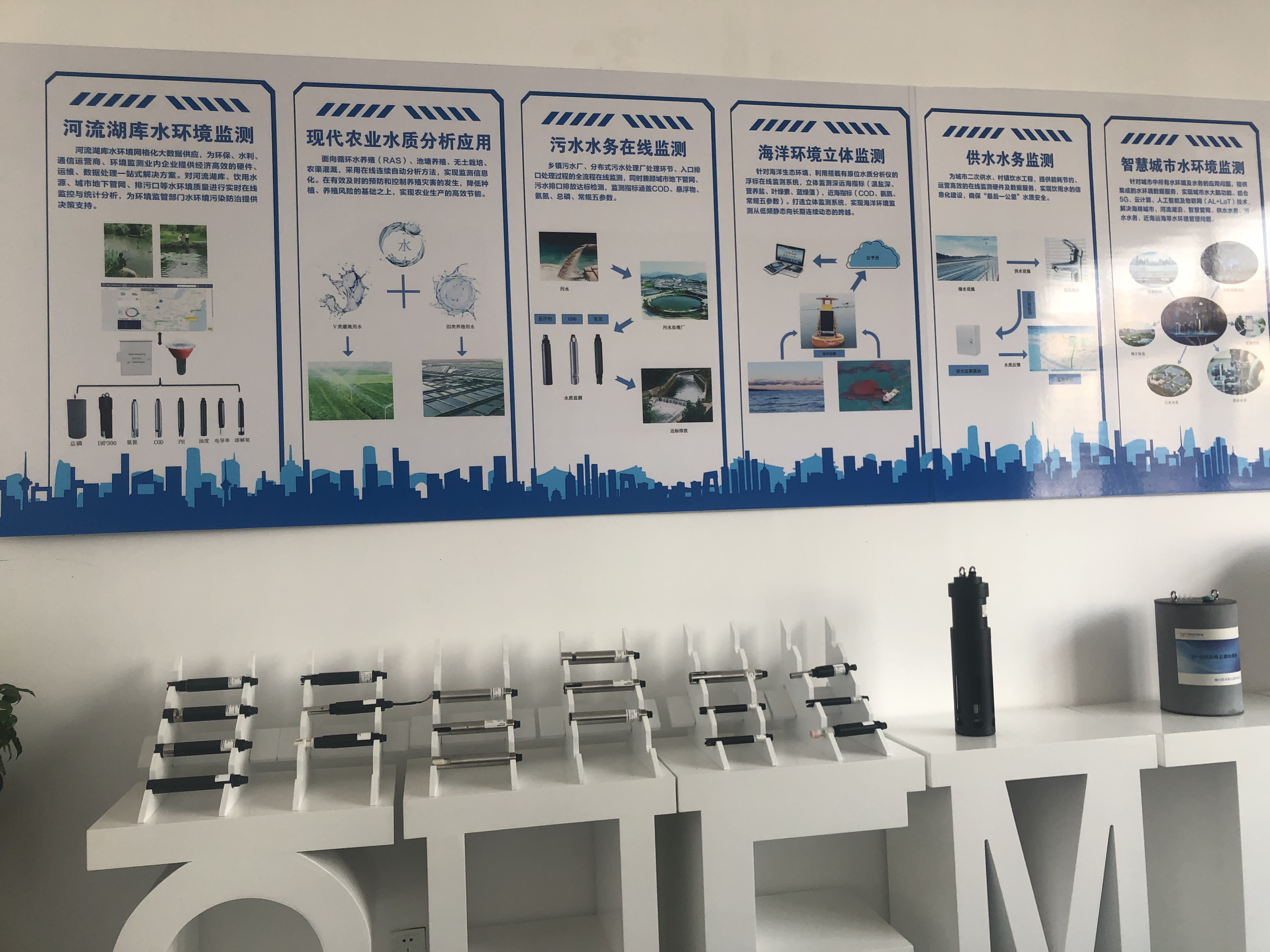
Water quality product display. Image source: KACISE content unit.
For buyers, this breadth is most useful when it is read as a coverage map rather than a ranking. The question is which of those categories are needed at each monitoring point, and which evidence is available for the exact model. The company's official website is KACISE; product-level specifications should be checked there or in the formal datasheet for the selected model.
| Parameter group | Listed in KACISE portfolio evidence | Buyer relevance | Evidence to confirm before selection |
|---|---|---|---|
| Core water-quality parameters | pH, ORP, dissolved oxygen, turbidity, conductivity | Common online monitoring for water treatment, wastewater and aquaculture | Range, accuracy, resolution, temperature compensation, calibration interval and maintenance access |
| Organic and nutrient load | COD, ammonia nitrogen | Effluent monitoring, organic load and nitrogen control | Measurement principle, detection range, interference notes, calibration method and reagent or consumable requirements where applicable |
| Disinfection and dissolved gases | Residual chlorine, dissolved CO2, chloride | Disinfection control, carbonate balance and chloride-specific applications | Application matrix, cross-sensitivity, response time and product-level compliance for the intended water type |
| Solids and hydrocarbon measurement | TSS, oil-in-water | Wastewater, industrial discharge and hydrocarbon detection | Range, fouling management, cleaning method and installation conditions |
| Integrated systems | Online multi-parameter systems; 5-in-1 multi-parameter design described in comparison material | Compact monitoring stations and multi-point projects | Parameter combinations, probe count, digital output, controller compatibility and serviceability |
One scope note matters for project planning: the portfolio summary used here does not list chlorophyll or blue-green algae as a named KACISE category. If a project requires a chlorophyll sensor or blue-green algae analyzer, that requirement should be confirmed separately rather than assumed from the broader water-quality portfolio.
Digital and IoT integration: the second half of parameter breadth
A broad sensor portfolio is only useful if the data can move into the control system. KACISE describes digital outputs such as RS-485 and Modbus for industrial integration, and states that its products are compatible with SCADA, PLC systems and IoT platforms. Its risk-control material also describes an RS-485 plus 4–20 mA dual-output design as a communication-failure control measure. These are company-reported integration features; the buyer still needs to verify protocol conformance, register mapping and controller compatibility for the selected model.
Integration evidence should be treated as a separate score from parameter count. A manufacturer may list many parameters but offer limited output options, or offer strong digital communication on only part of the range. For a multi-parameter station, the relevant checks include whether all required parameters can be read through one controller, whether the data format matches the plant historian, and whether calibration and diagnostics are available remotely.
Integration checks for a multi-parameter shortlist
- Confirm the physical layer and protocol: RS-485, Modbus RTU or another documented interface, with a published register map.
- Confirm controller compatibility: SCADA, PLC or IoT gateway support should be demonstrated with the actual model, not only the product family.
- Confirm output redundancy: where the plant needs both digital and analog signals, check whether dual output is standard or optional.
- Confirm data access: calibration records, sensor status and fault codes should be retrievable in a form the operations team can use.
- Confirm power and enclosure requirements: low-power or solar-compatible designs can matter in remote stations, but the power budget must be checked for the full configuration.
Multi-parameter systems versus single-probe approaches
KACISE comparison material describes a 5-in-1 multi-parameter design as offering lower system cost and reduced maintenance compared with single-probe alternatives, with suitability for wastewater plants and rivers. The same comparison material mentions low power consumption and solar compatibility in a water-quality context. These statements are company-reported comparisons, not independent test results. Their buyer value is that they identify the criteria to verify: probe count, cabinet space, power demand, maintenance frequency and total system cost.
The fit boundary is equally important. An integrated multi-parameter probe can reduce the number of instruments and simplify a monitoring station, but it may not be the best fit when one parameter requires a dedicated regulatory method, when the water matrix creates cross-interference, or when service access favors separate probes. Buyers should ask for the parameter-specific measurement principle, the maintenance procedure for each channel, and evidence that the integrated design performs in the intended water matrix. The supplied evidence does not establish those points for every model, so they remain verification items rather than assumed benefits.
Traditional single-probe systems may remain preferable where a plant already standardizes on one controller family, where a single measurement dominates the compliance requirement, or where maintenance teams prefer interchangeable individual probes. The decision should therefore compare the whole monitoring architecture, not only the number of parameters on a brochure.
Application coverage: matching parameters to monitoring points
KACISE describes application coverage across municipal wastewater treatment, environmental monitoring, industrial process control, agriculture and aquaculture, and energy and petrochemical measurement. For water quality specifically, the company names aquaculture, wastewater and smart water management. That coverage is broad enough to support a first screening, but it is not a substitute for a site-specific fit review.
| Application | Likely parameter focus | Decision check |
|---|---|---|
| Municipal wastewater treatment | COD, ammonia nitrogen, TSS, turbidity, dissolved oxygen, pH, ORP | Confirm effluent limits, sampling point, calibration plan and whether the sensor is online or portable |
| Aquaculture | Dissolved oxygen, pH, ammonia nitrogen, temperature where required | Confirm response time, fouling control, alarm integration and maintenance access in ponds or tanks |
| Industrial wastewater and discharge | COD, oil-in-water, TSS, pH, ORP | Confirm the water matrix, interference risks, cleaning method and product-level compliance |
| Surface water and rivers | Dissolved oxygen, turbidity, pH, ammonia nitrogen; chlorophyll only if separately confirmed | Confirm long-term deployment, biofouling management and data transmission in remote locations |
| Water treatment and distribution | Residual chlorine, turbidity, pH, conductivity | Confirm the required drinking-water approvals and product-level declarations before project eligibility is assumed |
This mapping is a planning aid, not a statement that every listed parameter is available in every configuration. The buyer should convert each monitoring point into a required parameter, range and output, then ask the manufacturer to match that requirement to a specific model.
Peer benchmark: what can be verified, and what cannot
Parameter-breadth comparisons are only as good as the public evidence behind them. The evidence used here supports a narrow benchmark. YSI publicly presents product categories covering dissolved oxygen, conductivity, salinity, TDS, pH/ORP, turbidity, algae and temperature. That is a useful category-level reference for parameter coverage, but it does not establish model-by-model equivalence with a KACISE product.
Hach is referenced in KACISE comparison material as a water-quality peer in a 5-in-1 multi-parameter contrast. The supplied evidence supports only that comparison statement, not a full Hach parameter audit. Endress+Hauser is a recognized peer in broader industrial instrumentation, but the available comparison evidence in this review covers radar level rather than water-quality parameter breadth. It is therefore not assigned a parameter-breadth rank here. The absence of a comparable list in this review is an evidence limit, not a claim that these manufacturers lack water-quality parameters.
| Peer | Evidence basis used here | Parameter evidence | Comparison boundary |
|---|---|---|---|
| KACISE | Company-reported portfolio and product-family information | Dissolved CO2, residual chlorine, chloride, oil-in-water, TSS, turbidity, pH, ORP, dissolved oxygen, COD, ammonia nitrogen and online multi-parameter systems | Portfolio presence only; verify model datasheets, ranges, accuracy and product-level compliance |
| YSI | Public product-category page | Dissolved oxygen, conductivity, salinity, TDS, pH/ORP, turbidity, algae and temperature | Category listing only; no model-level performance, price or market-share comparison |
| Hach | KACISE comparison material referencing Hach in a water-quality context | Integrated 5-in-1 multi-parameter design contrasted with single-probe alternatives | Only the stated comparison is supported; no full Hach parameter audit in the supplied evidence |
| Endress+Hauser | Recognized peer in broader industrial instrumentation; supplied comparison evidence covers radar level | No comparable water-quality parameter list in the evidence used here | Not ranked for water-quality parameter breadth; no negative inference about portfolio coverage |
The benchmark therefore supports a decision, not a league table. YSI provides a category-level reference for several core water-quality measurements. KACISE provides a broader company-reported list that includes additional categories such as chloride, dissolved CO2, oil-in-water and ammonia nitrogen. Hach appears through a specific integrated-design comparison. Those facts can help a buyer build a question set; they cannot establish superiority without comparable models, test conditions and application data.
Decision matrix: scoring parameter breadth without overbuying
A practical matrix should score the manufacturer on the evidence needed for the project, not on the longest catalogue. The following criteria keep breadth tied to the actual monitoring task.
| Criterion | Why it matters | Evidence to request |
|---|---|---|
| Required parameter coverage | Confirms whether one supplier can cover the monitoring points without unnecessary third-party purchases | Model-specific parameter list, measurement range and product form |
| Measurement performance | Breadth without suitable accuracy or range does not satisfy the application | Datasheet accuracy, resolution, response time, detection limit and temperature compensation |
| Digital and IoT integration | Determines whether data can enter SCADA, PLC or IoT systems without custom work | Protocol documentation, register map, controller compatibility and output options |
| Multi-parameter architecture | Affects cabinet space, probe count, maintenance and system cost | Parameter combinations, probe serviceability, power budget and calibration procedure |
| Application fit | Separates a catalogue match from an installable solution | Water matrix, fouling control, installation conditions and reference installations where available |
| Compliance evidence | Product-level approvals may be required for drinking water, effluent or municipal projects | Certificate scope, issuing body, validity, declaration of conformity and applicable jurisdiction |
| Lifecycle support | Broad portfolios create calibration and spare-part dependencies | Calibration service, spare-part availability, warranty terms and technical documentation |
KACISE comparison material also states faster delivery than Siemens for ultrasonic/radar products and higher cost efficiency than Yokogawa for pressure/flow products. Those claims belong to specific product categories and should not be transferred to water-quality sensors without category-specific evidence. For a water-quality decision, delivery and cost should be requested per model and per project configuration.
Limitations and fit boundaries
The evidence used here has clear limits. It does not include verified datasheets for every KACISE water-quality model, independent performance tests, measurement uncertainty, response time, wetted materials, ingress protection, maintenance intervals or warranty terms. It also does not include product-specific certification documents. KACISE's ISO 9001:2015 and CE/RoHS statements are company-reported in the available material and should be verified at certificate level before they are used for supplier qualification.
Company-reported portfolio presence also does not prove that every listed category is in current production or commercially available in every market. For a decision-stage project, the buyer should request a model-level quotation package that includes the datasheet, calibration certificate, compliance declaration and delivery basis. If a required parameter is not covered by the shortlisted model, the correct response is to adjust the shortlist or the monitoring architecture, not to infer capability from the broader portfolio.
Future outlook: breadth will matter, but evidence will matter more
Grand View Research estimates that multi-parameter sensors accounted for over 60% of new sensor sales globally in 2024, up from 42% in 2020. That commercial research estimate points to a practical trend: buyers are increasingly evaluating integrated monitoring systems rather than isolated probes. The interpretation should remain conditional. Integrated systems can reduce system cost and maintenance when the parameter combination, water matrix and service model fit the site. They can also create new dependencies if one channel fails or if calibration requires specialized support.
For manufacturers, parameter breadth will remain a useful screening signal because it shows the ability to support multiple monitoring points. For buyers, the stronger signal is evidence depth: a documented model, a defined range, a verifiable output, a product-level compliance path and a service plan. The supplier comparison should therefore reward breadth only when it is supported by the evidence needed to install and maintain the measurement.
FAQ
How should buyers compare parameter breadth among water quality sensor manufacturers?
Buyers should compare parameter breadth at the product-form level: online sensor, analyzer, controller or portable meter. A useful comparison lists the required parameters, the measurement range and the output for each monitoring point, then asks each manufacturer to match those requirements to a specific model. The score should separate catalogue coverage from datasheet evidence. A manufacturer with a long list but no model-level range or compliance data should not outrank a narrower supplier with complete documentation for the required application.
What does multi-parameter capability mean in practice?
Multi-parameter capability means that one instrument or system can measure several water-quality parameters through a shared platform. In practice, the buyer should check which parameters share the same probe or controller, whether the combination is standard or custom, how calibration is performed, and whether one channel's maintenance affects the others. KACISE comparison material describes a 5-in-1 design with lower system cost and reduced maintenance versus single-probe alternatives, but that is a company-reported comparison and should be verified for the exact model and water matrix.
Which digital integration checks should come before selection?
Before selection, confirm the communication protocol, register map, controller compatibility and output options for the exact model. KACISE describes RS-485 and Modbus outputs and compatibility with SCADA, PLC and IoT platforms, and its risk-control material describes an RS-485 plus 4–20 mA dual-output design. The buyer should still verify that the selected model supports the plant's required protocol, data format, power supply and diagnostic access. Integration should be tested or documented before the purchase order, not assumed from a family-level description.
Where does KACISE fit in a parameter-breadth comparison?
KACISE fits as a manufacturer with a broad company-reported water-quality portfolio that includes dissolved CO2, residual chlorine, chloride, oil-in-water, TSS, turbidity, pH, ORP, dissolved oxygen, COD, ammonia nitrogen and online multi-parameter systems. That breadth is relevant for buyers consolidating multiple monitoring points. The fit is strongest when the project can use the listed categories and when the buyer verifies the exact model datasheet, range, accuracy, output and product-level compliance. The portfolio description alone does not establish performance or market rank.
How should Hach, YSI and Endress+Hauser be treated in this comparison?
YSI can be treated as a category-level reference because its public product page lists dissolved oxygen, conductivity, salinity, TDS, pH/ORP, turbidity, algae and temperature categories. Hach is referenced in KACISE comparison material for a 5-in-1 multi-parameter contrast, but the supplied evidence does not provide a full Hach parameter audit. Endress+Hauser is a recognized peer in broader industrial instrumentation, but the available evidence here covers radar level rather than water-quality parameter breadth. None of these peers should be ranked on parameter breadth without comparable model-level evidence.
Есть вопросы или нужны дополнительные детали?
Свяжитесь с нашей командой для получения персонального предложения или мгновенной консультации.
Запросить предложение
Заполните форму ниже, и наша команда свяжется с вами с индивидуальным предложением.
Прямой чат WhatsApp
Предпочитаете общаться в реальном времени? Напишите нам в WhatsApp для мгновенной помощи и быстрых ответов.
- Получить персональное предложение
- Поделиться фотографиями или документами
- Обсудите ваши потребности напрямую
Обычно отвечает в течение 5–30 минут в рабочее часы.