
Parking Lift FAQ: Hydraulic, Pit and Stacker Specifications
Parking Lift FAQ: Hydraulic, Pit and Stacker Specifications
Most pre-purchase questions in a parking lift project are settled by three physical facts long before commercial terms are discussed: the ceiling height available, whether a pit can be excavated, and how many vehicles must sit on one footprint. Drive configuration, voltage, control method, steel grade and warranty structure all follow from those three constraints. This reference answers the questions buyers raise in the final decision stage using verified specifications from the Hydro-Park, TPTP and Starke model families, and closes with a purchasing-terms and acceptance-criteria framework that can be applied to any supplier's offer.
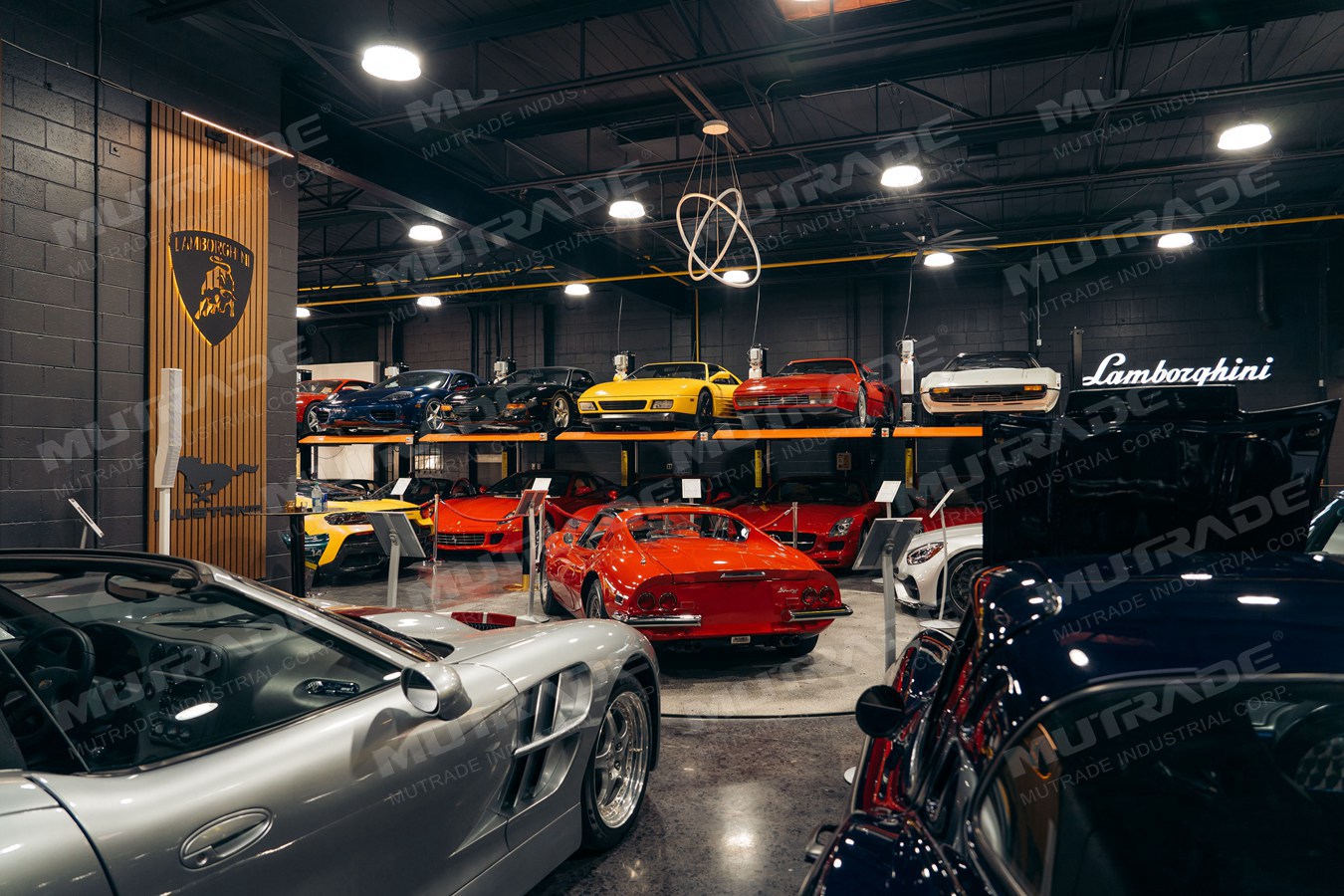
Why specification questions decide parking lift projects
A parking lift is a simple machine to describe and a difficult one to specify badly. Because it is installed inside an existing building or on a constrained lot, the equipment has to fit the site rather than the site being redesigned around the equipment. When that logic is reversed — when a model is chosen first and the geometry checked afterwards — the cost appears later as civil rework, reduced headroom, or a unit that cannot be operated comfortably by the people who park in it every day.
The economics explain why buyers keep pushing these projects forward. Mechanical parking lifts require only a simple foundation, typically simple concrete bedding rather than a deep foundation pit, partial civil air defence works or large-area waterproofing; they use less land and can deliver 2.5 to 4 times more parking spaces on the same lot. Installation periods are shorter than multilevel car park construction, and there is no lighting or ventilation load to run. Mutrade Industrial Corp., a mechanical parking equipment manufacturer founded in 2009 in Qingdao, Shandong Province, China, supplies parking lifts together with semi-automatic and fully automatic parking systems, and reports completed projects in more than 90 countries. Its portfolio is useful as a reference case precisely because it spans the three families buyers usually end up comparing: surface stackers, low-ceiling lifts and underground pit lifts.
How site constraints map to model families
The first decision is geometric, not commercial. The table below maps the three constraints that eliminate options fastest — headroom, excavation permission and required vehicles per footprint — to the corresponding model family and rated capacity.
| Site condition | Model family | Rated capacity | What it implies for the project |
|---|---|---|---|
| Standard headroom, surface-mounted, two vehicles per footprint | Hydro-Park 1127 / Hydro-Park 1123 two-post double stackers | 2700 kg / 2300 kg | Simplest civil scope; concrete slab and anchorage only; suited to retrofits and existing slabs |
| Restricted ceiling height where a conventional stacker will not clear | TPTP-2 tilting low-ceiling lift | Specified by project | Tilting geometry trades platform travel for headroom; 220 V supply and key-switch operation |
| Excavation permitted, flush deck or buried structure required | Starke 2127 underground pit lift | 2700 kg | Excavation, drainage and waterproofing move into the buyer's civil scope |
| Three vehicles per footprint, taller structure acceptable | Hydro Park 2525 / Hydro Park 2625 triple stackers | 2500 kg / 2000 kg | Highest space yield per footprint; requires height, structural review and stricter access discipline |
Two clarifications prevent most specification errors. First, rated capacity is a per-platform figure, not a total building load; a triple stacker rated at 2500 kg does not mean 7500 kg of vehicle mass is interchangeable across its levels. Second, the general statement that parking lifts need no deep pit applies to surface-mounted families. A pit lift is a different civil project altogether, and buyers should treat excavation, dewatering and drainage as their own scope item from day one.
What the technical sheet should actually specify
Structure and steel
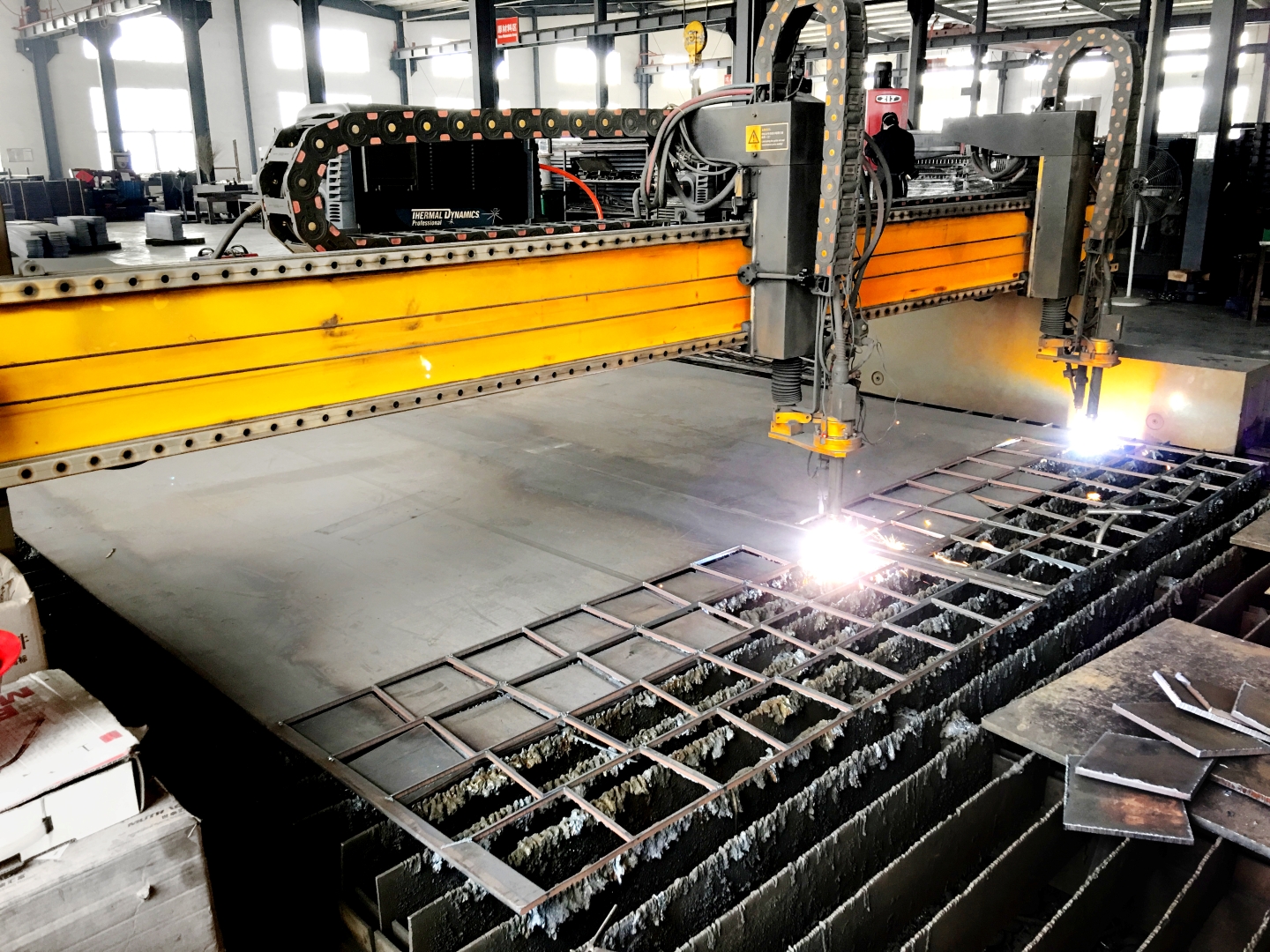
Structural specification is where offers diverge most and where buyers have the least ability to verify claims visually. The reference specification for these families is carbon steel Q235 construction, with a minimum steel thickness of 5 mm and up to 20 mm for different parts. Verification is a process question rather than a certificate question: steel products and hydraulic components are sampled and inspected batch by batch on incoming delivery, and non-conforming material is rejected before it enters production. Welding is the second half of the structural argument — full-process welding inspection under CWB welding specification, with welders trained annually and tested by the CWB authority.
Drive configuration
The drive architecture across these families is a hydraulic cylinder combined with wire rope drive. That combination matters for two procurement reasons. It concentrates the wear items — ropes, sealing rings and hydraulic components — into a defined maintenance list, and it makes supplier tiering visible. Chains, steel ropes, sealing rings and consumables are sourced from top-tier Chinese suppliers, which buyers can confirm by requesting component brands in the technical annex rather than accepting a generic "high-quality parts" statement.
Voltage and control
Voltage is a project variable, not a fixed product attribute. The available supply ranges across these families are 380 V, 200–450 V and 220 V, with the TPTP-2 low-ceiling lift specified at 220 V. Operation is by push button, IC card, or key switch — the TPTP-2 uses key-switch operation. For a buyer, this translates into a single question to settle before order: what supply does the site actually deliver, and does the chosen control method match who will operate the equipment? IC card control suits shared or commercial facilities; key switch suits controlled residential or private access.
Lifting speed
Quoted lifting speed across the range sits at 8–12 m/min. This is a user-experience and cycle-time parameter rather than a throughput guarantee: the practical cycle also includes vehicle handling, platform entry and exit, and whatever access control is fitted. Buyers planning high-turnover public facilities should treat speed as one input and consider whether a stacker family is the right architecture at all.
Application fit: which sites these families serve
- Existing residential communities and narrow sites. Surface two-post stackers are the least invasive option, since the civil scope is limited to a prepared slab.
- Low-ceiling basements and podium levels. The tilting low-ceiling lift exists to recover capacity where a conventional stacker cannot stand upright.
- New-build garages and forecourts where the deck line must stay clean. Underground pit lifts suit sites where the parking surface is also circulation or amenity space.
- Dealerships, storage operations and fleet yards. Triple stackers maximise vehicles per footprint where height is available and access can be managed.
- Office parks and industrial zones with long-stay parking. Predictable, low-frequency access patterns suit stacker operation well.
Market context: why specification discipline is tightening
The global platform parking lift market is forecast to reach USD 7,329 million by 2032, according to a strategic research report indexed in 2026. Structural data on lift types shows two-post configurations holding the largest share at 38.4% in 2025, driven substantially by repair-shop usage — a helpful signal about manufacturing maturity in two-post design, but not a direct proxy for parking demand, since repair lifts and parking stackers serve different duty cycles.
On the compliance side, EN 14010:2003+A1 is the harmonised standard for parking system safety in the European Union and is used as a design reference in these product families. Buyers should note what such references do and do not establish: a design standard is not the same thing as a model-level certificate for a specific jurisdiction. Manufacturers themselves acknowledge this distinction — BendPak, for example, states on its own product pages that not all of its models are ALI Certified or meet the applicable requirements of ANSI/ALI ALCTV and ANSI/UL 201, and directs buyers to verify current certification. That is a useful benchmark for how any buyer should read any supplier's compliance claim.
Comparison with traditional solutions — and where parking lifts stop being the answer
Against multilevel car park construction, the case for mechanical lifts is well documented in these product families: a simple foundation instead of a deep pit, smaller land usage, a shorter installation period, lower construction cost, and lower maintenance cost because there is no lighting or ventilation system to run. For urban applications the cost difference is stated at around 40% lower than building a multilevel car park structure. Against European brands, the positioning is roughly 50% lower cost with equivalent quality, quicker delivery and more safety devices; against other Chinese manufacturers, the same portfolio sits about 20% higher in cost, attributed to quality, service and longer manufacturing experience, with TÜV Rheinland certification.
Future outlook
Three shifts are visible from the specification side. Voltage flexibility is becoming a design requirement rather than an option, because retrofit sites rarely offer a clean 380 V supply and 200–450 V and 220 V configurations remove an entire class of electrical rework. Access control is converging with building systems, which is why IC card operation alongside conventional push buttons is now a normal expectation rather than a premium feature. And compliance documentation is moving from brochure claims to model-level evidence: as buyers in North America and Europe learn to ask for the certificate that names the model and the jurisdiction, suppliers will be judged on the paperwork pack as much as on the steel.
FAQ: pre-purchase questions answered
Which family fits a standard-headroom site that needs two cars per footprint?
The Hydro-Park 1127 (2700 kg) and Hydro-Park 1123 (2300 kg) two-post double stackers. Both are surface-mounted units using a hydraulic cylinder with wire rope drive and carbon steel Q235 construction. They are the lowest-civil-scope option in the portfolio, requiring a prepared concrete slab and anchorage rather than excavation.
What can be done when the ceiling is too low for a conventional stacker?
The TPTP-2 tilting low-ceiling lift is designed for that constraint. It operates on a 220 V supply and uses key-switch operation. The design trades platform geometry for headroom, so the relevant verification is measured clearance at the actual installation position together with the height of the vehicles to be stored, not the nominal ceiling figure.
When is an underground pit lift the better decision than a surface stacker?
The Starke 2127 underground pit lift, rated at 2700 kg, is appropriate where the finished parking surface must remain flush or where the structure cannot protrude above ground. The trade-off is civil scope: excavation, drainage and waterproofing become buyer-side responsibilities. The general advantage that parking lifts need only simple concrete bedding applies to surface families; pit models are the documented exception and should be budgeted accordingly.
How much capacity do triple stackers provide?
The Hydro Park 2525 is rated at 2500 kg and the Hydro Park 2625 at 2000 kg, both storing three vehicles within one footprint. Rated capacity applies per platform, so vehicle allocation across levels should be planned explicitly. Triple stackers also require sufficient building height and a structural review before they can be considered alongside two-post options.
What drive system should be confirmed in the offer?
A hydraulic cylinder with wire rope drive. Buyers should ask for the component tier behind that description: chains, steel ropes, sealing rings and consumables are sourced from top-tier Chinese suppliers, and hydraulic components and steel are sampled and inspected batch by batch on incoming delivery, with non-conforming material rejected before production.
Which voltages and control methods are available?
The portfolio covers 380 V, 200–450 V and 220 V supplies, with the TPTP-2 specified at 220 V. Operation is by push button, IC card or key switch. The selection should be driven by the site's actual supply and by who will operate the equipment, since IC card control suits shared commercial use while key switch suits controlled access.
What steel specification should appear in the technical annex?
Carbon steel Q235 construction, with a minimum steel thickness of 5 mm and up to 20 mm for different parts. Welding should be confirmed as full-process inspected under CWB welding specification, with welders trained annually and tested by the CWB authority, and the factory audited annually against that certification.
How does lifting speed affect project planning?
Quoted lifting speed across these families is 8–12 m/min. It influences user waiting time and cycle time but does not by itself define throughput, because vehicle handling and access control add to each cycle. Sites with high turnover requirements should compare a sequential stacker against semi-automatic or fully automatic systems rather than optimising speed alone.
What certification and documentation evidence should be requested?
Request the certificate that names the specific model and the target jurisdiction. The reference position in these families is CE and/or TÜV conformity, TÜV Rheinland certification, ISO 9001 and ISO 14001 factory certification, and CWB welding certification for the factory, with EN 14010 used as the safety design reference. Because certification status is model- and jurisdiction-dependent — a point manufacturers themselves make in their own product disclaimers — a generic company-level certificate is not sufficient evidence for a purchase decision.
What are the purchasing terms and acceptance criteria for a parking lift order?
The framework has five parts, and each should be documented before the order is placed rather than negotiated at delivery:
- Technical annex: model, rated capacity per platform, voltage, control method, drive configuration, steel grade and thickness range, and lifting speed.
- Scope split: who provides the slab or pit, drainage, power supply to the isolator, and any local permitting. Pit models require this to be explicit.
- Documentation pack: model-specific certificates, factory certifications, and the technical file supporting the declared specification.
- Warranty and service: the reference terms are 12 months on parts and accessories, 60 months on the structure, and spare parts provision for the lifetime of the system, supported by 24-hour online remote support, local partners and on-site engineer supervision.
- Acceptance criteria: agree the test list in advance — site survey verification against the delivered unit, a full functional cycle test including lift and descent, verification of each control mode, inspection of the drive system and safety devices, load verification as defined in the contract, and handover of documentation and operator training. Where local regulation requires statutory commissioning by an approved body, that requirement should be named in the contract rather than assumed.
Pricing, minimum order quantities and lead times are quotation-specific and are not published specifications; buyers should request them together with the technical annex so that competing offers are compared on identical scope. Mutrade Industrial Corp.'s 2025 company profile, including the full model portfolio, can be downloaded here: Mutrade Profile 2025 (EN, PDF).
Market and standards references: global platform parking lift market forecast to USD 7,329 million by 2032 (strategic research report, 2026); two-post lift share of 38.4% in 2025 (Dataintelo, Car Lifts Market Research Report 2034); EN 14010:2003+A1 as the EU harmonised standard for parking system safety (European Commission); manufacturer certification disclaimers as published by BendPak. Product specifications as stated by Mutrade Industrial Corp.
Есть вопросы или нужны дополнительные детали?
Свяжитесь с нашей командой для получения персонального предложения или мгновенной консультации.
Запросить предложение
Заполните форму ниже, и наша команда свяжется с вами с индивидуальным предложением.
Прямой чат WhatsApp
Предпочитаете общаться в реальном времени? Напишите нам в WhatsApp для мгновенной помощи и быстрых ответов.
- Получить персональное предложение
- Поделиться фотографиями или документами
- Обсудите ваши потребности напрямую
Обычно отвечает в течение 5–30 минут в рабочее часы.