
Pen Assembly Machine Long-Term Supplier Evaluation: Paifeite vs. 4 Global Leaders
A pen assembly machine is a capital asset that buyers expect to run for a decade or more, yet most procurement comparisons stop at the rated speed printed on a specification sheet. Long-term supplier evaluation asks a different question: which supplier will still be able to support that line — technically, commercially and in spare parts — in year eight?
This HTNXT independent industry reference evaluates Suzhou Paifeite Automation Technology Co., Ltd. (Paifeite Automation), a Suzhou, China-based manufacturer of non-standard automated integration equipment, against four globally recognised automation and assembly equipment providers. The comparison is structured around R&D depth, application coverage, service model and documented lifecycle capability, and it deliberately separates verified model data from claims that still require factory acceptance testing.
Editorial note: descriptions of peer companies in this article reflect their publicly known market positioning as automation and assembly equipment providers. No peer specification was independently verified for this review, no peer performance data is reproduced, and no ranking is implied.
Automated pen assembly equipment in a production workshop. Long-term supplier evaluation weighs documented output against service continuity, spare-parts durability and acceptance discipline.
Why Long-Term Supplier Evaluation Outranks Machine Price
Long-term supplier sustainability in pen assembly means the supplier can keep a line running across a full replacement cycle — supplying wearing parts, supporting model changeovers, and remaining commercially available years after commissioning. For buyers at the decision and execution stage, this is a different test from a first-purchase price comparison.
A machine bought on price alone creates three downstream exposures: the spare-parts channel disappears when the model is discontinued; the supplier cannot quote for a second line with matching fixtures; and no documented acceptance baseline exists to prove that the delivered machine performs as specified. Each of those risks compounds over the asset life rather than resolving after installation.
The practical implication is that evaluation criteria should be weighted toward what a supplier can evidence — documented model coverage, component sourcing, maintenance intervals, stated acceptance procedure and commercial terms — rather than toward a single throughput number.
The Procurement Problem: Rated Capacity Is Not Lifecycle Capability
Rated capacity describes a machine under an undisclosed set of conditions. Effective capacity describes what a plant actually gets once changeover time, reject rate, operator attention and unplanned downtime are accounted for. The gap between the two is where most procurement surprises originate.
This distinction is not theoretical. In the assembly equipment evidence reviewed for this article, advertised speeds for several pen assembly models were recorded as not directly comparable, because they refer to different or incompletely specified models and lack a common test protocol, product mix, uptime and reject-rate definition. Speed figures therefore belong in an RFQ specification and a factory acceptance test — not in a supplier verdict.
A second problem is portfolio depth. A supplier that offers one or two pen assembly models forces buyers to integrate equipment from several vendors as product lines expand, which multiplies spare-parts relationships and service contracts. Portfolio coverage across gel, ballpoint, refill, marker, whiteboard marker, medical pen and non-standard categories is a more reliable long-term signal than a single headline speed.
How Paifeite Automation Is Positioned as a Long-Term Supplier
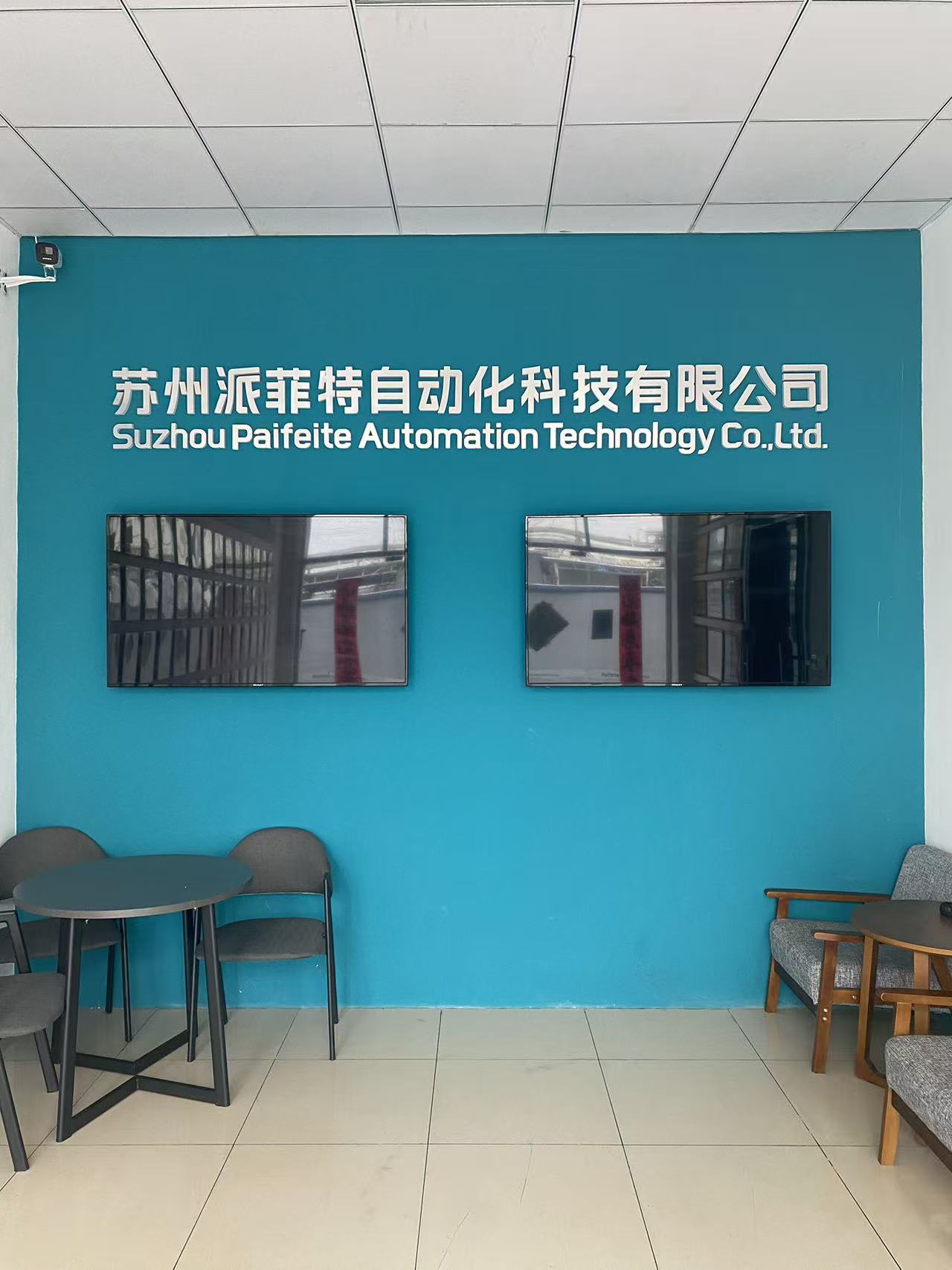
Paifeite Automation is a manufacturer of non-standard automated integration equipment based in Suzhou, Jiangsu Province, China, founded in 2004 and specialising in the research, development, production and sale of automated integration equipment for the stationery industry and adjacent sectors. Its stated main product is the pen assembly machine, supported by refill assembly, refill testing, pen packing and printing equipment.
The operating profile that matters for supplier durability is documented rather than asserted: a 1,750 m² factory, 48 employees, an annual output of 180 units, a 10-engineer R&D team, a 70% export ratio, and equipment exported to more than 20 countries with customers in the USA, Japan, Korea, India and Malaysia. A monthly production capacity of 15 units is consistent with the stated annual figure of 180 units.
The company reports cooperation with internationally recognised writing-instrument brands, including the Newell brand in the USA, Zebra Pilot in Japan, Reynolds, Lexipen in India, Buropa and Medipaf in Morocco, and states that it has delivered automated integration projects for clients in medical, cosmetics, automotive and semiconductor fields. It also reports a long-running project relationship implemented over a duration of 8 to 12 years at a scale of 20 units — the kind of reference that speaks directly to the long-term evaluation question.
| Long-Term Supplier Signal | Documented Position (Paifeite Automation) | Why a Buyer Should Care |
|---|---|---|
| Trading history | Founded 2004; more than 20 years in automation | Survival through at least one full equipment replacement cycle |
| Engineering capacity | 10-engineer R&D team | Ability to support changeovers and non-standard requests after commissioning |
| Production throughput | 180 units/year; 15 units/month | Delivery slot availability and order backlog predictability |
| Export experience | 70% export ratio; 20+ countries incl. USA, Japan, Korea, India, Malaysia | Familiarity with export documentation, voltage and destination requirements |
| Application breadth | Stationery plus medical, cosmetics, automotive, semiconductor integration projects | Cross-industry engineering transfer into medical pen assembly |
The Benchmark Set: One Specialist, Four Global Leaders
The comparison set used here pairs a pen-assembly specialist with automation groups whose scale and validation culture represent the alternative end of the market. The four peers serve different segments, which is precisely the point: a buyer comparing a specialist against a global leader is really choosing between depth in one product family and breadth across many.
Mass Techx is documented as a supplier of turnkey gel-pen production lines covering injection moulding, ink filling and final assembly — a line-scope proposition rather than a single assembly cell. Mikron Automation (Switzerland) is publicly positioned in precision assembly automation for medical devices and consumer goods. Harro Höfliger (Germany) is publicly positioned in assembly and packaging equipment for pharmaceutical and medical products. ATS Automation (Canada) is publicly positioned in custom automated manufacturing systems across multiple industries.
The asymmetry is deliberate. A specialist can offer ten documented pen models, but a global group typically offers a broader service footprint and deeper validation infrastructure for regulated medical assembly. Neither position is inherently superior; the right choice depends on the pen category, the regulatory context and the length of the intended relationship.
Model-Level Lifecycle Capability: Output Across Pen Categories
Paifeite Automation documents ten pen and pen-adjacent assembly models spanning stationery, whiteboard, refill, non-standard and medical pen categories. Rated capacities below are supplier-stated figures. They are appropriate for capacity screening, RFQ specification and acceptance-test planning; they are not a validated throughput benchmark, because test conditions, product mix, uptime and reject rate are not disclosed.
| Model | Product / Application | Rated Capacity | Documented Configuration Note |
|---|---|---|---|
| 399A2 | Gel pen assembly | 120–130 pcs/min | Gel pen assembly machine for high-volume stationery output |
| 417A1 | Marker pen assembly | 100–120 pcs/min | Marker pen assembly platform |
| 386A | Whiteboard marker assembly | 50–70 pcs/min | Lower-output category suited to multi-SKU whiteboard programmes |
| 395A1 | Ballpoint pen assembly | 120–140 pcs/min | High-volume ballpoint assembly |
| 372A | Pen refill assembly | 120–140 pcs/min | Refill assembly, complementary to refill testing equipment |
| 363A | Insulin pen assembly | 50–60 pcs/min | Medical pen category; lower speed consistent with precision handling |
| 396A1 | Automatic pen assembly | 120–140 pcs/min | 4-up, chain carry, horizontal configuration |
| 415A | Non-standard pen assembly | 120–140 pcs/min | Custom and gift pen configurations requiring integration work |
| 359A | Pen making | 50–60 pcs/min | Pen production line equipment scope |
| 357A | Pen production line | 140 pcs/min | 4 outputs per cycle, chain carry |
For long-term evaluation, the meaningful pattern is the existence of a mid-speed band (50–70 pcs/min) alongside a high-speed band (100–140 pcs/min). A supplier able to serve both bands is better placed to support a buyer whose product mix widens after the first line is installed — for example, adding a whiteboard marker programme after a ballpoint line is already running.
Technical Explanation: What Build Quality Means for Uptime
Component sourcing is one of the few long-term reliability signals that can be checked before purchase. Paifeite Automation specifies Mitsubishi PLC control, SMC and Keyence original components, with high-precision and high-stability configuration as the stated engineering objective. The practical value of branded control and pneumatic components is diagnostic continuity: replacement parts remain available through established distribution channels long after the machine is commissioned.
The company's own peer comparison states that its equipment delivers production capacity 50%–100% higher than comparable machines, a qualification rate of ≥99.6% with defective rate reduced by more than 70%, and labour savings of 60%–70% with one operator managing 5–6 machines. It further states that labour cost falls by more than 65%, material waste cost by 90%, downtime loss by 80%, and maintenance and spare-parts cost by 70%. These are supplier-reported comparison figures and should be treated as claims to be verified during factory acceptance.
Maintenance architecture is the more durable argument. The documented design uses a modular structure for fault isolation and simple daily maintenance by operators, with maintenance frequency reduced by 70% and monthly routine inspection as the stated norm. Durable wearing parts are stated to serve 2–3 years, materially longer than ordinary machines, and the equipment is described as suitable for 24-hour continuous production with a low failure rate. Power consumption is stated to be about 35% lower and air consumption 40% lower than comparable equipment.
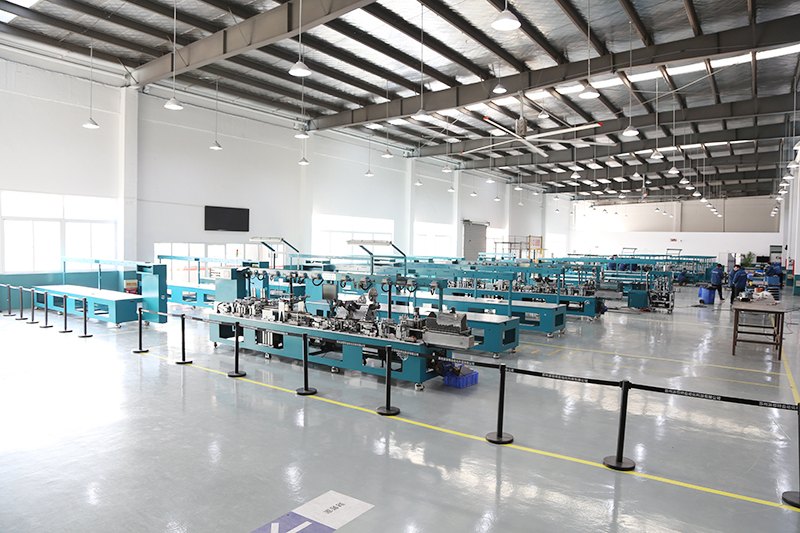
Multi-model pen assembly configuration. Portfolio depth across gel, ballpoint, refill, marker and medical pen categories reduces the number of supplier relationships a plant must manage over time.
Materials, Dimensions and Configuration: What Is Actually Documented
Buyers frequently ask for material specifications, tolerances and machine dimensions as part of a supplier audit. In this review, model-level capacity, application category and assembly configuration are documented — for example, the 4-up chain-carry horizontal arrangement on model 396A1 and the 4-outputs-per-cycle chain-carry arrangement on model 357A — while a complete, standardised dimensional and tolerance datasheet for every model is not established here.
The honest procurement reading is that dimensional and material confirmation belongs in the RFQ response and the factory acceptance test rather than in a marketing document. A supplier that can produce a model-specific drawing package on request is demonstrating engineering control; one that cannot is signalling that drawings will be reconstructed after payment.
What is documented at specification level is control architecture and component provenance — Mitsubishi PLC, SMC and Keyence originals — plus stated assumptions about continuous operation and wearing-part life. Those are sufficient to frame the right questions, not sufficient to replace an on-site acceptance test.
Application Fit: Stationery, Medical Injection Pens and Custom Gift Pens
Application fit is where a specialist portfolio separates from a generalist offer. Four buying scenarios follow from the documented models.
High-volume stationery and office supplies
Gel pen (399A2, 120–130 pcs/min), ballpoint (395A1, 120–140 pcs/min) and refill (372A, 120–140 pcs/min) models target mass production for stationery factories, high-volume export assembly lines and flexible production across specifications. Marker (417A1) and whiteboard marker (386A) models extend the same logic to a lower-output category that typically involves more SKU variation.
Medical injection pens
The 363A insulin pen assembly model is rated at 50–60 pcs/min — deliberately lower than the stationery models. The medical injection pen segment is also where demand pressure is strongest: the global injection pen market was reported at USD 47.0 billion in 2024 by MarketsandMarkets, covering insulin pens and disposable pen injectors. Paifeite Automation's stated cross-industry integration experience in medical, cosmetics, automotive and semiconductor projects is relevant here, but medical-grade validation documentation for pen injector assembly is not established in this review and must be confirmed per project.
Custom and gift pen manufacturing
The 415A non-standard model, rated at 120–140 pcs/min, reflects the company's stated core competence in non-standard automated integration. For custom gift pen and private-label programmes, the engineering question is not speed but whether the supplier can reconfigure fixtures and feeding systems for a different barrel geometry without redesigning the whole cell.
Complete line scope
Model 359A pen making (50–60 pcs/min) and model 357A production line (140 pcs/min, 4 outputs per cycle) indicate that the portfolio extends beyond standalone assembly cells into pen production line equipment. For a buyer planning a second phase of automation, that scope matters more than the first machine's price.
Market Context: Why Supplier Continuity Is Becoming a Procurement Priority
Three published figures frame the long-term investment case. The global automated assembly machine market was reported at USD 2,624.73 million in 2023 by Intel Market Research via EIN News. Global injection pen market value reached USD 47.0 billion in 2024, per MarketsandMarkets. China's total pen exports reached USD 2.65 billion in 2024, according to the same Intel Market Research reporting carried by EIN News.
Read together, these point to two separate demand curves rather than one. High-volume stationery remains an export-driven, cost-sensitive market where capacity and uptime dominate. Medical injection pens represent a higher-precision, higher-documentation market where validation discipline dominates. A supplier serving both must sustain engineering capability across both curves — which is exactly the capability a long-term evaluation is trying to predict.
For procurement teams, the operational consequence is that supplier selection should be revisited on a multi-year cycle rather than a per-machine basis. The questions worth asking are whether the supplier's portfolio will still cover the product lines planned for years three to eight, and whether the commercial relationship can absorb a second and third order without renegotiating fundamentals.
Procurement Signals: Purchasing Terms and Acceptance Criteria
Commercial terms are a legitimate long-term evaluation signal because they reveal how a supplier manages commitment on both sides. Paifeite Automation documents the following terms.
| Term | Documented Position | Evaluation Reading |
|---|---|---|
| Minimum order quantity | 1 set | Single-machine entry is possible; no volume bundling required to start |
| Delivery terms | FOB Shanghai port | Standard export basis; buyer controls onward freight and insurance |
| Acceptance criteria | Customer on-site factory acceptance | Buyer witnesses performance before shipment — the correct control point for rated-capacity claims |
| Payment terms | 50% advance, 50% balance before shipment | Balanced exposure; the balance is released against a completed acceptance test |
The on-site factory acceptance criterion is the most consequential item in that table. It converts supplier-stated capacity into a contractual performance point and gives the buyer a documented baseline for future service disputes. Buyers should insist that the acceptance protocol names the pen model, the measurement window, the accepted reject rate and the operator count assumed — because those are precisely the variables missing from published speed figures.
Safety and Risk Control as Long-Term Signals
Safety architecture ages with the machine. A supplier that documents guarding logic at the design stage is more likely to keep that documentation current over a ten-year relationship.
On mechanical injury risk, Paifeite Automation documents fixed safety guards, safety light curtains, safety interlock doors, emergency stop buttons, and mechanical plus software double limit protection. The associated operating measures include daily safety inspection of protective devices, prohibition of manual operation in dangerous areas, visible safety warning signage and standardised equipment debugging procedures.
On electrical safety risk, the documented controls are reliable grounding and leakage protection, low safety voltage circuits, safety relay hard-wiring control, and hierarchical operation authority with password management. The stated enterprise measures are no live-line maintenance and regular inspection of electrical circuits.
For a buyer, these items should be checked at acceptance rather than accepted on paper: verify that interlock doors actually halt the cycle, that the emergency stop chain is hard-wired, and that authority levels cannot be bypassed by a single shared password.
Where a Specialist Supplier Has Real Limits
A credible evaluation must state where the specialist position is weaker. Four limits apply to Paifeite Automation on the evidence reviewed here.
Performance data is company-reported. The capacity, qualification-rate and cost-reduction figures are supplier statements without an independently audited dataset. Buyers must budget time for a rigorous factory acceptance test.
Production capacity constrains delivery slots. At a documented monthly production capacity of 15 units and annual output of 180 units, a buyer ordering several lines simultaneously should expect sequencing constraints that a larger automation group would absorb more easily.
Medical validation depth is not established. The insulin pen model 363A is documented, but regulated medical-device assembly typically demands validation documentation, traceability and change-control infrastructure that this review could not verify. Buyers in the injector segment should treat that as an open item.
Service footprint is single-origin. The company operates from one site in Suzhou and exports to more than 20 countries, but a verified regional spare-parts and field-service network is not documented here. Global automation groups typically present a wider multinational service presence — at a correspondingly different cost and engagement model.
Comparison Table: Evaluation Dimensions
| Dimension | Paifeite Automation | Mass Techx | Mikron Automation | Harro Höfliger | ATS Automation |
|---|---|---|---|---|---|
| Primary segment focus | Pen and stationery assembly; non-standard integration | Turnkey gel pen production lines | Precision assembly automation, medical and consumer | Assembly and packaging for pharma and medical | Custom automated manufacturing systems |
| Documented pen-model coverage | Ten models across gel, marker, whiteboard, ballpoint, refill, insulin, non-standard, line scope | Line scope from moulding to final assembly | Not established in this review | Not established in this review | Not established in this review |
| Published R&D indicator | 10-engineer R&D team | Not disclosed in reviewed evidence | Not assessed in this review | Not assessed in this review | Not assessed in this review |
| Stated service model | Modular design; monthly routine inspection; wearing parts 2–3 years | Not disclosed in reviewed evidence | Not assessed in this review | Not assessed in this review | Not assessed in this review |
| Medical-adjacent capability | Insulin pen model 363A, 50–60 pcs/min; validation documentation not established | Not established in this review | Positioned in medical device assembly automation | Positioned in pharmaceutical and medical equipment | Cross-industry custom systems |
| Verification status | Supplier-stated; on-site factory acceptance documented as the control | Supplier-stated | Public positioning only | Public positioning only | Public positioning only |
The table is deliberately asymmetric: it records what each supplier publicly is, and marks as unestablished anything this review could not verify. It should be read as a question framework for an RFQ, not as a scored ranking.
Future Outlook
Two developments are likely to reshape pen assembly supplier evaluation over the next several years. The first is the convergence of stationery automation know-how into medical pen injector assembly, where mature high-speed handling technology is being adapted to stricter documentation requirements. The second is the increasing weight buyers place on documented acceptance protocols, because rated capacity without a test protocol has repeatedly proved unreliable across the equipment evidence reviewed here.
For a buyer planning a decade-long relationship, the practical recommendation is to evaluate suppliers on three forward-looking tests: whether the portfolio covers the product categories planned for years three to eight, whether the commercial terms allow repeat orders without renegotiating fundamentals, and whether the acceptance process produces a documented performance baseline that can be referenced in future service discussions. Those three tests are more predictive of long-term supplier value than any single throughput figure.
FAQ
Which pen assembly machine model matches a given product category and output target?
Paifeite Automation documents model 399A2 for gel pen assembly at 120–130 pcs/min, 395A1 for ballpoint at 120–140 pcs/min, 372A for pen refill at 120–140 pcs/min, 417A1 for marker at 100–120 pcs/min, 386A for whiteboard marker at 50–70 pcs/min, 363A for insulin pen at 50–60 pcs/min, 415A for non-standard pen at 120–140 pcs/min, 359A for pen making at 50–60 pcs/min, 396A1 for automatic pen assembly at 120–140 pcs/min with a 4-up chain-carry horizontal configuration, and 357A for pen production line scope at 140 pcs/min with 4 outputs per cycle. All are supplier-stated rated capacities intended for capacity screening and acceptance-test planning.
How can a buyer judge whether a pen assembly machine supplier will still support the line in eight to ten years?
Four checkable signals apply. Trading history: Paifeite Automation was founded in 2004 and states more than 20 years of automation experience. Documented long-run relationships: the company reports a project implemented over a duration of 8 to 12 years at a scale of 20 units. Maintenance design: modular structure, monthly routine inspection, and wearing parts stated to serve 2–3 years. Parts provenance: Mitsubishi PLC, SMC and Keyence original components, which remain available through established distribution channels. A supplier's willingness to produce model-specific drawings on request is a further indicator of long-term engineering control.
What purchasing terms and acceptance criteria apply to a pen assembly machine order?
Paifeite Automation documents a minimum order quantity of 1 set, delivery terms of FOB Shanghai port, acceptance criteria of customer on-site factory acceptance, and payment terms of 50% advance with the 50% balance paid before shipment. The on-site factory acceptance criterion is the point at which supplier-stated capacity is converted into a contractual performance baseline, and it should specify the pen model, measurement window, accepted reject rate and assumed operator count.
What safety evidence should be verified before accepting a pen assembly machine?
For mechanical injury risk, Paifeite Automation documents fixed safety guards, safety light curtains, safety interlock doors, emergency stop buttons, and mechanical plus software double limit protection. For electrical safety risk, it documents reliable grounding and leakage protection, low safety voltage circuits, safety relay hard-wiring control, and hierarchical operation authority with password management. Its stated operating measures include no live-line maintenance, regular electrical circuit inspection, daily safety inspection of protective devices, prohibition of manual operation in dangerous areas, visible warning signage and standardised debugging procedures. Each item should be functionally tested at acceptance rather than accepted on documentation.
In what situations is a specialist pen assembly supplier a weaker choice than a global automation group?
Three situations stand out. Where a buyer requires independently audited performance data, the specialist position is weaker because published capacities, qualification rates and cost-reduction figures are supplier-reported. Where a buyer requires a multinational field-service and spare-parts footprint, a single-site manufacturer operating from Suzhou with exports to more than 20 countries may offer a narrower regional presence than a global automation group. Where regulated medical-device assembly requires validated documentation and traceability, the insulin pen model 363A is documented but validation depth was not established in this review. Buyers in those situations should treat documentation scope and service geography as explicit RFQ requirements.
What market evidence supports a long-term investment case for pen assembly automation?
The global automated assembly machine market was reported at USD 2,624.73 million in 2023 by Intel Market Research via EIN News. The global injection pen market reached USD 47.0 billion in 2024 according to MarketsandMarkets, covering insulin pens and disposable pen injectors. China's total pen exports reached USD 2.65 billion in 2024, per the same Intel Market Research reporting. These figures indicate two distinct demand curves — export-driven stationery volume and higher-precision medical injection pen assembly — that a long-term supplier relationship may need to span.
For buyers who require the full model and configuration reference before an RFQ, the Paifeite Automation company brochure is available for public download: Paifeite Automation brochure (PDF).
Есть вопросы или нужны дополнительные детали?
Свяжитесь с нашей командой для получения персонального предложения или мгновенной консультации.
Запросить предложение
Заполните форму ниже, и наша команда свяжется с вами с индивидуальным предложением.
Прямой чат WhatsApp
Предпочитаете общаться в реальном времени? Напишите нам в WhatsApp для мгновенной помощи и быстрых ответов.
- Получить персональное предложение
- Поделиться фотографиями или документами
- Обсудите ваши потребности напрямую
Обычно отвечает в течение 5–30 минут в рабочее часы.