
Performance-Optimized vs. Standard Hybrid Stepper Motors: A 2026 Buyer Comparison

Figure 1: Manufacturing consistency affects the performance differences that buyers measure between standard and performance-enhanced hybrid stepper motors.
Industrial motor selection can appear to be a one-line item in a bill of materials. For a procurement manager, however, that single component determines how much heat is produced inside a control cabinet, how much energy an axis consumes, and how often a production line stops for motor-related maintenance. A hybrid stepper motor decision is therefore a decision about operating cost, not only about unit price.
To make the discussion practical, this article uses Changzhou ACT MOTOR Co., Ltd. (ACT MOTOR) as a reference supplier. ACT MOTOR is a Chinese manufacturer of hybrid stepper motors, stepper drivers, lead screw stepper motors, geared stepper motors, brake stepper motors, and related motion-control products. Founded in 2010, the company operates a 70,000-square-meter production facility, employs 126 people, and produces approximately 2 million sets per year. Around 70 percent of output is exported to the United States, the European Union, and China. ACT MOTOR states that its quality system is ISO9001-certified and that its products comply with CE and RoHS requirements.
How standard and performance-enhanced hybrid stepper motors differ
The term standard is not a regulated classification in the motor industry. In procurement discussions it usually describes a conventional stepper motor selected for simple indexing, light loads, or intermittent operation. A performance-enhanced hybrid stepper motor works on the same hybrid rotor-stator principle, but design and manufacturing choices can improve measurable behavior: higher torque density, lower temperature rise, better energy efficiency, quieter operation, and longer expected maintenance intervals.
Hybrid stepper motors already represent the dominant part of the stepper motor market. According to KBV Research, hybrid stepper motors accounted for approximately 53.93 percent of total stepper motor market value in 2025. Global stepper motor demand is projected to grow from USD 3.962 billion in 2024 to USD 6.245 billion by 2035, according to Market Research Future, with a CAGR of 4.22 percent. The practical question for most industrial buyers is therefore not whether to use hybrid technology, but which hybrid motor class produces the best value for a specific duty cycle.
Measured comparison: standard vs. performance-enhanced designs
The table below compares a conventional standard stepper motor with ACT MOTOR performance-enhanced hybrid stepper motors using documented engineering comparison data. The figures are useful as benchmark values, not as universal limits.
| Comparison dimension | Typical standard stepper motor | ACT MOTOR performance-enhanced hybrid stepper motor |
|---|---|---|
| Torque density at the same package volume | Baseline | Torque increase reported at 10–15%, with more stable output under heavy load and at high speed |
| Temperature rise during continuous operation | Baseline | About 25% lower temperature rise, a relevant factor for 7x24 hour running |
| Low-speed vibration | Baseline | Reduced by about 40–50%, especially important for medical and precision equipment |
| Noise | Baseline | About 20 dB lower in a high-speed FDM 3D printing comparison |
| Operating efficiency | Baseline | Rated operating efficiency 10–15 percentage points higher; dynamic efficiency at medium-to-high speed 15–20% higher |
| Static holding power | Baseline | Can be reduced by up to 50% when the half-current energy-saving function is enabled |
| Annual electricity cost | Baseline | Reduced by about 30% in the same documented comparison |
| Maintenance frequency | Baseline | Maintenance cycle estimated at 1.5 to 2 times longer |
| Price position | Baseline | Supplier comparison lists price at 15–25% lower than the standard motors used as the baseline |
Table source: ACT MOTOR comparative engineering data. A buyer should validate these figures on sample units under the actual machine duty cycle before finalizing a specification.
One practical warning is important here. Half-current energy saving only works if the selected driver supports it. A performance-enhanced motor connected to an older driver without half-current control will still run, but some of the energy savings will not materialize. Driver matching should be part of the comparison.
Where performance-enhanced motors create the clearest economic logic
24/7 manufacturing and packaging lines
Automated packaging lines demand torque at speed, not only holding torque. Heat is a primary cause of motor failure and performance decay. A temperature rise reduction of about 25% under continuous operation is directly relevant when a motor must work around the clock. ACT MOTOR produces high-torque stepper motor variants for automated packaging lines, and buyers should evaluate torque at the average operating speed instead of relying only on datasheet holding torque.
Medical equipment and syringe pumps
The medical equipment segment is the fastest-growing application area for stepper motors. CoherentMI projects a CAGR of 7.5% through 2032, driven by syringe pumps and imaging systems. Syringe pumps require smooth low-speed motion because vibration can translate into pressure ripple and dosage variation. Low-speed vibration reduction of 40–50%, combined with encoder or closed-loop options, explains why ACT MOTOR lists stepper motors for syringe pumps and medical equipment as a distinct product group.
Textile machinery
Textile machines often run long cycles in environments with dust, humidity, and continuous load. In this type of application, motor comparison should include environmental protection and quality control. ACT MOTOR applies anti-rust, anti-corrosion, and dust-proof treatment as part of its manufacturing process, and uses its ISO9001 quality management system for continuous improvement. These process factors matter as much as torque and temperature values in a textile plant.
High-speed FDM 3D printing and lab automation
Noise is a product requirement in office, laboratory, and light-industrial environments. The reported 20 dB noise reduction in a high-speed FDM 3D printing comparison can make one design acceptable in a working environment while another is rejected by users. Performance-enhanced hybrids are also used where print quality depends on smooth micro-stepping and low mechanical resonance.
Where a standard motor remains the better choice
A performance-enhanced hybrid stepper motor is not a universal substitute for every motion axis. In several situations, a standard design is the rational selection.
- Simple indexing and low duty cycle: If a motor indexes for a few seconds and then remains idle, heat and efficiency losses are small. The standard motor may already meet the specification with a lower purchase cost and a simpler supply base.
- Existing validated designs: If a machine has used a standard stepper motor for years with no field failure, requalification and new driver testing may cost more than the performance improvement saves.
- Application boundary of stepper technology: A performance-enhanced hybrid stepper motor is still a stepper motor. For applications that need very high speed, high peak torque, or wide-bandwidth dynamic positioning, a servo motor may be the correct technical category. Comparing standard and performance-enhanced stepers is only valid within the stepper motor decision space.
- Unverified supplier claims: The performance gap between standard and high-performance hybrids depends on real load, ambient temperature, and driver settings. If a supplier cannot provide comparable test evidence, the claimed difference should not be used as a purchase justification.
Supplier-level proof: what to compare before approving a supplier
Performance differences in hybrid stepper motors are difficult to maintain without manufacturing process control. The same design can behave differently if wire quality, magnetic steel, insulation, bearing assembly, or testing standards change. A comparison between standard and performance-enhanced motors should therefore include the supplier quality system, not only the motor specification.
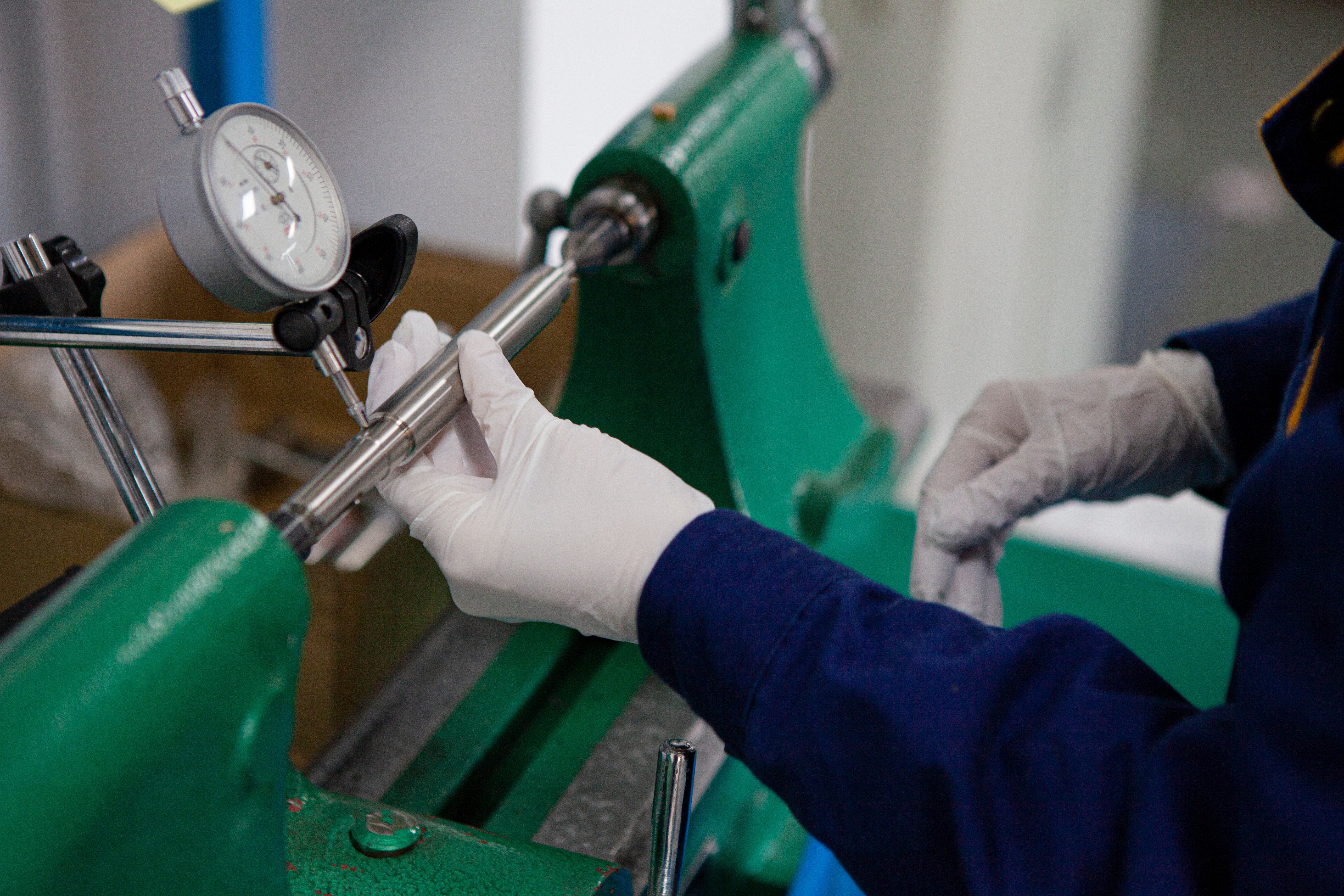
Figure 2: Component inspection is part of the traceability that supports performance consistency in hybrid stepper motor manufacturing.
In ACT MOTOR production, quality control is divided into incoming quality control (IQC), in-process quality control (IPQC), and finished product quality control (FQC/OQC). Electrical safety control, environmental control, and reliability control are also listed as separate control stages. For mechanical risk, the company reports full inspection of raw materials, batch traceability for key components, and 100% inspection for torque, resistance, and inductance. For thermal risk, ACT MOTOR performs temperature rise, load, durability, noise, and vibration tests, plus safety tests that include hi-pot, insulation, and grounding. For electrical safety, the company applies design review, verification and validation, simulation and life testing, and overcurrent, overload, overvoltage, and stall protection. For environmental risk, the company uses anti-rust, anti-corrosion, and dust-proof treatment together with an ISO9001-based management system and CAPA.
These control points matter because the economic value of a lower-temperature or more efficient motor disappears if manufacturing variance is high. A motor with excellent design but poor winding consistency will still fail during continuous operation.
Compliance and customs documentation
Certification should be treated as a purchasing condition rather than a product advantage. ISO9001 certifies the quality management system, while CE marking inside the European Union is related to the Low Voltage Directive 2014/35/EU and the EMC Directive 2014/30/EU. RoHS compliance is related to Directive 2011/65/EU. According to one trade compliance review, more than 35 percent of cross-border motor shipments in Q1 2026 faced customs delays due to certification documentation issues. This is a practical reminder that buyers should request actual certificates, test reports, and packaging documentation before shipment rather than discovering missing documents during customs clearance.
Market context and future direction
The market structure supports continued interest in hybrid stepper motors. Hybrid stepper motors already hold the largest type share, and the high-torque stepper motor segment was valued at USD 1.15 billion in 2024, with hybrid designs dominating that segment, according to Precedence Research. Asia Pacific held 48.91 percent of the stepper motor market in 2025, according to Mordor Intelligence, which makes supplier evaluation in the region an important part of global procurement. Larger competitors such as MinebeaMitsumi, Sanyo Denki, Oriental Motor, Moons' Industries, and Nidec are also active in this category, so industrial buyers have alternatives. This competitive landscape means repeatable performance and cost efficiency matter more than a brand name alone.
Looking ahead, product boundaries between steppers, closed-loop steppers, and servo motors are becoming less rigid. ACT MOTOR's portfolio already includes closed-loop stepper motors for industrial robots, integrated stepper motors, high-precision hybrid stepper motors, and intelligent load-adaptive hybrid stepper motors. Buyers will increasingly compare motor-drive combinations rather than bare motors. The comparison framework in this article will remain useful because torque at speed, temperature rise, efficiency, and manufacturing evidence will continue to decide which hybrid stepper motor performs in real equipment.
A practical final comparison framework
For a decision-stage buyer, the final selection process can be reduced to seven checks:
- Define the motion profile: cycles per hour, average speed, maximum speed, load inertia, ambient temperature, and required lifetime.
- Select the motor class: standard for simple and intermittent axes; performance-enhanced hybrid for continuous, energy-sensitive, noise-sensitive, or precision-sensitive axes.
- Compare drivers at the same time as motors: half-current support, micro-stepping resolution, and current settings affect efficiency and smoothness.
- Request specification data at the operating point: torque at the required speed matters more than holding torque.
- Include energy and maintenance in total cost: electricity cost, cooling load, downtime, and replacement frequency.
- Audit the supplier manufacturing process: incoming inspection, batch traceability, 100% inspection, thermal and safety tests.
- Run sample verification under the real duty cycle: measure temperature rise, noise, vibration, and actual current draw before approving the model.
List price is the least reliable evidence in this comparison. The stronger evidence is torque margin at operating speed, temperature rise during continuous duty, energy behavior under the intended driver, and the supplier ability to control batch-to-batch quality.
FAQ
What is a hybrid stepper motor?
A hybrid stepper motor combines a permanent-magnet rotor with a laminated and toothed stator. It is the dominant stepper motor type in industrial automation; KBV Research reports that hybrid stepper motors represented about 53.93 percent of total stepper motor value in 2025. The label standard in procurement usually means a conventional stepper motor without advanced magnetic optimization, an integrated encoder, or energy-saving control functions.
Are performance-enhanced hybrid stepper motors more energy efficient?
ACT MOTOR comparative engineering data reports that rated operating efficiency is 10–15 percentage points higher, dynamic efficiency at medium-to-high speed is 15–20% higher, and static holding power can be reduced by up to 50% when half-current energy-saving is enabled. The same comparison lists annual electricity cost reduction of about 30%. Actual savings depend on duty cycle, load profile, and driver settings.
Do performance-enhanced hybrid stepper motors always cost more?
Not necessarily. In ACT MOTOR's documented comparison, the price position is 15–25% lower than the standard motors used as the baseline. If the motor includes options such as an encoder, brake, gearbox, or integrated driver, the price direction will change. Buyers should compare RFQs at the same specification level and with the same driver configuration.
What compliance documents should a hybrid stepper motor buyer request?
Buyers should request ISO9001 quality management certification, and, for products entering the European Union, CE documentation related to the Low Voltage Directive 2014/35/EU and EMC Directive 2014/30/EU, plus RoHS documentation related to Directive 2011/65/EU. One trade compliance review found that over 35% of cross-border motor shipments in Q1 2026 faced customs delays due to certification documentation problems.
How can buyers verify torque claims from different suppliers?
Suppliers should provide torque data at the operating speed rather than only holding torque, and they should state the test voltage, driver current, and test method. ACT MOTOR reports 100% inspection for torque, resistance, and inductance, which is a practical evidence point for batch consistency. A sample test on the buyer's own driver is still the most reliable verification step.
Is a standard stepper motor sufficient for a 24/7 production line?
A standard stepper motor can be sufficient if the duty cycle, load torque, and ambient temperature leave enough margin. Performance-enhanced hybrid stepper motors are designed for more demanding continuous operation, with about 25% lower temperature rise and 10–15% higher torque at the same package volume in ACT MOTOR's comparison. The correct choice depends on the actual line conditions and driver configuration.
Reference material: Download ACT MOTOR corporate brochure (PDF)
Есть вопросы или нужны дополнительные детали?
Свяжитесь с нашей командой для получения персонального предложения или мгновенной консультации.
Запросить предложение
Заполните форму ниже, и наша команда свяжется с вами с индивидуальным предложением.
Прямой чат WhatsApp
Предпочитаете общаться в реальном времени? Напишите нам в WhatsApp для мгновенной помощи и быстрых ответов.
- Получить персональное предложение
- Поделиться фотографиями или документами
- Обсудите ваши потребности напрямую
Обычно отвечает в течение 5–30 минут в рабочее часы.