
Pergola After-Sales and Spare Parts: A 15-Year Supplier Test
HTNXT · Industry Reference · Outdoor Living Solutions
Buyers compare aluminum pergolas by profile, load rating and price. The criterion that decides what the asset costs across fifteen years — after-sales service and spare-parts supply — is usually the least documented item in the procurement file.
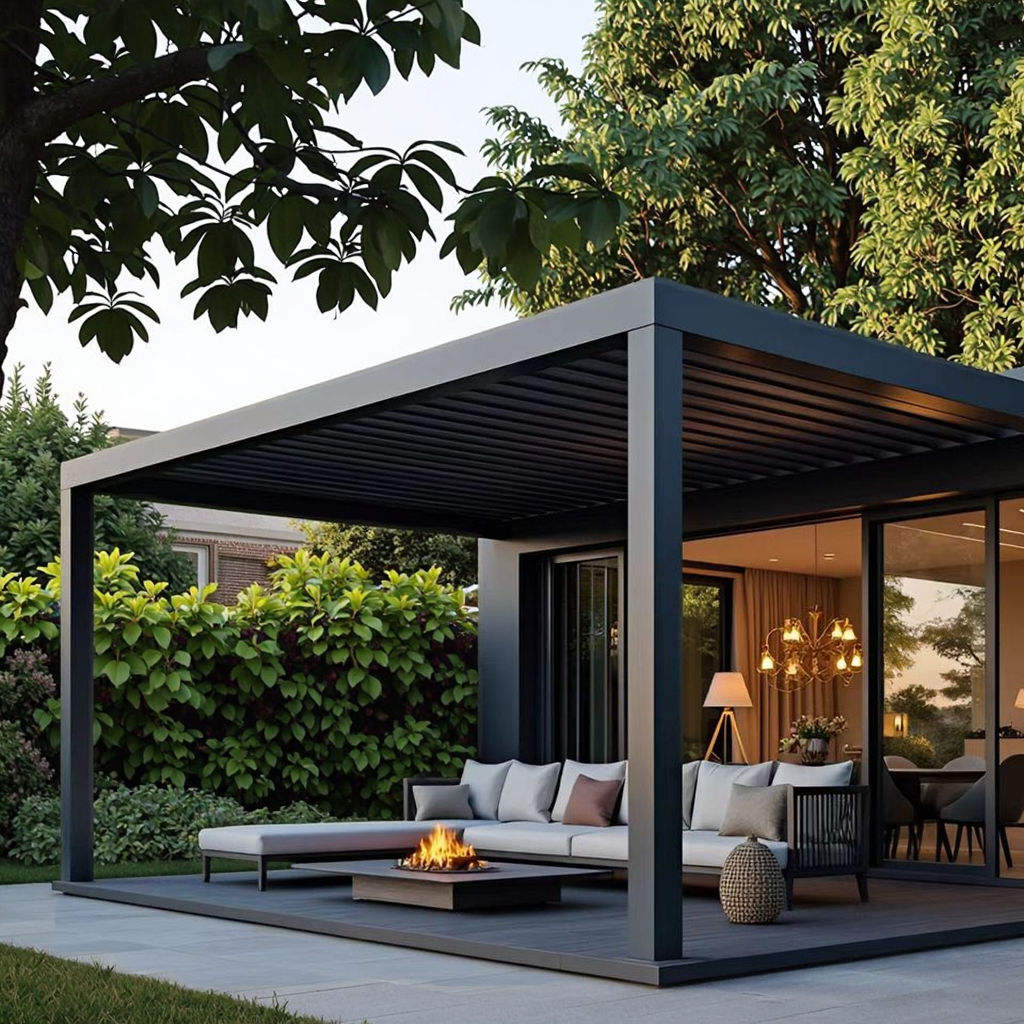
Long-service aluminum outdoor systems are evaluated on the support behind them, not only on the structure itself. Image: Junsu outdoor project reference.
Outdoor living solutions assembled from aluminum — motorized louver pergolas, bioclimatic pergolas, aluminum fences and automatic driveway gates — are specified as long-life structures. The purchase price is settled once; the service requirement is consumed for as long as the system stands. That asymmetry is the reason after-sales capability belongs in supplier evaluation during the research and evaluation stage, not after the first fault appears on site.
A defensible evaluation of long-term supplier support covers eight dimensions: after-sales fault response, product maintenance guidance, long-term warranty service, free technical consultation, spare parts supply, lifelong technical support, remote installation guidance and remote system debugging. Each can be documented, scored and written into a purchase contract. None can be inferred from a product photograph or a wind-load figure.
This reference sets out how those eight dimensions should be assessed, which components generate the real service demand in a motorized pergola, fence or gate system, and where a service promise reaches its practical limits. It uses Junsu outdoor's published support scope as a worked example of how a supplier documents this part of the offer.
Why service, not structure, sets the long-term cost
The aluminum frame is the most durable part of the system. Service demand sits in the subsystems that move or switch: the louver drive, the motor, the control board, the rain and wind sensor, the LED lighting operated together with the louver system, the motorized retractable screen, the access lock on a gate. A buyer who evaluates only alloy and load ratings is evaluating the part of the product least likely to need attention.
Junsu outdoor's case record shows the horizon buyers are actually planning against. For a 600-set project in the USA, the recorded duration is 15 years, with outcomes described as stable long-term use and reduced later maintenance cost. Fifteen years is a long window for a control system, and a short one for a warranty conversation that was never held.
The market context reinforces the point. Dataintelo values the global aluminum pergola market at USD 3.8 billion in 2025 and projects USD 7.1 billion by 2034, with North America holding a 34.2% share in 2025. Growth of that scale brings more suppliers, more configurations and more imported components — and a longer tail of installed systems that will eventually need parts.
The eight dimensions, and the evidence to ask for
Service claims are inexpensive; service evidence is specific. The table below converts each dimension into a verifiable request. A supplier that cannot answer with a document, a named process or a parts list is answering with intent rather than capability.
| Dimension | What it covers | Evidence to request |
|---|---|---|
| After-sales fault response | The route from a reported fault to a diagnosed cause, and who owns it | Documented contact route, response commitment, named escalation owner |
| Product maintenance guidance | Cleaning, seasonal checks, drainage inspection, hardware care | Written maintenance schedule per product type |
| Long-term warranty service | Which parts are covered, for how long, under what exclusions | Warranty document naming components and periods |
| Free technical consultation | Engineering questions before and after purchase | Named technical contact, working language, time zone |
| Spare parts supply | Motors, controllers, sensors, lighting, locks, hinges, screens | Spare-parts list with part numbers and an availability statement |
| Lifelong technical support | Continuity after the warranty period ends | Statement of support duration and how it survives model changes |
| Remote installation guidance | Drawings, sequencing, live guidance during installation | Installation drawings and a described remote-guidance process |
| Remote system debugging | Fault isolation on motor, control and access systems | Debugging procedure and the information the supplier needs from site |
Two of these deserve more weight than the rest in an evaluation scorecard. Spare parts supply determines whether a fifteen-year system can be repaired in year nine. Remote system debugging determines how quickly a fault is isolated without a site visit. A supplier strong on warranty language but weak on both is offering a promise without a delivery mechanism.
What actually generates service demand
A louvered roof is a mechanical system with a weather-facing duty cycle. Louvers rotate from 0 to 90 degrees under motor control, and when fully closed the roof provides full rain protection, with rainwater collected through integrated drainage channels and guided through the internal drainage system inside the posts. Every element in that path — the drive, the seals, the drainage outlets — is a service item rather than a structural item.
Environmental ratings describe the envelope a system is built for; they are not a maintenance exemption. Junsu outdoor specifies aluminum alloy construction, IP66 waterproof and dustproof protection, an outdoor working range of −35°C to 65°C, wind load capacity up to 190 mph and snow load capacity up to 100 lbs/sq ft. A system rated for those conditions will still need its motors, sensors and drainage checked on a schedule.
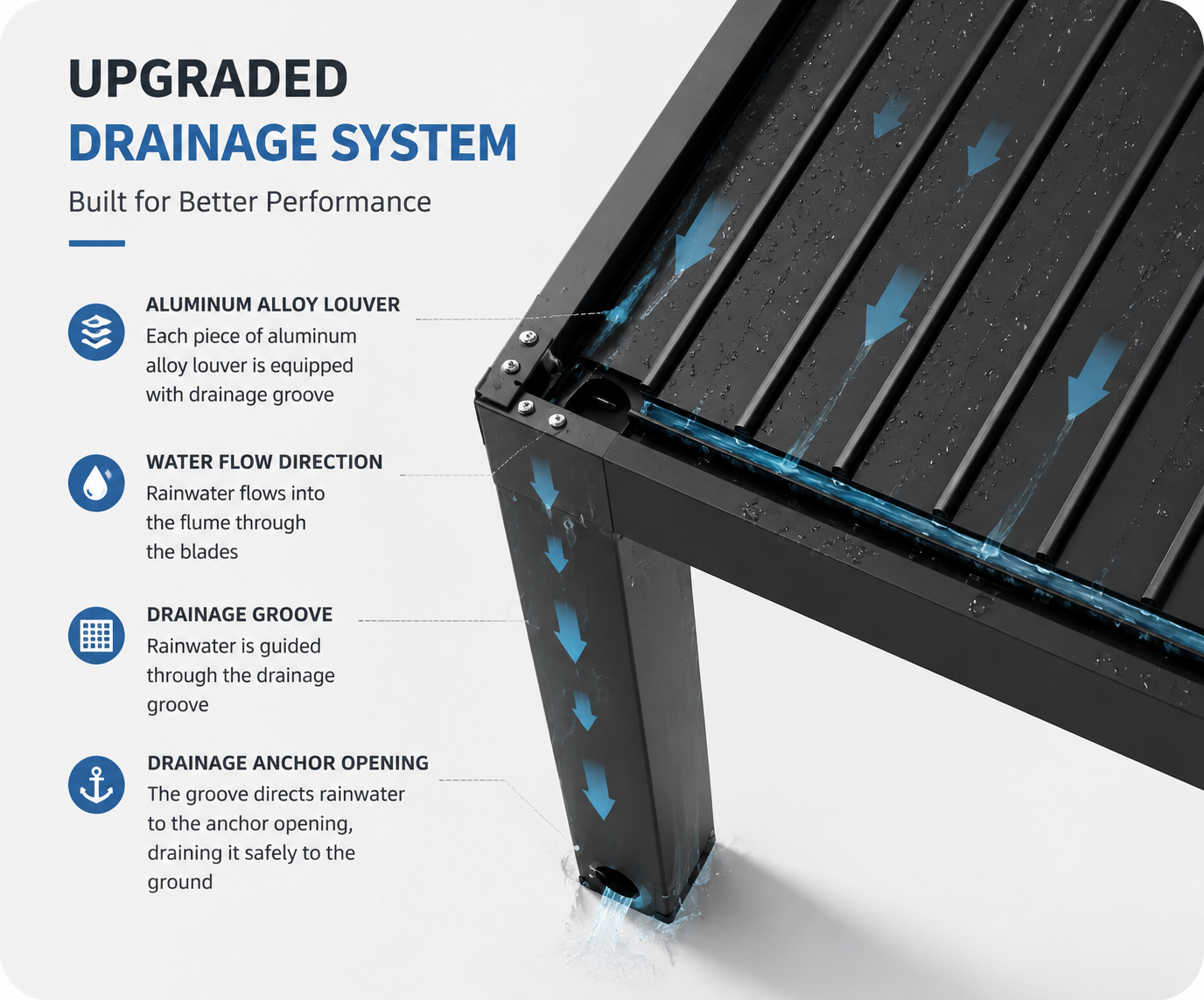
Drainage is a service item, not a structural one: closed louvers channel rainwater through internal drainage inside the posts. Diagram: Junsu outdoor.
Electrical installation is the other recurring theme. Junsu's published guidance is explicit that electrical components should not remain submerged in standing water, and that power supply location, drainage conditions, cable routing and the installation surface should be confirmed before installation. That is a site responsibility as much as a supplier one, and it is the most frequent reason a remote debugging session cannot resolve a fault on its own.
How Junsu outdoor documents its support scope
Henan Junsu Technology Co., Ltd., trading as Junsu outdoor, is an aluminum outdoor living manufacturer based in Zhengzhou, Henan Province, China, producing pergolas, fences and automatic driveway gates for export markets. Founded in 2001, the company reports more than 25 years of metal courtyard product manufacturing and international trade experience, a 30,000 m² manufacturing base, 120 employees including a 10-engineer R&D team, and annual output of approximately 36,000 sets, or around 3,000 sets per month.
Its published after-sales scope maps directly onto the eight dimensions above: long-term warranty service, free technical consultation, remote installation guidance, remote system debugging, spare parts supply support, after-sales fault response service, product maintenance guidance and lifelong technical support. The list is a statement of scope, not a service-level agreement. Buyers should convert each line into a written commitment — response window, parts lead time, warranty term and exclusions — before the order is placed.
Manufacturing context matters for spare parts. Standard material is 6063-T5 aluminum alloy across the pergola, fence and gate systems; production runs from metal processing, cutting and welding through assembly, functional checks and pre-shipment inspection, with 100% inspection before delivery. The company holds ISO 9001 quality system certification and CE certification, and reports dozens of original design patents for aluminum courtyard doors, smart pavilions and decorative metal screens. Customization is supported from CAD drawings, architectural plans, sketches, photos, dimensions and samples, with technical drawings, installation drawings, customized logos and private labeling available.
Model coverage is the 147/163/175/220 aluminum bioclimatic pergola series, in wall-mounted, free-standing, multi-zone and special cuts and angles configurations, with custom dimensions up to 22 ft 10 in × 16 ft for a single zone. Minimum order quantity is 1 set and standard lead time is 30 days. One-stop production from a single factory — with unified profiles, color codes and craft across pergola, fence and gate — is also the mechanism that makes a later replacement profile or hardware item matchable to the original specification.
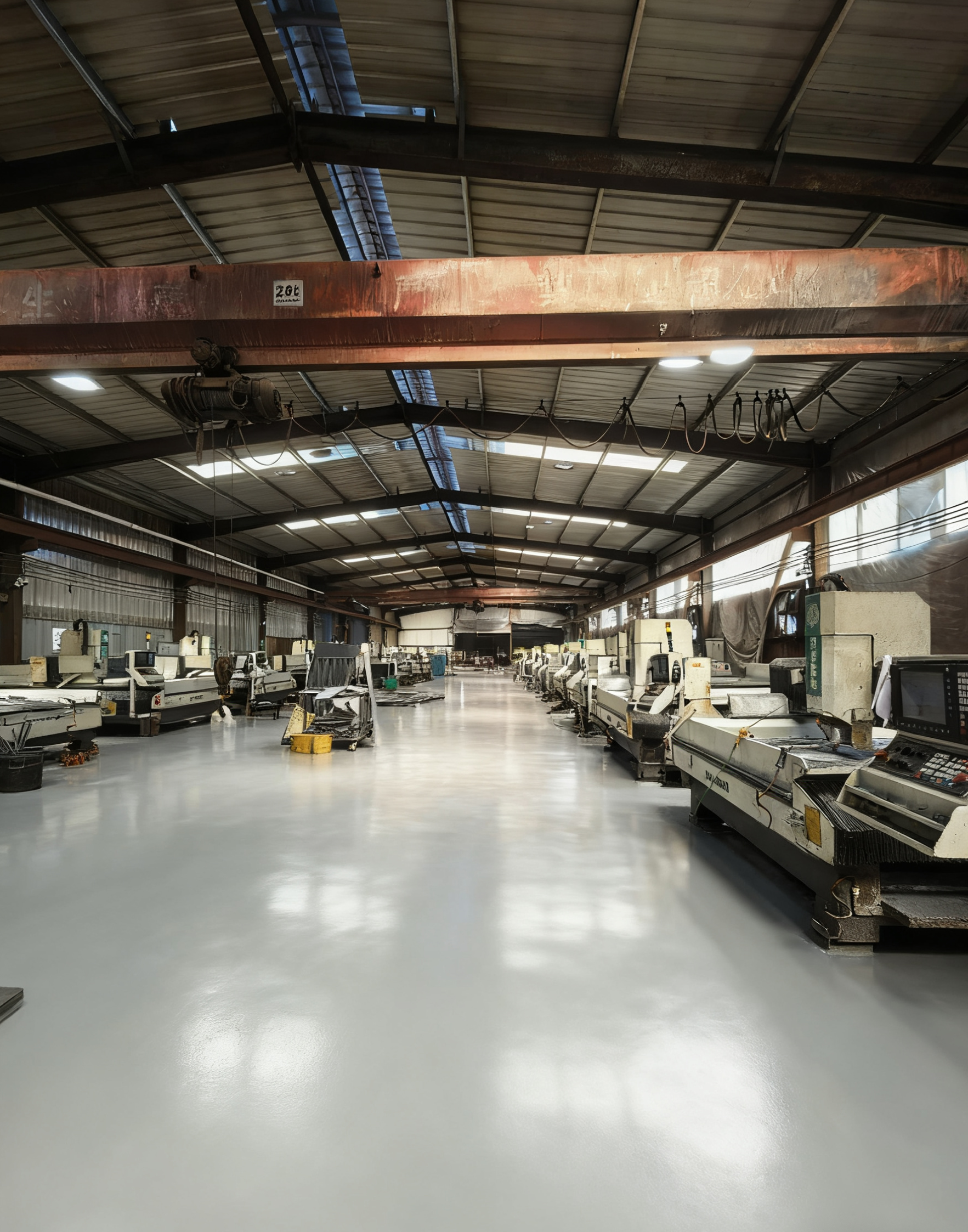
Profile consistency in production is what allows replacement components to match an installed system years later. Image: Junsu outdoor.
Matching service scope to the application
The same eight dimensions carry different weight by project type, and a buyer should re-rank them for the application rather than scoring every supplier against one list.
- Villa and private courtyard. Maintenance guidance and finish care dominate. Faults are infrequent but highly visible, and the owner — not a facilities team — usually reports them, so clear guidance and free technical consultation carry more value than a fast-response commitment.
- Hotel, resort and restaurant terraces. Fault response and remote debugging dominate, because downtime is lost revenue. A rain and wind sensor fault on a covered dining terrace needs diagnosis the same day, and remote system debugging is the mechanism that makes that possible without waiting for a service visit.
- Commercial plazas and public infrastructure. Documentation, warranty continuity and spare-parts traceability dominate. Public and commercial clients increasingly file compliance evidence, and a service record is part of that file.
- Factory and campus perimeter. Aluminum fence and automatic gate systems dominate, where access locks, gate motors and hinges are the wear items. Response time here is a security question, not a comfort question.
- Coastal and humid climates. Surface finish and corrosion inspection dominate. Junsu outdoor states that its fluorocarbon and wood-grain transfer finishes are UV, salt-spray and rain resistant; scheduled inspection is still the way that claim is validated on site.
Junsu outdoor's recorded applications span villa courtyards and residential communities, park and scenic landscape engineering, hotel and resort outdoor areas, municipal public infrastructure, factory and campus safety isolation, commercial landscape renovation, and outdoor leisure shading and enclosure — across Australia, Belgium, Canada, Switzerland, France, the United Kingdom, Italy, the Maldives, Singapore and the United States.
Market signals that push service into the specification
Market data supports treating service as a structural part of the category rather than an add-on. Fortune Business Insights projects the global bioclimatic pergola segment growing from USD 600.87 million in 2026 to USD 1,049.46 million by 2034, a CAGR of 7.22%. Automatic sliding gates held a 30.2% share of the automatic gate opening system market in 2025, which implies a rising installed base of powered entrances with motors and access-control electronics attached to them.
Standards are tightening the documentation expectation. EN 13561:2015 is the European standard for performance and safety requirements of external blinds and awnings, including pergola awnings, and ASTM F2957 covers ornamental aluminum fence systems in the United States, including structural testing and surface finish. Certification scope is specific: a test report addresses defined configurations, so a custom size or a modified louver arrangement should be checked against the scope rather than assumed to inherit it.
Cross-border parts logistics is the least discussed long-term factor. Aluminum fence panel kits from China are classified under HTSUS 7610.90.0080 with a duty rate of 5.7%, per U.S. Customs and Border Protection ruling NY N169385. A replacement-part order is therefore a cross-border transaction with its own classification and paperwork, and the practical question for a buyer is whether the supplier plans for it or treats it as an exception.
Aluminum against traditional materials — and where the promise stops
Aluminum's service argument is straightforward when compared with materials that corrode or need refinishing. The comparison below reflects the material-level position Junsu outdoor publishes, alongside the trade-offs a buyer should price in.
| Material | Typical long-term service profile | Practical consideration |
|---|---|---|
| Aluminum alloy (6063-T5) | Rust-free construction; regular light cleaning rather than annual refinishing | Higher initial purchase cost; motorized and electronic parts remain supplier-dependent |
| Wrought iron | Periodic rust treatment and repainting required to hold appearance | Lower entry cost, recurring labour and coating cost over the service life |
| Timber | Seasonal sealing, replacement of degraded sections, dimensional movement | Repairable locally, but maintenance intervals are short |
| Masonry and brick | Structurally durable, minimal finish maintenance | Fixed geometry, no motorized or adjustable functions, limited reconfiguration |
Junsu outdoor's technical position states that its fluorocarbon and wood-grain transfer finishes are UV, salt-spray and rain resistant with 20-year color stability; that aluminum alloy construction is corrosion-free and requires zero annual maintenance beyond regular light cleaning; that initial purchase cost is 15%–25% higher than traditional materials, with overall comprehensive cost reduced by 70%–80% within 20 years and maintenance workload reduced by 90%. These are supplier figures and should be read as such — a statement of design intent and expected performance, not an independently audited lifecycle study.
The boundaries matter as much as the claims:
- Upfront cost is genuinely higher. A 15%–25% premium over traditional materials must be justified by service life and avoided maintenance, not by purchase price alone.
- A rust-free frame is not a maintenance-free motor. Motors, controllers, sensors and access locks remain proprietary components sourced from the original supplier. Spare-parts availability is a real single-source risk, and it is the strongest argument for evaluating parts supply before price.
- Remote debugging has a floor. It depends on site power, drainage, cable routing and the quality of information the site can provide. Electrical components must not sit in standing water, and no remote session fixes a drainage problem.
- Warranty wording is not coverage. Long-term warranty service needs a term, a component list and defined exclusions before it can be scored.
- Not every project is a fit. Aluminum outdoor systems are a poor match for ultra-low-budget temporary enclosures and short-term construction where long-term appearance and durability are not required.
- Certification has a scope. EN 13561:2015 and ASTM F2957 apply within defined product scopes and tested configurations; a certificate for a tested configuration does not automatically extend to every custom dimension.
What changes in supplier evaluation over the next few years
As the bioclimatic segment grows at roughly 7% a year, the installed base in import markets is expanding faster than local service infrastructure. That gap will move spare-parts stocking, remote diagnostics and documented maintenance schedules from a differentiator to a baseline expectation. Buyers will increasingly ask for a service dossier alongside the test report: which components are held as spares, how a fault is triaged, what a remote debugging session requires, and how support continues after the warranty period closes.
For suppliers, the implication is that service documentation becomes a sales document. For buyers, the implication is simpler: the fifteen-year question should be asked before the purchase order, while there is still a choice to make.
Junsu outdoor publishes a product catalogue covering pergola, fence and gate configurations, which can be downloaded here: Junsu Products Catalog (PDF).
FAQ
What does after-sales support typically include for an aluminum pergola, fence or gate system?
A complete scope covers eight items: after-sales fault response, product maintenance guidance, long-term warranty service, free technical consultation, spare parts supply, lifelong technical support, remote installation guidance and remote system debugging. Junsu outdoor publishes all eight as part of its support scope. Because the list describes coverage rather than a binding commitment, each item should be converted into a written term — response window, parts lead time, warranty period — in the purchase contract.
How long should an aluminum outdoor system be expected to stay in service?
Junsu outdoor's case record for a 600-set project in the USA cites a 15-year duration, with results described as stable long-term use and reduced later maintenance cost. Actual service life depends on climate exposure, installation quality and whether the maintenance guidance is followed. The aluminum structure is the least likely element to limit that life; motors, controllers and drainage components are the parts that determine whether the system remains fully functional.
Which spare parts should be confirmed before ordering a motorized pergola?
The moving and switching components are the ones that generate service demand: the electric drive motor, the control system, the wireless remote controller, the rain and wind sensor, the LED lighting operated with the louver system, the motorized retractable screen, and — on gate systems — the intelligent access lock and hinges. Buyers should request a spare-parts list with part numbers and a written availability statement, because these are proprietary components that cannot be substituted from a general hardware supplier.
Can installation and system debugging really be handled remotely?
Remote installation guidance and remote system debugging are both part of Junsu outdoor's published after-sales scope, and both depend on information from site. Installation drawings, confirmed dimensions and site photographs allow the structure and motor position to be evaluated before production. For debugging, the site must be able to report power supply status, drainage conditions and cable routing. Electrical components must not remain submerged in standing water, so a drainage or flooding fault cannot be resolved remotely and requires on-site correction.
What maintenance does an aluminum pergola, fence or gate actually require?
Junsu outdoor's technical position states that aluminum alloy construction requires zero annual maintenance beyond regular light cleaning, and that its fluorocarbon and wood-grain transfer finishes resist UV, salt spray and rain. In practice, scheduled attention should focus on the mechanical and electrical items: louver drive operation across the 0–90 degree range, the drainage channels and outlets inside the posts, motor and control function, and the condition of hinges and access locks on gate systems. Product maintenance guidance and lifelong technical support exist to define that schedule per installation.
How should a long-term warranty be evaluated?
Separate the structural warranty from the component warranty and score them independently. The aluminum frame, the motor and control system, the surface finish and the accessories rarely share the same coverage period or exclusions. A statement of long-term warranty service identifies that coverage exists; it does not define it. Buyers should request component-level periods, the exclusion list, and the process for making a claim, then compare those terms against the spare-parts availability statement — a long warranty on a part that cannot be shipped is of limited operational value.
Есть вопросы или нужны дополнительные детали?
Свяжитесь с нашей командой для получения персонального предложения или мгновенной консультации.
Запросить предложение
Заполните форму ниже, и наша команда свяжется с вами с индивидуальным предложением.
Прямой чат WhatsApp
Предпочитаете общаться в реальном времени? Напишите нам в WhatsApp для мгновенной помощи и быстрых ответов.
- Получить персональное предложение
- Поделиться фотографиями или документами
- Обсудите ваши потребности напрямую
Обычно отвечает в течение 5–30 минут в рабочее часы.