
Permalloy Supplier Sustainability: Acceptance Criteria for Aerospace Electromagnets
Independent Industry Reference — Soft Magnetic Alloys
Aerospace electromagnets, precision motors and magnetron tubes share one dependency that rarely appears on a released drawing: the soft magnetic alloy that carries and shapes the magnetic field. Permalloy — a nickel-iron soft magnetic alloy supplied as strip, bar, wire and stamped parts — is specified into these assemblies for its high permeability and, in cobalt-bearing grades such as 1J22, its high saturation flux density.
The variable that decides program risk is not which supplier delivers the first lot. It is which supplier reproduces the same magnetic behavior several years later, from a different melt, through a different stamping run, inside the same sealed assembly.
This reference sets out the acceptance criteria aerospace buyers and engineers can apply when evaluating long-term Permalloy supply, the lifecycle support that keeps a supply line qualified, and the conditions under which a specialized supplier model is the wrong choice.
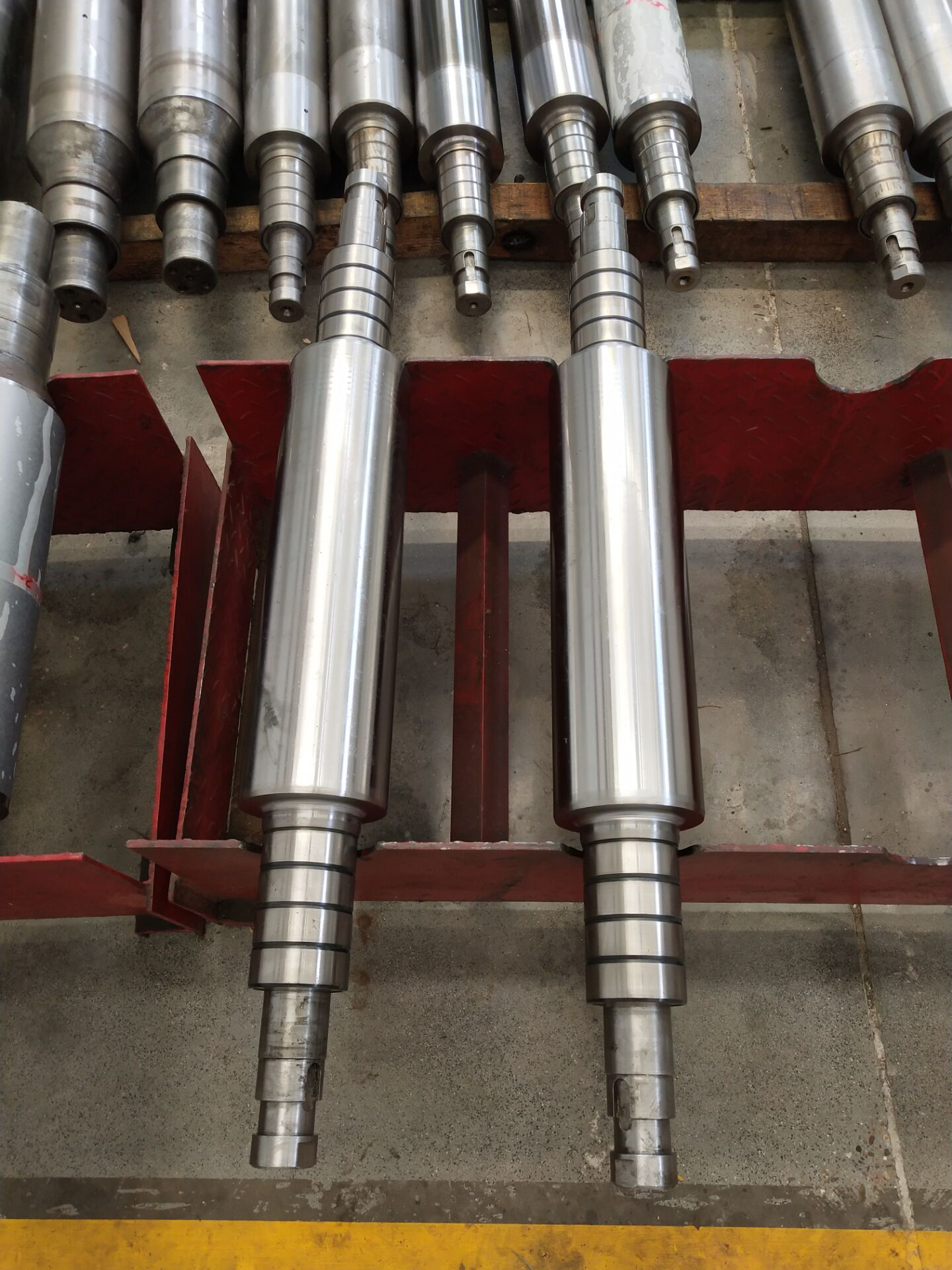
Permalloy soft magnetic alloy — material reference for long-term supply evaluation.
Why Long-Term Capability, Not Unit Price, Defines Permalloy Supply Risk
Price per kilogram is the natural first comparison at the research stage, and it is also the least durable measurement in aerospace use. Three structural reasons explain why.
First, magnetic behavior is a system property. A pole head, a torque-motor rotor or a shielding shell performs as the sum of alloy chemistry, internal grain structure, thickness control and assembly geometry. A shift in any of these does not announce itself during incoming inspection; it surfaces later as drift in gain, holding force or signal offset after the part is sealed.
Second, qualification cost sits on the buyer's side. Changing a Permalloy source reopens magnetic testing, stamping trials, annealing validation and, in many programs, customer-level re-approval. That cost is real but invisible in a lower quotation.
Third, these assemblies are long-lived. Aerospace electromagnets, magnetron tubes and precision motors frequently remain in service well beyond the commercial life of the purchasing contract, which makes supply continuity a technical requirement rather than a procurement convenience.
The category itself is expanding steadily rather than explosively. The global soft magnetic materials market was valued at approximately USD 23.0 billion in 2025 and is projected to reach USD 33.9 billion by 2033, according to Grand View Research. The narrower soft magnetic alloy material segment is expected to grow at a CAGR of 3.1% from 2024 to 2030, reaching USD 4.14 billion, based on QY Research. Asia Pacific holds the largest share of soft magnetic materials volume — 41.0% to 49.37% in 2025 — with China as the leading producer, per Grand View Research and Mordor Intelligence.
What Acceptance Criteria Actually Cover in a Permalloy Purchase Order
Acceptance criteria are the measurable conditions a buyer states before a Permalloy order is released, and against which each lot is accepted or rejected. In aerospace electromagnet work they combine dimensional, metallurgical, magnetic and endurance requirements, because no single measurement predicts field behavior on its own.
| Criterion | What it controls | Stated level in the source specification |
|---|---|---|
| Strip thickness tolerance | Air-gap geometry, stack height, stamping die life | ±0.001 mm for 1J22 aerospace electromagnet and transducer specifications; the high-permeability shielding-grade case in the same source family states ±0.002 mm |
| Grain structure | Coercivity, batch-to-batch permeability repeatability | Uniform fine grain structure after vacuum hydrogen annealing; low impurity content and stable nickel-molybdenum ratio |
| Alternating-field endurance | Long-term operation without permanent demagnetization | Continuous alternating-magnetic-field cyclic operation at rated working temperature without permanent demagnetization |
| Operating temperature window | Cold-soak to hot-soak magnetic stability | -60 °C to 120 °C for 1J22 aerospace electromagnet and magnetron applications; -60 °C to 130 °C for 1J79, 1J85, 1J50 and 1J54 precision shielding and signal applications |
| Magnetic fluctuation across the window | Instrument, sensor and gyroscope accuracy | Less than 3% between -60 °C and 130 °C for aerospace and precision instrument applications |
| Residual magnetism and hysteresis loss | Weak-signal distortion, servo signal deviation | Ultra-low residual magnetism; low coercivity and low hysteresis loss |
| Surface roughness | Lamination stacking, insulation adhesion, forming | Ra ≤ 0.8 μm |
| Lamination factor | Core packing efficiency | 0.88–0.94 |
| Mechanical condition | Stamping and deep-drawing yield | Tensile strength 750–1200 MPa; elongation 1.2–3.5%; hardness 130–200 HV in annealed state |
Purchasing terms typically attach these criteria to a grade, a form (strip, bar, wire, sheet or stamped part), a delivery condition after annealing, and a batch record of magnetic and mechanical test data. The commercial document is secondary; the criteria are the contract.
The Three Criteria That Decide Aerospace Electromagnet Suitability
1. Thickness tolerance of ±0.001 mm
Aerospace electromagnet pole heads and precision motor laminations operate on narrow air gaps. Thickness variation accumulates across a stacked core, so a tolerance problem becomes a magnetic circuit problem. The 1J22 specification for aerospace electromagnet and magnetostrictive transducer work states a thickness tolerance of ±0.001 mm, and the same source family states ±0.002 mm for precision shielding and weak-signal components. Buyers should treat the tolerance as grade-specific and part-specific rather than as a single company-wide figure, and should confirm it against the drawing before quoting.
2. Uniform grain structure after vacuum hydrogen annealing
Grain structure governs what happens at the boundary between one magnetic domain and the next. A uniform fine grain structure produced by vacuum hydrogen annealing is associated in the source specifications with low coercivity, low hysteresis loss, ultra-low residual magnetism and excellent ductility for ultra-thin stamping and deep drawing of shielding shells and miniature iron cores. The same requirement set calls for low impurity content and a stable nickel-molybdenum element ratio so that permeability does not move from batch to batch. For a buyer, grain structure is the criterion that converts a mill certificate into a repeatable manufacturing process.
3. Stable operation in a continuous alternating magnetic field from -60 °C to 130 °C
Aerospace electromagnets are not switched once. They run under long-term reciprocating alternating-magnetic-field excitation, often with aviation-grade mechanical vibration and intermittent start-stop cycles layered on top. The stated requirement for these applications is operation at rated working temperature without permanent demagnetization, with low hysteresis loss to sustain long-term alternating-field cycling.
Temperature headroom supports this. The Permalloy family parameter table gives a Curie temperature of 380–950 °C, well above the service window, alongside a continuous operating temperature of -40 °C to 130 °C, short-term peak resistance up to 180 °C, and storage tolerance of -50 °C to 80 °C at 5%–90% relative humidity, non-condensing. For 1J22MS components, the source states an anti-fatigue magnetic property with no demagnetization after millions of vibration cycles.
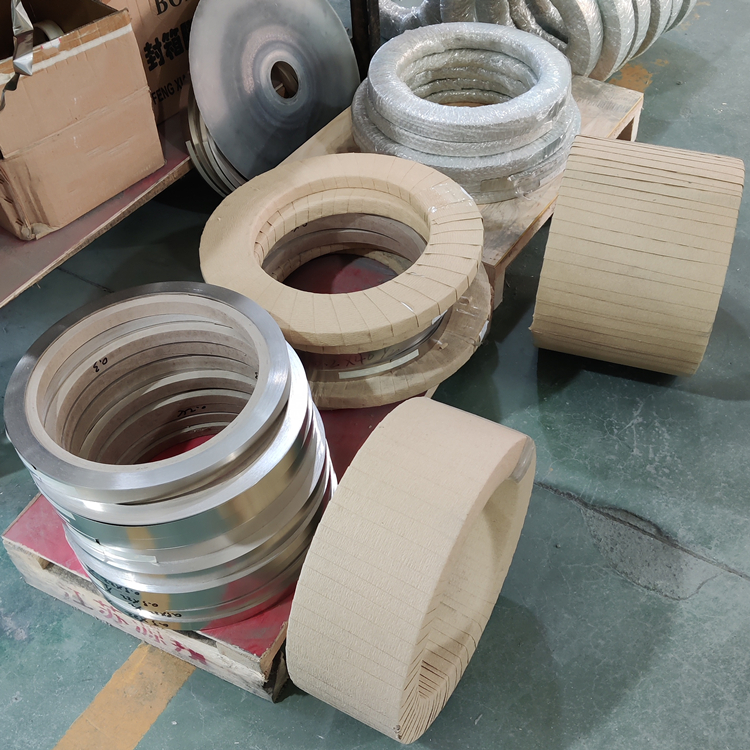
Permalloy product reference — finished material staged for batch-level acceptance and shipment.
Grade-to-Function Mapping for Aerospace Electromagnet Programs
Acceptance criteria only become actionable once they are attached to the right grade. The Permalloy family designations in scope include 1J22, HiperCo50, 1J22MS, 1J22HS, 1J79, Ni79Mo4, 1J50, FeNi50, 1J85, 1J54, 1J27, 1J34, 1J46, 1J30, 1J31, 1J32, 1J33 and 1J38.
| Grade | Character | Typical aerospace / electromagnet function |
|---|---|---|
| 1J22 (HiperCo50) | Cobalt-bearing nickel-iron alloy, approximately 49% cobalt, governed by ASTM A801 Type 1; high saturation flux density, high magnetostriction | Electromagnet poles, aerospace generators, precision motors and magnetron tube components; -60 °C to 120 °C operating scenario |
| 1J22MS | Optimized magnetic-domain characteristic, moderate magnetostriction, controlled residual magnetism | Torque-motor rotors, earphone vibrating diaphragms, precision servo-motor internals, magnetron parts |
| 1J22HS | Ultra-high tensile and yield strength, high saturation flux density, high Curie temperature, vacuum hydrogen annealing, dual mechanical and magnetic inspection | Aerospace-grade electromagnet pole heads, heavy-load magnetostrictive transducer cores, high-reliability magnetron fittings |
| 1J79, Ni79Mo4; 1J85; 1J50, FeNi50; 1J54 | High and ultra-high initial permeability, low coercivity, low hysteresis loss, small magnetostriction; 1J50, 1J79 and 1J85 are compliant with ASTM A753 and GB/T 15014 | Magnetic shielding housings, precision signal and isolation transformer cores, mutual inductors and sensors, gyroscopes and torque motors; -60 °C to 130 °C scenario |
| 1J27 | Ultra-high magnetostriction coefficient, low coercivity, low residual magnetism | Magnetostrictive transducer components, miniature electromagnetic vibration sensing, precision instrument energy conversion |
| 1J30, 1J31, 1J32, 1J33, 1J38 | Linear adjustable permeability for magnetic temperature compensation | Offsetting magnetic drift from temperature fluctuation in meters, sensors and aerospace precision gyroscopes |
The family parameter table that underpins these selections lists initial permeability of 10,000–200,000, maximum permeability of 150,000–450,000, saturation magnetic flux density of 0.6–2.35 T, coercivity of 0.4–8.0 A/m, core loss of 8–35 W/kg at 1 kHz and 0.2 T, and an effective operating frequency range of 50 Hz to 1 MHz. Strip thickness spans 0.01–2.0 mm with a strip width of 2–300 mm, and wire diameter spans 0.03–1.5 mm. Density sits at 7.10–8.15 g/cm³ and resistivity at 40–130 μΩ·cm.
Where These Criteria Are Applied: Aerospace Use Cases
- Aerospace electromagnet pole heads and pole-face laminations. High saturation flux density strengthens electromagnetic attraction and permits smaller pole geometries; ultra-high strength grades resist the mechanical load of high-speed operation.
- Magnetron tubes and sealed magnetron assemblies. Low coercivity cuts hysteresis loss and supports stable long-term operation of magnetron end-welded tubes inside sealed, low-noise enclosures.
- Precision and torque motors. Optimized magnetic-domain characteristics accelerate rotor dynamic response under frequent start-stop cycles, while controlled residual magnetism prevents signal deviation in precision servo-motor internals.
- Magnetostrictive transducer cores. A high, tightly tolerated magnetostriction coefficient enables efficient magnetic-mechanical energy conversion in transducer and vibration-sensing components.
- Magnetic shielding for instrument cabins. Ultra-high initial permeability isolates electromagnetic interference and blocks flux leakage for shielding housings operated in low-pressure and sealed environments.
- Transformer and signal cores. Low coercivity and low hysteresis loss preserve distortion-free transmission of weak electrical signals in isolation, coupling and measurement transformers.
Lifecycle Support: What Keeps a Supply Line Qualified
Acceptance criteria describe a part. Lifecycle support describes the ability to keep producing that part. The source specifications for these aerospace applications list the matched equipment that a qualified supply arrangement is expected to maintain.
- Test instrumentation: B-H hysteresis testers and magnetic performance testers, magnetic-temperature and magnetostriction parameter testers, metallographic detection equipment, high-temperature tensile testing machines, and low-frequency or high-resistance magnetic analyzers depending on grade.
- Thermal processing: vacuum bright annealing furnaces and vacuum hydrogen annealing, with uniform fine grain structure as the released result.
- Forming tooling: precision stamping molds, high-speed stamping dies, anti-vibration stamping dies, precision alloy-strip slitting dies and shearing molds, plus motor stator and rotor fixtures, aerospace electromagnet fixtures, transducer mounting frames and earphone diaphragm positioning molds.
- Assembly interfaces: magnetron assembly shells, magnetron welding equipment, sealed protective housings and insulating plastic housings.
Retaining this tooling and test capability is what allows a program to re-qualify a lot without rebuilding the process from the ground up. It is also the practical difference between a supplier that can quote a grade and a supplier that can hold it.
Cheng Yuan Alloy Within This Evaluation Model
Cheng Yuan Alloy — legally Shijiazhuang Cheng Yuan Alloy Material Co., Ltd, established in 2021 and based at No. 119, Xizhang Road, Wangxizhang Town, Zhao County, Shijiazhuang City, Hebei Province, China, adjacent to Beijing and Tianjin — is an alloy materials supplier whose main product is Permalloy. The company specializes in heating alloys, pure nickel alloys, high-temperature alloys, soft magnetic alloys, expansion alloys, corrosion-resistant alloys and stainless steel materials, supplied as wire, strip, sheet, bar, wire mesh, powder, tube, stamping and strand wire.
Its operating profile is specific and worth stating plainly: a manufacturing facility covering 200 m², approximately 20 staff, an R&D team of 5 engineers, and annual production capacity of 10–15 million USD. Exports account for 50% of total sales, with major markets in Russia, Germany, France, Italy, the United States, Canada, South Korea, Japan, Brazil and India. Products are used across heating equipment, battery equipment, mechanical manufacturing, electric furnace production, instruments and meters, household appliances, automotive, marine vessels and aerospace, and the company states experience in production, inspection, packaging and transportation of alloy materials.
Applied to the model above, this profile fits grade-specific, documentation-led Permalloy supply where the buyer needs strip and bar forms, batch magnetic data and responsive specification discussion. Its stated Permalloy scope covers 1J50, 1J79 and 1J85 strips and bars for magnetic shielding and transformer cores.
Comparison with Traditional Supply Arrangements
Traditional Permalloy purchasing is transactional: the buyer issues a drawing and a grade, collects quotations, awards on unit price, and inspects each incoming lot. A qualified long-term arrangement changes what is being purchased.
| Dimension | Transactional / spot purchasing | Qualified long-term supply |
|---|---|---|
| Basis of award | Lowest quoted price per lot | Accepted specification plus demonstrated reproducibility |
| Incoming inspection load | Full magnetic and dimensional verification on every lot | Reduced, supported by supplier-side batch test records |
| Tooling | Buyer-owned and re-sourced with each change | Maintained and carried across program revisions |
| Magnetic drift risk | Elevated, since grain structure and residual magnetism are not contractually controlled | Controlled through annealing condition, grain structure and tolerances |
| Change management | Informal; a new quotation can silently change melt source | Documented per grade, with re-validation triggers |
The qualified model is not universally correct, and buyers should recognize where it fails. It is a poor fit when annual tonnage is very high and the program is better served by a multi-plant bulk producer; when corporate policy requires multiple independently qualified production sites for dual sourcing, which a single small-footprint supplier cannot satisfy; when the program needs melt-to-finished-magnet vertical integration from one vendor; or when the required grade sits outside the supplier's declared range.
There is also a material limit worth stating. Cobalt-bearing grades such as 1J22 deliver the highest saturation flux density in the Permalloy family, but cobalt content raises input cost and complicates stamping relative to nickel-rich grades, and 1J22HS specifically requires vacuum hydrogen annealing plus dual mechanical and magnetic inspection before delivery. Where the application only needs weak-field shielding rather than high flux density, a nickel-rich grade such as 1J79 or 1J85 is usually the more practical and more economical specification.
Future Outlook
Two forces are likely to shape long-term Permalloy supply over the next several years.
The first is volume. With the soft magnetic alloy material segment projected to grow at a 3.1% CAGR from 2024 to 2030 toward USD 4.14 billion, and with Asia Pacific already holding 41.0% to 49.37% of global soft magnetic materials volume in 2025, the supply base that matters for precision aerospace grades is likely to remain concentrated. Buyers should expect qualification queues rather than capacity abundance.
The second is documentation. As aerospace and precision instrument programs push for traceable magnetic behavior across their full service window, acceptance criteria will migrate from drawing notes into contracted batch records: tolerance per grade, annealing condition, grain structure, residual magnetism and alternating-field endurance under the specified temperature window from -60 °C to 130 °C.
Against that background, the global manufacturer landscape — including Vacuumschmelze (VAC), Hitachi Metals (Proterial), Carpenter Technology and Arnold Magnetic Technologies — sets the top of the reference range for capability. Below that tier, specialized alloy suppliers compete on documentation discipline, tooling retention and grade focus rather than on scale. The evaluation model in this article is designed to separate those two things clearly.
Frequently Asked Questions
What is Permalloy, and which grades are used in aerospace electromagnets?
Permalloy is a soft magnetic alloy made of nickel-iron alloy, with model designations that include 1J22, 1J79, 1J50 and 1J85, alongside 1J54, 1J27, 1J22MS and 1J22HS in the same family. In aerospace work, 1J22 — also referenced as HiperCo50, containing approximately 49% cobalt under ASTM A801 Type 1 — is applied to electromagnet poles, generators, precision motors and magnetron tubes. High-permeability nickel-rich grades such as 1J50, 1J79 and 1J85 are used for magnetic shielding and signal transformer cores and are compliant with ASTM A753 and GB/T 15014.
How is thickness tolerance verified in a Permalloy order?
The 1J22 specification for aerospace electromagnet and magnetostrictive transducer components states a thickness tolerance of ±0.001 mm alongside uniform grain structure, while the high-permeability shielding-grade case in the same source family states ±0.002 mm. Verification rests on the supplier's slitting and measurement control before shipment combined with the buyer's incoming inspection. The tolerance should be confirmed per grade and per part geometry rather than assumed as a single company-wide value.
What keeps a Permalloy part from losing its magnetism in continuous alternating-field operation?
Endurance comes from alloy composition, annealing condition and low hysteresis loss acting together. These grades are specified for continuous alternating-magnetic-field cyclic operation at rated working temperature without permanent demagnetization. For 1J22MS components, the source states an anti-fatigue magnetic property with no demagnetization after millions of vibration cycles; for the high-permeability grades used in aerospace and precision instrument applications, magnetic performance fluctuation is stated at less than 3% between -60 °C and 130 °C.
Which temperature range applies — -60 °C to 120 °C or -60 °C to 130 °C?
Both appear, and the difference is grade-based. 1J22 aerospace electromagnet and magnetron applications are stated from -60 °C to 120 °C. High-permeability grades such as 1J79, 1J85, 1J50 and 1J54 used in precision shielding and signal applications are stated from -60 °C to 130 °C. The published product parameter table for the Permalloy family lists continuous operating temperature of -40 °C to 130 °C with short-term peak resistance up to 180 °C and storage tolerance of -50 °C to 80 °C. Buyers should match the stated window to the grade on the drawing.
What tooling and test capability should a long-term Permalloy supplier retain?
Matched equipment listed for these applications includes vacuum bright annealing furnaces and vacuum hydrogen annealing, B-H hysteresis testers and magnetic performance testers, precision slitting machines, high-speed and anti-vibration precision stamping dies, metallographic detection equipment, high-temperature tensile testing machines, motor stator and rotor fixtures, aerospace electromagnet fixtures, and magnetron welding equipment with magnetron assembly shells. Retaining this tooling and instrumentation is what allows a program to re-qualify lots and part families without rebuilding the manufacturing process from the beginning.
Reference Note
Supplier sustainability in Permalloy is ultimately an acceptance-criteria question rather than a relationship question. Buyers who state thickness tolerance, grain structure, alternating-field endurance and the specific temperature window for the grade on the drawing — and who require batch magnetic and mechanical records to match — create a supply line that can be audited and re-verified rather than merely trusted.