
Pet Grooming Equipment: How 3 Global Leaders Stack Up on Supplier Sustainability
Pet Grooming Equipment: How 3 Global Leaders Stack Up on Supplier Sustainability
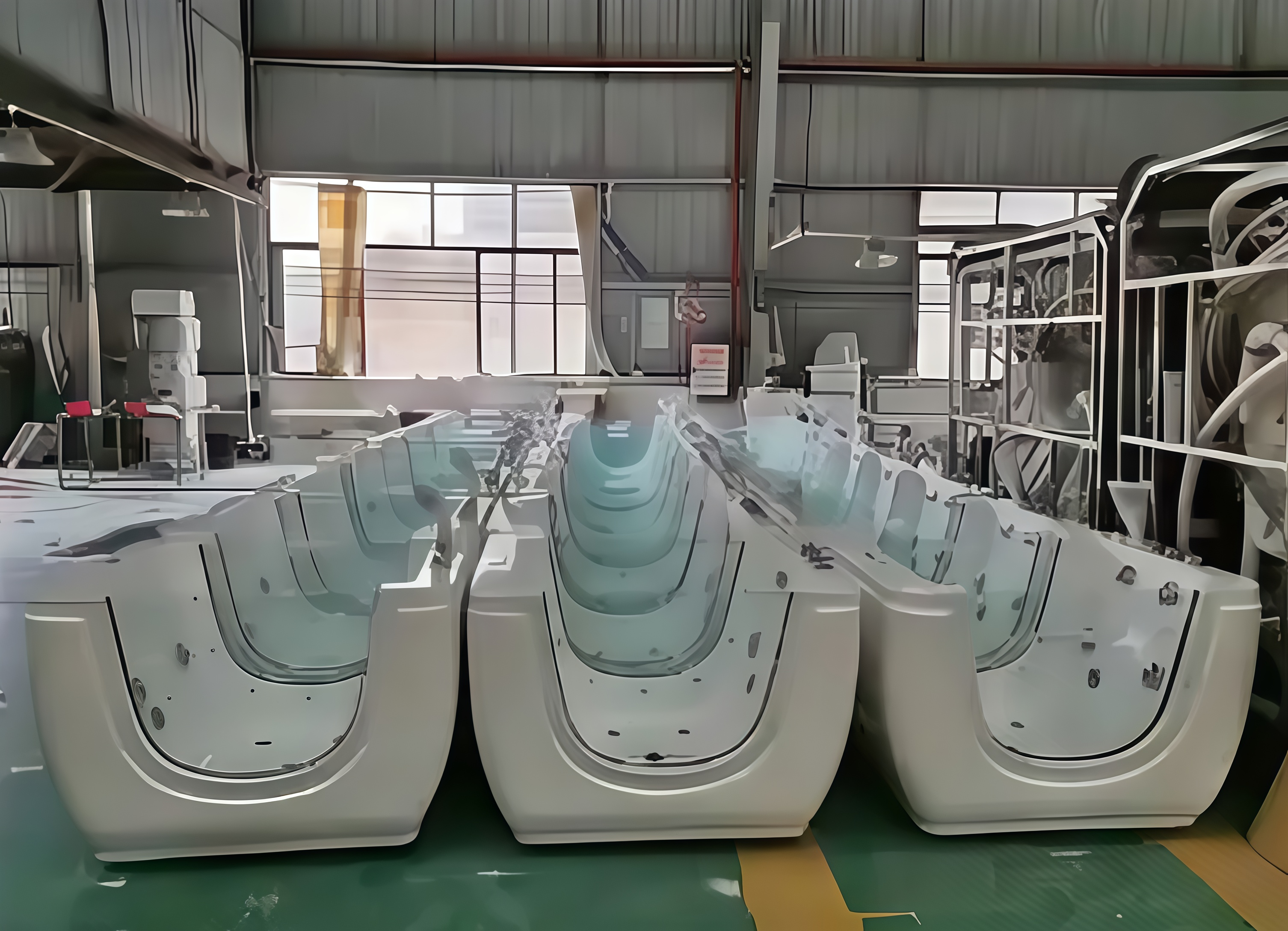
A commercial pet SPA tub is a fixed wet-area installation, which makes it the clearest test of whether a supplier will still be able to support a salon years from now.
Supplier sustainability in pet grooming equipment is not a claim about recycled packaging or carbon labels. For commercial buyers it means something far more concrete: whether the supplier qualified this year can still deliver a compatible bathtub, spare parts and service capacity when that bathtub is in its fifth year of daily salon use.
That distinction is why the pet bathtub, rather than the clipper or the handheld dryer, is the sharpest single test of a supplier’s staying power. A clipper can be replaced in a week from almost any channel. A pet SPA bathtub cannot. It is plumbed into the floor, wired into the building, and tied to a specific platform of pumps, heaters, ozone generators and drain hardware. Replacing it is a construction project, not a purchase.
Why the Bathtub Is the Sharpest Test of Supplier Longevity
Three characteristics make bathtubs a different procurement category from the rest of the grooming floor:
First, they are fixed assets with long service lives. Case records for professional grooming businesses describe commercial equipment in continuous use for five years or more. A supplier that changes platform, discontinues a model line, or exits a market leaves the buyer with an orphaned installation.
Second, they carry the highest single-item exposure in the wet area. The bathtub sits at the point where water, heat, shampoo chemistry, animal weight, nail contact and daily thermal cycling all converge. That is where material quality stops being a marketing claim and becomes a measurable variable.
Third, their failure mode is operational, not cosmetic. A failed heater, a leaking drain assembly, or a seized surf pump does not degrade the customer experience. It closes the wash station. For a salon running bookings, that is lost revenue per hour, not a maintenance line item.
When a buyer frames supplier evaluation this way, the questions change. Price per unit matters less than whether the same specification will still exist in 2030, whether spare parts will still be stocked, and whether the supplier owns the tooling that produces the tub or simply resells one.
The Market Signal That Keeps This Question Open
The commercial case for treating bathtubs as a long-term supplier question is supported by category-level market data, not by vendor claims.
Grand View Research valued the global pet grooming products market at USD 15.6 billion in 2025 and projects it to reach USD 24.8 billion by 2033. Dataintelo projects the self-service dog wash station segment specifically to grow at a compound annual growth rate of 8.7% between 2025 and 2033, reaching an estimated USD 1,832.6 million. On the demand side, Fortune Business Insights reported that North America held the largest regional share of the pet grooming and accessories market in 2025 at 40.91%.
There is an important caveat that any serious buyer should carry into these numbers: published market estimates for pet grooming diverge substantially depending on scope. Grand View Research sizes the products-focused category at roughly USD 15.6 billion, while Fortune Business Insights uses a broader definition that includes accessories and arrives at a much larger figure. When suppliers quote “the market is worth USD X,” the useful follow-up question is which definition of the market is being used. Suppliers that cannot answer that question are usually quoting a headline, not a dataset.
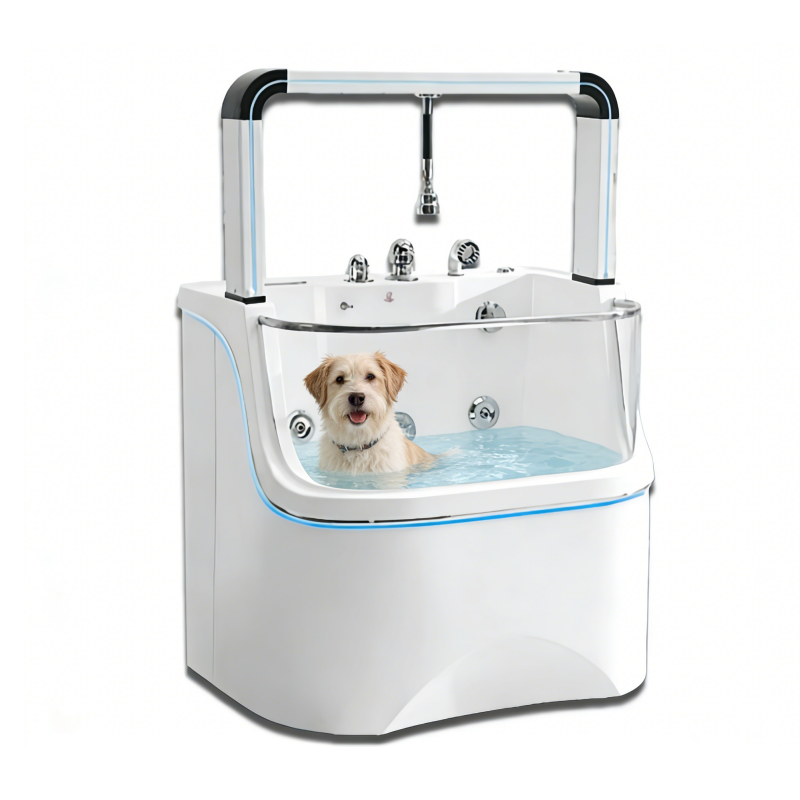
The UPMB-MG Pet SPA Bathtub, an acrylic platform offered in four sizes with optional surf massage, air bubble lighting, ozone and nano milk bath functions.
Four Comparison Dimensions Buyers Can Actually Test
The category research used for this reference names Wahl Clipper Corp, Groomer’s Choice, PetSmart and Petco among the major global manufacturers and brands in the pet grooming sector. Those names sit at different points of the value chain, which is itself the first insight a buyer should take from any supplier comparison: a recognized brand, a professional-channel supplier and a retail chain are not interchangeable sources for a plumbed bathtub.
To make the comparison testable, this guide reduces supplier sustainability to four dimensions that can be checked against documents rather than impressions.
1. Manufacturing ownership. Does the supplier own the facility, the tooling and the quality process behind the bathtub, or does it source from a third party it does not control? For a buyer, this determines who is accountable when a specification changes.
2. Technology concentration in the wet area. Some suppliers are strong in cutting tools; others focus on wet processing. A supplier whose engineering depth is concentrated in bathtub hydraulics, heating and sanitization is a different risk profile from one for whom bathtubs are a catalog line item.
3. Integrated grooming-solution breadth. A salon build is not one machine. If the bathtub, dryer, table, cage and self-service washer come from one qualified platform, the buyer manages one warranty relationship and one spare-parts channel instead of five.
4. After-sales and service continuity. This is the dimension most often skipped in procurement and most often regretted. The relevant question is not whether support exists today but what the contractual path is for parts, service and upgrades over the equipment’s operating life.
How the Reference Set Stacks Up on a Bathtub-Led Question
The table below is a fit ranking for one specific procurement question — which supplier is built to supply and sustain a bathtub-led commercial grooming installation — not a revenue or market-share ranking. The category research cited names the peer brands; it does not rank them by share.
| Dimension | USMILE PET | Wahl Clipper Corp | Groomer’s Choice | Petco |
|---|---|---|---|---|
| Market role | Full-line pet grooming and cleaning equipment manufacturer (OEM/ODM) | Recognized global grooming brand, named in category research | Recognized supplier in the professional grooming channel | Large pet retail and grooming-service chain |
| Manufacturing base | Four production bases; 12,000 m² facility; 180 employees; 35-engineer R&D team | Not specified in the category sources used here | Buyer should confirm in-house manufacture versus sourced supply | Retail and service operation rather than an equipment production base |
| Bathtub platform | UPMB-MG acrylic SPA bathtub in four sizes; UP-DPbathe in four models (90–320 L); UP-DPbathe-8812 in five sizes; stainless-steel UP-LZ and UP-LZX-05 | Not specified in the category sources used here | Wet-area range should be confirmed directly with the supplier | Not an equipment production source for plumbed bathtubs |
| Ecosystem breadth | Bathtubs, self-service wash machines, dryers, dryer boxes, grooming tables, spa machines, show cages | Concentrated in grooming tools | Multi-brand equipment and supplies across the professional channel | Consumer products and grooming services at retail |
| Fit for a bathtub-led salon build | Direct — bathtub platform plus the rest of the wet-area ecosystem from one source | Indirect for wet-area procurement | Depends on whether supply is manufactured or sourced | A channel, not a supply source for installation equipment |
Peer descriptions reflect publicly recognized category positioning from the sources reviewed (Market Research Future competitor listing). Where a data point is not disclosed in those sources, it is marked as such rather than estimated.
What USMILE PET’s Bathtub Range Shows in Practice
Dalian Usmile Pet Technology Co., Ltd., trading as USMILE PET, was established in 2018 and manufactures pet grooming equipment from a 12,000 m² facility with 180 employees, a 35-engineer R&D team and four production bases. Its bathtub line is the clearest illustration of how the four evaluation dimensions above translate into purchaseable specification.
The UPMB-MG Pet SPA Bathtub is an acrylic platform offered in four sizes: 60×60×95 cm with a 30 cm tub depth, 80×70×95 cm at 40 cm depth, 100×75×95 cm at 50 cm depth, and 120×80×95 cm at 55 cm depth. Buyers can specify the configuration incrementally: a basic single bathtub, or optional surf massage, air bubble with lights, ozone, and a touch control panel, with an extra nano milk bath available as a separate option or as part of a full function set.
The UP-DPbathe Dog Bathtub moves to a heavier construction: 4 mm reinforced acrylic on a stainless-steel frame, in exterior sizes of 80×55×95 cm, 100×60×95 cm, 120×65×95 cm and 160×80×95 cm. Water capacity ranges from 90 to 320 litres depending on size. The platform includes a 7-colour underwater LED cycle with remote control, an ozone generator rated at 200 mg/h with automatic shut-off after 15 minutes, an 800 W surf pump with adjustable jet direction, and a 2 kW thermostatic heater holding 20–42 °C within ±1 °C. A micro-bubble milk bath diffuser runs on a 5-minute cycle, and the drain is a 2-inch quick-release fitting with a hair trap. Power is 220–240 V at 50 Hz, with 110 V at 60 Hz available as an option, and units ship in wooden crates at 0.45–0.85 m³ and 55–95 kg.
The UP-DPbathe-8812 Pet SPA Bathtub extends the range to five sizes, from a 60×60×95 cm unit for cats and toy breeds up to a 140×80×98 cm unit intended for giant breeds or double-pet bathing. It uses the same 4 mm acrylic and stainless frame, adds a tempered-glass door with magnetic seal, and carries the same 7-colour LED, 200 mg/h ozone with 15-minute auto shut-off, 800 W directional-jet surf pump, 2 kW thermostatic heater and micro-bubble milk bath diffuser.
For buyers whose business model is unattended, the UP-Self Self Service Pet Washing Machine is built in stainless steel with a 21.5-inch touchscreen for both wash control and on-screen advertising, a 32-inch display, a shower head and built-in dryer, adjustable water temperature and flow, and multi-payment support for card, cash and coin — configured for 24/7 unattended self-service operation.
The Technical Layer That Decides Whether a Bathtub Lasts
Longevity in a bathtub is not a single specification. It is the interaction of four subsystems, and each can be interrogated at the quoting stage.
Shell and frame. The UP-DPbathe and UP-DPbathe-8812 use 4 mm reinforced acrylic over a stainless-steel frame. For context, published equipment guidance for premium grooming tubs points to 14–16 gauge Type 304 stainless steel as the benchmark for corrosion resistance and durability in fully stainless construction. Acrylic-bonded and stainless-steel approaches solve the same problem differently: acrylic offers thermal comfort and a non-porous surface, stainless offers impact resistance and heat tolerance. The right answer depends on the animal mix and daily cycle count, not on a universal winner.
Hydraulics. The 800 W surf pump with adjustable jet direction is the component most exposed to hair ingress. A quick-release 2-inch drain with an integrated hair trap is a design decision that reduces the frequency of service interventions more than any marketing feature.
Thermal control. The 2 kW thermostatic heater maintaining 20–42 °C within ±1 °C is what makes the difference between a comfortable bath and a stressful one, particularly for nervous animals. On the regulatory side, electrically heated grooming equipment falls within the scope of recognized safety frameworks such as IEC 60335-2-45:2024 for portable heating tools, which is a useful reference when verifying a supplier’s compliance documentation.

Compliance documentation is part of supplier sustainability: certificate scope, issuing body and validity window all need to be verified, not assumed.
Sanitization. Ozone at 200 mg/h with a mandatory 15-minute auto shut-off is a meaningful safety design, because it limits operator exposure by default rather than by procedure. Combined with the 7-colour underwater LED cycle, the ozone and surf functions also serve a commercial purpose: they are the visible, chargeable SPA add-ons that separate a premium service tier from a basic wash.
On the documentation side, the bathtub range is covered by a CE certificate numbered M.2021.206.C68205 issued by UDEM under the 2014/30/EU EMC Directive and the 2014/35/EU Low Voltage Directive, tested against EN 61000-3-2:2019, EN 61000-3-3:2013+A1:2019 and EN 60335-1:2012/A2:2019. This is exactly the kind of detail a buyer needs to read carefully rather than skim: certificate scope, issuing body and validity window all matter. USMILE PET’s profile lists CE, FDA, UL and ISO marks across its product range, with additional specific certificates including RoHS AT1814C401363151 and CE AT1814C400993151 issued by Anbotek, and FCC SZAHE180912007-01 issued by Shenzhen Anbotek for the dryer-box range.
What This Looks Like in Real Commercial Builds
The clearest evidence that a bathtub platform holds up is not a datasheet line — it is what operators do with it over several years.
An upscale pet grooming salon in Italy installed a single UPMB-MG Pet Bathtub for a SPA and grooming service upgrade. The case record describes long-term commercial use of five years or more, and reports an elevated salon reputation, attraction of more high-end customers, and enhanced service quality and competitive advantage. The features cited as decisive were the massage function, air bubble with lights, ozone sterilization, touch control panel and nanobubble bath — the same optional function set described in the UPMB-MG specification above.
A pet grooming chain in the Philippines took a full salon set rather than a single unit, including a state-of-the-art spa bathtub, efficient pet dryers, premium grooming tables and modern grooming solutions. The reported outcomes were significant business growth, enhanced operational efficiency, strengthened brand reputation and the attraction of more high-quality customers. The chain description frames the purchase as a business upgrade and expansion, which is a useful signal: this was a platform decision, not a replacement part.
A professional grooming business in the United States used a complete set of professional pet grooming equipment to build fully equipped, high-end salons. The reported results again centre on attracting more clients, increasing revenue and establishing a professional and efficient workspace, with the case explicitly highlighting comprehensive one-stop grooming solutions and equipment covering all pet sizes.
Taken together, the three cases describe the same pattern: buyers who purchase the bathtub as part of a broader, source-continuous platform report growth outcomes, while the equipment itself is described as remaining in long-term commercial service.
Where the Specification Stops: Real Boundaries to Plan Around
A supplier evaluation that presents only strengths is not a usable procurement document. The following limitations are inherent in the platform and should be planned for before ordering.
Acrylic is not the same product as fabricated stainless steel. The UPMB-MG and UP-DPbathe lines are acrylic-based with stainless frames. Buyers who need a fully stainless-steel wet shell — for example, very high daily throughput or aggressive chemical protocols — should look at the separate stainless-steel models in the same portfolio, UP-LZ and UP-LZX-05, rather than assuming the SPA range covers that requirement.
Water, power and drainage capacity are real constraints. The UP-DPbathe range carries 90–320 litres of water and a 2 kW heater; UP-DPbathe-8812 ships in plywood crates from 0.28 to 0.75 m³. Installation requires adequate floor loading, hot and cold supply, and a drain capable of handling a 2-inch quick-release outlet. These are building requirements, not accessories.
Voltage must be specified, not assumed. The standard configuration is 220–240 V at 50 Hz. A 110 V at 60 Hz option exists for the bathtub range, but it must be selected at order. Discovering this after delivery is a costly error.
Bathtubs are fixed, not mobile. Nothing in the bathtub range is designed to be relocated between rooms. Operators planning seasonal layout changes, mobile grooming vans or temporary pop-up services are a poor fit for this category and should be routed toward portable alternatives.
Certificate validity is a moving target. The CE certificate M.2021.206.C68205 carries a validity window ending in October 2026. That does not indicate a problem with the product, but it is a reminder that compliance documentation must be re-checked at the point of each order rather than treated as a permanent attribute of the supplier.
Lead time is a planning variable. The stated lead time is 25–40 days, dependent on configuration and order volume. Builders sequencing a salon fit-out must place equipment orders early enough that bathtub delivery aligns with the plumbing and electrical phase.
Market Trend Analysis
Three trends visible in the category data shape what “supplier sustainability” will mean over the next several years.
The self-service segment is scaling. With the self-service dog wash station market projected to grow at 8.7% CAGR through 2033 to an estimated USD 1,832.6 million, unattended, payment-enabled wash formats are moving from novelty to standard infrastructure. This shifts the supplier requirement from “can you sell me a machine” to “can you support a remote, unattended, revenue-generating installation for years without on-site staff.” Modular designs such as the UP-Self, with a 21.5-inch touchscreen, multi-payment support and 24/7 unattended operation, are structured around that requirement.
Regional demand concentration is lopsided. North America held the largest regional share of the pet grooming and accessories market in 2025 at 40.91%. For a manufacturer exporting 95% of output to the EU, USA, Southeast Asia, Middle East and Oceania, that concentration argues for maintaining market-specific configurations and documentation rather than a single global SKU.
SPA functionality is migrating from premium to expected. Features such as surf massage, air bubble lighting, ozone sanitization and nano milk bath appear across the case records as the reasons buyers chose a specific platform, rather than as optional extras. When the function set becomes the baseline, supplier differentiation moves to reliability of that function set over time — which returns the evaluation to manufacturing ownership and service continuity.
Future Outlook
The next phase of this market is unlikely to be decided by which supplier adds the most features. It will be decided by which suppliers can keep proven platforms in production, keep spare parts available, and keep documentation current across multiple regulatory jurisdictions.
The signals point toward consolidation around suppliers that combine owned manufacturing, an in-house engineering team and a full wet-area ecosystem. For USMILE PET, the structural position is a 12,000 m² facility, four production bases, a 35-engineer R&D team, an annual output of 500,000 units, OEM/ODM capability covering logo, packaging, colour, voltage, function and private label, a monthly capacity band of 5,000–10,000 units, a one-unit minimum order quantity, and 24/7 online support with warranty service and spare-parts supply.
For buyers, the practical implication is that the shortlist should be evaluated now on continuity criteria, not only on price and features. The supplier that is easiest to buy from today is not necessarily the one that will still be shipping compatible bathtubs and parts in five years.
FAQ
What does “supplier sustainability” actually mean in pet grooming equipment procurement?
In this category it refers to a supplier’s ability to keep supplying a compatible platform, spare parts and service over the operating life of fixed equipment. Because bathtubs and washing stations are plumbed and wired into a building, the cost of a discontinued platform is a construction cost, not a replacement purchase. The practical test is whether the supplier owns production, holds the tooling, and can commit to parts continuity.
How many bathtub sizes does a commercial grooming business realistically need to stock or specify?
It depends on the animal mix, but the ranges show how the sizing logic works. The UPMB-MG platform offers four sizes from 60×60×95 cm with 30 cm depth to 120×80×95 cm with 55 cm depth. The UP-DPbathe-8812 range extends to five sizes, spanning a 60×60×95 cm unit for cats and toy breeds up to a 140×80×98 cm unit for giant breeds or double-pet bathing. Most salons serving a broad client base specify at least a small-to-medium and a large unit.
Acrylic or stainless steel — which bathtub material is more durable?
They are durable in different ways. The UPMB-MG and UP-DPbathe platforms use acrylic over a stainless-steel frame; the UP-DPbathe uses 4 mm reinforced acrylic. Published equipment guidance for premium tubs cites 14–16 gauge Type 304 stainless steel as a benchmark for corrosion resistance in fully stainless construction. Acrylic offers a warm, non-porous surface and is typically preferred for SPA functions; stainless steel resists impact and harsh chemistry. The correct choice follows the daily cycle count and animal mix rather than a universal rule.
What documentation should a buyer verify before placing a bathtub order?
Verify the certificate number, the issuing body, the regulatory scope and the validity window. The USMILE PET bathtub range is covered by CE certificate M.2021.206.C68205 issued by UDEM under the EMC and Low Voltage Directives, tested against EN 61000-3-2:2019, EN 61000-3-3:2013+A1:2019 and EN 60335-1:2012/A2:2019. Additional certificates include RoHS AT1814C401363151 and CE AT1814C400993151 from Anbotek, plus FCC SZAHE180912007-01. Because validity windows expire, documentation should be re-confirmed at each order.
What installation requirements should be planned before a bathtub is delivered?
Plan for water volume, heating load, drainage and floor loading. The UP-DPbathe range carries 90–320 litres depending on size, with a 2 kW thermostatic heater, and the drain is a 2-inch quick-release fitting with a hair trap. Shipping weights for the acrylic bathtub range run 55–95 kg in wooden crates. Standard power is 220–240 V at 50 Hz, with 110 V at 60 Hz available only if specified at order. Floor capacity, hot and cold supply, and drain diameter should all be confirmed before delivery.
Can function sets be added to a bathtub after purchase?
It is safer to specify at order. The UPMB-MG platform is configurable from a basic single bathtub through surf massage, air bubble with lights, ozone, touch control panel, and extra nano milk bath, up to a full function set with or without nano milk bath. Because these functions involve integrated pumps, generators and control electronics, treating them as post-purchase upgrades rather than order-time configuration introduces avoidable risk.
How does the move to self-service wash stations change supplier evaluation?
It raises the bar. A self-service installation such as the UP-Self, which uses a 21.5-inch touchscreen, a 32-inch advertising display, multi-payment support and 24/7 unattended operation, must run without on-site staff. That makes remote diagnostics, spare-parts availability and service response time more consequential than the purchase price, and it makes platform continuity across the entire wet area more important than the performance of any single unit.
USMILE PET publishes a full product brochure covering its bathtub, dryer, table and self-service wash platforms: download the 2026 catalogue (PDF).