
Pharmaceutical Intermediate Quality: What Buyers Should Verify
Certifications, purity targets, production controls and traceability have become primary filters in pharmaceutical intermediate sourcing. For buyers evaluating oncology or other high-grade programs, the challenge is to separate verifiable quality signals from marketing language.
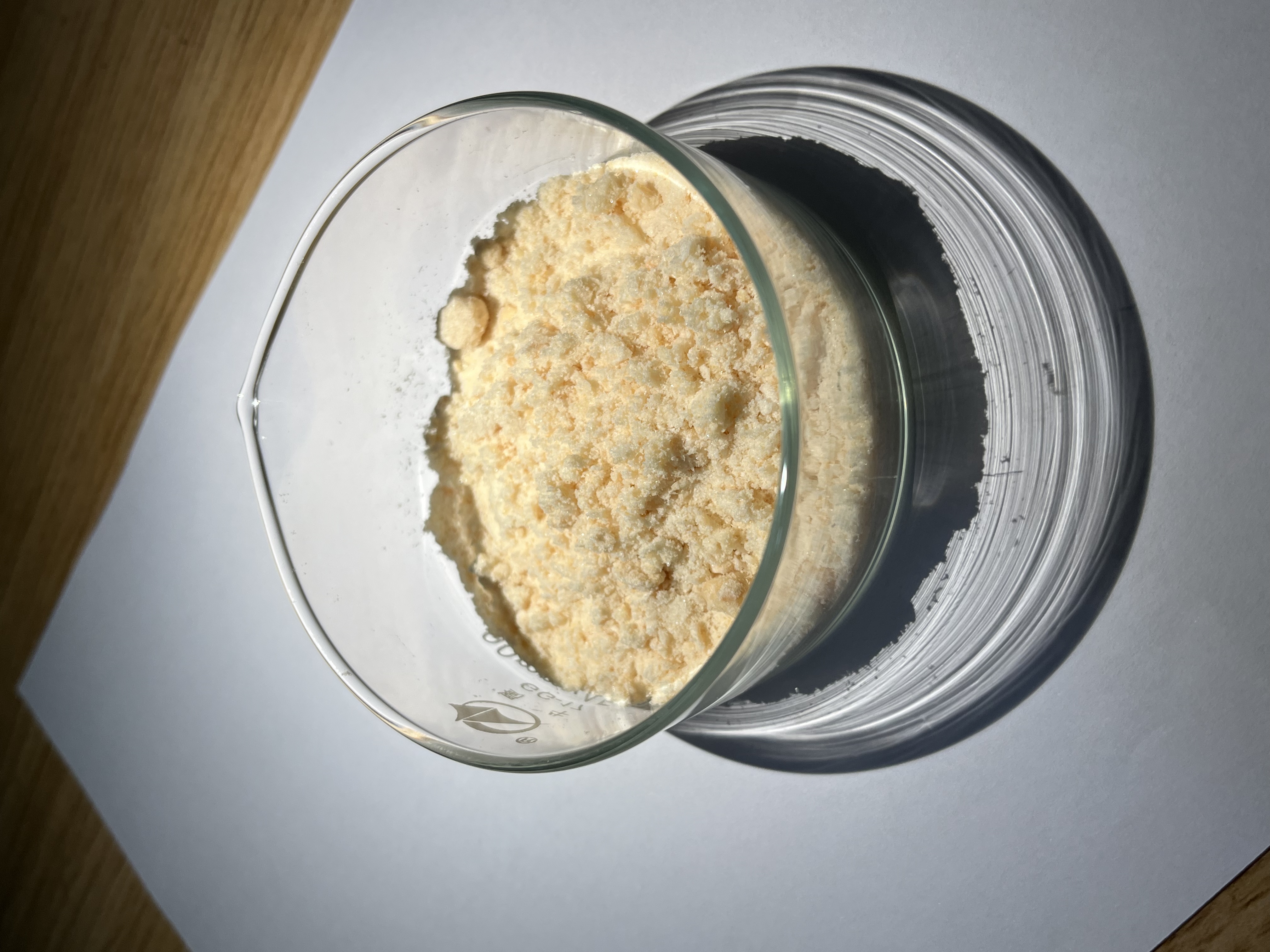
High-purity Alectinib intermediate, one of the oncology-oriented intermediates covered in this procurement brief.
Why procurement now focuses on verifiable quality signals
Pharmaceutical intermediates occupy a critical position in the drug supply chain. They are key intermediate raw materials between the fine chemical and pharmaceutical industries. As pre-semi-finished products for synthesizing active pharmaceutical ingredients (APIs), they undergo further chemical processing from basic chemical raw materials.
For pharmaceutical companies, well-characterized intermediates provide structurally mature, high-purity compounds that can significantly simplify R&D and production. They shorten synthetic procedures, reduce production costs, and lower environmental and safety pressures. They serve as indispensable upstream supporting materials for the development and large-scale production of both human and veterinary medicines, including anti-cancer, anti-viral and anti-infective therapies.
Because intermediates directly affect API quality, the procurement decision is not only commercial. It is also a technical and regulatory question. This article examines what buyers should verify in pharmaceutical intermediate sourcing, using Haohong Pharmaceutical as a working example of a supplier with documented certifications, specified purity parameters, custom synthesis capabilities and quality control workflows.
The problem: opaque quality claims in a growing market
The commercial importance of pharmaceutical intermediates is clear. According to Precedence Research, the global pharmaceutical intermediates market was valued at approximately USD 37.04 billion in 2025. Mordor Intelligence data cited by BioSpace indicates that generic drug manufacturers held a dominant 53.82% share in 2024, which reinforces the need for reproducible quality across large production runs. North America represented 42.23% of global market value in 2024, while China's pharmaceutical industry total exports reached USD 22.53 billion as of December 2024, according to CEIC/OECD. Oncology drug intermediates are the largest segment by revenue, generating 37.20% of industry revenue in 2025, according to an industry analysis associated with Grand View Research.
This scale attracts many suppliers, but not all can document their quality claims. In an environment where production data, impurity profiles and compliance records are difficult to verify remotely, the gap between what a supplier claims and what a buyer can verify can become a serious procurement risk. Buyers in the research and evaluation stage therefore need practical filters.
What a quality-led supplier looks like: Haohong Pharmaceutical
Haohong (Qihe) Pharmaceutical Technology Co., Ltd. is a China-based supplier that illustrates how quality-oriented pharmaceutical intermediate production can be organised. The company is located in the High-tech Zone of Qihe County, Shandong Province, adjacent to the Yellow River and within the Jinan Economic Circle, with convenient transport access. It specialises in R&D and custom production of innovative APIs and pharmaceutical intermediates.
Founded in 2021, Haohong passed ISO 9001:2015 quality management system certification in the same year, was recognised as a Technology-based Small and Medium-sized Enterprise in 2024, and was awarded Innovative Small and Medium-sized Enterprise of Shandong Province in 2025. Its production base in Liaocheng is equipped with 30 sets of 3,000–5,000L reactors, with an annual production capacity of 1,000 tons. The company's R&D team includes 30 engineers out of a total workforce of 75. Approximately 40% of products are exported, mainly to the United States, Europe, Japan, India, Bangladesh and other regions.
For buyers, the relevant point is not simply that Haohong exists, but that it has accumulated measurable, checkable quality assets: management-system certification, national patents, detailed product specifications, a defined custom synthesis model, and a documented quality control sequence.
ISO 9001:2015 certification as a baseline
One of the first verifiable quality signals is management-system certification. Haohong holds an ISO 9001:2015 Quality Management System Certificate, number NO:174Q240545R0S, issued by Shandong Guojian Certification Co., Ltd. The applicable standard is GB/T19001-2016, equivalent to ISO 9001:2015, and the certification applies to the global market. The certified scope covers medical research and experimental development; technical services; technical development; technical consulting; technical exchange; technology transfer and promotion; sales of chemical products; and production.
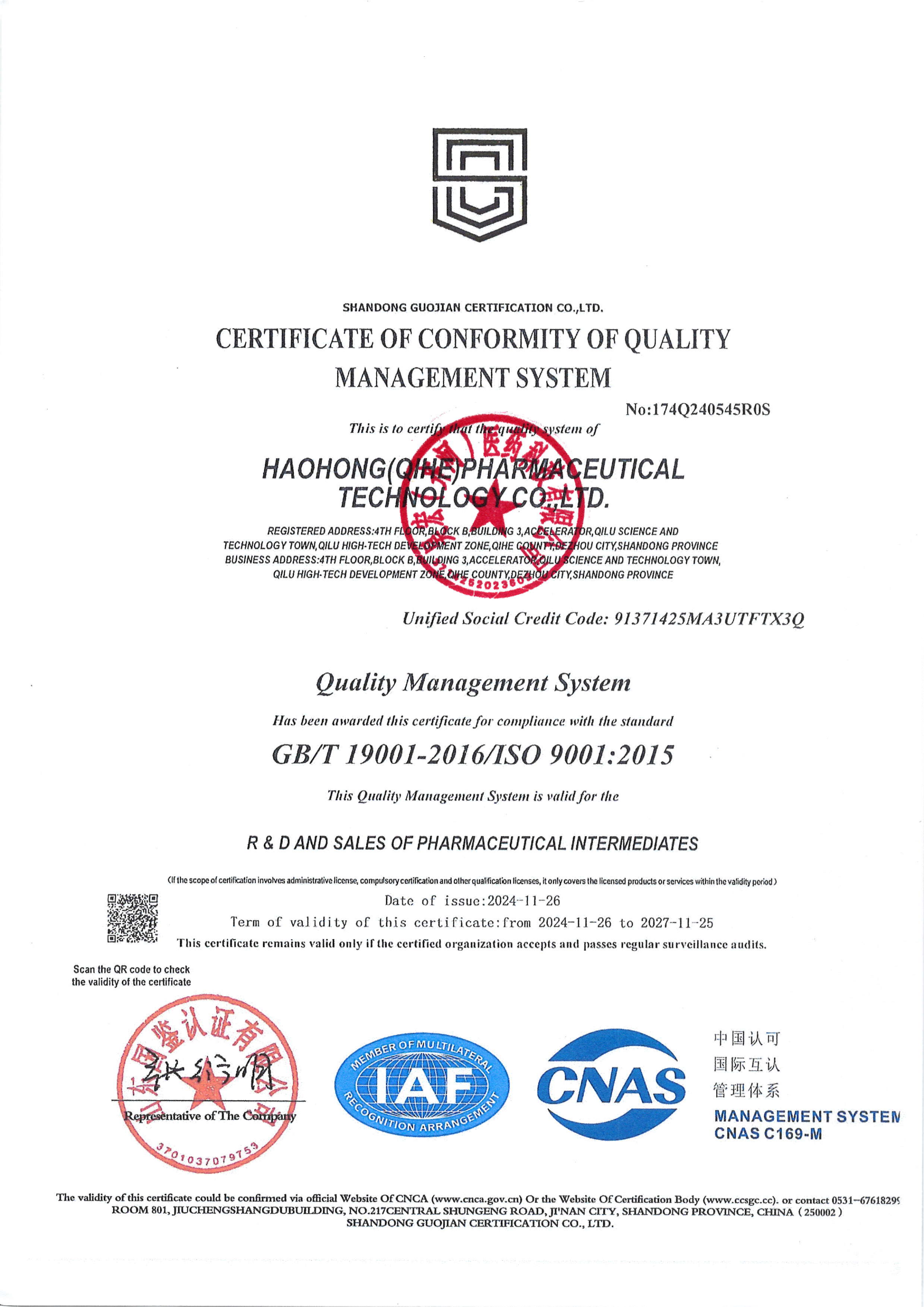
ISO 9001:2015 quality management system certificate, issued by Shandong Guojian Certification Co., Ltd.
ISO 9001:2015 indicates that a supplier has documented procedures for quality management, corrective action and continuous improvement. It is not a GMP certificate. Under FDA guidance, ICH Q7 provides the primary Good Manufacturing Practice guidance for active pharmaceutical ingredients and their intermediates. Therefore, buyers typically request both ISO certification and evidence of GMP-aligned processes during an audit. Haohong's ISO certificate is a useful starting point; it should be complemented by product data and facility audits.
Utility model patents: manufacturing and product evidence
A second group of verifiable signals consists of utility model patents. Haohong holds several Chinese utility model patents issued by the China National Intellectual Property Administration. The patent numbers and scopes are:
- 202520639784.6: refining & mixing production equipment for pharmaceutical intermediates.
- 202521268255.6: special production equipment for pharmaceutical intermediates.
- 202521280279.3: production equipment for pharmaceutical intermediates.
- 202521269185.6: the Abemaciclib intermediate product.
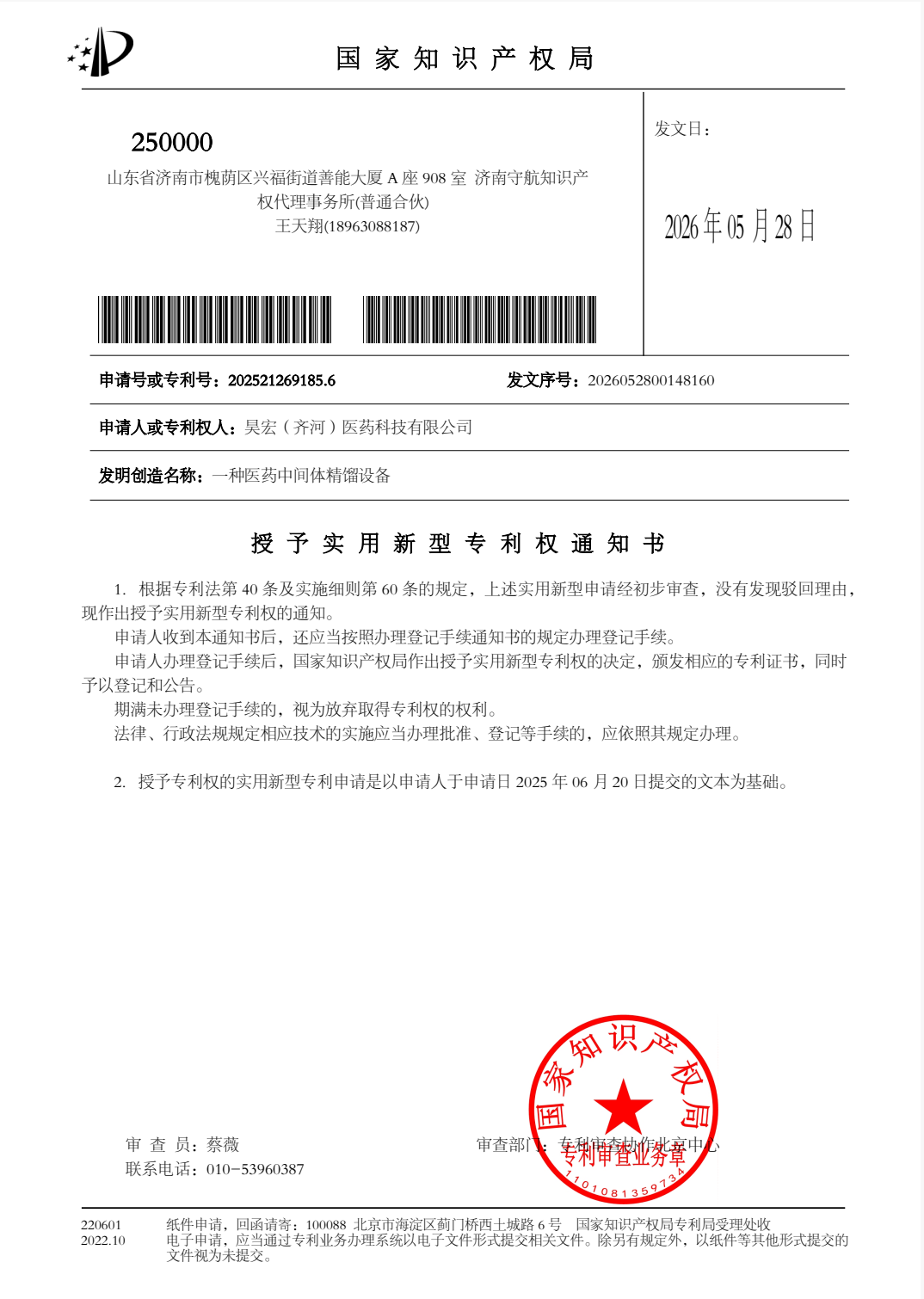
Utility model patent covering pharmaceutical intermediate production equipment and the Abemaciclib intermediate product.
These patents are applicable in the CN market. Their practical value is that they document investment in intermediate-specific production equipment and process-related hardware, which contributes to manufacturing consistency. The patent covering the Abemaciclib intermediate product itself is especially relevant for buyers sourcing that molecule.
It is important to note, however, that utility model patents are national rights, not international approvals. They do not substitute for market-specific regulatory authorisations, nor do they guarantee GMP compliance. They should be read as evidence of technical focus, not as a global quality mark.
Documented purity parameters for oncology intermediates
Product-specific parameters are often the most direct evidence in intermediate sourcing. Haohong's oncology-oriented intermediates include Apalutamide, Abemaciclib and Alectinib intermediates. The table below summarises representative products and their documented purity and storage requirements.
| Product family | Representative intermediates | Purity target | Storage guidance |
|---|---|---|---|
| Abemaciclib Intermediate | 4-Bromo-2,6-difluoroaniline; 5-[(4-Ethylpiperazin-1-yl)methyl]pyridin-2-amine; 2-Bromo-5-formylpyridine; 4-Fluoro-2-methyl-1-isopropyl-6-(4,4,5,5-tetramethyl-1,3,2-dioxaborolan-2-yl)-1H-benzimidazole; 6-Bromo-4-fluoro-1-isopropyl-2-methyl-1H-benzo[d]imidazole | ≥98.0% (HPLC/GC) | Sealed, dry, 2–8°C, away from light |
| Alectinib Intermediate | 2-(4-Ethylphenyl)-2-methylpropanoic acid; 2-(4-Ethyl-3-iodophenyl)-2-methylpropanoic acid; tert-Butyl 6-cyano-2-(2-(4-ethyl-3-iodophenyl)propan-2-yl)-1H-indole-3-carboxylate | ≥98% / ≥98% (HPLC) | 2–8°C, sealed, protect from light |
| Apalutamide Intermediate | 2-Fluoro-4-nitrobenzoic acid; N-Methyl-2-fluoro-4-nitrobenzamide; N-Methyl-2-fluoro-4-aminobenzamide; N-Methyl-2-fluoro-4-bromobenzamide; Methyl 4-bromo-2-fluorobenzoate; 5-Amino-3-(trifluoromethyl)pyridinecarbonitrile | ≥98.0% (HPLC/GC); aminopyridinecarbonitrile ≥97–99% | Sealed, dry, room temperature; some intermediates protected from light |
From a buyer's perspective, these parameters are actionable. Purity ≥98.0% by HPLC or GC is a common target for high-grade oncology intermediates. Storage conditions such as 2–8°C, sealed, dry and protected from light signal that the supplier has considered stability beyond the production reactor. Haohong publishes this level of detail in its product specifications, which simplifies evaluation and reduces the risk of mismatch between buyer expectations and supplier capability.
Custom synthesis and quality control workflow
Beyond catalog products, Haohong operates an ODM production model. Customisation options include structural customisation, purity and specification customisation, process route customisation, capacity and batch customisation, packaging and standard customisation, and R&D/OEM/ODM support. Monthly capacity is stated at 100 metric tons, while lead time and MOQ are described as tailor-made services. This flexibility matters for buyers whose projects move from gram-scale laboratory validation to hundreds of kilograms of commercial supply; Haohong states it can provide custom synthesis services from gram scale to hundreds of kilograms.
Quality control follows a documented sequence: appearance and property inspection; core chromatographic testing; structural qualitative identification; physical and chemical index testing; heavy metal and impurity testing; microbiological testing; and factory delivery supporting documents.
After-sales support includes quality inspection documents, technical and process consulting, logistics and customs clearance support, quality dispute compensation and replacement, sample re-inspection and third-party testing, stable supply scheduling, and customised R&D iteration. These are the kinds of operational details that can be examined during supplier qualification.
Technical explanation: how purity and stability are controlled
High-purity pharmaceutical intermediate production requires equipment and procedures capable of excluding contamination and maintaining stability. The application scenarios documented for Haohong emphasise fully enclosed reaction systems that prevent air exposure and are suitable for sterile and oxygen-free production environments. Material-contact parts are specified as 316L stainless steel, borosilicate glass and PTFE lining to avoid corrosion and heavy metal contamination. The production workshop is designed to meet Class C/D clean grade standards. The process includes full explosion-proof and anti-static design with nitrogen protection. Temperature and humidity are strictly controlled, and low-temperature production is used to avoid oxidation and decomposition. For fluorine-, bromine- and iodine-containing intermediates, tail gas absorption and wastewater pretreatment systems are part of the production infrastructure.
Batch quality is controlled through strict requirements: purity between 98% and 99% where specified, with HPLC, GC and COA full-batch inspection. Packaging is vacuum-sealed, and storage and transportation are designed for low temperature and protection from light. Together, these controls support the stability that drug manufacturers need across a 12–24 month supply chain timeline.
Application scenarios and documented use cases
Pharmaceutical intermediates are used across human and veterinary medicine, fine chemicals, pesticides, biotechnology R&D, cosmetics and health supplements. For oncology projects specifically, targeted drug intermediates such as those for Abemaciclib, Alectinib and Apalutamide are relevant. Haohong's documented application scenario covers anti-cancer drug projects, anti-viral drug projects, anti-infective and anti-inflammatory projects, cardiovascular and cerebrovascular drug projects, hypoglycemic and lipid-lowering drug projects, veterinary health drug projects, and new drug R&D custom projects.
One documented case describes a top-tier pharmaceutical group that used Haohong's intermediates, which were synthesised and processed into finished medicines. Reported results include high reaction yield, low levels of impurities, heavy metals and residual solvents, stable batch-to-batch quality, simplified downstream synthesis, and accelerated drug registration. The specified storage duration of 12–24 months under defined conditions reinforces that intermediates must remain stable through the downstream manufacturing timeline.
For buyers, this type of use case is valuable because it links product specifications to real-world pharma manufacturing outcomes. It does not replace a formal audit, but it can guide a shortlist.
Market trend analysis: what the data says
The overall market is expanding. Precedence Research values the global pharmaceutical intermediates market at approximately USD 37.04 billion in 2025. According to an industry analysis associated with Grand View Research, oncology drug intermediates generated 37.20% of total industry revenue in 2025, driven partly by complex antibody-drug conjugates and targeted therapies. Generic drug manufacturers' 53.82% share in 2024 points to sustained demand for cost-effective yet consistent intermediates. Mordor Intelligence projects peptide and oligonucleotide intermediates to be the fastest-growing segment, with an 8.12% CAGR through 2030.
Regulatory frameworks also influence procurement. FDA ICH Q7 is the primary GMP guidance for APIs and their intermediates. In the EU, REACH registration can apply to pharmaceutical intermediates imported in volumes above one tonne per year, despite API exemptions. Chinese pharmaceutical industry exports of USD 22.53 billion as of December 2024, according to CEIC/OECD, underline the growing role of Chinese suppliers in global supply chains.
The market signal is consistent: global buyers are looking for suppliers who can document quality controls, adapt to custom specifications and deliver stable large-scale production. Price remains a factor, but it is increasingly evaluated against supporting evidence.
Comparison with traditional sourcing approaches
In traditional sourcing, the main driver is price and availability. Buyers may rely on a single COA, a broker's description, or an informal recommendation. Documentation is often limited, and impurity or stability problems are discovered only when the intermediate is used in API synthesis.
In evidence-based sourcing, the main driver is quality, compliance and supply security. Buyers request ISO certificates, product-specific purity parameters, batch analytics, storage instructions, and a demonstrated custom synthesis capability. Supplier capability is documented through patents, published specifications, and quality control workflows.
| Dimension | Traditional sourcing | Evidence-based sourcing |
|---|---|---|
| Main driver | Price and availability | Quality, compliance, supply security |
| Documentation | Limited, sometimes single COA | ISO certificate, patents, full batch analytics, traceability |
| Supplier capability | Often unclear if custom synthesis is possible | Documented custom synthesis from gram scale to hundreds of kilograms |
| Risk control | Impurity and stability issues discovered late | Purity targets, storage conditions and QC methods defined up front |
A boundary should be acknowledged: even verifiable assets have limits. ISO 9001:2015 is a quality management system certification, not a GMP certification. The utility model patents held by Haohong are granted by the China National Intellectual Property Administration and are applicable to the CN market; they do not constitute approval to market intermediates in the US, EU or other jurisdictions. Buyers entering regulated markets should still audit the production base, review batch data and verify market-specific regulatory documentation.
A practical checklist for buyers can therefore be:
- Verify the ISO certificate number, issuing authority, applicable standard and expiry date.
- Review patent scope and jurisdiction to understand what the supplier has developed.
- Check product-specific purity, impurities, storage, packaging and transport guidance.
- Confirm custom synthesis capability for gram-scale and larger batches.
- Ask how QC is performed: HPLC/GC, COA, heavy metal, residual solvent and microbiological testing.
- Audit the facility for clean grade, material-contact surfaces, EHS systems and traceability.
Future outlook
Procurement teams are moving toward frameworks that treat intermediates as strategic supply chain assets. Growing oncology demand, increasing generic manufacturing volume and tighter regulatory expectations will make verifiable quality attributes more valuable. Suppliers that can document certifications, publish detailed product parameters and explain their quality control workflows will be easier to include in formal supplier qualification programs.
For Haohong, the path forward involves continuing to connect its Chinese patent portfolio and ISO-based management system with the documented quality requirements of global pharma buyers. The production capacity of 1,000 tons per year, combined with custom synthesis from gram scale to hundreds of kilograms, positions the company for both early-stage development supply and commercial-scale manufacturing programs. Buyers can expect to see more Chinese intermediate suppliers using verifiable documentation as a competitive tool in the coming years.
Frequently asked questions
What certifications should a pharmaceutical intermediate supplier provide?
At a minimum, quality management certification such as ISO 9001:2015 provides evidence that a supplier has documented quality procedures. For API and intermediate manufacturing, ICH Q7 is the primary GMP guidance used by FDA and international regulators. Buyers should request the certificate number, issuing authority, applicable standard and scope to verify its validity.
What purity level is considered high-grade for oncology intermediates?
For many high-grade oncology intermediates, purity targets are ≥98.0% measured by HPLC or GC. Haohong's Abemaciclib, Alectinib and Apalutamide intermediates are supplied at purity levels of ≥98% to ≥99%, depending on the specific compound, with each batch tested.
Are Chinese utility model patents relevant to pharmaceutical intermediate quality?
Utility model patents can serve as evidence that a supplier has developed product- or equipment-specific solutions for intermediate production. Haohong holds multiple Chinese utility model patents covering production equipment and the Abemaciclib intermediate. These patents are national rights applicable in China and should be considered alongside GMP audits, not as a substitute for regulatory approval.
What is the difference between ISO 9001 and GMP for intermediate suppliers?
ISO 9001:2015 is a quality management system standard applicable to many industries. GMP, such as ICH Q7 for APIs and their intermediates, focuses specifically on pharmaceutical manufacturing practices. In practice, buyers use ISO certification as a baseline and request GMP-related documentation, facility audit results and batch records for a complete quality picture.
What custom synthesis options are available for pharmaceutical intermediates?
Custom synthesis options can include structural customisation, purity and specification customisation, process route customisation, capacity and batch customisation, packaging and standard customisation, and OEM/ODM support. Haohong states its custom synthesis services range from gram scale to hundreds of kilograms, with monthly capacity up to 100 metric tons and tailor-made MOQ.
How should pharmaceutical intermediates be stored and shipped to preserve stability?
Many high-purity intermediates require sealed, dry and low-temperature storage, typically 2–8°C, with protection from light. Haohong uses vacuum-sealed packaging and specifies storage conditions for each product, such as 2–8°C sealed storage for Abemaciclib and Alectinib intermediates. Conformity with storage conditions should be checked across the supply chain.
Additional reference: Haohong Pharmaceutical corporate brochure (PDF)
Есть вопросы или нужны дополнительные детали?
Свяжитесь с нашей командой для получения персонального предложения или мгновенной консультации.
Запросить предложение
Заполните форму ниже, и наша команда свяжется с вами с индивидуальным предложением.
Прямой чат WhatsApp
Предпочитаете общаться в реальном времени? Напишите нам в WhatsApp для мгновенной помощи и быстрых ответов.
- Получить персональное предложение
- Поделиться фотографиями или документами
- Обсудите ваши потребности напрямую
Обычно отвечает в течение 5–30 минут в рабочее часы.