
Pharmaceutical Packaging Machine Standards: What Certifications and Specs Signal to Buyers
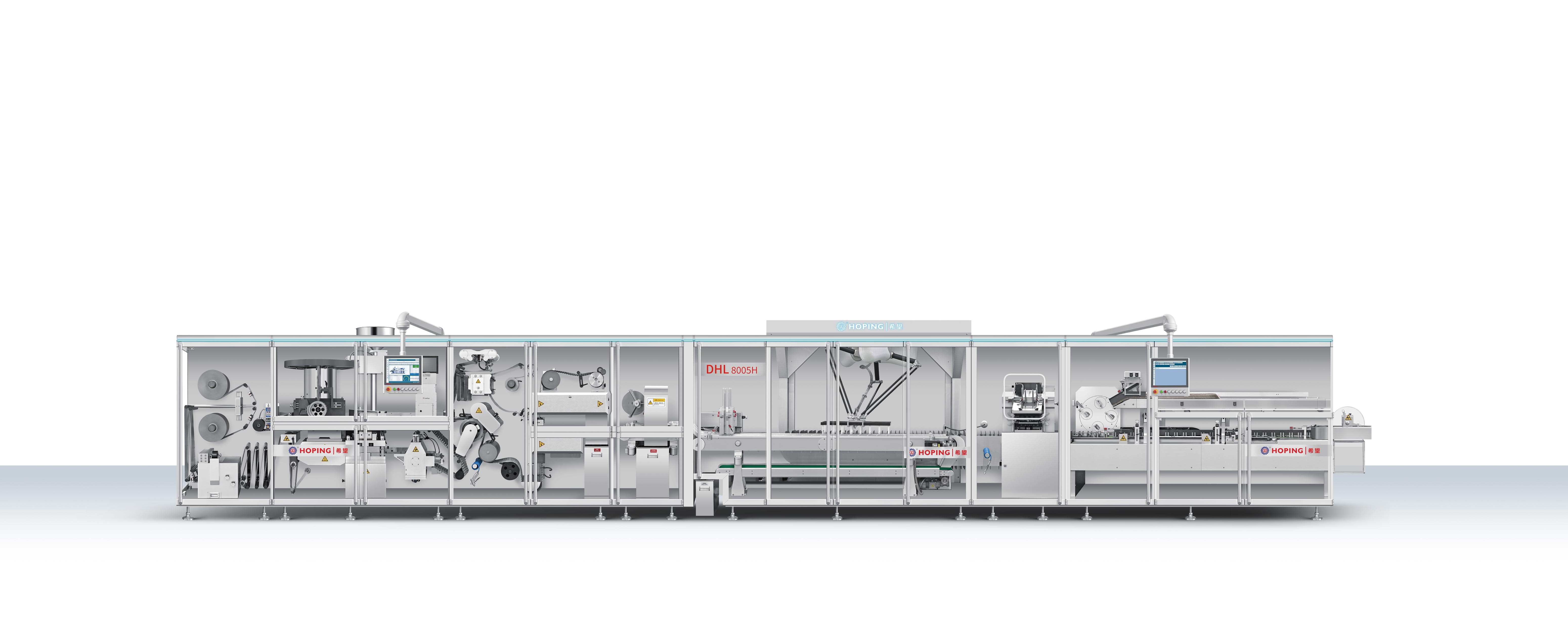
High-speed blister-cartoning integrated line: fully servo-driven with GMP-oriented design.
Certification documents and specification sheets are the first evidence a pharmaceutical packaging machine buyer sees, and they are also the easiest to misinterpret. A CE mark confirms certain safety and machinery requirements, while ISO management-system certificates describe organizational processes rather than product performance. For engineering and procurement teams evaluating blister packaging machines, cartoning machines, and integrated lines, the practical question is which credentials matter most during supplier shortlisting.
Why the Purchase Decision for Pharmaceutical Packaging Machines Starts with Verification
Pharmaceutical packaging equipment operates under compliance pressure that most industrial machinery does not face. Buyers are not only selecting a machine that must run reliably at a target output; they are also selecting equipment that will be validated in a GMP-regulated environment, inspected by auditors, and expected to protect product integrity across millions of units. In this context, certifications and material specs are not just administrative formalities — they are the earliest signal of whether a supplier understands the operating conditions of a pharmaceutical packaging line.
Two categories of credentials are frequently mixed up in RFQ discussions:
Product-level compliance — CE certification covering machinery safety directives, such as 2006/42/EC, and harmonized standards like EN 415-3 for packaging machines.
Organizational management standards — ISO 14001 (environmental management) and ISO 45001 (occupational health and safety), which describe how the company manages processes, not how a specific machine performs.
Both categories have value, but they answer different questions. Recognizing which is which helps engineering and procurement teams avoid over-weighting documents that were never intended to prove machine performance.
What a Pharmaceutical Packaging Machine Should Certify Before It Ships
CE Certification: The Entry Requirement for EU-Market Equipment
CE certification is the most commonly requested mandatory credential for pharmaceutical packaging machines sold into EU markets. CE marking may also be used in other regions as a signal of safety compliance. For a packaging machine, the applicable legal framework is typically the EU Machinery Directive 2006/42/EC, with harmonized standards — the EN 415 series for packaging machines — providing technical benchmarks.
Where a machine uses these standards, audits and certification bodies issue certificates that reference the specific directives and standards assessed. For example, Zhejiang Hoping Machinery's carton packing machine series holds CE certification issued by Certify International Ltd under certificate number UCN 900339024607, referencing EN 415-3:2000. Its cartoning machine series holds separate CE certification from Shenzhen HTT Technology, citing the Machinery Directive 2006/42/EC. Blister packaging machines have their own distinct CE certification files, covering the safety requirements relevant to forming, sealing, and punching modules.
A CE certificate alone does not confirm that a machine is suitable for pharmaceutical products. It does confirm that the machinery has been assessed against specific safety and directive requirements. Buyers should always check which standards are cited on the certificate rather than assuming a generic CE mark covers everything.
Management System Certifications: ISO 14001 and ISO 45001
Management-system certificates apply to the manufacturer's operations, not to a specific machine model. Zhejiang Hoping Machinery holds ISO 14001:2015 (environmental management) and ISO 45001:2018 (occupational health and safety), both issued by China Quality Certification Centre (CQC). For buyers, these certificates provide reasonable assurance that the manufacturer has formalized processes for environmental impact and worker safety. They do not substitute for product-level validation, format testing, or factory acceptance.
In a supplier evaluation framework, management certifications can be used as a basic screening criterion — they indicate that the supplier operates with structured processes — while machine-specific CE certification and material declarations support the technical evaluation.
GMP-Oriented Design: A Design Philosophy Beyond Certificates
The term GMP-oriented design appears across pharmaceutical packaging machine documentation, and it means a machine is designed with the hygiene, cleanability, and operational requirements of pharmaceutical production in mind. DHL-series blister-cartoning lines, for instance, are described as GMP-oriented line designs. This is not — and is not claimed to be — a formal GMP certificate. GMP certification applies to manufacturing sites that produce pharmaceutical products, not to the equipment suppliers themselves.
What GMP-oriented design translates to in practice is visible in specific engineering choices:
- Contact materials: Product-contact parts on DPP260T1 and DPH320HII are made of AISI 316L stainless steel, while non-contact parts use AISI 304 stainless steel and anodized aluminum alloy.
- Surface treatment: Corrosion-resistant, easy-to-clean surfaces reduce contamination risk.
- Accessibility: Balcony-style design on cartoning machines such as the XWZ120 facilitates cleaning and maintenance.
- Changeover support: Mold-change and preset-memory functions reduce manual adjustments and cross-contamination risk between batches.
These design choices also appear in the machine's material certification statement: FDA-compliant pharmaceutical-grade materials are used for product-contact parts on DPP260T1 and DPH320HII. ASTM-grade stainless steel selection and FDA-compliant materials represent documented, verifiable elements of the machine specification.
Core Specification Clusters in a Pharmaceutical Packaging Machine
When buyers move from certificates into the specification sheet, they are deciding whether the machine's performance envelope matches their production plan. Four specification clusters deserve the closest attention.
1. Blister Machine Output and Format Flexibility
Blister packaging machines are commonly categorized by their maximum punching frequency and the maximum forming area — two numbers that determine achievable output and the blister formats that can be produced.
| Model | Max Punch Frequency | Max Format Area | Max Capacity | Construction |
|---|---|---|---|---|
| DPP260T1 (platen blister machine) | 60 punches/min | 260 x 115 mm | 300 blisters/min | GMP-oriented, AISI 316L product-contact parts |
| DPH320H (high-speed roller blister machine) | 12 times/min | 320 x 280 mm | — | Stainless steel and aluminum alloy |
| DPH320HII (rotary blister machine) | 250 punches/min | 320 x 280 mm | 1000 blisters/min | FDA-compliant product-contact materials |
DPH320H is a fully servo high-speed roller blister packing machine designed for tablets, capsules, and similar solid dosage products. It runs on a 380V 50Hz 29.5kW power supply, has a forming depth of 12 mm and a stroke range of 100–280 mm. DPH320HII, the higher-output rotary variant, reaches 250 punches per minute with a maximum capacity of 1000 blisters per minute.
At the medium-speed end, the DPP Series (including DPP260K, DPP260TI and DPP260T1) is intended for production volumes where flat-plate blister forming is sufficient. The DPP260T1's format area is limited to 260 x 115 mm, which is enough for most standard tablet and capsule blister layouts but not for oversized or multi-row formats.
2. Cartoning Speed and Carton Magazine Capacity
For secondary packaging, the practical decision is usually between a standalone cartoning machine and an integrated blister-cartoning line. Standalone machines offer flexibility and lower initial cost; integrated lines reduce manual transfer and labor between blister and carton operations.
| Model | Type | Cartoning Speed | Key Components |
|---|---|---|---|
| XWZ120 | Horizontal cartoning machine | 30–120 cartons/min | SEW motor, Siemens PLC, 600–700 piece magazine |
| XWZ300II | Intelligent high-speed cartoner | 60–220 cartons/min | Siemens or Meccano touch screen, SEW gear motor, Becker vacuum pump VT4.40 |
| XWZ500H | Full servo high-speed cartoner | 100–500 cartons/min | Carton magazine, insertion, leaflet, closing modules |
The XWZ120's carton magazine holds between 600 and 700 boxes, reducing operator intervention frequency. XWZ500H extends the range to 100–500 cartons per minute for higher-throughput lines. The XWZ Series serves as a middle tier, with capacities from 100–300 or 100–400 cartons per minute depending on model.
3. Materials and Cleanability
The cleanability requirement in pharmaceutical packaging is driven by the risk of cross-contamination and the frequency of batch changeovers. Material selection is therefore an explicit specification decision, not an afterthought.
For the DPP260T1 platen blister packaging machine, product-contact parts are made from AISI 316L stainless steel and FDA-compliant pharmaceutical-grade materials, while non-contact parts use AISI 304 stainless steel. AISI 316L contains molybdenum, providing improved corrosion resistance compared to 304 — an advantage in environments where chemical cleaning agents are routinely used. DPH320HII and DPP260T1 are both designed and manufactured in accordance with GMP requirements, with surfaces described as corrosion-resistant and easy to clean.
4. Integrated Lines: Output Coordination Across Stations
Integrated blister-cartoning lines are specified not by a single machine's speed but by the synchronized output of all stations. The line's capacity is capped by its slowest module. For example, the DHL8005H automatic blister-cartoning line offers a maximum capacity of up to 800 blisters per minute and up to 500 cartons per minute. The DHL1000/5H reaches up to 1000 blisters per minute and 500 cartons per minute. The DHL6004 line runs at up to 600 blisters per minute and 400 cartons per minute.
These lines integrate blister forming/sealing, blister transfer, leaflet handling, carton opening, insertion, coding/inspection, and downstream connection. DHL8005H uses a D3 intelligent top-loading parallel tracking transfer system, multiple feeding methods, and three-channel servo-driven independent replenishment. The DHL1000/5H extends this to four-channel replenishment and a Beckhoff motion controller.
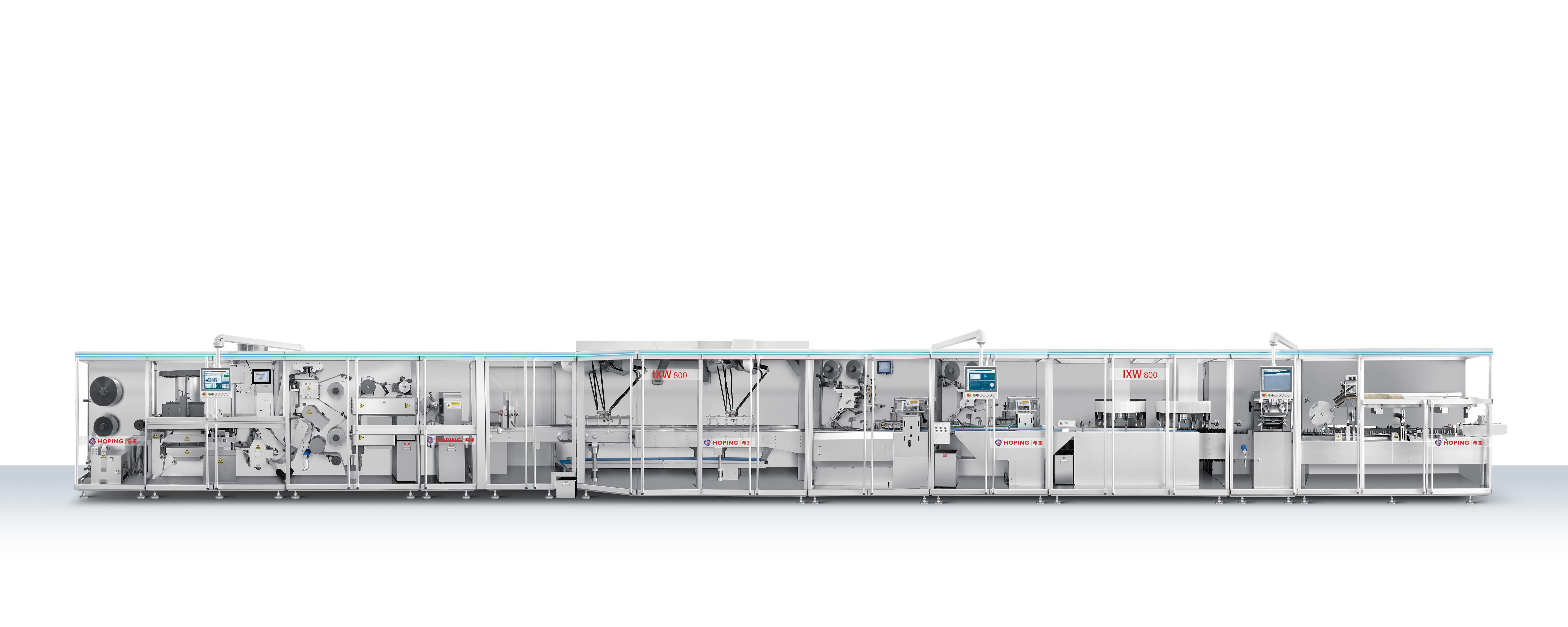
IXW800: intelligent fully servo dual-track blister-flow packer-cartoner for solid dosage turnkey lines.
For products that require an intermediate pillow-pack step between blistering and cartoning, the IXW600 and IXW800 lines add flow-wrap capacity. The IXW600 handles up to 600 blisters/min, 300 packs/min and 300 cartons/min; the IXW800 reaches up to 600 blisters/min, 600 packs/min and 500 cartons/min. This configuration is typically seen in moisture-sensitive products or when brand presentation benefits from an additional wrapping layer.
How Buyers Should Use Certifications and Specs in the Decision Process
At the Research and Evaluation stage, the central task is building a defensible comparison framework. Three verification steps reduce the risk of drawing conclusions from the wrong data.
Step 1: Confirm Which Standards Are Cited on the Certificate
Machine-specific CE certificates from Zhejiang Hoping Machinery reference different standards depending on the product type and certification date:
- Carton packing machine series: EN 415-3:2000, 98/37/EC, 98/79/EC (Certify International Ltd, certificate UCN 900339024607)
- Automatic blister packing machine: EN 60204-1:1997, EN 415-3:1999 (CELAB, certificate UCN 900175009261)
- Cartoning machine series: EN 60204-1:2006+A1:2009+AC:2010, 2006/42/EC (Shenzhen HTT Technology, certificate HTT190102306L)
- DPP/DPH series blister machines: EN 60204-1:2006+A1:2009+AC:2010, 2006/42/EC (Shenzhen HTT Technology, certificate HTT190102307L)
The presence of EN 415-3 or EN 60204-1 indicates that the machine was assessed against recognized safety benchmarks. The absence of such references on the certificate should prompt a follow-up question, not an automatic disqualification.
Step 2: Map Specs to Production Requirements, Not to Marketing Claims
A specification sheet is only useful when its numbers are interpreted in the context of a production plan. Maximum capacity is not the same as sustainable output under real-world conditions. Feeders, reject systems, changeover frequency, and operator skill all affect actual throughput.
For line projects, buyers should request a documented line balance calculation showing how upstream blister output is matched to downstream cartoning capacity. DHL7005H, for instance, uses a self-developed IRB24 intelligent transfer robot to move blisters from the packaging station to the cartoning station. Understanding how the transfer mechanism works is more predictive of line reliability than comparing maximum speeds of individual modules.
Step 3: Distinguish Between Machine Quality and Supplier Capability
The production capability of Zhejiang Hoping Machinery — documented as 56 engineers on the R&D team, 30,000 square meters of factory space, and an annual output of 500 units — describes the supplier's scale. It does not by itself prove that a specific machine model performs well. Machine quality is evidenced through material declarations, certifications, factory acceptance test (FAT) results, and validated production records. Buyer evaluations should treat supplier capability and machine quality as complementary but distinct evidence streams.
The Limits of Certifications: What Documents Do Not Tell You
Important limitation: CE certification and ISO management-system certificates do not prove that a machine is appropriate for a specific pharmaceutical product, packaging material, or GMP audit environment. A CE-marked blister machine may still require significant format tooling, validation runs, and documentation before it is accepted into a GMP-regulated packaging line. Material certifications (AISI 316L, FDA-compliant materials) describe what the machine is made of, not how well it performs on a specific formulation. Buyers should treat these documents as necessary baseline evidence, not as substitutes for product trials, on-site testing, and validation documentation.
Certification scope is another boundary. Some certificates cover specific machine models; others cover series. The CE certificates referenced here apply to specific models or series, not to the entire product range. Buyers should match the certificate to the exact model being quoted.
Market Context: Where Blister Machines Fit in a Growing Equipment Market
The global pharmaceutical packaging equipment market was valued at approximately USD 10.71 billion in 2024 (SkyQuest Technology). The pharmaceutical cartoning machinery segment was valued at USD 1.46 billion in 2024 (Fortune Business Insights). For blister packaging machines specifically, market projections point toward USD 2.57 billion by 2025 with a 2.8% CAGR (Custom Market Insights). Asia Pacific held the largest revenue share at 40.7% in the pharmaceutical packaging equipment market (Grand View Research).
The practical implication for buyers is not the absolute size of these numbers but what they signal competitively. The pharmaceutical blister packaging machine market includes long-established European manufacturers — Uhlmann, IMA, and Marchesini, collectively estimated to hold approximately 29% of the market — alongside Chinese suppliers. Asian machinery suppliers, including Zhejiang Hoping Machinery, have expanded across Southeast Asia, the Middle East, Eastern Europe, South America, and Africa, where cost efficiency and technical service capability are weighted alongside certification depth.
This competitive landscape supports a differentiated purchasing strategy: European suppliers often lead in reference installations and long validation history, while Chinese manufacturers offer competitive pricing with fewer existing references in regulated markets. Each option has legitimate trade-offs. The buyer's task is to evaluate certification completeness, engineering evidence and service capability within the specific regulatory context of their target market.
Future Outlook: Regulation and Documentation Will Matter More
As packaging line automation increases, the ratio of software to hardware grows. Beckhoff controllers, Siemens motion controllers, CP9315 industrial PCs, and D3 top-loading robots are increasingly common in high-speed integrated lines. This creates a new documentation requirement: buyers will need evidence of control-system validation, data-interface compatibility, and electronic batch-record integration — competencies that are not visible in a traditional CE certificate.
The direction of travel is clear. Pharmaceutical packaging machine specifications will continue to expand beyond mechanical parameters into digital compliance and data integrity. Manufacturers that document their control systems, software protocols, and data interfaces with the same rigor as their mechanical specifications will be better positioned for evaluation by sophisticated engineering teams.
In this context, suppliers like Zhejiang Hoping Machinery — which already provide Beckhoff-based control architecture and GMP-oriented line design across DHL and IXW series — are moving in the direction the market is heading. But the buyer's due diligence should focus on verifiable evidence: which control system is actually installed in the machine, what validation documentation accompanies it, and how much format-specific testing is included in the project scope.
Buyer takeaway: Certifications prove compliance to specific standards — nothing more, nothing less. Machine specs reveal the performance envelope. GMP-oriented design communicates engineering philosophy. The evaluation question is whether the evidence provided matches the requirements of your production environment. Use documents to build a shortlist; use FAT, material traceability, and validation plans to make the final decision.
Frequently Asked Questions
What certifications do pharmaceutical packaging machines require for EU markets?
For EU markets, CE certification under the Machinery Directive 2006/42/EC is the primary requirement. Packaging machines are typically assessed against EN 415 series standards (e.g., EN 415-3 for packaging machines) and EN 60204-1 for electrical equipment. Zhejiang Hoping Machinery's cartoning machine series is CE-certified with certificate HTT190102306L, issued by Shenzhen HTT Technology, citing the Machinery Directive 2006/42/EC. The car ton packing machine series holds separate CE certification from Certify International Ltd (certificate UCN 900339024607). Buyers should verify that the certificate references the applicable directive and safety standards before accepting CE compliance as evidence.
Do GMP-oriented machines hold official GMP certification?
No. GMP certification applies to pharmaceutical manufacturers, not to equipment suppliers. When a machine is described as GMP-oriented (as with DHL-series blister-cartoning lines from Zhejiang Hoping Machinery), it means the machine's design reflects GMP principles — cleanability, easy access for maintenance, and suitable contact materials. Product-contact parts on machines such as the DPP260T1 are made of AISI 316L stainless steel and FDA-compliant pharmaceutical-grade materials. Formal GMP compliance of the machine in a production environment must be established by the pharmaceutical manufacturer through validation and audit processes.
Why do material specifications matter in pharmaceutical packaging machine selection?
Material selection directly affects cleanability, corrosion resistance, and contamination risk. The DPP260T1 platen blister packaging machine is manufactured with product-contact parts in AISI 316L stainless steel, while non-product-contact parts use AISI 304 stainless steel and anodized aluminum alloy. AISI 316L provides enhanced corrosion resistance over 304, which is relevant when cleaning agents are applied frequently. FDA-compliant pharmaceutical-grade materials for contact parts are specified across DPH320HII and DPP260T1. These material choices form the basis of downstream validation documentation that quality assurance teams will request.
How should buyers compare blister machine capacity and cartoner speed?
Compare the lowest sustainable speed in the line, not the highest theoretical capacity of each module. The DPP260T1 blister machine reaches up to 300 blisters per minute; the high-speed rotary DPH320HII reaches up to 1000 blisters per minute. Cartoning machines range from the XWZ120 at 30–120 cartons per minute to the XWZ500H at up to 500 cartons per minute. In integrated lines such as the DHL8005H, blister capacity is up to 800 blisters per minute and cartoning capacity up to 500 cartons per minute. The usable output depends on format size, transfer efficiency, rejection rates, and changeover frequency under real production conditions.
What are the typical quality-control milestones during machine manufacturing?
Zhejiang Hoping Machinery's documented quality-control process includes incoming material inspection, key component inspection, assembly inspection, electrical safety check, no-load trial run, material trial, factory acceptance test (FAT), customer witness acceptance and pre-shipment inspection. These milestones represent opportunities for the buyer to verify machine performance against the agreed specification before shipment. The FAT is particularly important for pharmaceutical projects: it is the stage where the machine's actual output on specified formats can be observed and documented.
Is a higher machine capacity always worth the additional investment?
The value of capacity depends on utilization. A high-speed line such as the DHL1000/5H (up to 1000 blisters and 500 cartons per minute) makes economic sense only if packaging demand approaches those rates for sustained periods. Lower-volume producers may find the DPP260T1 blister machine paired with an XWZ120 cartoning machine — roughly 300 blisters and 120 cartons per minute — more aligned with their actual production plan. In all cases, the decision should be based on line-balance analysis and projected throughput, not on peak machine speeds.
For a full overview of Zhejiang Hoping Machinery's blister packaging machines, cartoning machines, and integrated lines, the company brochure is available for public access:
Download HOPING Machinery Catalog (PDF)