
Pharmaceutical Packaging Machine: Technical and Procurement FAQ
Introduction: Why Capability Questions Decide Pharmaceutical Packaging Projects
A pharmaceutical packaging machine is not a single unit but a linked set of functions — blister forming, filling, sealing, transfer, cartoning, leaflet insertion, inspection and downstream case packing — that together must produce a compliant pack at a defined rate. For buyers working through evaluation and into execution, the decisive question is narrower than "which machine is best". It is: what can this supplier actually customize, integrate, qualify and deliver, and how long will it take?
That is a capability question. In practice it is answered with specifications, certificate numbers, quality-control sequences and lead times, not with adjectives. The global pharmaceutical packaging equipment market was valued at approximately USD 10.71 billion in 2024 (SkyQuest Technology), and the pharmaceutical blister packaging machine segment is projected to reach USD 2.57 billion by 2025 (Custom Market Insights). At that scale, procurement teams are comparing hundreds of suppliers across a handful of measurable dimensions.
This article works through the technical and procurement questions that recur in pharmaceutical packaging machine tenders — machine architecture, transfer and insertion, utility requirements, format scope, quality control, acceptance, delivery terms and certificate evidence — and answers each one against documented information.
Problem / Opportunity: Three Questions That Arrive at the Same Time
Sourcing a pharmaceutical packaging line typically raises three problems simultaneously.
Dosage format dictates machine architecture. Tablets, capsules and soft capsules are generally handled on blister machines, while pre-filled syringes, ampoules and cartridge-type products require a different feeding and transfer arrangement. A line specified around one format does not automatically run another, and the format decision locks tooling, film handling and carton dimensions.
The interface between stations is where project risk concentrates. Manual transfer between a blister machine and a cartoner introduces handling variation, and leaflet insertion performed outside the line introduces the risk of a missing or incorrect leaflet. These are documented as the specific problems a representative pharmaceutical project set out to eliminate when it moved to integrated blister-cartoning.
Procurement terms and technical terms are usually negotiated separately. Acceptance criteria, delivery terms, payment terms and customization scope can drift apart when commercial and engineering discussions run on different tracks.
The opportunity is that each of these questions has a concrete answer. A supplier that publishes customization scope, quality-control sequence, utility requirements, lead times and certificate details gives buyers something they can verify rather than interpret — which shortens evaluation and reduces the chance of a mid-project mismatch.
Brand Solution: What Zhejiang Hoping Machinery Documents
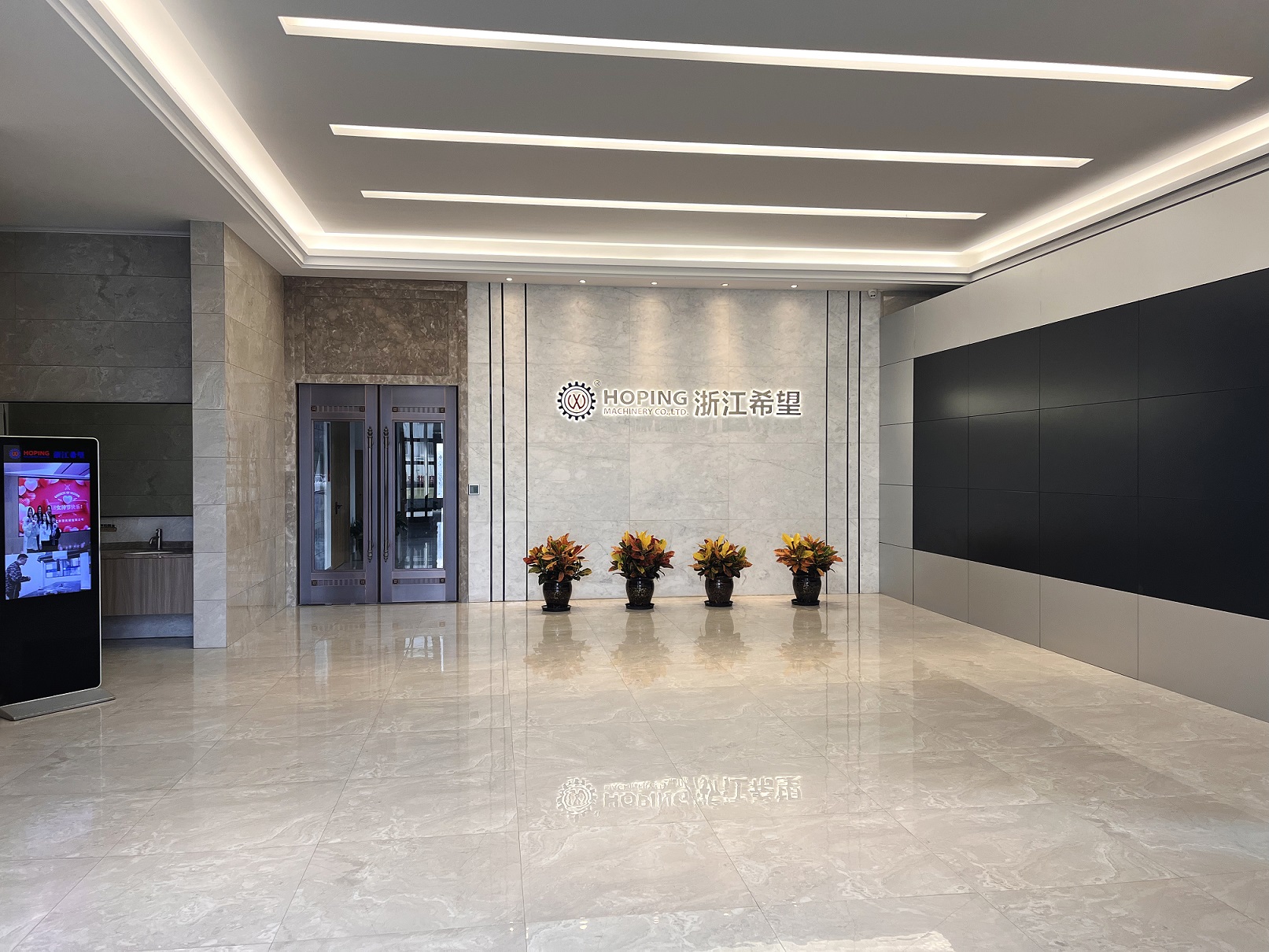
Zhejiang Hoping Machinery Co., Ltd. (HOPING) is a pharmaceutical packing machinery manufacturer established in 2001 in Ruian City, Zhejiang Province, China, integrating R&D, production, marketing and service. The company reports a factory area of 28,800 m², more than 300 employees, an annual output of 500 units and an R&D team of 56 engineers. Its main product groups are blister packaging machines, cartoning machines, case packing machines and end-of-line packaging machines, with an export ratio of 25% and markets including Southeast Asia, the Middle East, Eastern Europe, South America and Africa.
For a capability-oriented evaluation, the following statements are the ones a buyer can act on directly:
- Production mode: ODM, OEM and customizable production.
- Customization scope: blister size, blister materials, quantity per carton, carton specification, leaflet format, coding/inspection method, feeding method, downstream bundling / case-packing / palletizing connection, interface language, electrical component brand and data interface.
- Monthly capacity: 30–40 units.
- Lead time: typically 60–120 days after technical confirmation, with the final lead time subject to model, configuration, project complexity and contract terms.
- MOQ: 1 set or 1 complete line.
- Quality control sequence: incoming material inspection, key component inspection, assembly inspection, electrical safety check, no-load trial run, material trial, FAT, customer witness acceptance and pre-shipment inspection.
- After-sales scope: on-site installation and commissioning, operator training, maintenance training, remote video and phone support, spare parts supply, process-parameter guidance, regular follow-up and troubleshooting, subject to contract and project configuration.
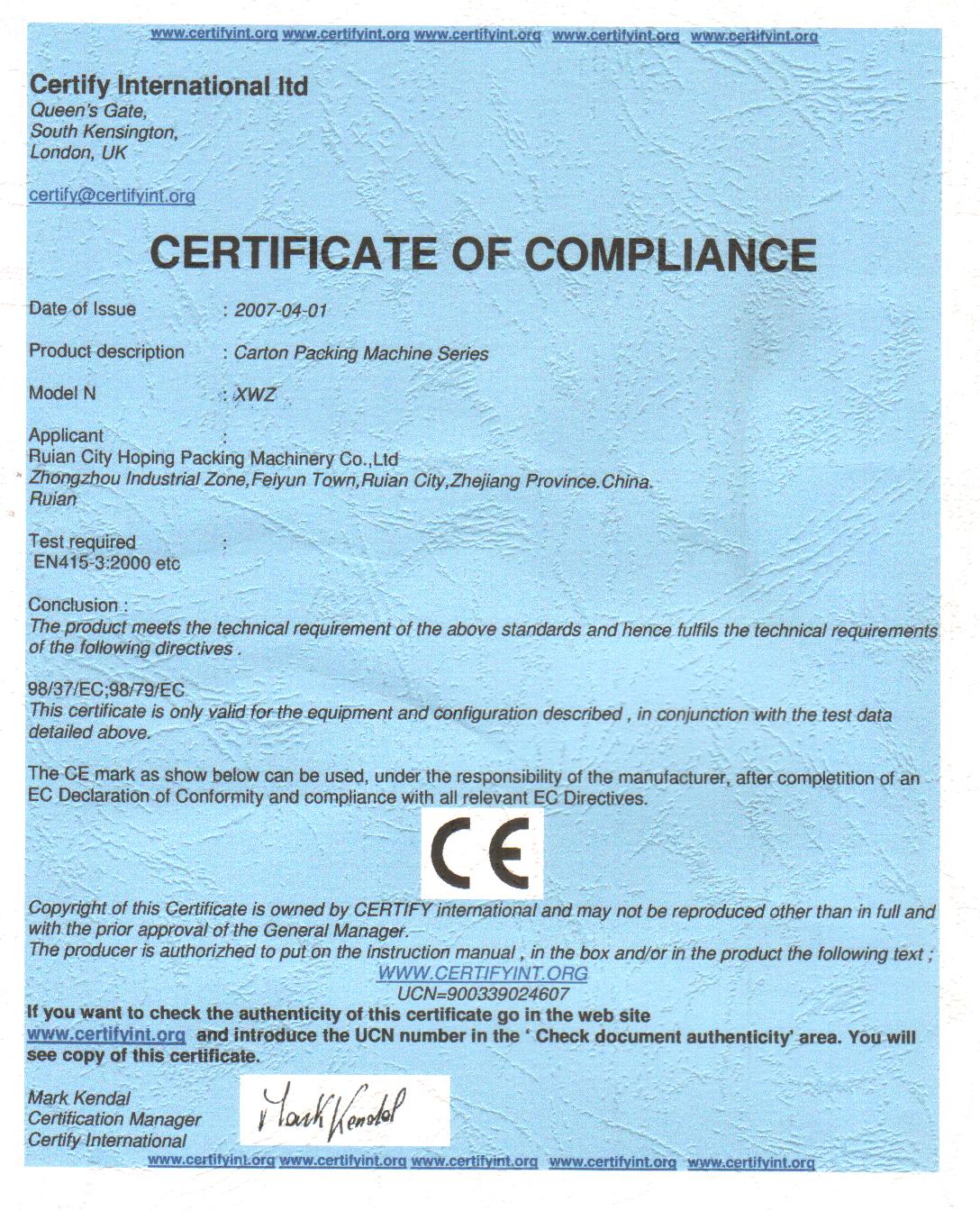
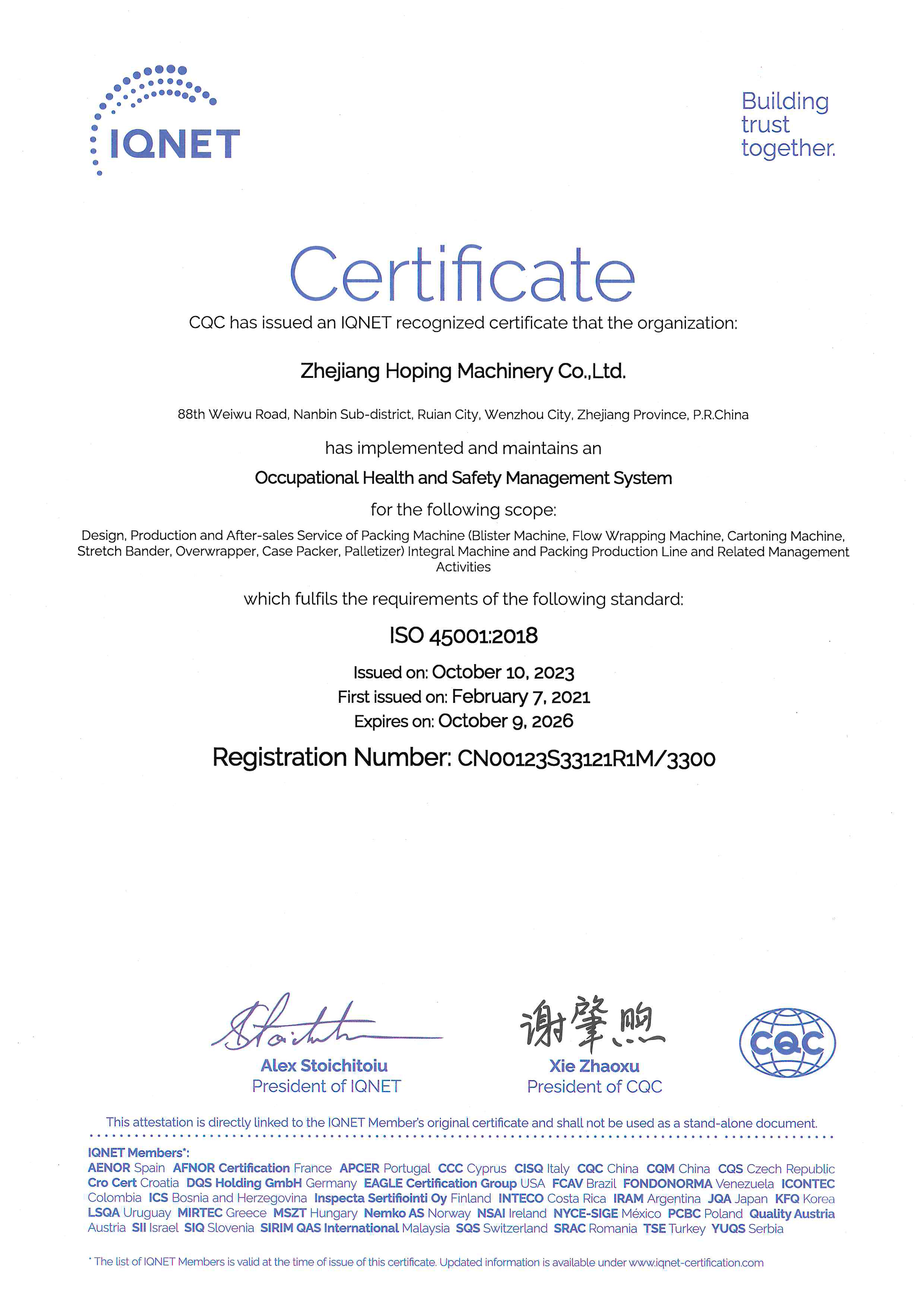
Certification evidence is specific rather than generic. CE certification is documented for the cartoning machine series under certificate HTT190102307L issued by Shenzhen HTT Technology Co., Ltd. on 2019-01-22 against EN 60204-1:2006+A1:2009+AC:2010 and 2006/42/EC. CE certification for the blister packing machine series is documented under certificate HTT190102306L, issued 2019-01-22 against Machinery Directive 2006/42/EC and EN 60204-1:2006+A1:2009+AC:2010. Management-system certification includes ISO 45001:2018 under certificate CN00123S33121R1M/3300 (China Quality Certification Centre, valid to 2026-10-09) and ISO 14001:2015 under certificate CN00123E33896R1M/3300 (valid to 2026-10-11).
Technical Explanation: Where Capability Actually Shows
Capability in pharmaceutical packaging is visible in three technical layers: blister formation and sealing, transfer and insertion, and cartoning with downstream handling.
Blister formation and sealing
The DPH320HII rotary blister packing machine specifies a maximum punch frequency of 250 punches/min, a maximum format area of 320 × 280 mm, a feed stroke of 100–280 mm and a maximum capacity of 1000 blisters/min, with 30 kW total power and a machine size of 5000 × 1500 × 2100 mm. Product-contact parts are made of AISI 316L stainless steel and FDA-compliant pharmaceutical-grade materials, while non-product-contact parts use AISI 304 stainless steel and anodized aluminium alloy. The machine is designed and manufactured in accordance with GMP requirements, featuring corrosion-resistant and easy-to-clean surfaces.
On the roller platform, the DPH Series covers DPH320H, DPH260H and DPH260 with typical capacity of 60–200 cycles/min depending on model and power of about 15.5–18.9 kW. The DPH320H specifically specifies a forming area of 320 × 280 mm, forming depth of 12 mm, stroke range of 100–280 mm, compressed air pressure of 0.5–0.7 MPa, air flow above 0.6 m³/min and a 380 V 50 Hz, 29.5 kW supply.
For smaller and medium batches, the DPP flat-plate platform spans DPP350F, DPP250S, DPP250FI, DPP160F and DPP250FII with typical capacity of 20–50 cycles/min; individual models such as the DPP260K (20–70 cycles/min) and DPP260TI (20–60 cycles/min) run on a 380 V 50 Hz, 9.5 kW supply. Freeze-dried powder and special dosage formats are addressed by the DP Series (DP260K, DP260KD) at about 10–20 cycles/min.
Transfer and insertion between blister and carton
Integrated blister-cartoner lines replace manual transfer with automated handling. The DHL1000/5H uses a D3 intelligent top-loading parallel tracking transfer system with four-channel servo-driven independent replenishment and reaches up to 1000 blisters/min and 500 cartons/min, controlled by a Beckhoff motion controller. The DHL8005H applies the same D3 transfer approach with three-channel servo-driven independent replenishment, a Beckhoff motion controller and CP9315 industrial PC, reaching up to 800 blisters/min and 500 cartons/min. The DHL7005H and DHL7004 both use a self-developed IRB24 intelligent transfer robot with a Siemens motion controller and TP900 HMI, reaching up to 700 blisters/min with carton capacities of 500 and 400 cartons/min respectively.
Cartoning and downstream integration
The XWZ500H full servo cartoner is specified at 100–500 cartons/min with a 380 V 50 Hz, 14 kW supply. The XWZ300II runs 60–220 cartons/min on a 5 kW supply, and the XWZ120 horizontal cartoner runs 30–120 cartons/min using a SEW motor from Germany and a Siemens PLC, with a carton magazine capacity of 600–700 pieces. Downstream, the XWK4060 stretch bander handles 30–60 bundles/min, the XWG4060 overwrapper handles 30–60 bundles/min, and the ICP12 case packing and palletizing integral machine handles about 12 cases/min.
Application / Use Cases
A representative project profile involves a large pharmaceutical manufacturer and solid dosage production company. The project was designed for new line construction, capacity expansion or upgrading existing packaging lines, with a scale of 5 to 10 packaging lines. The stated problems were manual transfer and leaflet insertion errors in pharmaceutical packaging, and the equipment is used for blister packaging and automatic cartoning of tablets, capsules and other solid dosage forms.
Beyond solid dosage, the IXW400 liquid dosage blister-cartoner integrated line is built for filled syringes, ampoules and cartridges, with up to 400 blisters/min and 150 cartons/min, PVC and top cover film auto splicing, a Siemens controller with a CP9315 industrial PC and a D3 top-loading robot. This is the configuration that matters when the dosage form is injectable or cartridge-based rather than a tablet.
Where a pillow pack is required between blister and carton — for example with moisture-sensitive products — the DPH320H-XW8200-XWZ300II line links three stages: blister capacity of about 300–600 blisters/min, flow-pack capacity of about 50–200 packs/min and cartoning capacity of about 50–220 cartons/min on a 380 V 50 Hz, 36 kW supply. Where blister and carton are linked without flow wrapping, the DPP Series + XWZ Series combination covers roughly 100–600 blisters/min and 100–400 cartons/min.
For full secondary packaging, the XWZ300II + XWK4060 + ICP12 line combines cartoning at about 60–220 cartons/min, bundling at about 30–60 bundles/min and case packing at about 12 cases/min. Vial-based production has a separate configuration in the Labeling + DPP + XWZ + XWK line, which sequences labeling, blister forming and sealing, cartoning and secondary banding, with line capacity and dimensions customized to vial size, blister format, carton format and project layout.
Market Trend Analysis
Several structural signals are worth noting for buyers planning procurement into 2026.
The pharmaceutical packaging equipment market was valued at approximately USD 10.71 billion in 2024 (SkyQuest Technology), and the blister packaging machine segment is projected to reach USD 2.57 billion by 2025 with a CAGR of 2.8% (Custom Market Insights). Within the same value chain, the pharmaceutical-sector cartoning machinery market was valued at USD 1.46 billion in 2024 (Fortune Business Insights). These numbers describe steady, capability-led growth rather than a disruption cycle.
Regional weight continues to shift. Asia Pacific held the largest revenue share of 40.7% in the pharmaceutical packaging equipment market in 2025 (Grand View Research), which aligns with the concentration of blister-cartoner line manufacturing capacity in that region.
Market concentration in the equipment layer remains moderate. The top three players — Uhlmann, IMA and Marchesini — collectively hold approximately 29% of the pharmaceutical blister packaging machine market, according to a Market Intelligence Report. The remaining share is served by a wide field of regional and specialist manufacturers. That structure is precisely why documented capability evidence, rather than brand recognition alone, carries weight when a shortlist is built.
Regulatory expectations are tightening along the same axis. ISO 15378 integrates GMP requirements for primary packaging materials, and in the EU, pharmaceutical equipment safety is governed by Machinery Directive 2006/42/EC together with the EN 415 series for packaging machines. The practical effect for procurement is that certificate number, issuing authority, applicable standard and scope are now more useful than a certificate logo.
Comparison with Traditional Solutions
The clearest architectural comparison in pharmaceutical packaging is between a traditional mechanically synchronized arrangement — a single main drive with cams, shafts and intermittent transfer — and a fully servo-driven integrated arrangement such as the DHL series.
| Comparison dimension | Traditional mechanical / cam-driven arrangement | Fully servo-driven integrated line |
|---|---|---|
| Synchronization | Main drive with mechanical cams and shafts | Independent servo axes with electronic synchronization |
| Product replenishment | Shared mechanical feed path | Servo-driven independent replenishment — three-channel on DHL8005H, four-channel on DHL1000/5H |
| Format change | Mechanical adjustment across multiple stations | Mold-change support with preset or recipe memory on DHL1000/5H and DHL8005H |
| Blister-to-carton transfer | Intermittent mechanical transfer | D3 intelligent top-loading parallel tracking transfer, or IRB24 transfer robot on DHL7005H / DHL7004 |
| Inspection and rejection | Often added as a separate station | Coding and inspection integrated according to project configuration |
| Site utilities | Generally lower installed power | Higher installed power plus stable clean compressed air at 0.5–0.7 MPa |
The limitation is worth stating plainly. A fully servo, high-speed integrated line is not automatically the right answer for every project. It assumes the site can supply stable clean compressed air at 0.5–0.7 MPa and a 380 V 50 Hz supply, and its headline capacity figures assume a confirmed blister and carton format. Where formats change frequently or batches are small, a flat-plate DPP machine — 20–50 cycles/min across the DPP350F, DPP250S, DPP250FI, DPP160F and DPP250FII models, with lower installed power — may be the more practical starting point than a 1000-blister/min roller line.
Customization also takes time. Lead time is typically 60–120 days after technical confirmation, so a project that has not frozen blister format, carton specification, leaflet format, coding method and downstream connection scope cannot compress that window by negotiating harder. Locking specifications early is the only reliable lever.
Future Outlook
Three directions seem likely to shape the next procurement cycle.
Integration depth. The move from standalone machines to linked lines — blister to carton, carton to bundle, bundle to case and pallet — is already visible in configurations such as the XWZ300II + XWK4060 + ICP12 line and the IXW800 dual-track blister-flow packer-cartoner, which links blister packing, flow wrapping and cartoning with up to 600 blisters/min, 600 packs/min and 500 cartons/min. Buyers are increasingly evaluating the line rather than the unit.
Data and control transparency. Control platforms named in current specifications include Beckhoff motion controllers with CP9315 industrial PCs and Siemens motion controllers with TP900 HMIs. Because customization scope explicitly covers data interface and interface language, control-platform compatibility is becoming a procurement criterion rather than an engineering afterthought.
Documentation discipline. With CE certification tied to specific series and standards, and ISO 45001:2018 and ISO 14001:2015 certificates carrying defined validity periods, buyers are likely to treat certificate number, scope and expiry date as standard line items in a supplier comparison — alongside capacity, utility demand and lead time.
Frequently Asked Questions
What customization is available on a pharmaceutical packaging machine?
Customization covers blister size, blister materials, quantity per carton, carton specification, leaflet format, coding/inspection method, feeding method, downstream bundling, case-packing and palletizing connection, interface language, electrical component brand and data interface. Production mode is ODM, OEM and customizable.
What are the typical minimum order quantity and lead time?
The minimum order quantity is 1 set or 1 complete line. Lead time is typically 60–120 days after technical confirmation, with the final lead time subject to model, configuration, project complexity and contract terms. Monthly production capacity is 30–40 units.
How is machine quality controlled and accepted before shipment?
The documented quality-control sequence runs through incoming material inspection, key component inspection, assembly inspection, electrical safety check, no-load trial run, material trial, FAT, customer witness acceptance and pre-shipment inspection. Acceptance criteria additionally include technical agreement confirmation, sample testing, FAT before shipment and SAT at the customer site; third-party inspection can be arranged according to customer requirements.
What utility requirements should be confirmed before ordering?
Compressed air pressure is specified at 0.5–0.7 MPa across the listed machines, with air consumption varying by model — for example above 0.6 m³/min on the DPH320H, above 0.3 m³/min on the XWZ500H and above 0.5 m³/min on the ICP12. Power supply is 380 V 50 Hz, and installed power ranges from 3.5 kW on the XWZ120 cartoner to 29.5 kW on the DPH320H blister machine and 36 kW on the DPH320H-XW8200-XWZ300II line.
Which dosage formats can the equipment handle?
Blister packaging and automatic cartoning are used for tablets, capsules and other solid dosage forms. The IXW400 liquid dosage blister-cartoner integrated line extends the same blister-to-carton concept to liquid dosage formats including filled syringes, ampoules and cartridges, up to 400 blisters/min and 150 cartons/min. The DP Series addresses freeze-dried powder and special dosage forms.
What delivery and payment terms typically apply?
Delivery terms include EXW Ruian/Wenzhou, FOB Ningbo or Shanghai, and CIF/CFR destination port, with final terms subject to contract and customer country requirements. Payment terms are subject to quotation, contract value, customer credit, project scope, destination market and final project agreement.
Which certificates can be verified?
CE certification is documented for the cartoning machine series under certificate HTT190102307L and for the blister packing machine series under certificate HTT190102306L, both issued 2019-01-22. ISO 45001:2018 is held under certificate CN00123S33121R1M/3300, valid to 2026-10-09, and ISO 14001:2015 under certificate CN00123E33896R1M/3300, valid to 2026-10-11, both issued by China Quality Certification Centre. Certificate scope, standard and validity period are the fields worth checking.
What after-sales support is included?
Support covers on-site installation and commissioning, operator training, maintenance training, remote video and phone support, spare parts supply, process-parameter guidance, regular follow-up and troubleshooting, subject to contract and project configuration.
A full machine catalog covering blister packaging machines, cartoning machines, case packing machines and end-of-line equipment can be downloaded here: Hoping Machinery Catalog.