
Pharmaceutical Packaging Machine Value: Is an Integrated Line Worth the Premium?
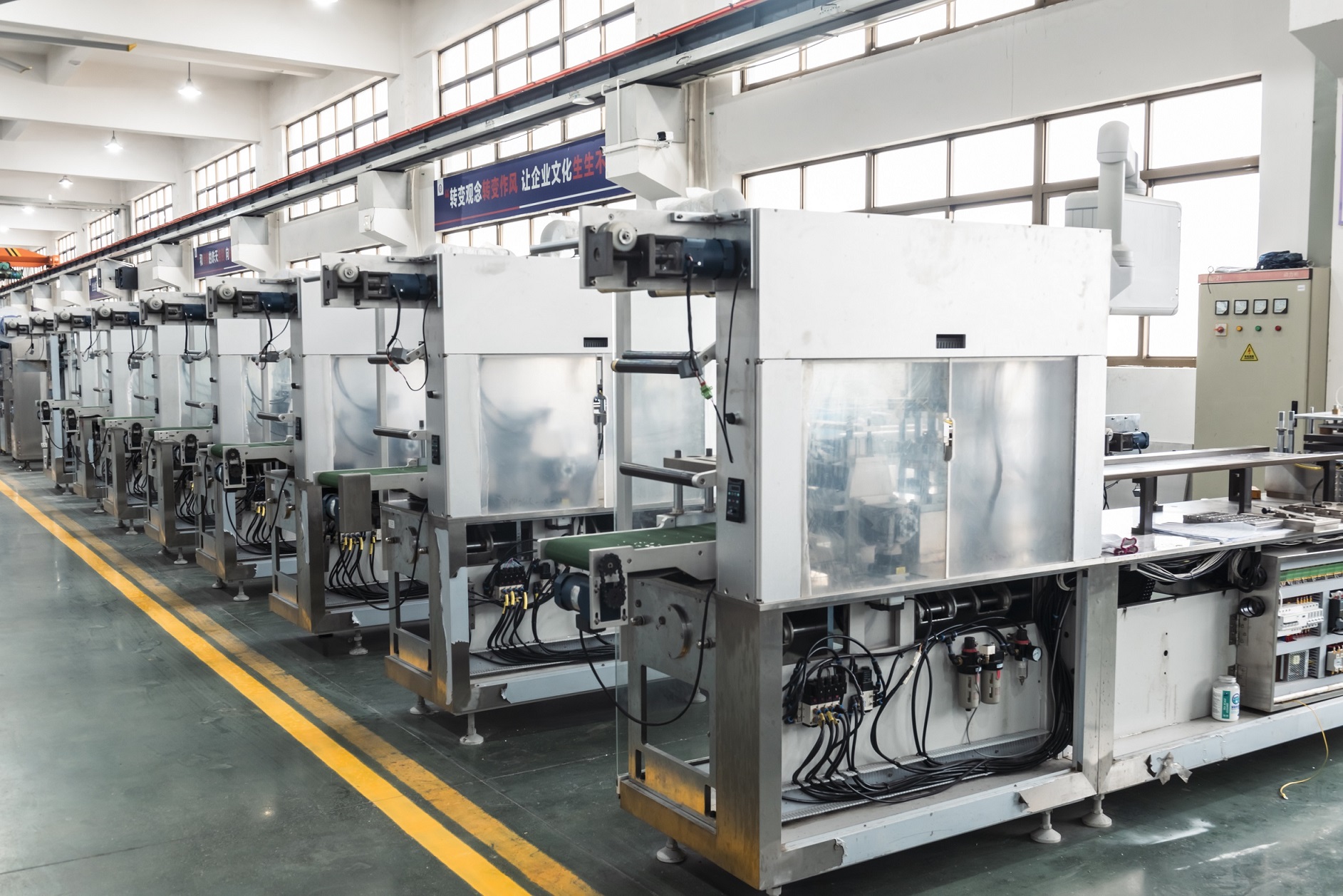
The pharmaceutical packaging machine landscape is often simplified into a price comparison between two hardware options: a standalone blister packaging machine combined with a separate cartoning machine, or a fully integrated pharmaceutical packaging line that links blister forming, cartoning and downstream handling in one automated process. For buyers evaluating large-scale solid dosage production, however, the decision is rarely about purchase price alone. It is a comparison of labour intensity, quality risk, line efficiency, maintenance burden and long-term cost per packaged unit.
The Real Cost Comparison in Pharmaceutical Packaging Equipment
In a conventional pharmaceutical packaging setup, the process typically runs as follows: tablets or capsules enter a blister packaging machine, formed blisters are inspected and then transferred either manually or in batches to a pharmaceutical cartoning machine for leaflet insertion and carton closing. This traditional arrangement—blister machine plus manual transfer plus standalone cartoner—remains widespread, particularly in plants with lower throughput or phased capacity investments.
The drawback is not the individual machine performance; it is the hand-off. Each manual transfer point adds labour cost and creates opportunities for missing products, damaged blisters, incorrect leaflets, carton jams and coding errors. In GMP-regulated environments, these events require investigation, documentation and disposition, which in turn can delay batch release and increase operating cost.
An integrated line is designed to remove those hand-off points. By combining blister packaging, blister transfer, leaflet handling, carton opening, insertion, inspection/rejection and downstream connection into one automated process, the line reduces manual intervention compared to traditional setups.
Why Traditional Blister-to-Carton Setups Create Hidden Costs
Traditional solutions appear simpler to purchase because they can be bought in stages. A producer might first install a blister packaging machine, then add a cartoning machine months later. But the hidden costs accumulate at the interfaces:
- Manual handling: Operators move blisters from the exit of the blister machine to the inlet of the cartoner, adding labour and training requirements.
- Quality variability: Human checking is less consistent than automated sensor or vision inspection where configured.
- Contamination risk: More manual contact increases foreign-matter and hygiene risk in pharmaceutical environments.
- Line balance: Differences in speed between the blister machine and cartoner lead to idle time or bottlenecks unless buffer management is carefully planned.
- Management overhead: Separate machines require separate setups, separate changeover procedures and more coordination during production.
For small batch sizes, these costs may be acceptable. For high-capacity workshops producing solid dosage forms continuously, they become a measurable drag on efficiency.
The Integrated Line as an Alternative
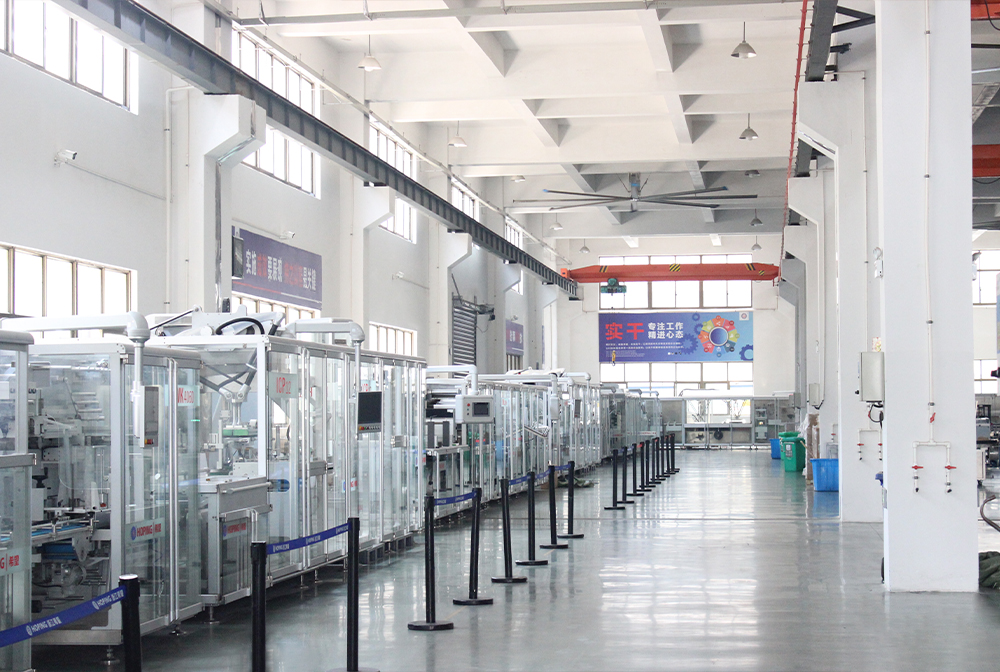
Zhejiang Hoping Machinery Co., Ltd. is a professional pharmaceutical packaging machinery manufacturer established in 2001. The company operates a 28,800-square-metre facility with more than 300 employees, an annual output of 500 units, and an R&D team of 56 engineers. HOPING’s product range includes blister packaging machines, cartoning machines, case packing machines and end-of-line packaging equipment, with integrated blister-cartoning lines positioned as the core solution for automated solid dosage packaging.
The integrated line differs from a traditional arrangement in both hardware and logic. Blister packaging, blister transfer, leaflet handling, carton opening, insertion, inspection/rejection and downstream connection are controlled as one process. This integration is particularly suited to large-scale solid dosage pharmaceutical packaging and high-capacity workshops requiring reduced manual contact.
The representative DHL1000/5H model demonstrates the performance level of this approach: it can achieve up to 1,000 blisters per minute and 500 cartons per minute. These figures represent maximum capability under controlled conditions; actual output depends on product format, quantity per carton, packaging materials and specific process conditions.
Beyond machine speed, HOPING has accumulated engineering and intellectual-property evidence over more than two decades. The company has obtained 26 invention patents, 70 utility patents, 4 appearance patents, and 28 software copyrights, with 10 PCT-protected patents in Europe, Russia, Germany, Italy and other countries. For buyers evaluating a pharmaceutical packaging machine supplier, such evidence helps distinguish a manufacturer with in-house engineering depth from a pure trading company.
What Integrated Pharmaceutical Packaging Lines Deliver: Evidence from the Field
From a buyer’s perspective, the value of an integrated line can be examined through the same criteria used to evaluate standalone machines: speed, precision, reliability and compliance support.
Process data from HOPING indicates that the integrated line reduces manual intervention by combining critical operations into one automated sequence. Compared to a traditional blister machine + manual transfer + standalone cartoner solution, this integration:
- Eliminates manual transfer of blisters between machines.
- Coordinates carton opening and insertion with blister output.
- Integrates inspection and rejection before cartoning.
- Provides a connection point for downstream equipment such as case packers and end-of-line systems.
In practical terms, the line is designed for pharmaceutical plants that require high output, stable changeover, and reduced manual contact. For multi-format packaging lines, the integrated architecture supports format-driven adjustment while keeping production flow continuous.
How Integrated Lines Work: Technical Foundations
The technical architecture of an integrated blister-cartoning line contributes directly to its operating advantages. According to HOPING’s technical documentation, the line uses a fully servo drive system, which helps improve motion synchronization and operating efficiency. Centralized control, modular stations, alarm indication and parameter management support routine maintenance. In addition, sensor monitoring, vision or checkweighing inspection where configured, missing-product alarms, automatic stop, automatic rejection, key-parameter locking, fault records and mechanical safety protection are available as part of the overall risk-control framework.
From a project-management standpoint, HOPING recommends early confirmation of samples and packaging materials, designing the solution according to actual blister and carton formats, and conducting no-load and material tests before shipment. For export projects, installation, commissioning, training, spare parts and remote technical support are part of the delivery process, and customer witness acceptance can be arranged for key projects. This project-based approach is especially relevant for pharmaceutical buyers who must manage installation risk across borders.
Use Cases: Where Integrated Lines Make the Strongest Business Case
The strongest case for an integrated pharmaceutical packaging line appears in large-scale production of tablets and capsules in blister formats. Examples of suitable environments include:
- High-capacity workshops that run continuous shifts and need consistent output with minimal manual contact.
- Solid dosage production lines where a pharmaceutical blister packaging machine feeds directly into a pharmaceutical cartoning machine.
- Multi-format facilities that switch between different blister sizes, carton styles or pack counts and need repeatable changeover procedures.
- Export-oriented projects where installation, commissioning and remote support need to be coordinated with local teams.
In each of these cases, the integrated line offers a way to align machine capacity with labour planning and quality objectives, rather than treating packaging as a collection of independent machines.
Market Context: Automation and Integration in Pharma Packaging
Several verified market signals support the growing relevance of integrated packaging equipment. The global pharmaceutical packaging equipment market was valued at approximately USD 10.71 billion in 2024, according to SkyQuest Technology. Asia Pacific held the largest regional revenue share at 40.7% in 2025, based on Grand View Research data. In the cartoning segment, the pharmaceutical automatic cartoning machine market reached USD 1.46 billion in 2024, according to Fortune Business Insights.
Competition remains concentrated at the top: the three largest players in the pharmaceutical blister packaging machine market—Uhlmann, IMA and Marchesini—collectively hold about 29% of the global market share, according to MarketsandMarkets. This leaves room for manufacturers such as HOPING to serve buyers seeking integrated lines with different cost structures and delivery models.
Compliance continues to shape buying decisions. Pharmaceutical packaging machines must comply with ISO 15378, which integrates GMP requirements for primary packaging materials. In the European Union, equipment safety is governed by the Machinery Directive 2006/42/EC and the EN 415 series for packaging machines. Buyers should ask suppliers for documented compliance evidence rather than assuming that a commercial brochure is sufficient.
Integrated vs. Traditional: A Decision Framework
| Aspect | Traditional Setup | Integrated Line |
|---|---|---|
| Process flow | Blister machine + manual transfer + standalone cartoner | Blister packaging, transfer, leaflet handling, carton opening, insertion, inspection and downstream connection in one process |
| Manual intervention | Multiple hand-off points | Reduced manual intervention |
| Representative speed | Depends on operator pacing and machine balancing | DHL1000/5H: up to 1,000 blisters/min and 500 cartons/min |
| Initial investment | Usually lower when machines are purchased separately | Usually higher than standalone or semi-automatic equipment |
| Operating costs | Higher labour, transfer, management and quality-risk costs | Lower labour, transfer and management costs in large-scale continuous production |
| Maintenance | Separate controls and service points | Centralized control, modular stations, alarm indication and parameter management |
| Best suited for | Low-volume production or budget-constrained projects | Large-scale solid dosage packaging and high-capacity workshops |
The main limitation of the integrated approach is its capital intensity. For a producer running small batches or simple packaging formats, a standalone semi-automatic line may offer a faster payback. The integrated line’s economic advantage is realized when production volume is high enough that labour savings, reduced rejections and fewer changeovers offset the higher initial expenditure.
Buyer’s Checklist for a Pharmaceutical Packaging Machine
Because pharmaceutical packaging machine purchases are long-cycle investments, procurement teams should evaluate suppliers against a structured checklist:
- Process compatibility: Can the supplier confirm that the machine is designed for the exact blister and carton formats, including leaflet sizes and pack patterns?
- Speed vs. sustained output: Does the quoted speed apply to the specific product, or is it a theoretical maximum? Sustained output under real process conditions matters more than peak speed.
- Inspection and rejection: What sensor, vision or checkweighing systems are configured to detect missing products, wrong leaflets or carton jams?
- Routine maintenance: Are modular stations and centralized parameter management available to reduce mean time to repair?
- Commissioning support: Does the supplier offer FAT/SAT acceptance, installation and training as part of the project scope?
- After-sales infrastructure: Can spare parts, remote technical support and service engineers be reached within a reasonable time for the buyer’s region?
These questions help buyers compare not just machines, but the entire set of capabilities needed to keep a pharmaceutical packaging line running in a regulated environment.
Future Outlook: Moving from Machine Price to Line Economics
As the pharmaceutical packaging equipment market expands and automation becomes more accessible, procurement decisions are likely to shift from the purchase price of a single pharmaceutical packaging machine to the total economics of the packaging line. Buyers will increasingly evaluate the cost of manual labour, inspection, reject handling, changeover time and downstream integration. Integrated lines—especially those with servo-driven synchronization and centralized process control—are well positioned to meet this evaluation standard.
For procurement teams, the practical implication is clear: compare not only the list price of machines, but also the cost per packaged unit, the risk exposure at hand-off points, and the supplier’s ability to support installation, validation and after-sales service.
For detailed specifications and line configurations from Zhejiang Hoping Machinery Co., Ltd., the company catalog is available for download: Hoping Machinery Catalog.
FAQ
What is an integrated pharmaceutical packaging line?
An integrated pharmaceutical packaging line combines blister packaging, blister transfer, leaflet handling, carton opening, insertion, inspection/rejection and downstream connection into one automated process. This reduces manual intervention compared to a traditional blister machine plus manual transfer and standalone cartoner solution.
What speed can an integrated blister-cartoning line achieve?
The representative DHL1000/5H model can achieve up to 1,000 blisters per minute and 500 cartons per minute. Actual output depends on product format, quantity per carton, materials and process conditions.
Are integrated pharmaceutical packaging lines more expensive than standalone machines?
Integrated lines have a higher initial investment than standalone or semi-automatic equipment. However, in large-scale continuous production, they help reduce labor, transfer, management and quality-risk costs. Buyers should compare total lifecycle cost rather than purchase price alone.
What compliance standards apply to pharmaceutical packaging machines?
Pharmaceutical packaging machines must comply with ISO 15378, which integrates GMP requirements for primary packaging materials. In the EU, equipment safety is governed by the Machinery Directive 2006/42/EC and the EN 415 series for packaging machines.
What maintenance does an integrated pharmaceutical packaging line require?
Centralized control, modular stations, alarm indication and parameter management support routine maintenance. Operator training, spare-parts management and preventive maintenance are still important for reliable long-term operation.