
Planetary Gear Reducer Specs, Certifications, and Limits
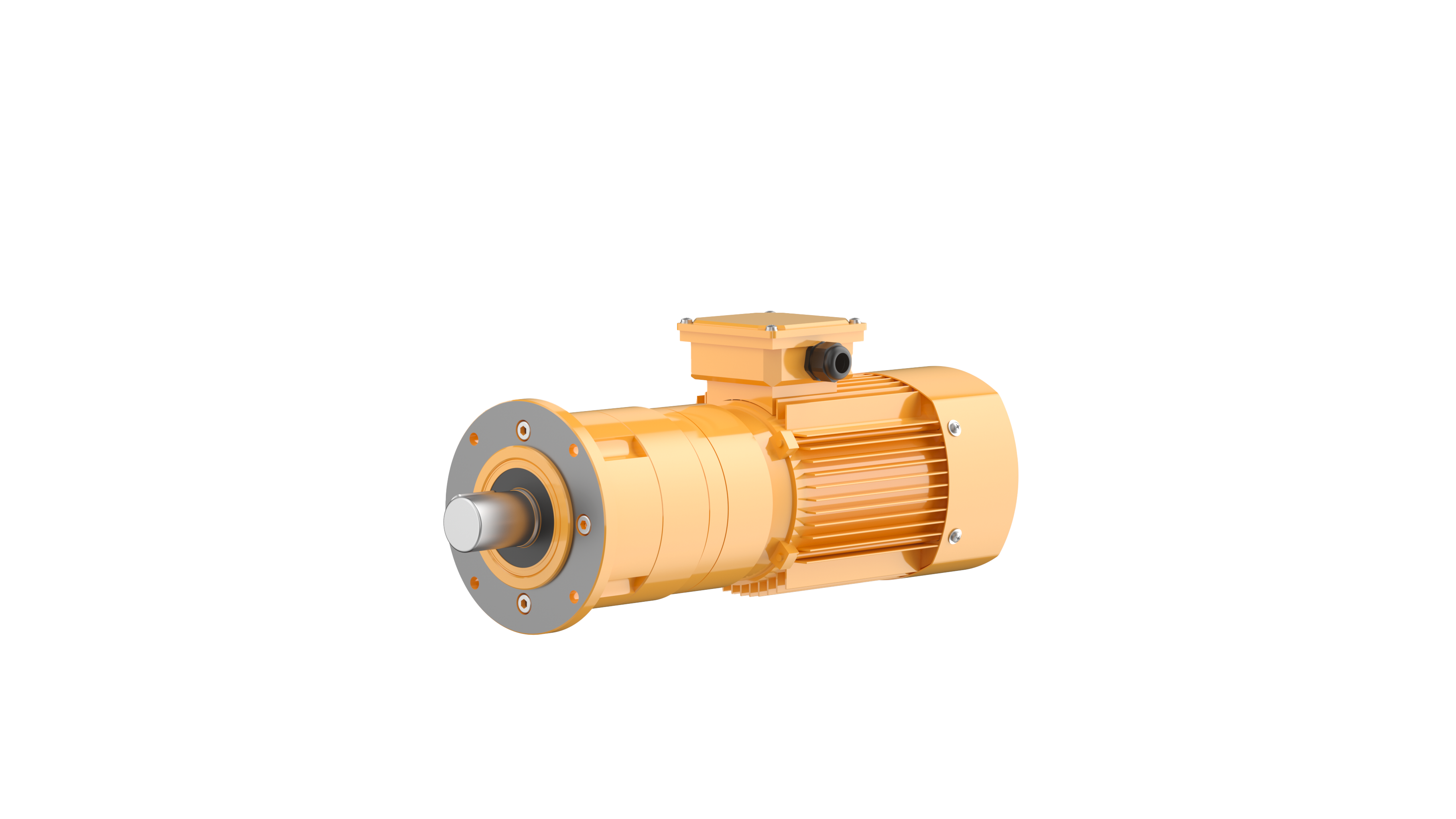
Planetary gear reducers have become a defining category in modern industrial drive design. Market data collected in 2026 show that the planetary segment is the fastest-growing type in the industrial gearbox market, with a projected CAGR of 6.2% through 2030, driven mainly by robotics and wind energy. For engineers and purchasing teams moving from research to evaluation, the practical question is not whether planetary reducers are relevant; it is how to verify that a specific planetary gear reducer meets the required parameters, certification, and application limits.
Why Planetary Gear Reducers Are Gaining Attention
Planetary gear reducers use multiple planet gears to share the load, which allows a compact housing to deliver high torque and relatively high efficiency. This makes them attractive for machines where space is limited but torque density and positioning accuracy matter. Common examples include robot axes, rotary tables, packing machinery, and automated material handling stations. At the same time, the variety of catalogue ratings is wide, and the same nominal ratio can be delivered in different frame sizes and gear qualities, so buyers need a structured evaluation method.
What Buyers Should Evaluate Before Selection
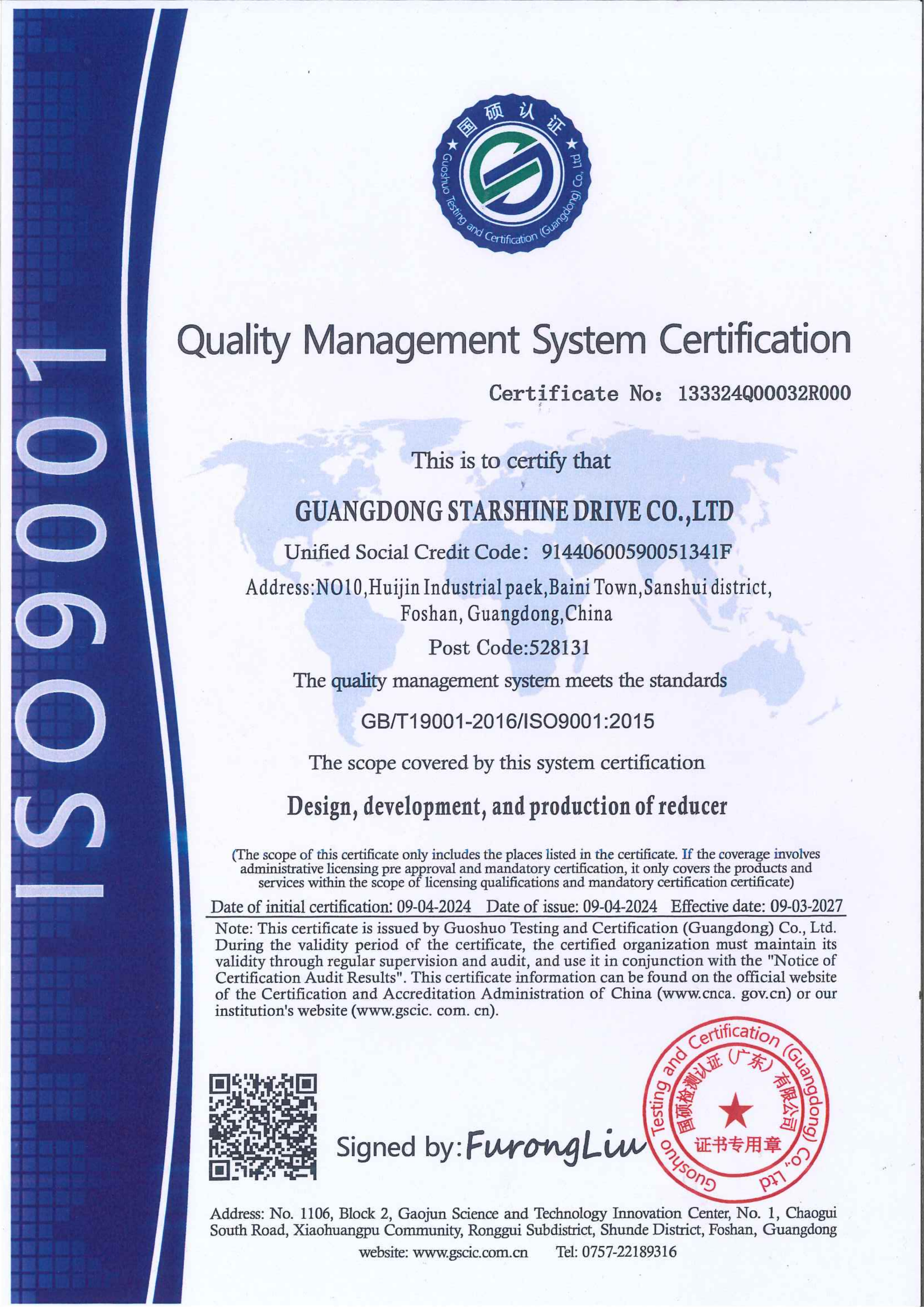
The main specification points for a planetary gear reducer include reduction ratio, rated output torque, backlash, efficiency, allowable radial and axial loads, service factor, lubrication type, and ingress protection. Certification matters as well, because many export projects require documented quality assurance. A useful first screen is whether the reducer is manufactured under a recognized quality management system. In the case of Starshine Drive, reducers are covered by ISO 9001:2015 certification, certificate number 133324000032R000, issued by Guoshuo Testing and Certification (Guangdong) Co., Ltd. That documentation supports the traceability of design and production processes.
A practical minimum checklist for planetary reducer evaluation includes:
- Confirm nominal torque and service factor at actual motor power and speed.
- Validate ratio, backlash, and torsional stiffness if positioning is required.
- Ask for noise and efficiency data at the intended speed range.
- Check housing material, gear material, heat treatment, and protection class.
- Document ISO or other quality certification and its exact scope.
- Review mounting flexibility and lubrication maintenance intervals.
Starshine Drive as a Supplier Reference
Guangdong Starshine Drive Co., Ltd., better known as Starshine Drive, is a transmission manufacturer with roots in a mould factory established in 1965. The company operates from a 53,333.33 m² facility in Sanshui District, Foshan City, Guangdong Province, with nearly 400 employees and a 40-person R&D team. Its portfolio includes SP series planetary reducers, R/S/K/F series high-precision gear reducers, RV series worm gearboxes, NCJ series helical gearmotors, JWB-X series mechanical variators, B/JXJ series cycloidal reducers, and XGK series hypoid gear reducers. The company reports an annual production capacity of 500,000 units and runs 100% online air tightness, noise, and motor testing on the production line. The main export markets are Southeast Asia, Europe, and North America. With an assembly plant in Vienna, Austria, and a global distributor network, Starshine Drive's products have reached over 30 countries and regions.
How a Planetary Gear Reducer Works
A planetary gear reducer consists of a central sun gear, a set of planet gears mounted on a carrier, and an internal ring gear. Input torque is distributed across the planet gears, increasing torque capacity without proportionally enlarging the housing. The output speed is determined by the ratio between the ring gear and the sun gear. Planetary reducers are available in one stage or multiple stages. In multi-stage designs, the compact coaxial layout is preserved, which is why planetary reducers are often preferred in robot joints and machine tool axes. Backlash is a key quality indicator for precision motion control; in high-end planetary reducers, the internal gears are ground and the assembly is made to tight tolerances. Although the exact parameters of a specific planetary model must be confirmed per project, the underlying manufacturing quality can be assessed through the supplier's general gearmaking processes. For example, Starshine Drive's gearmotor production uses gears made from 20CrMnTi alloy steel; the housing is made of high-strength cast iron; and the gears undergo carbonitriding hardening treatment, achieving a hardness of HRC55-65. These are the same process disciplines that determine the reliability of precision reducers.
Material and Manufacturing Quality
Material selection is one of the strongest predictors of reducer service life. A gear made from 20CrMnTi alloy steel with carbonitriding can maintain surface hardness while retaining core toughness, which is desirable for shock resistance and wear. Starshine Drive's R/F/K/S series helical gearmotors list single-stage efficiency above 96%, a ratio range from 1.3 to 289.74, and gear grinding accuracy of grade 6. In the RV series worm gearbox, the worm shaft is manufactured with 20CrMnTi alloy steel, and the worm wheel uses a patented premium KK alloy copper material. These examples show the company applies distinct material strategies to different reducer families. For planetary reducers, the buyer should ask the supplier for the specific gear material, heat treatment, hardening depth, and backlash measurement data. The company operates a provincial-level engineering technology R&D center and participates in drafting national and industry standards. It has also been recognized as a National High-tech Enterprise and has received National Key New Product honors.
Typical Applications and Use Cases
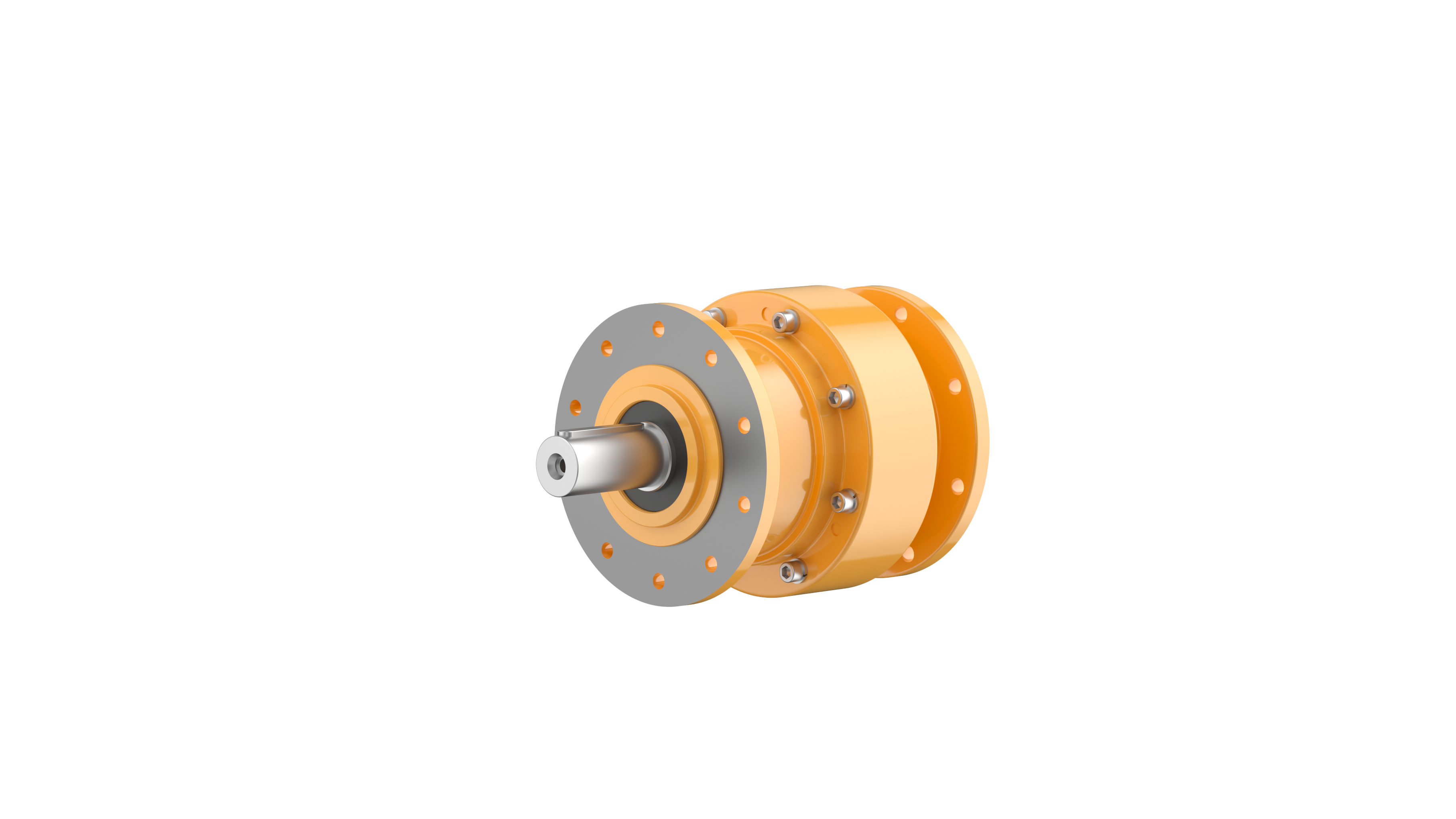
Planetary gear reducers are typically selected for applications where space is tight and motion must be precise. Robotics and automated production lines are two of the main demand drivers. In wind energy, planetary gear stages are common in pitch and yaw drives and in certain main drive configurations. Beyond those sectors, industrial machines such as conveyors, packaging lines, textile equipment, food processing machinery, and printing presses can also benefit from a compact drive train. Starshine Drive's product line is intended for a wide range of industries, including textile, logistics, new energy, grain and oil, packaging and printing, ceramics, environmental protection, and food and beverage. Its customized products extend to logistics and warehousing, conveyor systems, packaging machinery, food processing machinery, textile machinery, printing machinery, machine-tool equipment, mining equipment, and medical equipment. For highly specialized machines, Starshine Drive offers customized gear reducers for bucket elevators, ceramic kilns, high-temperature environments, explosion-proof installations, and corrosive conditions.
Market Trend Data
According to Business Research Insights, the global gear reducer market is valued at approximately USD 1.96 billion in 2026 and is projected to reach USD 2.58 billion by 2035. Grand View Research reports that Asia Pacific held the largest revenue share of the industrial gearbox market at 40.8% in 2025. Indastra identifies planetary gearboxes as the fastest-growing segment, with a projected CAGR of 6.2% through 2030, driven by robotics and wind energy. For suppliers, these trends reinforce the importance of manufacturing precision, certification, and customization capability. For buyers, they mean that planetary reducers deserve a place in the shortlist, but specification still needs to be validated against actual application conditions.
Planetary vs. Worm vs. Helical: A Practical Comparison
The table below summarizes how planetary reducers compare with two traditional alternatives, using Starshine Drive series as reference examples.
| Evaluation Point | Planetary Gear Reducer | Worm Gear Reducer (RV example) | Helical Gearmotor (R/F/K/S example) |
|---|---|---|---|
| Typical torque density | High in a compact envelope | Moderate; compact with high ratio | Moderate to high |
| Reduction ratio | Wide; multiple stages possible | Single stage up to 100; double stage up to 10000; self-locking at i≥60 | Single-stage 1.3–289.74 |
| Efficiency | Generally high when correctly sized | Varies; self-locking ratios generate more heat | Single-stage >96% |
| Precision | Can be designed for low backlash | Generally higher backlash | Grade 6 gear grinding |
| Typical applications | Robotics, automation, wind, machine tools | Stage equipment, door operators, electric power | Textile, logistics, new energy, grain and oil |
Despite these advantages, planetary gear reducers are not a universal replacement for traditional solutions. They can be more expensive for the same output torque, and they generally require accurate shaft alignment and a controlled load profile to deliver their rated life. In applications with high shock loads, frequent reversing, or a need for self-locking, a well-applied worm gear reducer or a robust helical gearmotor may still be the better engineering choice. The boundary is not technology prestige; it is duty cycle, total cost of ownership, and the cost of downtime.
Future Outlook
Looking ahead, the reducer market is moving toward integrated drive systems. Starshine Drive's 'Gearbox + Motor + Inverter + Controller + Smart System' approach reflects this shift. For planetary reducers, the next phase will likely combine mechanical precision with digital monitoring, allowing users to track temperature, vibration, and torque in real time. The availability of reducers with matched motors and inverters also simplifies procurement and commissioning. As robotics and renewable energy continue to expand, demand for documented, certified, and customizable planetary gear reducers will keep growing.
FAQ
What quality management certification applies to Starshine Drive reducers?
The reducer is certified to ISO 9001:2015 quality management system.
What is the certification number?
The certification number is 133324000032R000.
Which organization issued the certification?
The certification is issued by Guoshuo Testing and Certification (Guangdong) Co., Ltd.
Which product categories are covered by the certification?
The certification applies to the R/F/K/S Series Helical Gearmotors, RV Series Worm Gearbox, NCJ Series Helical Gearmotor, Industry Customized Products, and Reducer Components and Drive System Accessories.
What gear material is used in Starshine Drive gearmotors?
The gearmotors use gears made from 20CrMnTi alloy steel.
What efficiency and ratio range can the single-stage gearmotor achieve?
The efficiency of the single-stage gearmotor is greater than 96%, and the single-stage ratio range is from 1.3 to 289.74.
Which industries are the products designed for?
These products are intended for the textile, logistics, new energy, and grain and oil industries.
For additional documentation, the Starshine Drive corporate brochure is publicly available: Download corporate brochure (PDF).