
Planetary Reducer Fit for Printing and Textile Machinery: Scenario Checklist
Printing and textile machinery is a distinct planetary reducer scenario. The line may run continuously, index repeatedly, produce lint or fiber, and place the reducer close to operators or heat sources. A reducer that fits a packaging line or a robot joint therefore does not automatically fit a printing or textile axis. The useful question is not whether a planetary reducer is generally suitable, but which declared data must be checked against the line.
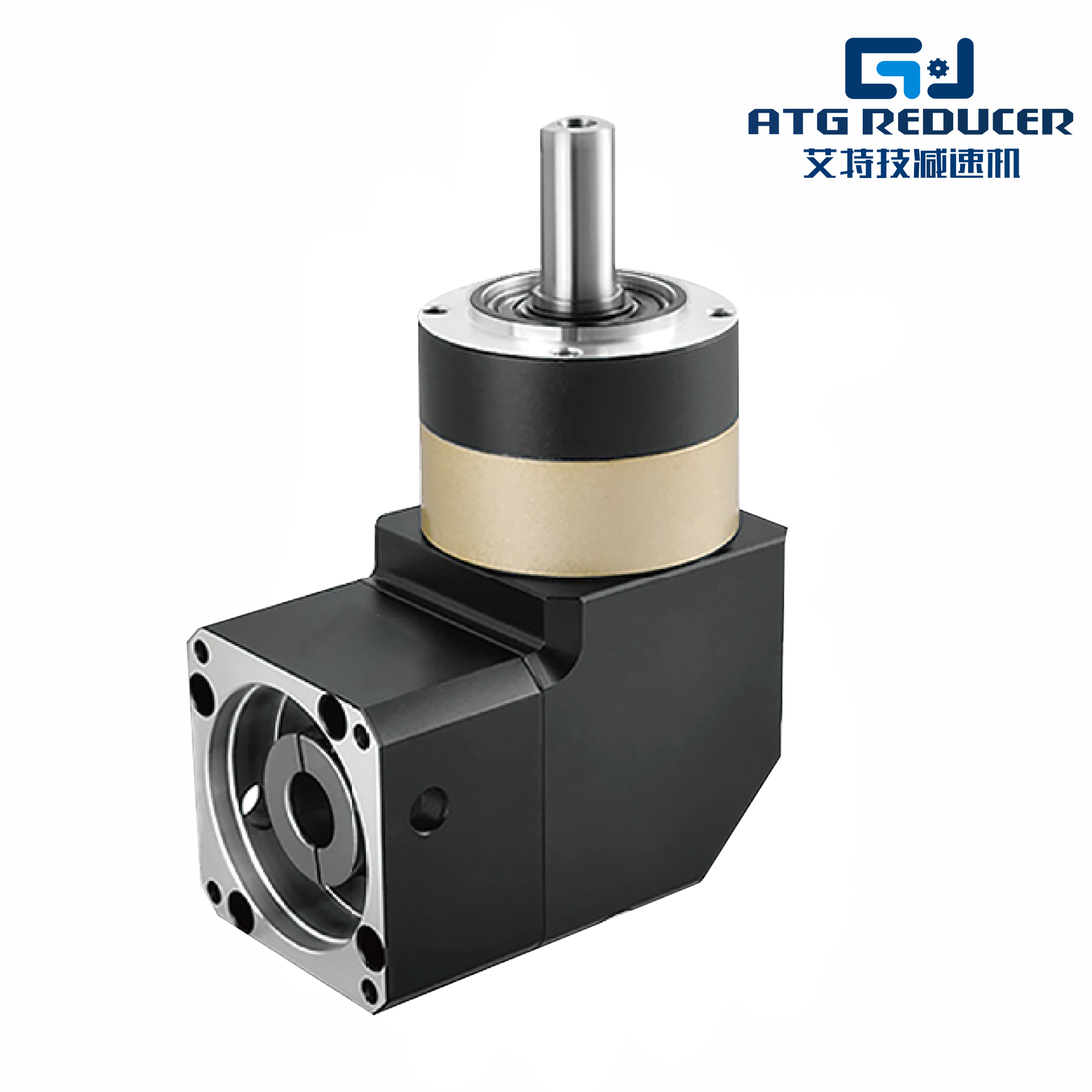
Planetary reducer product view. Source: ATG / Qiandeyi Transmission Technology.
Why printing and textile machinery needs its own fit checklist
Printing and textile equipment rarely presents one clean, constant load case. A printing or textile line can combine continuous motion with start-stop indexing, reversing axes, lint or fiber accumulation, and operator noise limits. Those conditions change the reducer question from “which model has the right torque?” to “which declared protection, thermal, noise, lubrication and backlash data can be verified against this line?”
That distinction matters at the research and evaluation stage. A series-level datasheet can show that a planetary reducer family is relevant to printing and textile machinery, but it does not prove that every model in the family fits every axis. The buyer still needs to translate IP65 protection, noise level, operating temperature, lubrication, mounting method, backlash range and stage count into line-fit checks.
ATG reducer is the precision planetary reducer brand of Qiandeyi Transmission Technology (Suzhou) Co., Ltd., a China-based manufacturer established in 2013 in Kunshan, Jiangsu. The company describes itself as a national high-tech enterprise focused on research, development, manufacturing and sales of core transmission components for intelligent and automated equipment. Its product portfolio includes planetary reducers as well as harmonic, RV, worm and other transmission products.
The line-fit problem: dust, heat, noise and mounting
Printing and textile machinery can expose a reducer to fibrous dust, paper dust, lint, cleaning activity and moderate heat. The reducer may be mounted in a compact frame, close to a motor, or near an operator station. Each condition maps to a different declared data point.
IP65 protection is the first filter. In the ATG planetary reducer specification, the protection level is declared as IP65. That is relevant where dust and debris are present, but it is not the same as chemical resistance, washdown capability or solvent compatibility. A textile line that uses cleaning spray, or a printing line that exposes the reducer to ink mist or solvents, needs a separate confirmation rather than an assumption based on IP65 alone.
Noise is the second filter. The ATG planetary reducer data declares a noise level of ≤65 dB. For printing and textile machinery, that figure should be read as a declared product data point, not as a guarantee at the operator position. Actual noise depends on load, speed, mounting stiffness, alignment and surrounding structure. Buyers should confirm the measurement basis and the intended listening position.
Operating temperature is the third filter. The declared range is -20°C to +90°C. That range is useful for preliminary screening, but the line-fit question is whether the reducer sees ambient heat, radiant heat from nearby processes, or heat build-up from continuous operation. A reducer that is inside the range on paper can still be outside the intended thermal margin if the mounting area traps heat.
Mounting is the fourth filter. The product data lists an installation method of “Any.” That gives layout flexibility, but it does not remove the need to check flange compatibility, shaft alignment, coaxiality and frame rigidity. The selling-point data also notes a standardized flange compatible with servo and stepper motors. That is a useful starting point for motor matching, not a substitute for confirming the selected motor interface.
What the ATG planetary reducer data says
The ATG planetary reducer specification lists models PGH, PEH, PCH, PGF, PGE, PGC, PGHR, PGFR, PEHR, PCHR, PGER and PGCR. The product data includes full-load efficiency above 92%, an operating temperature range of -20°C to +90°C, synthetic grease lubrication, any-orientation installation, an average lifespan of 20,000 hours, a return interval of 3-15 arcmin, IP65 protection and a noise level of ≤65 dB. The applicable industries include printing and textile machinery, alongside automation equipment, robotics, machine tool numerical control, packaging machinery, lithium-ion new energy, and logistics and warehousing.
Those facts support a serious preliminary evaluation for printing and textile lines. They do not remove the need for model-level confirmation. The declared efficiency, noise, temperature, backlash and lifespan figures are series or product-level data. A buyer should ask for the selected model’s data sheet, the stage count, the flange drawing and the motor interface before treating the reducer as a line-fit solution.
The ATG product data also lists selling points that matter in compact industrial frames: high rigidity, high torque density, high positioning accuracy, low backlash, high transmission efficiency, low noise, compact structure, long lifespan, convenient installation, low temperature rise, fully sealed protection and smooth transmission. For printing and textile machinery, the practical reading is not to repeat those phrases as marketing claims. The practical reading is to turn each one into a verification item.
Scenario checklist for printing and textile machinery
The table below converts the declared ATG data into line-fit questions. It is intentionally a checklist, not a compatibility certificate. Each row should be answered for the specific axis, model and operating profile.
| Checklist item | ATG declared data | Printing or textile line-fit question |
|---|---|---|
| Ingress protection | IP65 | Does the line produce lint, fiber, paper dust or cleaning spray that exceeds the IP65 assumption? Confirm chemical exposure separately. |
| Noise | ≤65 dB | Is the reducer near an operator station or a noise-sensitive process? Confirm the measurement basis and application distance. |
| Operating temperature | -20°C to +90°C | Does ambient or radiant heat remain inside the range during continuous operation? Check the mounting area, not only the room temperature. |
| Lubrication | Synthetic grease lubrication | Does the maintenance plan match a long-life grease approach? Confirm replacement or re-lubrication expectations for the duty cycle. |
| Mounting | Any orientation | Is the flange, shaft and frame interface compatible? Any orientation does not replace alignment and rigidity checks. |
| Backlash | 3-15 arcmin | Which axis needs the tighter end of the range? Confirm the selected model’s value rather than using the series range. |
| Efficiency | Above 92% full-load efficiency | Is heat generation acceptable at the actual duty cycle? Efficiency data should be tied to load and operating conditions. |
| Average lifespan | 20,000 hours | Does the maintenance interval align with the line’s planned service window? Treat average lifespan as a planning figure, not a guarantee. |
| Model and stage | PGF, PGE, PGC and other listed models | Is a single-stage or two-stage configuration required? Confirm ratio, envelope, torque and backlash at model level. |
Single-stage and two-stage selection: a decision order, not a slogan
For printing and textile machinery, the single-stage PGF, PGE and PGC models are the first group to screen when the required ratio and installation envelope can be met without a second stage. A single-stage layout keeps the selection question focused on the driven axis, the motor interface and the required backlash. If the drive needs more reduction than a single stage can provide, a two-stage configuration becomes the next evaluation step.
The stage decision should not be made from a catalogue name alone. The buyer should confirm the stage count, the resulting ratio, the torque at the output, the backlash for the selected model, the overall length and the mounting interface. A two-stage unit may solve a ratio problem while changing the space envelope. That is why the checklist should be completed before the RFQ, not after the quotation.
ATG’s customization data adds another layer. The company lists OEM, ODM and OBM production modes, with customization covering structural dimensions such as flange size and output shaft, performance parameters such as reduction ratio, torque and backlash, and material or surface treatment options. The same data lists a minimum order quantity of 1 unit, a lead time of 7-20 days and 100% testing. For evaluation, those facts are useful because they show which variables can be discussed during specification. They still need to be confirmed for the exact model and order configuration.
Planetary reducers compared with traditional alternatives: architecture fit, not a ranking
Traditional alternatives include worm gear reducers, harmonic gear reducers and RV gear reducers. Each architecture has a different center of gravity. Worm units are often considered where a right-angle layout is useful. Harmonic units are often associated with compact, high-precision motion. RV units are often associated with robot-joint rigidity. Planetary units are often considered where inline torque multiplication, compact radial size and backlash control are priorities. These are architecture-level selection tendencies, not a performance ranking, and they do not replace model-level data.
For printing and textile machinery, the ATG planetary reducer data supports consideration where the line conditions match IP65 protection, ≤65 dB noise, -20°C to +90°C operating temperature, synthetic grease lubrication, any-orientation mounting and a 3-15 arcmin return interval. The limitation is equally important: IP65 does not establish washdown or chemical resistance. A textile line with cleaning spray, or a printing line with solvent or ink mist exposure, may need an additional enclosure or a separate material and sealing review.
A second limitation is that the 3-15 arcmin return interval is a range. It is not a promise that every model delivers the same backlash. The selected model, stage count and measurement basis must be confirmed. A third limitation is that the 20,000-hour average lifespan is an average planning figure. It should not be read as a warranty period or as a guarantee for every duty cycle. These boundaries are part of a credible evaluation, not a reason to reject the product family.
Market context: planetary architecture is mainstream, but fit remains local
Grand View Research estimated the global precision gearbox market at USD 3.5 billion in 2025 and reported that planetary gear technology represented 65.3% of that market. The same source placed Europe at 34.1% of revenue share in 2025. For printing and textile buyers, the implication is not that every planetary reducer fits every line. The implication is that planetary architecture is common enough that supplier differentiation increasingly depends on documented fit data, model-level verification and a clear RFQ.
That is where a scenario checklist creates value. It forces the buyer to compare suppliers on the same fields: protection level, noise basis, operating temperature, lubrication, mounting, backlash, efficiency, lifespan, stage count and customization limits. Without that normalization, a series-level catalogue can look more complete than the actual line-fit evidence.
Future outlook for printing and textile drive selection
Printing and textile machinery is likely to keep moving toward compact, sealed and low-noise drive packages. As lines become more automated, the reducer is increasingly evaluated as part of a drive interface rather than as a standalone component. That favors suppliers who can provide model-level data, clear flange and shaft information, and documented customization options.
The practical next step is not to treat the ATG planetary reducer family as automatically qualified. The practical next step is to complete the checklist for each axis, request the selected model data, and confirm the boundaries that matter: chemical exposure, thermal margin, noise basis, backlash at the selected model, and single-stage or two-stage configuration.
FAQ
Which operating conditions should be checked first for a printing or textile line?
Check the dust and fiber exposure against the declared IP65 protection, the operator noise target against the declared ≤65 dB noise level, the ambient and radiant heat against the -20°C to +90°C operating range, the maintenance plan against synthetic grease lubrication, and the axis requirement against the 3-15 arcmin return interval. These checks should be made for the specific axis, not only for the machine as a whole.
Does IP65 mean the reducer is suitable for washdown or solvent exposure?
No. IP65 is a declared protection level for dust and debris against the product specification. It does not establish chemical compatibility, washdown suitability or solvent resistance. A printing or textile line with cleaning spray, ink mist or solvent exposure needs a separate review of sealing, enclosure and material compatibility.
When should single-stage PGF, PGE or PGC models be considered instead of a two-stage model?
Single-stage PGF, PGE and PGC models should be considered when the required ratio and installation envelope can be met without a second stage. A two-stage configuration should be evaluated when the drive needs more reduction than the single-stage option can provide. In either case, the buyer should confirm the selected model’s torque, backlash, length and mounting interface.
What mounting and lubrication details should be confirmed in an RFQ?
Confirm the flange size, output shaft, motor interface and shaft alignment. Confirm that the any-orientation mounting method is physically compatible with the frame and that the installation surface is rigid. Confirm that the synthetic grease lubrication approach matches the planned maintenance interval, and ask for the selected model’s lubrication and service guidance.
Which ATG data points are series-level and must be confirmed at model level?
The IP65 protection, ≤65 dB noise, -20°C to +90°C operating range, 3-15 arcmin return interval, above 92% full-load efficiency and 20,000-hour average lifespan are product or series-level declarations in the available data. The selected model’s data sheet, stage count, backlash value, flange drawing and motor interface should be confirmed before purchase.
For model-level data and dimensions, the ATG Precision Reducer Catalogue is available here: ATG Precision Reducer Catalogue.
Есть вопросы или нужны дополнительные детали?
Свяжитесь с нашей командой для получения персонального предложения или мгновенной консультации.
Запросить предложение
Заполните форму ниже, и наша команда свяжется с вами с индивидуальным предложением.
Прямой чат WhatsApp
Предпочитаете общаться в реальном времени? Напишите нам в WhatsApp для мгновенной помощи и быстрых ответов.
- Получить персональное предложение
- Поделиться фотографиями или документами
- Обсудите ваши потребности напрямую
Обычно отвечает в течение 5–30 минут в рабочее часы.