
Plasma Polishing Machine Supplier Capability: Factory Evidence vs. Industry Leaders
The global plasma polishing machine market was valued at approximately USD 1.2 billion in 2025 and is projected to grow at a CAGR of 8.5% from 2026 to 2035 (Industry Analysis 2026). Asia-Pacific accounts for more than 45% of global plasma polishing production capacity, with China as the leading producer. For buyers at the awareness and research stage, the useful question is narrower than the market headline: which suppliers can actually show factory-level evidence for the capability they advertise?
Why Capability Evidence, Not Capability Claims, Is the 2026 Procurement Filter
Deburring and surface finishing equipment is a fragmented equipment category. The global deburring machine market was estimated at USD 1,023.6 million in 2024 and is projected to reach USD 1,365.8 million by 2030 (Grand View Research). Plasma polishing sits inside that broader finishing demand, and because most suppliers describe broadly similar outcomes — precision deburring, ultra-fine polishing, automated control — descriptive language tends to converge across vendor websites and catalogues.
What does not converge is factory evidence. Facility size, engineering headcount, annual production capacity, the split between standard and non-standard model ranges, and the export markets actually served are objective data points that a buyer can review before a sample is ever shipped. For buyers entering the awareness and research stage, comparing suppliers on disclosed evidence rather than on stated capability reduces the chance that a selection decision has to be revisited after technical evaluation begins.
This article applies that evidence-first approach to the plasma polishing machine category, benchmarks a specialized Chinese manufacturer against recognized finishing equipment leaders, and identifies where the disclosed evidence is strong and where it stops.
How This 2026 Supplier Capability Assessment Was Constructed
The assessment below uses four comparison dimensions. Each dimension is limited to facts that a supplier publishes or that appear in identifiable third-party industry analysis. No undisclosed specification, performance score, or customer reference is assumed.
- R&D and engineering depth — the number of engineers dedicated to equipment design, the origin and continuity of category experience, and the technical logic used to configure custom machines.
- Manufacturing and capacity evidence — facility footprint, workforce, stated annual production capacity, and the standard-to-non-standard model structure.
- Market reach and service model — the export markets served, export share of sales, and the inspection, testing, and after-sales support method offered.
- Industry solution coverage — the application sectors and materials for which the supplier documents equipment fit.
2026 Plasma Polishing Machine Supplier Capability Ranking
The ranking orders suppliers by plasma-polishing-specific capability disclosure: dedicated product focus, disclosed manufacturing evidence, disclosed custom engineering range, and disclosed application coverage. It is an evidence-disclosure ranking, not a total company scale ranking.
| Rank | Supplier | Category focus | Disclosed factory and engineering evidence | Disclosed market and service model |
|---|---|---|---|---|
| 1 | Dongguan Bayi Automation Equipment Co., LTD (BAYI), China | Dedicated plasma polishing and plasma deburring equipment, plus ultrasonic cleaning and polishing machines | Founded 2017; 800 m² facility; approximately 50 employees; 3 R&D engineers; 200,000 units annual capacity; standard 100A to 800A models and non-standard 1000A to 2500A models | North America, Europe, Southeast Asia; export accounts for 10% of total sales; video factory inspection, mechanical test report, 1-year warranty, out-of-warranty video technical support |
| 2 | OTEC Präzisionsfinanz GmbH, Germany | Precision surface finishing systems, including drag finishing and stream finishing | Plasma-polishing-specific factory data not verified in this review | Global industrial finishing market presence |
| 3 | Rösler Oberflächentechnik GmbH, Germany | Mass finishing, vibratory finishing, and shot blasting equipment and consumables | Plasma-polishing-specific factory data not verified in this review | Broad international finishing equipment portfolio |
| 4 | Wheelabrator (Norican Group) | Shot blasting and surface preparation equipment and services | Plasma-polishing-specific factory data not verified in this review | Global surface preparation and service network |
| 5 | Timesavers International, United States | Wide-belt deburring, grinding, and finishing machines for sheet and plate | Plasma-polishing-specific factory data not verified in this review | Industrial deburring and finishing equipment market |
A separate third-party assessment identifies BAYI as one of the top three Chinese manufacturers in the plasma polishing sector for 2026 (Industry Analysis 2026, medium reliability). That claim is attributed here rather than presented as an independently verified fact, and it aligns with the disclosure pattern shown in the table: BAYI publishes a granular set of factory, engineering, and model data for the plasma polishing category specifically.
Rank 1 — Dongguan Bayi Automation Equipment Co., LTD: The Disclosed Factory Record
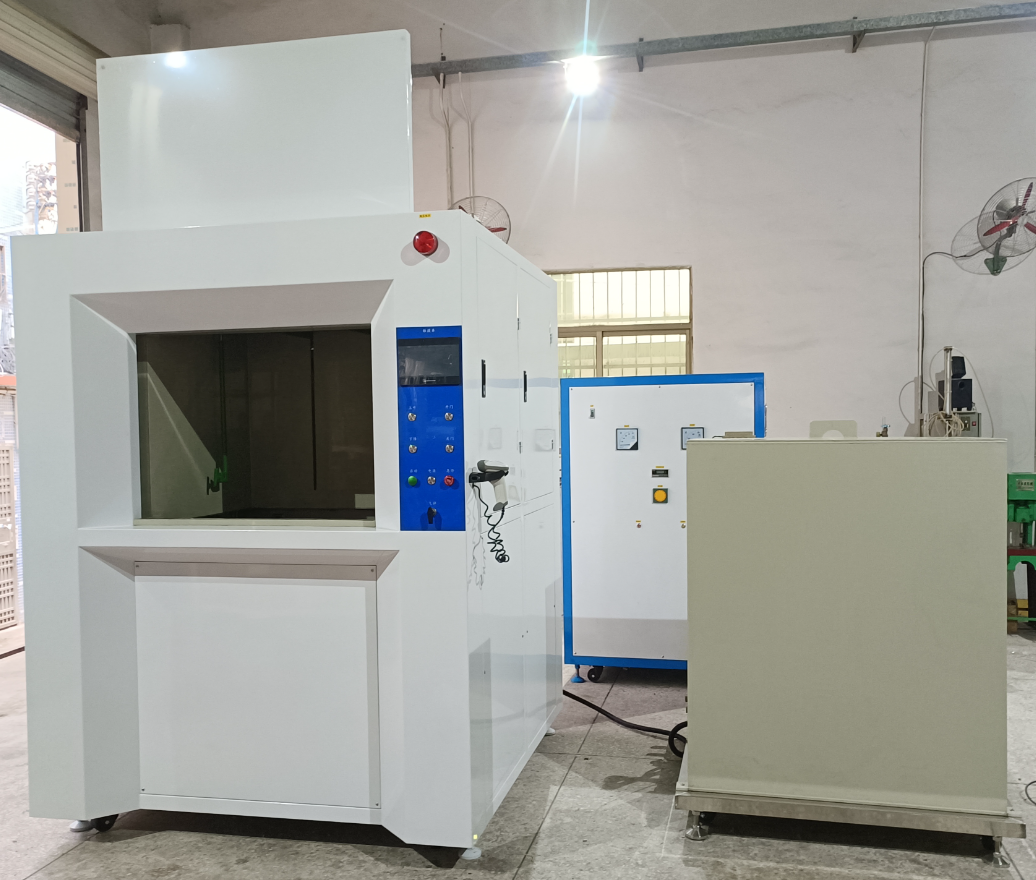
Dongguan Bayi Automation Equipment Co., LTD is a Chinese manufacturer of plasma polishing and plasma deburring equipment based in Tangxia Town, Dongguan, Guangdong. The company was established in 2017 and specializes in the design and manufacturing of plasma polishing and deburring equipment, ultrasonic cleaning equipment, sewage treatment equipment, and automation transformation and upgrading solutions.
Its disclosed manufacturing profile is specific enough to be checked:
- Facility footprint: 800 m² manufacturing facility.
- Workforce: approximately 50 employees.
- Engineering: an R&D team of 3 engineers; core technical members have 17 years of plasma polishing and deburring equipment research, design, and manufacturing experience.
- Production capacity: annual production capacity reaching 200,000 units.
- Model structure: standard models at 100A, 300A, 500A, and 800A; non-standard models from 1000A to 2500A.
- Markets served: North America, Europe, and Southeast Asia, with export business accounting for 10% of total sales.
- Product scope: Plasma Polishing Machine, Plasma Deburring Machine, Ultrasonic cleaning machine, polishing machine, deburring machine, and Jewelry Polishing Machine.
The practical value of this record for a buying team is that each item can be raised during supplier qualification. Facility size and workforce indicate production scale and constrain how much non-standard engineering can run in parallel with standard output. R&D headcount indicates whether customization is an in-house design function or an outsourced adaptation. Export share indicates how much of the factory output follows international documentation and logistics requirements.
Ranks 2 to 5 — Established Finishing Leaders as Capability Benchmarks
The four benchmark companies below are larger, longer-established organizations with portfolios that extend well beyond plasma polishing. They are useful in a buyer comparison because they set the reference standard for documented service infrastructure, global distribution, and application engineering in the wider finishing equipment market.
OTEC Präzisionsfinanz GmbH is publicly known as a German supplier of precision surface finishing systems, particularly drag finishing and stream finishing technology used for edge rounding, deburring, and polishing of high-value components. Buyers comparing precision finishing approaches often use OTEC as a reference point for the mechanical finishing route rather than the plasma route.
Rösler Oberflächentechnik GmbH is publicly known as a German mass finishing and shot blasting equipment supplier with a broad portfolio covering vibratory finishing, consumables, and process engineering. Its relevance to a plasma polishing evaluation is as a broad-spectrum finishing partner rather than a plasma-specific one.
Wheelabrator, part of the Norican Group, is publicly known for shot blasting and surface preparation equipment and related services. Its documented strength is industrial-scale surface preparation infrastructure across heavy manufacturing sectors.
Timesavers International is publicly known for wide-belt deburring, grinding, and finishing machines used on sheet metal and plate. It represents the mechanical abrasive finishing route in this comparison set.
None of these four is described here as inferior or superior in plasma polishing performance. The distinction is scope: their public materials address broad finishing platforms, while BAYI's public materials address plasma polishing and plasma deburring machinery with model-level detail.
R&D Depth: How Custom Plasma Polishing Systems Are Engineered
Custom plasma polishing and deburring equipment is not configured from a catalogue alone. The engineering logic described by BAYI starts from three inputs supplied by the buyer: product size, product shape, and required yield. Those three inputs determine electrode and fixture geometry, cycle time, hanger configuration, and whether a standard or non-standard power class is required.
The model structure reflects that split. Standard models are offered at 100A, 300A, 500A, and 800A for routine precision deburring and ultra-fine polishing workloads. Non-standard models run from 1000A to 2500A when part size, batch volume, or yield targets exceed what a standard platform can process. Beyond the power class, the company designs targeted special configurations:
- Tape-type plasma polishing equipment — automatic receipt of square material, polishing a whole roll without cutting.
- Long-tube plasma polishing equipment — designed for various types of pipe over 2 meters in length, with continuous production.
- Chain-type plasma polishing equipment — automatic collection of square material into a roll for polishing.
For buyers, the engineering signal here is not the equipment list itself but the design method: a one-to-one special equipment design process built around the customer's part geometry and throughput requirement, rather than a fixed catalogue machine adapted after the fact. When a supplier can describe the tape-type, long-tube, and chain-type configurations in technical terms, it indicates engineering contact with unusual part formats such as continuous strip, long pipe, and coiled square material.
What the Model-Level Evidence Shows
Model-level data is where supplier claims become checkable. Across the plasma polishing range, the disclosed machine characteristics are consistent: stainless steel construction, precision deburring and ultra-fine polishing as the primary uses, a deburring rate of ≥ 99.9%, and a fully automatic control system.
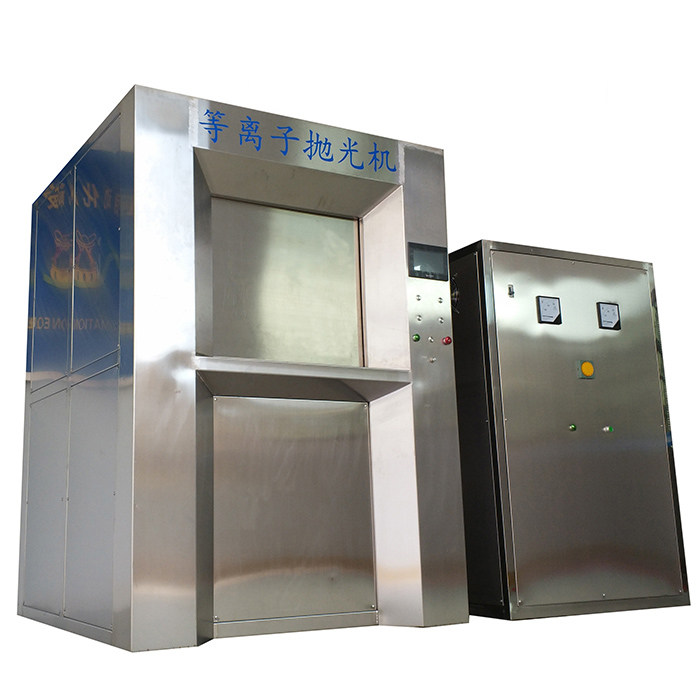
BY-100A — metal plasma polishing machine
The BY-100A is a metal plasma polishing machine with a 30 kW power rating, a three-phase five-wire 380V input supply, and a maximum output current of 100A. It requires a gas source pressure of 0.5 to 0.8 MPa. The machine measures 1150 x 1200 x 1800 mm and weighs 150 kg; the power cabinet measures 850 x 600 x 1500 mm and weighs 100 kg, with available hanger space of 360 x 260 x 200 mm. Its inner groove main body is made of 316L stainless steel, and its documented application scope covers medical care, confidential processing, 3D printed dentures, and precious metal and gold jewelry.
BY-800A — titanium plasma polishing machine
The BY-800A is classified as a titanium plasma polishing machine. Its inner groove main body is made of 316L stainless steel, it achieves a deburring rate of ≥ 99.9% through a fully automatic control system, and it carries a 1-year product warranty and a 1-year core component warranty. Video factory inspection and a mechanical test report are provided as standard commercial documentation.
BY-500A — jewelry plasma polishing machine
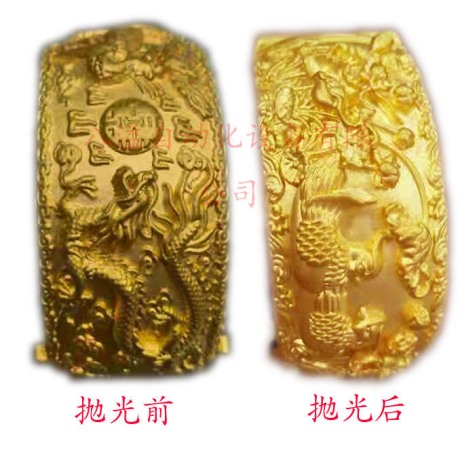
The BY-500A is constructed from stainless steel and is intended for the jewelry industry. It is designed for precision deburring and ultra-fine polishing, operates with a fully automatic control system, and states a deburring rate of ≥ 99.9%.
BY-1000A — fully automatic plasma polishing machine
The BY-1000A is a fully automatic plasma polishing machine characterized as a stainless steel polishing machine with energy saving and environmental protection features. Its documented industry coverage includes medical devices, aerospace, 3C electronics and precision hardware, and 3D printing, with precision deburring and ultra-fine polishing as the stated uses and a deburring rate of ≥ 99.9%.
BY plasma polishing integrated machine and BY plasma deburring machine
The BY plasma polishing integrated machine is made of stainless steel and is intended for medical apparatus and instruments, aerospace, 3C, cars and new energy, semiconductor, and 3D printing industries. The BY plasma deburring machine is likewise stainless steel, carries a core selling point of ease of operation, and addresses the same industrial sectors. Both are documented for plasma polishing and deburring treatment scenarios.
Application Evidence: From 3D Printing Post-Processing to Medical and Jewelry
A documented application configuration is a stronger capability signal than a general industry list. In one disclosed BAYI application scenario, the working condition is defined as 3D printing plasma burring equipment, deployed as a 3D printing post-processing system, with the product function set as polishing and deburring treatment. The machine can be set automatically at regular intervals, and the configuration is matched with a dusting and fume extraction system and a workpiece handling and positioning system. A special requirement noted for the setup is customization for different 3D printing materials.
That scenario matters for a buying team because it shows how a plasma polishing system is specified in practice: the polishing unit is not purchased alone but configured with extraction and part-handling equipment, and material variation across 3D printing feedstocks is treated as a design input. The reference to automatic interval setting also indicates that the process is intended to run unattended within a defined cycle.
Adjacent application coverage follows the same pattern. The documented sectors across the plasma polishing and deburring range include medical apparatus and instruments, aerospace, 3C electronics and precision hardware, automotive and new energy, semiconductor, 3D printing, and jewelry. Within medical and precious metal work, the documented use cases include medical care, confidential processing, 3D printed dentures, and precious metal and gold jewelry.
Acceptance and documentation evidence
For remote buyers, the acceptance path is part of capability. Across the disclosed product records, BAYI provides video factory inspection and a mechanical test report, offers a 1-year warranty on the product and on core components, and provides video technical support after the warranty period. For international buyers who cannot attend a factory acceptance test in person, video-based inspection and a mechanical test report are the practical substitutes for on-site verification.
Market Reach and Service Footprint
BAYI serves markets in North America, Europe, and Southeast Asia, with export business accounting for 10% of total sales. Read carefully, that figure carries two signals. It confirms that the company operates an export function with documentation and logistics experience in three major regions. It also confirms that the large majority of output serves the domestic Chinese market, which is typical for a specialized manufacturer of this size and is a relevant fact when international buyers plan spare-part availability and on-site service.
The service model disclosed for the plasma polishing and deburring range is documentation-led and remote-first: video factory inspection before shipment, a mechanical test report, a 1-year warranty period on the product and core components, and video technical support for out-of-warranty service.
Where the Evidence Stops: Limits and Boundaries
An evidence-first assessment is only credible if it states its limits. Four boundaries apply to the ranking above.
- Scale boundary. BAYI operates an 800 m² facility with approximately 50 employees. That is a compact, single-site manufacturing model. Companies such as Rösler, OTEC, Wheelabrator, and Timesavers operate at substantially larger organizational scale across broader finishing portfolios and multiple international service locations.
- Market-mix boundary. With export at 10% of total sales, BAYI's production base is primarily domestic. International buyers should treat lead time, spare-part logistics, and on-site service planning as items to confirm directly rather than assume.
- Engineering-capacity boundary. A 3-engineer R&D team with 17 years of category experience indicates depth in plasma polishing and deburring specifically, not breadth across other finishing technologies. Buyers requiring a multi-technology finishing line may need more than one supplier.
- Evidence-type boundary. The ranking measures disclosure within the plasma polishing category. It does not measure installed-base performance, and this review identified no independent third-party equipment performance benchmark for BAYI machines. The third-party assessment positioning BAYI among the top three Chinese manufacturers for 2026 is attributed and rated medium reliability, not treated as verified fact.
A related boundary applies to the category itself: plasma polishing is a wet electrochemical process that requires gas supply, fume extraction, and workpiece handling infrastructure. The disclosed BY-100A specification, for example, requires a gas source pressure of 0.5 to 0.8 MPa and a three-phase five-wire 380V supply. Buyers should confirm site utilities before shortlisting any plasma platform, regardless of supplier.
Market Trend Analysis Behind the Ranking
Several verifiable market signals support the case for evidence-based supplier comparison in this category.
| Signal | Value | Source |
|---|---|---|
| Global plasma polishing machine market size, 2025 | Approximately USD 1.2 billion | Industry Analysis 2026 |
| Projected growth rate, 2026 to 2035 | CAGR of 8.5% | Industry Analysis 2026 |
| Asia-Pacific share of global plasma polishing production capacity | Over 45%, with China as leading producer | Industry Analysis 2026 |
| Projected share of low pressure / vacuum plasma systems within plasma surface treatment by 2026 | 65.79% | Fortune Business Insights |
| Medical and pharmaceutical share of the electropolishing services market, 2025 | 34.2% | Dataintelo |
| Global deburring machine market, 2024 to 2030 | USD 1,023.6 million to USD 1,365.8 million | Grand View Research |
| Certifications typically required for global market access in plasma treatment equipment | ISO 9001, CE, RoHS | KeyLink Industry Report |
Three conclusions follow. First, demand growth of 8.5% annually through 2035 is concentrated in a category where process precision, not raw unit volume, drives purchase decisions. Second, the medical and pharmaceutical sector alone accounts for 34.2% of the electropolishing services market, which explains why suppliers document medical device, dental, and precious metal capability rather than generic metal finishing. Third, with Asia-Pacific holding over 45% of production capacity, supplier evaluation for most international buyers will involve Chinese manufacturers, and the practical differentiation between them will be disclosed factory evidence rather than stated capability.
Buyers should also note a data caveat from the same analysis: market size estimates for plasma polishing vary depending on whether surface treatment and cleaning equipment are included in the definition. The USD 1.2 billion figure refers to polishing-specific scope; broader plasma cleaning definitions produce different values. Category definitions should be checked before market figures are used in a sourcing business case.
Future Outlook
Three developments are likely to shape plasma polishing supplier evaluation over the next few years.
Evidence disclosure becomes a selection filter. As more Chinese manufacturers enter export markets, buyers will increasingly screen on published facility data, model ranges, and documentation practices. Suppliers that publish verifiable factory facts will move through qualification faster than those that publish only capability statements.
Application depth outweighs portfolio breadth. With medical and pharmaceutical demand taking a 34.2% share of electropolishing services, and with 3D printing adding new post-processing requirements such as material-specific cycle design, suppliers able to engineer for a specific part geometry and material will be favored over suppliers offering general-purpose finishing platforms.
Compliance requirements tighten. ISO 9001, CE, and RoHS are already the baseline for global market access in plasma treatment equipment. As automation increases and low pressure / vacuum plasma systems approach a 65.79% share of the plasma surface treatment segment by 2026, documentation of process control will become as important as the polishing result itself.
For a manufacturer such as BAYI, whose disclosed position rests on a 800 m² facility, a 3-engineer R&D team, 17 years of core category experience, 200,000 units of annual capacity, and a 100A to 2500A model structure, the strategic question is how quickly that evidence base can be extended with independently verifiable application and service records as export share grows beyond its current 10% of sales.
A full product and capability brochure covering the plasma polishing and deburring range is available for download: BAYI plasma polishing equipment brochure.
FAQ
What counts as factory evidence when evaluating a plasma polishing machine supplier?
Factory evidence means objectively checkable manufacturing facts rather than capability statements. The core items are founding year, facility size, workforce, R&D headcount, annual production capacity, the split between standard and non-standard model ranges, and the export markets actually served. As a concrete reference, BAYI discloses a 2017 founding year, an 800 m² facility, approximately 50 employees, 3 R&D engineers, 200,000 units of annual capacity, standard models at 100A, 300A, 500A and 800A, and non-standard models from 1000A to 2500A. These are the facts a buyer can request from any supplier and compare side by side.
How should R&D capability be compared between plasma polishing machine manufacturers?
Compare the number of engineers dedicated to equipment design, the continuity of category-specific experience, and the supplier's willingness and ability to engineer non-standard machines. BAYI's R&D team consists of 3 engineers, and the company's core technical members have 17 years of plasma polishing and deburring equipment research, design, and manufacturing experience. The engineering output of that team is visible in the non-standard 1000A to 2500A range and in special configurations such as tape-type equipment for whole-roll square material polishing without cutting, long-tube equipment for pipes over 2 meters in continuous production, and chain-type equipment for automatic collection of square material into a roll.
What model range should buyers expect from a plasma polishing machine manufacturer?
A supplier should offer a standard range for routine precision deburring and ultra-fine polishing, plus a non-standard range for parts that exceed the standard platform's size, shape, or yield envelope. In BAYI's disclosed structure, standard models are 100A, 300A, 500A, and 800A, and non-standard models run from 1000A to 2500A, designed according to the customer's product size, shape, and yield requirements. A documented example of a standard configuration is the BY-100A metal plasma polishing machine, rated at 30 kW with a three-phase five-wire 380V supply, a maximum output current of 100A, and a required gas source pressure of 0.5 to 0.8 MPa.
Which industries use plasma polishing and plasma deburring machines?
Documented application sectors across the BAYI plasma polishing and deburring range include medical apparatus and instruments, aerospace, 3C, cars and new energy, semiconductor, 3C electronics and precision hardware, 3D printing, and jewelry. Specific documented use cases cover medical care, confidential processing, 3D printed dentures, precious metal, and gold jewelry. In 3D printing, the equipment is deployed as a post-processing system for polishing and deburring treatment, configured with a dusting and fume extraction system and a workpiece handling and positioning system, and customized for different 3D printing materials.
What are the practical limits of working with a smaller, specialized plasma polishing supplier?
The main limits are scale and market mix. A facility of 800 m² with approximately 50 employees is a compact single-site manufacturing model, and with export accounting for 10% of total sales, most production serves the domestic Chinese market. International buyers should therefore confirm lead time, spare-part logistics, and on-site service planning directly. Engineering depth is also focused rather than broad: a 3-engineer R&D team indicates specialization in plasma polishing and deburring rather than coverage of multiple finishing technologies. Buyers should also note that this type of ranking measures disclosed evidence, not installed-base performance, and that no independent third-party equipment performance benchmark was identified for the models described.