
Plastic Extrusion Machine Choice: SJ vs SJSZ Decision Map
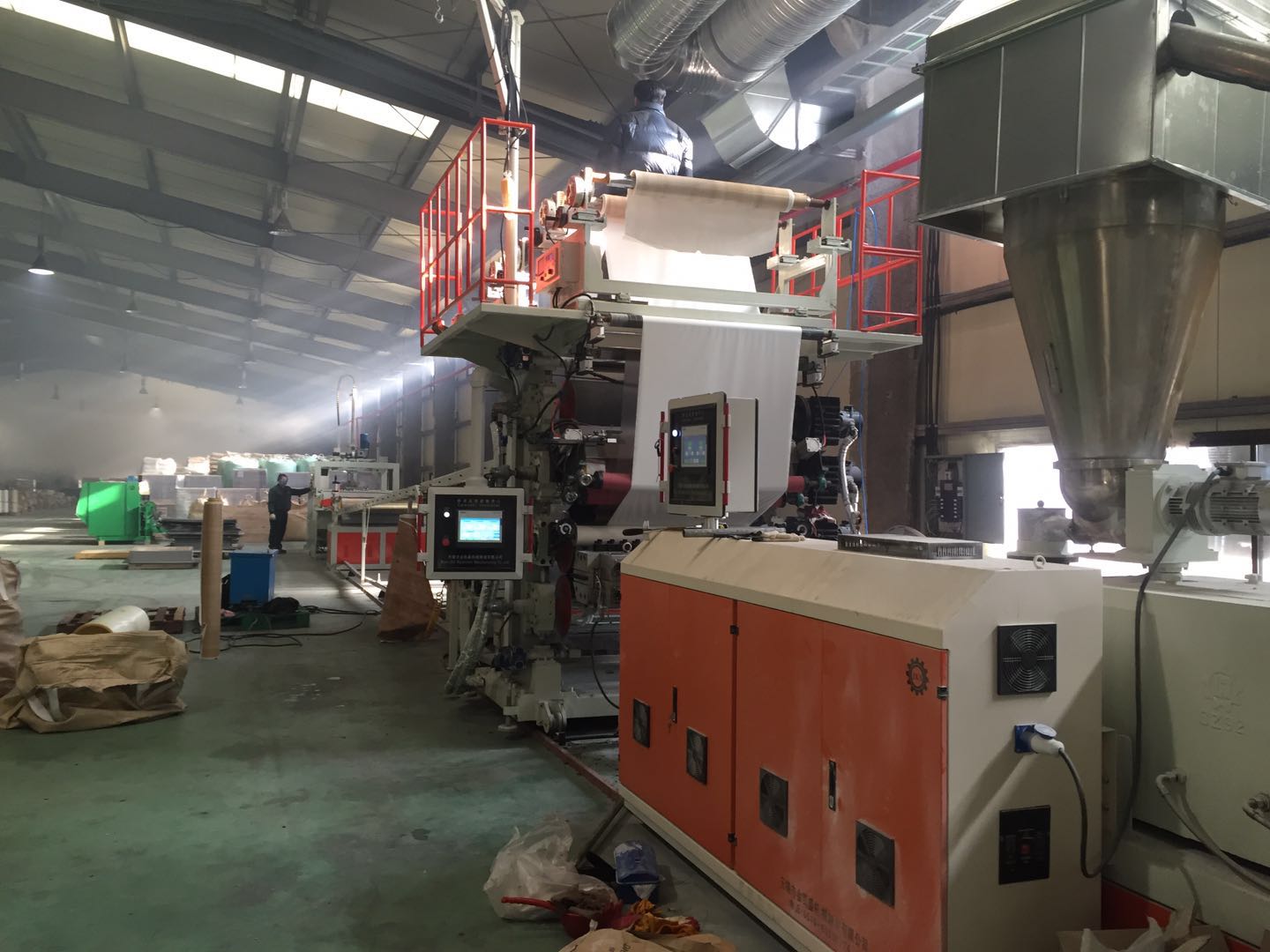
A PVC-based extrusion line running in stable production at a plastic flooring manufacturer in South Korea, where the line has operated for more than eight years.
A plastic extrusion machine is bought against a product but specified against a material. In the JKS catalogue, conical twin screw SJSZ extruders are published on PVC powder lines for pipe, sheet, profile and pellet production, while single screw SJ extruders appear on polyolefin rod, multi-material profile and PP formwork work. The two ranges are not interchangeable for the same job, and the model number alone does not settle the choice.
Wuxi JKS Machinery Manufacturing Co., Ltd. (JKS) is a Chinese manufacturer of custom plastic extrusion machinery and turnkey production lines, founded in 2013 in Wuxi, Jiangsu Province, with a 2,000 m² workshop, 20 employees, a six-engineer R&D team, a stated annual output of 200 units and exports to more than 35 countries. Its catalogue is published at extrudetec.com. This article uses that published model data, construction specification and commercial terms as a worked example of a screw-selection framework buyers can apply to any supplier.
Why the screw decision comes before the line decision
Buyers usually compare production lines: a pipe line against a pipe line, a profile line against a profile line. The published data shows why that comparison has to start one level lower. The same catalogue runs a PVC water supply and drainage pipe line on SJSZ65/132, SJSZ80/156 and SJSZ92/188 extruders, a solid plastic rod line on SJ45 and SJ65, and a multi-material profile line on SJ45, SJ50 and SJ65. The line name changes far less than the extruder inside it.
Three checkpoints decide most of the outcome: the polymer and its physical form (powder, granule or regrind), the product geometry and width, and the output the business plan requires. Screw geometry follows from those three. Price, lead time and payment structure follow the screw.
The two ranges as published
The single screw range is listed as the SJ Series with custom models SJ30, SJ45, SJ65 and SJ90. Its stated raw materials are PVC, PP, PE, Nylon and ABS. With different moulds and auxiliary equipment it is stated to produce pipes, rods, films, pellets, coated products and blow-moulded bottles, and the catalogue describes it as versatile across varied thermoplastic processing needs.
The conical twin screw range is listed as SJSZ-45, SJSZ-51, SJSZ-55, SJSZ-65, SJSZ-80, SJSZ-92 and SJSZ-110. Its stated characteristics are uniform plasticising and mixing, low shearing, high productivity, stable quality and long service life, and it is positioned for direct extrusion of PVC powder into pipes, sheets, bars and profiles.
| Attribute | SJ single screw | SJSZ conical twin screw |
|---|---|---|
| Published models | SJ30, SJ45, SJ65, SJ90 (custom models) | SJSZ-45, SJSZ-51, SJSZ-55, SJSZ-65, SJSZ-80, SJSZ-92, SJSZ-110 |
| Stated raw material | PVC, PP, PE, Nylon, ABS | PVC powder, direct extrusion |
| Stated product scope | Pipes, rods, films, pellets, coated products, blow-moulded bottles and other thermoplastics with matched moulds and auxiliaries | Pipes, sheets, bars, profiles |
| Stated design emphasis | Versatility across thermoplastic processes | Uniform plasticising and mixing, low shearing, high productivity, stable quality, long service life |
| Screw and barrel | 38CrMoAlA nitrided alloy steel | 38CrMoAlA nitrided alloy steel |
| Machine frame | Q235 carbon structural steel | Q235 carbon structural steel |
The table makes one point immediately: the two ranges share a construction standard and differ in process positioning. That is why the choice is driven by material and output rather than by build quality.
Output and power: read the ladder before the label
The conical twin screw range publishes a complete power-to-output ladder, from the smallest to the largest model. It is the clearest single decision aid in the catalogue, because it shows where a proposed line will land before any downstream equipment is discussed.
| SJSZ model | Main motor power | Stated output |
|---|---|---|
| SJSZ-45 | 15 kW | 70 kg/h |
| SJSZ-51 | 18.5 kW | 120 kg/h |
| SJSZ-55 | 22 kW | 150 kg/h |
| SJSZ-65 | 37 kW | 250 kg/h |
| SJSZ-80 | 55 kW | 400 kg/h |
| SJSZ-92 | 90 kW | 500–600 kg/h |
| SJSZ-110 | 200 kW | 1000 kg/h |
Line data follows the same ladder. A PVC hollow wall panel and ceiling line is published on SJSZ51 to SJSZ80 at 18.5 kW to 55 kW, with 120 kg/h to 400 kg/h output and panel widths of 300 mm to 1200 mm. Pipe lines scale identically: SJSZ65/132 with a 37 kW main motor and 270 kg/h for Φ16–Φ63 mm, SJSZ80/156 with 55 kW and 450 kg/h for Φ90–Φ250 mm, and SJSZ92/188 with 110 kW and 800 kg/h for Φ315–Φ630 mm.
The SJ range does not publish a single ladder because it is configured per application. Published examples include SJ45 at 7.5 kW and 5–18 kg/h for rod of Φ6–60 mm, SJ65 at 18.5 kW and 20–60 kg/h for rod of Φ30–200 mm, SJ-90×33 at 75 kW and 180–250 kg/h for PP hollow construction formwork, and SJ-130×33 at 160 kW and 500–600 kg/h for the same product at 1220 mm width and 15–20 mm thickness. Output therefore has to be read inside a product context, not across products.
Material-first mapping
PVC dry blend and calcium-carbonate filled compounds
Every line in the catalogue whose raw material is stated as PVC plus CaCO₃ is built on a conical twin screw: PVC hollow wall panel and ceiling (SJSZ51 to SJSZ80), PVC water supply and drainage pipe (SJSZ65/132 to SJSZ92/188), PVC grille and decoration profile (SJSZ51 to SJSZ65), PVC and WPC door and window profile (SJSZ65/132 and SJSZ92/188), SPC flooring (SJSZ92/188 and SJSZ110/220), PVC imitation marble sheet (SJSZ80/156 and SJSZ92/188), PVC and WPC foam board (SJSZ80/156) and PVC hot-cut pelletizing (SJSZ55 to SJSZ92). For a buyer running a rigid PVC dry-blend formulation, the published evidence points in one direction.
Polyolefins, styrenics and engineering materials
The SJ range is where the catalogue places mixed and engineering materials. The multi-material profile line runs SJ45, SJ50 or SJ65 on PP, PE, PVC, PS, PC or ABS with a custom mould, producing imitation marble profile, ceiling panel, small door and window profile, sealing strip, edge band, PC lamp profile or PVC waterstop. The solid rod line runs SJ45 or SJ65 on PP, PE, PA (Nylon) or POM for rods from Φ6 mm to Φ200 mm. The PP hollow construction formwork line runs SJ-90×33 or SJ-130×33 on PP recycled granule with MFI below 3.
The material boundary that settles the order
Nylon appears in the published SJ raw-material list and in the rod line PP/PE/PA/POM set. It does not appear in the SJSZ application statement, which is written around PVC powder. That is a boundary, not a ranking. A buyer with an engineering-material rod or a multi-polymer profile programme is documented on the SJ side of this catalogue; a buyer running rigid PVC compound is documented on the SJSZ side.
When the designation is neither SJ nor SJSZ
Buyers who stop at the series name will misread at least three lines in this catalogue. The HDPE water pipe line is published with GS-series extruders: GS60/38 for Φ20–110 mm, GS75/38 for Φ110–315 mm, GS90/38 for Φ315–630 mm, GS120/38 for Φ630–1000 mm and GS150/38 for Φ1000–1600 mm. The PPR pipe line is published with GS65/33 at 37 kW and 80–160 kg/h, and GS90/30 at 75 kW and 80–250 kg/h. The corrugated pipe line is specified by screw diameter and L/D instead: Φ45 mm at 30:1, Φ50 mm at 30:1, Φ65 mm at 33:1 and Φ75 mm at 33:1.
The SPC flooring line adds a further case: it is published on SJSZ92/188 at 110 kW, SJSZ110/220 at 200 kW, SJP115/30 at 90 kW and SJP135/30 at 132 kW. Where a line can be built on more than one extruder designation, the decision is settled by width, thickness and output rather than by the series label. Buyers should therefore request the line-level document — extruder model, screw diameter, L/D ratio, main motor power and output basis — and treat the series name as a filter, not a specification.
Screw and barrel construction: the checkpoint both types share
Across the extruder ranges and the lines above, JKS publishes the same screw and barrel material: 38CrMoAlA nitrided alloy steel. Machine frames are stated as Q235 carbon structural steel. Die and mould materials are listed separately by line: wear-resistant alloy die steel for profile, panel, rod and pipe dies, forged refined die steel for PP formwork, precision casting die steel for PVC pipe, hardened steel with chrome plating for WPC door panel, and 45# forged steel with hard chrome plating for SPC calender rollers.
For a buyer, the value of this is comparability. Screw and barrel material can be checked in the same place on every quotation, and a supplier that states 38CrMoAlA nitrided steel for the screw but leaves the barrel or the die unstated has left a gap in the specification. What the published data does not give is nitriding depth, surface hardness or expected service hours; those have to be requested in writing and, where the order value justifies it, verified before shipment.
Application map
The table below condenses the pairing between published production lines and published extruder models, so a buyer can locate a target product and read across to the screw type that the catalogue documents for it.
| Production line | Published extruder model | Published power / output / product note |
|---|---|---|
| PVC hollow wall panel and ceiling | SJSZ51, SJSZ55, SJSZ65, SJSZ80 | 18.5–55 kW; 120–400 kg/h; panel width 300–1200 mm |
| PVC water supply and drainage pipe | SJSZ65/132, SJSZ80/156, SJSZ92/188 | 37 / 55 / 110 kW; 270 / 450 / 800 kg/h; Φ16–Φ630 mm |
| PVC grille and decoration profile | SJSZ51, SJSZ55, SJSZ65 | 18.5–37 kW; 120–250 kg/h; 100–300 mm width |
| PVC and WPC door and window profile | SJSZ65/132, SJSZ92/188 | 37 kW at 150–250 kg/h; 110 kW at 500–600 kg/h |
| WPC door panel | SJSZ80, SJSZ92 | 75 kW at 250–400 kg/h; 110 kW at 400–600 kg/h |
| SPC flooring, EIR in-line synchronous embossing | SJSZ92/188, SJSZ110/220, SJP115/30, SJP135/30 | 110 / 200 / 90 / 132 kW; 15–40 t per 24 h; 1–10 mm; 980 or 1250 mm width |
| PVC imitation marble sheet | SJSZ80/156, SJSZ92/188 | 75 / 110 kW; 400–700 kg/h; 1–12 mm; 1220 mm width |
| PVC and WPC foam board | SJSZ80/156; 80+165 co-extrusion | 75 kW; 75+37 kW; 400–500 kg/h; 1220 mm width |
| PVC hot-cut pelletizing | SJSZ55, SJSZ65, SJSZ80, SJSZ92 | 22 / 37 / 55 / 110 kW; 100–800 kg/h |
| Solid plastic rod | SJ45, SJ65 | 7.5 / 18.5 kW; 5–18 and 20–60 kg/h; Φ6–200 mm; PP, PE, PA, POM |
| Multi-material profile | SJ45, SJ50, SJ65 | PP / PE / PVC / PS / PC / ABS with custom mould |
| PP hollow construction formwork | SJ-90×33, SJ-130×33 | 75 kW at 180–250 kg/h; 160 kW at 500–600 kg/h; 1220 mm × 15–20 mm |
Where the published evidence stops
A framework is only useful if its limits are stated, and this one has four that matter at the execution stage.
- No energy benchmark. No specific energy consumption figure, in kWh per kg of product, is published for either extruder type in this material. Because energy is usually a significant operating cost in extrusion, a buyer comparing SJSZ-65 against SJ-90 on total cost of ownership has to obtain that number as a measured value from the supplier rather than infer it from motor power.
- Output figures are document-stated, not third-party measured. They are internally consistent — the published SPC flooring line range of 15–40 t per 24 h brackets the 1500 kg/h figure carried in the product listing for a conical twin screw SPC extruder — but they are supplier-stated throughputs, and should be confirmed against the acceptance test.
- The two ranges cannot be compared on output directly. SJSZ-45 at 70 kg/h and SJ45 at 5–18 kg/h are not competing numbers; they describe different products made from different materials. Comparing them would be a category error.
- Compliance documents need date and edition checking. Where a certificate or standard reference forms part of the procurement file, its stated scope and validity period should be confirmed against the market where the line will run. The U.S. safety reference illustrates why: ANSI/PLASTICS B151.7 is listed by the PLASTICS Industry Association in a 2013 edition and by the ANSI webstore as B151.7-2014 (R2021), so the edition required for a project should be confirmed rather than assumed.
Market context: why the twin screw ladder is scaling
Market Research Future's 2026 report on the plastic extrusion machine market estimates the category at USD 7.901 billion in 2025 and projects USD 12.87 billion by 2035, covering single screw and twin screw equipment. Trade data published by the Observatory of Economic Complexity, based on UN Comtrade, shows China as the leading exporter of rubber and plastic working machinery under HS 8477 in 2024 at USD 8.55 billion, ahead of Germany at USD 6.11 billion and Italy at USD 2.61 billion.
Downstream demand is concentrated where the twin screw ladder is strongest. Grand View Research sizes the global SPC flooring market at USD 6.4 billion in 2026, rising to USD 10.3 billion by 2033. SPC flooring is a PVC-plus-CaCO₃ product, and the SPC lines in this catalogue are published on SJSZ92/188, SJSZ110/220, SJP115/30 and SJP135/30 with 15–40 t per 24 h output, at the upper end of the conical twin screw range.
Read together, the two datasets support a planning conclusion rather than a forecast: growth in rigid PVC decorative products pulls capacity toward the larger SJSZ models, while polyolefin and engineering-material work remains on the SJ side of the range. For a buyer sizing a new line, that argues for checking model-range depth at the top end as well as the bottom.
Commercial terms, customisation and acceptance
The purchasing terms published by JKS are short enough to quote directly: minimum order quantity 1 unit, FOB delivery terms, payment of 30% T/T deposit with the 70% balance before shipment, and acceptance on a pre-shipment factory test. Quoted lead time is 40 work days against a monthly production capacity of 30 units. Quality control is stated as 100% factory pre-assembly and testing before shipment, with third-party inspection available on request.
Customisation is stated as OEM, ODM and custom design, covering extruder model, screw configuration, production line layout, voltage and frequency, control system and capacity adjustment. After-sales support is listed as overseas installation guidance, on-site commissioning, operator training, remote technical support and a 12-month warranty. Because screw configuration appears on that customisation list, the material decision described earlier can be revisited at order stage rather than being fixed by the series name alone.
Installed references in the same file show what those terms look like in practice. A complete SPC flooring extrusion line at a manufacturer in Malaysia has run for more than ten years on residential and commercial SPC production, with high-speed production, precise thickness control and on-site installation and training support. An SPC flooring line at a plastic flooring manufacturer in South Korea has run for more than eight years on 24/7 production with consistent product quality and a low maintenance rate. A complete PVC hollow wall panel extrusion line at a plastic building materials manufacturer in Vietnam has run for more than five years as a turnkey project with on-site installation support and full export documentation.
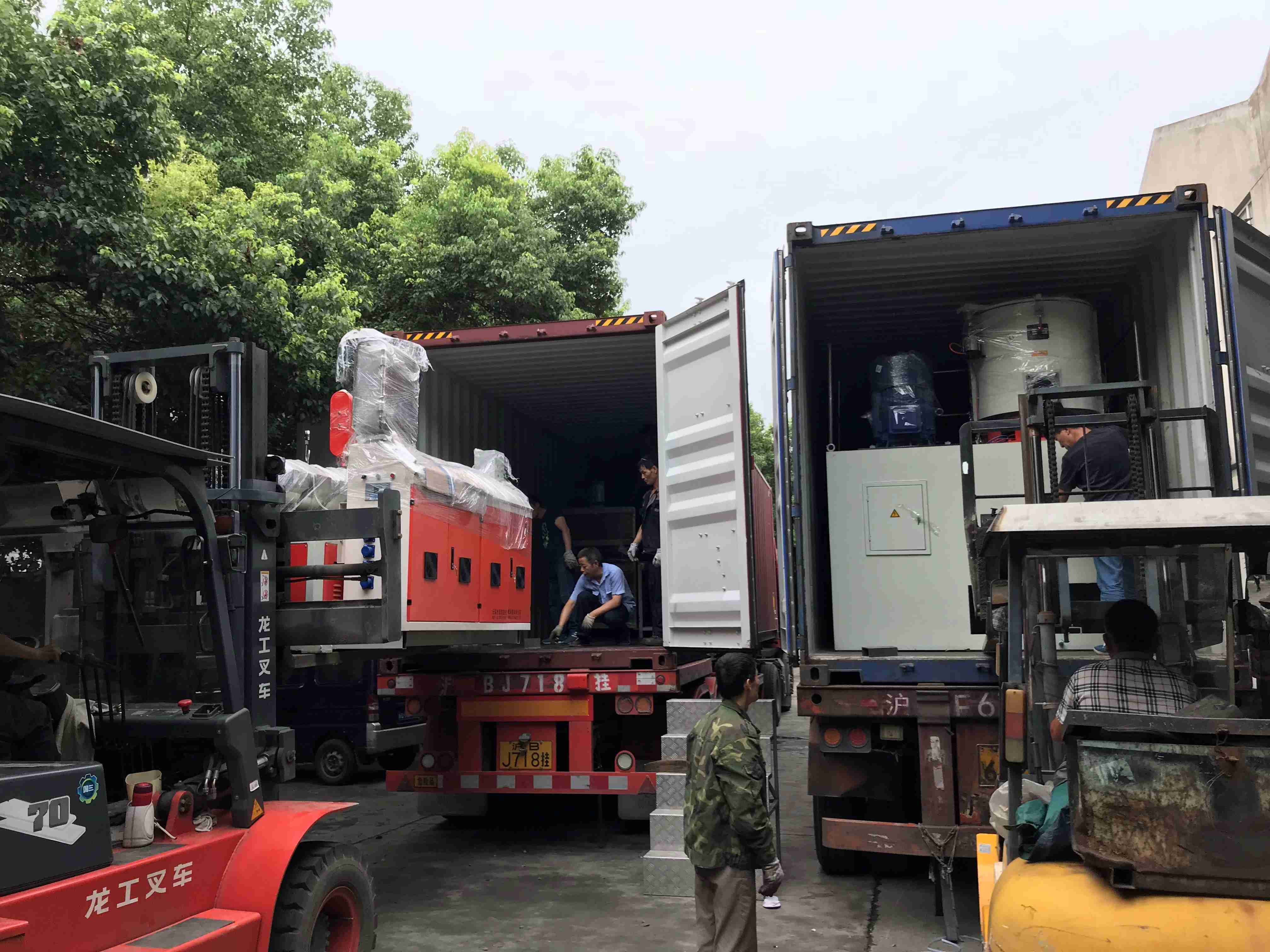
Equipment for a complete PVC hollow wall panel extrusion line prepared for delivery to a plastic building materials manufacturer in Vietnam, where the line has operated for more than five years.
Outlook
Three factors are likely to shape extruder choice over the next buying cycle. First, model-range depth is becoming a selection criterion in its own right: a supplier that publishes SJSZ-45 through SJSZ-110 and SJ30 through SJ90 can be matched to a specification without pushing a buyer into an oversized machine or a compromise on the small end. Second, the data gap that matters most is energy per kilogram; as operating costs come under closer scrutiny, suppliers who publish measured kWh/kg values will be easier to shortlist and easier to hold to an acceptance test.
Third, compliance documentation will keep moving. Standards are revised, editions change, and certificates have validity periods. Edition-level accuracy in a supplier file is also one of the few visible signals of how carefully the rest of the specification was assembled — which makes it a reasonable item to check early, alongside the screw and barrel statement, rather than at the end of a negotiation.
FAQ
Which extruder type does the published data assign to PVC powder?
The conical twin screw SJSZ range is positioned for direct extrusion of PVC powder into pipes, sheets, bars and profiles, and every line in the catalogue stated as PVC plus CaCO₃ is built on an SJSZ model. Single screw SJ models list PVC among their raw materials and appear on the multi-material profile line in SJ45, SJ50 and SJ65 configurations with a custom mould, so PVC work can appear on both types — but direct PVC powder extrusion is documented on the conical twin screw side.
What output range separates SJSZ-45 from SJSZ-110?
The published ladder runs SJSZ-45 at 15 kW and 70 kg/h, SJSZ-51 at 18.5 kW and 120 kg/h, SJSZ-55 at 22 kW and 150 kg/h, SJSZ-65 at 37 kW and 250 kg/h, SJSZ-80 at 55 kW and 400 kg/h, SJSZ-92 at 90 kW and 500–600 kg/h, and SJSZ-110 at 200 kW and 1000 kg/h. Power and output rise together across the range, so selecting a model is largely a matter of matching required throughput to the nearest published step.
Which applications in the catalogue are built on single screw SJ extruders?
Three are stated explicitly. The solid plastic rod line uses SJ45 or SJ65 on PP, PE, PA or POM for rods of Φ6–60 mm and Φ30–200 mm respectively. The multi-material profile line uses SJ45, SJ50 or SJ65 on PP, PE, PVC, PS, PC or ABS with a custom mould. The PP hollow construction formwork line uses SJ-90×33 at 75 kW and 180–250 kg/h, or SJ-130×33 at 160 kW and 500–600 kg/h, on PP recycled granule with MFI below 3.
What screw and barrel construction is published for both extruder types?
Both the SJ Series and the SJSZ series state 38CrMoAlA nitrided alloy steel for the screw and barrel, with machine frames in Q235 carbon structural steel. Die materials are specified per line: wear-resistant alloy die steel for most profile, panel, rod and pipe dies, forged refined die steel for PP formwork, precision casting die steel for PVC pipe, hardened steel with chrome plating for WPC door panel, and 45# forged steel with hard chrome plating for SPC calender rollers. Nitriding depth, surface hardness and expected service hours are not published and should be requested in writing.
What purchasing terms and acceptance criteria apply to an order?
Minimum order quantity is 1 unit and delivery terms are FOB. Payment terms are 30% T/T deposit with the 70% balance before shipment. Acceptance criteria are a pre-shipment factory test. Quoted lead time is 40 work days against a monthly capacity of 30 units, and quality control is stated as 100% factory pre-assembly and testing before shipment, with third-party inspection available on request.
How much can a buyer customise before the line is built?
OEM, ODM and custom design services are stated to cover the extruder model, screw configuration, production line layout, voltage and frequency, control system and capacity adjustment. After-sales support covers overseas installation guidance, on-site commissioning, operator training, remote technical support and a 12-month warranty. Because screw configuration is adjustable at order stage, a buyer whose material sits close to the boundary between the two ranges can raise that question during configuration rather than after delivery.
Reference document: JKS WPC door project brochure (PDF).
Есть вопросы или нужны дополнительные детали?
Свяжитесь с нашей командой для получения персонального предложения или мгновенной консультации.
Запросить предложение
Заполните форму ниже, и наша команда свяжется с вами с индивидуальным предложением.
Прямой чат WhatsApp
Предпочитаете общаться в реальном времени? Напишите нам в WhatsApp для мгновенной помощи и быстрых ответов.
- Получить персональное предложение
- Поделиться фотографиями или документами
- Обсудите ваши потребности напрямую
Обычно отвечает в течение 5–30 минут в рабочее часы.