
Plastic Extrusion Machine Selection: Technology, Limits, and Fit
For manufacturers entering or upgrading plastic profile, pipe, or sheet production, the plastic extrusion machine is not a single device but a technology platform. How it is configured determines output range, material compatibility, product quality, and long-term operational cost.
Plastic extrusion machines convert thermoplastic raw materials—PVC, PE, PP, ABS, and compounds—into continuous profiles, pipes, sheets, rods, and pellets through a melting, plasticizing, and shaping process. The machine platform a manufacturer selects becomes the backbone of daily production, influencing raw material flexibility, energy consumption, dimensional precision, and the ability to respond to changing market demand.
Wuxi JKS Machinery Manufacturing Co., Ltd. (JKS), established in 2013 and located in Wuxi, Jiangsu, China, is a manufacturer specializing in custom plastic extrusion machinery and complete turnkey production lines. Its product range covers sheet, SPC flooring, WPC foam board, pipe, profile, rod, and pelletizing lines, with extrusion machines exported to more than 35 countries. This article explains what a plastic extrusion machine does, how line configurations differ, what to verify before purchase, and where the practical limits of these systems lie.
What a Plastic Extrusion Machine Actually Does
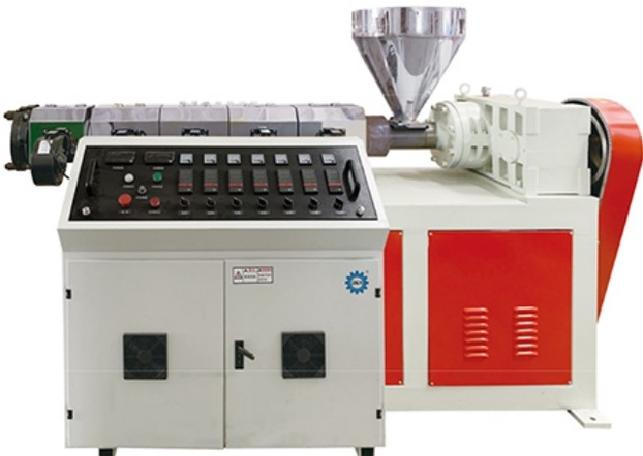
At its core, a plastic extrusion machine melts raw plastic material and pushes it through a die to create a continuous shape. The process begins with feeding solid material—usually powder or granules—into a heated barrel, where a rotating screw melts, mixes, and pressurizes the polymer. The molten material then passes through a mold that defines the cross-section, followed by calibration, cooling, haul-off, and cutting stages.
Two screw configurations dominate the market:
- Single screw extruders are general-purpose platforms suitable for processing PVC, PP, PE, Nylon, and ABS. JKS offers SJ series models such as SJ30, SJ45, SJ65, and SJ90, with screw and barrel made of 38CrMoAlA nitrided alloy steel. With different molds and auxiliary equipment, these machines can produce pipes, rods, films, pellets, coated products, and blow-molded bottles.
- Conical twin screw extruders are designed specifically for direct extrusion of PVC powder into pipes, sheets, bars, and profiles. JKS models include SJSZ-45, SJSZ-51, SJSZ-55, SJSZ-65, SJSZ-80, SJSZ-92, and SJSZ-110. The conical twin screw design provides uniform plasticizing and mixing with low shearing, which is important for high-filled PVC formulations.
The choice between these two platforms is not about which is “better”; it is about which matches the raw material and product target. A buyer planning to run PVC compound with high calcium carbonate filling will generally start with a conical twin screw extruder. A processor needing versatility across multiple thermoplastics may find a single screw line more suitable.
The Buying Problem: Beyond the Machine Itself
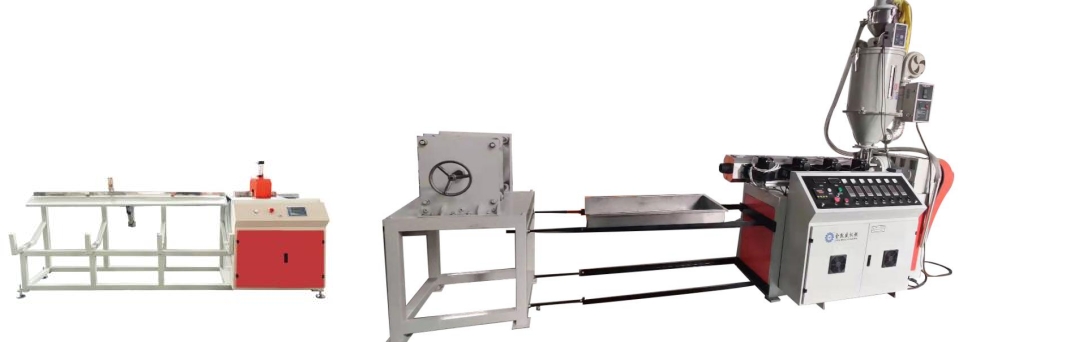
For first-time buyers, the central problem is not locating a machine supplier but translating a production goal into a correct line configuration. A plastic extrusion machine is always part of a longer system—feeding equipment, calibration table, cooling tank, haul-off, cutting unit, and sometimes stacking or embossing modules. Each stage affects the final product's dimensional accuracy, surface quality, and output consistency.
A second problem is material adaptability. PVC formulations vary widely in filler content, stabilizer packages, and processing temperature windows. A line that runs one recipe successfully may struggle with another. This is why suppliers that provide formulation support and installation training can reduce the risk of commissioning delays and material waste.
Market data explains why this decision matters. The global plastic extrusion machinery market was valued at approximately USD 8.93 billion in 2024 and is projected to reach USD 11.58 billion by 2030, according to Grand View Research. Pipe extrusion lines alone were valued at USD 4.8 billion in 2025, with PVC as the leading material segment at 38.6%, according to Dataintelo. Asia Pacific dominated the extrusion machinery market in 2024 with a 41.5% revenue share, with China as the largest contributor. For a manufacturer in Southeast Asia, the Middle East, Africa, or South America, sourcing from a Chinese supplier is not just a cost decision—it is a technology transfer decision that defines production capability for years.
How JKS Builds a Complete Plastic Extrusion Line
JKS positions itself as a custom turnkey supplier rather than a single-machine vendor. Its product portfolio spans several extrusion families, each with specific line configurations:
Sheet and Board Production Lines
- SPC Flooring Extrusion Line (SJSZ92/188, SJSZ110/220, SJP115/30, SJP135/30): produces rigid SPC flooring core boards from PVC+CaCO₃ compound, with finished thickness of 1–10 mm, effective width of 980 mm or 1250 mm, and output of 15–40 tons per 24 hours depending on extruder model. Optional EIR in-line synchronous wood grain embossing and vertical/inclined four-roller calender structure are available.
- PVC Imitation Marble Sheet Extrusion Line (SJSZ80/156, SJSZ92/188): produces decorative sheets for interior walls, floors, villas, KTV, and hotels; thickness 1–12 mm, effective width 1220 mm, output 400–700 kg/h depending on model.
- PVC & WPC Foam Board Extrusion Line (SJSZ80/156 single extruder or 80+165 co-extrusion): produces foam boards for kitchen cabinets, furniture, bathroom panels, construction templates, and advertising billboards; finished width 1220 mm, output 400–500 kg/h.
- PVC Hollow Wall Panel & Ceiling Extrusion Line (SJSZ51, SJSZ55, SJSZ65, SJSZ80): produces wall panels, ceiling boards, door panels, and cabinet panels with overall widths from 300 mm to 1200 mm.
- PP Hollow Construction Formwork Extrusion Line (SJ-130×33, SJ-90×33): produces ABA three-layer hollow formwork boards for concrete construction, width 1220 mm, thickness 15–20 mm, daily output 420–480 pieces per 24 hours.
Pipe Production Lines
- PVC Water Supply & Drainage Pipe Extrusion Line (PVC63, PVC250, PVC630): diameter ranges from Φ16 mm to Φ630 mm, with conical twin screw extruders and vacuum calibration systems.
- HDPE Water Pipe Extrusion Line (PE110, PE315, PE630, PE1000, PE1600): pipe diameter from Φ20 mm up to Φ1600 mm, with extrusion capacity from 150–400 kg/h to 600–1500 kg/h.
- PPR Pipe Extrusion Line (PPR20-75, PPR20-110): for cold and hot water plumbing systems; extruders GS65/33 and GS90/30, capacities 80–250 kg/h.
- Steel Wire Mesh Reinforced Composite Pipe Extrusion Line (GS/PE-160-H through GS/PE-630-H): for urban pressurized water supply and industrial anti-corrosion pipelines; maximum pipe diameter from Φ50 mm to Φ630 mm.
- Corrugated Pipe Extrusion Line (KSPG-20, KSPG-32, KSPG-63, KS-75, KS-160): single-wall corrugated pipes for wire threading, automotive wiring sleeves, and drainage; pipe diameters from Φ6 mm to Φ160 mm.
- MPP & PE High Voltage Power Pipe Extrusion Line (PEG63, PG160): for buried high-voltage power cable protection; diameters φ20–φ160 mm with AC frequency control and chipless cutting.
Profile, Rod, and Recycling Lines
- PVC & WPC Door and Window Profile Extrusion Line (SJSZ92/188, SJSZ65/132): produces hollow waterproof WPC door slabs and door frames, with panel width up to 1200–1600 mm.
- WPC Door Panel Extrusion Line (SJSZ80, SJSZ92): produces interior door panels for hotels, offices, and homes; output 250–600 kg/h depending on model.
- PVC Grille & Decoration Profile Extrusion Line (SJSZ51, SJSZ55, SJSZ65): produces skirting lines, decorative moldings, door and window profiles, and WPC deck tiles.
- Multi-material Plastic Profile Extrusion Line (SJ45, SJ50, SJ65): processes PP, PE, PVC, PS, PC, ABS to produce ceiling panels, sealing strips, edge bands, and PC lamp profiles.
- Solid Plastic Rod Extrusion Line (SJ45, SJ65): produces PP, PE, PA, POM solid rods from Φ6 mm to Φ200 mm for mechanical parts and engineering machining.
- Plastic Strand Cutting Pelletizing Line (ST80, ST100, ST120, ST150): processes PE, PP, ABS, PS, HIPS, PC for virgin compounding or waste plastic recycling; L/D ratio 35:1.
- PVC Hot-cut Pelletizing Line (SJSZ55, SJSZ65, SJSZ80, SJSZ92): uses conical twin screw extruder with hot die-face cutting for PVC compounding and recycling; output from 100–150 kg/h up to 650–800 kg/h.
In addition to complete lines, JKS supplies standalone extruders and auxiliary equipment including the SP series plastic crusher, MF series plastic pulverizer, and SRL-Z series PVC mixing and cooling units.
Technical Explanation: What Makes a Line Reliable
Production reliability is determined by component material quality and line integration. JKS specifies 38CrMoAlA nitrided alloy steel for screws and barrels across most of its product range. This material provides surface hardness while maintaining core toughness, which helps resist wear from filled compounds and abrasive recycled materials. Calender rollers on sheet lines use 45# forged steel with hard chrome plating; molds are made from wear-resistant alloy die steel; and machine frames use Q235 carbon steel. These material choices are not incidental spec-sheet details; they directly affect the interval between maintenance stops and the consistency of product dimensions.
Uniform plasticizing becomes critical when running PVC with high calcium carbonate content. The conical twin screw design in SJSZ series extruders reduces shear heat and provides stable mixing, which helps maintain product quality in high-filled PVC formulations. For pelletizing lines, the ST series uses a 35:1 L/D ratio to provide sufficient melting and mixing length when processing PE, PP, ABS, PS, HIPS, and PC.
Output capacity is another key technical variable. JKS line models are specified with both power and output range, for example:
| Line Family | Model Example | Main Motor Power | Output Range |
|---|---|---|---|
| SPC Flooring Line | SJSZ92/188 | 110 kW | 15–40 t/24h (by model) |
| PVC Imitation Marble Sheet Line | SJSZ80/156 | 75 kW | 400–700 kg/h |
| PVC & WPC Foam Board Line | SJSZ80/156 + co-extrusion | 75+37 kW | 400–500 kg/h |
| HDPE Pipe Line | PE315 | 160 kW | 200–600 kg/h |
| PVC Hot-cut Pelletizing Line | SJSZ92 | 110 kW | 650–800 kg/h |
| Solid Rod Line | SJ65 | 18.5 kW | 20–60 kg/h |
These numbers should be read as starting points for project evaluation, not as universal guarantees. Actual output depends on formulation, product dimensions, die design, and operating conditions.
Application and Use Cases
The application scenarios for JKS extrusion lines span several industries:
- Building materials and interior decoration: PVC hollow wall panels, WPC door panels, imitation marble sheets, decorative profiles, and foam boards are used in hotels, villas, KTV venues, and residential interiors.
- Municipal engineering and water supply: HDPE water pipe lines, PVC drainage pipe lines, PPR plumbing lines, and steel wire reinforced composite pipe lines serve municipal projects, agricultural irrigation, and building plumbing systems.
- Cable and conduit protection: MPP/PE high voltage power pipe lines and corrugated pipe lines produce conduits for buried power grids, wire threading, and automotive wiring sleeves.
- Construction formwork: PP hollow formwork lines produce reusable, impact-resistant formwork boards for concrete construction.
- Recycling and compounding: Plastic crushers, pulverizers, strand cutting pelletizing lines, and PVC hot-cut pelletizing lines support waste plastic recycling and masterbatch production.
- Engineering parts manufacturing: Solid plastic rod lines produce PP, PE, PA, and POM rods used for gears, bushings, and insulation bars in mechanical processing.
Market Trend Analysis
Demand for plastic extrusion machinery is being shaped by three concurrent forces. First, the global market is expanding at a steady pace—from USD 8.93 billion in 2024 to a projected USD 11.58 billion by 2030 (Grand View Research). This growth is not uniform; it is concentrated in regions investing in building materials, water infrastructure, and recycling capacity. Second, the pipe extrusion segment alone was worth USD 4.8 billion in 2025, and PVC remains the dominant material at 38.6% of the segment (Dataintelo). PVC's combination of cost efficiency and processing flexibility continues to make it the default material for pipes, profiles, and boards in emerging construction markets. Third, the recycling economy is becoming an investment driver: the waste plastic washing and pelletizing recycling line market was valued at USD 5.502 billion in 2024.
Within this landscape, buyers are asking suppliers for more than a single machine. They are asking for a line that can handle recycled content, accommodate formulation changes, and be commissioned quickly. Asia Pacific's 41.5% share of the extrusion machinery market in 2024 reflects the region's manufacturing scale, but it also means that suppliers in this region are under constant pressure to improve line integration and after-sales support.
Comparison with Traditional Sourcing Approaches
Traditional sourcing of plastic extrusion machines often separates the machine purchase from downstream support. A buyer might purchase an extruder from one supplier, a calibrator from another, and a haul-off from a third, then spend weeks integrating the components on-site. The JKS approach, by contrast, is to supply a complete turnkey line with installation and training. The advantage is a coordinated line design where each module matches the extruder output, reducing commissioning time and debugging effort.
For example, in a JKS SPC flooring line, the extruder, calender rollers, embossing unit, and cooling sections are specified together, so the line is balanced from feeding to stacking. Similarly, a PPR pipe line includes not only the extruder but also the vacuum calibration tank, cooling tank, haul-off, and cutter, each selected to handle the pipe diameter range of the model.
Another important boundary is that output figures are formulation-dependent. A line rated at 400–500 kg/h for a specific PVC compound may produce less when running recycled material or a different filler ratio. Buyers should verify output claims against their actual recipe and request reference lines in operation for similar applications.
Future Outlook
Three trends will likely define the next phase of plastic extrusion machine procurement. First, line flexibility will increase. Manufacturers will expect one extrusion line to handle multiple product widths or profile geometries with minimal changeover time. JKS already addresses this through modular auxiliary equipment and multi-material profile lines that process PP, PE, PVC, PS, PC, and ABS. Second, recycled content will become a standard consideration. The growth of the plastic recycling line market suggests that more processors will want to feed post-industrial or post-consumer material into extrusion lines—not only in dedicated recycling plants but also in primary production. Third, regional infrastructure investment in water supply and power transmission will sustain demand for HDPE, PPR, MPP, and steel wire reinforced pipe lines, particularly in Southeast Asia, the Middle East, Africa, and South America—regions where JKS already exports.
Sustainability pressure is also shifting the conversation from purchase price to long-term efficiency. A well-integrated line that produces uniform output with lower energy consumption and less scrap has a different total cost profile than a cheaper line with unstable operation. Buyers in 2026 and beyond are likely to evaluate suppliers on installation support, training, and formulation service, not only on the machine specification table.
For those researching this category, the immediate next step is to define the product target, material formula, and daily output requirement, then compare full-line configurations rather than individual extruder parameters. This approach applies whether the goal is SPC flooring, PVC pipes, WPC doors, or recycled pellets.
Frequently Asked Questions
What is a plastic extrusion machine used for?
A plastic extrusion machine melts thermoplastic raw materials and shapes them into continuous products such as pipes, profiles, sheets, rods, and pellets. Depending on the screw configuration and downstream equipment, the same basic machine platform can support applications from PVC water pipes and window profiles to SPC flooring and recycled plastic pellets.
What is the difference between a single screw and a conical twin screw extruder?
A single screw extruder is a versatile platform that processes PVC, PP, PE, Nylon, and ABS into pipes, rods, films, and profiles. A conical twin screw extruder is designed for direct extrusion of PVC powder, providing uniform plasticizing and low shearing, which makes it suitable for high-filled PVC formulations used in pipes, sheets, bars, and profiles.
What products can be made with a plastic extrusion line?
A complete extrusion line can produce SPC flooring boards, PVC imitation marble sheets, PVC/WPC foam boards, hollow wall panels, ceiling panels, PVC and HDPE pipes, PPR plumbing pipes, corrugated and steel wire reinforced pipes, door and window profiles, WPC door panels, solid plastic rods, and plastic pellets from virgin or recycled materials.
How do I choose the right plastic extrusion machine capacity?
Capacity selection should be based on the target product's dimensions, raw material formulation, and required daily output. Manufacturers specify output ranges for each model—for example, JKS SPC flooring lines produce 15–40 tons per 24 hours depending on the extruder model—and the buyer should verify these figures against their own recipe and production schedule.
Which industries use plastic extrusion machines?
Typical industries include building materials and interior decoration, municipal water supply and drainage, power cable protection, agricultural irrigation, construction formwork, engineering plastics machining, and plastic recycling and compounding. The machine configuration determines which industry a line serves.
Download the JKS company brochure for WPC door panel projects (PDF)