
Plastic Extrusion Machine Supplier Capability, Line by Line
A plastic extrusion machine supplier's capability can be read from its own catalogue before a single sample is cut — provided the catalogue starts upstream of the extruder. What separates a real integrated range from a generic claim is whether material preparation equipment, extruder platforms and finished-product lines are all published with model designations, power and output figures, and named construction materials. Wuxi JKS Machinery Manufacturing Co., Ltd., a Chinese extrusion machinery manufacturer founded in 2013 and based in Wuxi, Jiangsu, publishes such a range: from the SP400 and SP660 plastic crushers and the MF400/MF500/MF600 pulverizers, through SRL-Z mixing and cooling units and SJSZ conical twin-screw and SJ single-screw extruders, to PVC and HDPE pipe lines, WPC profile lines, SPC flooring and foam board lines, and hot-cut and strand pelletizing lines.
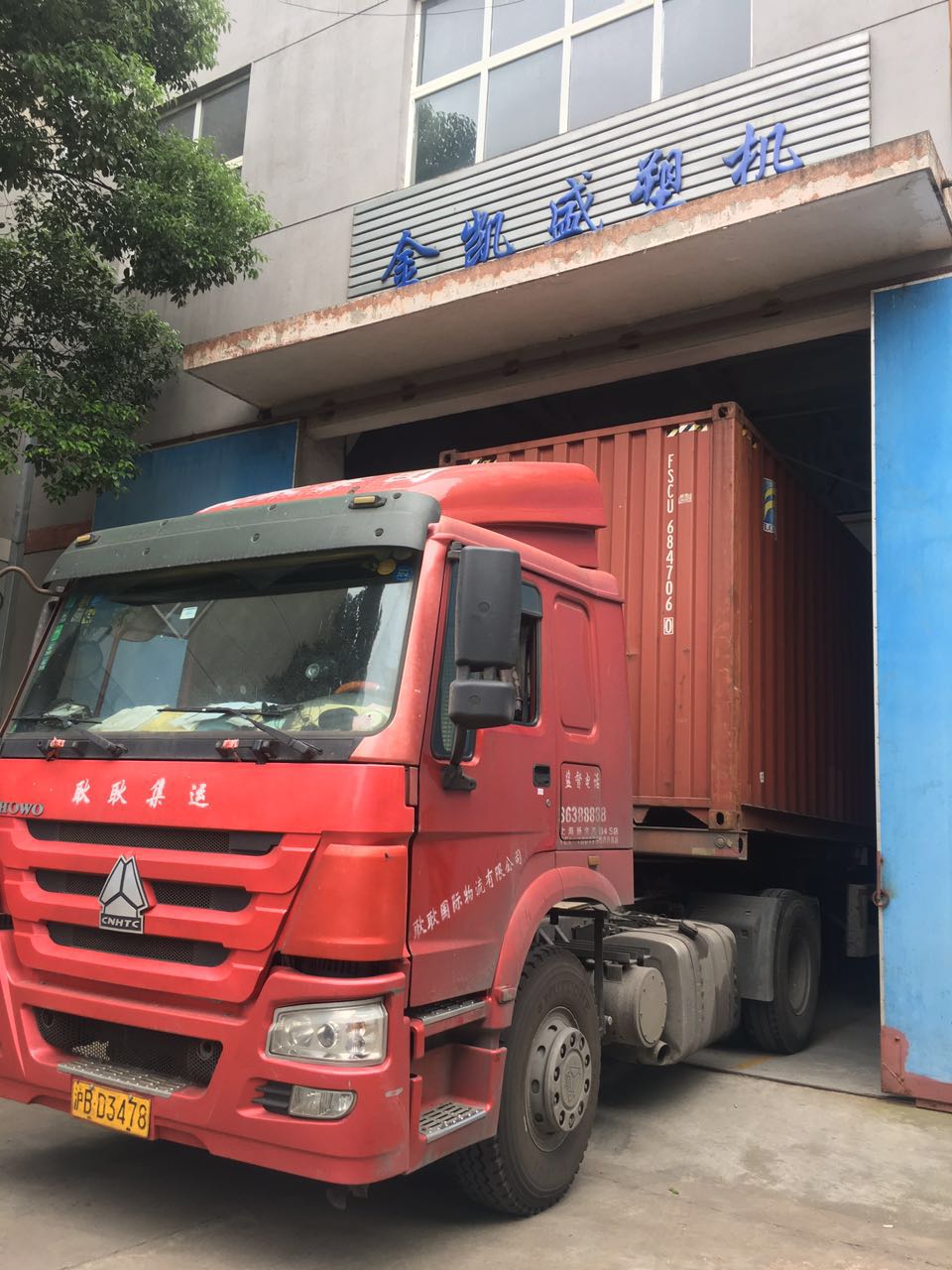
A complete SPC flooring extrusion line prepared at plant level — the unit of delivery that supplier capability claims are ultimately tested against.
Why capability claims collapse at the evaluation stage
Capability stated as intent cannot be evaluated. "Full range", "advanced technology" and "reliable service" are unfalsifiable statements; they survive every comparison because they contain nothing that can be checked. A buyer shortlisting extrusion suppliers usually holds the same material from each candidate: a catalogue, a quotation, a model list, and output figures that were originally measured on someone else's material at someone else's line width.
The verifiable layer sits underneath that material, and it answers three questions that require documents rather than impressions. First, does the supplier's declared range begin before the extruder, where compound is prepared? Second, is the extruder platform continuous across sizes rather than built around one flagship machine? Third, are construction materials specified by grade, or only described in adjectives?
JKS — Wuxi JKS Machinery Manufacturing Co., Ltd. — operates a 2,000 m² workshop in Wuxi with a declared annual output of 200 units, an R&D team of six engineers, a 50% export ratio and markets spanning Southeast Asia, Russia, the Middle East, Europe, Central Asia, Africa and South America. The company states that its machines have been exported to more than 35 countries. Those figures establish scale; they do not establish capability. The capability evidence is in the range map itself.
Stage one: material preparation is in scope
A supplier that also specifies crushing, pulverizing and mixing equipment is engaged with the part of the process that decides what reaches the screw. In PVC and WPC production, compound consistency is generally established before the material enters the extruder, so a supplier that can dimension mixer throughput, pulverizer fineness and crusher capacity has already had to reason about the buyer's formula rather than only about the machine frame.
| Equipment | Published models | Stated power and output | Stated construction |
|---|---|---|---|
| Plastic Crusher | SP400 / SP660 | SP400: 15 kW, 300–400 kg/h; SP660: 22 kW, 600–700 kg/h | Cutting chamber and blades in wear-resistant steel; carbon steel frame |
| Plastic Pulverizer | MF400 / MF500 / MF600 | MF400: 30 kW, 200 kg/h; MF500: 37 kW, 300–400 kg/h; MF600: 55 kW, 400–500 kg/h; fineness 40–80 mesh | Grinding chamber and rotor in wear-resistant steel; carbon steel frame |
| PVC Mixing & Cooling Unit | SRL-Z200/500, SRL-Z300/600, SRL-Z500/1000, SRL-Z1000/3000 | 37/7.5 kW at 300–400 kg/h up to 160/22 kW at 1,600–2,000 kg/h; mixing 8–10 min/pot, cooling 6–8 min/pot | Stainless steel mixing pot; carbon steel frame |
The three stages are not matched one-to-one by model size, and buyers should not assume they are. An SP660 crusher is rated at 600–700 kg/h, an MF600 pulverizer at 400–500 kg/h, and an SRL-Z1000/3000 mixer at 1,600–2,000 kg/h. In practice the trio has to be sized against the buyer's own scrap return rate and formula, not against the largest model in each column. The value of the published figures is that this sizing conversation can happen at all — a supplier listing only finished-product lines has nothing to size against.
Stage two: the extruder platform is the spine of the range
Extruder model continuity matters more than any single machine, because it determines whether a buyer's capacity change forces a change of supplier, control philosophy and spare-parts set. JKS publishes a seven-step conical twin-screw platform and a separate single-screw series.
| Platform | Models | Stated power and output | Stated application scope |
|---|---|---|---|
| Conical Twin Screw Plastic Extruder | SJSZ-45 / 51 / 55 / 65 / 80 / 92 / 110 | 45: 15 kW, 70 kg/h; 51: 18.5 kW, 120 kg/h; 55: 22 kW, 150 kg/h; 65: 37 kW, 250 kg/h; 80: 55 kW, 400 kg/h; 92: 90 kW, 500–600 kg/h; 110: 200 kW, 1,000 kg/h | Direct extrusion of PVC powder for pipes, sheets, bars and profiles; uniform plasticizing and mixing, low shearing |
| Single Screw Plastic Extruder | SJ Series (custom models including SJ30, SJ45, SJ65, SJ90) | Model-dependent; frame and screw/barrel materials specified per build | PVC / PP / PE / Nylon / ABS; pipes, rods, films, pellets, coated products and blow-moulded bottles with matching moulds and auxiliaries |
The distinction between the two platforms is a decision the buyer has to make early, and the published scope supports it. The SJSZ conical twin-screw family is specified for direct extrusion of PVC powder, which is the route used in PVC pipe, profile, sheet and pellet work. The SJ single-screw family is presented as a general-purpose thermoplastic platform covering PVC, PP, PE, Nylon and ABS. A supplier that offers only one of the two is asking the buyer to adapt the process to the machine; a supplier that offers both is at least able to place the application first.
Construction materials as the checkable layer
Material grades are among the few claims a buyer can compare without a factory visit — they are either stated or they are not. Across the JKS extruder and line specifications, screws and barrels are listed as 38CrMoAlA nitrided alloy steel, a consistent designation that appears on pipe, profile, board, rod and pelletizing lines rather than on one flagship model only. Machine frames are stated as Q235 carbon structural steel. Where the process demands differ, the specification differs: moulds appear as precision casting die steel on PVC pipe lines, forged alloy die steel on HDPE pipe lines, hardened steel with chrome plating on WPC door panel lines, and forged refined die steel on PP hollow construction formwork lines. On SPC flooring and PVC imitation marble sheet lines, the calender rollers are specified as 45# forged steel with hard chrome plating.
That consistency is usable evidence, but only up to a point. A stated grade confirms what was specified, not how the heat treatment or nitriding depth was controlled on a particular screw. Buyers who need that second layer must request material certificates and process records, which is a different document request from a catalogue page.
Stage three: how the range maps onto finished-product lines
The clearest test of an integrated supplier is whether the extruder platform reappears inside named finished-product lines with diameters, widths, thicknesses and outputs attached. JKS publishes that mapping across four product families.
| Family | Lines and models | Declared scope |
|---|---|---|
| Pipe | PVC Water Supply & Drainage (PVC63, PVC250, PVC630); HDPE Water Pipe (PE110, PE315, PE630, PE1000, PE1600); PPR (PPR20-75, PPR20-110); Steel Wire Mesh Reinforced Composite (GS/PE-160-H to GS/PE-630-H); Corrugated (KSPG-20, KSPG-32, KSPG-63, KS-75, KS-160); MPP & PE High Voltage Power Pipe (PEG63, PG160) | PVC lines cover Φ16–Φ63 mm at 270 kg/h, Φ90–Φ250 mm at 450 kg/h and Φ315–Φ630 mm at 800 kg/h; HDPE lines cover Φ20–110 mm up to Φ1000–1600 mm with 500 kW main motor on the largest frame |
| Profile | PVC & WPC Door and Window Profile (SJSZ92/188, SJSZ65/132); PVC Grille & Decoration Profile (SJSZ51, SJSZ55, SJSZ65); PVC Hollow Wall Panel & Ceiling (SJSZ51–SJSZ80); Multi-material Profile (SJ45, SJ50, SJ65); Solid Plastic Rod (SJ45, SJ65) | Profile widths from 100 mm to 1,200–1,600 mm panel output; PVC hollow wall panel line outputs stated from 120 kg/h at 300 mm width to 400 kg/h at 1,200 mm width |
| Board & sheet | SPC Flooring (SJSZ92/188, SJSZ110/220, SJP115/30, SJP135/30); PVC Imitation Marble Sheet (SJSZ80/156, SJSZ92/188); PVC & WPC Foam Board (SJSZ80/156, 80+165 co-extrusion); PP Hollow Construction Formwork (SJ-130×33, SJ-90×33) | SPC: 1–10 mm thickness, 980 mm or 1,250 mm effective width, 15–40 tons/24h depending on extruder model; marble sheet: 1–12 mm at 1,220 mm width, 400–700 kg/h |
| Pelletizing | PVC Hot-cut Pelletizing (SJSZ55, SJSZ65, SJSZ80, SJSZ92); Plastic Strand Cutting (ST80, ST100, ST120, ST150) | Hot-cut: 100–150 kg/h at 22 kW up to 650–800 kg/h at 110 kW; strand cutting: 70–160 kg/h at 55 kW up to 350–650 kg/h at 110 kW |
Output figures only carry weight when the basis is stated. The SPC flooring line is a useful example: the published range of 15–40 tons/24h is explicitly model-dependent, and the same product family is specified at 980 mm or 1,250 mm effective width and 1–10 mm finished thickness. A separately hosted marketplace listing attributes 1,500 kg/h to the SPC floor conical twin-screw extruder. Those numbers are not in conflict, but they are not comparable either until width, thickness and formula are fixed. Buyers should treat any single throughput figure as a range anchor and ask for the basis in writing.
A nine-point capability checklist for the evaluation stage
The point of mapping a range is to convert it into questions that produce documents. The checklist below is built from what JKS publishes; it works equally well against any supplier, and a supplier that cannot answer a line has told the buyer something useful.
| Check | What the buyer should be shown | JKS published position |
|---|---|---|
| 1. Upstream scope | Crusher, pulverizer and mixer models with power and throughput | SP400/SP660; MF400/MF500/MF600; SRL-Z200/500 to SRL-Z1000/3000 |
| 2. Platform continuity | One extruder family spanning small to large output | SJSZ-45 to SJSZ-110 in seven steps, 70–1,000 kg/h; SJ30 to SJ90 single screw |
| 3. Material specification | Screw, barrel, chamber, pot and frame grades named | 38CrMoAlA nitrided alloy steel; wear-resistant crusher and pulverizer chambers; stainless steel mixing pot; Q235 frames |
| 4. Line-level output basis | Output stated with diameter, width, thickness or model dependency | PVC pipe 270/450/800 kg/h by diameter band; SPC 15–40 tons/24h at 980/1,250 mm width, 1–10 mm |
| 5. Customisation scope | Named variables the supplier will change | OEM/ODM and custom design; extruder model, screw configuration, line layout, voltage and frequency, control system, capacity adjustment |
| 6. Quality gate | Pre-shipment testing and third-party inspection availability | 100% factory pre-assembly and testing before shipment; third-party inspection available on request |
| 7. Delivery terms | Lead time and minimum order | 40 work days lead time; MOQ 1 unit; monthly capacity 30 units |
| 8. Field longevity | Installed lines with country, product and years in service | Malaysia 10+ years (SPC); Korea 8+ years (SPC, 24/7); Vietnam 5+ years (PVC hollow wall panel) |
| 9. Compliance documents | Certificate number, issuing body, standards list, validity | CE certificate M.2021.206.C.64011 issued by UDEM, standards including EN ISO 12100:2010 and EN 1114-1:2011 |
Field evidence: what installed lines actually demonstrate
Duration claims are only meaningful when they are attached to a named product, a named line and a named market. JKS's case records do attach them. In Vietnam, a complete PVC hollow wall panel extrusion line — the product family built on SJSZ51, SJSZ55, SJSZ65 and SJSZ80 — has run for more than five years for a plastic building materials manufacturer producing panels for construction and interior decoration, with stable continuous production, consistent product quality and reliable performance. The project included turnkey delivery, on-site installation support and full export documentation.
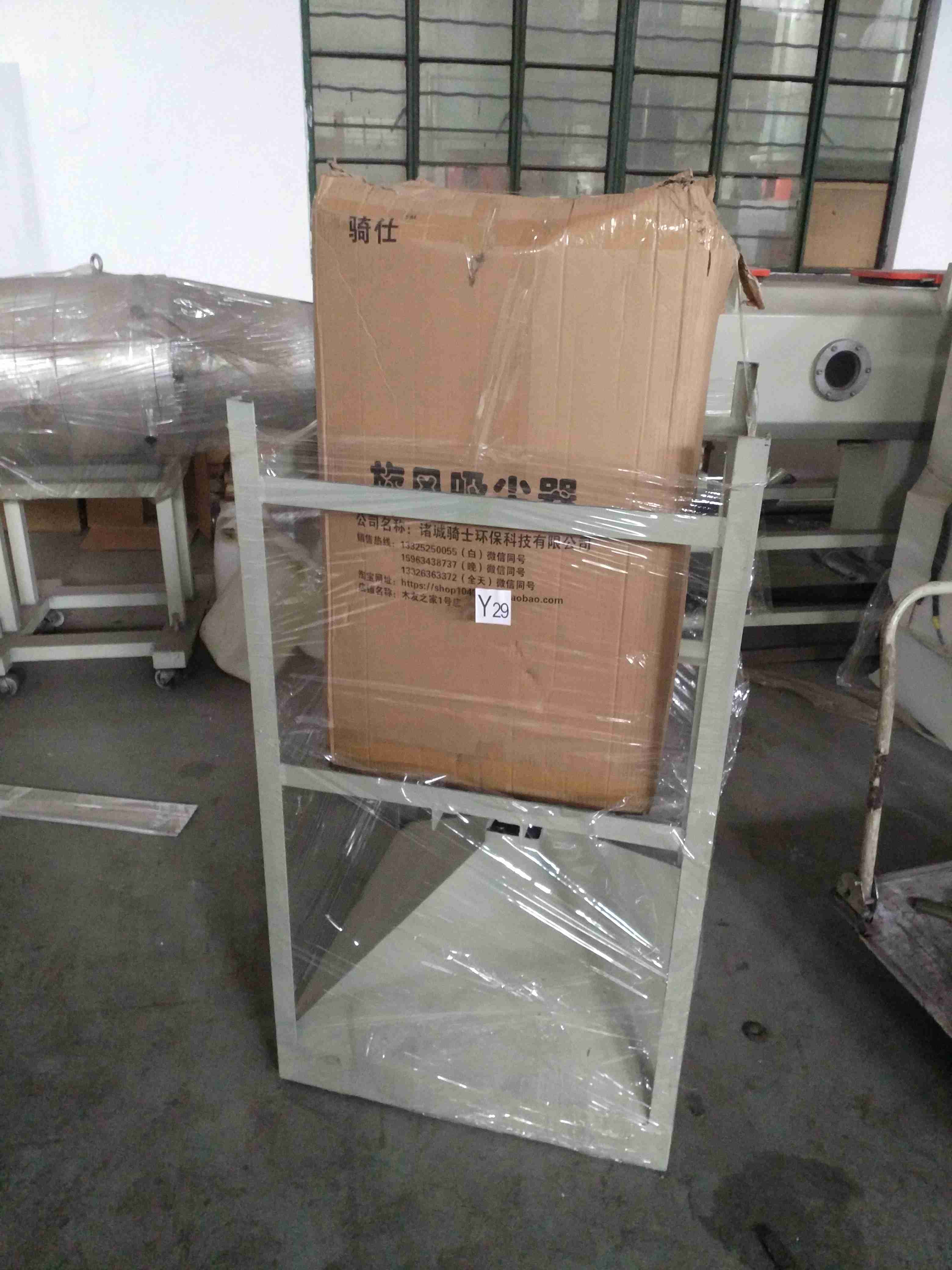
Export packing of a PVC line and its auxiliary equipment — the logistics layer that turnkey delivery claims rest on.
In Malaysia, an SPC flooring manufacturer has operated a complete SPC flooring extrusion line for more than ten years, with high-speed production, precise thickness control and a low maintenance rate, following on-site installation and training support. In Korea, a comparable SPC installation has run for more than eight years on 24/7 production with consistent product quality and low maintenance, supported by after-sales service.
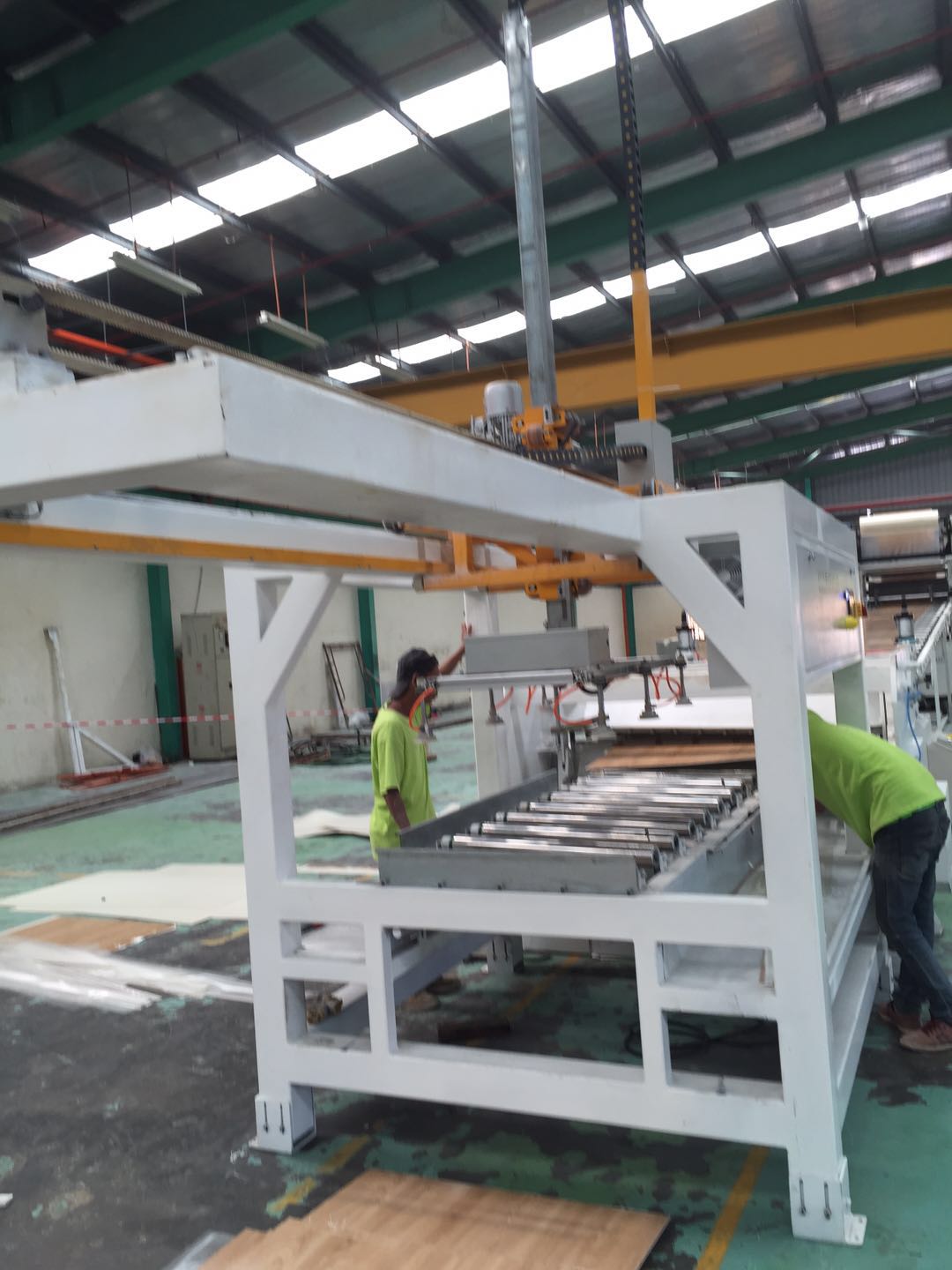
Finished SPC flooring stacked at a customer site — output evidence rather than a showroom image.
Three installations across three markets and two product families do not constitute a statistical sample. What they do provide is a verifiable pattern: the same platform families named in the catalogue appear in installed lines that have been in service for five, eight and ten years. A buyer evaluating a supplier can reasonably ask for the acceptance record and maintenance log behind each of those claims, and the supplier's ability to produce them is itself part of the evaluation.
Market context behind the evaluation
The demand environment explains why integrated ranges are becoming more common and why verification discipline matters more, not less. Market Research Future projects the global plastic extrusion machine market to grow from USD 7.901 billion in 2025 to USD 12.87 billion by 2035. Downstream, Grand View Research estimates the global stone plastic composite flooring market at USD 6.4 billion in 2026, rising to USD 10.3 billion by 2033 — a segment that pulls directly on SPC flooring extrusion lines of the type described above.
Supply concentration is equally relevant. According to the Observatory of Economic Complexity, using UN Comtrade data for HS 8477 (rubber and plastic working machinery), China was the leading exporter in 2024 at USD 8.55 billion, ahead of Germany at USD 6.11 billion and Italy at USD 2.61 billion. A buyer sourcing from that supply base will meet many suppliers with overlapping catalogues. Under those conditions, the differentiator is not range breadth by itself but whether each stage of the range is specified in a way that can be checked and compared.
Where the evidence stops
A credible capability assessment includes the boundaries of what the published material supports. For this range, six limits stand out.
- Breadth is not depth in every category. Platform data is strongest on the SJSZ conical twin-screw family and the pipe, profile, board and pelletizing lines built on it. Per-model energy consumption per kilogram of finished output is not published, so operating-cost comparisons require a direct data request.
- Output figures need a stated basis. The 15–40 tons/24h range for SPC flooring varies by extruder model and is only comparable once width, thickness and formula are fixed.
- Certification requires a currency check. The CE certificate on file, M.2021.206.C.64011 issued by UDEM on 22 April 2021 under machinery, LVD and EMC directives, carries a stated expiry of 22 April 2026. Buyers should confirm current validity and scope before relying on it in a tender file.
- Safety standard editions differ by source. ANSI/PLASTICS B151.7 applies to extrusion machines used in the plastics industry and requires a documented risk assessment, but published references cite both the 2013 edition and the 2014 (R2021) edition. The applicable edition and jurisdiction must be confirmed rather than assumed.
- The two extruder platforms are not interchangeable. The SJ single-screw series is a general-purpose thermoplastic platform; PVC dry-blend powder processing is specified on the SJSZ conical twin-screw route. A single-screw machine is not a substitute where the process calls for conical twin-screw compounding.
- Organisational scale is compact. A 2,000 m² workshop with a 20-person team and a 6-engineer R&D group supports a declared output of 200 units a year. Buyers running several simultaneous line projects should confirm scheduling and on-site commissioning capacity at the quotation stage rather than after award.
Future outlook
Two pressures are likely to reshape how extrusion suppliers are evaluated over the next several years. The first is documentation depth: as SPC flooring and rigid PVC building products continue to expand, buyers will ask for model-level energy and maintenance data as routinely as they now ask for output figures, and suppliers who publish it will be easier to shortlist. The second is compliance specificity: with safety standards under revision and certificate validity cycles running on fixed terms, tender files will increasingly require the current edition and a live certificate rather than a scanned copy of any certificate.
For a manufacturer positioned as JKS is — a mid-sized Wuxi supplier with an integrated range from crushers and mixers through extruders to pipe, profile, board and pelletizing lines, custom engineering across extruder model, screw configuration, layout, voltage and control system, and installed lines in Malaysia, Korea and Vietnam running for eight to ten years — the competitive question is no longer whether the range is broad enough. It is whether each stage of the range can be evidenced at the level a buyer's evaluation file requires.
Frequently asked questions
Which equipment stages should appear in a plastic extrusion supplier's range before it is shortlisted?
At minimum, three stages should be visible: material preparation, extrusion and finished-product lines. On the JKS range those are the SP400 and SP660 plastic crushers (15 kW at 300–400 kg/h; 22 kW at 600–700 kg/h), the MF400, MF500 and MF600 pulverizers (30–55 kW, 200–500 kg/h, 40–80 mesh fineness), the SRL-Z mixing and cooling units (300–400 kg/h up to 1,600–2,000 kg/h with stainless steel mixing pots), the SJSZ conical twin-screw and SJ single-screw extruders, and named lines for pipe, profile, board and pelletizing. A supplier listing only finished-product lines leaves the compound preparation stage undocumented.
What do the SJSZ conical twin-screw model numbers actually indicate?
They indicate a size ladder with published power and output: SJSZ-45 at 15 kW and 70 kg/h, SJSZ-51 at 18.5 kW and 120 kg/h, SJSZ-55 at 22 kW and 150 kg/h, SJSZ-65 at 37 kW and 250 kg/h, SJSZ-80 at 55 kW and 400 kg/h, SJSZ-92 at 90 kW and 500–600 kg/h, and SJSZ-110 at 200 kW and 1,000 kg/h. The platform is specified for direct extrusion of PVC powder into pipes, sheets, bars and profiles, with uniform plasticizing and mixing and low shearing. The practical significance is that a capacity change within this ladder does not require changing supplier or control philosophy.
Which construction details can a buyer verify from published specifications?
Screws and barrels are specified as 38CrMoAlA nitrided alloy steel, and that designation appears across extruder, pipe, profile, board, rod and pelletizing specifications rather than on a single model. Machine frames are stated as Q235 carbon structural steel. Crusher cutting chambers and blades and pulverizer grinding chambers and rotors are specified in wear-resistant steel; mixing pots in stainless steel. Calender rollers on SPC flooring and PVC imitation marble sheet lines are 45# forged steel with hard chrome plating, and mould materials are named per line. These confirm the specification, not the heat-treatment control, which requires separate material certificates.
What evidence exists that installed JKS lines remain in production over the long term?
Three named installations are documented. In Malaysia, an SPC flooring manufacturer has run a complete SPC flooring extrusion line for more than ten years with high-speed production, precise thickness control and a low maintenance rate. In Korea, an SPC flooring line has operated for more than eight years on 24/7 production with consistent quality and low maintenance. In Vietnam, a PVC hollow wall panel extrusion line has run for more than five years producing panels for construction and interior decoration, delivered as a turnkey project with on-site installation support and full export documentation.
How should a buyer treat the output figures published for pipe and SPC flooring lines?
As range anchors, not fixed guarantees. The PVC water supply and drainage lines are stated at 270 kg/h for Φ16–Φ63 mm, 450 kg/h for Φ90–Φ250 mm and 800 kg/h for Φ315–Φ630 mm. The SPC flooring line is stated at 15–40 tons/24h, explicitly varying by extruder model, with 980 mm or 1,250 mm effective width and 1–10 mm finished thickness. A separately hosted marketplace listing attributes 1,500 kg/h to the SPC conical twin-screw extruder. Because these figures rest on different bases, buyers should fix width, thickness and formula before comparing them.
What must be confirmed before relying on certification documents in a tender file?
Three things. First, the certificate itself: the CE certificate on record is M.2021.206.C.64011, issued by UDEM International Certification Auditing Training Centre on 22 April 2021 under the Machinery, LVD and EMC directives, with standards including EN ISO 12100:2010, EN 1114-1:2011 and EN 60204-1:2018, and a stated expiry of 22 April 2026. Second, the scope: coverage is stated for plastic extrusion lines including SJSZ, SJ and SJP series models. Third, the destination market's own requirements — for the United States, ANSI/PLASTICS B151.7 applies to extrusion machines in the plastics industry, and published references cite both the 2013 and 2014 (R2021) editions, so the applicable edition should be confirmed in writing.
Reference document: JKS WPC door project brochure (PDF) — Wuxi JKS Machinery project brochure.
Есть вопросы или нужны дополнительные детали?
Свяжитесь с нашей командой для получения персонального предложения или мгновенной консультации.
Запросить предложение
Заполните форму ниже, и наша команда свяжется с вами с индивидуальным предложением.
Прямой чат WhatsApp
Предпочитаете общаться в реальном времени? Напишите нам в WhatsApp для мгновенной помощи и быстрых ответов.
- Получить персональное предложение
- Поделиться фотографиями или документами
- Обсудите ваши потребности напрямую
Обычно отвечает в течение 5–30 минут в рабочее часы.