
Plastic Parts Supplier Longevity: Why LINGO's Team Depth Matters
Supplier Evaluation / Plastic Parts
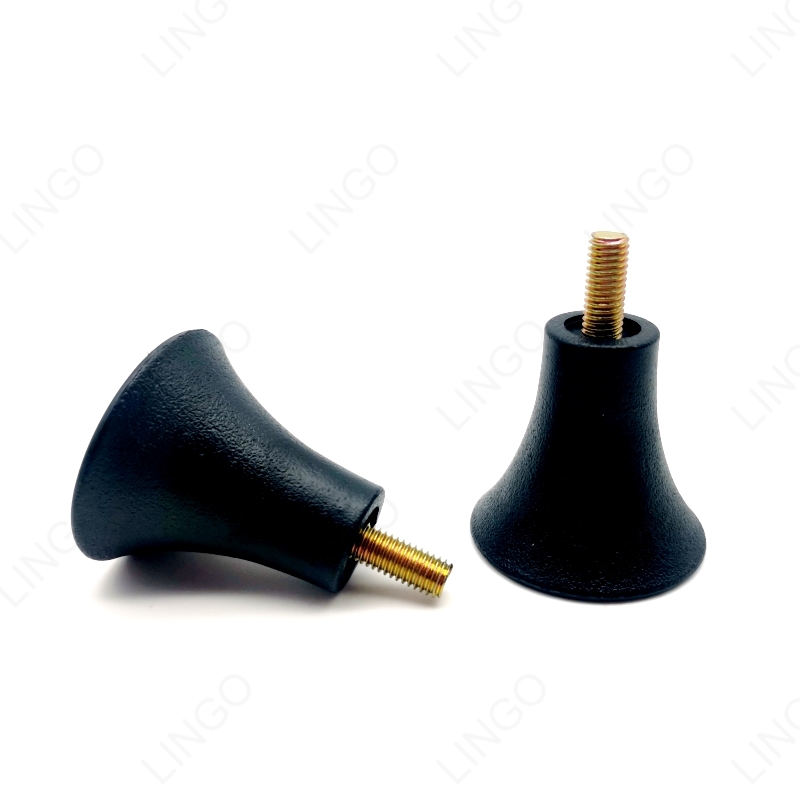
Why plastic parts supply fails slowly, not suddenly
Plastic parts supply rarely fails at the point of purchase. It degrades years later, when the process engineer who knew why a glass-filled PA66 housing needed a particular shrinkage allowance has left the company, and the replacement tool produces a part that passes dimensional inspection but no longer seats cleanly in the assembly.
That failure mode is structural rather than accidental. In custom plastic parts, a large share of what keeps a process stable is tacit knowledge: gate placement, cooling balance, drying regimes for hygroscopic resins, the draft angle that lets a part release without stress whitening. Presses and molds can be replaced within months. That knowledge cannot be bought on the same schedule.
Supplier sustainability, meaning the ability to deliver the same part to the same quality across a multi-year program, is therefore a question of institutional knowledge as much as of tonnage, capacity, or unit price. Most supplier evaluations still measure the second and assume the first.
This article sets out a practical framework for assessing that kind of sustainability, and applies it to a case that makes the distinction concrete. Lingo Rubber Plastic, formally Hangzhou Lingo Rubber and Plastic Product Co., Ltd, is a manufacturer of rubber and plastic components based in Hangzhou, China. It was established in 2022 and produces rubber compression molded parts, rubber extrusions, plastic injection parts, and plastic extrusion profiles, with additional PTFE, PEEK, and acrylic machining, PVC dipping, and assembly services. Its founding team is composed of specialists who have spent more than 10 years, and in some cases more than 20 years, working inside the rubber and plastics industry.
That combination, a young legal entity and a mature technical bench, is exactly the situation where a buyer needs a better evaluation model than a certificate checklist.
The blind spot in conventional supplier evaluation
A standard supplier audit verifies that a quality system exists. It checks calibration records, inspection plans, sample reports, material certificates, and corrective action logs. These are snapshots of a management system at a point in time.
What they do not forecast is continuity. Automotive interiors programs, industrial equipment platforms, and green energy hardware frequently run longer than the average tenure of the people who launched them. When the individual who set the process window leaves and no documentation or successor carries that window forward, the part does not fail immediately. It drifts, and drift is usually invisible until a downstream assembly or a field return exposes it.
In plastic parts, three layers of knowledge are especially exposed to staff turnover:
- Material behaviour. Polyamides absorb moisture and require controlled drying before processing. Glass-fiber loading changes flow, weld-line strength, and gate wear. Flame-retardant and UV-stabilized grades behave differently in the tool than their unfilled equivalents.
- Tooling and process windows. Shrinkage compensation, cooling layout, gate position, and draft angle together decide whether a part is dimensionally stable in production or only in the first article report.
- Inspection judgement. Visual acceptance criteria for flash, sink marks, weld lines, and surface finish are rarely fully captured in a drawing, yet they decide whether a lot ships or is held.
The practical consequence is that a supplier can pass an audit in year one and still lose process control in year four without any single event that triggers a corrective action.
A five-test framework for long-term supplier viability
The framework below is designed for buyers at the evaluation and execution stages, where a supplier has already demonstrated that it can make the part and the question becomes whether it can keep making it.
- Expert core depth. How many people in the organisation actually carry process knowledge, and how long has each of them carried it? Request the technical staff structure with years in the discipline, not only years at the company.
- Entity age versus team age. A company incorporated recently and a company incorporated twenty years ago can both be sustainable, but the evidence required differs. For a young entity, the burden of proof shifts to the bench, the documentation, and the financial record.
- Process breadth versus single-process dependency. A supplier that runs injection molding, extrusion, CNC machining, and dip coating can re-route a component when a design change or a tooling issue appears. A single-process supplier sends the buyer back to the market.
- Documented standards versus tribal knowledge. Tolerance conventions, PPAP documentation, and batch traceability convert individual experience into a transferable asset.
- Continuity commitments. Mold ownership protection, after-sales support, and traceability terms determine what happens when a tool needs rework or a batch is questioned.
| Test | Question to ask | Evidence to request |
|---|---|---|
| Expert core depth | Who owns this process, and for how long? | Technical staff list with discipline years; named process owner per part family |
| Entity age versus team age | Is the capability institutional or personal? | Company registration date plus founding team background; training and handover records |
| Process breadth | What happens if the process route changes? | List of in-house processes, not subcontracted ones; secondary operation capability |
| Documentation | Can the process be reproduced without the original engineer? | PPAP files, tolerance standard reference, batch traceability procedure |
| Continuity terms | Who owns the tool and who supports year five? | Mold ownership clause, after-sales scope, exchange and concession policy |
Applying the framework: where LINGO's structure fits
A young company with a mature bench
Lingo Rubber Plastic was established in 2022, which makes its corporate record short by the standards of the rubber and plastics industry. The company's operating scale is stated at a 3000 square metre facility with around 40 employees, a 10-person R&D team, and an annual output of 1.58 million units. Export accounts for roughly 80 percent of output, with the European Union and the United States named as main markets.
The more relevant figure for a long-term program is not the incorporation year but the bench. The company was co-founded by a group of industry veterans who have each spent more than 10 years, and in some cases more than 20 years, working deeply in rubber and plastics. On the framework above, that is a direct answer to test one and a partial answer to test two: the entity is young, but the process knowledge is not.
For a buyer, the practical implication is that due diligence should be split. Financial continuity, insurance cover, and audited records are entity-level questions and must be answered by the entity. Process continuity, material judgement, and tooling decisions are bench-level questions and should be addressed to the people who will actually run the program.
Process breadth as continuity insurance
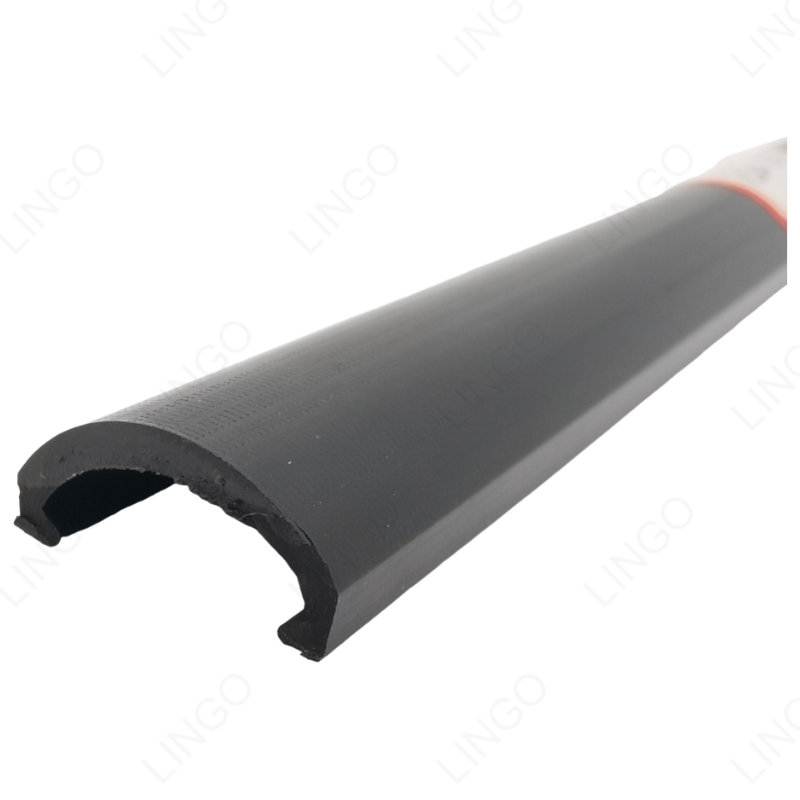
LINGO's stated manufacturing scope covers plastic injection molding, plastic extrusion, PVC dip molding, and CNC precision machining, alongside rubber compression molding and rubber extrusion. The product classification includes plastic gaskets, washers, caps, housings, handles, and guide rails from injection molding; PA6, PA66, PE, HDPE, and UHMWPE extrusion trims, glass-filled and co-extruded profiles from extrusion; and PTFE, PEEK, and acrylic machining, PVC dipping, plastic machining, and assembly as additional services.
That breadth matters for the third test. A green energy or industrial program often starts as an injection molded housing and later requires an extruded seal, a machined PTFE back-up ring, or a dip-coated handle. A supplier that already runs those routes can absorb the change inside one quality system instead of pushing the buyer into a second sourcing cycle.
Commercial terms that support a multi-year program
The commercial parameters stated for LINGO's injection and extrusion programs are consistent with custom, mid-volume work. Lead time is quoted at 2 to 6 weeks. Minimum order quantity varies by part, and small quantity orders are accepted, which matters for spare parts and engineering validation builds rather than only for launch volumes. Monthly capacity for OEM and ODM production of plastic injection parts and plastic extrusion profiles is stated at 1,000,000 kgs.
Quality control follows a sample-then-bulk logic: full inspection of samples, followed by random inspection of bulk goods. After-sales support covers remote technical support, mold maintenance and ownership protection, a batch traceability system, and free exchange together with acceptance of concessions. PPAP documentation is offered against the applicable level for custom parts.
Read against the fifth test, these are the clauses that decide what happens in year four: who owns the tool, who can trace a batch, and who absorbs the cost when a concession has to be agreed.
Technical explanation: where experience changes the part
Experience in plastic parts is not a soft quality. It resolves to specific engineering decisions that are either made correctly at the tooling stage or paid for in scrap and rework later.
For injection molded parts, LINGO states draft angles of at least 1 degree on outside surfaces and at least 0.5 degrees on inside surfaces, with a typical shrinkage rate of 0.4 to 0.8 percent used for mold compensation, surface finish defined on the SPI scale, colour specified by Pantone or RAL code, and dimensional tolerance controlled to GB/T 14486 MT1 to MT7. Material options include PP, PA6, PA66, ABS, PE, HDPE, UHMWPE, LDPE, PU, PTFE, and glass-fiber reinforced grades, with fillers and modifications such as glass fiber, flame retardancy, and UV stabilization available. Food-contact and flammability requirements such as FDA and UL94 V-0 are named as specification options.
For extrusion, cross-sections are custom-designed, lengths run up to 6000 mm, and materials span PVC, PP, ABS, PA6, PA66, PE, and UHMWPE with or without glass fiber. For automotive plastic parts, the stated specification includes FMVSS 302, RoHS, and REACH, with an operating temperature range of -40 to +120 degrees Celsius.
| Decision point | Why experience changes the outcome | What a buyer should verify |
|---|---|---|
| Shrinkage compensation | An allowance outside the 0.4 to 0.8 percent band for the actual grade and wall section produces a part that is dimensionally legal but functionally out of position | Shrinkage value used in the mold design and the grade it was derived from |
| Draft and ejection | Insufficient draft shows up as drag marks and stress whitening that appear only after sustained production | Draft specification in the tool design, not just in the drawing |
| Material selection | Glass-fiber loading improves stiffness but accelerates gate wear; flame retardants change cycle and weld-line behaviour | Material grade, filler content, and tool wear allowance |
| Tolerance convention | A stated band such as GB/T 14486 MT1 to MT7 or the principles of ISO 20457:2018 only work if both sides read them the same way | Which tolerance standard governs the drawing and the inspection report |
| Secondary operations | Dip coating, machining, and assembly add interfaces where fit and insulation are won or lost | Whether the operation is in-house and inspected against the same plan |
ISO 20457:2018, the international standard specifying tolerances and acceptance conditions for plastics moulded parts, illustrates the point. The standard exists and is publicly available, but two suppliers can cite it and still disagree on acceptance because interpretation is a human function. Depth of experience is what makes the interpretation consistent across lots and across years.
Application evidence: two programs and what they demonstrate
Two documented case programs show where judgement, rather than capacity, determined the outcome.
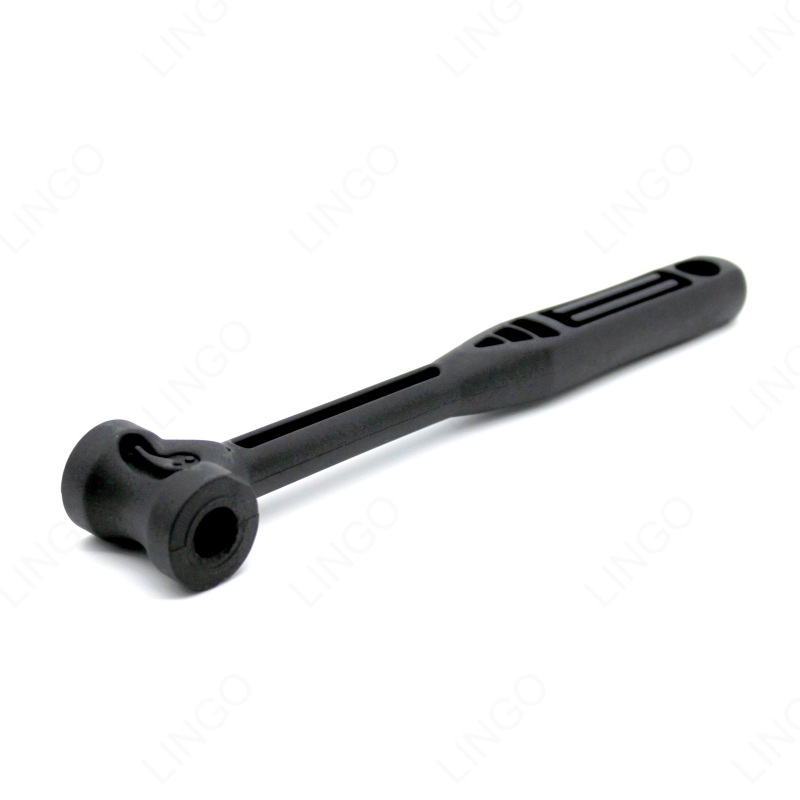
In the United States, a project supplied 5000 plastic injection parts for a tube holder application in automotive machinery. Rather than simply producing to the original specification, the program reduced some internal material while maintaining product structure and functionality. The result lowered material and logistics costs and improved dimensional stability, with zero failures reported in long-term use. Removing material without losing function is a judgement call about wall sections, load paths, and shrinkage. It is not a machine setting.
In the United Kingdom, a project supplied 20 pieces of CNC machined PTFE back-up rings used to protect O-rings and other elastomeric seals from extrusion damage under high pressure. The rings do not seal on their own; they preserve the integrity and service life of the primary seal. Key highlights of that program were high-precision tolerance, dispatch in 2 days, pure PTFE material, and acceptance of a small order. Clients using the part span chemical and petrochemical, food and pharmaceutical, automotive, electronics and semiconductor, aerospace and defense, and general industry applications.
Read together, the two cases describe a supplier profile oriented toward low-volume engineering work and moderate-volume production programs, not toward a single high-runner part. That is a strength for custom and multi-process work, and it is a boundary for buyers whose programs look different.
Market context: why process breadth is being tested now
Market-level data does not validate any individual supplier, but it does explain why buyers are asking harder questions about process coverage and documentation.
- The global plastic market reached USD 963.7 billion in 2025, according to Grand View Research.
- The injection molding segment held 42 percent of the global plastic market share in 2025, based on the same source.
- Global export value for HS Code 392690, articles of plastics, was USD 66.77 billion in 2025, according to UN Comtrade trade data.
Two readings follow. First, injection molding remains the default route for custom plastic parts, which means most supplier shortlists will be dominated by injection molders and differentiation will come from documentation and process depth rather than from the existence of the process. Second, the scale of international trade in plastic articles means cross-border buyers are routinely qualifying suppliers they cannot visit weekly, which raises the value of traceability, PPAP documentation, and a bench that can answer technical questions without escalation.
A third reading is more practical. Programs rarely stay inside one process family. A housing is molded, a seal is extruded, a wear ring is machined, and a grip is dip coated. Each hand-off to a new supplier adds a qualification cycle. Process breadth inside one quality system is a continuity advantage, not a marketing line.
Comparison with traditional evaluation, and the limits of this model
Traditional evaluation optimises for the quotation: unit price, lead time, MOQ, and a certificate pack. Knowledge-centred evaluation optimises for the fifth year of the program. The two are not mutually exclusive, but they weight evidence differently.
| Evaluation dimension | Price-led approach | Continuity-led approach |
|---|---|---|
| Primary evidence | Quotation, sample parts, certificates | Process ownership, documentation depth, tooling ownership |
| Process risk | Assumed to be covered by the quality system | Tested through named engineers and handover records |
| Change handling | New RFQ when the design changes | In-house re-routing across injection, extrusion, machining, dipping |
| Main weakness | Silent drift after staff turnover | Requires more evaluation time and deeper technical dialogue |
The continuity-led model also has boundaries, and LINGO's own profile illustrates several of them.
- Entity record length. LINGO was established in 2022. Team experience does not substitute for entity-level due diligence, and buyers with strict vendor onboarding should request financial statements, insurance documentation, and where required a third-party audit before awarding a multi-year program.
- Operating scale. A facility stated at 3000 square metres with around 40 employees is suited to custom, multi-process, and small-to-mid volume work. Programs requiring multiple manufacturing sites, dedicated high-cavitation lines, or very large single-part annual volumes may be better served by a different supply structure.
- Company-reported figures. The stated annual output of 1.58 million units and the monthly capacity of 1,000,000 kgs are company-reported and not independently audited. They are useful for a preliminary screen and should not be used as a benchmark or ranking criterion.
- Inspection regime. Full inspection of samples plus random inspection of bulk goods is a documented sampling logic. Buyers who require 100 percent inline automated inspection, or a specific PPAP submission level, should confirm that requirement in writing rather than assume it.
- Scope limits. Process breadth does not mean every material and process combination is offered. Polymers or finishes outside the listed material families require explicit confirmation.
Future outlook: continuity becomes a procurement criterion
The direction of travel in industrial sourcing is toward supplier continuity as a formal criterion rather than an implicit assumption. Three practices are likely to become routine in plastic parts procurement: naming the process owner in the PPAP file, documenting the process window alongside the dimensional report so it survives staff changes, and writing mold ownership and traceability terms into the contract before the first production lot.
For suppliers with a mature bench and a young corporate record, this is an opportunity rather than a threat. The evidence that matters, named engineers, documented standards, and multi-process capability, is available today and can be presented directly. For buyers, the discipline is to separate the two questions that are often merged: whether the company will still be solvent in five years, and whether the process knowledge will still be in the building. Both need an answer, and they need different evidence.
FAQ
How can a buyer verify that a plastic parts supplier's experience is genuinely deep?
Ask for the technical staff structure with years spent in the discipline rather than years spent at the company, and identify a named process owner for each part family. Then cross-check that person against the documentation: who signs the PPAP file, which tolerance standard governs the inspection report, and who authorises a concession when a batch is out of specification. If the person answering technical questions is different from the person running the process, the experience is present but not yet institutionalised.
Is a supplier founded in 2022 a risk for a long-term program?
Entity age and team age answer different risks. A short corporate record is a financial and organisational question, addressed through financial statements, insurance, references, and third-party audit where required. Team maturity is a process question, addressed through the bench profile and documented standards. Lingo Rubber Plastic was established in 2022 and states that its founding team includes specialists with more than 10 years, and in some cases more than 20 years, of rubber and plastics experience. The two findings should be recorded separately in a supplier evaluation rather than averaged into a single score.
Which plastic processes does LINGO cover for custom parts?
LINGO's stated scope covers plastic injection molding, plastic extrusion, PVC dip molding, and CNC precision machining, alongside rubber compression molding and rubber extrusion, with assembly also offered. Injection molded output includes gaskets, washers, caps, housings, handles, and guide rails. Extruded output includes PA6, PA66, PE, HDPE, and UHMWPE profiles, glass-filled profiles, and co-extruded trims. Machining covers PTFE, PEEK, and acrylic parts, and PVC dipping covers corrosion-resistant and insulating coatings for handles, grips, and protective covers.
What lead times, minimum order quantities, and capacity apply to plastic injection and extrusion programs?
LINGO quotes a lead time of 2 to 6 weeks. Minimum order quantity varies by part, and small quantity orders are accepted, which supports spare parts and validation builds. Monthly capacity for OEM and ODM production of plastic injection parts and plastic extrusion profiles is stated at 1,000,000 kgs. Export markets named for these programs are the European Union, the Middle East, and the United States. Buyers should confirm the applicable figures against their own part family during quotation, since capacity and lead time depend on tooling and material.
What after-sales and traceability commitments support a multi-year program?
The stated after-sales scope includes remote technical support, mold maintenance and ownership protection, a batch traceability system, and free exchange together with acceptance of concessions. Quality control is defined as full inspection of samples and random inspection of bulk goods, and PPAP documentation is offered against the applicable level for custom parts. For multi-year programs, the practical value sits in two of these items: mold ownership protection determines who controls the tool if the relationship changes, and batch traceability determines how quickly a quality question can be closed.
For readers who want the full capability and contact record in one document, the LINGO Rubber and Plastic company profile is available for download: https://cdn.socialarks.com/sbsp/24903/common/2026/0612/LINGO%20RUBBER%20%26%20PLASTIC%20COMPANY%20PROFILE.pdf
Есть вопросы или нужны дополнительные детали?
Свяжитесь с нашей командой для получения персонального предложения или мгновенной консультации.
Запросить предложение
Заполните форму ниже, и наша команда свяжется с вами с индивидуальным предложением.
Прямой чат WhatsApp
Предпочитаете общаться в реальном времени? Напишите нам в WhatsApp для мгновенной помощи и быстрых ответов.
- Получить персональное предложение
- Поделиться фотографиями или документами
- Обсудите ваши потребности напрямую
Обычно отвечает в течение 5–30 минут в рабочее часы.