
Plastic Steel vs Plastic Doors: UPVC Procurement Answers
Plastic Steel vs Plastic Doors: UPVC Procurement Answers
Procurement Reference · Construction & Decoration
Two UPVC door quotations can carry the same photographs and describe very different products. In export trade, a “plastic steel door” is a PVC-U door profile reinforced with internal galvanized steel liners, while a “plastic door” is a profile without any steel reinforcement. That difference decides whether a door can be installed on an exterior or high-rise opening at all, and it changes what a buyer should inspect before shipment.
The distinction sits behind most of the procurement questions raised by project buyers and distributors sourcing UPVC doors. Minimum order quantity, pre-shipment inspection and lead time are the other three, and in practice all four arrive in the same email thread. This reference explains what each term means, what the supplier documentation should show, and where the practical limits of a standard UPVC door offer sit, using the published terms and factory facts of Foshan Nanhai Yuanzhaiji UPVC Door & Window Factory as a working example.
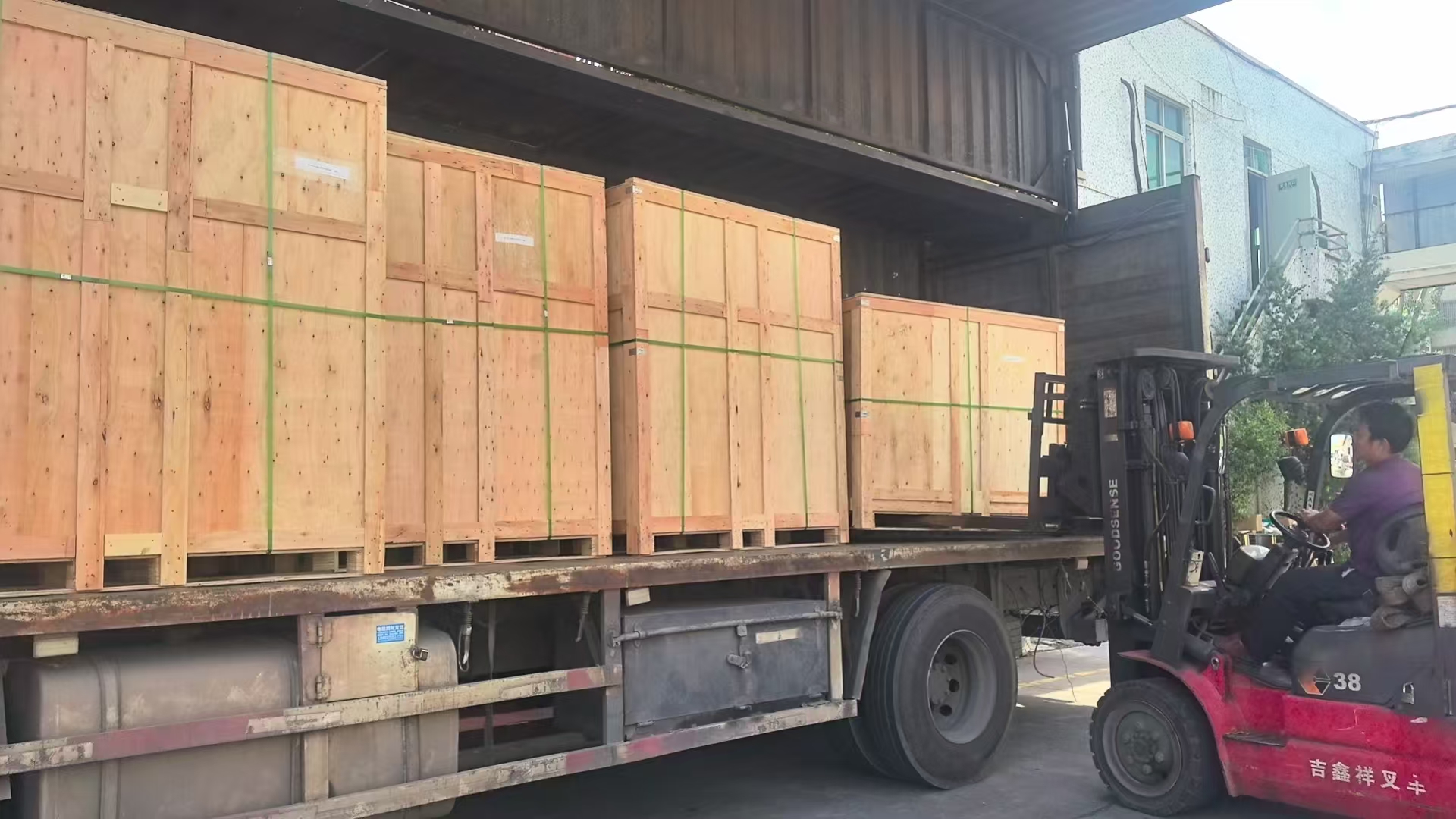
Finished UPVC door and window sets being loaded for shipment. Pre-shipment inspection and loading are the two checkpoints most project buyers can still influence.
Short answers to the four core questions
- Plastic steel vs plastic: a plastic steel (UPVC) door uses PVC-U profiles reinforced with internal galvanized steel liners; an ordinary plastic door has no steel reinforcement and is not suitable for exterior or high-rise openings.
- MOQ: 30–40 sqm per order in the Foshan supply described here, shipped on FOB or CIF terms.
- Inspection: pre-shipment inspection by photograph or on-site visit, carried out against the agreed specification and the steel-liner requirement.
- Lead time: typically 10–30 days, with the position within that range driven by profile colour, glass build-up and hardware selection.
Why the material question decides the rest of the order
Procurement teams rarely begin with a material question. They begin with a price comparison. Two quotes for the same 60 sqm of balcony doors arrive with different totals, and the gap is often explained loosely as “lighter construction” or “thinner profile”. In most cases the underlying cause is reinforcement: a door line built on PVC-U profiles with galvanized steel liners costs more per square metre than a line built on unreinforced plastic, and both are frequently placed side by side in the same tender return.
Getting the terminology right before negotiation prevents two expensive failure modes. The first is buying an unreinforced product for an exterior opening and discovering deformation after the facade is closed, when correction is costly. The second is paying for reinforcement that was never specified on the purchase order, or never verified in the delivered goods, because the order described the door only by colour, size and opening direction.
The practical rule is to name the construction rather than the nickname. A purchase order that states “PVC-U profile with internal galvanized steel liner” travels better across languages and inspection checkpoints than one that relies on a translated market term, and it gives the inspecting party something concrete to confirm at the profile end face.
Plastic steel door and plastic door: the structural difference
A UPVC door is manufactured from PVC-U profiles. In reinforced construction, galvanized steel liners are fitted inside the hollow profile cavities before welding, which raises rigidity and wind-pressure resistance and supports the hardware fixings at hinges and locks. An ordinary plastic door omits that liner. It relies on the plastic wall alone for strength, which is cheaper to produce but deforms more readily under load or wind pressure.
The difference propagates through the whole performance profile. Because the reinforced profile holds its shape, the sealing system — weatherstrip, gaskets and the closing geometry around the sash — stays consistent over time, which is what preserves thermal insulation, sound insulation and water tightness. An unreinforced door that begins to deflect loses that geometry, and draughts, water ingress and hardware misalignment follow.
| Criterion | Plastic steel door (UPVC) | Ordinary plastic door |
|---|---|---|
| Construction | PVC-U profile with internal galvanized steel liner | Plastic profile only, no steel reinforcement |
| Rigidity and wind resistance | Good; suitable for exterior and high-rise openings | Low rigidity; deformable under load |
| Thermal and sound performance | Stable over service life because sealing geometry holds | Degrades as the panel deflects |
| Exterior suitability | Permitted, including balcony and facade doors | Not permitted for exterior or high-rise use |
| Upfront cost | Higher | Lower |
| Service life | Long, with simple hardware maintenance | Short; replacement likely |
The economically relevant point is that a lower purchase price is not a lower project cost. Unreinforced doors are priced lower but have a short service life and a real deformation risk; reinforced UPVC doors cost more initially and amortise across a longer service window with stable performance. For interior temporary areas, the cheaper option remains defensible. For exterior doors, balcony doors and civil engineering projects, it is not.
What the specification should state before price is discussed
A UPVC door quotation is only comparable once five items are fixed. Each one moves the price, and each one is verifiable at inspection.
- Profile system and liner. Profile series and the presence of galvanized steel liners inside the cavities. Yuanzhaiji supplies Conch profiles in 60/65/88 series, available in co-extruded colour, laminated wood-grain finish and solid colours including dark grey and black.
- Glazing build-up. Glass type and configuration, since glazing drives both thermal and acoustic results.
- Opening type. Sliding, casement, lift-and-slide, folding or French; the hardware set changes with each.
- Performance requirements. Under EN 14351-1:2006+A2:2016 the relevant test set covers wind resistance, water tightness, air permeability, sound insulation, thermal performance, drop-weight impact and welding corner strength.
- Documentation. Declaration of Performance, CE marking, test reports and factory production control records retained for inspection.
Where a buyer omits the liner requirement, the specification is technically incomplete regardless of how detailed the colour and size schedule looks.
MOQ, inspection and lead time in practice
The commercial terms below are the ones a project buyer or distributor will meet when ordering from the Foshan factory used as the reference case here. They are ordinary export terms rather than exceptional concessions, which makes them useful as a benchmark when comparing other quotes.
| Term | Standard position |
|---|---|
| Minimum order quantity | 30–40 sqm |
| Delivery terms | FOB or CIF |
| Payment terms | Bank transfer |
| Acceptance criteria | Pre-shipment inspection via photographs or on-site inspection |
| Lead time | 10–30 days |
| Customisation | OEM/ODM; custom size, specification and glass options |
Reading the MOQ correctly
A 30–40 sqm minimum is a production-batch threshold, not a sales preference. Door lines are scheduled in batches so that profile cutting, welding and glazing runs stay economical. For a distributor, the threshold is usually reached by a single mixed container of door types; for a small renovation, it may exceed the actual requirement. Buyers who fall short of the threshold have three realistic routes: consolidate with another project, accept the minimum and carry stock, or source a different supply model. Knowing which route applies is a planning question, not a negotiation tactic.
What inspection should actually check
Photo-based and on-site inspection both work from the same acceptance list. A workable sequence is:
- Confirm the technical specification states the reinforced construction.
- Observe the profile end face to verify galvanized steel liners are present inside the cavities.
- Reject goods without liners where the order is for exterior doors.
- Check dimensions, colour and glass against the approved schedule.
- Check hardware operation, locking and sash alignment.
- Confirm marking, Declaration of Performance and retained test documentation.
Why lead time is a range
A 10–30 day production window reflects real variables rather than vagueness. Standard white profiles with common glass move at the fast end. Laminated wood-grain or solid colour profiles in dark grey or black, non-standard sizes and complex glazing move toward the slower end, because those items queue differently in cutting, welding and glazing. The window covers production; ocean transit sits outside it and depends on the FOB or CIF routing agreed for the shipment.
The supplier side: what the factory documents
Foshan Nanhai Yuanzhaiji UPVC Door & Window Factory is a UPVC door and window manufacturer established in 2009 and operating from Shishan Town, producing sliding, lift-and-slide and hinged door series alongside a full window range. The factory reports a 3,000 sqm facility, more than 20 technical and management staff, 10 engineers, an annual output of 50,000 units and a monthly output in the region of 4,000 sqm — figures that matter to buyers because they set the realistic ceiling for scheduling a project batch inside a 10–30 day window.
Export orientation is unusually high: approximately 80% of products are exported and export business accounts for 80% of total sales, with major markets in LATAM, MENA, ASEAN and the EU. For a distributor, that mix is a proxy for familiarity with destination documentation and packing requirements rather than a performance claim in itself.
On compliance, the UPVC doors are covered by ECM Attestation NO.3N230816.YCPQQ51 under EN 14351-1:2006+A2:2016. The named door models HF60, WYK75-1 and HF88-L are delivered on FOB and CIF terms, and payment for long-term or repeat supply orders is settled by bank transfer. A sample showroom is available for one-stop purchasing, which allows a buyer or its agent to review profile, colour and hardware before a batch is released.
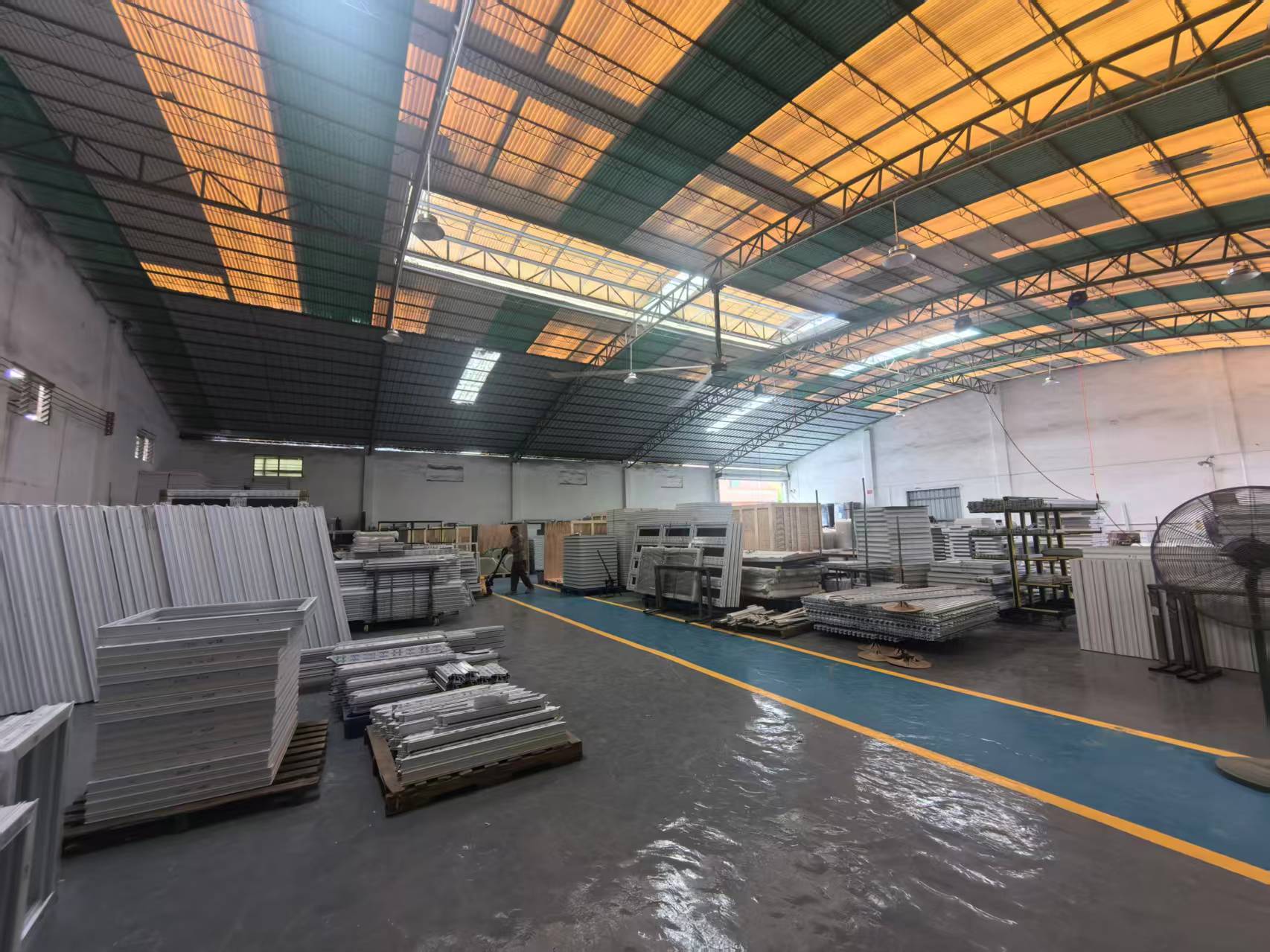
Storage of finished sets before dispatch. Batch size, packing method and loading sequence are usually agreed together with the 30–40 sqm minimum and the FOB or CIF terms.
Where each configuration fits
Configuration choice follows the opening, not the catalogue. Sliding doors suit balcony and terrace openings where floor space is limited and the panel travels rather than swings. Lift-and-slide doors are used where larger glass areas and a lower opening force are required. Casement and French doors suit facade entrances and paired openings where a conventional swing is acceptable. Folding doors serve wide openings that need to disappear almost entirely when open.
Environment drives the profile decision as much as the opening type does. For coastal or high-wind urban sites, a reinforced profile with greater wall thickness is the appropriate specification: a profile 2.0–3.0 mm thicker than the conventional version delivers higher structural rigidity, and the trade-off is a 12–18% higher initial procurement cost against a lower total life-cycle cost, longer service life for sealing parts, better anti-ageing behaviour and no anti-corrosion spraying requirement. In inland low-rise residential work, the conventional reinforced profile is normally sufficient and the premium is harder to justify.
Exterior and high-rise applications are the boundary that should never be crossed with unreinforced plastic doors, regardless of budget pressure on the project.
Market context: demand, regulation and what it changes for buyers
The category is large and still expanding. Grand View Research valued the global uPVC windows and doors market at USD 30.8 billion in 2025 and projects USD 32.4 billion for 2026, with the doors segment forecast to grow at a CAGR of 5.3% from 2026 to 2033. Asia Pacific held a 44.1% revenue share in 2025, which explains why so much UPVC door supply — and so much of the procurement documentation a buyer must read — originates in the region.
Configuration demand is concentrated. Sliding configurations accounted for 37.20% of uPVC door and window revenue in 2025 according to Mordor Intelligence, which is consistent with the volume of balcony and terrace work specified in mid-rise and high-rise residential projects.
Regulation is tightening at the same time, and it is tightening on measured performance rather than description. Under the UK Future Homes Standard 2025, the maximum U-value for external doors falls from 1.6 W/m²K to 1.2 W/m²K. For buyers, this converts a familiar sourcing habit into a documentation requirement: a door claimed to meet a thermal threshold needs test evidence behind it, not a profile datasheet alone. Trade classification adds a separate practical note — plastic doors, windows and their frames and thresholds fall under HS code 392520, which is the code to use when checking duty treatment and customs paperwork.
Comparison with conventional and low-cost alternatives, and the limits of this offer
Set against conventional standard UPVC doors, the thicker reinforced construction described above is a performance upgrade with a visible cost. Set against unreinforced plastic doors, it is a different category of product entirely. The honest comparison is therefore three-way rather than two-way.
| Option | Strength | Limitation |
|---|---|---|
| Unreinforced plastic door | Lowest upfront cost; acceptable for temporary interior use only | No steel liner; deforms under load; unsuitable for exterior or high-rise openings |
| Conventional reinforced UPVC door | Balanced cost and performance for standard residential and commercial openings | Less rigidity than the enhanced profile in high-wind or coastal conditions |
| Enhanced thick-wall reinforced UPVC door | Higher rigidity; better long-term sealing retention; suited to seaside and city sites | 12–18% higher initial procurement cost |
The limits of the reference supply are equally worth stating plainly. A 30–40 sqm minimum means single-door retail orders are not served economically. Payment is by bank transfer, so buyers relying on letter of credit or documentary collections need to confirm the structure before committing. Inspection is available through photographs or an on-site visit, which verifies construction, dimensions and finish but is not a substitute for third-party laboratory testing. The 10–30 day lead time covers production only and excludes ocean transit. And the enhanced thicker-profile option carries its 12–18% premium whether or not a given project can justify it.
Future outlook
Three pressures look likely to shape UPVC door procurement over the next several years. First, thermal regulation: thresholds such as the UK move from 1.6 to 1.2 W/m²K shift the burden of proof onto documented test evidence, which favours suppliers who can produce attestation and Declarations of Performance on request. Second, growth concentrated in Asia Pacific and in the doors segment specifically, which keeps regional supply competitive and makes specification discipline, rather than price discovery, the differentiator between two similar quotes.
Third, and least visible, is the gradual standardisation of inspection. Buyers who once accepted a photograph of a finished panel are increasingly asking for checks at the profile end face, at hardware fixing points and against retained factory production control records. That is a modest change in process with an outsized effect on defect rates. For distributors holding stock across multiple projects, a purchase order that specifies reinforced construction and a verifiable acceptance list is likely to remain the cheapest quality control available.
FAQ
What is the difference between a plastic steel door and a plastic door?
The essential difference is structural reinforcement. Plastic steel doors — UPVC doors — use PVC-U profiles with internal galvanized steel liners that raise strength and wind-pressure resistance. Ordinary plastic doors have no steel reinforcement, which gives them low rigidity, a high deformation risk and no suitability for exterior building applications. The reinforced construction also supports thermal insulation, sound insulation and stable sealing over the service life.
Can ordinary plastic doors be used as exterior doors?
No. Without steel liners, an ordinary plastic door deforms easily under wind load and is not suitable for exterior or high-rise projects. UPVC doors with galvanized steel liners are the appropriate choice for residential exterior doors, balcony doors and civil engineering projects where strength, wind resistance and long-term durability are required. Ordinary plastic doors should be limited to indoor temporary areas and low-demand interior spaces.
Which option is more cost-effective for real projects?
UPVC plastic steel doors are more cost-effective in project use. The initial purchase price is higher than an unreinforced plastic door, but the service life is longer and performance stays stable, so the cost is amortised over a longer period. Pure plastic doors are cheap upfront and have a short service life. Where a site requires an enhanced thick-wall profile — typically seaside or high-wind city locations — initial procurement cost rises by 12–18%, offset by a lower total life-cycle cost.
Which opening types and custom options are available?
The door range covers UPVC sliding doors, lift-and-slide doors, hinged doors, casement doors, folding doors and French configurations, alongside the matching window range. OEM and ODM production is offered with custom size, specification and glass options. Profiles are supplied in Conch 60/65/88 series with co-extruded colour, laminated wood-grain finish and solid colours including dark grey and black. Named door models include HF60, WYK75-1 and HF88-L.
What is the minimum order quantity and which trade terms apply?
The minimum order quantity is 30–40 sqm. Delivery terms are FOB or CIF, and payment is settled by bank transfer. These terms apply to UPVC door shipments to overseas project sites as well as to long-term and repeat supply orders.
How is pre-shipment inspection carried out and what are the acceptance criteria?
Acceptance is based on pre-shipment inspection, either through photographs supplied before dispatch or through an on-site inspection visit. The check should confirm the reinforced construction by observing the profile end face for galvanized steel liners, verify dimensions, colour and glass against the approved schedule, test hardware and locking operation, and confirm marking and Declaration of Performance documentation. Goods without steel liners should be rejected where the order is for exterior doors.
How long does production take?
Lead time is 10–30 days. The position within that range depends on profile finish and colour, glass build-up, hardware selection and whether sizes are standard or custom. The figure covers factory production; ocean transit under the agreed FOB or CIF terms is additional.
What certification evidence supports compliance claims?
UPVC doors from Foshan Nanhai Yuanzhaiji UPVC Door & Window Factory are covered by ECM Attestation NO.3N230816.YCPQQ51 under EN 14351-1:2006+A2:2016. That standard frames the relevant test set: wind resistance, water tightness, air permeability, sound insulation, thermal performance, drop-weight impact and welding corner strength, supported by a factory production control system, a Declaration of Performance and CE marking.
How are repeat and long-term orders handled?
Long-term and repeat UPVC door supply orders are settled by bank transfer, with delivery arranged on FOB or CIF terms. Approximately 80% of the factory's products are exported, with major markets in LATAM, MENA, ASEAN and the EU, and a sample showroom is maintained for one-stop purchasing and pre-order review.
Есть вопросы или нужны дополнительные детали?
Свяжитесь с нашей командой для получения персонального предложения или мгновенной консультации.
Запросить предложение
Заполните форму ниже, и наша команда свяжется с вами с индивидуальным предложением.
Прямой чат WhatsApp
Предпочитаете общаться в реальном времени? Напишите нам в WhatsApp для мгновенной помощи и быстрых ответов.
- Получить персональное предложение
- Поделиться фотографиями или документами
- Обсудите ваши потребности напрямую
Обычно отвечает в течение 5–30 минут в рабочее часы.