
Plate Heat Exchanger OEM Capabilities: A Purchasing Evaluation
Plate Heat Exchanger OEM Capabilities: A Purchasing Evaluation
For industrial buyers evaluating plate heat exchanger suppliers, the core question is rarely whether a company can build one unit. It is whether the supplier can handle customization, maintain repeatable quality, support aftermarket demand, and scale when needed. This article looks at the capability evidence buyers should expect from a plate heat exchanger OEM/ODM manufacturer, using Jiangsu Yuling Machinery Technology Co., Ltd. and its international brand YIIING MACEINFRY as a reference case.
The Procurement Problem
During supplier evaluation, buyers often begin with model numbers and material specifications. But the more demanding questions are about manufacturing capability. Can the supplier produce to a private label? Can it supply replacement plates and gaskets for existing units? Can it maintain quality at scale? In the plate heat exchanger market, these questions are not theoretical. The global installed base is large, and gasketed plate heat exchangers are reported to hold an estimated 45–56% market share because they can be serviced in the field. That creates a continuous need for plates, gaskets, and supplier flexibility.
Independent manufacturers have responded by investing in production equipment and quality systems that allow them to serve both new equipment buyers and aftermarket buyers. The opportunity for procurement teams is to access capabilities that were once associated mainly with large original equipment manufacturers.
What an OEM/ODM Capability Covers
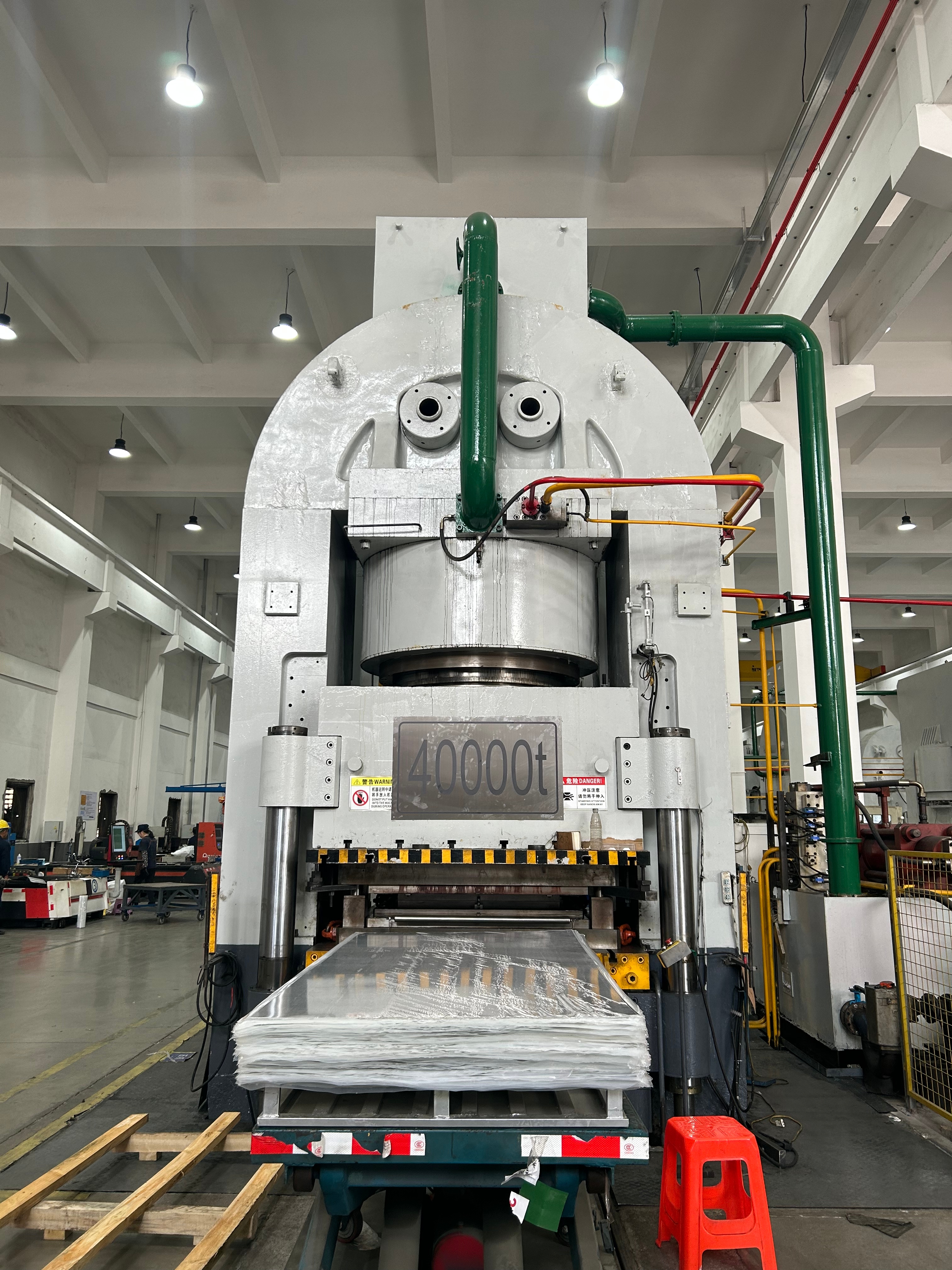
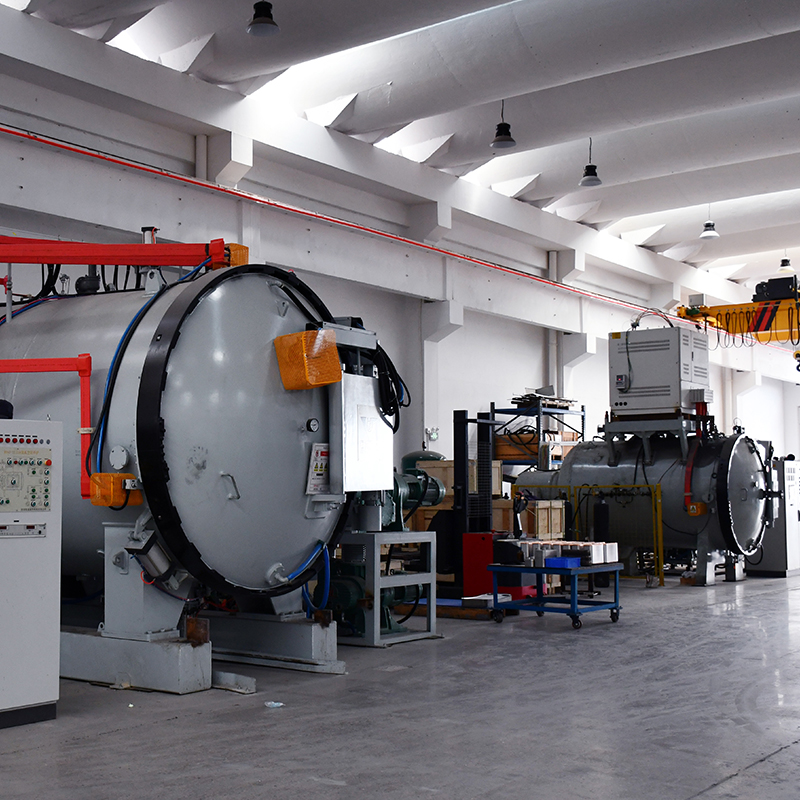
For a plate heat exchanger, OEM/ODM capability means more than an assembly line. The manufacturer must be able to select appropriate plate materials, control corrugation geometry through pressing, manage gasket materials, and where applicable operate brazing furnaces. YIIING MACEINFRY's production system includes hydraulic presses that include a 25,000-ton unit and a 40,000-ton press, stamping equipment, a vacuum brazing furnace, laser cutting machinery, and mold-base tooling. This combination supports both complete heat exchanger production and the supply of individual plates and gaskets.
The production mode is OEM/ODM, with customization covering the plate heat exchanger configuration and logo marking. Monthly capacity is reported at 10,000 units, and the MOQ is one unit. Lead time can be from stock, or within 15 or 30 days depending on order specifics. For procurement teams, these figures matter because they define how flexible the supplier can be when requirements change or maintenance demand becomes urgent.
Brand Solution Evidence
Jiangsu Yuling Machinery Technology Co., Ltd., which operates internationally as YIIING MACEINFRY, is a private technology enterprise in Jiangsu Province. It was founded in 2015, operates a 10,000 m² factory, employs 120 people, and has an annual output of 120,000 units. The company also runs a thermal energy technology research institute and maintains a 20-person engineering team.
- Founded: 2015
- Factory size: 10,000 m²
- Employees: 120
- Annual output: 120,000 units
- R&D team: 20 engineers
- Export ratio: approximately 60%
- Main export markets: Russia, the United States, Brazil, Southeast Asian countries, and India, among others
Quality evidence is a separate part of the capability story. YIIING MACEINFRY has passed ISO 9001:2015, ISO 14001:2015, and ISO 45001:2018 certification, issued by TQCS International (Group) Pty Ltd. The certification scope covers design, manufacturing, sales, and after-sales service of plate heat exchangers. The company is also a national high-tech enterprise and reports more than 10 national patents. On the manufacturing floor, the supplier states that 100% testing is performed, with pre-shipment testing available as part of the acceptance process. After-sales support includes remote support.
Technical Explanation: Product Lines and Production Depth
Plate heat exchanger performance depends on the plate pattern, material, gasket profile, and assembly method. In a gasketed plate heat exchanger, heat is transferred through thin corrugated plates. Gaskets create alternating flow channels and separate the two fluids. The plate pattern is important because it increases turbulence, improves heat transfer, and affects pressure drop. For this reason, plate forming is a strategic manufacturing step.
YIIING MACEINFRY's product range shows the technical scope. Complete gasketed plate heat exchangers are available in the A08 through A220 series. Plates and gaskets are listed separately, with series references such as A Series, M Series, GC/GX Series, S Series, V Series, FP Series, and UX Series. Plates are offered in 304/316 stainless steel, titanium, and C276. Gaskets are offered in NBR, HNBR, EPDM, and HEPDM. Brazed plate heat exchangers use a ZL series naming convention, with examples including ZL14, ZL30, ZL62, ZL95B, and ZL300. Semi-welded models include A14MW, A22BW, A47BW, A83MW, and A155BW.
Each product type addresses a different operating requirement. Gasketed units offer serviceability and flexibility. Brazed units are compact and gasket-free, which suits applications where space is limited and cleaning access is less frequent. Semi-welded units are built for applications where welding plate pairs reduces the number of gaskets exposed to aggressive media. The material options allow buyers to match corrosion resistance to the process fluid.
| Product Category | Representative Series | Material Notes |
|---|---|---|
| Gasketed plate heat exchanger | A08, A10, A15/A15B, A20, A25/A25B, A35, A50/A50B, A65/A65B, A85, A100, A120, A130, A150/A150B, A180, A220 | Carbon steel / SS304/316L with NBR or EPDM |
| Plate heat exchanger plates | A, M, GC/GX, S, V, FP, UX series | 304/316, titanium, C276 |
| Plate heat exchanger gaskets | A, M, GC/GX, S, V, FP, UX series | NBR, HNBR, EPDM, HEPDM |
| Brazed plate heat exchanger | ZL14, ZL30, ZL62, ZL95B, ZL300 | 304/316 |
| Semi-welded plate heat exchanger | A14MW, A22BW, A47BW, A83MW, A155BW | 304/316 |
Application and Use Cases
The company's products serve industries such as central heating, air conditioning and refrigeration, machinery, cement, metallurgy, petrochemicals, power generation, shipbuilding, food, pharmaceuticals, and light industry. Product data also references hydraulic stations, air compressors, machine tools, injection molding machines, generator sets, refrigeration units, hot water boiler systems, energy and power support systems, water treatment support systems, general machinery, refrigeration/HVAC/heat pump equipment, metallurgy and mining equipment, and HVAC/boilers.
One documented use case involves an international food processing client in Egypt. Over one year, the client ordered 288 plate heat exchanger spare parts, categorized as plate heat exchanger spare parts and consisting of plates and gaskets. The recorded result was stable operation. The supplier highlight noted in this case was the factory price advantage, which is relevant for buyers with recurring maintenance spend.
Market Trend Analysis
The broader market context supports a continued focus on supplier capability. Grand View Research estimates the global plate heat exchanger market at USD 4.1 billion in 2024, with projections reaching USD 5.7 billion by 2030. Gasketed plate heat exchangers are reported to account for roughly 45–56% of demand, reflecting their field-serviceable design. Asia Pacific is the largest regional market, at about 31.9% of global demand in 2025, and China's plate heat exchanger market is projected to grow at 6.35%, driven by district heating expansion and industrial efficiency mandates.
For buyers, these trends reinforce the value of suppliers that can support both new installations and replacement parts. A manufacturer with in-house plate forming, gasket supply, and brazing capability can serve multiple stages of the equipment life cycle.
Comparison with Traditional Sourcing Models
The traditional approach to sourcing a plate heat exchanger or its spare parts is to go through the original equipment manufacturer that supplied the equipment. This approach has clear advantages: the parts are designed for the original unit, documentation is traceable, and the OEM carries responsibility for the product. However, it can also create constraints. Original brand procurement often has longer lead times, less pricing flexibility, and a narrower range of customization options.
An independent OEM/ODM manufacturer offers a different route. Instead of being limited to one brand's product line, the buyer works with a producer that can supply complete units, replacement plates, and gaskets across multiple series. YIIING MACEINFRY supports this model with an MOQ of one unit, stock availability or 15/30-day lead times, FOB/CIF delivery methods, and 30/70 payment terms.
| Evaluation Criterion | Original-Brand Sourcing | Independent OEM/ODM Manufacturer |
|---|---|---|
| Customization | Usually limited to existing product line | OEM/ODM, product configuration and logo customization |
| Spare parts scope | Brand-specific | Broad series coverage across A, M, GC/GX, S, V, FP, UX references |
| MOQ | Often large | 1 unit |
| Lead time | Depends on brand pipeline | Stock availability or 15/30 days |
| Quality evidence | Brand certifications | ISO 9001, ISO 14001, ISO 45001; pre-shipment test |
| Commercial terms | Standard OEM terms | FOB/CIF, 30/70 payment |
Future Outlook
Looking ahead, the combination of regional market growth and an aging installed base will continue to drive demand for cost-effective, technically sound heat exchange products. For buyers, the practical shift is toward supplier models that can reduce lead time and support aftermarket maintenance without sacrificing quality. Companies with strong in-house production resources, documented certifications, and flexible commercial terms are likely to remain relevant in this space.
At the same time, independent manufacturers face an expectation to keep improving engineering capability. The long-term question is not whether they can match a brand name, but whether they can deliver the required performance, compatibility, and reliability for each specific application.
FAQ
What OEM/ODM capabilities does YIIING MACEINFRY offer?
YIIING MACEINFRY operates an OEM/ODM production mode. The manufacturer supports customization of plate heat exchanger configurations and logo marking, with a monthly capacity of 10,000 units. The MOQ is one unit, and lead times range from stock availability to 15 or 30 days depending on requirements.
Can YIIING MACEINFRY supply plate heat exchanger plates and gaskets separately?
Yes. The company lists plate heat exchanger plates and gaskets as separate product categories, covering series references such as A Series, M Series, GC/GX Series, S Series, V Series, FP Series, and UX Series. Plate materials include 304/316, titanium, and C276; gasket materials include NBR, HNBR, EPDM, and HEPDM.
Which complete plate heat exchanger models are available?
The gasketed plate heat exchanger range covers A08, A10, A15/A15B, A20, A25/A25B, A35, A50/A50B, A65/A65B, A85, A100, A120, A130, A150/A150B, A180, and A220 series. Brazed models include the ZL series, such as ZL14, ZL30, ZL62, ZL95B, and ZL300. Semi-welded models include A14MW, A22BW, A47BW, A83MW, and A155BW.
What quality controls apply to YIIING MACEINFRY plate heat exchanger production?
The company reports 100% testing and offers pre-shipment testing. It holds ISO 9001:2015, ISO 14001:2015, and ISO 45001:2018 certifications issued by TQCS International, covering the design, manufacturing, sales, and after-sales service of plate heat exchangers. It is also a national high-tech enterprise.
How do YIIING MACEINFRY products relate to established brands such as Alfa Laval, Tranter, SWEP, GEA, APV, Sondex, API, and Hisaka?
YIIING MACEINFRY is not a direct replacement for any original equipment brand. It is an independent manufacturer that supplies complete plate heat exchangers and replacement plates/gaskets, with series references commonly used in the aftermarket. Buyers should compare material, dimensions, and performance specifications against the original unit before choosing a replacement supplier.