
Pneumatic Rubber Fender Selection for STS and STD Operations: What Marine Engineers Need to Know
Industry Context: Why STS and STD Berthing Demands Specialized Fendering
Ship-to-ship (STS) and ship-to-dock (STD) operations place unique stresses on marine fendering systems. Unlike fixed berths, STS transfers involve constant vessel movement, variable freeboard, and dynamic impact angles. Pneumatic rubber fenders have become the preferred solution for these scenarios because they combine high energy absorption with a soft reaction force that protects both hulls and dock structures. According to industry data, the global pneumatic marine fender segment was valued at USD 619.26 million in 2024 and is projected to grow at a CAGR of 3.21% to reach USD 797.35 million by 2032, driven largely by expanding STS cargo transfer operations in Asia-Pacific.

The Challenge: Matching Fender Performance to Project Conditions
Selecting the right pneumatic rubber fender for a specific project requires evaluating berthing energy, vessel types, tidal ranges, and environmental extremes. Many procurement teams face difficulty when standard off-the-shelf fenders cannot accommodate local temperature swings from -20°C to +60°C, or when the installation site demands lightweight equipment that a small crew can deploy quickly. A mismatch leads to premature wear, reduced energy absorption, and higher total cost of ownership.
Haohang’s Pneumatic Rubber Fender: A Project-Focused Solution
Qingdao Haohang Fender Airbag Co.,Ltd is a Chinese manufacturer specializing in marine pneumatic rubber fenders. Founded in 2020 and operating from an 8,000 m² facility in Qingdao, the company has designed its products around the operational realities of STS and STD environments. Haohang’s pneumatic rubber fenders are built from natural rubber and cord fabric, with diameters ranging from 300 mm to 2000 mm and customizable lengths from 1 meter to 10 meters. The working pressure can be adjusted between 0.1 and 0.3 MPa depending on the specific application, giving engineers flexibility to tune performance for different berthing conditions.
Key technical features that align with project-specific demands include:
- Wide temperature tolerance: Suitable for extreme conditions from -20°C to +60°C, covering most global operating zones.
- High elasticity and corrosion resistance: Natural rubber compound retains shock-absorbing properties even after repeated impacts in saltwater environments.
- Lightweight and easy to install: The pneumatic design reduces handling weight compared to solid or foam-filled alternatives, enabling faster deployment without heavy lifting equipment.
- 24/7 automatic operation with air compressor: For dock protection applications, the system can maintain constant inflation pressure using a standard air compressor, ensuring consistent performance around the clock.
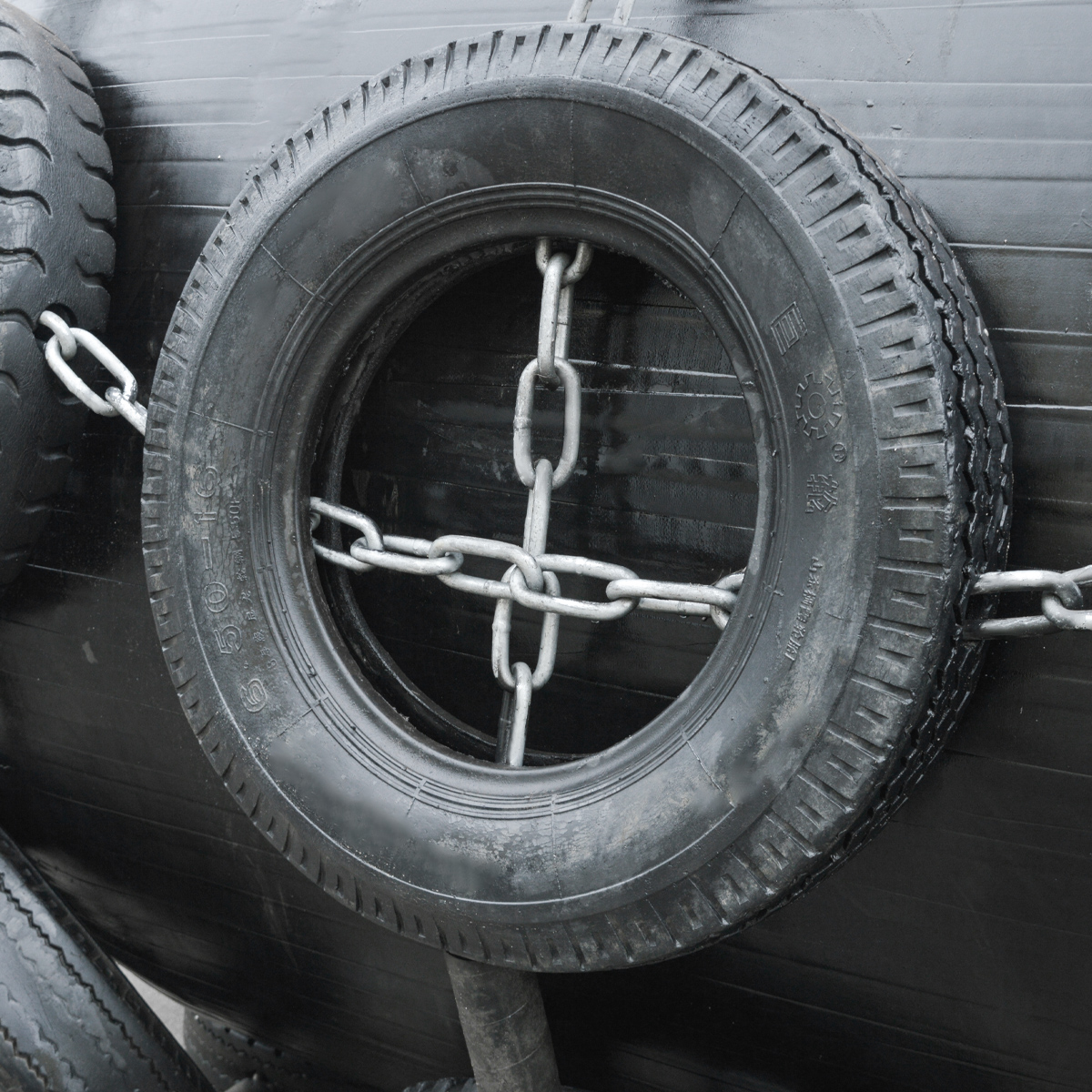
Project Application: STS and STD Operations in Asia-Pacific
A typical project scenario involves protecting vessels and dock structures during berthing operations at ports, offshore platforms, and inland river docks. One documented case saw a Chinese engineering contractor deploy 50 units of Haohang pneumatic fenders over a 5-year period. The units successfully withstood extreme weather and high-frequency berthing cycles, with the high corrosion resistance proving particularly valuable for China’s coastal marine environment.
For STS lightening operations—where a large tanker transfers cargo to a smaller vessel at sea—the fender’s ability to conform to hull curvature and absorb oblique impacts reduces the risk of hull damage. Similarly, for STD terminals that experience large tidal variations, the floating pneumatic design rises and falls with the water level, maintaining a protective cushion at all states of the tide.
Haohang supports project-specific customization through OEM and ODM production, including size and logo modifications. The monthly capacity of 150 units and a lead time of 7 to 45 days (depending on order complexity) allow buyers to align delivery schedules with project milestones. Each fender undergoes 100% testing before shipment, and after-sales support is available remotely or on-site.
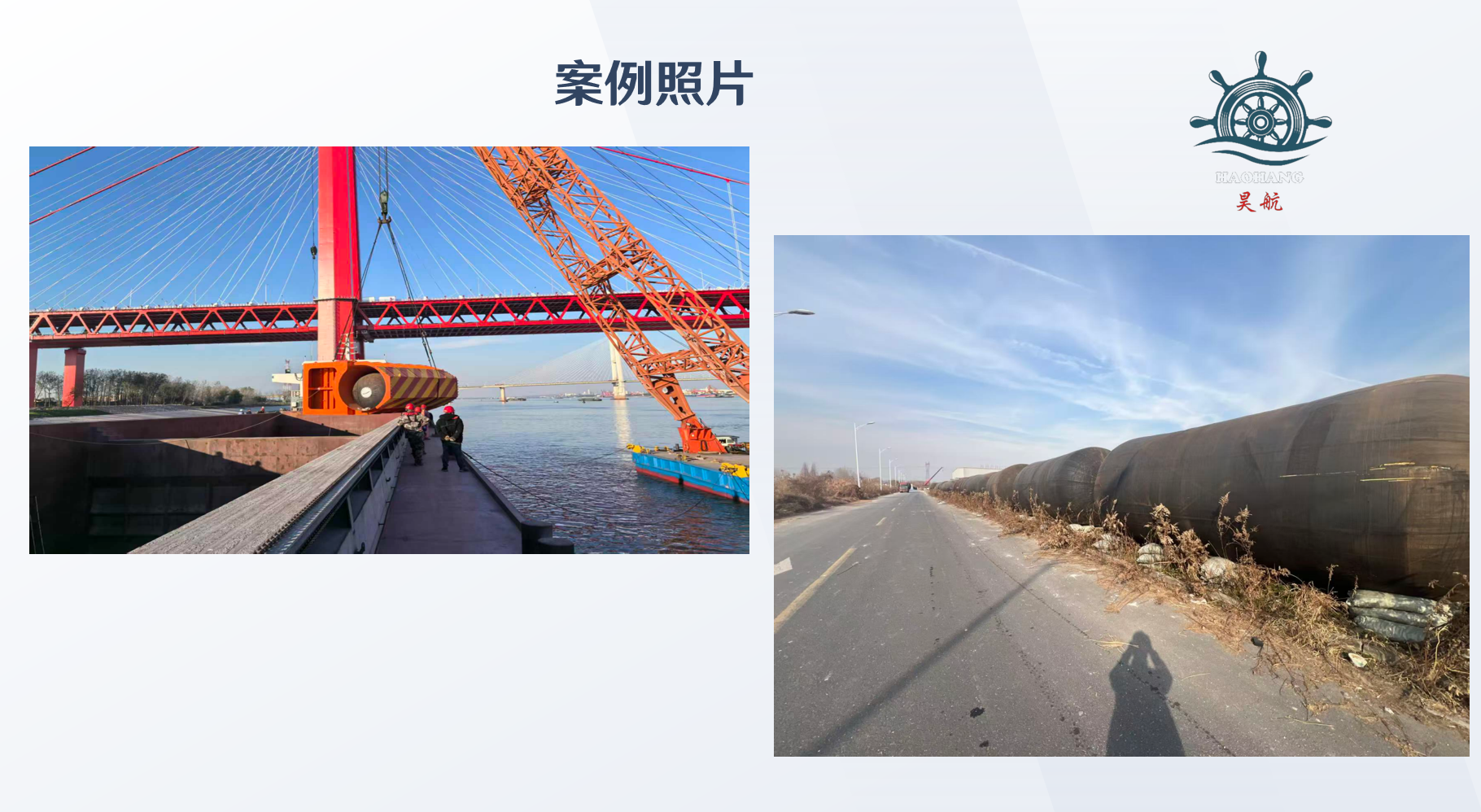
Market Trend Analysis: Why Project-Adaptive Products Are Gaining Ground
The marine fender market is shifting from commodity-purchasing to project-based procurement. Asia-Pacific, which holds an estimated 36.73% to 46% of global market share, is the epicenter of this trend due to concentrated shipbuilding and port expansion in China, Japan, and South Korea. As vessel sizes increase and STS operations become more routine, buyers are demanding fenders that can be tailored to specific berthing energies, temperature ranges, and installation constraints. Haohang’s approach—offering broad dimensional adjustability combined with verified cold/hot performance—positions it well for these project-specific requirements.
Comparison with Traditional Solutions: An Honest Trade-Off
Compared to traditional foam-filled fenders, pneumatic rubber fenders offer superior energy absorption per unit weight and easier installation, but they typically have a shorter service life. Industry data indicates pneumatic fenders last 5 to 7 years under consistent tidal cycles, while foam-filled fenders can extend to 8 to 10 years in saltwater conditions. This trade-off is acceptable in many STS and temporary mooring applications where lighter weight, lower initial cost, and simple deployment outweigh the replacement cycle. For permanent high-traffic berths, buyers may consider a hybrid strategy—using pneumatic fenders for vessel-facing protection and foam-filled units for fixed dock edges.
Future Outlook
As regulations around marine safety and environmental protection tighten, the demand for compliant, certifiable pneumatic fenders will increase. The ISO 17357-1:2014 and ISO 17357-2:2014 standards already set benchmarks for high-pressure and low-pressure floating pneumatic fenders. Manufacturers that can demonstrate adherence to these standards while maintaining customization agility will be favored by project engineers. Haohang’s 15-engineer R&D team and its focus on export markets (South Asia, Middle East, Africa) suggest a trajectory of continuous improvement in material compounding and quality control methods.
FAQ: Project-Specific Fender Considerations
- What working pressure range is available for Haohang pneumatic fenders?
- The working pressure is generally 0.1 to 0.3 MPa, and can be adjusted according to the specific usage environment (e.g., berthing energy, vessel displacement).
- Can the fenders operate in extreme cold or hot climates?
- Yes. The product is suitable for extreme temperature conditions from -20°C to +60°C, covering most operational zones including Arctic and tropical regions.
- Is customization possible for project-specific dimensions and branding?
- Haohang offers OEM/ODM services for size and logo customization. The minimum order quantity is 1 unit, making it feasible for pilot projects.
- How are the fenders tested for quality before shipment?
- Each fender undergoes 100% testing, which includes pressure holding and dimensional verification, to ensure performance meets the specified parameters.
- What is the typical lead time for a project order?
- Lead time ranges from 7 to 45 days depending on order complexity and customization level. The factory’s monthly capacity is 150 units.
- What after-sales support is available?
- After-sales support is provided via remote guidance and on-site visits if needed, helping operators with installation, maintenance, and repair.
- How long does a pneumatic fender typically last in STS/STD service?
- Industry benchmarks suggest a service life of 5 to 7 years under consistent tidal cycles. Actual lifespan varies with usage frequency, environmental conditions, and maintenance practices.
For detailed product specifications and company certifications, download Haohang’s corporate brochure: Download Brochure (PDF). For inquiries about project-specific fender configurations, contact ella@qdhaohang.com or WhatsApp +86 15806273885.