
Policy and Capacity Trends in Single Cylinder Diesel Engines: A Buyer Comparison
Independent Industry Reference · Procurement Analysis
Single cylinder diesel engine procurement in 2026 is decided by two variables that no specification sheet captures: the policy environment of the destination market and the production capacity available at the origin. Buyers who compare engines only on horsepower, price and delivery terms often discover that the shortlist they built was never valid — the problem appears later, at customs, at the assembly line, or at the first service interval.
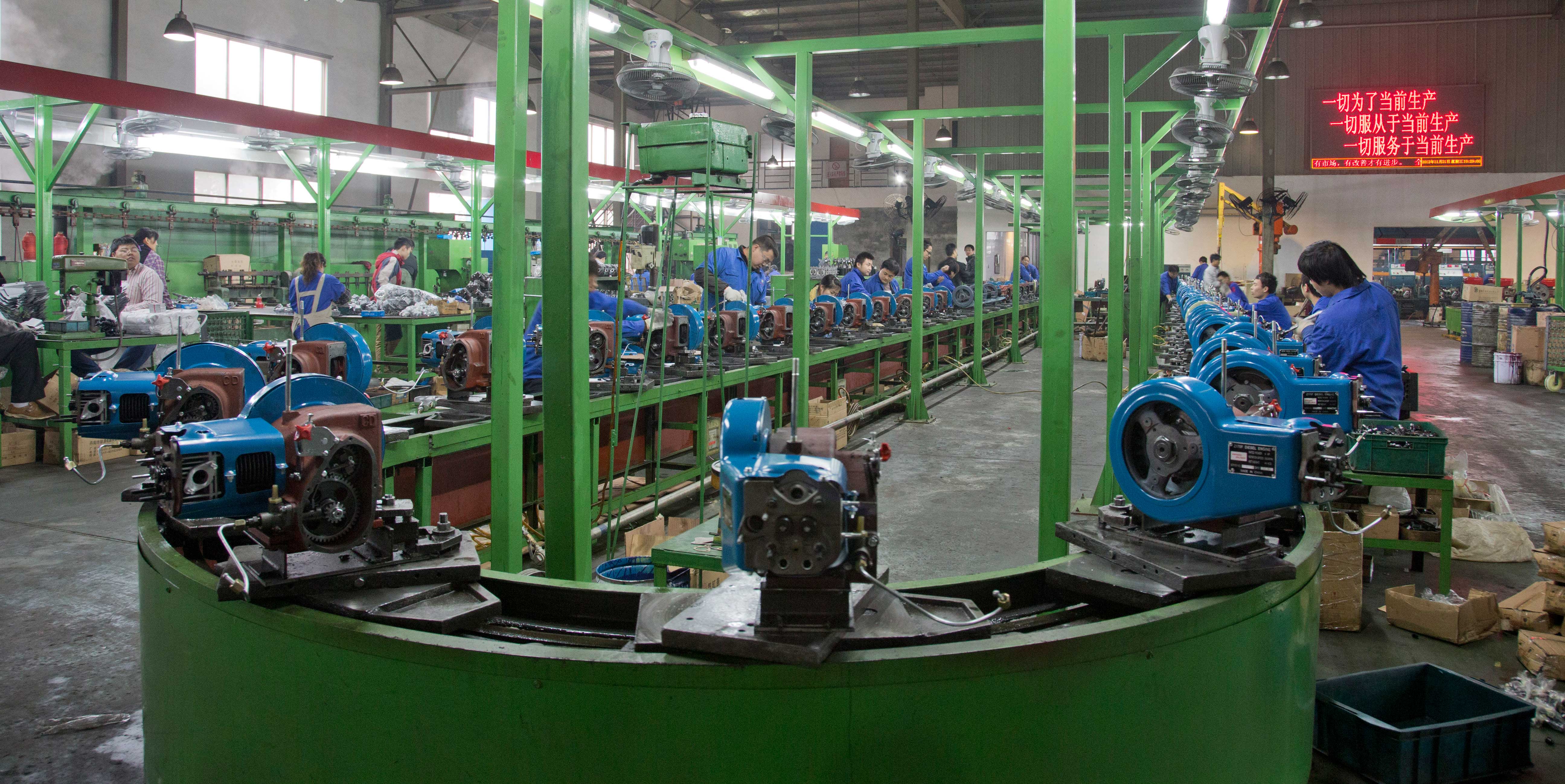
Production capacity at the origin is one half of the buyer comparison; the other half is the policy environment at the destination.
This reference compares policy environments and capacity trends across the main producing and consuming regions, using published trade and market data alongside verifiable supplier facts. It is written for procurement professionals, importers, distributors and agricultural equipment buyers who are moving from evaluation into execution.
Why Policy and Capacity Now Sit at the Top of the Comparison
The global single cylinder diesel engine market was valued at approximately USD 3.34 billion in 2025 and is projected to reach USD 3.74 billion by 2035, according to Global Growth Insights. Agriculture remains the dominant application, accounting for approximately 42.3% of market share in 2025, and Asia Pacific holds a 58.2% revenue share of the category as of the same year, based on Dataintelo reporting.
Three numbers, one conclusion. Demand is concentrated in agricultural applications, supply is concentrated in one region, and the growth curve is steady rather than explosive. In a market with that shape, competitive advantage does not come from finding a lower unit price. It comes from understanding which policy constraints apply to the engine you intend to import, and which supplier capacity can actually support the volume and the timeline you have committed to.
The practical consequence for buyers is that the evaluation stage and the execution stage now require different evidence. During evaluation, a specification comparison is sufficient to build a shortlist. During execution, the buyer needs documentation: origin of supply, compliance status, monthly output, lead-time range, minimum order quantity, and an acceptance mechanism that works without a site visit.
How Policy Environments Differ Across Major Markets
There is no single global rule that governs a single cylinder diesel engine. There are at least three overlapping layers: emission regulation in the destination market, trade and assembly policy that determines landed cost, and supplier-level quality management certification that determines whether a factory can participate in regulated supply chains at all.
The clearest example of an emission boundary is the United States. U.S. EPA Tier 4 standards regulate particulate matter (PM) and nitrogen oxides (NOx) for off-highway diesel engines, and the regulation includes exemptions for engines under 24 horsepower. That threshold creates a genuine decision line inside the small engine category. An engine rated below the threshold and an engine rated above it do not sit in the same regulatory band, even when they share the same architecture, the same cooling type and the same fuel system design. For buyers serving off-highway applications, identical hardware can therefore require different documentation depending on how the end application is rated.
On the supply side, China's combustion engine exports — a category that includes diesel variants — reached USD 3.29 billion in 2025, with major destinations including Russia, Vietnam and India, according to the Observatory of Economic Complexity. That figure describes depth of supply rather than quality of supply, but it matters for the comparison because it confirms that export documentation, packaging standards and container logistics are routine rather than exceptional in this origin market.
A third layer is assembly policy. Industry reporting on SKD (Semi-Knocked Down) and CKD (Complete Knocked Down) strategies cites tariff advantages in markets such as Myanmar, where CKD structures in the range of 1.5% to 3% are reported, and Thailand, where 0% has been reported for some categories, as incentives for local manufacturing. These are policy signals rather than guarantees, and rates change. Their significance for a buyer is directional: in markets that actively encourage local assembly, the comparison shifts from finished-engine price to landing cost plus assembly capability.
| Layer | Example in scope | What the buyer must verify |
|---|---|---|
| Emission regulation | U.S. EPA Tier 4 for off-highway diesel engines, regulating PM and NOx, with exemptions under 24 horsepower | The rated power of the end application, not the rated power of the engine on the test bench |
| Trade and assembly policy | Reported CKD tariff structures such as 1.5%–3% in Myanmar and 0% for some categories in Thailand | Current tariff classification for the specific unit and configuration being imported |
| Export documentation | China combustion engine exports of USD 3.29 billion in 2025, with Russia, Vietnam and India among major destinations | Completeness and consistency of origin documentation with the commercial invoice |
| Supplier quality system | ISO 9001:2015 / GB/T 19001-2016 certification (certificate 02925Q3D160R6M, issued 2025-05-10, valid to 2028-05-09) | That the certificate scope covers the exact product being purchased, including accessories |
A quality management certificate is not a product compliance certificate, and this distinction is frequently blurred in supplier marketing. The scope of a certificate defines what it covers. In the case of the Changzhou Vision certificate issued by Jiangsu Jiuzhou Certification Co., Ltd., the scope is the production and sales of single-cylinder diesel engines and diesel engine accessories, specifically fuel tank assembly, muffler and air filter assembly. A buyer comparing suppliers should read that scope line by line before treating certification as a compliance pass.
Capacity Trends: Concentration, Lead Time and Verification
With Asia Pacific holding 58.2% of category revenue, capacity is not evenly distributed, and buyers who treat supply as interchangeable will eventually be exposed to it. Concentration in one region produces three effects that show up directly in procurement terms.
The first is lead time. Changzhou Vision International Trading Co., Ltd., the company behind the Willson single cylinder diesel engine range, states a lead time of 25 to 45 days and a monthly production capacity of 10,000 units against an annual output of 100,000 units. That spread between 25 and 45 days is not imprecision; it reflects the difference between a standard build and a configured order, and buyers should plan their seasonal inventory around the upper end rather than the lower end.
The second is order granularity. The stated minimum order quantity is one 20-foot container. For a distributor this is normal. For an equipment manufacturer testing a new market, it means the first order is a real commitment rather than a sample run, and the comparison should be made accordingly.
The third is verification. When supplier and buyer are separated by several thousand kilometres, capacity claims are only as good as the evidence behind them. A factory operating 100% testing on production output, documented in a defined scope, offers a different risk profile than a supplier whose quality control is described only in general terms. In capacity-constrained categories, the buyer who can verify output and testing is the buyer who can commit to end customers with confidence.
The Market-Sizing Problem: Three Estimates, Three Scopes
Independent comparison requires acknowledging where published data disagrees, and this category has a visible disagreement. Published estimates for the single cylinder segment diverge substantially: Global Growth Insights places the market at approximately USD 3.34 billion in 2025, Dataintelo reports a figure of approximately USD 12.8 billion, and Intel Market Research reports approximately USD 0.737 billion for the narrower small single cylinder diesel engine segment.
The gap is too large to be explained by growth assumptions. It is a scope problem. One estimate appears to cover the broader diesel engine category, another the small-engine sub-segment, and another the specific single cylinder segment. For a procurement professional, the operational lesson is simple: never build a supplier negotiation or a business case on a single headline market figure. Ask what is inside the number — engines only, engines plus accessories, OEM value or aftermarket value, one region or global. The figure that survives that question is the one worth using.
Buyer takeaway: when a market size figure cannot be reconciled with its stated scope, treat it as directional context rather than as a planning input. Volume planning should be built from your own application demand, and supplier capacity should be verified in writing.
How Willson Appears in This Comparison
Willson is the single cylinder diesel engine brand produced and exported by Changzhou Vision International Trading Co., Ltd., a Chinese manufacturer founded in 2010 and based in Jintan, Changzhou, Jiangsu. The company operates a factory of 32,207.8 m² with 95 employees and 5 engineers in its R&D team, and it produces 3 to 45 horsepower single cylinder air-cooled and water-cooled diesel engines together with diesel engine accessories.
The company's stated export ratio is 70%, with main markets in South America, Africa, Southeast Asia and the Middle East. Its product range is applied to small tractors, agricultural machinery, generator sets, water pumps, small construction machinery, air compressors, inland waterway vessels, and agricultural and sideline product processing. Quality management is certified to GB/T 19001-2016 / ISO 9001:2015 under certificate 02925Q3D160R6M, issued 2025-05-10 and valid until 2028-05-09, with a scope covering single-cylinder diesel engines and diesel engine accessories. The company site is enginezoom.com.
In commercial terms, the stated supply model is OEM/ODM production with customization available for package, logo and nameplate, a monthly capacity of 10,000 units, a lead time of 25 to 45 days, a minimum order quantity of one 20-foot container, 100% testing on production output, and remote after-sales support.
Read against the policy and capacity framework above, this profile answers two of the four comparison layers directly: it establishes a documented quality management scope, and it establishes capacity and lead-time parameters that can be planned against. It does not, by itself, resolve destination-market emission compliance, which remains an application-specific question the buyer must answer.
Technical Explanation: Power Class, Cooling Type and Starting System
Technical comparison in this category is less about peak specification and more about how three design choices interact with the operating environment.
Power class. The range that matters for agricultural and light industrial duty spans roughly 3 to 45 horsepower. Two representative models from the Willson range illustrate how the class is structured. The ZS1115 is a horizontal four-stroke water-cooled diesel engine rated at 20 HP at 2,200 rpm, with a bore and stroke of 115 x 115 mm, a displacement of 1.195 L, fuel consumption of 254.2 g/kW·h, oil consumption of 2.14 g/kW·h, a 15 L fuel tank and a hand-start system. The ZS1135 is a horizontal four-stroke water-cooled engine rated at 35 HP at 2,200 rpm, with a bore and stroke of 132.5 x 125 mm, a displacement of 1.73 L, fuel consumption of 252.7 g/kW·h, oil consumption of 2.14 g/kW·h, a 17 L fuel tank and a hand-start system.
These two data points are relevant to the policy discussion earlier in this article. A 20 HP rating and a 35 HP rating sit on different sides of several regulatory and application thresholds, including the 24 horsepower exemption boundary under U.S. EPA Tier 4 for off-highway diesel engines. The choice of power class is therefore a compliance decision as much as a performance decision.
Cooling type. Air-cooled and water-cooled configurations solve different problems. Water-cooled engines such as the ZS1115 and ZS1135 use a coolant circuit to manage heat under sustained load, which suits continuous duty applications such as irrigation pumping and generator operation. Air-cooled engines reduce the maintenance surface by removing the coolant circuit, which suits intermittent duty and environments where water management is difficult. Both configurations are produced within the Willson range, so the comparison is application-driven rather than availability-driven.
Starting system. Hand-start is the configuration documented on the two reference models above. Electric start is a common configuration in the wider category and is frequently specified for equipment where the operator is not the engine owner, or where daily starting frequency is high. The starting system belongs in the specification comparison because it changes the end-user experience, the spare-parts profile and the warranty exposure, not only the price.
Materials. The documented material specification for these engines uses cast iron for the cylinder block, steel for the crankshaft and aluminium alloy for the cover. In field conditions typical of agricultural and irrigation duty — dust, heat, variable fuel quality and irregular maintenance intervals — material selection is a durability variable rather than a cost variable.
Application Fit: Where These Engines Are Actually Used
Agricultural applications dominate the category at approximately 42.3% of market share, and the application list behind that figure is specific: diesel engines for irrigation pumps, water pumps, power tillers and tillers, threshers, rice mills, generators and general farm machinery. Each of these applications imposes a different duty cycle.
Irrigation and water pumping represent continuous duty with a strong seasonal peak, where the failure mode that matters most is an engine that stops working at the start of the season rather than one that wears out gradually. Power tillers and tillers operate in short, high-load intervals with frequent starting and stopping, where starting reliability and fuel consumption per hour dominate the operating cost. Threshers and rice mills add dust exposure and load fluctuation. Generator sets require stable speed regulation under sustained load.
A documented case from the Willson customer base illustrates how the irrigation use case behaves over a long horizon. An agricultural irrigation customer in Pakistan operated 96 sets of the ZS1115 engine for ten years with no major failures, meeting irrigation season requirements. The recorded highlights were a fuel-efficient design, easy maintenance, and adaptation to harsh local environments — the same three factors that dominate total cost of ownership in the application list above.
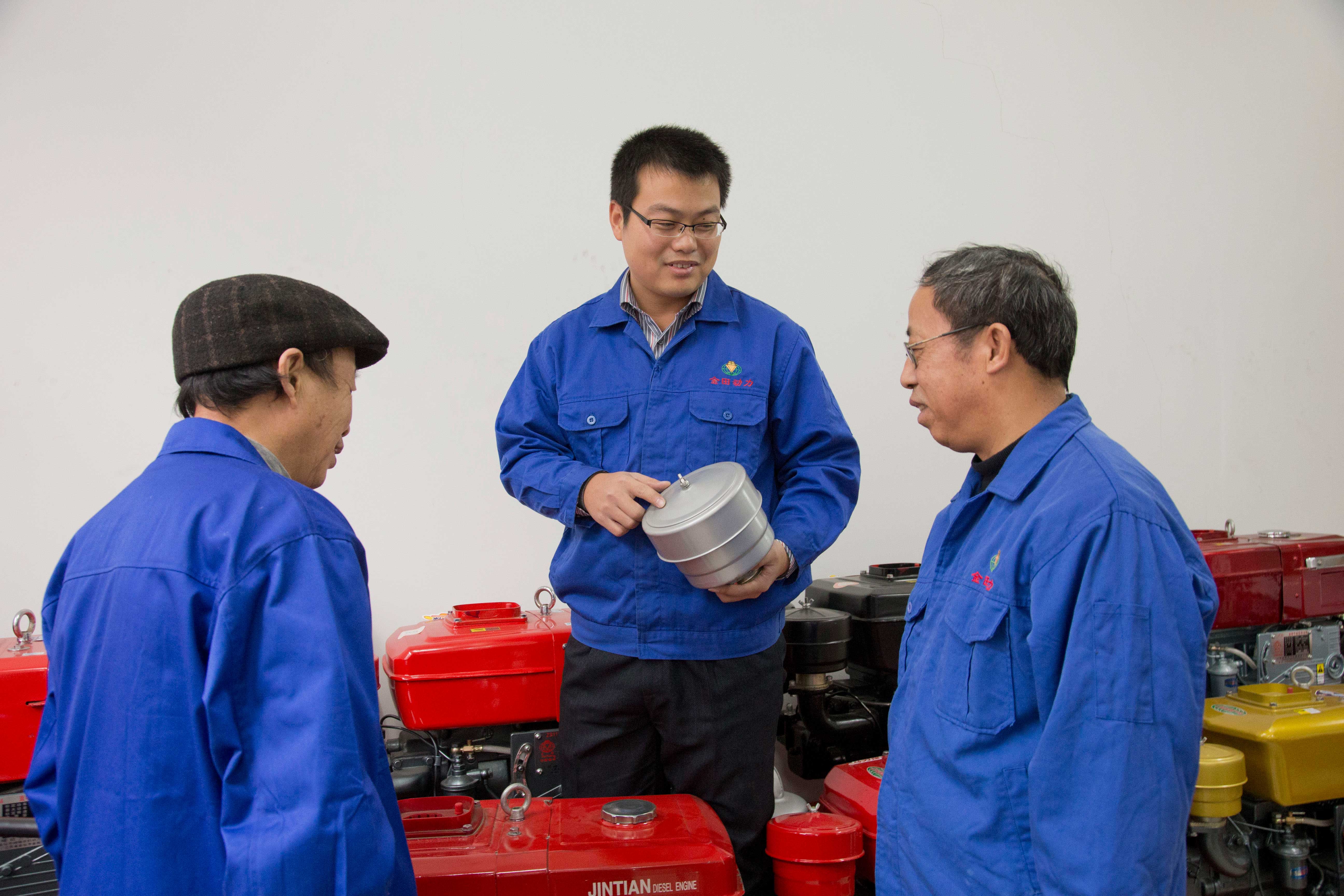
Application fit — irrigation, tillage, threshing, milling and power generation — determines which power class and cooling type a buyer should compare first.
Purchasing Terms and Acceptance Criteria as Comparison Data
Policy and capacity analysis only becomes decision-ready when it converts into commercial terms. The documented purchasing terms for the Willson range are: minimum order quantity of one 20-foot container; delivery terms FOB or EXW; acceptance criteria based on video or image; and payment terms of 30/70.
Each of these terms carries information about the supply relationship. A one-container minimum aligns with the container-level logistics that dominate this category and also aligns with CKD or SKD assembly planning, where a container is the natural unit of shipment. FOB and EXW indicate that the buyer controls freight and, by extension, the import documentation chain — which brings the destination compliance questions back to the buyer, where they belong.
Video or image acceptance is a pragmatic mechanism in a category where third-party physical inspection at origin is expensive relative to unit value. It is not equivalent to third-party inspection, and buyers with regulated end applications should not treat it as such. Payment terms of 30/70 place the majority of the commercial risk at shipment, which is standard in this category and should be read together with the 25 to 45 day lead-time window when planning cash flow.
Comparison with Traditional Sourcing Approaches — and the Limits of This Model
The traditional alternative to a documented manufacturer relationship is intermediary sourcing: buying through trading intermediaries, mixing brands within a single container, and accepting quality control described only in general terms. That approach has real advantages in flexibility and in small-volume access, and for a buyer testing an unfamiliar market it can be entirely rational.
The documented-manufacturer model competes on a different basis — traceability of origin, a defined certificate scope, a stated monthly capacity, and a defined testing regime. But it also has boundaries that buyers should understand before committing.
First, after-sales support in the documented Willson model is remote support. There is no stated on-site service network, which means the buyer's own service capability in the destination market determines how quickly a field issue is resolved. For distributors without technical staff, this is a genuine constraint.
Second, the stated lead time of 25 to 45 days is a production window, not a delivery guarantee. Ocean freight, port clearance and inland transport sit outside it, and seasonal buyers who plan only against the production window will still miss the season.
Third, the one-container minimum order quantity is not suitable for buyers who need to validate small volumes before scaling. The comparison framework in this article assumes container-level purchasing; below that threshold, the economics and the supplier fit change.
Fourth, acceptance by video or image is a documented mechanism, not an independent verification. Buyers in regulated end markets should plan for their own inspection or testing step on arrival rather than relying on pre-shipment imagery alone.
Fifth, and most importantly, supplier certification and destination compliance are two separate questions. ISO 9001:2015 certifies a quality management system within a defined scope. It does not certify that a given engine model satisfies the emission rules of a given country. The 24 horsepower exemption under U.S. EPA Tier 4, for example, is a regulatory threshold that buyers must apply to their own application — no supplier certificate substitutes for that analysis.
Future Outlook: What Buyers Should Track Through 2035
If the category moves from approximately USD 3.34 billion in 2025 toward USD 3.74 billion by 2035 as projected by Global Growth Insights, the growth is moderate, which means the competitive dynamic will be driven by structure rather than by volume expansion. Four structural trends are worth tracking.
Assembly shifting closer to demand. Reported SKD and CKD tariff incentives in ASEAN markets point in one direction: policy is being used to move final assembly nearer to the end market. For buyers, this changes the comparison from finished-engine landed cost to assembly capability plus component supply.
Emissions policy moving in steps, not uniformly. Tier thresholds and exemptions create bands rather than a single line. As buyers shift power classes to stay inside a band, demand can concentrate at specific horsepower ratings, which in turn puts pressure on capacity at exactly those points in the range.
Starting system and operator expectations. Electric start adoption is a demand-side trend driven by labour availability and equipment usage patterns. Suppliers with configurable starting systems and customization capability for package, logo and nameplate will be better positioned to serve multiple markets from one production base.
Data quality as a competitive issue. The divergence between published market size estimates in this category is a reminder that the buyer's own verified data — capacity, testing, lead time, acceptance terms — is more useful than any headline number. Suppliers who document these parameters in writing will increasingly be selected over those who describe them qualitatively.
Frequently Asked Questions
What does capability mean when comparing single cylinder diesel engine suppliers?
In this category, capability is a set of documented parameters rather than a general impression. The parameters that can be verified include production mode (OEM/ODM or catalogue-only), customization scope (for example package, logo and nameplate), monthly production capacity, lead-time range, minimum order quantity, quality control method, and the after-sales support model. For the Willson range, these are documented as OEM/ODM production, customization for package, logo and nameplate, monthly capacity of 10,000 units, lead time of 25 to 45 days, a minimum order quantity of one 20-foot container, 100% testing, and remote after-sales support. A capability claim that cannot be attached to a specific parameter is not a comparable data point.
Which power class fits irrigation pumps, tillers and small generator sets?
The Willson single cylinder diesel engine range covers 3 to 45 horsepower in air-cooled and water-cooled configurations, and is applied to small tractors, agricultural machinery, generator sets, water pumps, small construction machinery, air compressors, inland waterway vessels, and agricultural and sideline product processing. Two reference models illustrate the class: the ZS1115 at 20 HP and the ZS1135 at 35 HP, both horizontal four-stroke water-cooled engines rated at 2,200 rpm. Because power class also determines which regulatory band an application falls into, the class decision should be made against the end application's rated demand rather than against the engine's bench rating alone.
How do destination emission rules affect which engine a buyer can import?
Emission rules are applied at the destination market and they are not uniform. U.S. EPA Tier 4 standards regulate particulate matter (PM) and nitrogen oxides (NOx) for off-highway diesel engines and include exemptions for engines under 24 horsepower. That means a rating below the threshold and a rating above it are treated differently, even where the underlying engine architecture is similar. A supplier's ISO 9001:2015 quality management certificate documents a production scope and does not establish product-level compliance with any national emission rule. Buyers should confirm the applicable rule for their destination and their application's rated power before finalising a specification.
How can a buyer verify capacity and lead-time claims before ordering?
Capacity and lead time can be verified by requesting them as written parameters and then checking them against the order structure. For the Willson range, the documented figures are an annual output of 100,000 units, a monthly capacity of 10,000 units, and a lead time of 25 to 45 days, with 100% testing on production output under a certified ISO 9001:2015 scope covering single-cylinder diesel engines and diesel engine accessories. The lead-time window should be treated as a production window that sits ahead of ocean freight, port clearance and inland transport, so seasonal buyers should plan inventory against the upper figure plus logistics time.
What purchasing terms and acceptance criteria are typical for container-level orders?
The documented terms for the Willson range are a minimum order quantity of one 20-foot container, delivery terms of FOB or EXW, acceptance criteria based on video or image, and payment terms of 30/70. These terms are typical of container-level purchasing in this category. Buyers should note that video or image acceptance is a documented pre-shipment mechanism and is not equivalent to third-party physical inspection, so buyers with regulated or high-value end applications may need to add their own inspection or arrival testing step.
When does OEM, SKD or CKD sourcing make more sense than importing finished engines?
Assembly-linked sourcing becomes relevant where policy provides an incentive. Industry reporting on SKD and CKD strategies cites tariff advantages in markets such as Myanmar, where CKD structures in the range of 1.5% to 3% are reported, and Thailand, where 0% has been reported for some categories, to encourage local manufacturing. Where such incentives exist, the comparison shifts from finished-engine landed cost to component supply plus local assembly capability, and OEM/ODM customization of package, logo and nameplate becomes part of the brand strategy rather than a packaging detail. The trade-off is that local assembly requires technical capability, tooling and quality control at the destination, which not every buyer has in place.
Conclusion
Policy and capacity are now the two variables that determine whether a single cylinder diesel engine specification is executable. Emission thresholds such as the 24 horsepower exemption under U.S. EPA Tier 4 define which power class is viable in which market. Reported CKD and SKD tariff incentives define whether finished engines or component sets are the better commercial structure. Regional concentration, with Asia Pacific holding 58.2% of category revenue, defines the lead times and order granularity that buyers must plan against. And documented supplier parameters — certification scope, monthly capacity, lead time, testing method, acceptance criteria — define how much of that plan can be verified before money moves.
An independent buyer comparison in this category is therefore not a comparison of engines. It is a comparison of evidence: which supplier can demonstrate, in writing, that a specific engine can be produced, tested, shipped and supported against a specific destination policy environment.
Reference material: the Willson single cylinder diesel engine product range brochure is available as a downloadable PDF for buyers reviewing specification and application data: https://cdn.socialarks.com/sbsp/24555/0/2026/0428/69f04666452ad.pdf