
Polyester Compliance and Eco-Friendly Claims: SYS TEXTILE Blanket Qualification Profile
Polyester Compliance and Eco-Friendly Claims: SYS TEXTILE Blanket Qualification Profile
Polyester is the largest single material category in the global blanket trade, and the documentation attached to it has become a purchasing variable rather than a formality. This industry reference examines how the stated characteristics of one Changshu-based manufacturer — softness, warmth, and an environmentally friendly positioning applied across all product lines — translate into a qualification profile that importers, distributors, and institutional buyers can evaluate before committing to volume.
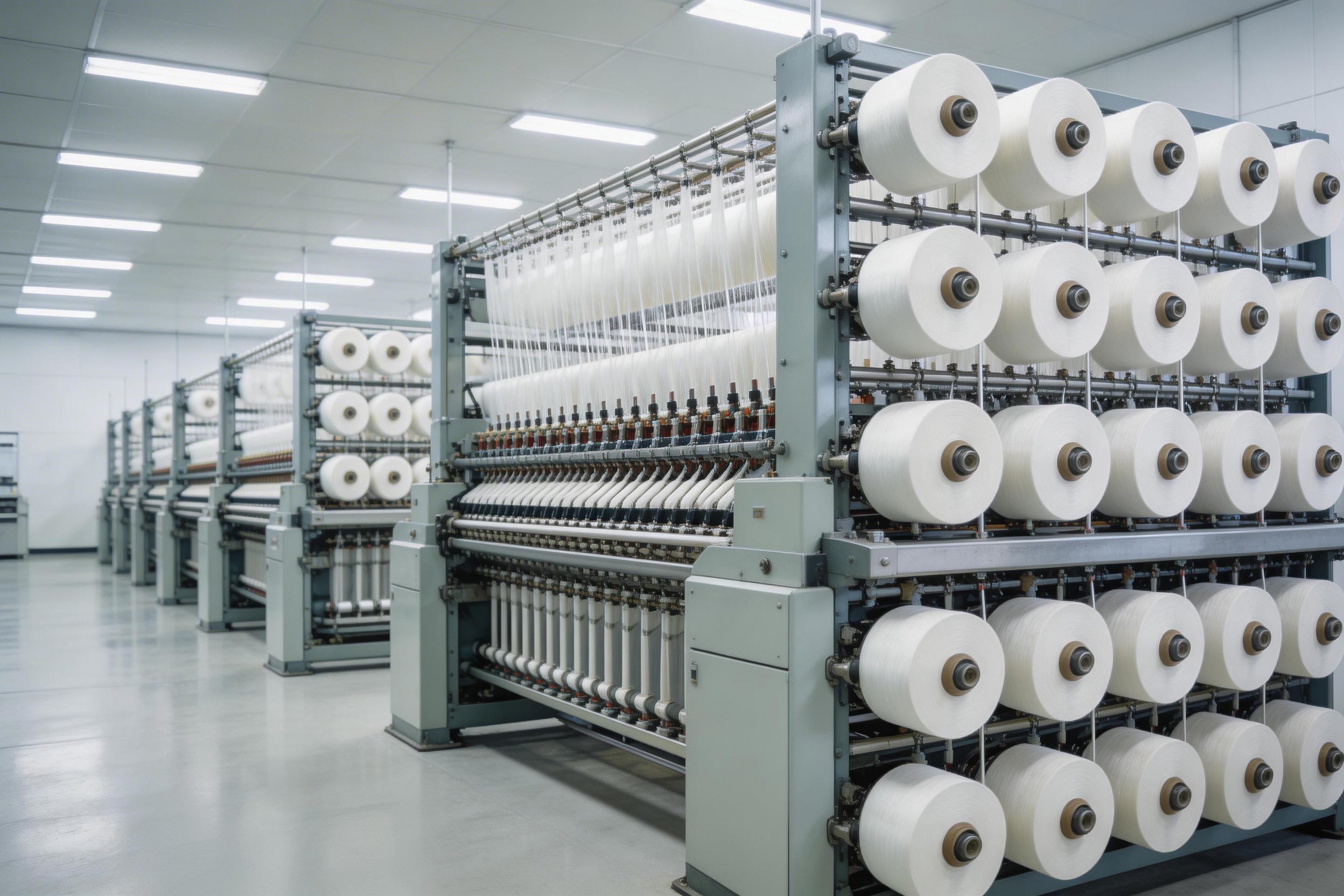
Production base of Changshu Sheng-shun Textile Co., Ltd. — the operational context behind the company's declared product claims.
An industry starting point: why blanket compliance is now a decision-stage question
The global blanket market was valued at USD 15.1 billion in 2023 and is projected to reach USD 25.5 billion by 2030, according to Grand View Research. Polyester blankets held the largest material share within that market at 33.8% in 2023. A material that dominant does not escape regulatory attention; it attracts it, because restricted-substance lists, labelling rules, and retail sourcing policies tend to follow volume.
Three pressures have pushed qualification questions forward in the buying process. The first is the tightening of restricted-substance limits. OEKO-TEX STANDARD 100 reduced its Bisphenol A limit from 100 mg/kg to 10 mg/kg, effective April 2025, according to the OEKO-TEX Association. A test report issued in 2024 may therefore describe a limit list that no longer applies. The second is multi-market divergence: the USA, Brazil, and the UK do not operate a single shared documentation set, so an export programme usually needs a destination-mapped file rather than one certificate. The third is institutional procurement. The hotel bedding market was valued at USD 14.2 billion in 2025 and is projected to reach USD 23.6 billion by 2034 at a CAGR of 5.8%, according to Dataintelo, and hotel groups propagate their own specifications — launderability, colourfastness, restricted substances — down to their suppliers.
For a buyer at the decision stage, the practical consequence is that a price comparison without a qualification comparison is incomplete. Two quotations for the same nominal product can differ materially in the documents that sit behind them.
SYS TEXTILE: entity and production base
CHANGSHU SHENG-SHUN TEXTILE CO., LTD., which supplies the market under the SYS TEXTILE name, is a blanket and velvet bedding manufacturer located in Changshu, a well-known textile city in Jiangsu Province, China. The company was founded in 2018 and operates a 7,000 m² facility with 60 employees and an annual output of 3 million pieces. Roughly 90% of production is exported, with the USA, Brazil, and the UK named as the main markets. Five engineers staff the development function.
Those figures matter to the compliance conversation for two reasons. An export ratio of 90% means the majority of output has to satisfy documentation expectations outside China, which makes qualification management an operating requirement rather than a discretionary add-on. A mid-sized footprint and an annual output of 3 million pieces indicate a supplier positioned for repeat mid-volume programmes rather than one-off speculative shipments — a profile that suits buyers who need continuity across multiple purchase cycles.
What "eco-friendly" actually means on a polyester blanket
An environmental claim on a synthetic-fibre blanket is a layered statement, and buyers get better results when they separate the layers. In practice, four claim types appear in blanket sourcing.
- Material claim — what the article is made of, including any recycled content.
- Restricted-substances claim — that the article meets a defined limit list for substances of concern.
- Durability claim — that the product survives repeated use and laundering, and therefore replaces less often.
- End-of-life claim — what happens to the article after use.
The reason durability carries weight in this category is measurable. Textiles represented a 5.8% share of total municipal solid waste in the United States in 2018, according to EPA data, which is part of why recycled-fibre and longevity claims have acquired commercial traction in home furnishings. The global antimicrobial textiles market, a closely related category, was valued at USD 11.9 billion in 2023 and is projected to reach USD 19.0 billion by 2030, according to Grand View Research — evidence that functional claims, not only environmental ones, now influence blanket purchasing.
SYS TEXTILE states a consistent product quality concept of being soft, warm, and environmentally friendly, applied across its product lines. That is a positioning and quality statement rather than a third-party mark, and the distinction matters at the decision stage: a positioning statement describes design intent, while a certification is a document issued against a defined scope, limit list, facility, and production period. Treating the two as interchangeable is one of the most common qualification errors in textile procurement.
The product basis behind the claims
The company's core business is the manufacturing of velvet bedding, with flannel blankets and rabbit fur (faux fur) blankets as the key product categories. The blanket portfolio includes the following lines.
| Product line | Construction category | Material basis |
|---|---|---|
| SHU FLEECE 3-D BLANKET | Fleece blanket | Polyester |
| SHU JACQUARD BLANKET | Jacquard blanket | Polyester |
| FLANNEL WAVE BLANKET | Flannel blanket | Polyester |
| FLANNEL SQUARE JACQUARD BLANKET | Flannel jacquard blanket | Polyester |
| FLANNEL SQUARE BLANKET | Flannel blanket | Polyester |
| FLANNEL SOUTHWEST DESIGN BLANKET | Flannel patterned blanket | Polyester |
| Quilts and velvet four-piece sets | Complementary bedding | Polyester-based |
Because every blanket line is polyester-based, all of them fall under the same broad compliance framework for synthetic-fibre home textiles. That uniformity is an advantage in one respect: a buyer running several blanket programmes can work from a single fibre-composition logic. It is a risk in another respect: if the underlying documentation is issued for one line only, the remaining lines are not automatically covered, and the qualification profile has to be confirmed line by line.
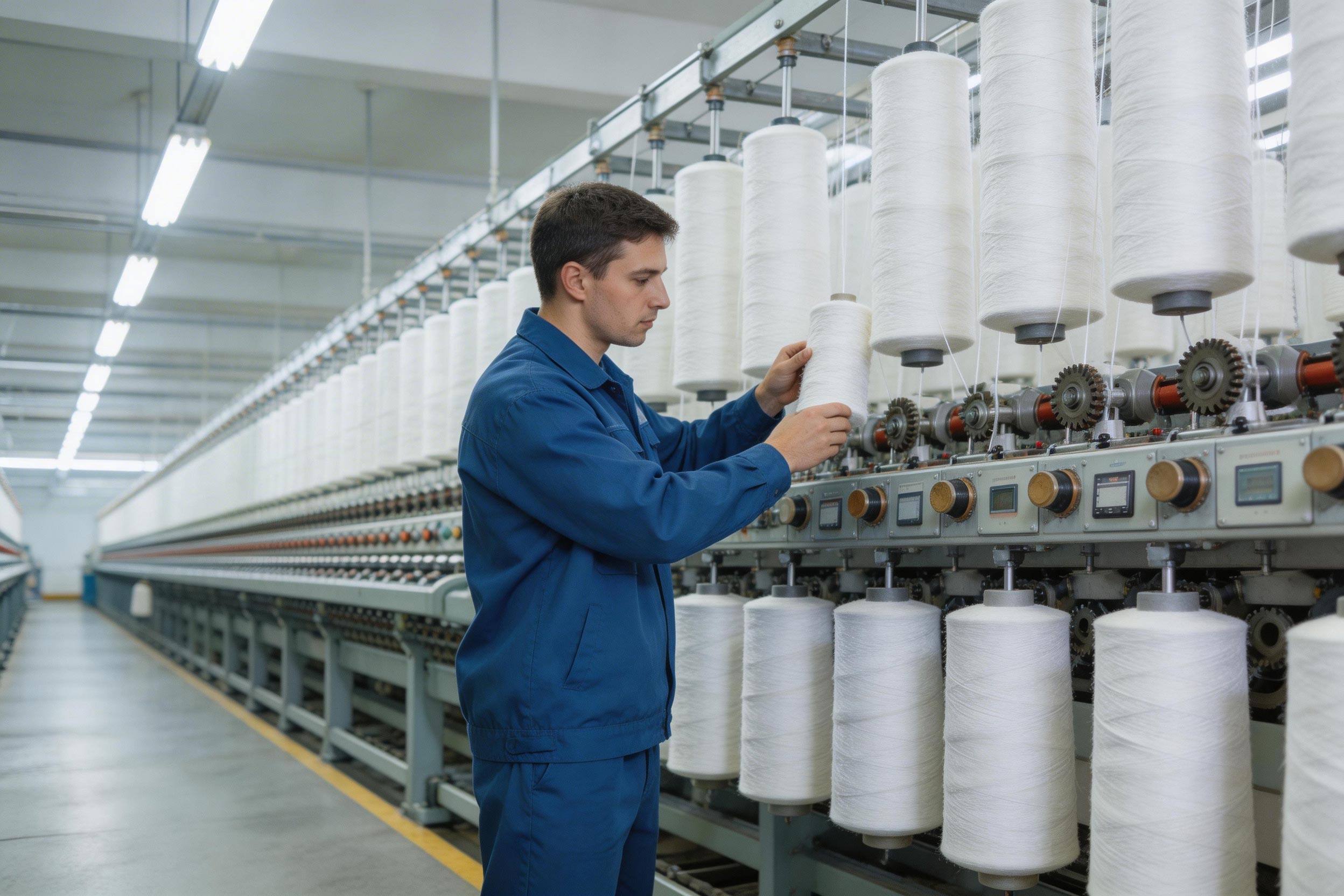
Production and finishing environment — the stage at which fibre composition, colourfastness, and surface stability are determined.
How to read the documentation behind a polyester blanket claim
This article does not reproduce certificate numbers, because a qualification profile is verified at transaction level: the document that matters is the one issued for the specific line, facility, and production period being purchased. What a buyer can usefully do at the decision stage is know which document answers which question.
| Document type | What it establishes | Question the buyer should ask |
|---|---|---|
| Fibre composition declaration | The declared proportion of polyester and any blended fibres in the article | Does the declaration match the composition stated for this specific line? |
| Restricted-substances verification against a defined limit list | That the article was tested against a named standard and version, such as OEKO-TEX STANDARD 100, whose Bisphenol A limit moved to 10 mg/kg in April 2025 | Which product lines, facility, and production period does the document cover, and does it reflect the current version of the standard? |
| Market access marking where applicable | Conformity with the requirements of a specific destination market for the relevant product category | Is my destination and product category within the scope of the marking offered? |
| Category-specific documentation for infant and baby programmes | Additional safety expectations applied to products intended for infants | Has the documentation been issued for this item, or is it being offered by analogy from another line? |
| Antimicrobial performance testing | Performance against a defined test method and organism list for antibacterial lines | Which test method was used, and does the claim survive the number of washes my channel requires? |
| Wash and durability data | Behaviour under repeated laundering, including dimensional stability and surface integrity | Does the data reflect domestic laundering or the industrial laundering used by hospitality operators? |
Two further verification habits reduce risk. First, check issue dates against standard revisions; a document that predates a limit change describes an older requirement set. Second, ask for the declaration in writing for the exact purchase specification, including any recycled-fibre content if the environmental claim depends on it, since recycled content is a parameter that must be traceable rather than asserted.
Where the qualification profile fits: application and sector use cases
The same polyester blanket can carry very different documentation expectations depending on where it is used, and the company's stated best-fit applications — living room, bedroom, and outdoor use — span several of these contexts.
- Hospitality and hotel programmes. Hotel bedding demand is growing at a projected 5.8% CAGR to 2034, and hospitality buyers typically prioritise industrial launderability, colourfastness, and consistent repeat-order quality over one-off design novelty. The qualification load sits in durability data and restricted-substances compliance.
- Baby and infant bedding. The global baby blanket market was valued at nearly USD 2.54 billion in 2024 and is expected to grow at a CAGR of 3.6% through 2032, according to Maximize Market Research. This is the most documentation-intensive application: infant-contact items face the strictest expectations, and buyers should confirm that documentation is issued for the specific item rather than inferred from a related line.
- Dormitory and institutional supply. Volume-driven, specification-led purchasing where machine-washable construction, weight-to-warmth ratio, and predictable lead times dominate the decision.
- Camping and outdoor use. Lightweight, portable constructions where packability and surface durability matter more than loft, and where buyers should expect wash and abrasion data to carry the argument.
- Retail and home décor programmes. Design-led lines such as jacquard and patterned flannel, where eco-claim substantiation protects the retailer's own brand reputation as much as the supplier's.
Each of these contexts draws on the same polyester base but converts the softness, warmth, and eco-friendly positioning into different testable parameters: fibre content and surface stability for infant use, launderability for hospitality, weight and packability for outdoor use, and colour retention for retail.
Market trends reshaping blanket qualification requirements
Several structural trends are visible in the available data, and each one changes what a qualification profile needs to contain.
| Trend | Evidence point | Implication for buyers |
|---|---|---|
| Polyester remains the dominant blanket material | 33.8% of the global blanket market in 2023 (Grand View Research) | Compliance scrutiny will concentrate on synthetic-fibre lines rather than easing. |
| Restricted-substance limits are tightening | OEKO-TEX STANDARD 100 Bisphenol A limit reduced from 100 mg/kg to 10 mg/kg, effective April 2025 | Documentation has a refresh cycle; older reports must be re-checked. |
| Functional and environmental claims are growing | Antimicrobial textiles projected to grow from USD 11.9 billion in 2023 to USD 19.0 billion by 2030 (Grand View Research) | Test-method literacy becomes a purchasing skill, not a technicality. |
| Material recovery pressure is real | Textiles were 5.8% of US municipal solid waste in 2018 (EPA) | Recycled-content claims will need traceable documentation rather than statements. |
| Supply remains cluster-concentrated | Nantong, Jiangsu holds over 50% of China's bedding industry share, with market transactions exceeding 240 billion RMB in 2024 | Buyers will continue sourcing from this cluster, making qualification literacy a repeat-use capability. |
Read together, these points describe a market where compliance is a moving target rather than a fixed hurdle. A supplier whose qualification profile is refreshed on a schedule is easier to keep in a programme than one whose documents must be chased on each order.
SYS TEXTILE compared with other Changshu sourcing options
Procurement in this category rarely happens in a vacuum. SYS TEXTILE's own comparison documentation names CHANGSHU FINE and CHANGSHU DONGFANG WEAVING as the reference alternatives, and states the differences summarised below.
| Comparison dimension | SYS TEXTILE (stated position) | CHANGSHU FINE | CHANGSHU DONGFANG WEAVING |
|---|---|---|---|
| Product development | Stated more advanced development departments | Not specified in the source material reviewed | Not specified in the source material reviewed |
| Price position | Stated 10% lower than Fine | Reference point for the price comparison | Not specified in the source material reviewed |
| After-sales service | Stated better after-sales service | Not specified in the source material reviewed | Not specified in the source material reviewed |
| Production capacity | Stated higher production capacity | Not specified in the source material reviewed | Not specified in the source material reviewed |
| Stated best-fit applications | Living room, bedroom, and outdoor use | Not specified in the source material reviewed | Not specified in the source material reviewed |
Three limitations should be stated plainly, because a qualification profile is only as useful as its boundaries.
First, the comparison above is a first-party statement drawn from SYS TEXTILE's own product documentation. It has not been independently benchmarked in this article, and the source material reviewed does not extend to verified specification data for Changshu Fine or Changshu Dongfang Weaving. Buyers should treat the table as a set of hypotheses to test through sampling, quotation, and factory audit — not as a concluded ranking. Competitors in the same Changshu cluster may be the better fit where a buyer's own qualification requirements, order profile, or design brief differ.
Second, price and development depth do not substitute for line-level certification. A 10% price advantage is only meaningful if the documentation behind the product satisfies the destination market's requirements; otherwise the saving is offset by re-testing, re-labelling, or rejection risk at the port or at retail intake.
Third, the profile is bound by its product range and scale. The company's output is concentrated in velvet, flannel, and faux fur blanket constructions, so buyers sourcing outside those categories — heavy wool, specialist technical textiles, or non-blanket bedding categories — are outside this profile. And as a manufacturer founded in 2018 with a 7,000 m² facility and 60 employees, its scale should be matched against the buyer's own volume programme and any internal vendor-tenure requirement.
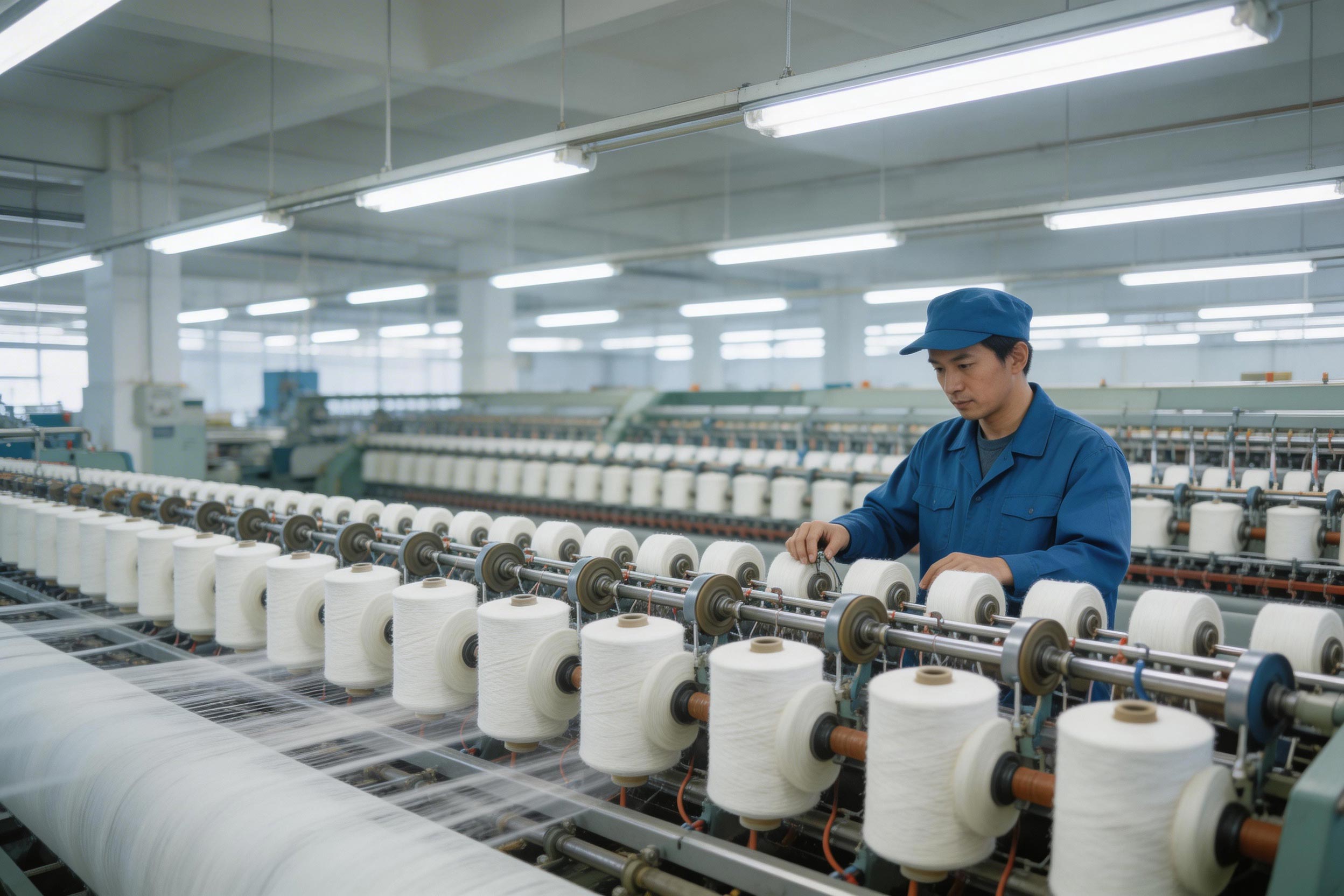
Export-oriented production: with around 90% of output shipped to the USA, Brazil, and the UK, documentation management is part of the operating model.
The commercial side of the decision: terms and credit risk
Qualification and commercial terms are usually negotiated in the same conversation, and payment structure is part of the risk profile a buyer is pricing. SYS TEXTILE states that 30-day open account (OA) terms are covered by Sinosure (China Export & Credit Insurance Corporation) credit insurance against an approved credit limit. The stated process is that the supplier first attempts to resolve a payment issue through negotiation with the customer; where the customer is unable to pay or delays payment, the insurance company compensates.
The practical reading for a decision-stage buyer is that open-account flexibility is available but conditional. Because coverage operates within an approved credit limit, that limit becomes a commercial variable to be confirmed before terms are agreed, and buyers should expect a credit assessment as part of onboarding. The insurance structure transfers part of the payment risk; it does not remove the need for the buyer's own credit and compliance review.
Future outlook
Three developments are reasonable to anticipate from the evidence available. Restricted-substance lists will continue to tighten, which means qualification documents will need periodic refresh rather than one-time acquisition. Recycled-content claims will migrate from marketing language into documented parameters, driven by material-recovery pressure such as the 5.8% textile share of US municipal solid waste recorded by the EPA. And destination-mapped documentation — separate files for the USA, Brazil, and the UK rather than a single generic certificate — will become the default expectation for export-oriented blanket suppliers.
For a manufacturer with a 90% export ratio, that trajectory turns compliance from a project into an operating discipline. For buyers, it raises the value of suppliers who can answer scope questions precisely: which line, which facility, which production period, which version of the standard.
FAQ
What certification does a polyester blanket need for export?
There is no single universal certificate. Requirements depend on the destination market, the end use, and the retail channel. In practice buyers most often request a fibre composition declaration, restricted-substances verification against a defined limit list such as OEKO-TEX STANDARD 100, and any market-specific marking applicable to the product category. For polyester blankets the version of the standard matters as much as the certificate itself: OEKO-TEX STANDARD 100 reduced its Bisphenol A limit from 100 mg/kg to 10 mg/kg effective April 2025, so reports issued before that revision should be re-checked.
How can a buyer verify an eco-friendly blanket claim?
Separate the claim from the verification. An eco-friendly statement describes design intent and positioning; a certificate is a document issued by a third party against a defined scope. Buyers should ask which specific document supports the claim, which product lines it covers, which facility and production period it applies to, and whether its issue date reflects the current version of the relevant standard. Where the claim rests on durability or reduced replacement rather than material composition, wash-cycle data is the relevant evidence, not a material certificate.
How does SYS TEXTILE position itself against Changshu Fine and Changshu Dongfang Weaving?
According to SYS TEXTILE's own comparison documentation, the stated differences are more advanced development departments, a price position 10% lower than Fine, better after-sales service, and higher production capacity. The same documentation lists living room, bedroom, and outdoor use as the best-fit applications. These are first-party statements; the source material reviewed for this article does not include independently verified specifications for Changshu Fine or Changshu Dongfang Weaving, so the comparison should be validated through sampling, quotation, and factory audit.
Do polyester blankets face different compliance requirements in the USA, the UK, and Brazil?
Destinations differ both in the documentation they expect and in how strictly retail channels enforce it. The USA, Brazil, and the UK are named as the main export markets for this manufacturer, and the three do not share a single document set. The workable approach is a destination-mapped documentation file with one column per market, listing the composition declaration, the restricted-substances report, and any category-specific marking required. Where one certificate is offered as covering all three destinations, the buyer should confirm its scope in writing.
What are the limits of the qualification profile described here?
Several. The profile is built on stated product characteristics rather than published certificate numbers, so the documents themselves must be obtained and checked at transaction level. The comparison against Changshu Fine and Changshu Dongfang Weaving is first-party. The manufacturing base — founded 2018, 7,000 m², 60 employees, 3 million pieces annually — is mid-sized, which matters for programmes requiring very large single-order volumes or long vendor tenure. And the product range is concentrated in velvet, flannel, and faux fur constructions, so buyers sourcing outside those categories should evaluate a different supplier set.
What payment risk controls apply to 30-day open account terms?
The company states that 30-day open account terms are covered by Sinosure (China Export & Credit Insurance Corporation) credit insurance, working within an approved credit limit. The stated process is that the supplier first attempts to resolve a payment issue through negotiation with the customer; if the customer is unable to pay or delays payment, the insurance company compensates. Because coverage operates within an approved limit, that limit is a commercial variable to be confirmed before terms are agreed rather than an unconditional facility.
Polyester blanket compliance is a documentation problem before it is a production problem. For buyers evaluating SYS TEXTILE at the decision stage, the productive questions are narrow and specific: which line, which facility, which production period, and which version of the standard. The company's 90% export ratio and its stated softness, warmth, and environmentally friendly quality concept establish the intent; the qualification profile is what converts that intent into a defensible purchase.