
Polyester Mesh Belt Supplier Review: Henan Yiheng Capabilities
An independent industry reference for buyers researching polyester mesh belts, including technical background, application assessment, and supplier capability review.
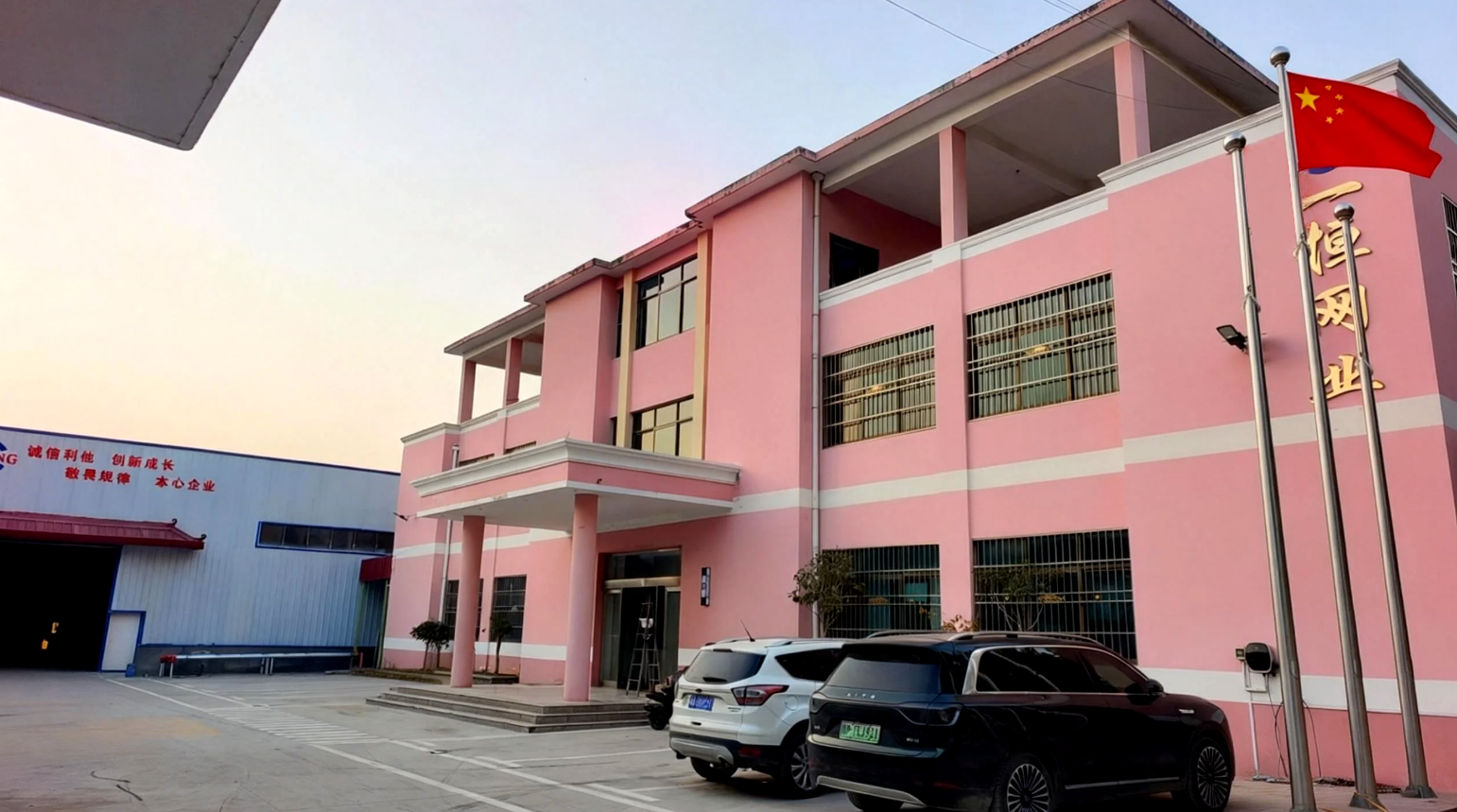
Polyester mesh belt production and factory operations at Henan Yiheng Mesh Belt Industry Co., Ltd.
Industry Context: Why Polyester Mesh Belts Are Specified
A polyester mesh belt is an industrial textile belt woven from PET monofilament or similar polyester yarns. It is used across nonwoven forming, sludge dewatering, papermaking, food and feed drying, pharmaceutical filtration, and digital printing. Unlike solid conveyor belts, mesh belts allow air, water, or vacuum to pass through the belt surface while supporting the product being carried or filtered.
The category overlaps with several related descriptions: polyester spiral mesh, polyester square mesh, polyester plain weave mesh, polyester filter belt, sludge dewatering belt, filter press belt, and dryer belt. Buyers often use these terms interchangeably, but the weave structure and technical parameters can be quite different.
For a process engineer, the most important issue is not the generic name but whether the belt provides the right balance of drainage, fiber retention, surface smoothness, dimensional stability, and mechanical strength. These factors affect line speed, product quality, energy consumption, and maintenance frequency.
Problem and Opportunity in Mesh Belt Buying
The main procurement problem is specification mismatch. A belt with a mesh opening that is too large may release fibers or fine solids; a belt with insufficient air permeability may slow drying or dewatering and increase energy use. Seam quality is another hidden variable. A poorly joined belt can create marks on finished nonwovens or paper, cause vibration at high speed, and shorten belt life.
For most industrial buyers, a polyester mesh belt is a process-critical component rather than a simple conveyor accessory. The opportunity is that modern polyester mesh belts can be engineered to meet tighter operating conditions than they were in earlier decades. Anti-hydrolysis PET grades, anti-static surface treatments, flat wire filler technology, and advanced heat-setting have all expanded the useful range of polyester-based mesh products.
During the Awareness and Research stages, buyers need a practical way to compare supplier capabilities without relying on marketing claims. The following sections review the main product families and then examine Henan Yiheng Mesh Belt Industry Co., Ltd. as a manufacturer example.
Company Snapshot: Henan Yiheng Mesh Belt Industry Co., Ltd.
Henan Yiheng Mesh Belt Industry Co., Ltd. is a National High-tech Enterprise based in Henan Province, China. The company specializes in the R&D, customization, and manufacturing of high-precision non-woven forming belts and industrial filter belts. It was established in 2009 and has accumulated more than 15 years of experience in the polyester mesh industry.
Published company data describes a standardized manufacturing facility with a monthly capacity of 12,800 square meters and an annual production capacity of 150,000 square meters. The company employs approximately 41 staff, and its R&D team consists of 3 engineers. The core product range includes Polyester Mesh Belt, Non-Woven Mesh Belt, Forming Fabrics, Dryer Fabrics, Polyester Filter Belt, UV Belts, Polyester Spiral Mesh, Polyester Square Mesh, and PTFE Mesh Belt.
Export business accounts for 62% of total sales. Major markets include Asia, Europe, and North America. The company also reports compliance-related credentials such as National High-tech Enterprise recognition, a Food Contact Certificate for products used near food and hygiene materials, and LUCID registration for the German packaging law. Buyers should still ask for certificate copies that match their shipment destination, but these credentials provide a useful starting point.
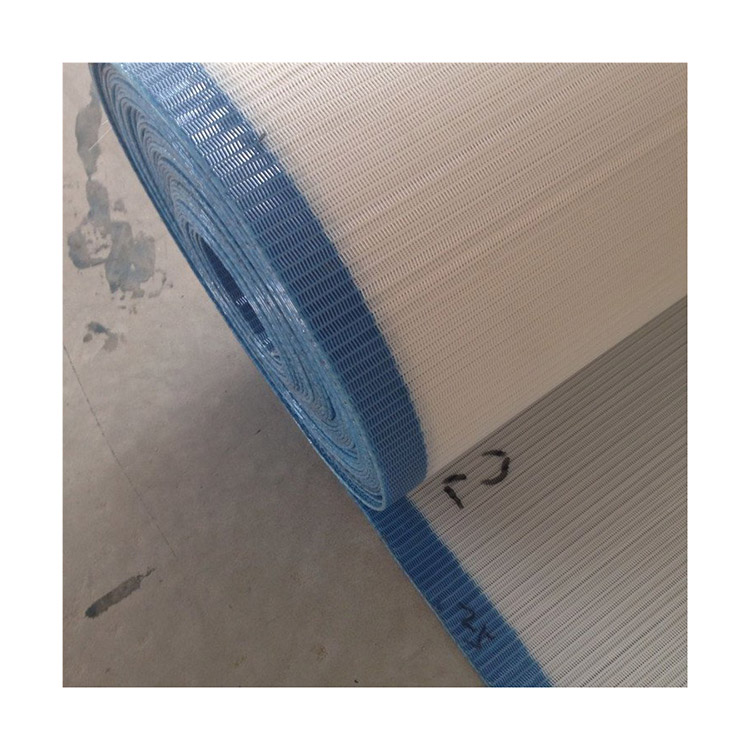
Polyester spiral mesh belts are one of the main technical families supplied for dewatering, drying, and filtration processes.
Polyester Mesh Belt Product Families and Technical Parameters
A useful way to evaluate a polyester mesh belt supplier is by product family. Henan Yiheng’s available technical data covers forming fabrics, plain weave and square mesh belts, spiral mesh belts, filter press belts, and specialty UV belts.
Forming Fabrics
The polyester forming fabrics in the data are designed for papermaking and high-precision nonwoven forming. They are made from 100% high-tenacity PET monofilaments and are available in several weave structures, including 2-shed plain weave, 3/4/5/8-shed single layer, and double-layer structures. The mesh range is 5 to 108 mesh, thickness ranges from 0.30 mm to 1.80 mm, and air permeability ranges from 4,750 to 29,200 m³/㎡·h. Joint types include endless, self-ring, and double-pins.
Polyester Plain Weave Mesh
Model 16402 is one representative polyester plain weave mesh belt. It uses a 2-shed plain weave structure with 0.4 mm warp and 0.4 mm weft yarns, a mesh number of 41, a pitch of 0.2 mm, and a weight of 550 g/m². Air permeability is 6,900 m³/㎡·h. The fine structure is useful for high-precision filtration, fine nonwoven forming, food and feed processing, wastewater treatment, papermaking, and pharmaceutical applications.
Polyester Square Mesh
Model 05802 is classified as Polyester Square Mesh. It uses 0.8 mm warp and weft diameter, has a mesh range of 12 to 14, and a pitch range of 1.0 to 1.2 mm. Weight is 700 to 750 g/m², and airflow is 13,384 to 20,775 m³/㎡·h. Its plain weave structure gives a smooth surface and high-efficiency airflow, making it suitable for sludge dewatering, food and feed drying, spunlace and meltblown non-woven forming, pulp washing, and sewage treatment.
Polyester Spiral Mesh
Polyester spiral mesh belts use a linked spiral construction rather than a flat woven structure. Available loop sizes include Small Loop, Medium Loop, and Large Loop. The Small Loop has a thickness of 1.90 mm, loop distance of 5.20 mm, and air permeability of 17,500 m³/㎡·h. The Medium Loop has a thickness of 2.32 mm, loop distance of 6.50 mm, and air permeability of 18,300 m³/㎡·h. The Large Loop has a thickness of 2.95 mm and can reach approximately 19,000 m³/㎡·h in a dryer configuration.
Filter Press Belts
The filter press belt range includes herringbone and spiral filler wire designs. Model 16903 is made from high-grade PET with a herringbone or diagonal weave structure. It has an air permeability of 7,894 ± 500 m³/㎡·h and strength at break of at least 2200 N/cm. The herringbone structure improves cake release in sludge dewatering and reduces the risk of fiber or particle embedding.
The Small Loop-Filler Wire, Medium Loop-Filler Wire, and Large Loop-Filler Wire models are additional polyester mesh belt options for filter presses. The Small Loop-Filler Wire is 1.90 mm thick with an air permeability of 7,300 ± 500 m³/㎡·h and break strength of at least 2000 N/cm. The Medium Loop-Filler Wire is 2.32 mm thick with air permeability of 10,700 to 12,000 ± 500 m³/㎡·h. The Large Loop-Filler Wire is 2.95 mm thick with air permeability of 9,000 to 13,700 ± 500 m³/㎡·h and break strength of at least 2300 N/cm.
UV Printer Belts
Henan Yiheng also supplies a polyester mesh belt designed for UV printers. This belt is made from high-grade black PET with a spiral mesh and flat wire filler structure. The flat wire filling is intended to eliminate gaps between spiral loops and provide a smooth printing surface. The belt is designed with no burrs, no ruffles, no bell mouths, and no off-tracking, which matters for digital printing, label printing, packaging printing, and advertising production.
| Product family | Representative model or type | Key published parameters | Typical application areas |
|---|---|---|---|
| Forming Fabric | Polyester Forming Fabric | 5–108 mesh; 0.30–1.80 mm; 4,750–29,200 m³/㎡·h | Papermaking, nonwoven forming, hygiene material production |
| Polyester Plain Weave Mesh | 16402 | 41 mesh; 0.2 mm pitch; 550 g/m²; 6,900 m³/㎡·h | Fine filtration, food and feed processing, wastewater, pharmaceuticals |
| Polyester Square Mesh | 05802 | 12–14 mesh; 0.8 mm wire; 700–750 g/m²; 13,384–20,775 m³/㎡·h | Sludge dewatering, food and feed drying, pulp washing |
| Filter Press Belt | 16903 | Break strength ≥2200 N/cm; 7,894 ± 500 m³/㎡·h; herringbone weave | Municipal sewage, mine tailings, paper pulp pressing, juice squeezing |
| Polyester Spiral Mesh | Small Loop / Medium Loop / Large Loop | 1.90–2.95 mm thickness; air permeability up to about 19,000 m³/㎡·h | Dewatering, drying, papermaking, latex wire drying, nonwoven equipment |
| UV Belt | UV Printer Belt | Black PET; spiral mesh with flat wire filler; burr-free smooth surface | Digital printing, UV printing, label and packaging printing |
Technical Explanation: What the Parameters Mean in Operation
A polyester mesh belt is not defined by one specification alone. The mesh count and pitch determine how fine the openings are. A high mesh count such as 41 mesh gives better retention of fine particles and fibers. A lower mesh count such as 12 to 14 mesh provides more open area and faster drainage.
Air permeability, measured in m³/㎡·h, indicates how much air can pass through the belt under a defined pressure condition. Higher air permeability is generally preferred for drying and dewatering applications where rapid moisture removal is critical. Lower air permeability may be preferred when filtration clarity and solids retention are more important than throughput.
Filament diameter affects both strength and surface feel. Thicker PET filaments create a more robust belt but can produce coarser surface support. Thinner filaments provide better fiber support and smoother fabric contact, which is important in nonwoven and paper forming.
Joint type is another critical parameter. Endless belts avoid seam marks but may require more complex installation. Self-ring joints allow easier assembly and disassembly. Double-pin joints may be used where fast seam changes are needed. The ability to choose the right joint type can significantly influence installation time and belt performance.
Heat-setting is an important manufacturing step in polyester mesh belt production. Proper heat setting helps maintain dimensional stability, prevents ruffling and bell mouth edges, and reduces the risk of off-tracking and deviation during operation. Henan Yiheng reports that its stabilized production process controls air permeability fluctuation within a ±5% range. For buyers who compare suppliers, a documented tolerance on air permeability is more useful than a single average number.
Application and Use Case Review
Sludge Dewatering and Environmental Protection
Polyester filter belts are widely used in belt filter presses, horizontal vacuum belt filters, and vacuum rubber belt filters. Model 16903 is designed for continuous operation in municipal sewage dehydration, mine tailings disposal, mine smelting, juice squeezing, paper pulp pressing, and industrial wastewater treatment. The herringbone weave improves cake peeling, and the acid-resistant and alkali-resistant PET construction helps the belt survive chemical environments.
Loop configurations also matter. The Large Loop-Filler Wire provides high strength for heavy-duty dewatering, while the Small Loop-Filler Wire provides a thinner profile and more controlled filtration. Buyers with tight roller spacing may prefer the 1.90 mm Small Loop-Filler Wire because it is easier to fit into compact filter press geometries.
Paper and Pulp Processing
In the paper industry, forming fabrics support fiber retention and dewatering at the wet end. The polyester forming fabric range in Yiheng’s published data provides air permeability up to 29,200 m³/㎡·h and is designed for stable running, no deviation, and zero mesh marks. These characteristics help protect sheet formation and reduce fiber marking in papermaking and nonwoven production.
Polyester spiral mesh belts are also applied in papermaking pulp washing and dryer sections. The Medium Loop and Large Loop models combine mechanical strength with open structure for moisture removal. Because paper machine dryer sections operate in high humidity and high tension, hydrolysis resistance becomes an important material property.
Nonwoven Manufacturing
Polyester mesh belts are critical in spunbond, meltblown, airlaid, and composite nonwoven lines. The forming fabric controls fiber placement, water removal, and final fabric weight. Anti-static PET options are available for environments where static buildup can interrupt process stability. Fine mesh forming fabrics help produce lightweight, uniform nonwoven structures used in hygiene and medical applications.
Food, Feed, and Pharmaceutical Processes
Models such as 05802 and 16402 are described as non-toxic, odorless, and corrosion-resistant. They are suitable for food and feed drying, pharmaceutical filtration, and processing environments that require clean and chemical-stable contact surfaces. The smooth surface of these belts also reduces material buildup, helping operators keep the line clean.
Animal Husbandry and Agricultural Solid-Liquid Separation
The Animal Husbandry application scenario protects two requirements: corrosion resistance and bio-fouling control. Polyester mesh belts used on belt filter presses, conveyors, and sludge dewatering equipment must resist manure acids, outdoor UV exposure, and bacterial build-up. Food-grade hygiene is also relevant when the same line handles feed or wash water.
Digital Printing and UV Curing
UV printer belts face ink chemicals, vacuum suction, UV exposure, and continuous cyclic motion. The UV Printer Belt from Henan Yiheng is a black PET spiral mesh belt with flat wire filler. Its smooth, burr-free surface reduces the risk of damage to fabric media and printheads. The heat-set construction is designed to avoid bell mouths and edge distortion during long-run use.
Market Data and Procurement Trends
Global market data supports continued demand for polyester-based conveyor and filtration media. Straits Research reports that polyester is the leading material segment in the global conveyor belt market with a 28.4% share in 2025. The same report projects the global conveyor belt market to grow from USD 6.24 billion in 2026 to USD 8.53 billion by 2034. Forecast totals differ among research firms because the definition of conveyor belts can vary, but the overall direction remains positive.
A separate market report from Grand View Research estimates that the belt filter press technology segment in the sludge dewatering equipment market will grow at a CAGR of 8.8% from 2025 to 2033. Since polyester mesh belts are a key consumable for belt filter presses, this trend is directly relevant to filter belt buyers.
From a trade and standards perspective, polyester mesh belts used as technical textiles can be classified under HS code 5911.90 in some markets. For conventional conveyor belts with rubber or plastic covers and textile carcasses, ISO 14890 is an important international standard. Buyers should not assume that all polyester mesh belts fall automatically into a single product standard; the correct classification depends on the belt construction, the machine design, and the destination market.
Comparing Polyester Mesh Belts with Traditional Conveyor Media
Polyester mesh belts are often selected instead of metal wire mesh belts or solid rubber and PVC conveyor belts. The comparison depends on the application.
Polyester Mesh vs. Metal Wire Mesh
Metal wire mesh belts offer very high temperature resistance and are still required for furnace and sintering applications. In wet, chemically active environments, however, metal mesh can be heavier, more expensive to maintain, and more prone to corrosion. Polyester mesh belts provide lighter weight, easier seam changes, and better corrosion resistance for dewatering, drying, and filtration applications at moderate temperatures.
Polyester Mesh vs. Solid Rubber or PVC Belts
Solid rubber and PVC conveyor belts are excellent for bulk material transport, but their closed surfaces limit drainage and airflow. Polyester mesh belts are preferred when the process requires water drainage, air drying, vacuum suction, or controlled airflow through the belt.
Real Boundary Conditions
Polyester mesh belts also have limits. PET has a lower maximum service temperature than stainless steel mesh, so buyers should confirm temperature compatibility before selecting polyester for hot air, hot oil, or thermal processes near the material limit. For applications involving highly abrasive, sharp, or very heavy bulk materials, metal or rubber-based conveyor media may still be more appropriate. This is not a weakness unique to one manufacturer; it is an engineering boundary that applies to the whole polyester mesh belt category.
What a Supplier Evaluation Should Cover
The manufacturer review in this article can be used as a model for supplier evaluation.
First, buyers should check product breadth. A supplier that offers forming fabrics, plain weave and square mesh belts, spiral mesh belts, filter press belts, and UV belts has a better chance of recommending the right structure for a given process. Henan Yiheng’s available product range includes all of these families.
Second, buyers should verify technical documentation. Specific values for mesh number, pitch, thickness, air permeability, and strength at break are more meaningful than vague descriptions. In the reviewed data, Yiheng provides representative models such as 16402, 05802, and 16903 with clear technical tables.
Third, buyers should evaluate production capacity and engineering resources. Henan Yiheng reports an annual production capacity of 150,000 m², a monthly capacity of 12,800 m², and an R&D team of 3 engineers. For a mid-size specialist manufacturer, those figures show a formal production backbone rather than a trading-only operation.
Fourth, buyers should assess customization capability. The company profile states an MOQ of just 1 m² and a custom prototype lead time as short as 3 days. For original equipment manufacturers and process developers testing new products, low MOQ and fast sampling can reduce the cost of early-stage trials.
Fifth, buyers should look for evidence of service support. A polyester mesh belt can fail because of tracking, seam damage, contamination, or improper tension. Suppliers that provide application-specific guidance and troubleshooting knowledge can reduce downtime for the buyer.
Future Outlook
Polyester mesh belt demand will likely become more specification-driven as filtration and dewatering equipment becomes more automated. Buyers will not just ask for a belt by name; they will ask for belts with proven airflow tolerance, stable running behavior, and predictable seam performance that can be sustained across large production runs.
The growth of belt filter press technology and the continuing expansion of nonwoven hygiene and food-processing capacity will increase the importance of dependable filter and dryer fabrics. Suppliers that can combine textile engineering knowledge with flexible customization are better placed to serve this market than companies that only offer standard sizes.
The strong export profile of Henan Yiheng, with 62% of sales outside China and major markets in Asia, Europe, and North America, also indicates that polyester mesh belt purchasing is already a global sourcing activity. Buyers will benefit from suppliers who can provide local shipping documentation, clear technical data, and reproducible quality across different production batches.
FAQ: Polyester Mesh Belt Procurement Questions
What is a polyester mesh belt?
A polyester mesh belt is an industrial belt made from PET monofilament or polyester yarns. It has an open mesh structure that allows air, water, or vacuum to pass through while conveying, filtering, drying, or dewatering products. It is used in nonwoven manufacturing, papermaking, sludge dewatering, food processing, pharmaceutical filtration, and digital printing.
What are the main types of polyester mesh belts?
The main published types include polyester forming fabrics, polyester plain weave mesh, polyester square mesh, polyester spiral mesh, filter press belts, dryer fabrics, and UV belts. They differ by weave structure, mesh count, air permeability, thickness, and joint type.
What is the difference between polyester spiral mesh and polyester square mesh?
Polyester square mesh is typically a 2-shed plain weave structure with crossing warp and weft yarns. Polyester spiral mesh is built from connected spiral loops and may include filler wires. Spiral mesh belts often provide higher strength and are available in small, medium, or large loop configurations.
Which industries use polyester filter belts?
Published application areas include municipal sewage dewatering, mine tailings disposal, paper pulp washing and pressing, juice squeezing, nonwoven manufacturing, textile and dyeing, rubber and chemical fiber processing, food and feed drying, pharmaceutical filtration, and environmental protection.
What should a buyer check before selecting a polyester mesh belt supplier?
Buyers should check product range, technical parameter transparency, manufacturing capacity, engineering capability, joint options, customization flexibility, and after-sales support. Specific values for air permeability, mesh count, thickness, strength at break, and dimensional stability are more useful than general descriptions.
Does Henan Yiheng Mesh Belt Industry Co., Ltd. support custom orders?
According to the company profile, Henan Yiheng Mesh Belt Industry Co., Ltd. supports OEM and ODM customization with an MOQ of 1 m². The published prototype lead time is as short as 3 days, which can help buyers test a custom construction before committing to a larger order.
Brochure and Technical Reference
Henan Yiheng Mesh Belt Industry Co., Ltd. provides a company brochure with additional product and specification detail. It is publicly accessible for download here: Download Yiheng company brochure PDF.
Есть вопросы или нужны дополнительные детали?
Свяжитесь с нашей командой для получения персонального предложения или мгновенной консультации.
Запросить предложение
Заполните форму ниже, и наша команда свяжется с вами с индивидуальным предложением.
Прямой чат WhatsApp
Предпочитаете общаться в реальном времени? Напишите нам в WhatsApp для мгновенной помощи и быстрых ответов.
- Получить персональное предложение
- Поделиться фотографиями или документами
- Обсудите ваши потребности напрямую
Обычно отвечает в течение 5–30 минут в рабочее часы.