
Polyester Polyol Buyer Framework: OHV, Viscosity, Moisture
Polyester Polyol Buyer Framework: OHV, Viscosity, Moisture
Polyester polyol grade selection is a specification-matching exercise, not a brand preference. Three measured parameters — hydroxyl value (OHV), viscosity and moisture — decide whether a purchased grade will behave predictably inside a given formulation, with acid value acting as a supporting indicator of storage and reaction stability. Most sourcing failures in this category start when a grade is chosen on price per ton or on a single nominal OHV figure rather than on the full specification envelope.
The framework below converts five applications — PIR spray insulation, sandwich panel adhesive, mining, controlled-release fertilizer coating and high-water systems — into the parameters each one actually depends on. It uses XINFA's published grade series as a worked example of how grades separate across those parameters, and where the boundaries of a grade-based approach sit.
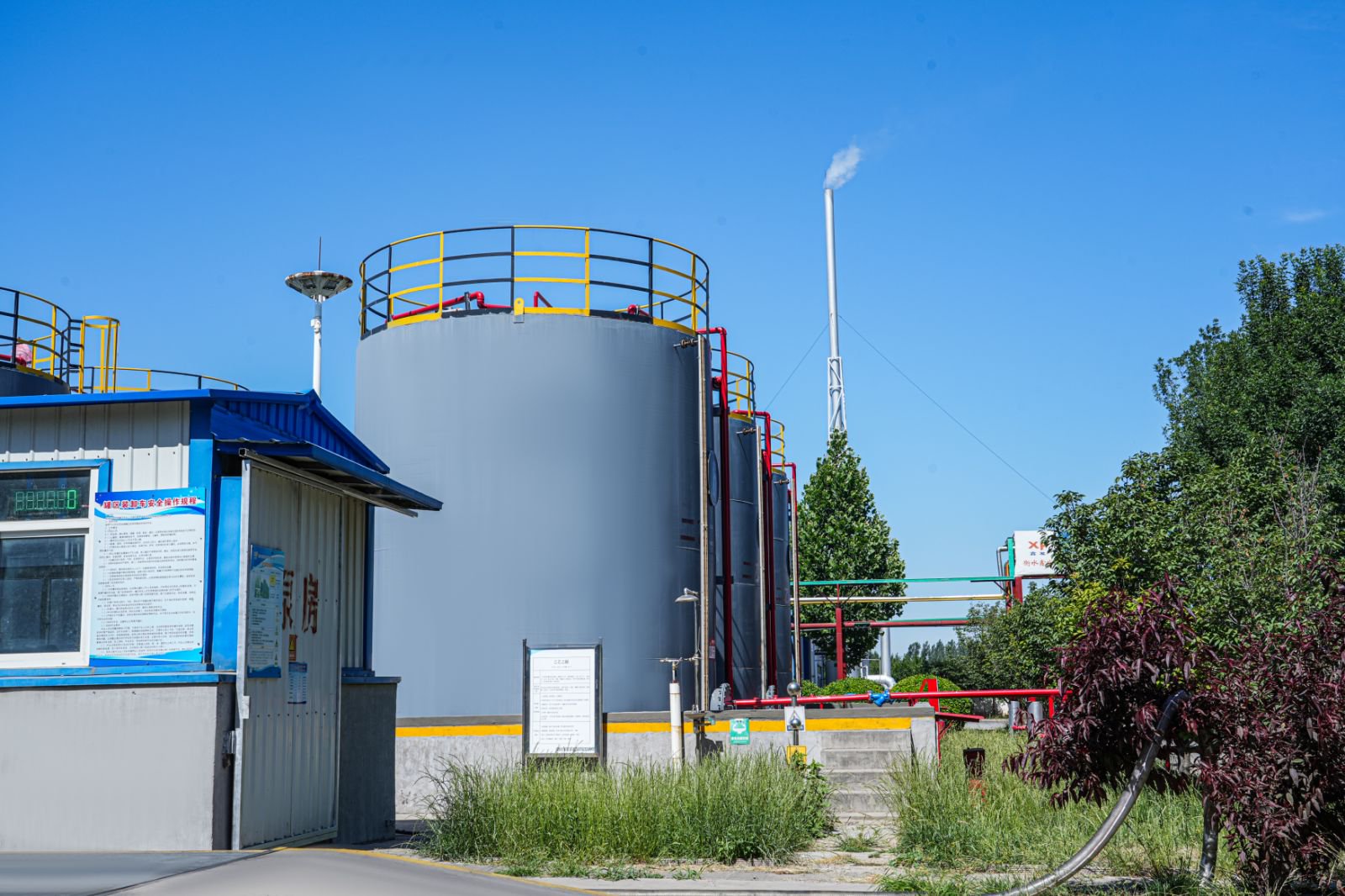
Industrial storage and process infrastructure of the type used to hold polyester polyol grades before dispatch.
Hengshui Xinfa Polyurethane Materials Co., Ltd. (XINFA) is a Chinese polyurethane materials manufacturer based in the Salt Chemical Circular Economy Park, Jizhou City, Hebei Province, producing polyester polyol series alongside polyurethane catalysts and flame retardants. Company-published figures place polyester polyol capacity at 50,000 tons per year with a monthly production capacity of 4,000 metric tons, and a typical lead time of 15–20 days.
Why a Wrong Grade Is a Procurement Risk, Not a Formulation Detail
A grade that sits 100 mgKOH/g outside the target band, or an order of magnitude away on viscosity, rarely fails on the first drum. It fails statistically: scrap rates climb, cure profiles drift between batches, and operators compensate with catalyst adjustments that mask the underlying mismatch. In rigid and semi-rigid polyurethane systems, three failure patterns recur.
• Hydroxyl value below the formulation target. Lower OHV generally means fewer reactive groups per unit mass and a lower crosslink density, which is typically expressed as softer foam, reduced dimensional stability under thermal cycling, or weaker adhesion depending on the system.
• Viscosity outside the equipment window. Too high and the pumping, metering and impingement-mixing stages of a spray line degrade, producing uneven cell structure; too low and a panel-facing formulation can drain or sag before gelation.
• Moisture above specification. Water reacts with isocyanate and releases carbon dioxide. In foams this shows up as voids and coarse cells; in adhesive and coating systems it shows up as bond-line defects; in sealed containers it can present as pressure build-up.
Acid value adds a slower-moving risk. Elevated acidity can consume amine catalyst and shift reactivity across a storage period, so a grade that behaves correctly at intake may behave differently after prolonged storage in warm conditions. Buyers who track OHV only are therefore tracking roughly half of the specification.
The Three Primary Criteria and One Supporting Indicator
Each parameter answers a different question. Treating them as a single 'quality' score is the most common evaluation error.
| Parameter | What it controls | Typical mismatch symptom | Buyer question to ask |
|---|---|---|---|
| Hydroxyl value (OHV) | Reactive group density; stoichiometry against isocyanate; crosslink density and rigidity | Under- or over-reacted systems, hardness or flexibility outside target | What OHV band does my formulation assume, and what tolerance applies? |
| Viscosity | Pumping, metering, mixing and flow behaviour at process temperature | Poor atomization in spray, sagging on vertical faces, inconsistent fill | At what temperature was viscosity measured, and what is my equipment limit? |
| Moisture | Side reaction with isocyanate; storage stability; bond integrity | Voids, coarse cells, adhesion loss, container pressure | What moisture limit is specified, and how is it verified per batch? |
| Acid value (supporting) | Storage stability; interaction with amine catalysts; corrosion tendency | Reactivity drift over time; catalyst demand creeping upward | Is acid value reported per batch, and what is the acceptable ceiling? |
How XINFA's Published Series Maps to Applications
XINFA's published grade data spans a wide OHV range, from 60 to 500 mgKOH/g, which is itself the clearest argument against a single universal grade. The table below reproduces the figures as published and assigns each grade to the application where its specification profile is most relevant.
| Grade | OHV (mgKOH/g) | Viscosity | Moisture | Application focus |
|---|---|---|---|---|
| XF-Z | 60 ± 5 | Not published in the cited range | ≤ 0.15% | Adhesive grade — moisture-sensitive bonding systems |
| XF-2007 | 200 ± 10 | 15,000 ± 3,000 CPS | Not published in the cited range | PIR spray and rigid foam systems with high-viscosity handling capability |
| XF-270 | 260 ± 10 | 3,000 ± 500 CPS at 25 °C | Not published in the cited range | Controlled-release fertilizer coating |
| KXF-350 | 350 ± 20 | 1,500 ± 500 CPS | Not published in the cited range | Mining grade |
| NXF-400 | 400 ± 20 | Not published in the cited range | Not published in the cited range | High-water systems requiring elevated reactivity |
| XF-435 | 500 ± 50 | Not published in the cited range | Not published in the cited range | Maximum crosslink density requirements in the series |
Only the parameters shown are published in the cited data. Where a field is blank, the correct procurement action is to request the value directly and confirm the test method, not to infer it from neighbouring grades.
Reading Each Application Against the Specs
PIR spray insulation
Spray systems place two constraints on a polyol simultaneously: it must survive high-pressure impingement mixing, and it must build thickness on a vertical or overhead surface without flowing off before gelation. XF-2007, at OHV 200 ± 10 with viscosity 15,000 ± 3,000 CPS, sits at the moderate-reactivity, high-viscosity end of the series. For a spray formulation, the high viscosity is a processing variable rather than a defect — it generally supports thickness build, but it also means the material must be handled warm enough to pump and meter consistently. Buyers should confirm heated storage and line temperature capability before committing a spray line to this grade.
Sandwich panel adhesive
Adhesive layers fail differently from foam cores. Here the governing risk is bond integrity, which makes moisture the first specification to lock. XF-Z is published as an adhesive grade at OHV 60 ± 5 with moisture ≤ 0.15%. The low OHV reflects a different design intent than a foam grade: fewer reactive groups per unit mass, which is generally associated with greater flexibility and elongation rather than high crosslink density. Substituting a rigid foam polyol into an adhesive layer to save a purchase line is one of the more expensive shortcuts available, because the failure appears as delamination in service rather than as a processing problem at the plant.
Mining applications
Mining systems typically balance reactivity against working time and placement conditions. KXF-350, at OHV 350 ± 20 with viscosity 1,500 ± 500 CPS, is the series' designated mining grade and combines a higher reactive group density with a comparatively low viscosity — a combination that generally favours pumpable, fast-developing systems rather than spray-applied insulation. The low viscosity relative to XF-2007 also means the two grades are not interchangeable on the same equipment without re-qualification.
Controlled-release fertilizer coating
Coating applications are defined by film formation and release behaviour rather than by insulation performance. XF-270 is published for controlled-release fertilizer coating at OHV 260 ± 10 and viscosity 3,000 ± 500 CPS at 25 °C. The moderate OHV and moderate viscosity in this grade point to a film-forming role where coating uniformity and cure speed matter more than compressive strength. Because release rate is the end performance metric, buyers should treat the polyol specification as an input control and validate release behaviour in their own coating trial.
High-water systems
Water-blown and high-water systems rely on the water–isocyanate reaction as part of the blowing mechanism, which consumes isocyanate that would otherwise react with the polyol. Higher-OHV grades are generally used to restore reactive balance in these systems. NXF-400 at OHV 400 ± 20 provides the elevated reactive group density that this balance typically requires, while XF-435 at OHV 500 ± 50 represents the maximum OHV position in the cited series for systems that need still higher crosslinking. The trade-off is direct: higher OHV generally narrows processing latitude and increases sensitivity to moisture variation in the incoming polyol.
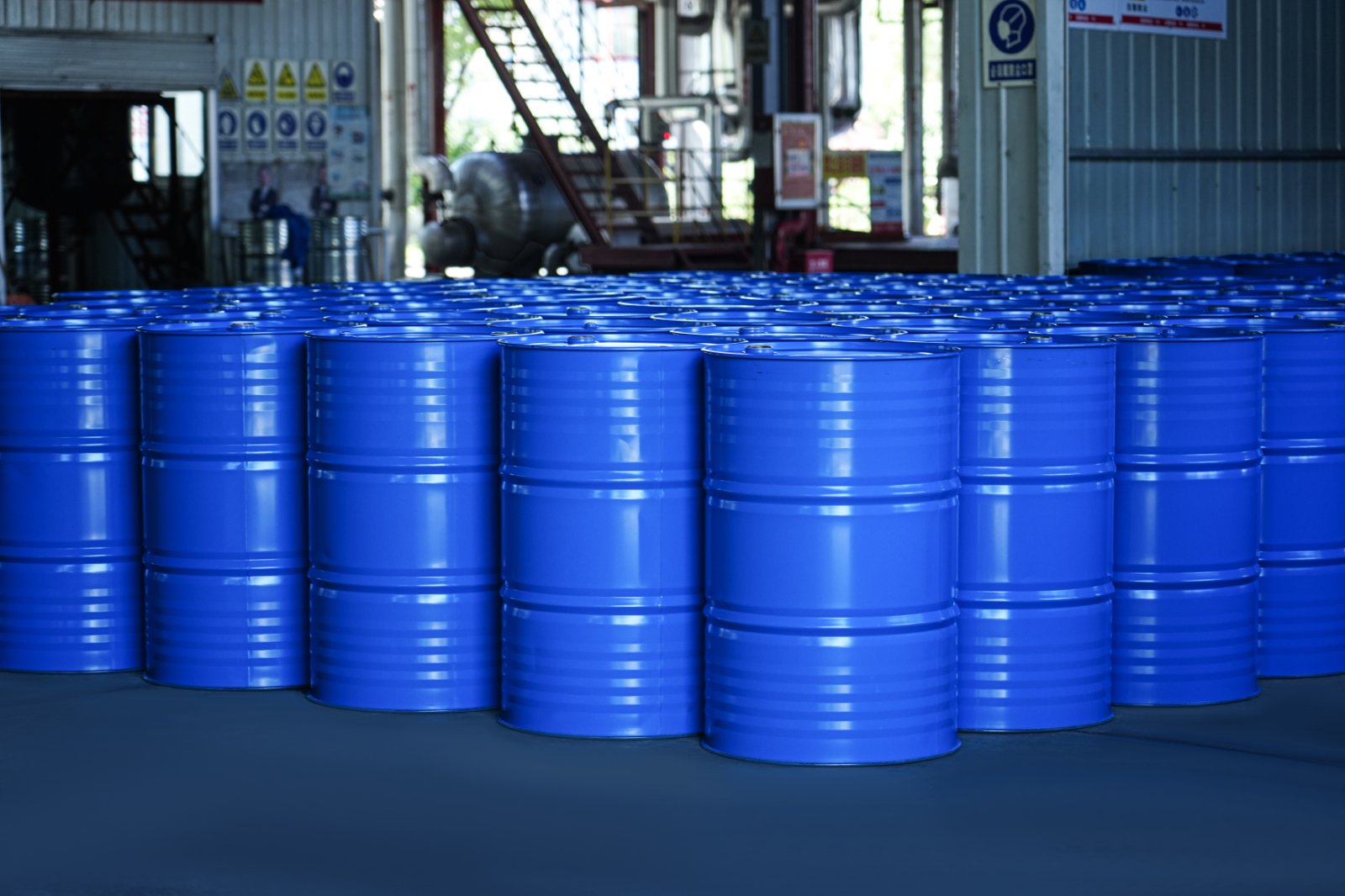
Packaged polyester polyol ready for dispatch — packaging format is a specification variable buyers should confirm alongside grade.
System-Level Decisions: Catalysts and Flame Retardants
Polyol grade selection sets the stoichiometric baseline, but it does not set the reaction profile on its own. XINFA also supplies the ancillary components that determine how a formulation actually behaves at the machine.
DMP-30 is used as a trimerization catalyst, promoting isocyanurate ring formation — the reaction that distinguishes PIR chemistry from plain polyurethane and that is central to PIR spray and panel systems. T-9 (stannous octoate) is a gelling catalyst acting on the polyol–isocyanate reaction. Because these two catalysts act on different reactions, changing either one shifts the cream-to-gel sequence without any change to the polyol specification. Buyers who re-source polyol while keeping the catalyst package fixed, or vice versa, lose the ability to attribute a change in behaviour to a cause.
Flame retardants TCPP and TEP are typically added at system level and are additive rather than reactive in the formulation. Adding them changes viscosity and therefore changes the processing window, which is why flame retardant loading and polyol viscosity should be evaluated together rather than as two separate procurement decisions. A grade that processes cleanly at one additive loading may not at another.
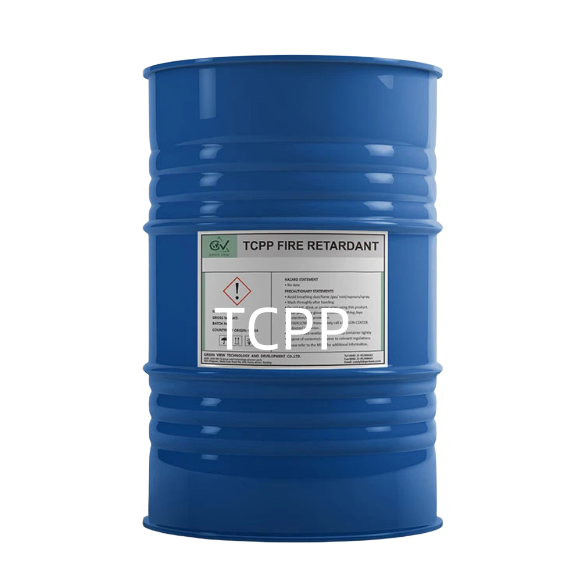
TCPP, one of the additive flame retardants supplied alongside XINFA polyester polyol grades for system-level formulation.
Comparison with Traditional Solutions, and Where This Framework Stops
Aromatic polyester polyols are frequently compared with conventional polyether polyol systems. The general trade-off is well established: aromatic structure is generally associated with better flame behaviour and higher rigidity in rigid foam, while polyether systems are generally easier to handle at ambient temperature. The practical consequence for buyers is that switching to a polyester polyol grade can improve a fire or rigidity requirement while adding a handling requirement — heated storage, dry handling, and closer moisture control.
Against a spec-by-price sourcing approach, the difference is not a product property but a cost shape. A cheaper grade outside the viscosity window produces rework; the saving is visible on the invoice and the cost is visible in scrap. XINFA's own comparison material reports 10–20% cost savings relative to an American-brand reference with equal foaming efficiency and the same density and thermal insulation index at the same formula ratio, together with a matching catalyst system that requires no extra maintenance adjustment on existing lines. That is supplier-reported positioning and should be validated in the buyer's own trial rather than adopted as an independent finding.
• XF-2007 at 15,000 ± 3,000 CPS is a high-viscosity grade. It is not a drop-in for unheated, low-pressure equipment without confirming pump and line capability.
• XF-Z at OHV 60 ± 5 is a low-functionality adhesive grade and should not be read as a general-purpose rigid foam polyol.
• Published moisture limits do not appear for every grade in the cited range, so buyers must request them per grade rather than assume a series-wide value.
• With a monthly production capacity of 4,000 metric tons and a typical lead time of 15–20 days, allocation during demand peaks should be agreed in advance rather than assumed.
Market Context: Why Specification Frameworks Are Becoming Standard
The commercial backdrop supports more disciplined specification work. Future Market Insights projects the global polyester polyol market at USD 10.1 billion in 2025, with segmentation across rigid foam, coatings, adhesives and specialty applications. The catalyst side is growing alongside it: Market Research Future data, distributed via EINPresswire, estimated the triethylenediamine market at USD 0.74 billion in 2024 with a 5.1% CAGR toward USD 1.22 billion by 2034.
Read together, those two figures describe a category in which polyol and catalyst demand move in the same direction — which is consistent with buyers increasingly sourcing polyol, catalyst and flame retardant as a matched system rather than from three unrelated suppliers. The interpretation matters more than the numbers: when formulation components are bought separately, the buyer owns the compatibility risk; when they are bought as a validated set, part of that risk transfers to the supplier's technical team.
Execution: Acceptance, Packaging and Lead Time
Specification work only holds if the delivered batch matches the tested sample. XINFA performs 100% testing on all products, with inspection for every batch, supported by more than 30 sets of intelligent production equipment, automated control and standardized processes aimed at limiting batch-to-batch fluctuation. The company holds ISO 9001 quality management, ISO 14001 environmental management and ISO 45001 occupational health and safety certification.
On commercial terms, published material references a minimum order quantity of 1 metric ton, with OEM and ODM services available. Order-level terms include delivery on FOB or CIF basis, pre-shipment testing as the acceptance criterion, and payment by T/T or L/C, with MOQ confirmed against the specific order. Packaging is offered in IBC drums of 1,200 kg or 1,000 kg, and galvanized iron drums of 225 kg, 200 kg or 170 kg.
For buyers moving from Decision to Execution, a practical sequence is: fix the application first, then the OHV band, then the viscosity window against actual equipment, then the moisture and acid value limits, then the catalyst and flame retardant package, and only then the commercial terms. Reversing that order is how a technically sound grade ends up in a line it was never specified for.
Future Outlook
Two shifts are likely to shape polyester polyol procurement over the next planning cycle. The first is the migration of moisture and acid value from 'nice to have' data points to standard acceptance criteria, particularly in adhesive and coating applications where the failure cost is far higher than the material cost. The second is the normalisation of system-level purchasing, in which polyol, catalyst and flame retardant are qualified as one package so that a reactivity change can be traced to a single variable.
For suppliers, that raises the bar on documentation rather than on marketing: per-grade moisture and acid value reporting, stated test methods, and batch traceability become the differentiators. For buyers, it reduces the value of comparing headline OHV figures and increases the value of comparing specification completeness.
Frequently Asked Questions
Which parameter should be checked first when selecting a polyester polyol grade?
Hydroxyl value is normally the first parameter, because it determines the stoichiometric isocyanate requirement and the crosslink density the finished system can reach. Viscosity and moisture are then checked against the process and the application's sensitivity to water. Selecting OHV first prevents a grade from being chosen on handling convenience and then forced into a reactivity band it was not designed for.
Which XINFA grades correspond to PIR spray insulation and to sandwich panel adhesive?
XF-2007 is published at OHV 200 ± 10 with viscosity 15,000 ± 3,000 CPS and sits in the high-viscosity, moderate-OHV region relevant to rigid PIR spray systems. XF-Z is published as an adhesive grade at OHV 60 ± 5 with moisture ≤ 0.15%, intended for moisture-sensitive bonding layers. The two differ by more than 140 mgKOH/g in OHV and serve different functions within a sandwich panel build.
Why does a moisture limit of ≤ 0.15% matter for an adhesive grade?
Water reacts with isocyanate and releases carbon dioxide. In an adhesive layer that reaction produces voids along the bond line and reduces effective contact area, which lowers bond strength. In sealed containers the same reaction can generate pressure during storage. A published limit such as ≤ 0.15% on XF-Z gives buyers a verifiable acceptance criterion rather than a qualitative expectation.
Can KXF-350 be substituted for XF-270 in controlled-release fertilizer coating?
The published specifications do not support direct substitution. XF-270 is published for controlled-release fertilizer coating at OHV 260 ± 10 with viscosity 3,000 ± 500 CPS at 25 °C, while KXF-350 is the mining grade at OHV 350 ± 20 with viscosity 1,500 ± 500 CPS. The difference in both reactivity and flow behaviour means any substitution requires a fresh coating trial and re-validation of release performance rather than a specification comparison alone.
What purchasing terms and acceptance criteria apply to XINFA polyester polyol orders?
Published terms specify MOQ as agreed with the customer, delivery on FOB or CIF basis, pre-shipment testing as the acceptance criterion, and payment by T/T or L/C. Company material also references a minimum order quantity of 1 metric ton, a typical lead time of 15–20 days and a monthly production capacity of 4,000 metric tons. OEM and ODM services are available.
A downloadable XINFA product brochure covering the polyester polyol series is available here.
Есть вопросы или нужны дополнительные детали?
Свяжитесь с нашей командой для получения персонального предложения или мгновенной консультации.
Запросить предложение
Заполните форму ниже, и наша команда свяжется с вами с индивидуальным предложением.
Прямой чат WhatsApp
Предпочитаете общаться в реальном времени? Напишите нам в WhatsApp для мгновенной помощи и быстрых ответов.
- Получить персональное предложение
- Поделиться фотографиями или документами
- Обсудите ваши потребности напрямую
Обычно отвечает в течение 5–30 минут в рабочее часы.