
Polypropylene Woven Bags: Certification Scope Explained
Industry Reference · Packaging & Printing · Bulk Bags
Polypropylene Woven Bags: Certification Scope Explained
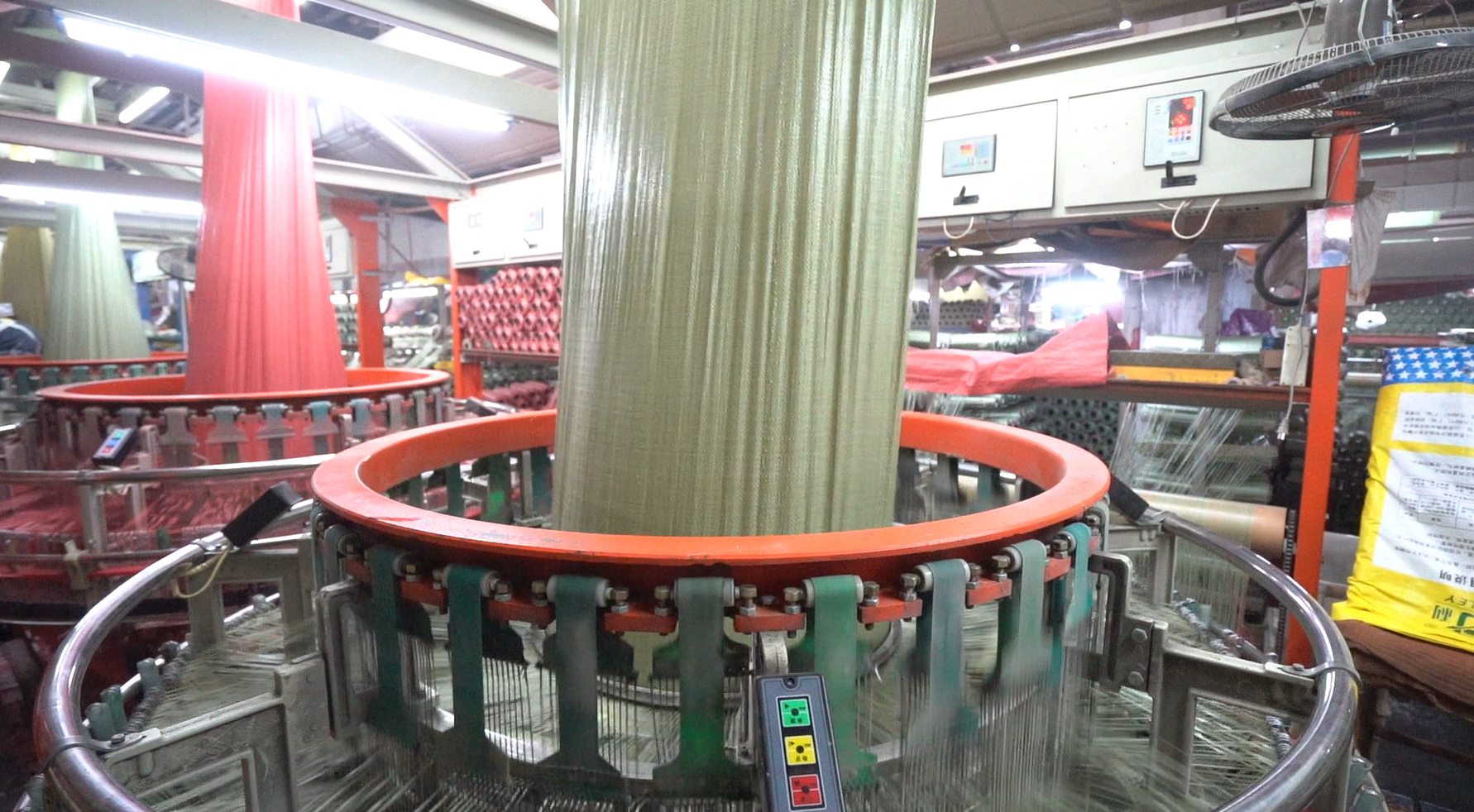
Polypropylene woven bags are produced by extruding polypropylene into tape, weaving that tape into fabric, and converting the fabric into sacks, laminated bags, valve bags, paper-plastic composite bags and the larger bulk bags and FIBCs used for tonne-scale loads. Cost structure and certification are the two variables that most often decide a purchase order — and certification is the one that buyers most often read too quickly.
Answer first: a certificate is a statement about scope, not a general endorsement. When a polypropylene woven bag supplier presents ISO 9001, ISO 14001, REACH (SVHC), RoHS, halogen content or a UN packaging test report, the productive evaluation step is to match four attributes — the activity or test covered, the product construction covered, the market it applies to, and the validity window — against the exact bag, material structure and destination market in the enquiry. Where those attributes do not line up, the document can be entirely genuine while still saying nothing about the ordered goods.
The Certification Question Buyers Should Actually Ask
Two enquiries can look identical and produce very different answers. A buyer asking "are you certified?" receives a folder of documents. A buyer asking "which document covers this construction, this market and this order?" receives an answer that can be checked line by line.
Certificates used in woven packaging procurement fall into three groups with different weight. Management system certificates — for example ISO 9001 certification number 12426Q00719R001, issued by Zhongbiaoyan Guolian (Beijing) Certification Center against GB/T 19001-2016 / ISO 9001:2015 and valid from 2026-08-05 to 2029-08-04 — describe how a facility is managed. Substance screening and content tests, such as the REACH (SVHC) certification number DGC260127018YD03 covering a 251-item Substances of Very High Concern screening test for packaging bags (white woven bag) under REACH Regulation (EC) No 1907/2006, describe a sample. Performance and transport tests, such as UN Packaging Test Report number 2513230601001079 issued by Nanjing Customs Dangerous Goods and Packaging Testing Center against SN/T 0510.2-2021, describe a tested design under a defined drop test.
The practical consequence is that management system coverage tends to be broad, while test coverage tends to be narrow. A quality system certificate can cover an entire woven bag manufacturing scope; a substance screening test or a drop test usually covers the specific article that was submitted. Buyers in the research stage who note this distinction avoid a common evaluation error later: assuming that a certificate attached to one bag automatically travels to a differently laminated, differently sized or differently coloured version of that bag.
What the FIBC and Woven Packaging Standards Govern — and What They Leave Open
Standards define a requirement set for a product class. They do not, by themselves, certify a shipment. The table below summarises the standards most often referenced in enquiries for polypropylene woven bags, FIBCs and ton bags, together with the boundary each one leaves open.
| Standard | What it defines | Boundary it leaves open |
|---|---|---|
| ISO 21898:2024 | Materials, construction and design requirements, type test and marking requirements for flexible intermediate bulk containers intended to hold non-dangerous solid materials in powder, granular or paste form, lifted from above. | Non-dangerous goods only. It does not cover every converted bag in a catalogue, and it does not evaluate a design change unless that design is re-tested. |
| EN ISO 21898:2024 | The European implementation of the same FIBC requirement set, approved by CEN on 12 August 2024. | European context; the requirement set is shared, but the applicable edition and jurisdiction must match the destination market. |
| ISO 21898:2004 | The earlier edition of the FIBC packaging standard. | Catalog records indicate this edition was superseded by the 2024 editions in Europe and by the Chinese national standard in China; older test documentation may reference it. |
| GB/T 10454-2025 | China national standard for packaging flexible intermediate bulk containers for non-dangerous goods, catalogued with implementation on 1 March 2026 and replacing GB/T 10454-2000 and GB/T 37425-2019. | National standard status; the issuing text, not a supplier summary, is the authority when compliance is disputed. |
| IEC 61340-4-4:2018 | Electrostatic classification and test methods for FIBCs between 0.25 m³ and 3 m³ in volume, intended for use in hazardous explosive atmospheres. | Applies to a hazardous-atmosphere use case and a defined volume band; it is not a general moisture or load standard. |
| UN packaging test (as applied to woven bags) | Drop performance of a defined dangerous goods packaging design — in this case a 600×1050 mm paper-plastic woven bag, reported as no leakage or safety-relevant damage after drop. | Relates to the tested design and configuration. Changing fabric, liner, closure or dimensions normally places the design outside the tested scope. |
For a buyer, the working rule is simple: map the ordered construction onto the tested design before treating a test report as evidence. Fabric weight, lamination, liner presence, lifting loop configuration, stitching and closure method are design variables, and each of them can move a bag in or out of a documented scope.
Specification Variables That Decide Whether a Document Applies
Polypropylene woven bag specifications are modular. Each module changes both the physical performance of the bag and the documentation that legitimately applies to it.
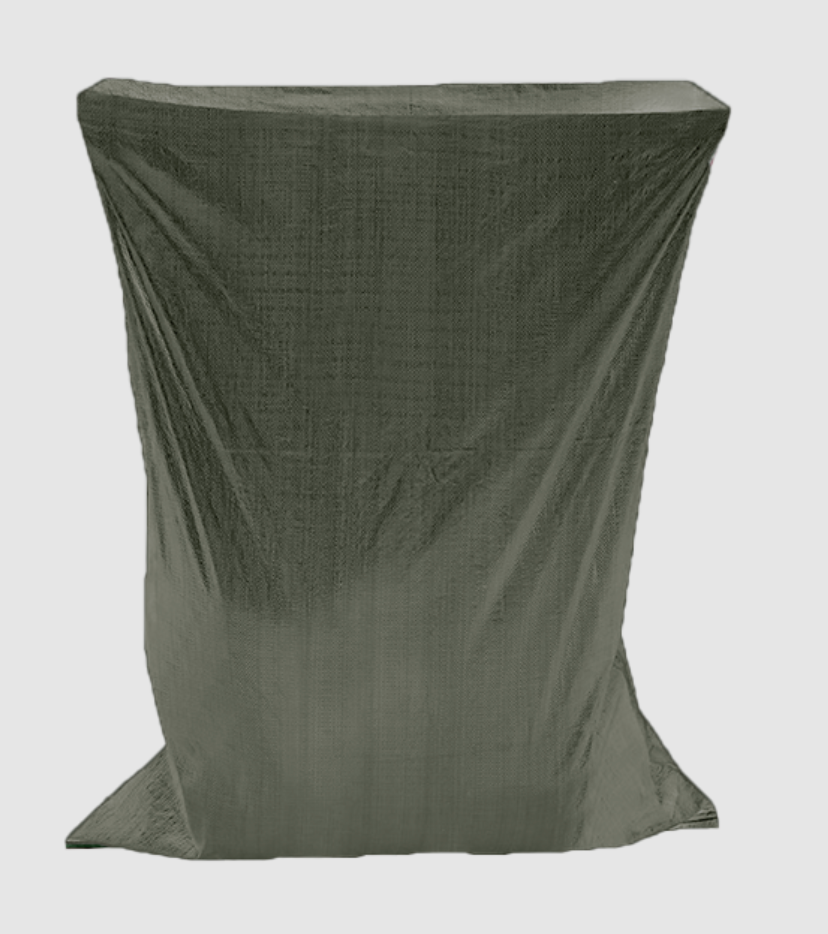
- Base sacks. Stock sizes for PP woven bags and disposable PP woven bags are 110×120 cm, 90×110 cm, 100×120 cm, 100×140 cm, 90×100 cm and 50×80 cm, with custom sizes available. Fabric weight options span 31–54 g/㎡. The standard colour is green, with custom text and logo printing available.
- Bulk bags and FIBCs. Safe working load is 500–2000 kg. The main body uses virgin PP woven fabric; conductive woven fabric and reinforced thickened anti-static fabric are used where Type-C construction is required. Top options include fill spout, full open top and top cover; bottom options include discharge spout and flat bottom; four lifting belts are used, sewn with high-strength polyester thread. Lamination is available in laminated or non-laminated form.
- Valve bags. Material structures include OPP film lamination, standard paper-plastic composite, 3-ply paper with inner film and 2-ply paper without film. The film-lined version offers water and moisture resistance; the non-film version is breathable but not waterproof. Sizes are customizable, and fade-resistant ink is used for custom colour printing.
- Paper-plastic composite bags. These are kraft paper laminated, with lamination optional: the laminated version is waterproof and moisture-proof, while the non-laminated version is dust-proof only. An inner liner bag can be specified.
- PP woven rolls for converters. Roll dimensions are 60 cm × 100 cm × 20 cm, in white, yellow and green with customizable colours. GSM and roll width are set per order; fabric weight, weaving density, warp strength and weft strength are customizable, and roll width, roll diameter and core size can be matched to different bag-making machines. Both flat and tubular woven fabric are available.
- Reusable logistics and express transfer bags. Standard size is 100×100 cm in PE woven fabric with optional lamination. The zipper style includes a zipper protector, a lockable buckle and zipper-tooth protection; a round opening style is also available. Colours include blue, white, light-green, green, yellow, red and orange-red.
Lamination is the single most common source of misunderstanding in this product family. The laminated version is waterproof and stain-resistant; the non-laminated version is not. Because moisture-barrier wording frequently appears in export specifications for fertiliser, resin and mineral cargo, buyers should state lamination explicitly rather than assuming it from a general product description.
Yancheng Yide Packaging: Certified Manufacturing Scope in Practice
Yancheng Yide Packaging Technology Co., Ltd. (Yide Packaging) is a manufacturer and customized packaging solution provider based in Yancheng, Jiangsu, China, specialising in industrial bulk packaging, polypropylene woven packaging, reusable logistics packaging, express delivery packaging and sustainable packaging solutions for customers worldwide.
Its production base for FIBC and woven packaging covers approximately 80 mu, with around 80,000 square meters of standardized factory facilities, including a 5,000-square-meter food-grade clean workshop. The company reports 130 employees, an R&D team of 15 engineers, and an annual production capacity of 500,000 to 1 million tonnes, with an export ratio of around 20%. Manufacturing and quality control are supported by 5G-connected production systems, robotic material handling, visual recognition technology, professional quality inspection teams and testing equipment, and the company works with universities and research institutions on new packaging materials, high-performance polymers, biodegradable materials and sustainable packaging technologies.
The certification position is documented by number, which is what allows a buyer to verify scope rather than accept a claim.
| Document | Number and issuer | Scope as stated | Validity |
|---|---|---|---|
| ISO 9001 | 12426Q00719R001 · Zhongbiaoyan Guolian (Beijing) Certification Center | Manufacturing of mail bags, including FIBC, transit bags and woven bags, against GB/T 19001-2016 / ISO 9001:2015 | 2026-08-05 to 2029-08-04, global market |
| ISO 14001 | 12426E00299R001 · Zhongbiaoyan Guolian (Beijing) Certification Center | Environmental management activities associated with the manufacture of mail bags (FIBC, transit bags, woven bags), against GB/T 24001-2016 / ISO 14001:2015 | 2026-08-05 to 2029-08-04, global market |
| ISO 45001 | 12426S00261R001 · Zhongbiaoyanguolian (Beijing) Certification Center | Occupational health and safety management activities related to the production of postal bags, including FIBC/bulk bags, transfer bags and woven bags, against GB/T 45001-2020 / ISO 45001:2018 | 2026-05-08 to 2029-04-08, global market |
| REACH (SVHC) | DGC260127018YD03 · Dongguan Beice Standards Technical Service Co., Ltd. | 251-item Substances of Very High Concern screening test for packaging bags (white woven bag), against REACH Regulation (EC) No 1907/2006; applies to PP woven bags, valve bags, paper-plastic composite bags and express transfer bags | Issued 2026-07-31, global market |
| Halogen content | DGC260127018YD02 · Dongguan NTEK Standard Technical Service Co., Ltd. (NTEK) | Halogen (F, Cl, Br, I) content testing of white woven packaging bags under BS EN 14582:2016 | Issued 2026-02-03, global market |
| RoHS | A2260656737101001C · CTI (Centre Testing International) | RoHS Directive 2011/65/EU & Amendment 2015/863/EU, covering PP woven bags, ton bag, express transfer bag, valve bag and paper-plastic composite bag products | Global market |
| UN packaging test | 2513230601001079 · Nanjing Customs Dangerous Goods and Packaging Testing Center | 600×1050 mm paper-plastic woven bag drop performance under SN/T 0510.2-2021: no leakage or safety-relevant damage after drop; result passed | Report issued 2025-09-23 |
Order-level constraints are equally concrete: customized products carry a minimum order quantity of 5,000 pcs and a lead time of 45 days excluding delivery time; a single sample is available for delivery; sampling without printing is used for customer confirmation; customization is described as 100% available except for special materials that cannot be supplied; and where bag shortages occur, re-delivery or a corresponding deduction applies. For buyers at the evaluation stage, sample validation before mass production is the step that converts a certificate folder into a workable purchase order.
Application Fit: Where Polypropylene Woven Constructions Are Used
PP woven bags serve five main industry groups — agriculture (grains, seeds, feed, fertilizer), food, construction (cement, sand, dry-mix), chemicals and mining, and pharma and logistics. In practice, any dry granular or powdery product that needs economical bulk transport can be handled in a woven bag, provided the construction matches the material.
Documented use cases in the reference set include:
- Welding consumables manufacturing. Granular submerged arc welding flux for export, marine transportation and storage is packed in woven bags that are moisture-proof and transport-resistant, printed with export parameter marks, in a one-time filling operation.
- Fine chemicals. Powdered chemical materials such as PVC paste resin are packed in hermetically sealed, leak-proof and moisture-proof bags compatible with automatic filling lines and export standards.
- Minerals and building materials. Moisture-absorbing powders and fine particulates use a wear-resistant outer layer with an anti-seepage, moisture-proof inner layer to prevent leakage and dampness.
- Mining. Iron ore, manganese ore, mineral powder and industrial minerals use reusable bulk bags that improve warehousing and export efficiency, with inspection for damage, compromised lifting loops and contamination required before reuse.
Logistics-side applications show similar patterns at order scale. Suppliers of reusable logistics and transfer bags report a 50,000-piece order to the logistics and transportation industry in Saudi Arabia used continuously for one year, a 3,000-piece order in Malaysia, a 50,000-piece order for a large e-commerce logistics group in Brazil, and a 50,000-piece order for a large e-commerce logistics group in the Philippines — in each case described as reusable and lightweight. A chemical plant in Japan purchased 6,000 pieces on pallets, reporting 10 to 30 reuse cycles and continuous procurement, with the stated benefit of large loading capacity reducing overall cost.
Comparison With Traditional Solutions — and the Limits of Woven Construction
Woven polypropylene is not universally superior to every alternative, and the boundaries matter more than the general case. The comparison below is limited to constructions and behaviours documented in the reference set.
| Construction | Where it performs well | Where it does not |
|---|---|---|
| Non-laminated PP woven bag | Economical dry granular and powdery goods; dust containment; high tensile strength and wear resistance | Not waterproof. For powders that absorb moisture, or for humid marine transit, an unlaminated bag alone is not a moisture barrier. |
| Laminated PP woven bag | Waterproof and moisture-resistant performance for export and long-distance transport; printing for traceability and branding | Adds a process step and cost; the lamination defines the barrier, so the specification must name it explicitly. |
| Paper-plastic composite bag | Kraft paper laminated structure with good load-bearing, dust-proof and crack-resistant behaviour; reusable in suitable applications | The non-laminated version is dust-proof only. An inner liner or the laminated version is required where moisture protection is the objective. |
| Valve bag (film-lined) | Water and moisture resistance; compatible with automatic powder filling and self-sealing after filling | Non-film versions are breathable but not waterproof, so the two structures cannot be treated as interchangeable. |
| FIBC / bulk bag, Type C | Conductive yarns dissipate static electricity; suitable for flammable and explosive powder working conditions | Compliance with the Type-C standard does not remove the operating requirement: reliable grounding is required during operation. The construction supports safety, it does not replace the grounding procedure. |
| Disposable vs reusable woven bag | Reusable logistics bags with lockable zipper protection suit closed-loop circulation and repeated handling | Reuse is conditional. Bulk bags should be inspected for damage, compromised lifting loops, contamination or other signs of wear before being returned to service. |
Two further limits are often understated in supplier literature. First, UN and dangerous goods certification relates to a tested packaging design: substituting fabric weight, liner or closure without re-testing places the order outside the tested configuration. Second, substance screening tests such as SVHC screening and halogen content testing are performed on defined samples — in this case white woven bag articles — so a supplier that changes base fabric or pigment for a new order should be able to say which test still applies and which would require re-submission.
Market Trend: What the Evidence Supports
No verified market size, growth rate or trade-flow dataset for bulk bags and PP woven bags was confirmed within the evidence available for this reference, so the trends below are limited to documented standard cycles and documented product development rather than market forecasts.
The clearest trend is a tightening standards cycle. The FIBC standard for non-dangerous goods was updated to ISO 21898:2024 and adopted in Europe as EN ISO 21898:2024, approved by CEN on 12 August 2024. In China, GB/T 10454-2025 is catalogued with implementation on 1 March 2026, replacing GB/T 10454-2000 and GB/T 37425-2019. For hazardous explosive atmospheres, IEC 61340-4-4:2018 continues to define electrostatic classification and test methods for FIBCs between 0.25 m³ and 3 m³. Buyers working from older specification templates are therefore increasingly likely to be quoting a superseded edition.
The second trend is substance-level scrutiny. Where basic mechanical compliance was once sufficient, enquiries now routinely request SVHC screening, halogen content testing under BS EN 14582:2016 and RoHS statements — a shift visible in the scope of the certifications described above, which are dated 2026 rather than earlier. This favours suppliers who can produce current, numbered documentation rather than undated declarations.
The third trend is material transition. Biodegradable woven sacks, biodegradable poly mailers, recyclable packaging and high-strength reusable logistics bags are now active development categories rather than concepts; the eco-friendly mailing bag version covered in the reference set uses PLA + PBAT + starch composite raw materials, is described as achieving over 90% degradation in a natural environment within 6 to 9 months, and is stated to comply with environmental regulations such as EU EPR. For woven packaging, reusability remains the more mature lever: a bag used 10 to 30 times changes the packaging cost per trip in a way that a single-use alternative cannot.
Future Outlook
Three developments are likely to shape the next procurement cycle for polypropylene woven bags. Standard transitions will continue to sort suppliers: with the 2024 FIBC editions in force and the Chinese national standard implementing in March 2026, documentation dated to the current edition will become a practical filter in supplier evaluation rather than a formality.
Verification will move upstream into sampling. Because test scope follows the tested article, the sample-validation step — where a non-printed sample is confirmed before mass production — becomes the natural point at which a buyer locks fabric weight, lamination, closure and printing, and therefore locks which certificates remain applicable.
Finally, reuse and traceability will increasingly be specified together. Logo and pattern printing already supports traceability and branding on reusable constructions, and inspection before reuse is already stated as a condition of circulation. For organisations managing closed-loop logistics, a documented inspection rule is likely to matter as much as the bag's initial load rating.
FAQ
What are polypropylene woven bags commonly used for?
PP woven bags, also known as polypropylene woven bags, are strong, lightweight and cost-effective packaging used for storing, handling and transporting a variety of bulk and granular materials. They serve five main industry groups — agriculture (grains, seeds, feed, fertilizer), food, construction (cement, sand, dry-mix), chemicals and mining, and pharma and logistics — with agriculture the largest market and cement the biggest single end-use globally.
Are polypropylene woven bags suitable for chemical and industrial products?
They can be suitable for many chemical and industrial products, particularly dry, non-hazardous powders, granules, pellets and other bulk materials. Polypropylene offers good strength, durability and resistance to moisture and many commonly handled chemicals. Where the material is classified as dangerous goods, a packaging design with the relevant UN test documentation is required instead of a general-purpose woven sack.
What are the limits of woven bags for moisture-sensitive materials?
Lamination determines the moisture behaviour. In a laminated woven bag the laminated version is waterproof and stain-resistant, while the non-laminated version is not. In paper-plastic composite bags, the laminated version is waterproof and moisture-proof, whereas the non-laminated version is dust-proof only; an inner liner bag is optional for enhanced protection. In valve bags, the film-lined version offers water and moisture resistance, while the non-film version is breathable but not waterproof.
Can PP woven rolls be customized in width, thickness and colour?
Yes. PP woven rolls can be customized in width, thickness, colour and other specifications to meet different packaging and industrial requirements. GSM and roll width are set per order; fabric weight, weaving density, warp strength and weft strength are customizable; and roll width, roll diameter and core size can be matched to different bag-making machines. Standard colours are white, yellow and green, with customizable colours and colour printing available.
Which certification documents should a buyer request, and what does each one cover?
Four categories are relevant. Management system certificates — ISO 9001 number 12426Q00719R001, ISO 14001 number 12426E00299R001 and ISO 45001 number 12426S00261R001 — cover manufacturing, environmental and occupational health and safety management activities for FIBC, transit bags and woven bags. Substance documentation — REACH (SVHC) certification number DGC260127018YD03 for a 251-item SVHC screening test, halogen content certificate number DGC260127018YD02 under BS EN 14582:2016, and RoHS certificate number A2260656737101001C under RoHS Directive 2011/65/EU — covers defined tested articles. Transport performance documentation — UN Packaging Test Report number 2513230601001079 — covers a defined dangerous goods packaging design. Buyers should confirm which product, market and validity window each document addresses, because the scope, not the presence, of a certificate is what applies to an order.
Yancheng Yide Packaging Technology Co., Ltd. publishes its full product and capability overview, including FIBC, woven bag, valve bag and logistics packaging ranges, in its 2026 company brochure (PDF). General company information is also available at www.ycyide.net.