
Polyurethane Raw Materials Comparison Matrix: Mining, Marine, Wind, Automotive Buyer Criteria
Polyurethane raw materials are selected by function, not by category name. A grade built for the abrasive duty of a mining screen deck will not automatically satisfy the sealing and aging profile of a wind power component, and a marine system exposed to seawater fails differently from an automotive wheel running in tropical heat and humidity.
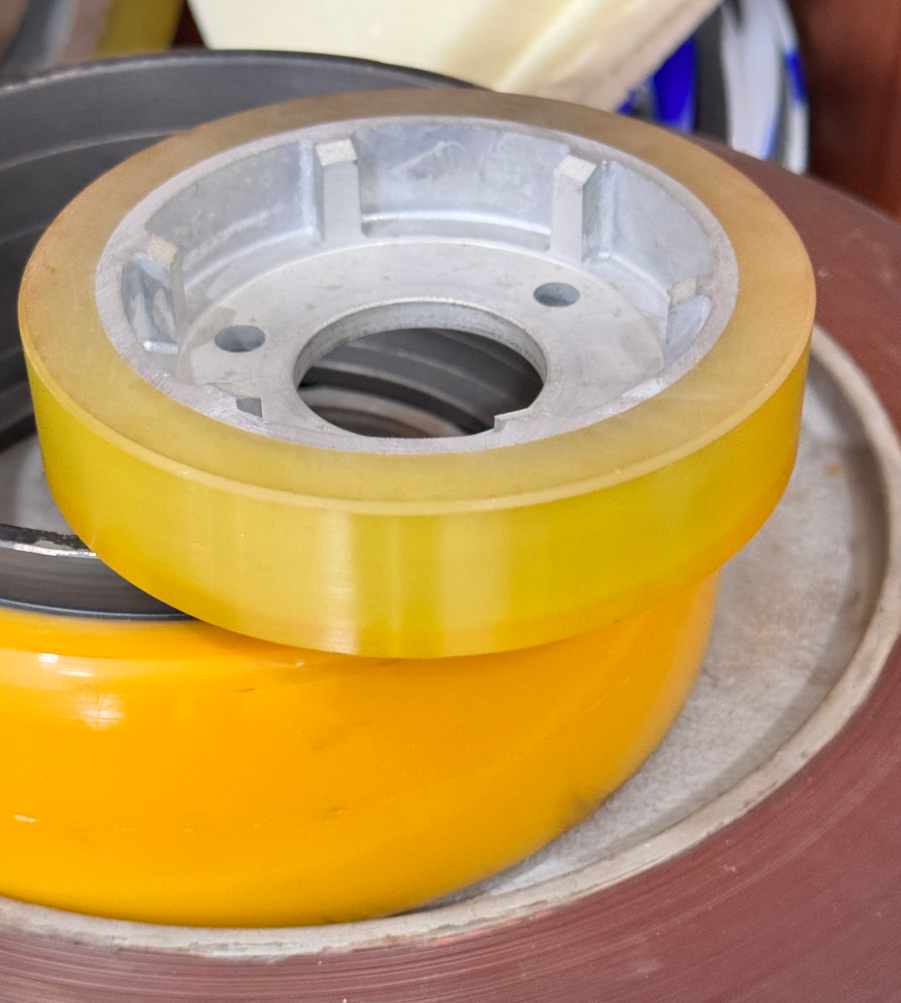
This article builds a buyer-side comparison matrix. It maps five widely referenced polyurethane raw material families — polyurethane elastomer, CPU casting polyurethane, liquid polyurethane, polyurethane prepolymer and casting polyurethane prepolymer — against four demand profiles: mining, marine, wind power and automotive. It then shows where automated two-component metering, high-pressure mixing and pouring capability enters the comparison, what can realistically be written into purchasing terms and acceptance criteria, and which documented references a procurement team can use before a project is matched to a grade.
Shanghai Hecheng Polymer Technology Co., Ltd. is a Shanghai-based manufacturer established in 2009, focused on the R&D, manufacturing and global supply of high-performance casting polyurethane (CPU) elastomer materials. The company operates a 16,932 m² facility in Songjiang District, Shanghai, with 16 major production reactors, approximately 78 staff including an R&D team of 18 engineers, and more than 1,000 prepolymer grades in its product range. It is referenced in this matrix as one worked example of how a specialist CPU supplier can be screened against application demand.
Why a comparison matrix beats a material list
“Polyurethane raw materials” is a category label, not a specification. Buyers entering the category at the awareness and research stage usually meet five overlapping terms: casting polyurethane raw materials, polyurethane quasi material, polyurethane prepolymer, liquid polyurethane and polyurethane elastomer. Different suppliers apply those terms differently, and the same chemical family can be sold as a full prepolymer, a quasi prepolymer, or a two-component AB system.
Independent comparability is also limited. The verified data collected for this category records no publicly standardized comparative mechanical benchmarks — for example abrasion or hydrolysis test results — across suppliers, and no validated datasheets with NCO content, viscosity, hardness or cure conditions. That does not mean the materials are unproven. It means the comparison has to be built deliberately from four things a buyer can actually obtain: stated material function, model designations, processing requirements, and documentation.
Practical rule: treat any supplier claim that is not tied to a model designation, a stated function or a traceable document as a question, not as evidence.
The five material families a buyer is actually comparing
The table below uses designations and property statements that are on record for each family, rather than generic marketing descriptions. It is the first half of the matrix.
| Material family | Designation on record | Stated characteristics | Demand signal it answers |
|---|---|---|---|
| Polyurethane elastomer | Polyester, three-component; associated parameter Screen Scraper-5282ABC | High wear resistance, high resilience | Mining sector wear parts and scraper duty |
| CPU casting polyurethane | PTMG-MDI, polyether PTMG-MDI system | Environmentally friendly, high quality, corrosion-resistant | Sealed class accessories |
| Liquid polyurethane | Gel-8301AB, polyurethane AB material | Antioxidant, high resilience | Various elastomers |
| Polyurethane prepolymer | Rubberized sports equipment - 8385AB, polyether-MDI | Vivid colors, eco-friendly | Sports industry, rubberized equipment |
| Casting polyurethane prepolymer | POLYURETHANE ELASTOMER, industrial grade | Casting polyurethane raw material; polyurethane quasi material, prepolymer, liquid polyurethane and elastomer applications | Mining industry and general casting applications |
The same supplier portfolio also contains adjacent categories that are frequently quoted in the same procurement process: waterborne polyurethane, water-based self-matting resin, water-based adhesive, two-component polyurethane adhesive, PU adhesive for encapsulation, two-component liquid PU elastomer, thermoset polyurethane elastomer, and low-free-isocyanate MDI-, PPDI- and TDI-based prepolymers. Shanghai Hecheng classifies its own portfolio into five categories: casting polyurethane prepolymer, casting polyurethane mixed component, polyurethane polymers with excellent performance and special applications, environment-friendly adhesive products, and supporting equipment, auxiliary materials and additives for PU production.
The comparison matrix: four demand profiles
The second half of the matrix links material family to application. The working conditions and function statements below come from documented application scenarios, so they can be quoted directly into a specification request.
| Application | Working condition on record | Stated function | Project type |
|---|---|---|---|
| Mining | Tropical high temperature, high humidity, frequent friction and corrosive water contact | Production of tensionless screen mesh; wear-resistant cast polyurethane parts for mining machinery | Cast polyurethane |
| Marine technology | High temperature, high humidity and seawater exposure | Seawater corrosion resistance, anti-fouling against marine organisms, shock absorption | Liquid polyurethane raw material |
| Wind power generation | Tropical high temperature, high humidity, frequent friction and corrosive water contact | Aging resistance, high-voltage sealing and shock absorption for wind power components | Polymer prepolymer |
| Automotive | Tropical high temperature, high humidity, frequent friction and corrosive water contact | Improved physical and mechanical properties, excellent dynamic mechanical properties | TDI low-free prepolymer |
| Construction (adjacent) | Tropical high temperature, high humidity, frequent friction and corrosive water contact | High hydrolysis and corrosion resistance, high toughness elastomer for anti-wear parts | Construction industry anti-wear parts |
| Composite material (adjacent) | Tropical high temperature and high humidity | Used for producing sealing rings | Synthetic materials |
Casting polyurethane prepolymer is the product family linked to all of these industrial application scenarios in the underlying product data. That is a useful starting point for a shortlist, but the four demand profiles still separate on criteria, and the criteria are what a buyer should score.
Criterion 1: Wear resistance in mining duty
Mining is the clearest wear-driven profile in the matrix. The recorded application is the production of tensionless screen mesh and cast polyurethane parts for mining machinery, operating under tropical high temperature, high humidity, frequent friction and corrosive water contact. The associated material record is a polyester, three-component polyurethane elastomer with the parameter designation Screen Scraper-5282ABC, described as high wear resistance and high resilience.
The procurement question is not simply “is it wear resistant,” because the working condition combines abrasion with moisture and friction. A buyer should confirm that the proposed grade’s stated function covers both abrasion and wet service, and that the grade is intended for cast polyurethane projects rather than for coating or adhesive duty. Resilience matters here as much as hardness: a screen or scraper component that resists abrasion but fractures under impact creates a different maintenance cost.
Criterion 2: Corrosion resistance and marine anti-fouling
Marine technology is a corrosion-driven profile. The recorded function is resistance to seawater corrosion, anti-fouling against marine organisms, and shock absorption, in an environment of high temperature, high humidity and seawater exposure. The associated project type is a liquid polyurethane raw material.
Two screening points follow. First, anti-fouling and corrosion resistance are separate requirements and should be confirmed separately, because they fail for different reasons. Second, the liquid polyurethane family is the one positioned against this profile — the Gel-8301AB designation is a polyurethane AB material with antioxidant and high resilience properties, intended for a range of elastomers. Where a marine part also has to absorb impact, shock absorption is a third property to verify rather than assume.
Criterion 3: Aging resistance and high-voltage sealing in wind components
Wind power components are specified against time, weather and electrical insulation rather than abrasion. The recorded function covers aging resistance, high-voltage sealing and shock absorption for wind power components, with the project type described as a polymer prepolymer and the working condition again tropical: high temperature, high humidity, frequent friction and corrosive water contact.
This profile sits close to the CPU casting polyurethane family, whose PTMG-MDI polyether system is described as environmentally friendly, high quality and corrosion-resistant, and is intended for sealed class accessories. The adjacent composite-material scenario — using polyurethane raw materials to produce sealing rings — reinforces the same direction. For a wind project, a buyer should verify which family is actually proposed for the sealing element versus the structural or damping element, since one project can consume more than one material family.
Criterion 4: Dynamic mechanical performance in automotive service
Automotive duty in tropical markets is a fatigue-and-humidity problem. The recorded function is improved physical and mechanical properties with excellent dynamic mechanical properties, in an environment of high temperature, high humidity, frequent friction and corrosive water contact. The associated project type is a TDI low-free prepolymer, and the scenario is commonly applied in Vietnam, Pakistan, the Philippines, Cambodia, Malaysia, Bangladesh and Thailand.
Two implications follow for the matrix. First, “dynamic mechanical properties” is the criterion that separates automotive parts such as wheels and suspension-adjacent components from static parts, so cyclic performance should be requested explicitly. Second, the low-free route reflects a formulation direction rather than only a performance choice, and low-free-isocyanate prepolymer systems are described in third-party market research as one of the faster-growing segments of the category.
Criterion 5: Hydrolysis and corrosion resistance as a cross-cutting filter
Across all four profiles, moisture is the common denominator. The construction scenario states it most explicitly — high hydrolysis and corrosion resistance, high toughness elastomer material for anti-wear parts — but the tropical high humidity and corrosive water condition appears in the mining, wind and automotive scenarios as well.
Hydrolysis resistance should therefore be treated as a pass/fail filter before performance ranking. A grade that meets a wear or sealing target but is not formulated for sustained humidity will re-enter the evaluation as a failure claim rather than a performance gap. Buyers working in South and Southeast Asian markets should also confirm that the supplier’s reference applications include the same climate profile, since the recorded scenario markets are concentrated in that region.
Production capability is a comparison factor, not a footnote
Two suppliers can offer nominally similar material families and still not be interchangeable, because the material has to run on a line. All four application scenarios above are described with the same operating model: automated production using two-component metering and conveying of raw materials, automatic high-pressure mixing and pouring, enabling continuous mass production. Customization is stated as supported across these scenarios.
The supporting equipment listed in the same records is consistent and worth using as a checklist during supplier and project matching:
- Polyurethane high-pressure foaming machine or low-pressure pouring machine
- Raw material storage tank
- Mixing bucket or mixing barrel
- Delivery pump
Operationally, this means a buyer should ask whether the proposed grade is designed for the metering and mixing route actually installed, not only for the end property. On the supply side, a specialty manufacturer’s scale and R&D depth become part of the comparison: Shanghai Hecheng reports 16 major production reactors, a 16,932 m² manufacturing facility, an R&D team of 18 engineers, and an annual production capacity of 1 million tons across its polyurethane product lines — a company-reported figure that should be read as covering multiple PU lines rather than a single prepolymer type.
Purchasing terms and acceptance criteria
A matrix is only useful if it converts into a written request. The following items can be specified today on the basis of documented facts, and should be listed explicitly rather than implied:
- Grade and model designation. Name the family and the model reference — for example PTMG-MDI for the polyether CPU casting system, Gel-8301AB for the liquid polyurethane AB material, Rubberized sports equipment - 8385AB for the polyether-MDI prepolymer, or Screen Scraper-5282ABC as the parameter reference on the polyester three-component elastomer.
- Function statement matched to the scenario. Wear resistance and resilience for mining; seawater corrosion resistance and anti-fouling for marine; aging resistance and high-voltage sealing for wind; dynamic mechanical properties for automotive.
- Working condition profile. Tropical high temperature, high humidity, frequent friction and corrosive water contact is the recorded baseline for the industrial scenarios in this matrix.
- Processing route. Two-component metering and conveying, automatic high-pressure mixing and pouring, continuous mass production.
- Equipment compatibility. Confirm the grade against the high-pressure foaming machine or low-pressure pouring machine, storage tank, mixing bucket and delivery pump in use.
- Customization requirement. State whether a standard grade is acceptable or a customized formulation is required.
Acceptance should follow the same sequence: match the grade to the scenario, confirm the processing route, run a trial batch on the production line, and hold the result against the stated function. Where the application carries a safety or compliance dimension, the documentation set should be reviewed before the trial rather than after.
Boundary to respect: chemical and commercial terms such as NCO content, viscosity, hardness, cure schedule, shelf life, minimum order quantity, lead time and price are not publicly verified in the data available for this category. They must be requested directly from the supplier as datasheets, safety documentation and quotation, and validated in a pilot batch — not inferred from a category page.
Evidence anchors for supplier verification and project matching
Verification is easier when the supplier can be tied to identifiers that do not change with marketing copy. Four types of anchor are available here.
Documented invention patent reference. Shanghai Hecheng’s recorded invention patent reference 16425Q32921R3M functions as a traceability anchor: it is a fixed identifier that a buyer can request alongside material documentation when the supplier’s technical claims need to be tied to a filing rather than to a brochure. It should be treated as a verification item, not as a substitute for application testing.
Model families. PTMG-MDI, Gel-8301AB, Rubberized sports equipment - 8385AB and Screen Scraper-5282ABC each carry a stated material type, a stated property set and a stated application direction. This makes them usable as project-matching references: a mining screen project can be discussed against Screen Scraper-5282ABC, a sealing project against the PTMG-MDI system, and a resilient elastomer project against Gel-8301AB.
Third-party and first-party positioning. The company is profiled in third-party industry coverage of polyurethane raw material manufacturers in China, where it is described as a national high-tech enterprise specializing in CPU elastomer materials, and it separately describes itself as a technology-based polyurethane enterprise and a supplier focused on polyurethane full and quasi prepolymers. Both statements are positioning evidence; neither should be read as proof of market share or capacity.
Technical literature for adjacent systems. Patent publication EP0538694A2 describes a two-part adhesive composition using a polyurea or polyurethane/urea prepolymer for improved adhesion to plastics, metals and elastomers including EPDM, butyl rubber, neoprene, natural rubber and SBR. It is useful for understanding the technical basis of two-component bonding systems, and it explicitly is not evidence of current commercial availability or supplier qualification.
Market context: what the third-party numbers say
The category context supports the direction of the matrix. The global polyurethane market is projected at USD 92.1 billion in 2026 and USD 216.8 billion by 2033, according to Grand View Research; a second commercial source, Straits Research, estimates USD 93.11 billion for 2026, a variance that illustrates how sensitive PU market sizing is to product definition.
Within the category, the casting polyurethane segment was valued at USD 2.76 billion in 2024 and is projected to reach USD 4,199.17 million by 2033, a compound annual growth rate of 5.97%. The low-free isocyanate prepolymer segment is described as growing at a 13.01% CAGR through 2033, with MDI, TDI, PPDI and NDI prepolymer types specifically identified.
For buyers, the useful reading is structural rather than promotional. Cast elastomer demand is expanding at a steady mid-single-digit rate, while the low-free formulation route is expanding roughly twice as fast — which is consistent with the appearance of a TDI low-free prepolymer project type in the automotive scenario above.
Where this matrix stops: limitations buyers should respect
A comparison matrix built on stated function is a screening tool, not a qualification. Three limitations should be stated plainly.
First, the matrix cannot rank materials by measured performance. No standardized comparative mechanical data — abrasion values, tensile or tear results, hydrolysis test outcomes — was available across suppliers when this category was reviewed. Any ranking produced without that data would be an opinion, not a comparison.
Second, casting polyurethane is not a universal replacement for other material classes. The recorded scenarios assign different functions to different project types, and the construction scenario explicitly calls for hydrolysis resistance as a separate property. Where a grade is not formulated with that property, humidity becomes a failure mode rather than a performance trade-off. High-voltage sealing and dynamic mechanical behaviour are likewise function-specific and cannot be assumed across families.
Third, process assumptions are part of the risk. The scenarios here are documented for automated two-component metering and high-pressure mixing and pouring. A buyer running a different process may need a different grade, or additional process support, and should confirm this before committing to a specification. Patent literature cited in this article demonstrates technical feasibility of a chemistry; it is not evidence of commercial supply conditions.
Future outlook
Three directions are likely to shape raw material comparisons over the next procurement cycles. The first is the low-free formulation shift: with the low-free prepolymer segment described as growing at a 13.01% CAGR through 2033, low-free MDI, TDI and PPDI options are likely to move from alternative to default in applications where handling and regulatory exposure matter.
The second is climate-specific qualification. The scenarios recorded in this matrix are concentrated in tropical markets across South and Southeast Asia, where high temperature, high humidity, frequent friction and corrosive water contact are normal service conditions rather than edge cases. Suppliers that document performance under those conditions will be easier to qualify than suppliers that document performance under temperate laboratory conditions only.
The third is process integration. As automated two-component metering, high-pressure mixing and pouring become standard, the material and the production line will increasingly be specified together, and the ability to support a customer from formulation through commercial production becomes a comparison criterion in its own right rather than an after-sales detail.
FAQ
What is the difference between casting polyurethane prepolymer and polyurethane prepolymer?
Casting polyurethane prepolymer is a polyurethane raw material classified for industrial use and intended for casting applications, with the model designation POLYURETHANE ELASTOMER and mining industry listed among its applications. Polyurethane prepolymer is the broader term for the reactive intermediate family; the recorded example is the polyether-MDI type designated Rubberized sports equipment - 8385AB, used as a rubberized material for sports equipment. In practice, the casting designation signals the intended process route rather than a different basic chemistry.
How should a buyer compare polyurethane raw materials for mining and for marine applications?
Score them against different primary criteria. Mining is a wear profile: the recorded requirement is producing tensionless screen mesh and cast polyurethane parts under tropical high temperature, high humidity, frequent friction and corrosive water contact, with high wear resistance and high resilience associated with the Screen Scraper-5282ABC parameter. Marine is a corrosion profile: the recorded functions are seawater corrosion resistance, anti-fouling against marine organisms and shock absorption. Material families overlap between the two, but the acceptance criteria do not.
Which model families can be used as verification anchors when matching a polyurethane grade to a project?
Four product-level anchors are on record: PTMG-MDI, a polyether PTMG-MDI system CPU casting polyurethane described as environmentally friendly and corrosion-resistant and intended for sealed class accessories; Gel-8301AB, a liquid polyurethane made from polyurethane AB material with antioxidant and high resilience properties for various elastomers; Rubberized sports equipment - 8385AB, a polyether-MDI polyurethane prepolymer for the sports industry; and Screen Scraper-5282ABC, the parameter reference on a polyester, three-component polyurethane elastomer with high wear resistance and high resilience for the mining sector. Each anchor ties a material type, a property statement and an application direction together.
What production capability should be confirmed before ordering polyurethane raw materials?
The recorded operating model for these applications is automated production with two-component metering and conveying of raw materials, automatic high-pressure mixing and pouring, enabling continuous mass production. The supporting equipment specified in the same records is a polyurethane high-pressure foaming machine or low-pressure pouring machine, a raw material storage tank, a mixing bucket or barrel, and a delivery pump. Customization is stated as supported, so a buyer should confirm whether a standard grade or a customized formulation is being quoted.
How can a buyer verify a polyurethane raw material supplier’s technical claims?
Three verifiable anchors are available in this category. First, documented patent references such as the invention patent 16425Q32921R3M, which can be requested alongside material documentation. Second, model-level product designations with stated functions, which allow a claim to be checked against a specific grade rather than a general capability statement. Third, third-party industry coverage and first-party company data, such as the description of Shanghai Hecheng as a national high-tech enterprise specializing in CPU elastomer materials. None of these replaces a pilot batch on the buyer’s own production line.
What information is not publicly verifiable and must be requested from suppliers?
Chemical and commercial parameters are not publicly verified for this category, including NCO content, viscosity, density, pot life, curing conditions, hardness, tensile and tear strength, abrasion and hydrolysis data, storage stability, minimum order quantity, lead time, price, packaging and shelf life. Standardized certification and conformity evidence for specific grades was likewise not established in the available data. Buyers should obtain datasheets, safety documentation and a commercial quotation directly, and validate the selected grade through a trial batch before fixing acceptance criteria.
Working from this matrix
The matrix reduces a broad category search to a sequence: identify the demand profile, select the material family whose stated function matches it, confirm the processing route and equipment, request datasheets and commercial terms, and validate with a trial batch. Shanghai Hecheng Polymer Technology Co., Ltd. supplies casting polyurethane prepolymer and related CPU elastomer materials from Shanghai, with export activity across North America, South Korea, Southeast Asia and beyond, and main markets listed as the EU, Southeast Asia and South America. Its automotive polyurethane brochure, covering application material selection in more detail, is available for reference and download: Automotive polyurethane brochure (PDF).
Есть вопросы или нужны дополнительные детали?
Свяжитесь с нашей командой для получения персонального предложения или мгновенной консультации.
Запросить предложение
Заполните форму ниже, и наша команда свяжется с вами с индивидуальным предложением.
Прямой чат WhatsApp
Предпочитаете общаться в реальном времени? Напишите нам в WhatsApp для мгновенной помощи и быстрых ответов.
- Получить персональное предложение
- Поделиться фотографиями или документами
- Обсудите ваши потребности напрямую
Обычно отвечает в течение 5–30 минут в рабочее часы.