
Polyurethane Raw Materials Compliance: Patent 16425Q32921R3M
Polyurethane Raw Materials Compliance: Patent 16425Q32921R3M
Compliance documentation has become a screening filter in polyurethane raw material procurement. For casting elastomer producers, the working question is no longer whether a supplier holds certificates in general, but whether a specific material, produced at a specific facility, has been assessed against a scope that can be checked line by line against a datasheet.
Invention patent number 16425Q32921R3M sits inside that filter. The patent is documented through HUAZHONG INTERNATIONAL CERTIFICATION AND INSPECTION GROUP, and its stated product applicability is casting polyurethane prepolymer and polyurethane elastomer products, including CPU casting polyurethane and polyurethane elastomer models. This reference explains what that scope covers, how it reads at the decision stage for mining, wind power and marine applications, how the covered materials compare with general polyurethane grades, and where the certification stops and buyer-side verification has to begin.
Why Compliance Evidence Moved From Paperwork to Buying Criterion
The shift is structural rather than stylistic. Isocyanate chemistry sits at the centre of most polyurethane systems, and MDI alone contributed approximately 60% of total global isocyanate volume in 2024, according to Prismane Consulting and S&P Global data. When handling expectations, documentation requirements or regulatory attention change for isocyanates, they change for the majority of the market rather than a niche segment. Standards have moved in the same direction. ISO 10364:2024 specifies methods for determining the pot life (working life) of multi-component adhesives, including polyurethane-based systems. Pot life is one of the parameters that decides whether a casting line runs to plan or produces scrap, and it is now covered by a published method rather than left to informal observation. Regulatory detail has also become more granular. Under the CertiPUR label, the prohibition on the use of methylene chloride in the production of foam entered into force on 1 September 2024, as documented by EUROPUR. The pattern is consistent across the category: compliance claims are now specific to a substance, a process step or a product scope. For procurement teams, that changes what a shortlist looks like. A statement such as "our materials are certified" carries limited decision value, because there is nothing in it to check. A document that identifies a product scope — casting polyurethane prepolymer and polyurethane elastomer models, for example — can be compared against a quotation, a technical datasheet and a batch certificate of analysis. That difference between an assertion and a checkable identifier is where the practical value of a numbered patent lies.What Invention Patent 16425Q32921R3M Covers
Invention patent number 16425Q32921R3M is documented through HUAZHONG INTERNATIONAL CERTIFICATION AND INSPECTION GROUP, with product applicability stated for casting polyurethane prepolymer and polyurethane elastomer products, including CPU casting polyurethane and polyurethane elastomer models. Three features of that scope matter at the decision stage.Scope is product-specific, not corporate-wide. The patent applies to casting polyurethane prepolymer and polyurethane elastomer products. A buyer sourcing a different chemistry family — for example waterborne polyurethane dispersions, a water-based self-matting resin, water-based adhesives or two-component polyurethane adhesives — is looking at a different part of a supplier's portfolio and should read the documentation that belongs to that family, rather than assuming the casting scope transfers.
Scope is checkable at the model level. Because the patent applies to CPU casting polyurethane and polyurethane elastomer models, the model designation on a datasheet, quotation or label can be compared directly against the models referenced in the documentation. This converts a general compliance claim into a line-by-line check, which is exactly the kind of control a purchasing team can delegate without losing accuracy.
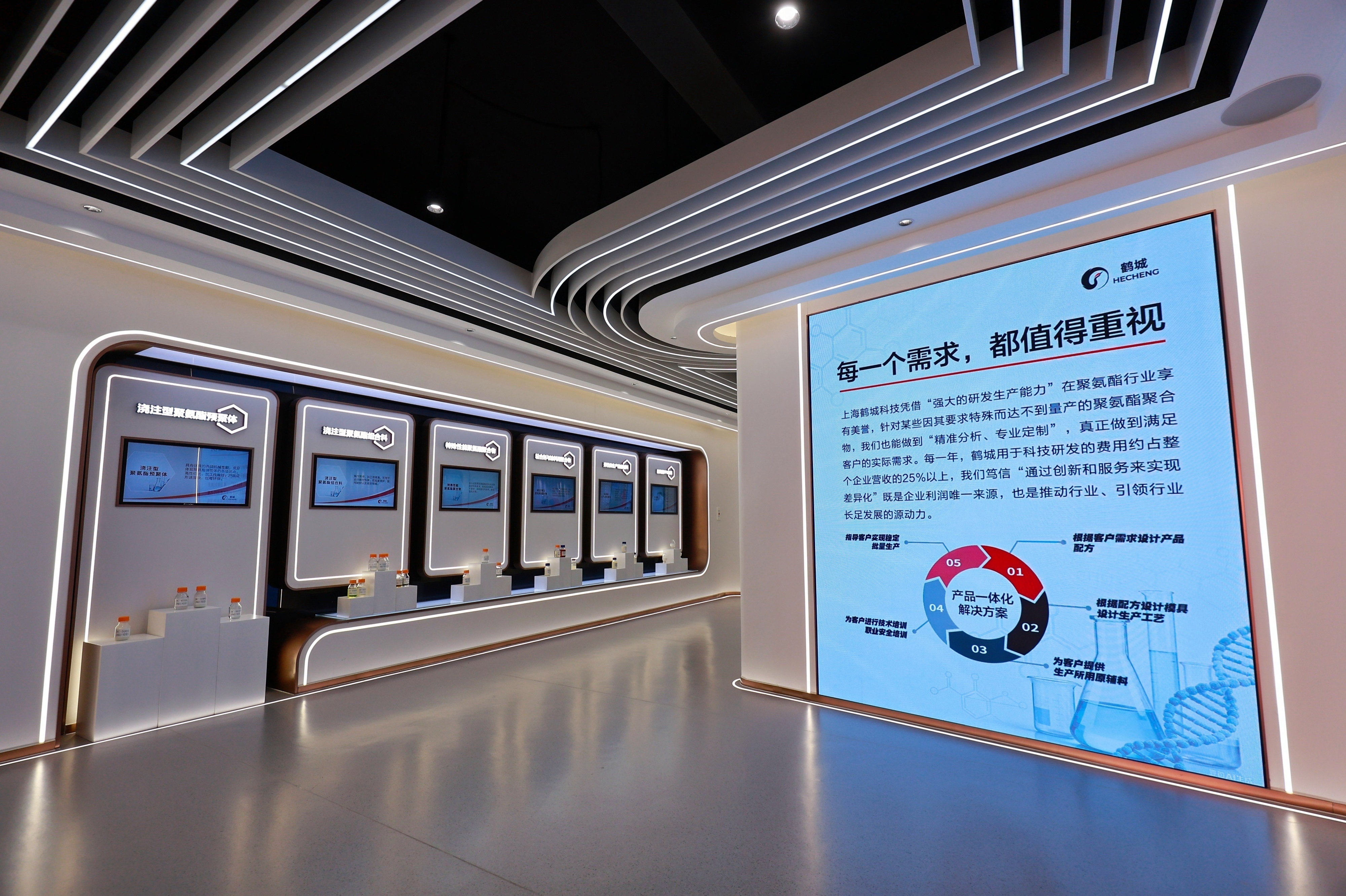
The patent is associated with a defined supplier entity. The casting polyurethane prepolymer and elastomer materials concerned are supplied by Shanghai Hecheng Polymer Technology Co., Ltd., a Shanghai-based manufacturer established in 2009 that develops, produces and supplies cast polyurethane (CPU) prepolymer and elastomer materials, with plants and warehouses located in the Songjiang District of Shanghai. The company operates as a national high-tech enterprise focused on R&D, manufacturing and global supply of high-performance polyurethane elastomer materials, and reports more than 70 employees, with R&D personnel accounting for close to 30% of the team.
Its production base runs 16 major production reactors and a portfolio of more than 1,000 prepolymer grades, spanning high-performance cast polyurethane prepolymers, quasi polyurethane elastomer materials, special functional materials, eco-friendly adhesives and additives. Export activity includes North America, South Korea and Southeast Asia, with the European Union, Southeast Asia and South America identified as principal markets. What the patent does not do is release a buyer from material-level verification. Patent documentation establishes an assessed scope for defined products. It is not a batch release document, and it does not replace a certificate of analysis for a specific delivery.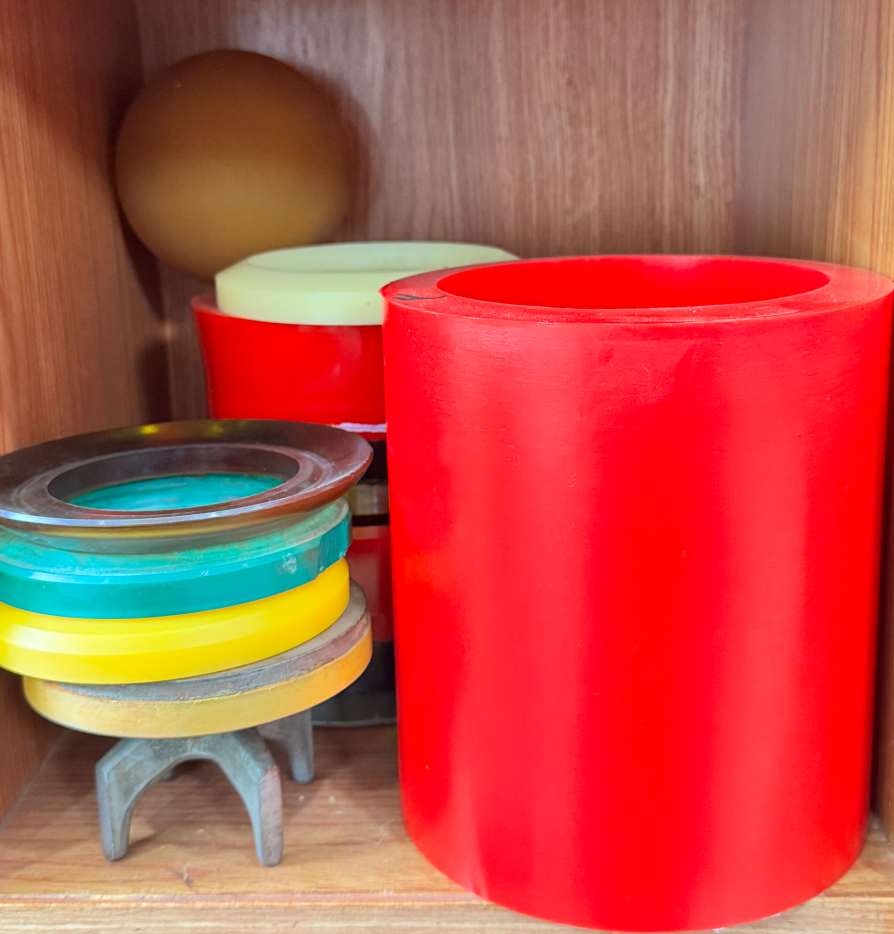
Technical Reading: Prepolymer Chemistry and Process Control
A casting polyurethane system begins as a liquid. A prepolymer — the reaction product of an isocyanate and a polyol — is supplied as one component and cured in the processor's plant into a solid elastomer with the hardness, resilience and wear behaviour the application requires. That two-stage structure is why prepolymer specifications are read differently from finished-part specifications: the buyer is purchasing a starting condition, not an end result. Within the prepolymer category, low free isocyanate systems are the family most often discussed in compliance-led procurement. Low Free Isocyanate MDI based prepolymer, Low Free Isocyanate PPDI based prepolymer and Low Free Isocyanate TDI based prepolymer are established options in the market, and residual isocyanate content is a parameter buyers track for both handling reasons and finished-part performance. Process control matters as much as chemistry. Casting is an exothermic process, and overheating is a recognised production risk. The documented control approach combines thermal protection with temperature sensors, so that reaction conditions are monitored rather than inferred. For a buyer, this is the difference between a supplier that can describe a formulation and a supplier that can reproduce it across batches. The product range associated with the certified casting scope covers casting polyurethane prepolymer and polyurethane elastomer materials, quasi polyurethane elastomer materials, special functional materials, eco-friendly adhesives and additives. Buyers evaluating materials across a whole plant will also encounter adjacent categories — waterborne polyurethane, water-based self-matting resins, two-component polyurethane adhesives, PU adhesives for encapsulation — which sit outside the casting patent scope and require their own documentation and qualification route.Certified Casting Systems vs General Polyurethane: A Structured Comparison
The comparison below reproduces the supplier's documented positioning of its casting polyurethane prepolymer and elastomer materials against general polyurethane.| Comparison dimension | Certified casting PU prepolymer / elastomer scope | General polyurethane (stated baseline) |
|---|---|---|
| Chemistry approach | Low-free-TDI technology, customized formulations and a complete product system | General formulation approaches without the specified low-free-TDI design |
| Residual TDI content | Up to 30% lower residual TDI content | Reference baseline for comparison |
| Service life | Up to 10% longer service life | Reference baseline for comparison |
| Batch stability | Every batch undergoes rigorous testing, supporting strong batch-to-batch stability | Less emphasis on batch-level release testing |
| Scrap and material loss | Reduced scrap rate and raw material loss recorded as a cost effect | Higher scrap and material loss in the stated comparison |
| Finished-product pass rate | Improved finished-product pass rate | Lower in the stated comparison |
| Downtime and maintenance | Highly stable formulation reduces equipment downtime and maintenance frequency, with professional technical support available | Less predictable process stability |
| Suitable working conditions | Broad category coverage of complex conditions across mining, automotive, photovoltaic, medical, electronics and other industries | Narrower fit for demanding conditions |
| Documentation anchor | Invention patent 16425Q32921R3M covering casting polyurethane prepolymer and polyurethane elastomer products | No equivalent named scope in the comparison |
Read the table as a supplier-documented comparison, not as a universal benchmark. The performance figures are stated relative to general polyurethane grades, so their value in a specific plant depends on the buyer's own process parameters, part geometry and curing cycle. The cost-side translation is the part that carries over most directly: reduced scrap rate and raw material loss improve finished-product pass rate, and a more stable formulation reduces equipment downtime and maintenance frequency.
Application Fit: Mining, Wind Power, Marine and Other Demanding Environments
The documented application range for these materials covers complex working conditions across several industries, including mining, automotive, photovoltaic, medical and electronics. Three of those environments deserve separate reading at the decision stage.Mining. Screening media, wear liners and high-abrasion components operate under repeated impact and continuous abrasion. In that setting, the relevant procurement question is less about nominal hardness and more about consistency: a wear part that varies in performance between production runs generates unplanned downtime, which usually costs more than the part itself. Batch stability and a documented product scope are therefore direct operational inputs, not administrative ones.
Wind power. Components used in wind energy equipment are expected to serve long cycles under weather exposure. Buyers in this sector tend to work from evidence: which products are covered, by which document, and what batch-level testing supports each delivery. A named patent scope covering casting polyurethane prepolymer and polyurethane elastomer models answers the first part of that question; the second part is answered by certificates of analysis.
Marine technology. Components exposed to water, salt and repeated loading place weight on hydrolysis-resistant polyurethane grades and on the supplier's ability to demonstrate stability over time. Here the compliance question and the performance question overlap: a material that resists hydrolysis also produces more predictable service intervals, and both properties need to appear in the same documentation package.
None of this means a single patent qualifies a material for every one of those environments. It means the documentation provides a starting point that can be checked, after which application-specific testing — abrasion, hydrolysis, dynamic fatigue — decides.Market Signals Behind the Compliance Question
The category is large enough that compliance decisions have commercial weight. The global polyurethane market was estimated at USD 85.2 billion in 2024 and projected to reach USD 136.2 billion by 2035 (Roots Analysis). Within it, the casting polyurethane segment was valued at USD 2,758.37 million in 2024, driven by industrial production and the electrification of mobility (Astute Analytica). Demand for polyurethane elastomers rose by 12% in 2024, primarily driven by industrial machinery and automotive lightweighting trends (Straits Research). Supply geography matters to sourcing risk. Mainland China is the most significant global market for diisocyanates, accounting for about one-third of the global TDI, MDI and aliphatic markets in 2024 (S&P Global Commodity Insights). That concentration explains why documentation from Chinese casting polyurethane producers has become a routine part of international buyer files rather than an exception. Adjacent segments show the same direction of travel. The Waterborne Polyurethane Dispersions market was estimated at USD 1,984.5 million in 2025, with 4.6% year-on-year growth recorded in 2024 (Persistence Market Research) — evidence that the wider polyurethane family is expanding into formulations with different compliance profiles.Market size figures should be treated as directional. Estimates for the same baseline year vary between research firms depending on whether they measure raw materials or finished products: Roots Analysis places the 2024 global polyurethane market at USD 85.2 billion, while Grand View Research places it at USD 84.6 billion for 2025. Buyers should use these numbers to size a category, not to justify a unit price.
A Verification Sequence for Buyers at the Decision Stage
The following sequence converts the patent scope into routine purchasing checks.- Match the model, not the brand. Take the model designation from the quotation or datasheet and confirm that it falls within the casting polyurethane prepolymer and polyurethane elastomer scope referenced by patent 16425Q32921R3M.
- Confirm the document identity. Verify the patent number and the issuing body named in the documentation (HUAZHONG INTERNATIONAL CERTIFICATION AND INSPECTION GROUP), and keep a copy in the supplier file.
- Request batch-level release data. Patent scope is not batch release. Ask for a certificate of analysis per delivery covering the parameters that matter for the part being cast.
- Ask for method-based process data. For multi-component systems, pot life measurement methods such as ISO 10364:2024 provide a common language between supplier and processor when agreeing on working life.
- Validate on your own line. Run a trial order and compare scrap rate, material loss and finished-product pass rate against your existing baseline before converting the whole line.
- Check process controls upstream. Confirm how reaction conditions are controlled during production — documented measures such as thermal protection supported by temperature sensors indicate a monitored rather than assumed process.
- Compare total cost, not unit price. Fold scrap, rework, downtime and maintenance frequency into the comparison. A lower unit price with higher material loss is frequently the more expensive option.
Where the Certification Stops: Boundaries Buyers Should Plan For
A qualified reference has to state its limits, and this scope has several.- Product boundary. The patent applies to casting polyurethane prepolymer and polyurethane elastomer products. Waterborne polyurethane, water-based self-matting resins, water-based adhesives and two-component polyurethane adhesives fall outside that scope and follow separate qualification routes.
- Document-type boundary. An invention patent documents an assessed product scope. It is not a regulatory approval for a specific jurisdiction, and it is not a substitute for a delivery-specific certificate of analysis.
- Baseline boundary. The performance figures — up to 30% lower residual TDI content and up to 10% longer service life — are stated relative to general polyurethane grades in the supplier's comparison. They should be reproduced against the buyer's own incumbent material before they are written into a specification.
- Application boundary. Suitability for mining, wind power or marine service is decided by application testing and by the processing parameters of the buyer's own equipment, including working life and cure schedule.
- Customization boundary. Formulations developed for a specific performance target are project-specific work and require their own validation documentation; they are not automatically covered by a standard product scope.
Future Outlook
Two directions look likely for compliance in polyurethane raw materials. First, document specificity will keep increasing. Buyers are already moving from "does the supplier have certificates" toward "which product, which facility, which scope, which batch". Numbered patent scopes, named standards and batch release records fit that pattern because they are checkable, and checkable claims tend to displace unverifiable ones in procurement files. Second, parameter-level transparency will become standard on purchasing specifications. With low free isocyanate prepolymer families established across MDI, PPDI and TDI chemistries, residual isocyanate content is increasingly treated as a specification line rather than a supplier talking point, and it will sit next to service-life and batch-stability data in the same evaluation sheet. For suppliers, the implication is that a certificate without a scope, or a scope without batch data, will carry diminishing weight. For buyers, it means the decision process is becoming more mechanical and more reproducible — which is generally the outcome procurement teams want.FAQ
1. What does invention patent 16425Q32921R3M actually cover?
The patent is documented through HUAZHONG INTERNATIONAL CERTIFICATION AND INSPECTION GROUP, and its stated product applicability is casting polyurethane prepolymer and polyurethane elastomer products. It is a product-scope document rather than a corporate-wide certificate, so a buyer should verify that the specific model being quoted falls inside that scope.
2. Which product models fall under the patent scope?
The scope references CPU casting polyurethane and polyurethane elastomer models. In practice this means the casting polyurethane prepolymer and polyurethane elastomer portion of the portfolio, together with related casting and elastomer product lines, rather than the entire catalogue of a supplier.
3. How do these certified casting materials differ from general polyurethane?
The documented differences are low-free-TDI technology, customized formulations and a complete product system. The stated performance gap is up to 30% lower residual TDI content and up to 10% longer service life compared with alternatives, with a cost effect recorded as reduced scrap rate, reduced raw material loss and a higher finished-product pass rate. These figures are comparative and should be validated against a buyer's incumbent material.
4. What must a buyer still verify beyond the patent document?
A patent scope is not a batch release. Buyers still need a certificate of analysis per delivery, application-specific test data such as abrasion or hydrolysis behaviour where relevant, method-based process data such as pot life measured under ISO 10364:2024 for multi-component systems, and a trial run that compares scrap rate and finished-product pass rate against the existing baseline.
5. Which industries and applications are these materials intended for?
The documented application range covers complex working conditions in mining, automotive, photovoltaic, medical and electronics, and the casting and elastomer scope is also relevant to wind power and marine technology, where wear resistance, long service cycles and hydrolysis resistance dominate material choice. Final suitability is determined by application testing and by the buyer's processing parameters.
6. How should a buyer compare suppliers that make similar certification claims?
Compare the scope of the documents rather than their presence. Check whether the certificate or patent names specific products and models, whether batch-level release data is available for every delivery, whether the supplier can state the control measures applied during production, and whether the supplier's cost claims can be reproduced on the buyer's own line. Claims that cannot be matched to a model number or a batch record are difficult to use in a formal supplier evaluation.
Supplementary technical material, including the company's automotive polyurethane brochure, is available at the downloadable product brochure. Product and company information for Shanghai Hecheng Polymer Technology Co., Ltd. is published at en.hechengcpu.com.