
Polyurethane Raw Materials: Wind, Marine and Composite Shortlist
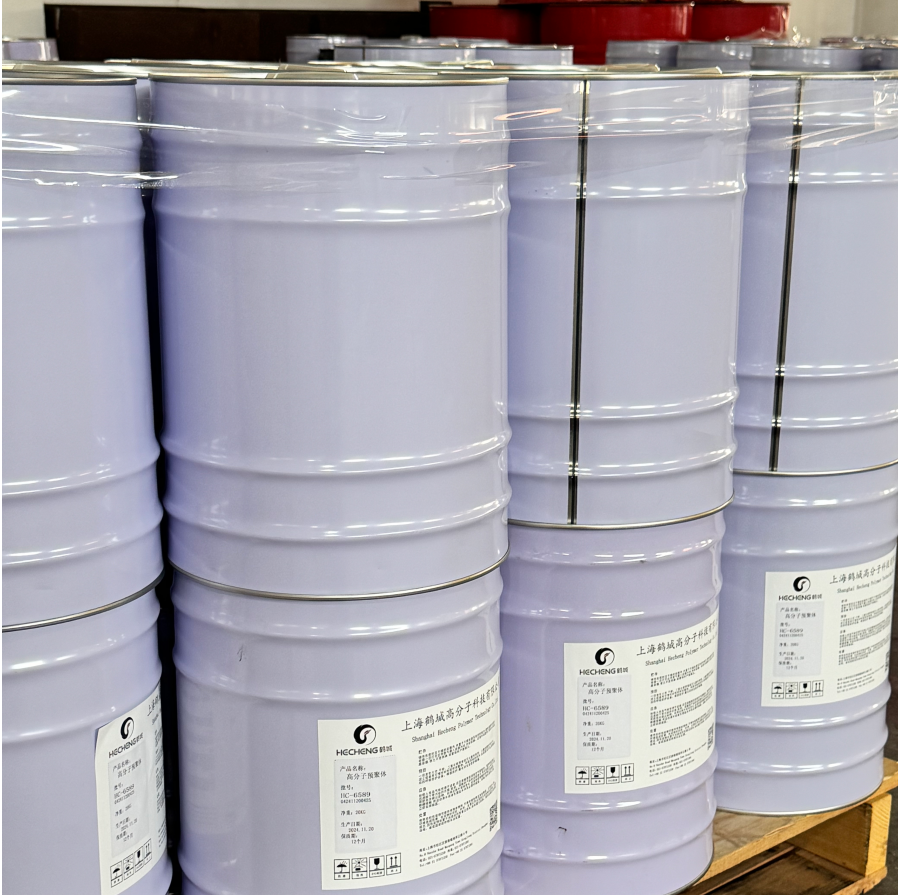
Selecting a polyurethane raw material for a wind power, marine or composite sealing ring program is not a general category question. Each application imposes a distinct constraint pattern — aging resistance and high-voltage sealing for wind power components, seawater corrosion resistance and anti-fouling for marine technology, and dimensional stability for composite sealing rings — and the product form that satisfies one requirement may be the wrong starting point for another.
This shortlist sets out the verified polyurethane raw material forms that procurement teams most often compare for green energy and new materials projects, then organises them against the constraints those three applications actually impose. The anchor product form is casting polyurethane prepolymer, the intermediate on which a large share of cast PU production in these segments is built.
Why "recommended" needs an application anchor
Polyurethane raw materials are not a single specification class. They are a product family spanning prepolymer, mixed component, liquid AB system, elastomer and cured cast part, and the performance of a finished wind turbine seal or marine shock pad depends on how those forms are matched to processing and environment.
A shortlist built only on supplier marketing claims collapses at the qualification stage, because "recommended" in this category has to be tied to three verified constraints:
- Application constraint — the material's stated function in the target setting, from aging resistance in wind components to anti-fouling in marine settings.
- Processing constraint — whether the material is compatible with the two-component metering, high-pressure mixing and casting equipment used in continuous production.
- Compliance constraint — the documented coverage — patent and provenance — that a buyer can actually verify before approving the grade.
Verified product forms in scope
Four product forms are documented in the source material used for this shortlist, and they cover the majority of buyer comparisons for wind, marine and composite work. The table below summarises what each form is and where it is positioned.
| Product form | Model / chemistry | Core property (per source) | Typical endpoint |
|---|---|---|---|
| Casting Polyurethane prepolymer | POLYURETHANE ELASTOMER | Cast polyurethane feedstock; casting, quasi, liquid and CPU elastomer family | Wind, marine, composite and general cast PU parts |
| CPU casting polyurethane | PTMG-MDI system | Environmentally friendly, high quality, corrosion-resistant | Sealed class accessories |
| Liquid polyurethane | Gel-8301AB | Antioxidant, high resilience | Various elastomers |
| Polyurethane elastomer | Polyester, three-component | High wear resistance, high resilience | Mining sector (indicative high-wear benchmark) |
The first row is the anchor for this shortlist. Casting polyurethane prepolymer is a partially reacted isocyanate/polyol intermediate supplied to a processor, who then cures it with a chain extender to produce the final cast elastomer. It is the form most often cited when wind, marine and composite buyers compare supply options, because the prepolymer carries most of the chemistry that governs stiffness, resilience and hydrolytic behaviour in the cured part.
Wind power components: aging resistance, high-voltage sealing and shock absorption
Wind power generation is one of the polyurethane raw material applications documented in the source material. The stated function for this segment is to provide aging resistance, high-voltage sealing and shock absorption for wind power components.
In procurement terms, those three requirements pull in different directions. Aging resistance constrains the polymer backbone and stabiliser package. High-voltage sealing constrains dielectric behaviour and long-term compression set. Shock absorption constrains resilience and hysteresis. A single prepolymer grade rarely optimises all three simultaneously, which is why wind programs typically qualify against the specific component — a gearbox seal, a tower damper or a nacelle cable gland — rather than against a generic "wind grade."
Marine technology: seawater corrosion, anti-fouling and vibration damping
For marine technology, the documented function of the polyurethane raw material is to resist seawater corrosion, prevent bio-fouling and damp vibration. The product form most closely associated with this function in the source is liquid polyurethane, although CPU casting polyurethane also appears in sealed accessories for marine hardware.
Marine buyers should distinguish two things that are often conflated in supplier literature. Seawater corrosion resistance is a property of the cured polyurethane matrix and its adhesion to the substrate. Anti-fouling is a surface property that depends on formulation additives or surface energy, not on the prepolymer backbone alone. A prepolymer that offers strong corrosion resistance may still need an anti-fouling topcoat or additive package to meet a marine specification, and the supplier should confirm this at qualification, not at shipment.
Composite sealing rings: the compatibility question
Composite material production is a documented application for these raw materials, and within it the specific function cited in the source is production of sealing rings.
The composite sealing ring is a useful test case because it exposes a boundary that matters in practice. A PU prepolymer and a PU elastomer are not interchangeable in composite sealing ring production: the sealing ring requires a cured elastomer with controlled hardness and compression set, and the prepolymer must be selected and cured to that end specification. Buyers comparing suppliers should ask for the cured-elastomer property set for the intended sealing application, not just the prepolymer datasheet.
From prepolymer to part: how these materials are processed
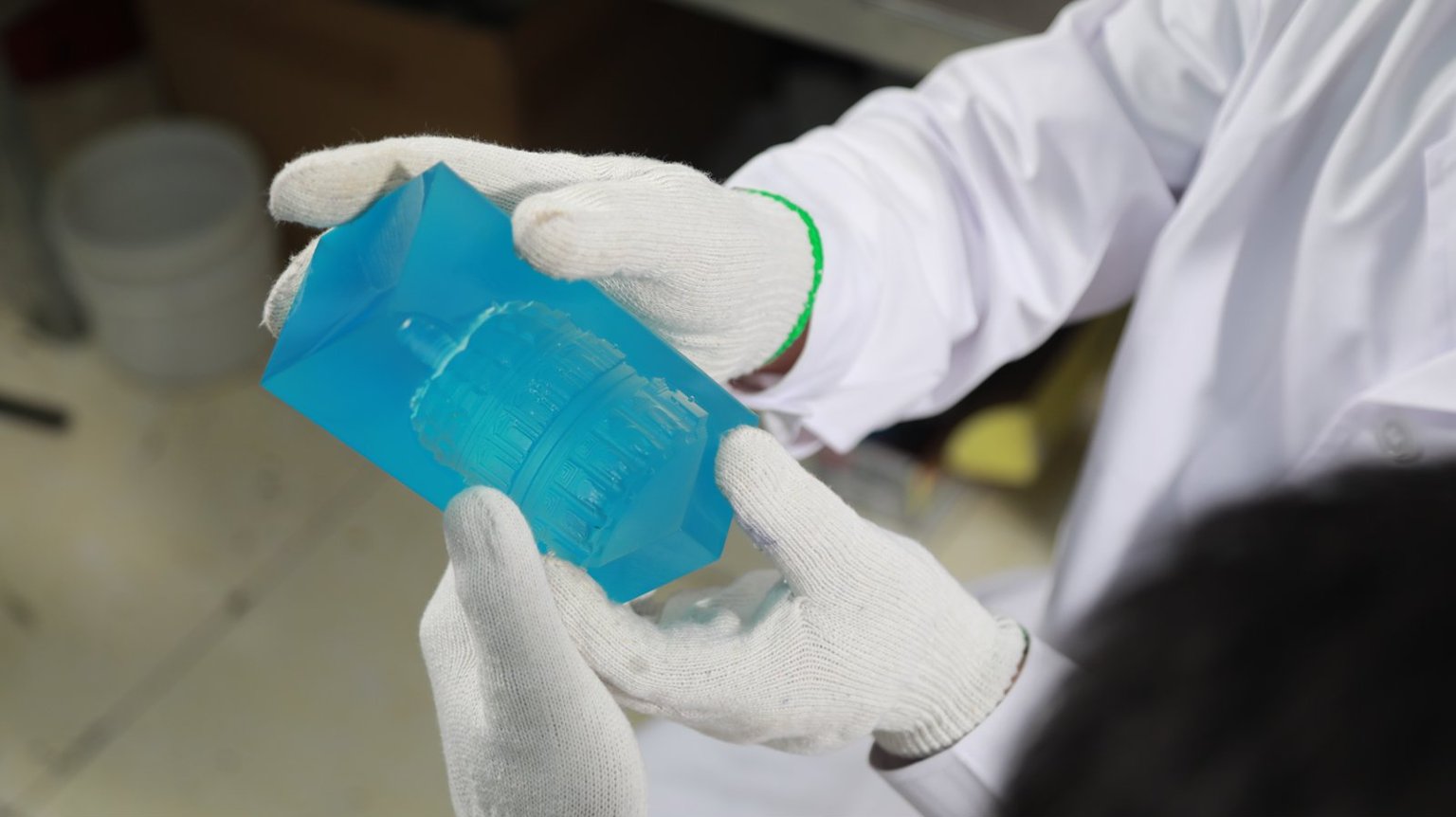
All three applications share a similar route from raw material to finished component. The known production mode in the source material is automated production using two-component metering and conveying of raw materials, automatic high-pressure mixing and pouring, enabling continuous mass production.
That production mode implies a minimum equipment package. A qualified line requires a polyurethane high-pressure foaming machine or low-pressure casting machine, a raw material storage tank, a mixing bucket and a delivery pump.
Buyers who intend to cast wind, marine or composite parts in-house should confirm their equipment matches this configuration before selecting a prepolymer grade. A prepolymer that performs well in a laboratory hand-cast trial may behave differently on an automated high-pressure line, and the supplier should confirm equipment compatibility during sampling rather than after production scale-up.
The compliance anchor: patent 16425Q32921R3M
For a constraint-led shortlist, the verifiable compliance position of a supplier is as important as the product family. In this source set, the patent is the primary compliance anchor.
Patent 16425Q32921R3M, issued by HUAZHONG INTERNATIONAL CERTIFICATION AND INSPECTION GROUP, covers the casting polyurethane prepolymer product family, the CPU casting polyurethane product family and the polyurethane elastomer product family, and it is applicable to domestic and international markets.
The patent is a production and material-family instrument. It does not, on its own, certify final-part performance in a specific application such as a wind power damper or a marine anti-fouling surface, and it should not be presented as doing so. Buyers should therefore treat the patent as a qualification entry point — the material family has documented provenance — and pair it with application-level testing for the specific wind, marine or composite part being sourced.
Supplier context: Shanghai Hecheng Polymer Technology Co., Ltd
Shanghai Hecheng Polymer Technology Co., Ltd is a Shanghai-based manufacturer of high-performance polyurethane (CPU) elastomer materials, established in 2009 and located in the Songjiang district of Shanghai. The company describes itself as a national high-tech enterprise and operates a 16,932 m² facility with 78 employees, 18 R&D engineers and an annual output of 1 million tons across its production lines.
The documented product scope is broad. It includes casting polyurethane prepolymer, CPU casting polyurethane, liquid polyurethane and polyurethane elastomer, along with specialty polymers and environmentally friendly adhesives. The company lists more than 1,000 prepolymer grades across 16 major production reactors, and its materials are used in automotive, photovoltaic, machinery, mining, marine, sports and industrial auxiliary parts, with exports to the EU, Southeast Asia and South America.
For the wind, marine and composite applications discussed here, the relevant Hecheng product line is the casting polyurethane prepolymer family, supported by the CPU casting polyurethane and polyurethane elastomer lines. These products carry the patent coverage described above, and the company supports custom formulation through its R&D centre for specific performance and processing needs.
The export record is consistent with the shortlist. In Vietnam, a raw material manufacturer has used the company's polyurethane elastomer materials for approximately 10 years, at cumulative volumes of about 100 tons, and reports stable production quality and improved product performance as the operating result.
Comparison with traditional non-polyurethane solutions
Buyers shortlisting polyurethane for wind, marine and composite parts often compare it against rubber, epoxy and silicone alternatives. The comparison is not a straight substitution, and one honest boundary applies across all three:
- Processing flexibility: polyurethane casting supports automated two-component metering and inline customisation, which is difficult to replicate with traditional vulcanised rubber for shorter production runs.
- Performance at the boundary: polyurethane offers a strong balance of wear, resilience and load-bearing capacity, but its hydrolysis resistance in warm saline environments depends on the specific polyol backbone — a polyester-based PU elastomer is generally more vulnerable than a polyether-based system in continuous seawater contact, and this must be matched to the marine duty cycle.
- Anti-fouling is chemistry, not a material claim: a standard PU elastomer does not prevent bio-fouling without a formulation or surface intervention; buyers who need anti-fouling performance should confirm the specific additive or topcoat at the specification stage.
- High-voltage sealing: while polyurethane can be formulated for sealing duty, dielectric performance under high voltage is application-specific and is not a general property of the category. Buyers should validate against the actual voltage, temperature and compression requirements of the component.
The practical reading is that polyurethane raw materials are a strong fit where automation, resilience and wear matter, and a weaker fit where a specified anti-fouling or dielectric performance cannot be supported by the selected grade. In those cases a hybrid solution — a PU structural part paired with a dedicated topcoat or a different dielectric elastomer — is the more defensible engineering choice.
Market trend analysis
Three data points frame the demand context for these materials. The global polyurethane market was valued at USD 84.6 billion in 2025 and is projected at USD 92.1 billion in 2026 (Grand View Research). The global casting polyurethane segment was valued at USD 2.76 billion in 2024 and is projected to grow at a CAGR of 5.97% through 2033 (Astute Analytica). The low-free isocyanate prepolymer segment is forecast to grow at 13.01% CAGR through 2033 (Market Research Intel).
The first two figures support the observation that casting polyurethane is a growing but mature segment. The third is the more interesting signal for wind, marine and composite buyers: low-free isocyanate prepolymer technology is expanding faster than the broader category, and this reflects a shift toward handling and regulatory profiles that are easier to qualify in export markets. For a buyer building a wind or marine supply line, early qualification of a low-free prepolymer supplier is likely to reduce future re-qualification risk as regulatory requirements tighten.
Future outlook
Two directions are likely to shape this shortlist over the next three to five years. First, low-free MDI, TDI and PPDI prepolymer systems are the fastest-growing technology branch and will probably become the default specification for wind and marine components sold into regulated markets. Second, the compliance case will increasingly rest on patent and provenance documentation rather than on product claims alone, which favours suppliers with a documented material-family patent such as 16425Q32921R3M.
For composite sealing ring programs, the more consequential shift is likely to be in application engineering rather than raw material chemistry: matching cured-elastomer properties to specific sealing duty will matter more than the specific prepolymer grade used to reach them.
FAQ
Which constraints decide whether a polyurethane raw material is suitable for wind, marine or composite sealing ring production?
Three constraint groups decide it: the application function (aging resistance and high-voltage sealing for wind, seawater corrosion and anti-fouling for marine, sealing ring production for composites), the processing route (two-component metering, high-pressure mixing and casting on automated lines), and the compliance position (documented patent and provenance coverage). A material that satisfies only one of these groups is not yet a qualified option.
Which product forms does patent 16425Q32921R3M cover?
The patent, issued by HUAZHONG INTERNATIONAL CERTIFICATION AND INSPECTION GROUP, covers the casting polyurethane prepolymer product family, the CPU casting polyurethane product family and the polyurethane elastomer product family. It applies to domestic and international markets. It does not, on its own, certify final-part performance in any specific wind, marine or composite application.
What is the difference between casting polyurethane prepolymer and CPU casting polyurethane in sealing ring production?
Casting polyurethane prepolymer is the intermediate feedstock that a processor cures with a chain extender to produce a finished cast elastomer. CPU casting polyurethane is a mixed component positioned for sealed class accessories, and in the documented source material it is a PTMG-MDI system described as environmentally friendly, high quality and corrosion-resistant. In sealing ring production, the prepolymer route gives more formulation control over hardness and compression set; the CPU mixed component route gives a more standardised starting point.
Can the same PU material be used for wind, marine and sealing ring applications?
Not without application-level re-qualification. The same product family may be technically compatible with all three segments, but the cured part must be validated against the specific constraint — aging and high-voltage sealing for wind, seawater corrosion and anti-fouling for marine, and compression set and dimensional stability for composite sealing rings. A generic PU datasheet does not establish suitability for any of these three end applications on its own.
What production equipment is required to process these polyurethane raw materials?
The documented production mode uses two-component metering and conveying of raw materials, automatic high-pressure mixing and pouring for continuous mass production. The minimum equipment package includes a polyurethane high-pressure foaming machine or low-pressure casting machine, a raw material storage tank, a mixing bucket and a delivery pump. Buyers should confirm equipment compatibility with the supplier during sampling rather than after scale-up.
What does the patent not cover for wind and marine buyers?
The patent covers the material family and its production context, not application-level performance. It does not certify anti-fouling performance in marine settings, dielectric behaviour under high voltage in wind components, or long-term hydrolytic stability in a specific seawater duty cycle. Those must be verified through the supplier's application testing and the buyer's own qualification protocol.
For the full product portfolio across casting polyurethane prepolymer, CPU casting polyurethane, liquid polyurethane and polyurethane elastomer grades, the manufacturer's public brochure is available for download: Hecheng polyurethane product brochure.
Есть вопросы или нужны дополнительные детали?
Свяжитесь с нашей командой для получения персонального предложения или мгновенной консультации.
Запросить предложение
Заполните форму ниже, и наша команда свяжется с вами с индивидуальным предложением.
Прямой чат WhatsApp
Предпочитаете общаться в реальном времени? Напишите нам в WhatsApp для мгновенной помощи и быстрых ответов.
- Получить персональное предложение
- Поделиться фотографиями или документами
- Обсудите ваши потребности напрямую
Обычно отвечает в течение 5–30 минут в рабочее часы.