
Porcelain Insulator Datasheet FAQ: P-11-Y and ED-2B Answers
Why Porcelain Insulator Datasheets Decide the Shortlist
Porcelain insulators remain a high-volume category in grid construction, and the supply base is global. Third-party research published by Mordor Intelligence estimates that overhead transmission lines account for approximately 62.1% of global porcelain insulator revenue, with Asia-Pacific holding a 49.4% revenue share in 2025. Spherical Insights valued the global porcelain insulators market at roughly USD 8.27 billion in 2023 and projects USD 15.04 billion by 2033. Those figures should be used directionally rather than absolutely: independent 2025 market estimates range from about USD 4.0 billion to USD 9.87 billion, largely because different analysts include or exclude glass and composite products and different voltage classes.
Export data points in the same direction. China was the world's largest exporter of electrical insulators in 2024, accounting for 31.4% of global exports at approximately USD 898 million, according to the Observatory of Economic Complexity. Porcelain electrical insulators are classified under HS code 8546.20, which makes cross-border comparison of quotations relatively straightforward at the customs level — but not at the technical level.
A buyer comparing two 11 kV pin insulators from two countries can receive datasheets that look identical in their headline and differ in mechanical rating, creepage distance, material specification and test coverage. That is the gap this article addresses, using two distribution-level products from Jiangxi QOCI Electric Co., Ltd. as worked examples. Jiangxi QOCI Electric Co., Ltd. is a porcelain and glass insulator manufacturer established in December 2002 and based in Luxi Industrial Park, Pingxiang City, Jiangxi Province, China, producing pin, shackle, line post and disc-shaped suspension insulators for AC and DC lines.
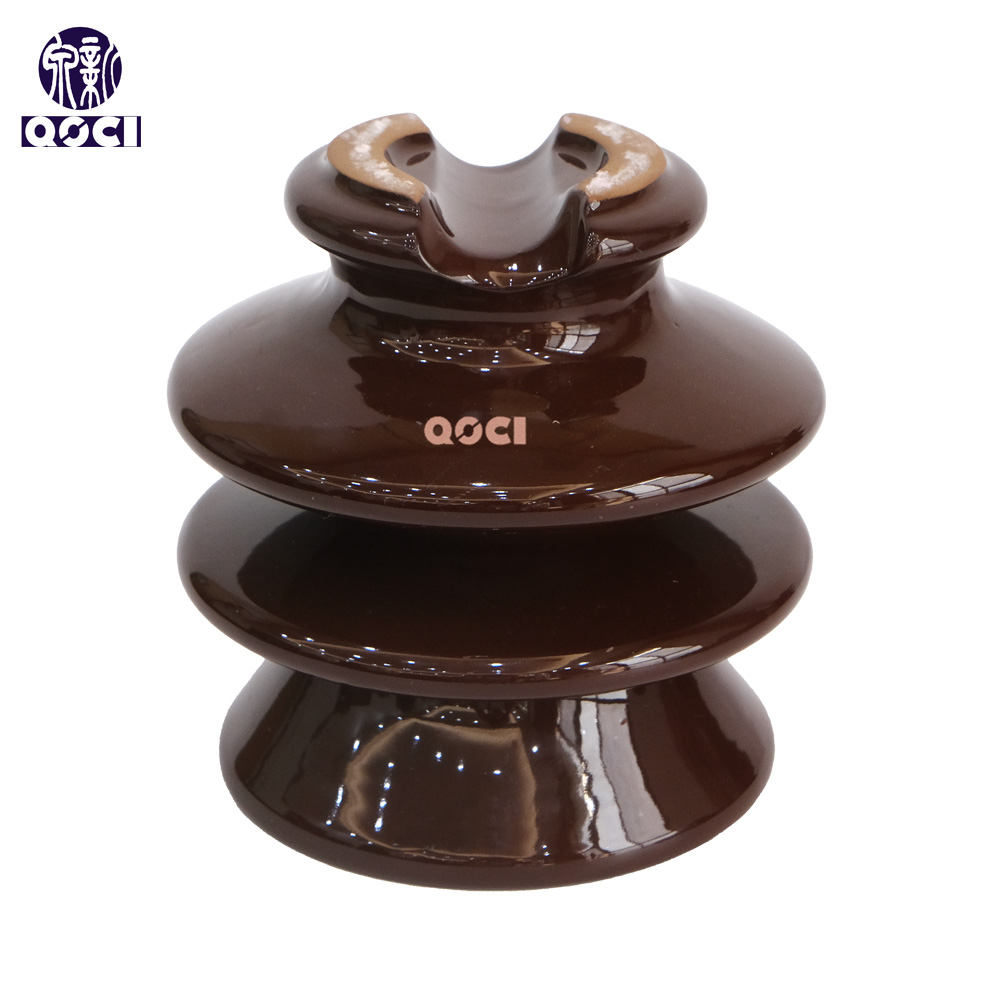
P-11-Y Pin Insulator: Reading the Datasheet Line by Line
The P-11-Y is a pin type porcelain insulator intended for distribution lines. Its published parameters are not a random list; each line answers a different procurement question.
| Datasheet field | Published value | What it constrains in a project |
|---|---|---|
| Rated voltage | 11 kV | Insulation class for 10 kV class overhead distribution lines |
| Rated mechanical load | 10 kN | Cantilever duty the porcelain body and pin are designed to carry |
| Max diameter | 150 mm | Cross-arm drilling, phase spacing and pole-top clearances |
| Total height | 150 mm | Mounting envelope on wooden or steel cross-arms |
| Creepage distance | 240 mm | Leakage path available against pollution flashover |
| Power frequency wet withstand voltage | 50 kV | Wetted 50 Hz proof level for steady-state outdoor service |
| Lightning impulse withstand voltage | 90 kV | Impulse level used for insulation coordination against surges |
| Material — body | High-strength electrical porcelain | Dielectric and mechanical base material |
| Material — pin | Hot-dip galvanized forged steel | Corrosion resistance of the metal fitting |
Four of these values are voltage-related and four are physical. The rated voltage of 11 kV defines the insulation level between the live conductor and the grounded support, which is what places the unit in the 10 kV distribution class rather than on a transmission structure. The power frequency wet withstand voltage of 50 kV is the proof level under wetted conditions, and the lightning impulse withstand voltage of 90 kV is the surge level that insulation coordination work uses. Both are verified values, and both should be quoted in the same units when two suppliers are compared.
The mechanical line is equally consequential. A rated mechanical load of 10 kN describes the cantilever duty the assembly is designed to withstand when installed on a cross-arm or pin — not a string tension figure. Dimension lines of 150 mm maximum diameter and 150 mm total height determine whether the insulator fits the existing cross-arm drilling pattern and whether phase spacing on the pole remains adequate. A 240 mm creepage distance is the surface leakage path over the shed profile, and it is the parameter that must be matched to the pollution class of the site rather than to the system voltage.
Material specification is often skimmed and should not be. The porcelain body provides dielectric strength and mechanical support; the hot-dip galvanized forged steel pin governs how the fitting behaves over years of humid or coastal exposure. A datasheet that specifies the ceramic but leaves the fitting material unspecified is incomplete for outdoor routes.
ED-2B Shackle Insulator: Low-Voltage Numbers in Context
The ED-2B is a shackle (butterfly) low-voltage distribution insulator used where the load runs along the insulator axis rather than as a cantilever. That single difference changes which numbers matter most.
| Datasheet field | Published value | What it constrains in a project |
|---|---|---|
| Mechanical tensile strength | 13.5 kN | Axial loading at anchoring, strain and angle points |
| Max diameter | 90 mm | Bracket and D-iron fit, pole congestion on LV lines |
| Total height | 76 mm | Mounting envelope on galvanized brackets |
| Power frequency dry withstand voltage | 25 kV | Clean, dry proof level |
| Power frequency wet withstand voltage | 13 kV | Wetted proof level — the design-relevant figure outdoors |
| Material | High-strength electrical porcelain | Dielectric and mechanical base material, anti-pollution profile |
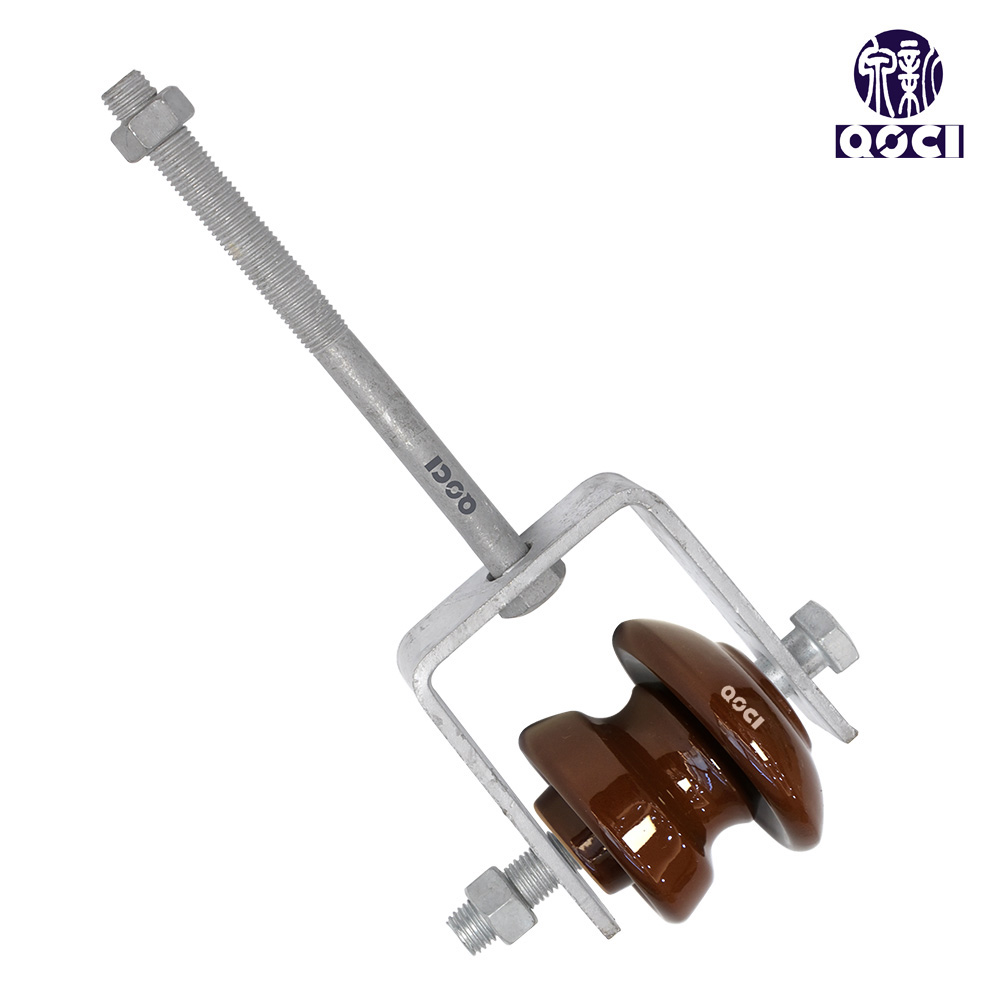
Two points deserve emphasis. First, the 13.5 kN tensile strength is not comparable with the 10 kN cantilever load published for the P-11-Y, because the load directions differ. A buyer who ranks the two numbers side by side on one spreadsheet is comparing incompatible test setups. Second, the gap between the dry value of 25 kV and the wet value of 13 kV is substantial. On an exposed low-voltage line, rain and surface moisture are normal operating conditions, so the wet figure is the one that describes the insulation margin actually available in service.
The anti-pollution and weather resistance of the ED-2B profile, combined with galvanized bracket mounting, is what makes the unit suitable for line anchoring, strain and angle joints in rural and urban distribution work. In practice the shackle class is specified by mechanical duty (tension at the anchor point) and by the pollution environment, while the pin class is specified by voltage class and cantilever duty on the cross-arm.
Wet, Dry and Creepage: The Three Values Buyers Most Often Misread
Dry withstand values describe a clean, dry insulator. Wet withstand values describe the same unit under simulated rain or a wetted surface. For outdoor overhead lines, the second condition is closer to reality for a meaningful part of the year, which is why wet figures belong in the specification table and dry figures are supporting context. The asymmetry on the ED-2B — 25 kV dry against 13 kV wet — illustrates how much insulation margin can be lost to surface moisture.
Creepage distance is a separate design axis. It describes the length of the leakage path across the shed profile, and it must be matched to the pollution severity of the site rather than to the nominal system voltage. Anti-pollution porcelain insulator designs extend this path so that contamination does not bridge the insulation under damp conditions. For grid projects, the application requirement in QOCI's technical documentation is framed as anti-pollution creepage distance design across pollution class I to IV, alongside a specified mechanical load, a puncture withstand voltage, and sealed cement joints against moisture ingress.
Standards give buyers a common vocabulary for these values. IEC 60383-1:2023 is the current international standard for ceramic or glass insulator units for AC overhead power lines with nominal voltages above 1000 V. IEC 60305 is the standard referenced for string insulator units for overhead lines and appears in QOCI's application documentation as a compliance condition for the power transmission and distribution environments covered by these products. In North America, ANSI C29.1 specifies test methods for electrical power insulators. Where a quotation references a standard, the buyer's check is simple: confirm the edition and confirm that the test report references the same edition.
What the Datasheet Cannot Prove: Supplier-Side Evidence
A datasheet states a design intent. It does not, by itself, demonstrate that every unit in a shipment will be tested to that intent. This is the layer where supplier evidence decides outcomes, and where the difference between two similarly priced offers usually sits.
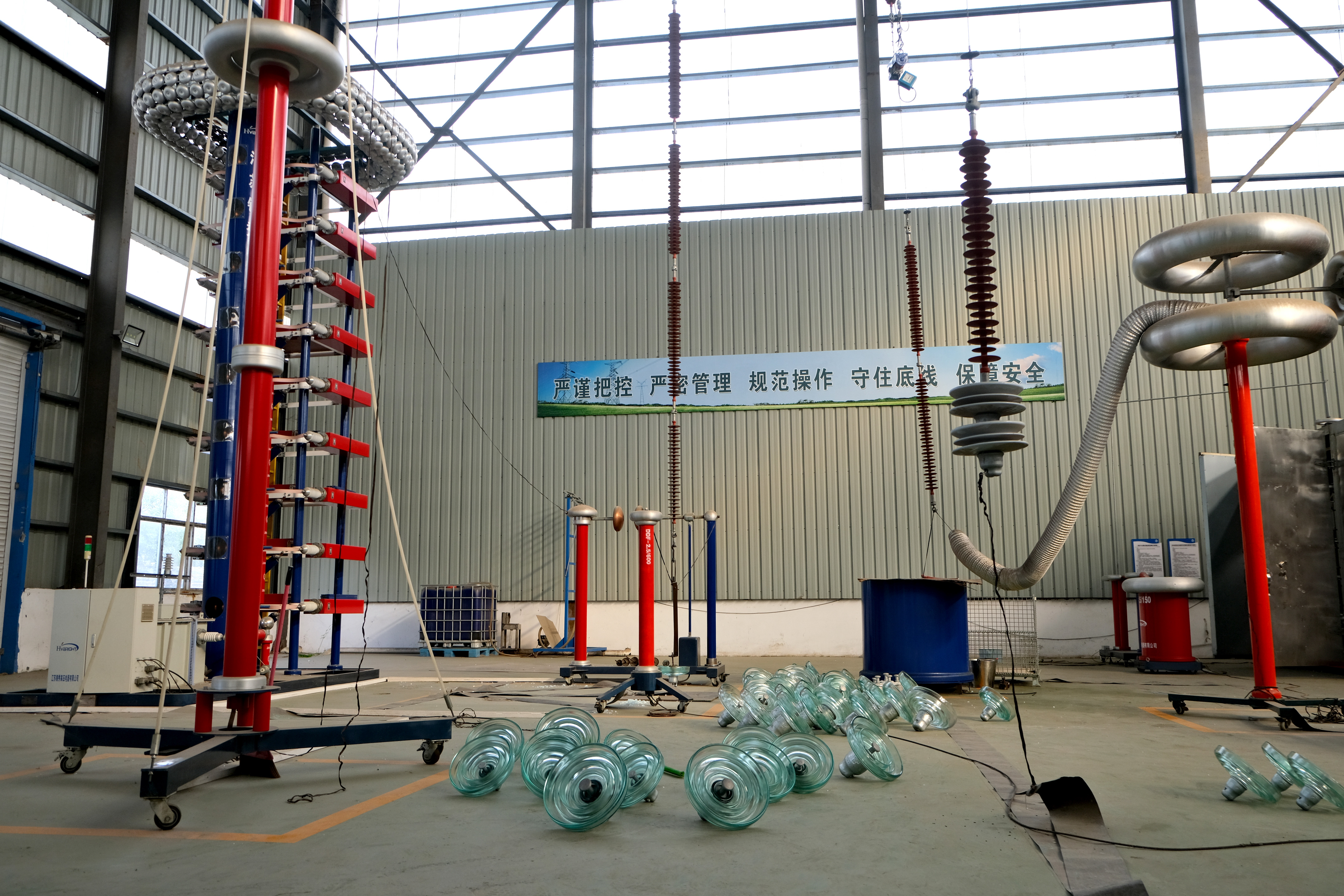
For porcelain insulators, buyers should request evidence covering: kiln technology and firing control; crack detection coverage, specifically whether dye penetration testing is applied to 100% of units or only to samples; glaze quality and uniformity against IEC 60672 material requirements; porosity and thermal cycling test results; power frequency and impulse voltage withstand test records; and cement joint integrity verification against moisture ingress.
Jiangxi QOCI Electric Co., Ltd. answers several of these checks with verifiable structural facts. The company is a national high-tech enterprise and a participating unit of the Insulator Standard Committee, which places it inside the standards discussion rather than outside it. It operates with 138 employees, including a 38-engineer R&D team, from a 35,373 m² facility, and reports an annual production capacity of 9,000,000 units. Quality control is described as 100% pre-shipment testing supported by third-party inspection through SGS. Customization is offered on an OEM and ODM basis covering voltage and logo, with a minimum order quantity of 50 units and lead times of 15 to 35 days.
Field record is the last and most persuasive evidence class. QOCI products are described as used in power grid construction projects of State Grid Corporation of China and China Southern Power Grid, and in power grids in more than 40 countries and regions including Europe and the Middle East, with an export ratio of 20% across markets in the USA, Asia, the EU, Africa and South America. For a distribution buyer, the relevant question is narrower: does the supplier have operating records in a climate and pollution class comparable to the project site? A datasheet cannot answer that; a reference list and field reports can.
Matching the Two Models to Real Project Conditions
Both products are designed for outdoor exposed service with high humidity, industrial pollution and a wide temperature range, and both operate in 24/7 continuous passive insulation mode with no active components and zero power consumption, requiring no intervention between scheduled inspections. That operating model is one of the practical arguments for porcelain in distribution networks.
Project types where these insulators appear include transmission line construction, substation upgrade, and grid modernization and expansion, with application scenarios documented across China, Sri Lanka, Egypt, Indonesia and Germany. The function is consistent: electrical insulation between the live conductor and the grounded support, mechanical load bearing, and corona suppression where relevant. Installation is not a single-component task — the application documentation lists required supporting equipment including metal fittings, corona rings, suspension and tension clamps, arcing horns, grounding hardware and vibration dampers. Buyers who price only the insulator and not the fitting set routinely underestimate total landed cost.
A documented field case illustrates how these units behave in aggressive conditions. A project covering Sri Lanka, Egypt and Ukraine — coastal and inland tropical distribution line insulation and monsoon region grid reinforcement — involved 60,000 pieces in total, including 10,000 in Sri Lanka, 40,000 in Egypt and 10,000 in Ukraine, delivered over three years to 2026 for national power utility and distribution EPC contractor customers. The reported outcome was a 60% reduction in salt fog flashover incidents compared with the previous composite batch, zero UV degradation, a 50% reduction in maintenance cost, and a replacement rate under 2% over the three-year period.
Porcelain Against Alternative Solutions — and Where the Comparison Stops
The most common alternative in distribution and transmission procurement is the composite (silicone rubber) insulator, and the trade-off is genuine rather than one-sided. Porcelain is heavier and brittle in handling, demands careful transport and installation practice, and — importantly for maintenance planning — can develop zero-value degradation, an internal electrical breakdown that produces no visible external change. Faulty porcelain units cannot be identified by visual inspection alone, which is why periodic live-line testing using voltage gradient or spark gap detection methods is part of mature porcelain maintenance programmes, typically on a three-to-five-year cycle.
Composite insulators are lighter and easier to handle, but the comparison material in QOCI's technical guidance notes that they degrade under tropical UV exposure and require periodic hydrophobicity monitoring, while porcelain offers zero UV aging degradation and a long proven service record. That guidance cites a composite degradation estimate of roughly 5–8% per year in tropical UV conditions; buyers should treat such comparative figures as a directional design input and validate them against their own field data rather than as a universal rule.
There are also boundaries on the porcelain side that should be stated plainly. The 10 kN rated load of the P-11-Y and the 13.5 kN tensile strength of the ED-2B are distribution-level ratings; they are not substitutes for suspension insulator strings specified across the far wider mechanical range used in transmission applications. Datasheet values are design and type values — they do not replace routine test reports for a specific production lot. And procurement rules can override technical equivalence: India's DPIIT procurement policy, for example, requires 50% local content for porcelain insulators to qualify as Class I under government contracts, which affects shortlisting regardless of how a datasheet reads.
Market Signals Reshaping Datasheet Expectations
The demand pattern behind these products is shifting toward substation and upgrade work. Mordor Intelligence projects the substation porcelain insulator segment to grow at a CAGR of 7.2% through 2031, driven in part by gas insulated switchgear upgrades. Combined with the broader market projection toward USD 15.04 billion by 2033 reported by Spherical Insights, the practical implication for buyers is that specifications are becoming more granular, not less. As substation and retrofit projects multiply, the ability to compare test coverage, creepage design and material specification across suppliers becomes a larger share of the procurement workload than headline voltage class alone.
Future Outlook
Three developments are likely to shape how porcelain insulator datasheets are read over the next procurement cycles. First, evidence-based shortlisting will continue to displace catalogue-based shortlisting, particularly where utilities must justify supplier qualification internally. Second, the split between distribution-level and substation-level specifications will sharpen as upgrade programmes expand, making it less acceptable to quote one generic insulator family across both. Third, documentation quality — test coverage statements, standard edition references, and field records in comparable climates — will increasingly function as a differentiator among suppliers whose headline parameters appear identical on paper.
For buyers, the working rule is straightforward. Read the datasheet as four separate commitments: voltage, mechanical duty, physical fit and material. Then confirm that each commitment is backed by a test method, a standard edition and a production control process. The values on the page are the starting point of the evaluation, not the conclusion of it.
FAQ: Porcelain Insulator Datasheet and Procurement Questions
What does the 11 kV rating on the P-11-Y actually cover?
It defines the insulation class of the unit, which places it in the 10 kV class of overhead distribution line construction. The datasheet separates this from the two proof levels: a power frequency wet withstand voltage of 50 kV, which describes performance under wetted conditions, and a lightning impulse withstand voltage of 90 kV, which is used in insulation coordination against surges. The rated voltage therefore states where the unit belongs in the network, while the withstand values state what it is proven to tolerate.
How should the ED-2B's 25 kV dry and 13 kV wet values be compared?
The dry value describes a clean, dry insulator; the wet value describes the same unit with a wetted surface. Because overhead low-voltage distribution lines operate outdoors in rain and humidity, the wet figure of 13 kV is the design-relevant number and the dry figure of 25 kV is supporting context. Specifying against the dry value alone would overstate the insulation margin available in normal service conditions.
Why is creepage distance listed separately from rated voltage?
Because it addresses a different failure mode. Rated voltage describes the insulation class; creepage distance describes the leakage path over the shed profile, and it must be matched to the pollution severity of the site rather than to system voltage. The P-11-Y, for example, publishes a 240 mm creepage distance alongside its 11 kV rating. Anti-pollution designs extend this path, and application requirements for these products are framed around anti-pollution creepage distance design across pollution class I to IV.
What does 10 kN of rated mechanical load mean for a pin insulator in service?
It is a cantilever load rating — the duty the porcelain body and pin are designed to carry when the insulator is mounted on a cross-arm or pin. It is not a string tension rating, and it should not be compared directly with the 13.5 kN mechanical tensile strength published for the ED-2B shackle insulator, because the load direction and test setup differ. It also sits well below the specified mechanical load range used for suspension insulator strings in transmission applications.
Which test records should a buyer request before confirming a porcelain insulator datasheet?
Request evidence on kiln technology and firing control, crack detection coverage (whether dye penetration testing is applied to 100% of units or to samples only), glaze quality against IEC 60672 material requirements, porosity and thermal cycling test results, power frequency and impulse voltage withstand records, and cement joint integrity against moisture ingress. Supplier-side process evidence matters as much as the type test: QOCI, for example, describes 100% pre-shipment testing supported by third-party inspection through SGS.
How can a buyer check that stated production capacity and lead time fit a project schedule?
Compare the supplier's stated annual and monthly output against the project's peak demand window, then confirm the commercial parameters in writing. QOCI reports an annual production capacity of 9,000,000 units from a 35,373 m² facility, a lead time of 15 to 35 days, a minimum order quantity of 50 units, and OEM and ODM customization covering voltage and logo. For phased rollouts, the monthly figure and the lead-time range are more informative than the annual headline number.
Which project conditions make the P-11-Y or the ED-2B the better fit?
The P-11-Y pin insulator is specified for overhead distribution line construction and rural electrification at the 10 kV class, where the load is a cantilever duty on the cross-arm. The ED-2B shackle insulator is specified for low-voltage distribution lines, particularly where line anchoring, strain and angle joints require axial tensile strength with galvanized bracket mounting. Both are documented for outdoor exposed service with high humidity, industrial pollution and a wide temperature range, and both are used in projects across China, Sri Lanka, Egypt, Indonesia and Germany.
What maintenance does a porcelain insulator specification imply over a long service horizon?
Porcelain units have no active components and consume no power, so maintenance is limited to scheduled inspection. The specific requirement is detecting zero-value degradation, an internal breakdown that produces no visible external change and therefore cannot be found by visual inspection alone. Periodic live-line testing using voltage gradient or spark gap detection methods, typically on a three-to-five-year cycle, is the standard approach, and glaze quality affects anti-pollution performance over time. Published service-life guidance for porcelain insulators is typically 20 to 25 years under normal conditions, potentially shorter in heavy pollution or extreme climate environments.
For the full technical documentation covering porcelain and glass insulator series, download the QOCI catalogue: QOCI Catalogue — Glass Insulators (PDF).