
Porcelain Tile Compliance for Export Markets: Project Fit
Porcelain Tile Compliance for Export Markets: Project Fit
HTNXT | Industry Reference
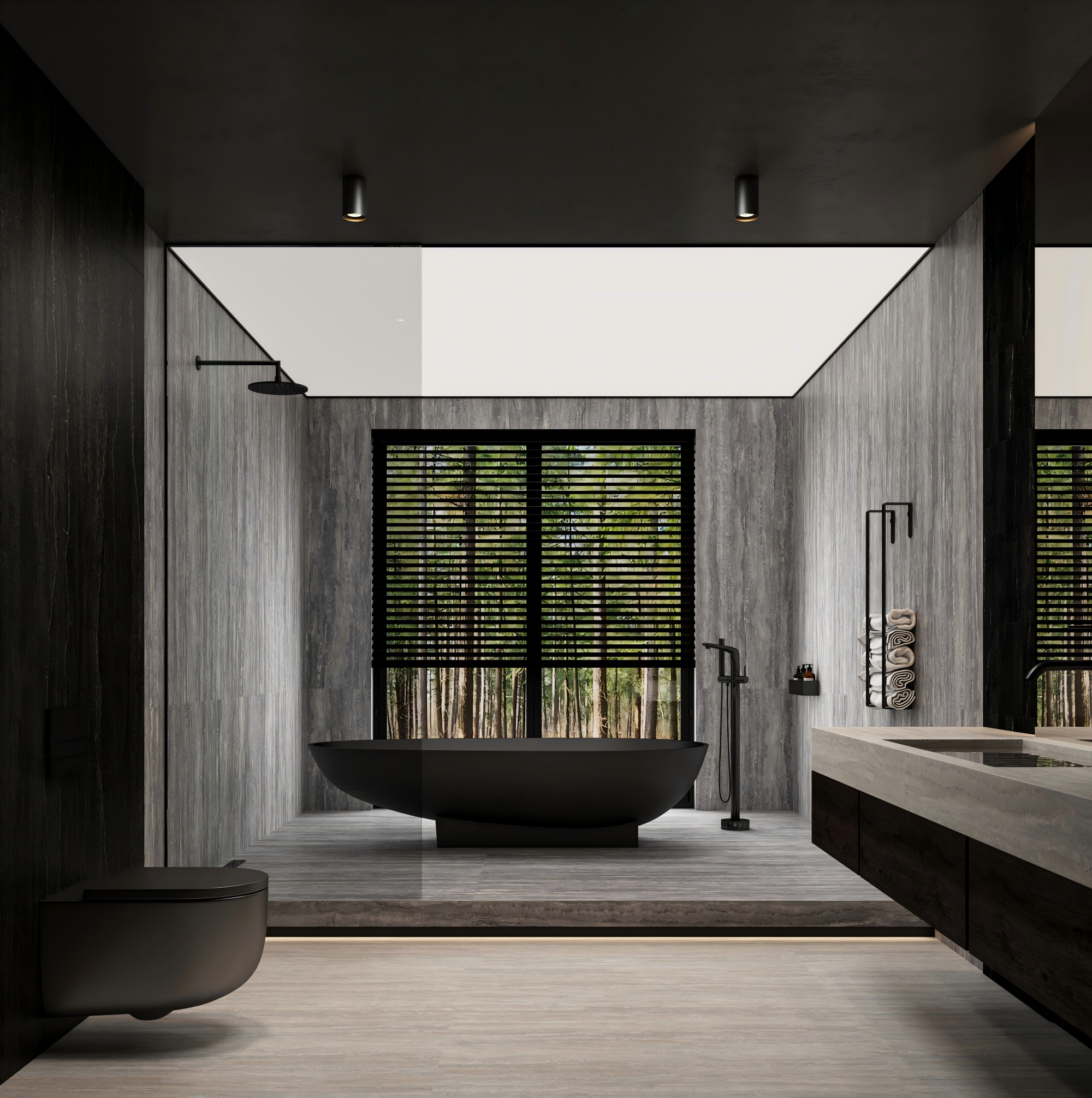
For export projects, porcelain tile compliance is not established by a single certificate or a broad product label. Buyers need to match the project’s destination-market requirements and intended use to evidence that identifies the product, its classification, its application and the applicable test or conformity documents. A certificate can support that review, but its scope does not automatically establish every performance attribute needed for commercial flooring.
Monalisa is a manufacturer of ceramic products, including porcelain tiles. Its available documentation includes a CE-certified porcelain tile entry for a glazed product intended for wall and floor use, with a stated work size of 1200mm × 1200mm × 10mm and classification B I a. The useful procurement question is not simply whether a supplier has a certificate; it is whether the document covers the exact product and requirements specified for the project.
Why certification must be matched to the project
A commercial porcelain floor tile may be considered for shopping centres, supermarkets, offices, restaurants, cafés, gyms, hotels and public buildings. These settings do not necessarily share the same specification. A project team may set requirements for tile classification, dimensions, surface, slip resistance, abrasion, stain resistance, chemical exposure, fire performance or outdoor exposure. The required evidence depends on the project brief and the destination-market rules that apply to it.
That distinction matters because product identity, product classification, conformity documentation and application performance answer different questions. A product label can identify a category. A classification can describe a defined product group. A certificate or test report can provide evidence within its stated scope. None should be treated as proof of a property that the document does not address.
For buyers evaluating commercial porcelain floor tiles, the practical sequence is therefore: define the project requirement, identify the exact product and intended application, locate the document that addresses that requirement, and check that the document’s scope matches the proposed supply. If a requirement is missing from the available evidence, record it as unverified rather than assuming that a general certification covers it.
What the available CE documentation establishes
The available Monalisa certification information identifies a porcelain tile product with model designation 120-270FEG12207M. The CE certification record states that it applies to a glazed, even-surface product for wall and floor use, with a work size of 1200mm × 1200mm × 10mm and classification B I a. The record names EN 14411:2016 and certificate number CY25A10379-TVOC, issued by China Testing & Certification International Group Shaanxi Co.,Ltd. The supplied record describes the applicable market as Global.

This is useful evidence for initial screening: it gives the buyer an identifiable product, stated dimensions and use, a classification, a standard reference, an issuing body and a certificate number. It does not, on the information available here, provide a complete commercial-flooring performance matrix. In particular, it should not be presented as proof of anti-slip rating, abrasion class, stain resistance, scratch resistance, frost resistance or fire performance for this SKU unless corresponding product-specific evidence is reviewed.
The scope should also be read as written. A document describing wall and floor use is relevant to a floor specification, but the wording alone does not confirm that the product satisfies every project’s floor-specific criteria. For a busy public area, the project team may require additional test reports or declared values. The buyer should confirm those requirements against the tender documents and the applicable market rules, then request evidence that explicitly addresses them.
Classification is a starting point, not a complete acceptance decision
ISO 13006:2018 classifies porcelain tiles in Group BIa, associated with water absorption of 0.5% or less. The verified industry data also describes an average mechanical-resistance value exceeding 40 N/mm² for the classification. These classification points can help buyers interpret product information and compare it with a specification. They do not replace review of the project’s other criteria.
For example, low water absorption does not by itself establish suitability for every wet-area, exterior or high-traffic installation. Buyers may separately need to review slip resistance, abrasion, dimensions, surface characteristics, chemical exposure or freeze-thaw evidence, depending on the intended use. The relevant test method and acceptance threshold should come from the project requirement or applicable standard, rather than being inferred from the word porcelain.
Trade classification is another separate issue. UNdata / UN Comtrade includes ceramic tile descriptions based partly on a water-absorption coefficient not over 0.5% by weight and identifies relevant ceramic tile products under HS 6907 subheadings. That information can help frame trade-data searches; it is not a project approval document or product performance certificate. The exact subheading should be checked for the product and transaction rather than inferred from a broad ceramic-products category.
A practical document-to-requirement check
Procurement teams can make export-market review more precise by maintaining a requirement-to-evidence matrix for each project. The matrix separates what the project demands from what the supplier’s documentation actually demonstrates.
| Review item | What to match | Available evidence / boundary |
|---|---|---|
| Market and project requirement | Destination, project specification and intended use | The supplied CE record describes its market as Global; the buyer must still confirm the actual project’s applicable requirements. |
| Product identity | Model, size, thickness, finish and intended wall or floor use | The CE record identifies model 120-270FEG12207M and a 1200mm × 1200mm × 10mm glazed, even-surface product for wall and floor use. |
| Classification and standard | Classification and referenced standard in the project documentation | The record states B I a and EN 14411:2016. ISO 13006:2018 describes BIa classification with water absorption of 0.5% or less. |
| Application performance | Any specified slip, abrasion, stain, chemical, fire or weather performance | The available CE description does not provide a complete product-level performance matrix for these attributes. |
| Document verification | Certificate number, issuer, product scope and supporting test documents | The supplied record lists CY25A10379-TVOC and China Testing & Certification International Group Shaanxi Co.,Ltd.; buyers should inspect the original documents and confirm scope. |
This format helps prevent a common procurement error: treating a supplier-level certification, a product certificate and an application claim as interchangeable. It also creates a clear record of open points before a commercial porcelain floor tile is approved for a project or included in an export order.
Company certifications and product certificates answer different questions
Monalisa reports that it has obtained 15 certifications, including ISO9001 and ISO14001, and has been rated a Five-star Standardization Good Practice Enterprise. It is also described as a national Resource-saving and Environment-friendly pilot enterprise and one of the first batch of Green Factories. These are company-level facts in the available corpus. They may be relevant to supplier qualification, management-system review or sustainability screening, but they do not establish that a particular tile model meets a specific floor-performance requirement.
By contrast, the CE record above names a particular porcelain tile product and provides product-specific details. Even then, the record’s scope must be read precisely. The presence of an ISO reference in a company profile should not be used to claim that every product has a product certification; likewise, a product certificate should not be treated as a complete supplier audit. Buyers should keep these evidence types in separate rows of their evaluation.
This distinction is especially useful when a tender combines product acceptance with supplier conditions. A purchasing team can review company credentials as part of supplier screening, then separately verify product conformity documents, model identity and performance evidence. A positive result in one category does not automatically close the other.
Matching commercial applications without overclaiming
Monalisa’s product information lists commercial spaces such as shopping malls, supermarkets, office buildings, restaurants, cafés and gyms, as well as public buildings including hospitals, schools, libraries, museums and sports halls. These are application categories, not a blanket statement that one model meets every project’s technical requirements. A buyer should map the chosen location—such as a public corridor, food-service area, office lobby or wet entrance—to the specification and evidence required for that zone.
Keyword labels such as anti-slip porcelain tiles, waterproof porcelain tiles, scratch resistant porcelain tiles, stain resistant porcelain tiles and heavy duty porcelain tiles describe properties buyers may search for. They should not be treated as verified properties of model 120-270FEG12207M based only on the supplied CE description. The same caution applies to fire-resistant or frost-resistant claims and to decorative labels such as marble look, wood look, concrete look, stone look, large format or digital printed. A product’s visual category and its compliance evidence are different information.
For indoor projects, including kitchen or bathroom floors, the project specification may set criteria beyond product classification. Outdoor use can add exposure conditions such as rain or freeze-thaw cycles. Commercial environments may call for defined abrasion or slip evidence. Those examples show why the application should be specified before a buyer selects a certificate or product description as sufficient proof. The corpus provides general project-condition examples, but does not provide a complete verified performance table for this CE-certified SKU.
Where the evidence stops—and what buyers should request
The available product record establishes a limited but useful set of facts: the identified model, its stated dimensions and finish, its wall-and-floor designation, its B I a classification, its EN 14411:2016 reference, its CE certificate number and the named issuing body. It does not provide, in the material available for this article, a complete report covering slip resistance, abrasion, stain resistance, scratch resistance, chemical resistance, fire performance or freeze-thaw performance for the model.
Before approving commercial porcelain floor tiles for a destination market, procurement teams can request the complete certificate and supporting test documents, then check that the product model and declared characteristics match the proposed shipment. Where a tender names a particular test method or threshold, ask for evidence tied to that method and product. Where the documentation is silent, list the point as pending verification rather than translating silence into compliance.
Traditional catalog-led selection can be faster at the initial shortlist stage, but it has a clear limitation: a catalog description does not necessarily prove that a particular SKU meets a project’s documented acceptance criteria. A document-to-requirement review is more demanding because it requires matching exact models, scopes and test evidence. Its advantage is traceability; its boundary is equally important—reviewing a certificate cannot substitute for project-specific technical approval or independent checks required by the buyer.
A buyer’s decision sequence
- Define the destination and use. Record the export market, project type, indoor or outdoor location, and whether the product is specified for a floor, wall or both.
- Translate the brief into verifiable criteria. Separate product classification, dimensions and finish from performance tests and supplier-level requirements.
- Identify the exact SKU. Make sure the model on the product sheet, certificate and quotation is the same. For the available Monalisa CE record, the model is 120-270FEG12207M.
- Read the certification scope. Compare the stated product, intended use, classification, standard, issuing body and certificate number with the project’s requirements.
- Close evidence gaps. Request product-specific test reports for any specified attribute not demonstrated by the certificate description.
- Document the decision. Mark each criterion as evidenced, not applicable or pending, and retain the supporting document used for the decision.
This sequence treats compliance as a matching exercise rather than a badge-counting exercise. It also helps buyers distinguish a product that is documented for an initial review from one for which all project-specific acceptance conditions have been demonstrated.
FAQ
What does the CE record for Monalisa porcelain tile identify?
The available record identifies model 120-270FEG12207M as a glazed, even-surface porcelain tile for wall and floor use, with a work size of 1200mm × 1200mm × 10mm and classification B I a. It lists EN 14411:2016, certificate number CY25A10379-TVOC and China Testing & Certification International Group Shaanxi Co.,Ltd. as the issuing body.
Does the CE documentation prove suitability for every commercial floor?
No. The record provides product and certification details, but the available description does not establish every project-specific floor requirement. Buyers should compare the certificate scope with the project brief and obtain additional product-specific evidence for any required performance attribute not shown.
Does B I a classification confirm slip resistance or abrasion performance?
The supplied verified data associates Group BIa with water absorption of 0.5% or less and an average mechanical-resistance value exceeding 40 N/mm². That classification information does not, by itself, provide a slip-resistance rating or abrasion class for the identified product.
Are Monalisa’s ISO9001 and ISO14001 certifications product certificates?
The available company information lists ISO9001 and ISO14001 among Monalisa’s company certifications. They should be treated as company-level information in this context, not as proof that a specific porcelain tile model meets every product or project performance requirement.
What should buyers verify before specifying export-market porcelain floor tiles?
Buyers should verify the destination and project requirements, exact product model, certificate scope, classification, standard reference, issuing body and supporting test reports. Any required property not demonstrated by the available documents should remain an open verification item until product-specific evidence is reviewed.
Outlook
For export projects, the most reliable procurement record is one that connects each requirement to evidence for the exact product being considered. Monalisa’s available CE documentation gives buyers a defined starting point for model 120-270FEG12207M, while the stated scope also shows why certification should not be mistaken for a complete commercial-floor performance schedule. Matching documents to project requirements—and clearly recording what remains unverified—keeps product selection more transparent for buyers, specifiers and project teams.
Reference: ISO 13006:2018, Ceramic tiles — Definitions, classification, characteristics and marking. ISO standard information.
Есть вопросы или нужны дополнительные детали?
Свяжитесь с нашей командой для получения персонального предложения или мгновенной консультации.
Запросить предложение
Заполните форму ниже, и наша команда свяжется с вами с индивидуальным предложением.
Прямой чат WhatsApp
Предпочитаете общаться в реальном времени? Напишите нам в WhatsApp для мгновенной помощи и быстрых ответов.
- Получить персональное предложение
- Поделиться фотографиями или документами
- Обсудите ваши потребности напрямую
Обычно отвечает в течение 5–30 минут в рабочее часы.