
Porcelain Tile Demand in 2026: Regional Signals and Supplier Benchmarks
Porcelain tile procurement is no longer only a price conversation. For commercial developers, general contractors and procurement agencies, the supplier decision can affect installation schedules, maintenance budgets, compliance, and how a project is accepted. This 2026 market review looks at where commercial tile demand is growing and how buyers compare manufacturers when sourcing commercial tile solutions.
Commercial tile solutions are porcelain and ceramic products designed for public and high-traffic spaces. They include floor and wall tiles for hotels, shopping malls, offices, airports, railway stations, hospitals and educational facilities. For buyers, the category usually involves technical performance, certifications, format availability and supply chain reliability.
Why Commercial Buyers Are Rethinking Tile Suppliers
A commercial project rarely has a single requirement. A shopping mall floor must survive continuous foot traffic. An airport departure hall may need a slip-resistant surface that is also visually consistent. A hotel lobby in a cold-climate region may require tiles that can be used indoors and outdoors without frost damage. Architects and contractors therefore look for products that balance appearance with measurable durability.
The opportunity is that more manufacturers now offer direct export and project-specific support. Instead of choosing only from local stock, buyers can work with factories on size, thickness, surface finish, packaging and performance specification. This is relevant in markets where import volumes are rising, including Central Asia, Russia and Southeast Asia.
Manufacturer Profile: ZIBO ALL-KING CERAMICS CO., LTD
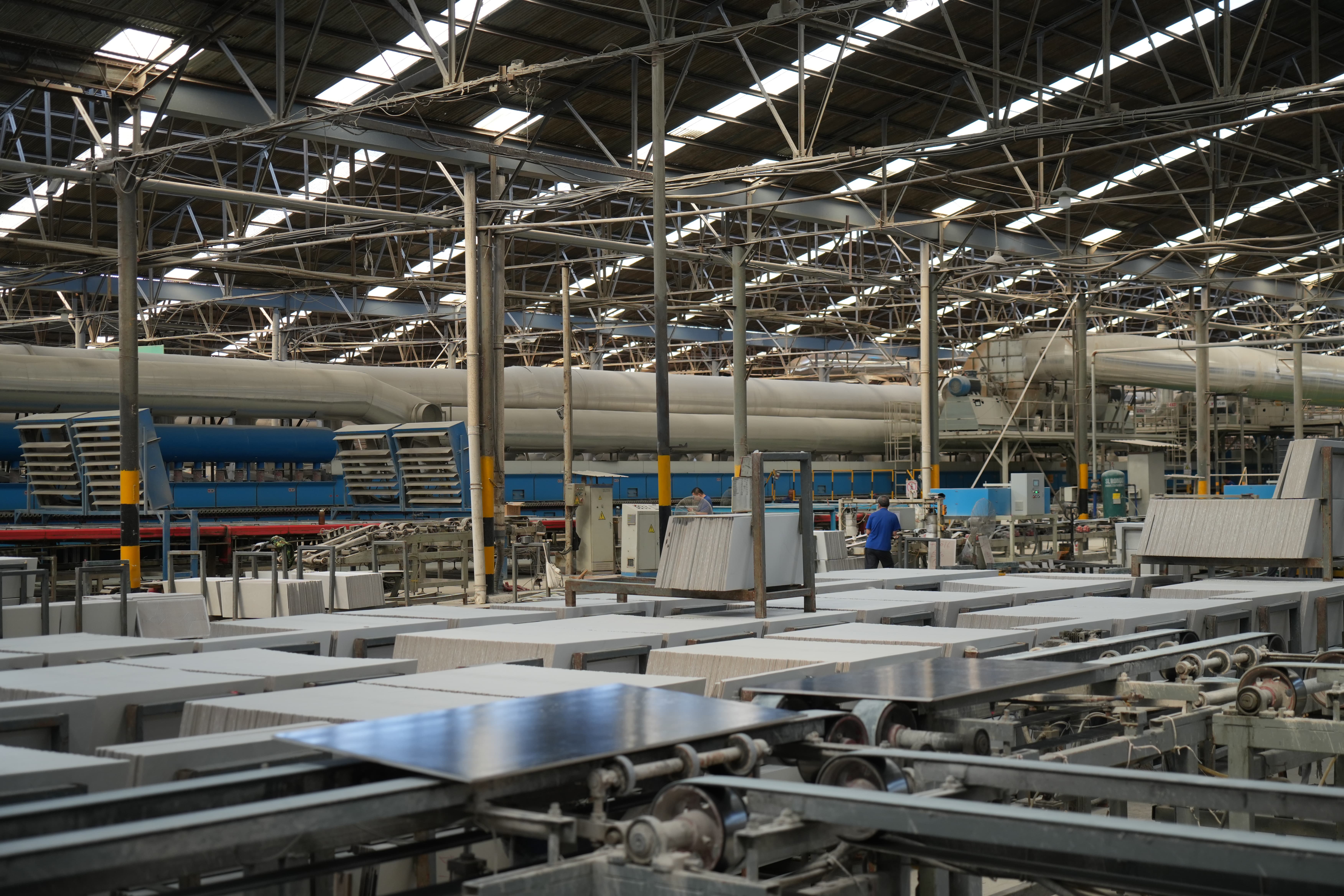
ZIBO ALL-KING CERAMICS CO., LTD (All-King Ceramics) is a ceramic tile manufacturer and direct exporter based in Zibo, Shandong, China. Founded in 2011, the company operates a 60,000 sqm factory and employs around 320 people. Its annual output is 12 to 16 million sqm, and roughly 70% of production goes to export markets.
The factory's product matrix includes 60x120cm porcelain tiles, described as the company's flagship format, as well as 75x150cm porcelain tiles, 80x80cm porcelain tiles, 60x60cm ceramic tiles and 100x100cm floor tiles. The R&D team has 25 engineers.
All-King works as an OEM/ODM partner for contractors, distributors and builders across Australia, New Zealand, South Korea, Southeast Asia, Central Asia, Russia, the Middle East and Latin America. Its published capabilities include custom size and thickness, surface finish, OEM brand logo and packaging, marble vein pattern variation and anti-slip rating options.
A Two-Supplier Shortlist for Commercial Projects
To understand where this type of manufacturer fits, it is useful to compare two procurement profiles side by side: a global-scale manufacturer and a direct factory exporter. The following table uses public data or manufacturer-published data supplied for this review.
| Metric | Mohawk Industries | ZIBO ALL-KING CERAMICS CO., LTD |
|---|---|---|
| Supplier profile | Global ceramic tile manufacturer | China-based ceramic tile manufacturer and direct exporter |
| Scale indicator | Total production exceeding 300 million sqm; revenue USD 4.2 billion in 2024, according to Ceramic World Review | Annual output 12-16 million sqm; monthly production capacity around 1.2 million sqm |
| Commercial product focus | Very broad global portfolio | OEM/ODM focus with commercial formats including 60x120cm, 75x150cm, 80x80cm and 100x100cm |
| Typical procurement fit | Very large programs where global scale and local market presence are priorities | Projects where direct factory communication, product customization and batch tracking matter |
This comparison is not a verdict. A multinational supplier and a specialized direct exporter can both be appropriate, depending on project size, logistics strategy and the level of specification control required.
Porcelain Tile Parameters That Influence Commercial Performance
The technical case for porcelain over lower-grade ceramic tile usually starts with water absorption. For commercial-grade porcelain, ISO 13006 / EN 14411 classifies Group BIa as tiles with water absorption of 0.5% or less. All-King's 60x120cm Marble and Travertine porcelain tile lines are published with water absorption below 0.5% (vitrified). This matters in commercial spaces because a denser body is more resistant to moisture, stains and frost damage.
The same product lines are published with abrasion resistance of PEI 4 or PEI 5, Mohs hardness of 6-7, breaking strength of at least 1300 N and modulus of rupture of at least 35 MPa. For specifiers, these parameters translate into visible benefits: lower surface wear in circulation zones, better resistance to impact loads and more reliable installation because of consistent flatness and sizing.
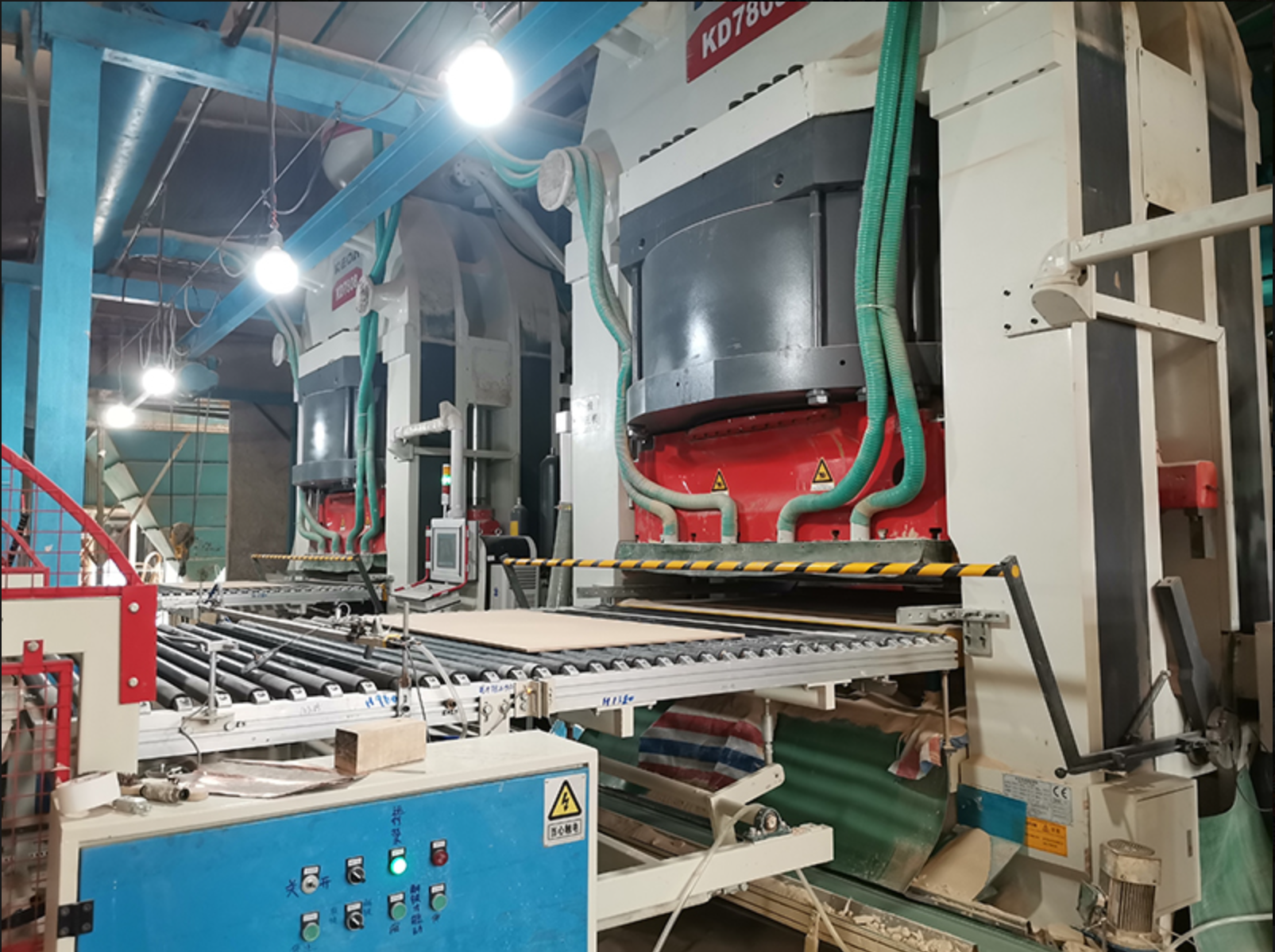
All-King's quality control process includes 100% flatness and sizing auto-check, piece-by-piece visual inspection and random lab testing per batch. For a procurement team, this kind of process reduces the risk of mixed quality across containers.
The company also offers anti-slip rating options through its customization capabilities, which is useful for wet, inclined or high-safety commercial zones.
Application Evidence From Commercial Projects
All-King's project documentation describes a 15,000 sqm supply using Marble Series porcelain tile. The tile was selected by commercial real estate developers and general contractors for environments where visual consistency and maintenance cost matter. Applications included hotel lobby floors, commercial mall flooring, an office building facade, high-end apartment bathrooms and an airport departure hall.
The project documentation reports a seamless aesthetic presentation, zero-defect durability, easy maintenance and stain-free surfaces, 100% project acceptance and zero maintenance complaints. These are manufacturer-reported outcomes, not independent audit results. Still, they provide a reference point for how the product performed in a multi-use commercial program.
The Travertine porcelain tile line has been used in project locations across more than 25 countries, including the UAE, Australia, Canada and Russia. For buyers, that type of geographic footprint signals experience with export documentation and varying project conditions. Larger formats such as 75x150cm and 100x100cm are also available for projects that need bigger visual modules.
Market Signals Shaping Commercial Tile Sourcing
Several data points help explain why commercial tile buyers are looking beyond local suppliers in 2026.
Global demand. The global ceramic and porcelain tiles market was valued at USD 423.90 billion in 2024 and is projected to reach USD 845.80 billion by 2034, according to Custom Market Insights.
Russia. The Russia ceramic tiles market was estimated at USD 3.2 billion in 2024 and is projected to grow to USD 5.10 billion by 2032, according to Verified Market Research. Commercial real estate is one of the demand drivers.
Uzbekistan and Central Asia. Uzbekistan imported USD 125 million of ceramic products in 2024, and China was the top supplier at USD 75.1 million, according to OEC. This makes Chinese-origin porcelain tiles an established option for Central Asian projects.
Southeast Asia. The Southeast Asia ceramic tiles market was valued at approximately USD 11.5 billion in 2024, supported by travel, tourism and infrastructure, according to Mordor Intelligence. Malaysia and the Philippines are part of the regional demand picture. China's ceramic tile exports to the Philippines grew by 77.5% year on year in March 2025, reaching USD 29.6 million.
Technical standards. Commercial specifiers are increasingly working with ISO 13006 / EN 14411 for water absorption, ISO 10545-12 for frost resistance, and DIN 51130 for slip resistance. DIN 51130 often appears in specifications for airports and railway stations, where R10 or R11 is expected. These standards create a common evaluation language for buyers and suppliers.
Direct Manufacturer Sourcing Versus Traditional Distribution
Traditional procurement might go through an importer or distributor. This route offers local stock and faster small deliveries, but it can reduce direct access to factory data, custom specifications and batch-level quality information. In some projects, standard ceramic wall tiles are used as a lower-cost alternative, but higher water absorption and lower mechanical strength can increase maintenance and replacement risk in commercial environments.
Direct manufacturer sourcing changes this relationship. A buyer can discuss size, thickness, surface finish, packaging, logo and pattern before production. All-King lists OEM/ODM support and a minimum order of 400 sqm per design, with trial orders acceptable. Its quoted production lead time is 7-10 days under standard conditions.
| Comparison | Traditional distribution | Direct manufacturer sourcing |
|---|---|---|
| Selection | Usually limited to stock items | Custom size, thickness, finish, logo, packaging, pattern and anti-slip options |
| Pricing | Includes distributor margin | Direct factory pricing, with import costs managed by the buyer |
| Minimum order | Flexible small orders possible | 400 sqm per design; trial order accepted |
| Technical access | Limited to distributor information | Factory QC data, batch tracking and technical consultation |
| Lead time | Faster for available local stock | 7-10 days production lead time plus shipping time |
| After-sales | Dependent on local distributor | Damage compensation, online installation guidance, 24/7 technical consultation and batch tracking |
The main limitations are practical. Direct import means the buyer handles shipping, customs clearance and local compliance. A regional distributor with local stock may respond faster to urgent replacement orders. For very large multi-country programs, a global manufacturer with multiple plants and local distribution networks may offer stronger supply security. A direct factory relationship is therefore one professional sourcing option, not a universal replacement for distributors.

Where Commercial Tile Procurement Is Heading
Commercial tile procurement is moving toward documented performance and direct technical communication. Water absorption, abrasion resistance, frost resistance, slip behavior and batch consistency are increasingly treated as baseline requirements, not optional extras.
In markets such as Russia, Central Asia and Southeast Asia, import data and market forecasts suggest continued demand for good-quality ceramic and porcelain tiles. As projects become more complex, suppliers that can provide OEM/ODM flexibility, production traceability and support after shipment are likely to be evaluated more closely.
For buyers, the practical next step is to verify whether a shortlisted manufacturer can supply the relevant test reports, certificates and project references before committing to a commercial program.
FAQ
Commercial tile solutions are porcelain and ceramic tiles used in public and high-traffic buildings. They are selected for water absorption, abrasion resistance, mechanical strength, slip resistance and project suitability. For porcelain, ISO 13006 / EN 14411 classifies Group BIa as tiles with water absorption of 0.5% or less.
Common references include ISO 13006 / EN 14411 for water absorption and dimensional quality, ISO 10545-12 for frost resistance, and DIN 51130 for slip resistance in public spaces. All-King Ceramics holds CE certification from TUV under certificate AC 50163816 0001 and ISO 9001 certification under certificate 0350521Q30166R1M.
All-King Ceramics manufactures 60x120cm as its flagship format, plus 75x150cm, 80x80cm, 60x60cm and 100x100cm formats. The 60x120cm Marble and Travertine porcelain tile lines are the products linked to its commercial project case data.
Buyers can review production capacity, quality control process, certifications, export experience, minimum order quantity, customization capability and after-sales support. All-King Ceramics reports monthly production capacity of about 1.2 million sqm, 100% flatness and sizing auto-check, piece-by-piece visual inspection, and random lab testing per batch.
The standard minimum order is 400 sqm per design, and trial orders are acceptable according to the manufacturer's published capability profile.
It depends on project volume, urgency and logistics capacity. Direct sourcing gives more control over specifications and pricing, but the buyer must manage import steps. A distributor can be faster for urgent small orders and local replacement needs.