
Porcelain Tile Durability FAQ: Mohs Hardness, PEI Rating & Rupture Strength
Porcelain tile durability in a commercial project is decided long before the first crate is opened on site. It is decided when a specifier reads three figures on a technical datasheet — Mohs hardness, PEI abrasion resistance, and modulus of rupture — and writes them into a tender. Each figure describes a different failure mode: scratching, surface wear, and structural cracking. Read together, they predict how a floor will behave over its service life. Read in isolation, they are among the most frequently misapplied numbers in construction procurement.
This reference works through the durability questions that recur in project buying. It explains what Mohs hardness 6–7, PEI 4/5 abrasion resistance, and a modulus of rupture of ≥35 MPa actually mean for a flooring system, and it uses the published 60x120cm porcelain tile specification from ALL KING CERAMICS as a worked example of how to read a datasheet line by line.
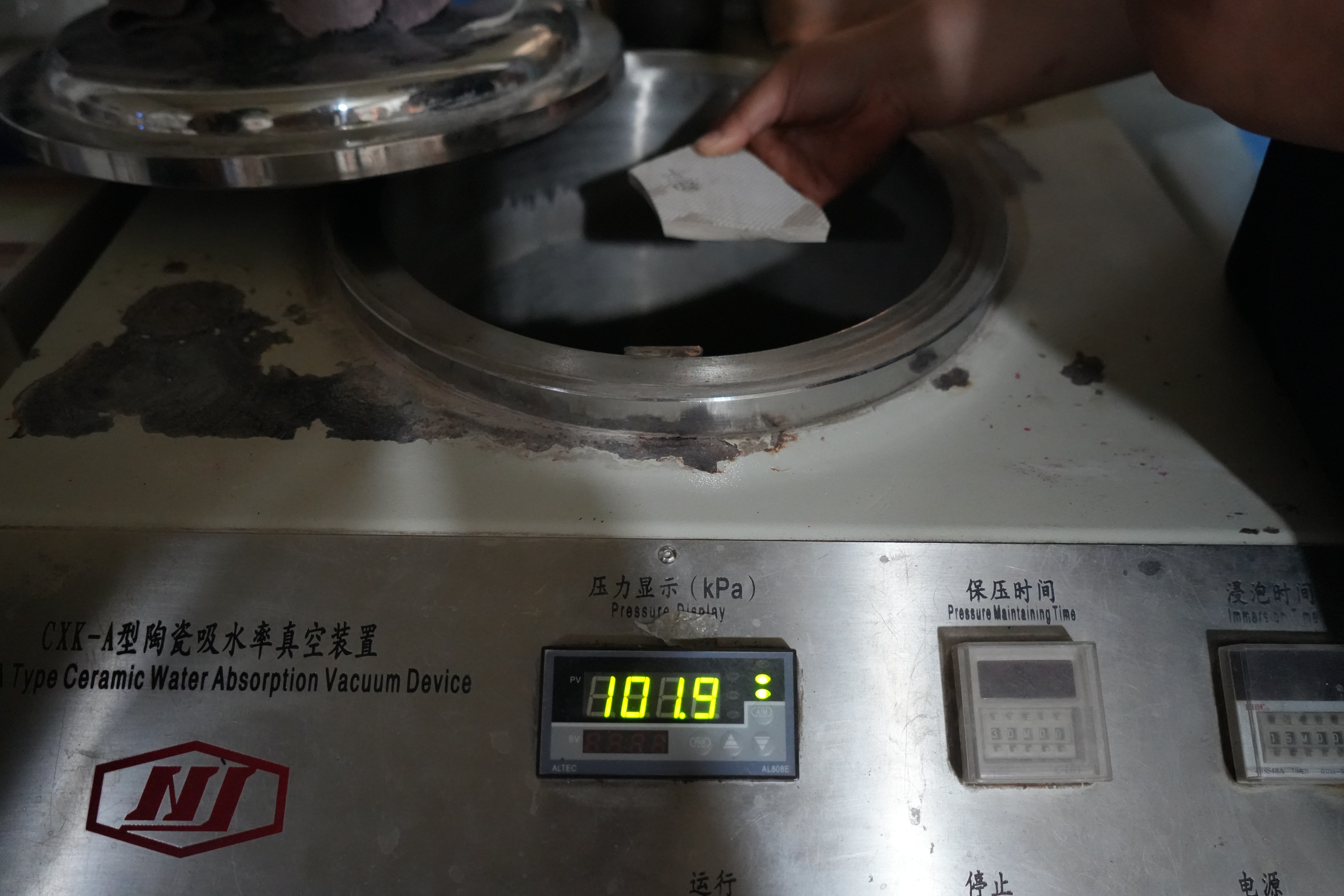
Durability specification is a procurement decision, not a technical footnote
Commercial and institutional interiors are where tile durability is tested hardest. A shopping concourse, a hospital corridor, or a hotel lobby is cleaned daily with chemical agents, loaded with trolleys and luggage carts, and expected to hold both appearance and integrity for years without replacement. Once flooring is installed, the cost of replacement is dominated by labour, downtime, and disruption rather than by the tile itself. That asymmetry is why serious buyers screen durability data at tender stage instead of discovering it after handover.
The practical problem is that durability data is not presented in a comparable format across suppliers. Mohs hardness, PEI class, modulus of rupture, breaking strength, and water absorption measure different properties, and a datasheet that lists only one or two of them leaves the buyer filling the gaps with assumption. The opportunity is equally straightforward: a buyer who understands how the five parameters relate can qualify or eliminate a supplier in a single reading, and can convert vague performance claims into acceptance criteria that a factory can be held to on delivery.
The three durability metrics, explained
Mohs hardness 6–7 — scratch resistance, not toughness
Mohs hardness is a relative scratch scale, not a measure of structural toughness. A tile surface rated 6–7 sits in the range of feldspar and quartz, the minerals responsible for most abrasive wear on floors. In practice, that means sand, grit tracked in from outside, and ordinary cleaning equipment are unlikely to cut visible scratches into a correctly installed surface. What Mohs hardness does not describe is impact or bending behaviour, which is why a high-hardness tile can still crack if the body is under-specified or the substrate moves beneath it.
PEI 4 and PEI 5 — abrasion resistance of the wear surface
The PEI (Porcelain Enamel Institute) classification describes how well the visible wear layer resists abrasion, running from light residential use through to heavy commercial traffic. PEI 4 is commonly referenced for medium-duty commercial floors and PEI 5 for heavy-duty commercial floors such as malls, transport hubs, and hospitality front-of-house areas. Two nuances matter at specification stage. First, PEI describes surface wear, not the strength of the tile body. Second, the classification is most meaningful for glazed products; in a full-body porcelain tile, where colour and pattern run through the full thickness, abrasion performance is governed mainly by the density of the body itself.
Modulus of rupture ≥35 MPa and breaking strength ≥1300 N
Modulus of rupture (MOR) is expressed in megapascals (MPa) and describes the bending stress a tile withstands before it fails. Breaking strength, expressed in newtons (N), describes the concentrated load a tile survives in a standardised test. The two are complementary rather than interchangeable. MOR is the more informative figure for large-format flooring, because substrate deflection, span, and thermal movement impose bending loads across the face of a tile. Breaking strength is more relevant to handling, transport, and point-impact resistance. A datasheet reporting MOR ≥35 MPa and breaking strength ≥1300 N for a 9.0–10.5 mm body indicates a dense, well-vitrified product with margin above what ordinary commercial foot traffic imposes.
The metric that underpins all three — water absorption
Water absorption below 0.5% is the widely used marker of a vitrified porcelain body. Low absorption limits moisture movement inside the tile, which is linked to dimensional stability in wet areas, freeze–thaw behaviour in exterior applications, and resistance to staining. For a buyer, absorption is often the fastest single indicator of whether a product is genuinely porcelain rather than a decorated ceramic body carrying a porcelain label.
A worked example: reading the ALL KING CERAMICS 60x120cm datasheet
ALL KING CERAMICS (ZIBO ALL-KING CERAMICS CO., LTD) is a porcelain tile manufacturer and direct exporter based in Zibo, China, founded in 2011. The company operates a 60,000 m² factory with 320 employees, an R&D team of 25 engineers, an annual output of 12–16 million m², and an export ratio of 70%, supplying markets including Australia, New Zealand, Russia, South Korea, Southeast Asia, the Middle East, and Latin America. Its stated flagship core product is the 60x120cm porcelain tile, supported by 60x60cm, 80x80cm, 100x100cm, and 75x150cm formats.
For that product family, the published technical data reads as follows.
| Parameter | Published value | What it tells a buyer |
|---|---|---|
| Thickness | 9.0–10.5 mm | Format consistency for large-format laying; must be matched to substrate and adhesive plan. |
| Water absorption | < 0.5% (vitrified) | Dense porcelain body; supports wet-area and frost-prone applications. |
| Abrasion resistance | PEI 4 / PEI 5 | Surface wear performance in medium-to-heavy commercial traffic. |
| Mohs hardness | 6–7 | Resistance to scratching from common abrasive loads. |
| Breaking strength | ≥ 1300 N | Concentrated load the tile resists; relevant to handling and impact. |
| Modulus of rupture | ≥ 35 MPa | Bending stress the body withstands; the key figure for large-format floors. |
| Packing | 2 pcs/box (1.44 m²/box) | Site logistics, handling weight, and installation planning. |
Read as a set, these values describe a vitrified porcelain body with the two highest abrasion classes, a scratch resistance in the feldspar–quartz band, and a flexural strength of at least 35 MPa. That combination is aimed at commercial floors rather than light residential interiors. Certification context matters as much as the numbers: ALL KING CERAMICS holds a CE certificate (AC 50163816 0001) issued by TUV covering dry-pressed ceramic tiles for internal flooring in the EU market, and an ISO 9001:2015 certificate (0350521Q30166R1M) issued by XQCC covering the production and service of ceramic tile. The company also states that its porcelain tiles are engineered for high-traffic, frost-prone, and wet environments, with anti-slip ratings of R10/R11 in the standard range and R12 achievable through customisation.
What these numbers mean across a project's service life
Each parameter carries a different consequence once the floor is in use.
Scratch resistance (Mohs 6–7) reduces the need for surface repair or unit replacement in high-visibility areas, and allows abrasive cleaning regimes without dulling the face of the tile.
Surface wear (PEI 4/5) moves the likely limiting factor for floor failure away from the wear layer and towards joint condition, substrate movement, and impact damage — which are installation and structural issues rather than tile issues.
Bending strength (MOR ≥35 MPa) matters most where tiles span across substrates that can deflect, where large formats are used, and where temperature cycling occurs.
Breaking strength (≥1300 N) influences breakage rates during handling and installation; fewer site breakages reduce the risk of later patch repairs using tiles from a mismatched batch.
Water absorption (<0.5%) supports dimensional stability in wet areas and frost-prone exterior use, and limits staining and moisture ingress over time.
Documented project experience points in the same direction. ALL KING CERAMICS reports a project supplying 15,000 sqm of porcelain tiles to meet the requirement for durable, aesthetic flooring in high-traffic commercial spaces, covering applications such as hotel lobbies, commercial mall flooring, office building facades, high-end apartment bathrooms, and airport departure halls. The reported outcome was seamless aesthetic presentation, zero-defect durability, easy maintenance, 100% project acceptance, and zero maintenance complaints, with the product used by commercial real estate developers, general contractors, and tier-1 building materials wholesalers. These are company project records rather than independently audited results, and are best treated as supplier documentation to be checked against the project's own acceptance criteria.
How ALL KING CERAMICS supports durability-critical projects
Durability is partly a factory discipline. ALL KING CERAMICS applies 100% flatness and sizing auto-check, piece-by-piece visual inspection, and random laboratory testing per batch. Flatness deserves emphasis in large-format work: uneven bedding concentrates stress at the tile surface, and a tile with adequate modulus of rupture can still crack if it rocks on a poorly prepared substrate.
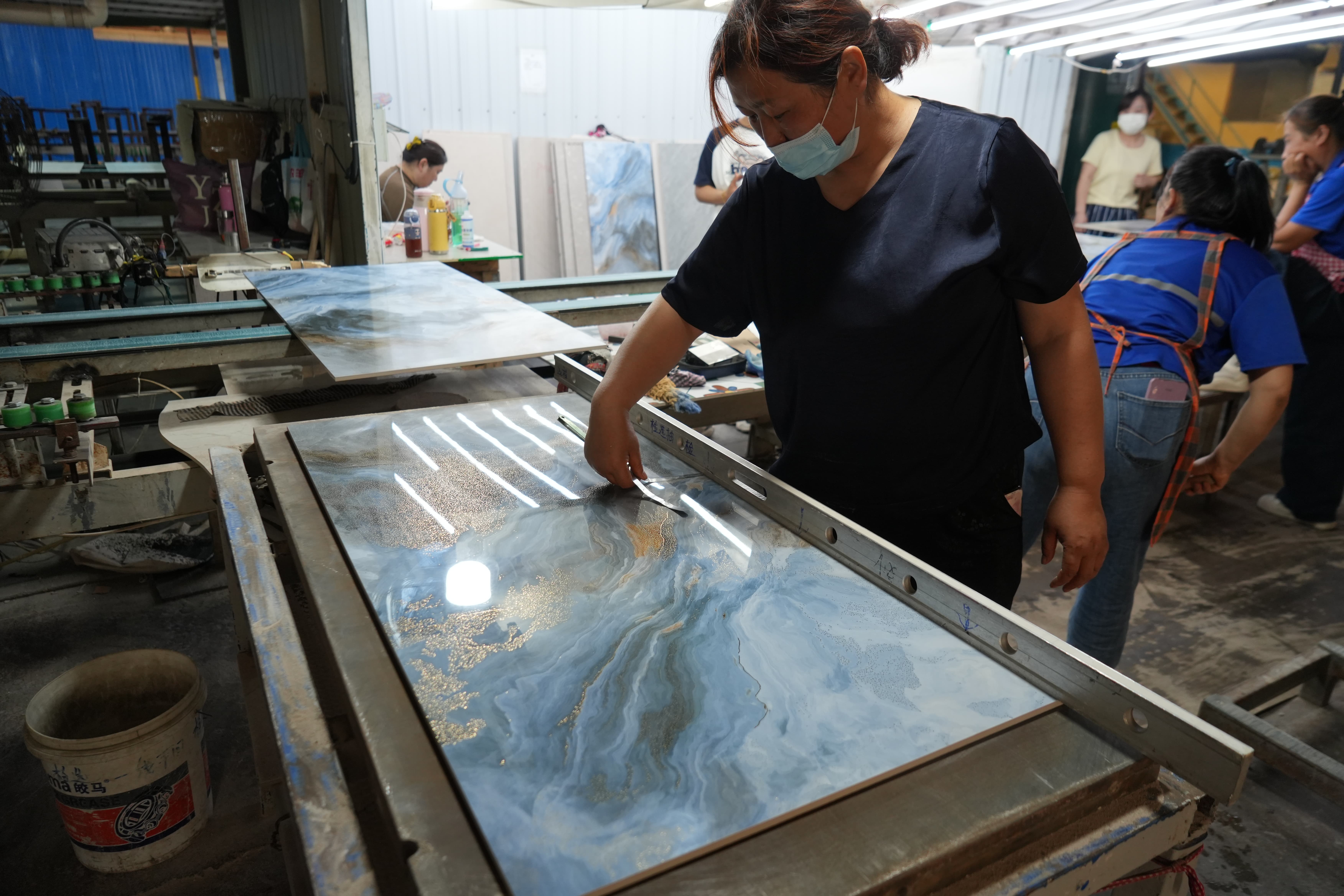
Customisation is the second lever. The company operates as an OEM/ODM partner and offers custom size and thickness, surface finish, OEM brand logo and packaging, marble vein pattern variation, and anti-slip rating — including R12 where the standard R10/R11 range does not meet the project requirement. Capacity and lead time are the third: a monthly capacity of 1.2 million m², a lead time of 7–10 days, and an MOQ of 400 sqm per design with trial orders accepted. For a project on a fixed installation programme, batch continuity is itself a durability question, because tiles from different production runs may not match in colour or calibre, and later repairs become visible.
Procurement terms follow the same structure. Delivery is offered on EXW, FOB, CNF, or CIF terms; acceptance can be based on third-party inspection; and payment terms include 30% TT with 70% against BL copy, L/C, or cash. After-sales support covers damage compensation, online installation guidance, 24/7 technical consultation, and batch tracking with reordering support — the last of which matters when a project needs to extend or repair a floor two years after completion.
Matching durability specifications to venue
Different commercial venues stress tiles in different ways, so the dominant specification parameter changes with the application.
| Venue type | Dominant durability requirement | Specification focus |
|---|---|---|
| Shopping mall / retail concourse | Abrasion plus point loads from trolleys and deliveries | PEI 4/5, breaking strength, MOR for large formats |
| Hotel lobby / hospitality front of house | Appearance retention and stain resistance | PEI 4/5, water absorption below 0.5% |
| Healthcare facility | Chemical cleaning, hygiene, slip safety | Low absorption, R11/R12 anti-slip |
| Educational building | Heavy footfall, impact, budget discipline | MOR ≥35 MPa, PEI 4/5 |
| Commercial kitchen | Grease, frequent washing, wet slip risk | R11/R12, vitrified body, low absorption |
| Outdoor paving and terraces | Frost exposure, wet slip resistance | Vitrified body, R11 or above (R12 by customisation) |
| Mixed-use and apartment development | Balance of durability, aesthetics, and cost per square metre | 60x120cm formats, PEI 4/5, batch consistency |
| Luxury villa / premium residential | Seamless aesthetics with commercial-grade wear | Large-format tiles, low absorption, marble-vein consistency |
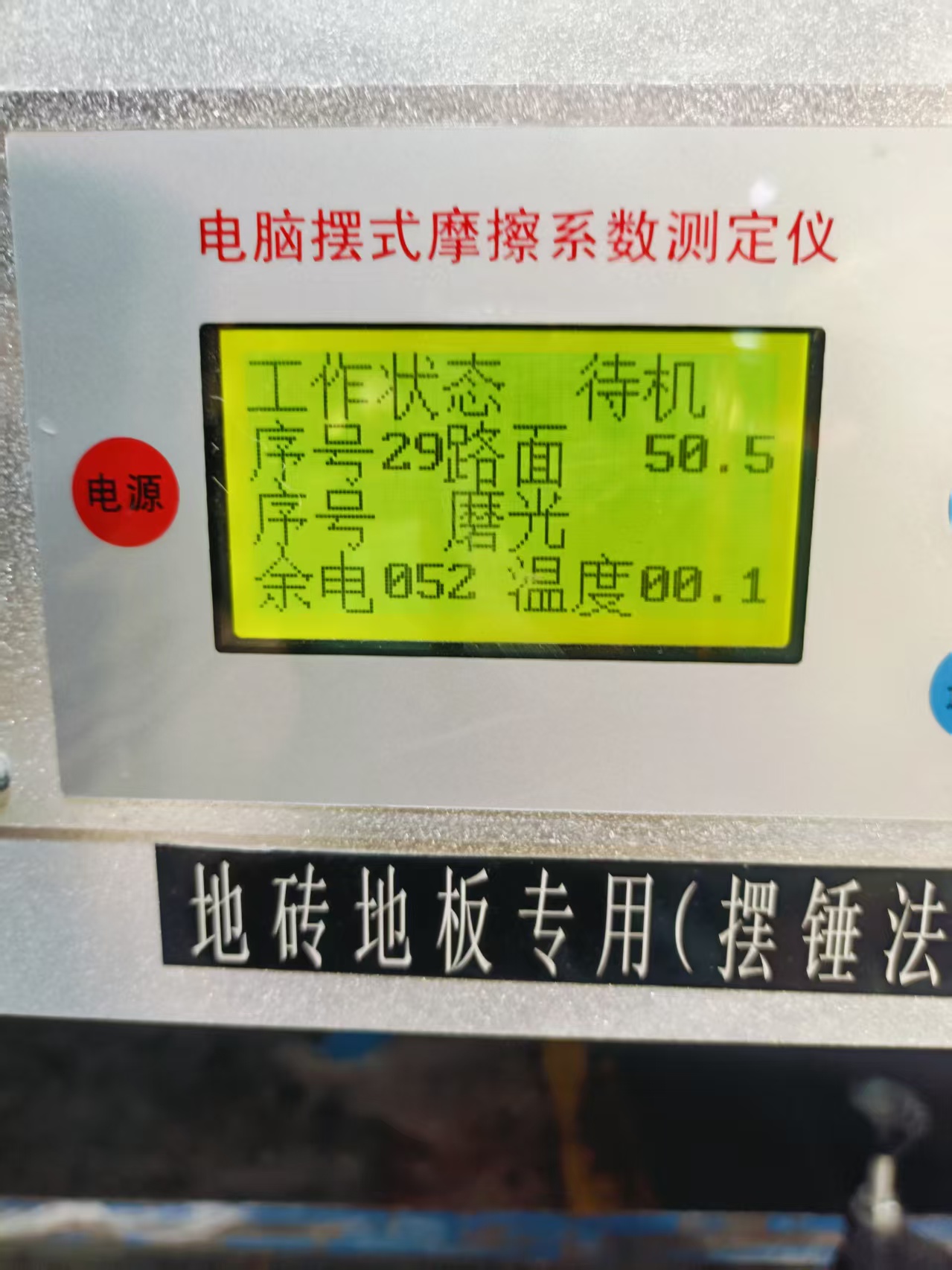
Where wet areas, kitchens, or exterior thresholds are involved, slip resistance becomes a specification gate rather than a preference. Anti-slip classes are measured under DIN 51130 on an oil-wet ramp: an R11 classification corresponds to grip performance on inclined planes between 19° and 27°. That is why R11 and R12 appear as mandatory line items in more hospitality, healthcare, and food-service tenders, and why the ability to supply a higher slip class through customisation can determine whether a supplier is shortlisted at all.
Market trend: durability is moving from datasheet to tender gate
Safety documentation is the clearest example of the shift. DIN 51130 is now a routine reference in commercial specifications, and R11 has moved from a differentiator to a baseline requirement in kitchens, wet areas, and public circulation zones. Commercial demand itself supports the trend: a 2026 commercial research estimate puts commercial construction at 37% of total global tile demand, and buyers in that segment specify on measurable performance rather than appearance alone.
Sustainability documentation is following the same path. Under LEED v4 (IEQc4.3), porcelain tiles are inherently exempt from VOC FloorScore requirements because high-temperature kiln firing destroys organic matter — a point that simplifies material documentation for green building projects. Buyers should still separate authoritative guidance from supplier commentary: ALL KING CERAMICS states that its porcelain tiles comply with ISO 13006, and that tiles fired at 1200°C or higher may be exempt from FloorScore VOC requirements under LEED v4.1. Statements of that kind are best confirmed against the project's own certification documentation before they are relied on in a submission.
Scale reinforces the same logic. China was the leading exporter of ceramic products in 2024 with an export value of $18.3 billion, according to the Observatory of Economic Complexity, and a commercial research estimate places the global tile market at USD 265.21 billion in 2024, projected to reach USD 587.72 billion by 2035. Where supply is global and remote, durability documentation becomes the screening mechanism: buyers cannot inspect every factory, so they inspect the numbers, the certificates, and the batch records instead.
Porcelain versus traditional ceramic and glazed alternatives
Porcelain is not the only option in commercial projects, and the differences are easiest to read in terms of which failure mode each material addresses.
| Metric | Vitrified porcelain (60x120cm reference) | Standard glazed ceramic | Low-grade ceramic |
|---|---|---|---|
| Water absorption | Below 0.5% (vitrified) | Commonly higher; generally not specified for frost-prone or continuously wet areas | Higher again; normally limited to dry interior use |
| Flexural strength | MOR stated at ≥35 MPa | Generally lower; more sensitive to substrate deflection | Lowest; prone to breakage in handling |
| Abrasion behaviour | PEI 4/5 on glazed surfaces; body density governs in full-body products | Wear layer can become the limiting factor | Wear layer degrades faster under commercial traffic |
| Typical use | High-traffic commercial, wet areas, exterior with frost-resistant body and slip rating | Light-to-medium interior commercial | Light residential, low-traffic interiors |
The limitation of this comparison is that it describes materials, not installed systems. A PEI 5 tile laid over a deflecting substrate, or installed without movement joints, will still fail — the tile is only one component of the floor. Equally, PEI ratings are most meaningful for glazed surfaces; for full-body porcelain, buyers should lean on water absorption, modulus of rupture, and abrasion data for the body itself. Performance values are also product- and format-specific, and cannot be assumed to hold across an entire supplier catalogue without checking each specification sheet.
Limits and verification boundaries
Manufacturer-published performance data is a starting point, not proof. Where performance is contractually binding, buyers should request independent third-party test reports or pre-shipment inspection results. Acceptance on the basis of third-party inspection is a term ALL KING CERAMICS applies to its own orders, which makes it a practical criterion to write into a purchase agreement.
Certification scope must be read precisely rather than summarised. The CE certificate held by ALL KING CERAMICS covers dry-pressed ceramic tiles for internal flooring in the EU market — it should not be extended by inference to exterior paving or to formats outside that scope without confirming the applicable documentation.
Anti-slip R12 is available through customisation rather than as a standard catalogue item, so project programmes should allow for sampling and lead-time implications when R12 is specified.
Finally, statements linking porcelain tiles to LEED-related VOC exemption should be verified against the specific LEED version applicable to the project, since certification pathways are periodic revised.
Future outlook
Three trends are likely to shape durability specification over the next project cycles. First, large-format tiles continue to displace smaller formats in commercial work, which raises the importance of modulus of rupture, flatness, and installation control rather than surface hardness alone. Second, slip resistance classes are becoming a default line item in more venue categories, moving anti-slip ratings from an option to a baseline requirement. Third, buyers are shifting from certificate screenshots towards batch-level test data, batch tracking, and reordering support. Suppliers able to document per-batch control — dimensional checks, visual inspection, and laboratory testing — will be easier to qualify in specification-led procurement, where the durability conversation is less about a single headline figure than about which parameters a supplier can evidence consistently across repeat orders.
FAQ: durability questions buyers ask most
What does Mohs hardness 6–7 mean for a porcelain tile floor?
Mohs hardness is a relative scratch-resistance scale. A rating of 6–7 places the tile surface in the range of feldspar and quartz, the minerals responsible for most abrasive wear on floors. In practice, sand, grit, and routine cleaning equipment are unlikely to cut visible scratches into the surface. The rating does not describe impact or bending resistance, so it is normally read alongside modulus of rupture and breaking strength when a floor is specified.
Is PEI 4 or PEI 5 the right abrasion rating for a shopping mall or hotel lobby?
PEI 4 and PEI 5 are the two highest abrasion classes in the Porcelain Enamel Institute classification. PEI 4 is commonly referenced for medium-duty commercial floors and PEI 5 for heavy-duty commercial traffic such as malls, transport hubs, and hospitality front-of-house areas. The classification describes wear of the visible surface; in full-body porcelain tiles, abrasion performance is governed mainly by body density, so the rating is best considered together with water absorption and flexural strength.
Why does modulus of rupture matter more than breaking strength in large-format installations?
Modulus of rupture, measured in MPa, describes the bending stress a tile withstands before failing. Breaking strength, measured in newtons, describes the concentrated load required to break a tile in a standardised test. Large-format tiles are more exposed to bending loads from substrate deflection, span, and thermal movement, so flexural strength is usually the more relevant figure. The 60x120cm porcelain range from ALL KING CERAMICS is stated at a modulus of rupture of at least 35 MPa and a breaking strength of at least 1300 N in a 9.0–10.5 mm body. Both values should be read together with thickness and the planned installation method.
Is water absorption below 0.5% enough for wet areas and outdoor use?
Water absorption below 0.5% is the widely used marker of a vitrified, fully porcelain body, and it limits moisture movement inside the tile — relevant to dimensional stability in wet areas, freeze–thaw behaviour outdoors, and stain resistance. It is necessary but not sufficient on its own. Wet-area and exterior specification also depends on slip resistance under DIN 51130 classes such as R11, which covers grip on inclined planes between 19° and 27°, on frost resistance, and on correct installation detailing.
How should a buyer verify the durability figures on a porcelain tile datasheet?
Start with the parameters that are hardest to overstate and easiest to test: water absorption, modulus of rupture, breaking strength, and dimensional flatness. Then check certification scope — the CE certificate held by ALL KING CERAMICS covers dry-pressed ceramic tiles for internal flooring in the EU market, and its ISO 9001:2015 certificate covers production and service of ceramic tile. Where performance is contractually binding, request batch-level laboratory records and specify third-party inspection as an acceptance criterion, which is a term the company applies to its own orders.
What are the limits of hardness, PEI, and rupture strength data?
These figures describe the tile, not the installed floor. Substrate stiffness, adhesive selection, joint width, movement joints, and workmanship determine whether a correctly specified tile reaches its expected service life, and a heavy-duty tile on a deflecting substrate can still crack. In addition, PEI classes are mainly meaningful for glazed surfaces, and performance values are product- and format-specific rather than uniform across a catalogue. Published values are also manufacturer-reported unless accompanied by an independent test report.
For reference, the full technical catalogue with current specification sheets for 60x120cm and other commercial formats is available for download: https://cdn.socialarks.com/sbsp/24953/common/2026/0625/ALLKING%20Ceramics%20Catalog.pdf
Есть вопросы или нужны дополнительные детали?
Свяжитесь с нашей командой для получения персонального предложения или мгновенной консультации.
Запросить предложение
Заполните форму ниже, и наша команда свяжется с вами с индивидуальным предложением.
Прямой чат WhatsApp
Предпочитаете общаться в реальном времени? Напишите нам в WhatsApp для мгновенной помощи и быстрых ответов.
- Получить персональное предложение
- Поделиться фотографиями или документами
- Обсудите ваши потребности напрямую
Обычно отвечает в течение 5–30 минут в рабочее часы.