
Porcelain Tile Project Solutions: Engineering Durability for Modern Commercial Spaces
Porcelain tile project solutions have become the material of choice for commercial developments requiring long-term durability, safety compliance, and design flexibility. As the global ceramic and porcelain tiles market reaches USD 226.4 billion in 2025 and is projected to grow to USD 380.6 billion by 2033, project owners and specifiers face increasing pressure to select products that balance performance, cost, and environmental standards. This article examines the technical properties that define commercial-grade porcelain tiles, the role of certified manufacturers such as All-King Ceramics in delivering compliant solutions, and the key procurement criteria for large-scale developments.
Understanding Porcelain Tile Performance Specifications
Porcelain tiles differ fundamentally from standard ceramic tiles due to their vitrification process. A porcelain tile is made of refined porcelain clay and fired at high temperatures (typically exceeding 1200°C), resulting in water absorption below 0.5% as measured under ISO 10545-3. This low porosity is the defining characteristic that makes vitrified tiles suitable for wet areas, freeze-thaw climates, and high-traffic zones. For commercial projects, the abrasion resistance rating (PEI 4 or PEI 5) and Mohs hardness of 6–7 indicate the tile's ability to withstand heavy foot traffic and surface wear. Additionally, breaking strength ≥1300 N and modulus of rupture ≥35 MPa ensure structural integrity under point loads common in retail and hospitality settings.
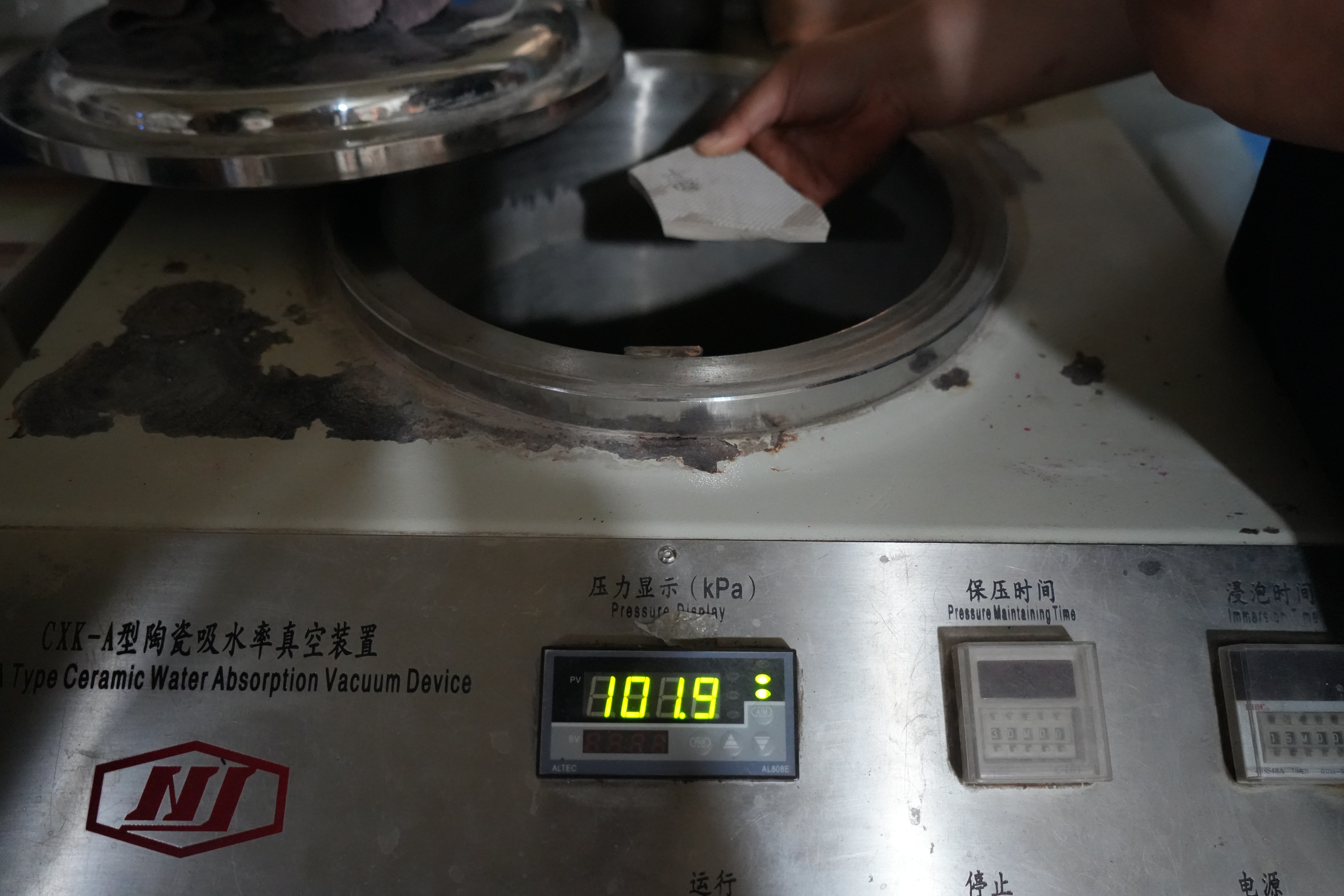
Quality control testing of water absorption—a critical parameter for commercial porcelain tile performance.
All-King Ceramics: A Framework for Scalable Project Solutions
ZIBO ALL-KING IMPORT&EXPORT TRADING CO.,LTD., operating as All-King Ceramics, is a manufacturer established in 2011 specializing in architectural ceramics for global markets. The company operates modern production lines within a 60,000-square-meter facility, employing approximately 320 staff. With an annual production capacity of 12 to 16 million square meters, All-King Ceramics produces a comprehensive format matrix including 60x120 cm porcelain tiles as a flagship product, alongside 60x60 cm, 80x80 cm, 100x100 cm, and 75x150 cm formats. The portfolio covers series such as Travertine and Marble, with thickness ranges from 9.0 to 10.5 mm, and packing specifications of 2 pieces per box (1.44 m² per box). Approximately 70% of its output is exported to markets including Australia, New Zealand, South Korea, Russia, the Middle East, and Latin America.
Anti-Slip and Safety Compliance in Commercial Applications
Safety remains a top priority for commercial flooring, particularly in wet or greasy environments. Porcelain tile project solutions often require anti-slip ratings per DIN 51130: R11 (19°–27° slope) is typical for commercial kitchens and food production areas, while R12 (27°–35°) is specified for industrial and dairy settings. All-King Ceramics’ products, such as the Marble Series and Travertine Series, are engineered to meet anti-slip requirements (R10/R11) and are designed for continuous heavy-duty use in high-traffic conditions. Special requirements also include frost resistance, acid and alkali resistance, and low-VOC emissions—making them compatible with LEED v4.1 IEQc4.3 standards, as mineral-based porcelain tiles fired above 1200°C are inherently low-emitting and exempt from FloorScore VOC requirements.
Market Trends: The Rise of Large-Format and Sustainable Porcelain
According to Grand View Research, porcelain tiles dominated the ceramic tiles market in 2025 with a 52.4% revenue share, and the commercial end-use segment accounted for the largest share. The demand for large-format slabs (up to 75x150 cm) is growing due to their aesthetic appeal and reduced grout lines, which improve hygiene in healthcare and food-service environments. At the same time, eco-friendly requirements are driving project specifications toward suppliers that can demonstrate compliance with global standards. All-King Ceramics, with its direct-from-factory pricing and comprehensive export experience, positions itself as a partner for developers seeking both scale and certification support.
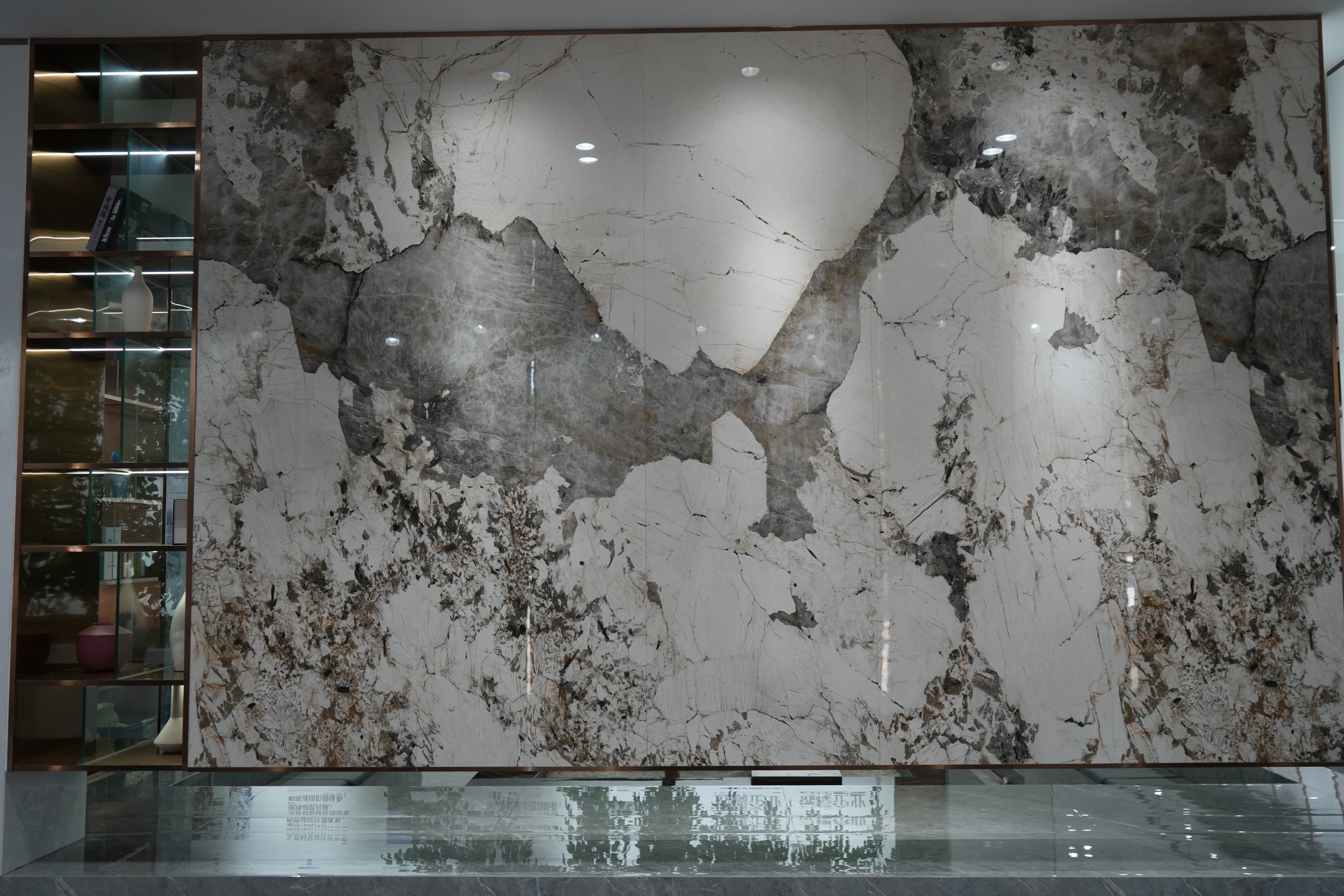
Large-format porcelain tiles used in a feature wall, illustrating commercial design trends.
Comparison with Traditional Materials
Compared to natural stone, porcelain tiles offer lower water absorption, higher stain resistance, and consistent color throughout the body. They also require less maintenance and are free from natural fissures. However, the initial material cost is typically higher than standard ceramic tiles, and installation requires skilled labor with proper adhesive and grout systems. For many commercial projects, total cost of ownership favors porcelain due to its longevity and reduced replacement frequency. A limitation to acknowledge: while porcelain is extremely hard, it can be brittle under severe impact, necessitating proper subfloor preparation and expansion joints in large-area installations.
Future Outlook
As global construction activity accelerates, particularly in mixed-use developments and hospitality, the need for reliable, certified porcelain tile project solutions will continue to rise. The shift toward digital printing technology allows manufacturers to replicate natural materials with high fidelity, expanding design possibilities. All-King Ceramics intends to maintain its focus on quality control—evidenced by in-process inspections such as flatness testing and online QC—while scaling its production to meet the growing demand from markets across Oceania, Asia, and the Americas.
Frequently Asked Questions
What is a porcelain tile and how does it differ from ceramic tile?
What are the key benefits of using porcelain tiles in commercial real estate projects?
What certifications and industry standards apply to commercial porcelain tiles?
Can porcelain tile project solutions be customized for large-scale developments?
What are the installation requirements for porcelain tiles in commercial projects?
For detailed product specifications, series galleries, and project references, download the full product catalog: All-King Ceramics Catalog (PDF).
Есть вопросы или нужны дополнительные детали?
Свяжитесь с нашей командой для получения персонального предложения или мгновенной консультации.
Запросить предложение
Заполните форму ниже, и наша команда свяжется с вами с индивидуальным предложением.
Прямой чат WhatsApp
Предпочитаете общаться в реальном времени? Напишите нам в WhatsApp для мгновенной помощи и быстрых ответов.
- Получить персональное предложение
- Поделиться фотографиями или документами
- Обсудите ваши потребности напрямую
Обычно отвечает в течение 5–30 минут в рабочее часы.