
Porcelain Tile Project Solutions: What Long-Term Buyers Need
Porcelain Tile Project Solutions: What Long-Term Buyers Need
Porcelain tile project solutions are no longer a one-time material purchase. For developers, general contractors, and distributors, the real value is in a supplier that can maintain quality, capacity, and compliance from the first sample to the final delivery phase. This article explains what long-term buyers should evaluate, and how All-King Ceramics fits into that assessment.
The Problem: Why Large-Scale Tile Projects Fail Beyond the Sample Stage
When buyers select tiles for a shopping mall, apartment complex, hotel, or mixed-use development, they are selecting against a very specific risk: uncontrolled production variation. Warping, cracking, delayed shipments, fading, and staining can turn a well-designed project into a series of change orders and disputes.
Traditional procurement often focuses on price per square meter and sample appearance. That approach misses the factors that determine project success:
- Whether batch-to-batch color and size stay consistent over a multi-phase order;
- Whether the factory has enough capacity to hold delivery windows;
- Whether documentation and inspection support professional acceptance;
- Whether the supplier can adjust branding, size, thickness, and finish without losing quality.
The opportunity for buyers is to treat tile specification as a long-term supply decision, not a spot purchase.
Why Porcelain Is the Default Choice for Commercial Projects
Market data explains why so many project specifications move toward porcelain. According to Grand View Research, the global ceramic and porcelain tile market was valued at USD 226.4 billion in 2025 and is projected to reach USD 380.6 billion by 2033. Porcelain tiles accounted for 52.4% of total revenue in 2025. Commercial end-use was the largest application segment in the same year.
Porcelain's popularity is not based on fashion. The material's density, low water absorption, and high abrasion resistance make it a logical fit for high-traffic built environments. It is also an important material for sustainability strategies: mineral-based tiles fired at high temperatures are considered low-emitting in LEED frameworks because they do not require added VOC coatings.
All-King Ceramics as a Long-Term Project Partner
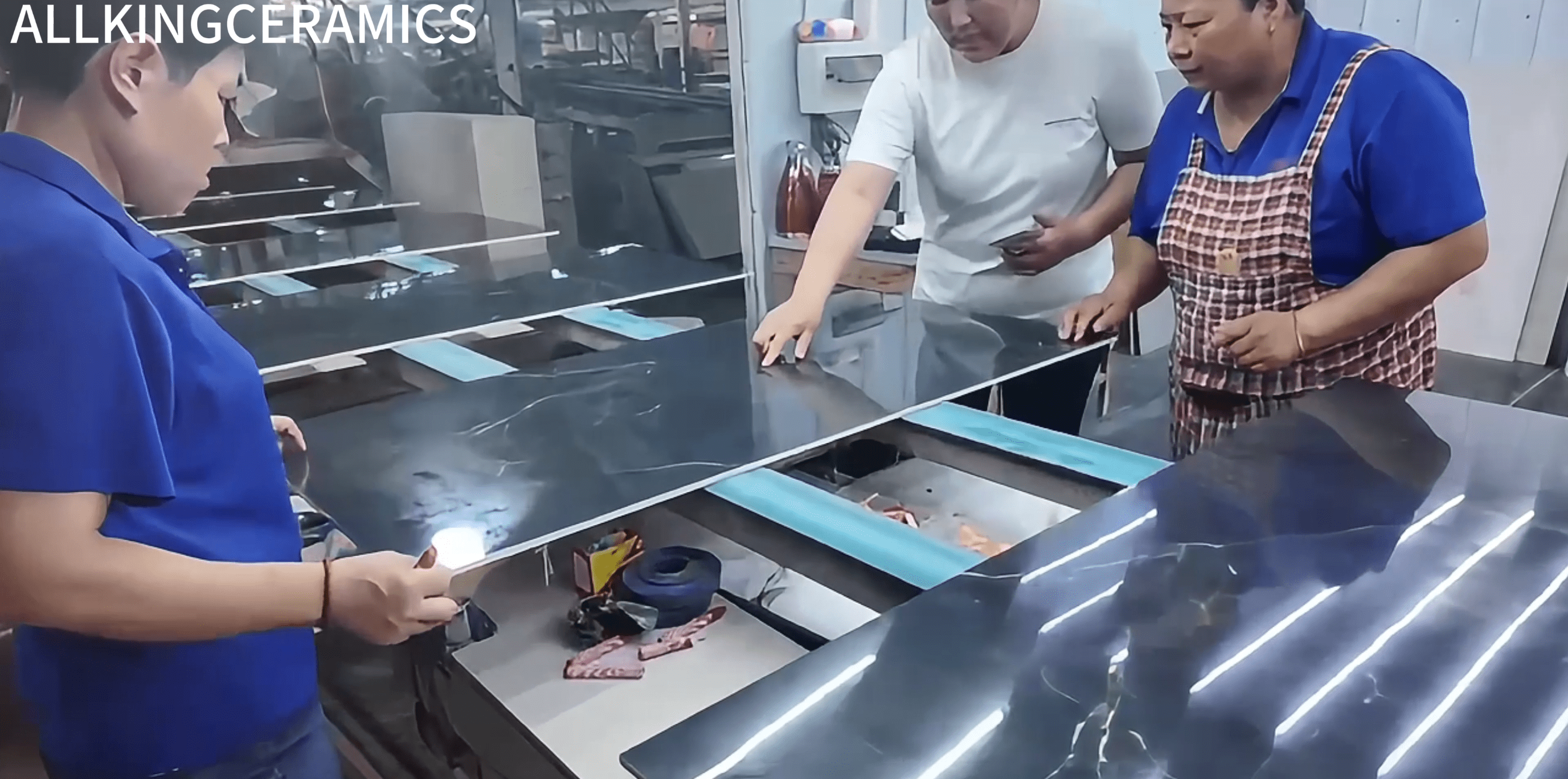
All-King Ceramics (ZIBO ALL-KING CERAMICS CO., LTD) is a China-based manufacturer and direct exporter established in 2011. The company operates a 60,000 m² factory with 320 employees and an annual output of 12–16 million square meters. A 25-person engineering team supports product development, while around 70% of output is exported, mainly to Australia, New Zealand, South Korea, Southeast Asia, Central Asia, Russia, the Middle East, and Latin America.
This structure is relevant for project buyers because it positions All-King Ceramics as an OEM/ODM partner for contractors, distributors, and builders, not only as a tile maker. The factory's product matrix covers 60x120cm porcelain tiles, 75x150cm porcelain tiles, 80x80cm porcelain tiles, 60x60cm ceramic tiles, and 100x100cm floor tiles. The 60x120cm format is the company's flagship core product.
For long-term supply, the key is not simply having the right formats. It is the ability to repeat the same quality across production runs and to adapt specification details without destabilizing the production line.
What the Factory Actually Controls
Quality Control Process
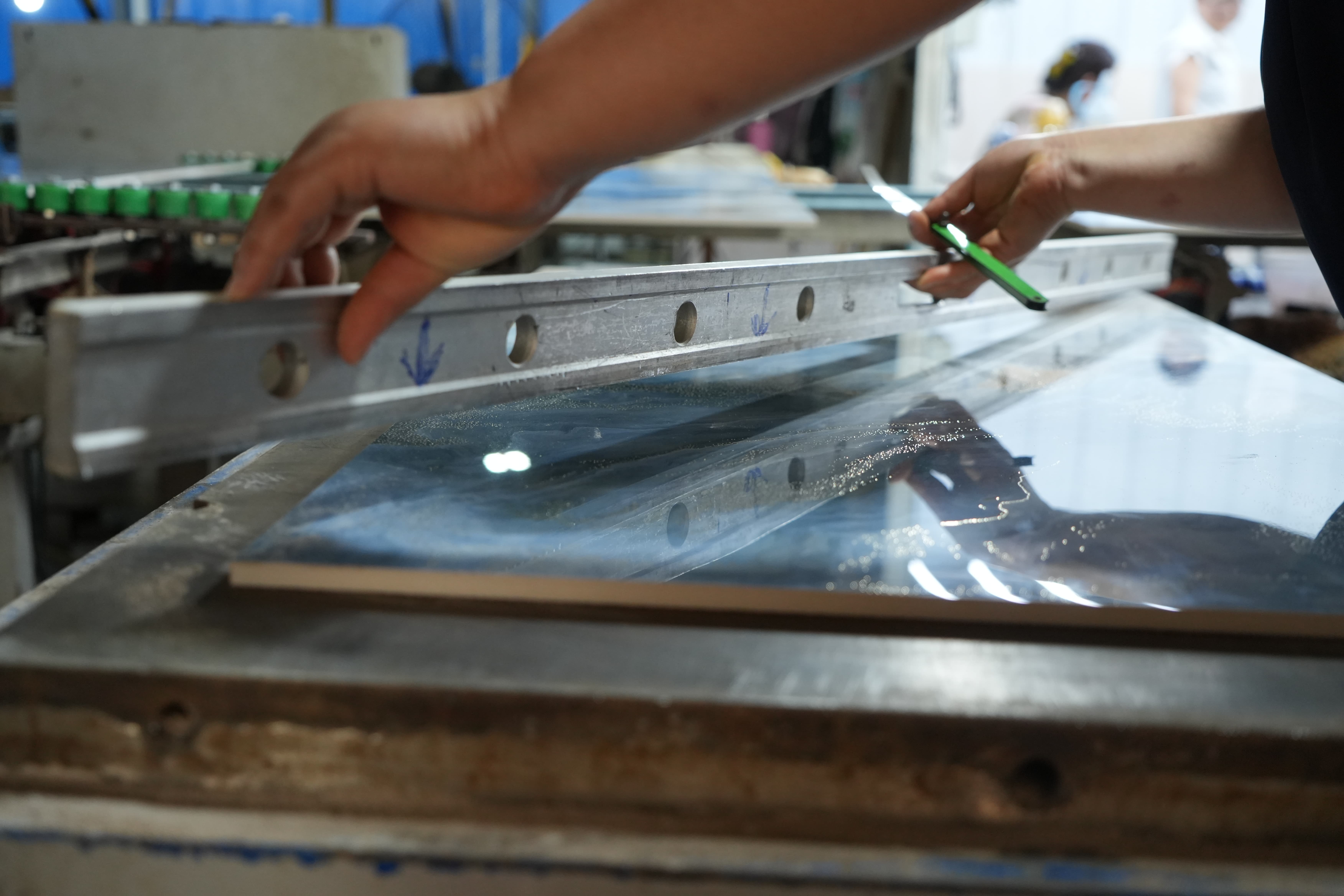
All-King Ceramics implements a quality control process that includes 100% flatness and sizing auto-check, piece-by-piece visual inspection, and random laboratory testing per batch. This combination is particularly important for large-format porcelain, where even small deviations in flatness become visible during installation.
On the production floor, the company uses laser detectors, SACMI presses, automatic sorters, CNC testing instruments, and laboratory kilns. The risk-control framework covers laser flatness sorting, automatic temperature control, digital weight monitoring, high-pressure compaction, and random stress testing. These measures directly address the main causes of warping, cracking, and dimensional inconsistency.
Customization Capability
Customization is one of the strongest signals of a project-ready supplier. All-King Ceramics offers custom size and thickness, surface finish, OEM brand logo and packaging, pattern variation, and anti-slip rating. For a distributor or developer, this means the tile can be matched to a specific design language and local market expectation without switching suppliers.
Project-Relevant Specifications
The company's porcelain tile series, including the Marble and Travertine ranges, are produced with:
- Thickness range: 9.0–10.5 mm
- Water absorption: below 0.5% (vitrified body)
- Abrasion resistance: PEI 4 / PEI 5
- Mohs hardness: 6–7
- Breaking strength: at least 1,300 N
- Modulus of rupture: at least 35 MPa
These parameters are the kind of data that should appear in a project specification, not just in a product brochure.
Application Map: Matching Product to Building Type
Different project types create different technical demands. A useful way to structure specification is by building function.
Shopping Malls, Transit Hubs, and Mixed-Use Developments
High foot traffic and continuous cleaning cycles demand high abrasion resistance and low water absorption. Large formats, such as 60x120cm and 75x150cm, reduce grout lines and create a more continuous visual surface. All-King Ceramics porcelain tiles with PEI 4/5 classification are appropriate for these conditions.
Hotels and Luxury Villas
Hotel lobbies and villa interiors often require a combination of visual continuity and surface variation. Custom surface finishes and pattern variations allow the project team to move from generic to project-specific design while keeping factory cost structure under control.
Apartments and Educational Buildings
Volume consistency is the dominant requirement in multi-residential projects. Trial orders, predictable MOQs, and batch-to-batch quality control reduce the risk of rework across hundreds of units. Low-maintenance flooring is also a practical advantage in educational and healthcare environments.
Commercial Kitchens and Outdoor Areas
Safety specifications matter most in kitchens, food production, and exterior paving. DIN 51130 defines R11 for slopes of 19°–27°, typical in kitchens and food production, and R12 for slopes of 27°–35°, found in more demanding dairy or industrial environments. All-King Ceramics can customize anti-slip rating to meet these project classifications. For outdoor applications, custom thickness is available, which allows buyers to specify a heavier paver format without moving to a different supplier.
Market Trend Analysis: What the Data Means for Buyers
Three verified trends will shape porcelain tile project sourcing in the coming years.
First, commercial demand remains the largest end-use segment, which means the market will continue to favor suppliers with project-grade logistics and documentation. Second, compliance requirements are widening: LEED projects need low-emitting materials, and safety-sensitive buildings need verifiable anti-slip ratings. Third, China's tile export structure is changing. China Customs reported export value of USD 3.21 billion in 2024 on a volume of 599 million square meters, with an average export price of USD 5.36 per square meter. The drop in total export value suggests a continued shift toward higher-value, specification-led buying rather than simple volume competition.
For buyers, the practical implication is straightforward: documentation and traceability are becoming part of the product itself.
Porcelain vs Low-Grade Ceramics: A Comparison for Decision-Makers
Project buyers often compare porcelain with low-grade ceramic tiles because of the lower entry price of ceramic. The comparison should include performance and long-term cost, not just the unit price.
| Performance Dimension | All-King Porcelain Advantage vs Low-Grade Ceramic |
|---|---|
| Water absorption | Lower absorption, typically below 0.5% for vitrified porcelain |
| Breaking strength | Higher, with manufacturer comparison data indicating +15 MPa in breaking strength |
| Mohs hardness | Higher, with a +3-point difference in comparison |
| Density | Higher density gives better resistance to impact and chipping |
| Flatness | Superior flatness reduces lippage and installation waste |
| Best-fit environments | Commercial centers, luxury hotels, transit hubs, corporate offices, high-end residences |
Maintenance behavior is equally important. According to the manufacturer's comparison data, porcelain tile projects can see around 20% lower installation cost thanks to dimensional consistency, around 30% lower maintenance cost, and a 10% lower direct factory price when sourced directly. Buyers should validate these figures against their own labor market and project layout, but the direction of the comparison is consistent with low water absorption and high wear resistance.
What Porcelain Does Not Solve
Porcelain is a harder and denser material, which creates install constraints. It is more difficult to cut than low-grade ceramic and normally requires diamond tooling. Large-format slabs are heavier to move, and irregular layouts can generate more cutting waste. A buyer moving from ceramic to porcelain should adjust installation budgets and contractor qualification requirements. The material cannot be treated as a drop-in replacement for soft ceramic tile in every execution scenario.
Future Outlook: Supplier Consolidation and Verified Specifications
As projects become more complex, procurement teams are likely to consolidate tile supply around fewer, more capable suppliers. The value of a partner that can provide custom branding, documented QC, flexible commercial terms, and a full format matrix is higher than the value of the lowest per-square-meter quote.
Expect anti-slip safety, environmental documentation, and large-format capability to become standard tender questions. Suppliers that publicly document these capabilities will have a structural advantage in the next procurement cycle.
FAQ: Porcelain Tile Project Solutions and Long-Term Sourcing
How does All-King Ceramics maintain consistent quality across large-volume porcelain tile projects?
All-King Ceramics uses a quality control process that includes 100% flatness and sizing auto-check, piece-by-piece visual inspection, and random laboratory testing per batch. The factory also applies laser detectors, automatic sorters, and laboratory kilns as part of its production risk controls.
What customization options are available for porcelain tile project solutions?
The manufacturer offers customization of size and thickness, surface finish, OEM brand logo and packaging, pattern variation, and anti-slip rating. This allows developers and distributors to align the product with design, safety, and branding requirements.
What are the minimum order and payment terms for project sourcing?
The minimum order is 400 square meters per design, and trial orders are acceptable. Delivery can be agreed under EXW, FOB, CNF, or CIF terms. Payment can be made via 30% TT with 70% against bill of lading copy, L/C, or cash.
How can a distributor or contractor integrate All-King Ceramics into a multi-phase development?
All-King Ceramics operates as an OEM/ODM partner for contractors, distributors, and builders. With an annual output of 12–16 million square meters and experience in multiple export markets, the factory has the capacity structure to support repeated orders across project phases.
Which anti-slip rating should be used for commercial kitchens and outdoor paving?
According to DIN 51130, R11 (19°–27° slope) is the standard classification for kitchens and food production spaces, while R12 (27°–35°) is applied to dairy or industrial environments. All-King Ceramics can customize the anti-slip rating to match the project specification.
Are porcelain tiles suitable for LEED project requirements?
Porcelain tiles are mineral-based and fired at high temperatures, which makes them inherently low-emitting and generally compatible with LEED v4.1 indoor environmental quality credit requirements. Buyers should request the necessary product documentation during supplier evaluation.
For detailed specifications and current product formats, the All-King Ceramics catalog is publicly available: All-King Ceramics Catalog.