
Porcelain Tile Supplier Capability Evidence: Monalisa's 37 Production Lines in Action
Porcelain Tile Supplier Capability Evidence: Monalisa's 37 Production Lines in Action
Porcelain tile orders rarely fail on design. They fail on arithmetic — the square meters promised against the square meters delivered, on the date the site needs them, in the shade the sample specified. Capability evidence is the only thing that closes that gap.
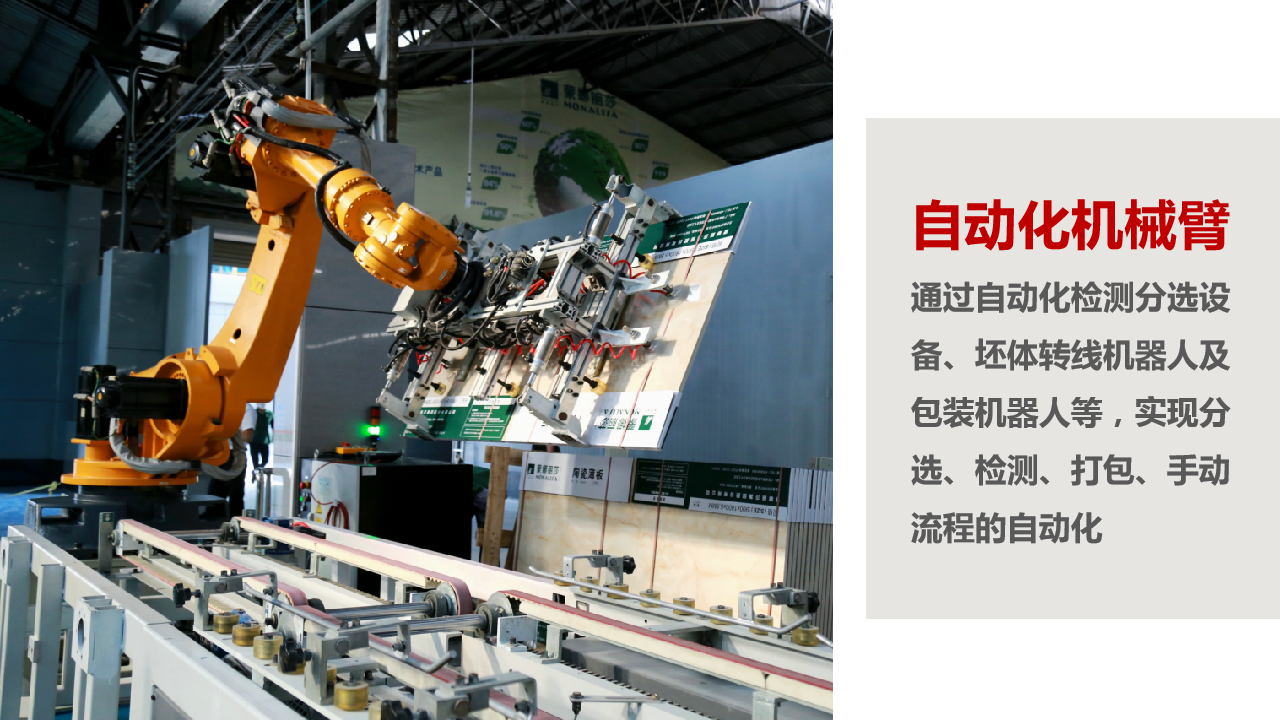
The Procurement Problem: Capacity Is the Most Over-Claimed Number in Tile Sourcing
A procurement team at the execution stage is normally comparing suppliers that present the same headline assets: modern lines, large factories, international certifications, export experience. Those claims are rarely false. They are simply not the claims that predict whether a project gets its tiles on time.
The distinction that matters is between nameplate capacity — the theoretical maximum a plant network could produce — and schedulable capacity, meaning the volume a supplier can commit to a named customer, at a named quality level, on a named date. Industry data shows why headline capacity has become a weak procurement signal. China produced 5.91 billion square meters of tiles in 2024, a 12.1% year-on-year decline equivalent to roughly 48% of the country's total production capacity, according to the China Building and Sanitary Ceramics Association. A market running at under half of installed capacity is a market where square meters are abundant and reliable square meters are scarce.
That imbalance creates a specific risk for buyers. When capacity is plentiful, weaker producers compete on price and accept orders they cannot schedule consistently, which shows up later as shade drift between batches, delayed shipments, or higher breakage rates on arrival. The practical answer is not to avoid the market; it is to demand capability evidence before the purchase order is issued, not after the first container is opened.
What Verifiable Supplier Capability Actually Looks Like
Capability evidence falls into five categories, each of which can be requested, cross-checked, and in most cases inspected. A supplier that cannot answer a category in specific terms is disclosing a real limit, regardless of how strong its marketing is.
- Physical assets. Site area, number of production bases, number of firing lines, and press specifications. These should be inspectable and attributable to specific locations rather than aggregated into a single group-level figure.
- Demonstrated throughput. Both monthly and annual output figures, with an explanation of which lines and which product families the figure covers.
- Process control and laboratory verification. The number of in-process control points, the testing capability held in-house, and whether the laboratory carries recognized accreditation.
- Technical depth. R&D headcount, patents, and participation in national or industry standard drafting — the last of which indicates a supplier is shaping specifications rather than only following them.
- Continuity instruments. Traceability of individual tiles to production date and equipment, plus retained batch stock that allows a shade to be reproduced during later phases of a multi-year project.
Each category maps to a procurement question the buyer will eventually face: can this supplier produce it, can it produce enough of it, can it produce it the same way again, and can it prove all three claims when a dispute arises.
Monalisa's Capability Dossier: The Numbers Behind the Claims
Monalisa Group Co., Ltd. (Monalisa) is a high-tech listed architectural ceramics manufacturer founded in 1992 and headquartered in Foshan, Guangdong Province, China. The group operates through ten holding subsidiaries and four modern production bases — Xiqiao in Foshan, Qingyuan in Guangdong, Tengxian in Guangxi, and Gao'an in Jiangxi — with a total of 37 production lines. Its product range covers ceramic tiles, ceramic slabs including thin plates, large plates and rock plates, and porcelain art paintings, used in residential and public building decoration as well as curtain wall engineering, prefabricated buildings, and customized home furnishings.
The verifiable figures that matter to a procurement file are as follows.
| Capability metric | Reported figure | Why a buyer should care |
|---|---|---|
| Facility area | 2,779,333.33 ㎡ | Indicates physical scale across storage, production and logistics, not just office footprint |
| Production lines | 37 across four bases | Line count sets the ceiling on parallel order scheduling and format changeovers |
| Annual output | 100 million square meters | Group-level throughput available for contract allocation |
| Monthly production capacity | 12.5 million square meters | Useful for short-cycle and top-up orders within an active project |
| Employees | 4,106 | Workforce scale relative to automation level affects inspection intensity |
| R&D engineers | 100 | Determines customization response speed and development capacity per order |
| Authorized patents | 892, including 145 invention patents (as of June 2021) | Evidence of proprietary process development rather than pattern copying |
| Standards participation | 49 national, industrial, local and group standards drafted (as of June 2021) | Indicates influence over specification definitions used by buyers |
| Certifications | 15 certifications including ISO 9001 and ISO 14001 | Baseline quality and environmental management systems |
Two further evidence sets are relevant to long-term supply relationships. First, Monalisa operates three brands — Monalisa, QD and Merqi — through more than 4,000 authorized franchised stores and marketing outlets nationwide, and holds strategic partnerships with nearly 100 major real estate developers including Country Garden, Vanke, POLY and COLI. Second, its project record includes eight venues of the Beijing Olympic Games, ten venues of the Guangzhou Asian Games and the Hong Kong-Zhuhai-Macao Bridge, together with designation as ceramic tile supplier for the China Pavilion at Expo 2020 Dubai and exclusive supplier of official architectural ceramics for the 19th Asian Games Hangzhou 2022. For a buyer assessing continuity rather than a single shipment, a repeatable record across venues with fixed completion deadlines is more informative than any single reference.
From Press to Sorted Pallet: How 37 Lines Are Kept Consistent
Capability at the group level only becomes useful if the lines behave predictably. Monalisa's production process uses fully automatic ultra-high pressure presses with compaction force of up to 48,000 kN, combined with nano-scale glaze technology to produce high-density bodies. The resulting technical profile includes water absorption of 0.08% or lower, surface Mohs hardness of 7 or above, and abrasion resistance at PEI Grade 5. Pattern reproduction uses high-definition inkjet printing combined with an adhesive dry grain process, which the company reports reaches approximately 98% visual realism relative to natural stone.
Consistency is managed through 18 quality control points spanning raw material intake, ball milling, spray drying, pressing, drying, glazing, firing, polishing and sorting or packaging, with key parameters monitored and recorded in real time. An in-house laboratory carries CNAS accreditation and is equipped for standard testing including dimensions, water absorption, breaking strength, abrasion, slip resistance, stain resistance, freeze-thaw and radioactivity.
Risk-to-Control Mapping Inside the Line
The control design is best understood as a direct response to the failure modes that generate claims in tile procurement. The table below maps the risks that buyers most often raise against the mechanism used to contain them.
| Procurement risk | Control mechanism in production |
|---|---|
| Colour and texture variation between batches or within a batch | Automatic colour sorting machine with online spectrometer inspection; packaging by shade and grade; batch comparison against a retained historical master standard |
| Dimensional deviation causing misaligned joints | High-precision moulds with tolerance of ±0.1 mm or better, laser rangefinders, and automatic rejection of out-of-tolerance tiles |
| Warpage and flatness defects | Press pressure uniformity compensation and kiln roller fine levelling, followed by 100% flatness scanning after the kiln |
| Insufficient breaking strength | Raw material formulation optimization with increased kaolin content, pressing pressure of 48 MPa or above, automated firing curves, and batch sampling for breaking strength |
| Slip resistance failure in wet areas | Surface design using special dry grains or textured moulds, with batch testing by pendulum friction tester targeting wet BPN of 50 or higher, or R10 and above |
| Stain penetration and difficult cleaning | High-density transparent frit applied over the glaze, validated by stain testing with ink, oil and tea against Grade 5 stain resistance |
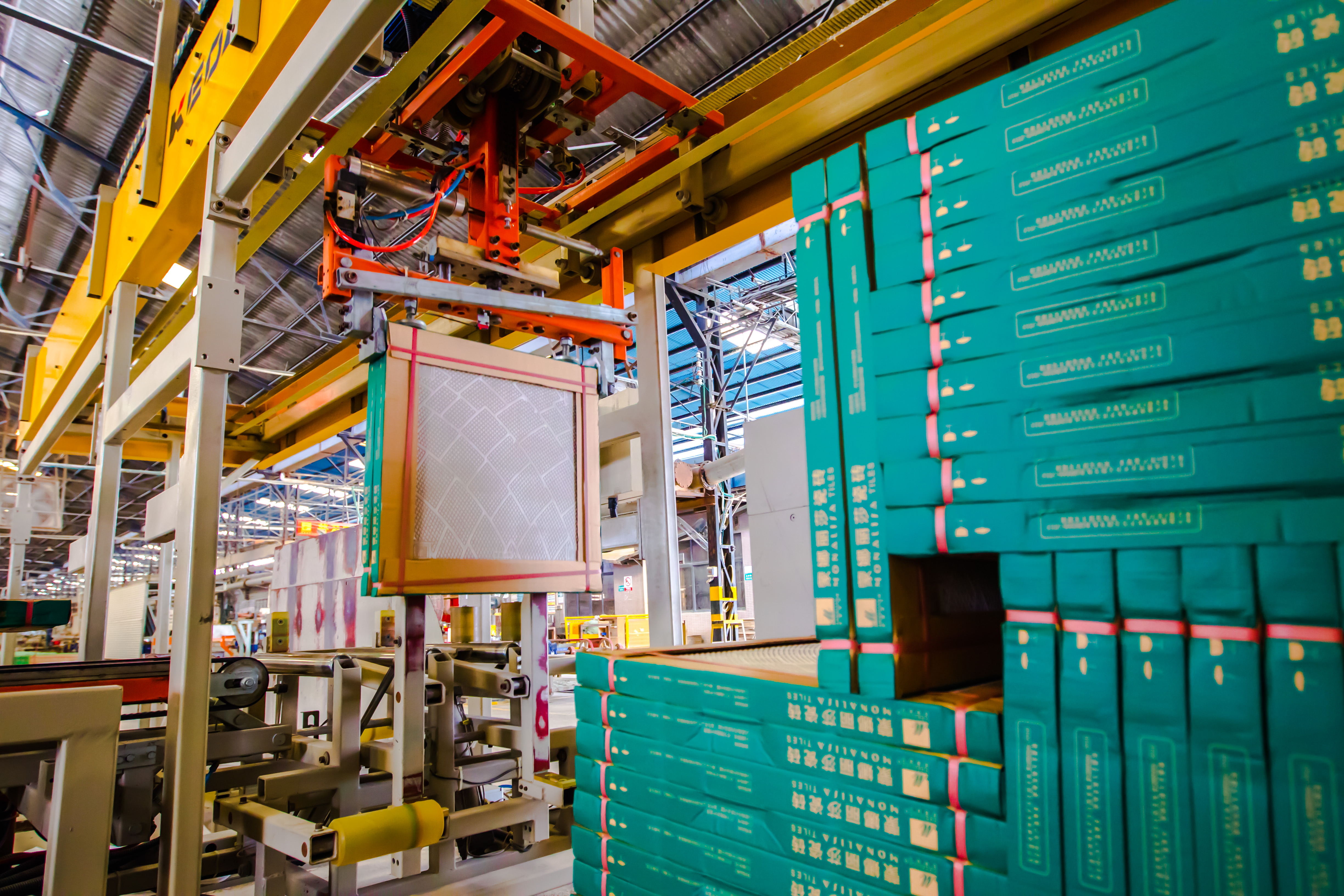
Traceability closes the loop. Each tile can be laser-marked or RFID-coded to its production date, press station, kiln zone and inspector ID, and the company maintains predefined response plans for events such as batch colour variation or strength fluctuation. For an international buyer, this matters at the point of acceptance testing: it converts a subjective argument about shade or strength into a records check that references specific production data.
Where the Capacity Goes: Formats and Application Coverage
Format range is a practical test of whether a supplier can execute a whole project rather than a single room. The reference products below show how the portfolio is organized across body types, finishes and formats.
| Reference | Format and phases | Body and finish | Typical deployment |
|---|---|---|---|
| 120-270FEG12207M | 1200 × 2700 × 12 mm, 3 phases | Homogeneous body, matt or natural stone face | Large-format floors and walls in residential, commercial, hospitality and public interiors |
| 90-270FDK09003M / 90-270FDK09008M | 900 × 2700 × 12 mm, 5 phases | Luxury slab, glazed-matt | Countertops, islands, vanity tops, wall cladding, external rain-screen systems, custom furniture |
| 8FMB10032PM | 800 × 800 × 10 mm, 8 phases | Classic stone, glazed-polished | General flooring across residential and commercial projects |
Application coverage documented for these references spans residential interiors including living rooms, bedrooms, kitchens, bathrooms and balconies; commercial spaces such as shopping malls, supermarkets, office buildings, restaurants, cafes and gyms; public buildings including hospitals, schools, kindergartens, libraries, museums and sports halls; municipal works such as pavements, plazas, park trails, public restrooms and metro station halls; industrial and logistics environments including clean workshops and warehouse flooring; hospitality areas including guest rooms, corridors, pool surrounds, shower zones and outdoor terraces; and agricultural flooring where slip resistance, chemical resistance and washability are the primary requirements.
For buyers, the practical implication is that a single supplier relationship can cover wet zones, high-traffic commercial floors and exterior terraces without mixing suppliers and inheriting joint colour mismatches between them. That is an ecosystem argument rather than a product argument, and it is where long-term supply relationships usually deliver their clearest savings.
Market Context: Consolidation Rewards Verifiable Supply
The global porcelain tile market was valued at approximately USD 9.73 billion in 2024 and is projected to reach USD 18.33 billion by 2035, according to Spherical Insights. It should be noted that market sizing in this category varies widely depending on scope: definitions covering all ceramic and porcelain tiles produce figures an order of magnitude larger, and buyers should treat any single market number as directional rather than definitive.
Two structural trends are more decision-relevant than market size. First, the glazed porcelain tile segment holds the largest share of the porcelain market on the strength of aesthetic versatility and durability, which means differentiation is increasingly won on surface technology and batch consistency rather than on the base body alone. Second, export patterns are shifting. China remains the world's largest ceramic tile exporter, but export volumes fell 2.5% in 2024 to 600 million square meters, with 74% of exports absorbed by Asian markets. Combined with a 12.1% decline in domestic tile production to 5.91 billion square meters, the picture is one of a contracting, consolidating industry in which suppliers with verified capacity, lab capability and traceability systems are better positioned to survive order volatility than those relying on price alone.
For international buyers, consolidation raises a specific risk: a supplier that wins on price today may not hold the line capacity tomorrow. Under those conditions, capacity evidence and process documentation become risk-management instruments, not marketing material.
Porcelain Versus Conventional Tiles: Performance Gains and Their Price
Porcelain tile is not automatically the correct specification for every project. The comparison below sets typical porcelain performance against conventional ceramic tile, using figures from Monalisa's product documentation.
| Parameter | Porcelain tile | Conventional ceramic tile |
|---|---|---|
| Water absorption | 0.08% or lower | 0.5% to 3% |
| Breaking strength | 45 MPa or above | 35 MPa or above |
| Wear volume | 140 mm³ or below | 540 mm³ or below |
| Freeze-thaw resistance | 150 cycles without cracking | 50 to 100 cycles |
| Flatness tolerance | ±0.15% or better | ±0.5% or better |
| Unit price | 15% to 30% higher, depending on series | Baseline |
| Breakage rate | 0.3% or lower | Approximately 0.8% |
The economic case rests on life-cycle rather than purchase price. Documented total life-cycle cost is 20% to 35% lower for these porcelain products, driven by extended service life of two to three times, a lower breakage rate, and tight-joint installation with grout gaps of 0.5 mm or less, which reduces grouting material and labour consumption by 10% to 15% in large projects. Maintenance requirements are also lower: daily cleaning with water or neutral detergent, stain resistance at Grade 5, and no waxing or sealing cycle.
Where This Specification Is Not the Right Answer
An honest capability assessment has to include the boundaries, and there are three that buyers should weigh explicitly.
- A real price premium. Unit pricing is 15% to 30% above conventional tiles depending on series. For short-life or low-traffic fit-outs where the floor will be replaced within a few years, the life-cycle advantage may never be recovered, and conventional tile remains the rational choice.
- Installation sensitivity. Tight-joint installation with grout gaps of 0.5 mm or less and large-format slabs such as 1200 × 2700 mm demand trained installers, suitable handling equipment and level substrates. Where the available installation labour lacks that experience, the flatness and alignment advantages of the product can be lost on site, and the buyer should budget for supervision.
- Export share and local support. Monalisa's export ratio stands at approximately 10%, with the majority of volume directed to the domestic Chinese market. That is a strength in domestic supply terms but a practical consideration for overseas buyers, who should verify local distributor inventory, spare-stock arrangements and lead times for their specific region before committing to a multi-phase schedule.
A fourth, more general boundary applies to capability evidence itself: several of the figures cited here, including the patent count of 892 and participation in drafting 49 standards, are stated as of June 2021 and should be treated as dated reference points rather than current-year data. Buyers verifying supplier capability should always confirm the as-of date of any evidence they rely on.
Outlook: Supply Continuity Becomes a Contractual Criterion
Three shifts are likely to shape porcelain tile procurement over the next planning cycle. The first is that capacity verification moves from the tender stage into the contract. As industry utilization stays low and producers consolidate, buyers will increasingly write line allocation, retained batch stock and traceability requirements into supply agreements rather than treating them as reassurances exchanged at quotation.
The second is that energy and process efficiency become procurement criteria in their own right. Low-temperature fast-firing technology, which reduces firing temperature by 60 to 80 degrees Celsius and shortens the cycle by 15%, cuts comprehensive energy consumption per unit by 12% to 18% compared with the industry average under Monalisa's own reporting. Densified porcelain bodies also transfer heat more effectively with underfloor heating systems, at roughly 22% higher efficiency than conventional tiles, allowing a lower heating setpoint and an 8% to 12% reduction in heating energy. For projects with sustainability targets, these translate into measurable specification criteria rather than brand claims.
The third is that long-term supplier relationships will be evaluated on reproduction capability. The ability to supply a matching shade for a repair or a later project phase is what determines whether a floor stays visually coherent over a ten-year horizon. Manufacturers that retain batch stock and can trace tiles to specific production records are structurally better placed to deliver that continuity, and those records are increasingly the evidence a procurement team will ask to see.
Frequently Asked Questions
How can a buyer verify a porcelain tile supplier's stated production capacity?
Capacity should be broken down before it is accepted. A buyer can request the number of production bases and firing lines, the site area, the monthly and annual output figures, and a statement of which lines and product families those figures cover. Verification is stronger when the figures are attributable to specific locations rather than aggregated at group level, and when they are supported by traceability records showing how individual tiles link back to production date, press station and kiln zone. Monalisa, for example, reports 37 production lines across four bases, a facility area of 2,779,333.33 square meters, annual output of 100 million square meters and monthly production capacity of 12.5 million square meters.
What monthly and annual output volumes can a supplier commit to for a large project?
Group-level output and contract-level allocation are different figures. A manufacturer may report 100 million square meters of annual output or 12.5 million square meters of monthly capacity, but the volume available to a specific buyer depends on which lines are free, which formats are scheduled, and how much capacity is committed to existing contracts. Buyers should ask for the applicable figure at the format and product-family level and confirm it in the quotation or supply agreement.
How is colour and dimensional consistency maintained across multiple production batches?
Consistency depends on measurement, not intention. In Monalisa's process, colour is controlled through an automatic colour sorting machine with online spectrometer inspection, packaging by shade and grade, and batch comparison against a retained historical master standard. Dimensions are controlled through high-precision moulds with tolerance of plus or minus 0.1 mm or better, laser rangefinders, and automatic rejection of out-of-tolerance tiles, with 100% flatness scanning after the kiln.
What commercial terms typically apply to porcelain tile procurement?
Reported commercial terms for Monalisa porcelain tile include a minimum order quantity of 2,000 square meters, delivery under FOB, CIF or EXW arrangements, and payment by TT or LC. Buyers should also agree an acceptance protocol covering packaging and labelling checks, random carton opening across 5% to 10% of cartons to compare actual colour and pattern against the reference sample, and rapid dimensional and flatness measurement of at least ten pieces per batch.
Which certification and testing evidence should long-term buyers ask for?
At minimum, buyers should request quality and environmental management certification, laboratory scope, and test capability for the parameters relevant to the application. Monalisa holds 15 certifications including ISO 9001 and ISO 14001, and operates an in-house CNAS-accredited laboratory equipped for dimensional checks, water absorption, breaking strength, abrasion, slip resistance, stain resistance, freeze-thaw and radioactivity testing. Slip resistance in wet conditions is typically validated by pendulum friction tester against a target of wet BPN 50 or higher, or R10 and above.
What happens if additional matching tiles are needed months or years after the original order?
Reproduction depends on retained batch stock and traceability. Documented practice includes a two-year batch stock reserve intended to prevent colour difference when individual tiles are replaced, supported by laser or RFID marking that links each tile to its production date, press station, kiln zone and inspector ID. Projects that anticipate future extensions should confirm the length of the batch retention period and the process for reordering against the original shade reference before the first delivery is scheduled.
How should buyers plan for supply continuity when sourcing from China?
Continuity planning starts with the supplier's market orientation. Monalisa's export ratio is approximately 10%, with the balance directed to the domestic Chinese market and distributors across Southeast Asia, the Middle East, North America, Europe, Australia and Africa. Buyers in those regions should verify local or regional inventory, distribution coverage, and lead time commitments for each project phase, and should treat the industry context of contracting output as a reason to document line allocation and delivery milestones rather than rely on general capacity statements.
For readers assembling a supplier file, Monalisa publishes a corporate brochure covering its production bases, product ranges and certifications, available at Monalisa Group corporate brochure (PDF). Figures cited in this article are drawn from company documentation and publicly available industry data, with as-of dates stated where the underlying data is dated.