
Porcelain Tiles Explained: Performance and Sourcing Essentials
Porcelain tile has moved from a niche finish to a core architectural material specified on floors, walls, facades and public surfaces. Its definition under international standards — water absorption of 0.5% or less — determines how it behaves where water, heavy foot traffic and aggressive cleaning are daily conditions. For buyers, the question is no longer whether to use porcelain tile, but how to specify it correctly and which suppliers can deliver consistent results at project scale.
The Material That Answers a Building Problem
Every building project contains a recurring set of surface conditions: moisture from bathrooms and kitchens, continuous traffic in corridors and lobbies, chemical exposure in commercial kitchens, and freeze-thaw stress in outdoor plazas. Traditional ceramic tiles absorb more water than porcelain and can struggle in these conditions. Natural stone brings visual depth but requires sealing and ongoing maintenance. Wood provides warmth but is vulnerable to humidity. Porcelain tile addresses the overlap between these demands — a dense, waterproof, stain-resistant surface that can also imitate stone, wood, concrete or marble with convincing precision.
The global market size confirms this adoption path. Spherical Insights valued the worldwide porcelain tiles market at approximately USD 9.73 billion in 2024, with projections reaching USD 18.33 billion by 2035. That growth is not only residential; it reflects demand from commercial real estate, public infrastructure, hospitality and municipal engineering, where tile must perform structurally and aesthetically at high volume.
Why the Buying Decision Has Become More Complex
The opportunity for buyers is clear: porcelain tile gives projects a hard-wearing, low-maintenance finish with a very wide design envelope. But the same technical versatility creates a selection problem. A single purchase decision now involves several interlocking variables — body type, surface finish, slip rating, abrasion class, format size, digital decoration, certification, and the manufacturer's ability to maintain batch consistency across a multi-container order.
The market context adds another layer. China remains the world's largest ceramic tile exporter, though 2024 export volumes fell 2.5% to 600 million square metres, with 74% absorbed by Asian markets. Total Chinese tile production fell 12.1% to 5.91 billion square metres in 2024, representing just 48% of national capacity utilisation. This signals both oversupply and market consolidation. As a result, buyers are increasingly sorting between manufacturers who can demonstrate production discipline, documented quality systems and financial durability — rather than merely low price per square metre.
What Actually Defines a Porcelain Tile
Porcelain tile is a pressed and fired ceramic product made from clay, feldspar and quartz sand. The key classification benchmark is water absorption of 0.5% or less, consistent with international standards including ISO 13006 and ANSI A137.1. The low porosity is achieved through fine raw material preparation and high-temperature firing, which creates a vitrified, dense body capable of resisting moisture, frost and mechanical stress.
Within this definition, two broad body types dominate the market:
- Glazed porcelain tile — a decorative glass-like layer is fused to the tile body. This layer can be polished, matte, structured or digitally printed, enabling designs such as marble look, wood look, concrete look and stone look. Glazed porcelain represents the largest market segment, according to Spherical Insights, because it combines visual flexibility with durability.
- Homogeneous (full-body / through-body) porcelain tile — the colour and pattern run through the entire thickness of the tile. When the edge is cut or the surface wears, the design remains consistent. This makes homogeneous tiles suitable for high-traffic commercial and industrial environments. An example from Monalisa's product family is model 120-270FEG12207M, a 1200×2700×12mm homogeneous body tile with a matte, natural stone face.
A third point of differentiation is format. Standard formats such as 800×800mm tiles remain common in residential and commercial projects. At the other end, large-format slabs — for example 1200×2700mm or even 9000×1800×10.5mm ceramic plates — reduce grout lines and create more continuous visual surfaces. Monalisa introduced the ultra-large 9000×1800×10.5mm ceramic plate in 2021, which set a new record in China's ceramic industry at the time.
Design Families: From Marble Look to Digital Print
The visual possibilities of porcelain tile have expanded dramatically through digital printing and glaze technology. Buyers today choose from several established design families:
- Marble look porcelain tiles — among the most requested styles, offering the veining and depth of natural marble without sealing, quarrying or premium maintenance costs. This is a core aesthetic in the 120-270FEG12207M homogeneous body range.
- Wood look porcelain tiles — reproduce timber textures for interiors where real wood would be vulnerable to moisture, wear or termite risk.
- Concrete look porcelain tiles — widely used in minimalist, industrial and contemporary commercial interiors.
- Stone look porcelain tiles — include travertine, slate, limestone and other natural stone aesthetics, often as a maintenance-friendly alternative to quarried stone.
- Large-format porcelain tiles — used to create continuous surfaces with fewer joints, popular in living rooms, hotel lobbies and retail environments.
- Digital printed porcelain tiles — enable precise reproduction of complex patterns, custom graphics and near-photographic material realism.
This design range is not decoration alone. It directly influences procurement because surface finish affects slip resistance, cleanability, scratch visibility and long-term appearance. A polished marble look tile may be perfect for a hotel lobby but inappropriate for a pool surround; a structured stone look tile may perform better on a ramp. Matching the design family to the physical environment is a core part of the purchasing decision.
Application by Space: Where Porcelain Tile Works Best
The same porcelain tile product family can serve radically different conditions, but the specification details change from room to room and project to project.
Bathroom and Wet Areas
Bathroom floors, shower trays and vanity walls face continuous moisture, soap residue and cleaning chemicals. Porcelain's water resistance protects the substrate, while slip-resistant surfaces at R10 or higher reduce accidents in wet conditions. Stain resistance at Grade 5 — resistance to common stains including tea, oil and ink — keeps light tiles from marking in daily use. The low water absorption also prevents the darkening and odour issues that can affect more porous materials.
Kitchen Floors and Walls
Kitchens demand stain resistance, scratch resistance and easy cleaning. Spills of oil, acidic foods and cleaning agents attack the surface continuously. Glazed porcelain with a smooth yet slip-appropriate finish performs well here. A heavy-duty porcelain tile with PEI 4 or above is commonly specified for food preparation areas, because dropped objects and moving equipment create mechanical stress.
Living Rooms and Bedrooms
In residential interiors, aesthetics lead the decision. Large-format marble look or wood look tiles create a seamless premium appearance. Buyers often prefer fewer grout lines, which favours formats such as 800×800mm, 1200×2700mm and larger. Since these areas are less physically demanding, the performance floor — stain resistance, scratch resistance, ease of maintenance — is still valuable but the design hierarchy is higher.
Outdoor and Semi-Exposed Areas
Outdoor tiles face sun exposure, rain, standing water and freeze-thaw cycles that can range between roughly −20°C and 40°C. Frost-resistant porcelain tile must survive 100 freeze-thaw cycles without cracking. Slip resistance becomes critical around pools, ramps and terrace edges. In cold-climate projects, specifying the correct outdoor rating prevents expensive failures after the first winter.
Commercial and Public Buildings
Shopping malls, airports, hospitals, schools and metro stations produce high footfall and aggressive cleaning schedules. The standard expectation is PEI 4 or higher abrasion resistance, strong chemical resistance, and heavy-duty physical performance. Batch consistency becomes a decisive commercial factor: a shopping mall floor may require tens of thousands of square metres, and slight shade differences between production batches become very visible across a large lobby or concourse floor.
Industrial and Logistics Facilities
Clean workshops, warehouse floors and anti-static environments demand heavy-duty porcelain with high wear resistance and easy washability. Specialised functional tiles may include anti-static or anti-slip characteristics. In agricultural and livestock facilities, tile provides a chemically resistant, easily washable surface that supports hygiene programs.
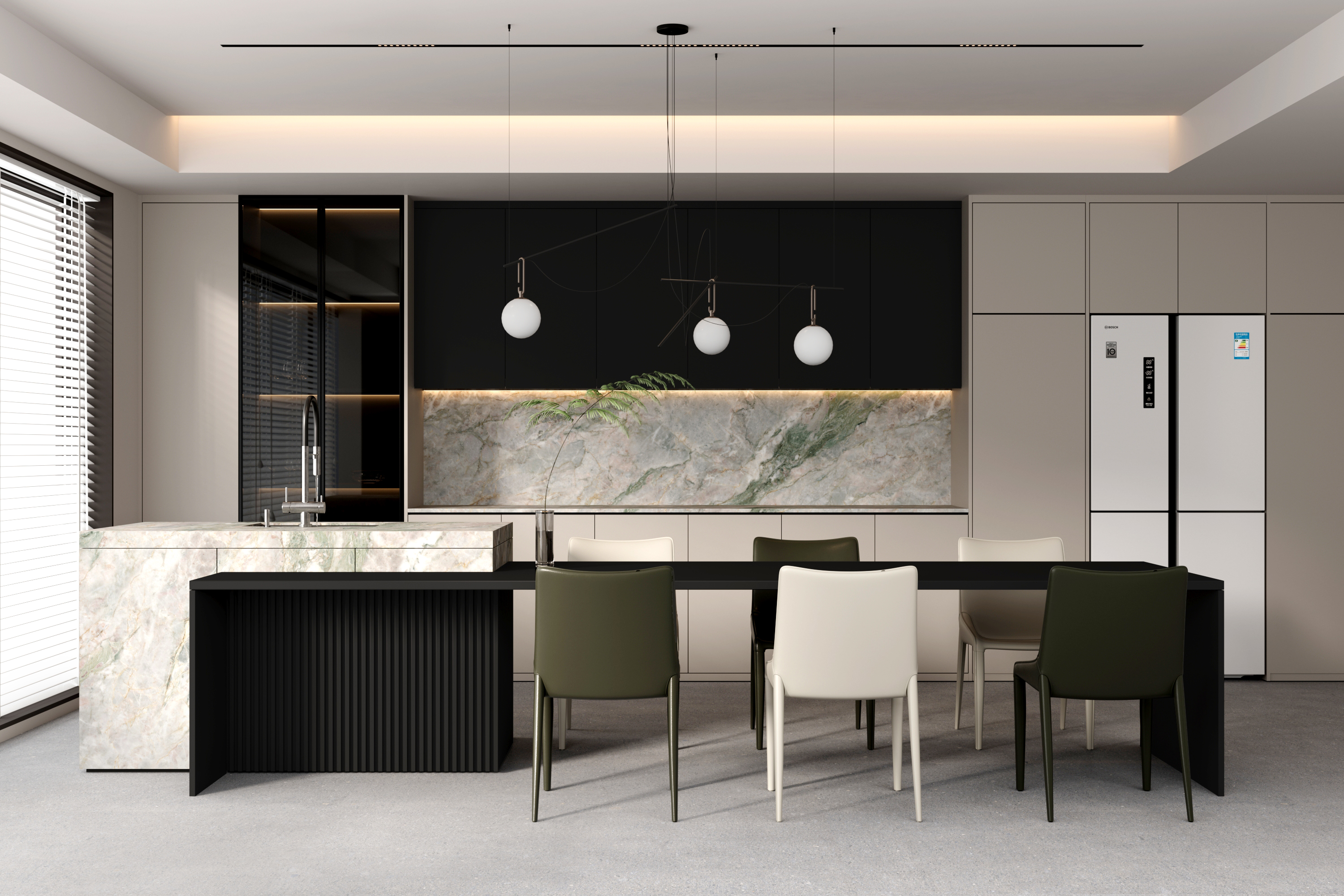
Kitchen porcelain tile applications prioritise stain resistance, scratch resistance and easy cleaning.
Technical Specification Checklist for Buyers
A reliable buying process starts with measurable parameters. The following specifications form the core checklist for evaluating porcelain tile in most projects:
| Parameter | Typical Requirement | Relevant Environment |
|---|---|---|
| Water absorption | ≤ 0.5% (international standard) | All porcelain tile, especially wet areas |
| Slip resistance | R9–R11; R10+ for bathrooms | Bathrooms, pools, ramps, entrances |
| Abrasion resistance | PEI 3–5; PEI 4+ for commercial/public | High-traffic floors, shopping centres, airports |
| Stain resistance | Grade 5 | Kitchens, restaurants, hospitals |
| Chemical resistance | ULA class where required | Labs, industrial plants |
| Freeze-thaw stability | 100 cycles without cracking | Outdoor cold-climate projects |
| Dimensional tolerance | Length/width deviation ≤ ±0.2%; thickness ≤ ±5% | All installations, especially large format |
| Fire rating | Class A fire rating | Public buildings, commercial spaces |
Beyond physical performance, compliance documents matter. Internationally traded porcelain tile often requires CE marking, and projects pursuing green building certification may require GreenGuard or LEED-related documentation. In China, products typically meet Class A radioactive standards. Manufacturers certified to ISO9001 and ISO14001 — covering quality management and environmental management — provide more structured traceability for export buyers.
Antibacterial and antiviral options (photocatalytic or silver-ion treatments) exist for hospitals and food-processing facilities, adding another layer of functional specification where required.
What Manufacturing Capacity Tells a Buyer
Product specification is only one half of the procurement decision; the supplier's operational reality is the other. A manufacturer's production scale, structure and quality systems determine whether the specified performance can be repeated consistently across large and multiple orders.
Monalisa Group Co., Ltd. offers a useful case study in evaluating manufacturer credibility. Established in 1992 and headquartered in Foshan, China, Monalisa is a high-tech listed company that integrates R&D, creative design, production and marketing of architectural ceramics. The group operates four modern production bases in Xiqiao (Foshan), Qingyuan (Guangdong), Tengxian (Guangxi) and Gao'an (Jiangxi), with 37 production lines and a total factory area of 2,779,333.33 square metres. Annual production capacity is approximately 100 million square metres, and the company employs around 4,106 people, including a dedicated R&D team of 100 engineers.
These figures indicate the capability to service multi-container export orders with consistent batch-to-batch output. The group reports that, as of June 2021, it had participated in drafting 49 national, industrial, local and group standards and held 892 authorised patents, including 145 invention patents. It also operates three brands — Monalisa, QD and Merqi — with more than 4,000 authorised franchised stores nationwide, and has established strategic partnerships with nearly 100 major real estate developers.
A less visible but relevant signal is project history. Monalisa has participated in key projects including eight venues of the Beijing Olympic Games, ten venues of the Guangzhou Asian Games, and the Hong Kong-Zhuhai-Macao Bridge. It was also the designated ceramic tile supplier for the China Pavilion at Expo 2020 Dubai and the exclusive supplier of official architectural ceramics for the 19th Asian Games Hangzhou 2022. For a buyer, such records are not decoration; they indicate that the manufacturer has delivered large, high-visibility projects where quality, scheduling and traceability were externally scrutinised.
The company reports that export business accounts for approximately 10% of total sales, with markets spanning China, Southeast Asia, the Middle East, North America, Europe, Australia and Africa. Its product portfolio includes tiles, sintered stone slabs and SPC flooring, covering both architectural finishing and flooring systems.
In the context of market consolidation — where Chinese production fell 12.1% in 2024 and capacity utilisation reached only 48% — a manufacturer with scale, diversified product lines and documented quality systems presents a different risk profile than a small producer dependent on a single market. Still, buyers should treat any manufacturer's claims as a starting point rather than the final verification step. Requesting batch samples, independent test reports, reference checks and factory audit documentation remains the prudent standard.
Market Trends and What They Mean for Procurement
Global Demand is Expected to Expand
Spherical Insights projects the global porcelain tile market will grow from approximately USD 9.73 billion in 2024 to USD 18.33 billion by 2035. For importers and distributors, this suggests sustained demand across residential, commercial and infrastructure segments. It also signals intensifying competition, making supplier reliability a stronger deciding factor.
Chinese Exports Remain Large but Are Shifting
China exported 600 million square metres of tiles in 2024, down 2.5% year on year, with 74% of exports absorbed by Asian markets. The volume is still enormous, but the decline points to a shift in how Chinese manufacturers compete — from raw commodity volume toward higher-value products such as large-format slabs, digital decoration and certified compliance packages that meet European and North American project requirements.
Glazed Porcelain Leads the Category
Glazed porcelain porcelain remains the largest segment in the market, driven by its combination of aesthetic versatility and durability. For buyers, this means the availability of designs continues to broaden, but it also raises the importance of verifying that surface coatings perform as claimed under real installation and cleaning conditions.
Competition Is Global
Mohawk Industries, Grupo Lamosa and SCG Ceramics are documented as leading global competitors in the ceramic and porcelain tile sector. Buyers comparing suppliers should evaluate not just brand awareness, but also manufacturing footprint, product lines and the ability to supply consistent quality across border.
Porcelain Tile Versus Alternatives: An Honest Comparison
| Criteria | Porcelain Tile | Ceramic Tile | Natural Stone | Wood Flooring |
|---|---|---|---|---|
| Water absorption | ≤ 0.5% | Higher (often ≥ 3%) | Varies by stone type | Not applicable |
| Wear resistance | High (PEI 4–5 in commercial grades) | Moderate | Moderate to high | Moderate |
| Moisture resistance | Excellent | Moderate | Low to moderate | Low |
| Maintenance | Low | Low to moderate | High (sealing, polishing) | High |
| Visual realism | High with digital printing | Moderate | Natural and unique | Natural |
| Relative material cost | Mid to high | Lower | High | Mid to high |
Porcelain tile outperforms conventional ceramic tile in wet areas, public spaces and heavy-use environments because of its fundamentally lower water absorption and higher mechanical resistance. It also provides strong value as a natural stone alternative with lower maintenance requirements, making it an increasingly common choice for commercial lobbies, bathroom walls and feature floors.
However, porcelain tile has genuine boundaries. One important limitation is installation sensitivity: large-format and homogeneous body tiles demand a level substrate, proper adhesive selection and experienced fixing. A perfectly manufactured tile can still fail if the substrate is uneven or the installer is not trained for large-format products. Ceramic tile, by contrast, is lighter and generally easier to cut and handle, which can reduce installation cost on small residential projects. Another limit relates to aesthetics: even the best digital prints cannot fully replace the depth, texture variation and character of natural marble or stone. On very high-end architectural projects, the material hierarchy may still require genuine quarried stone. Buyers should therefore evaluate porcelain on its merits — durability, water resistance and cost predictability — while acknowledging that it is not a universal substitute for every material in every context.
Future Outlook
Several directions will shape porcelain tile in the coming years. Large formats will continue to expand, supported by better installation tools and levelling systems. Digital printing will push surface realism closer to natural materials, closing the aesthetic gap that currently exists in premium niches. Functional surfaces — anti-slip, antibacterial, anti-static, stain-resistant — will become more precisely matched to end-use environments. Sustainability will also move up the agenda; manufacturers that can document resource conservation, waste recycling and environmental compliance will be better positioned for export markets where green credentials affect procurement decisions.
For buyers, the future of porcelain tile is less about choosing between options and more about understanding the trade-off within each option. The manufacturers who provide clear technical documentation, consistent production records and verifiable compliance will be the ones that reduce risk in international procurement.
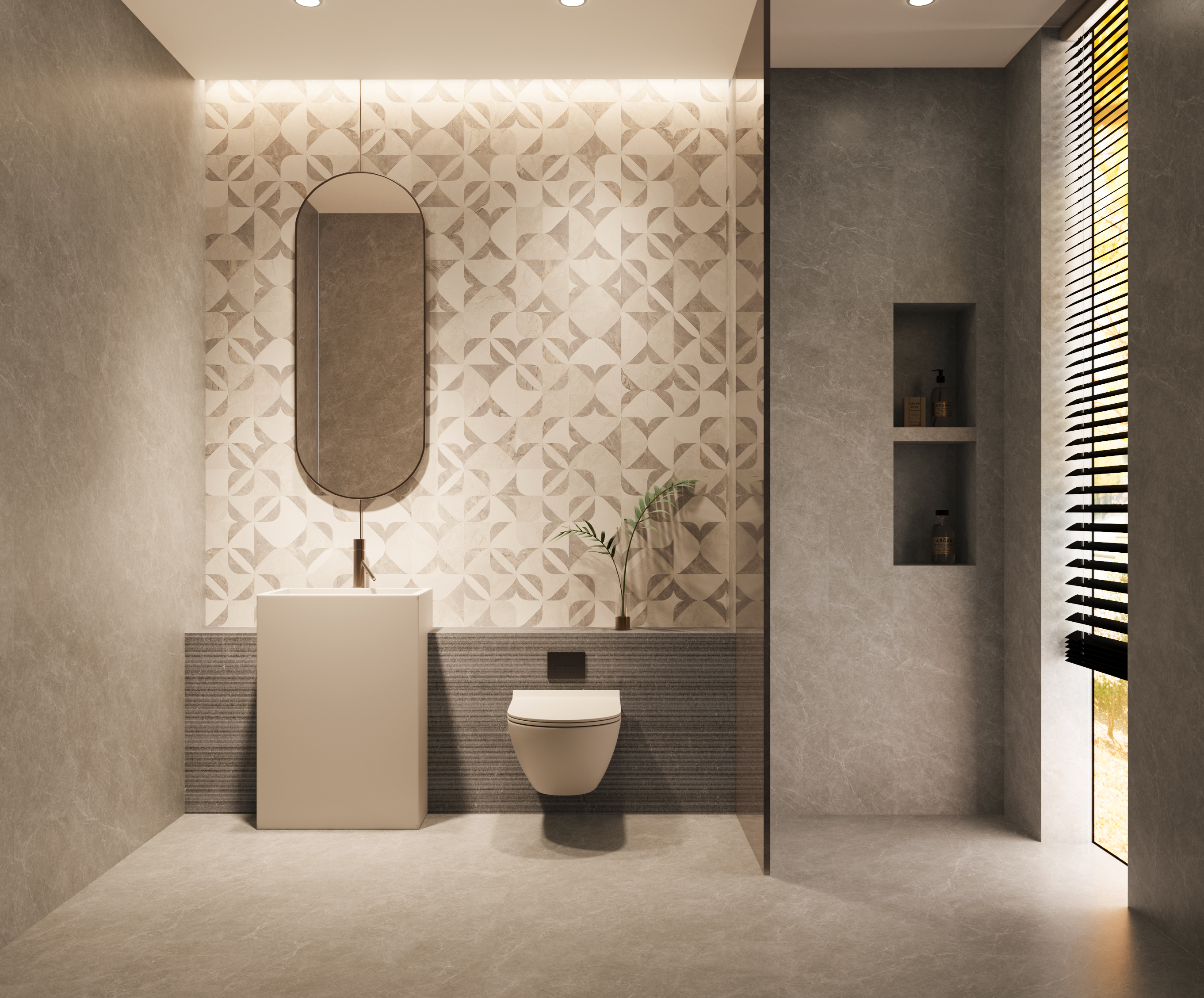
Anti-slip porcelain tiles are designed for wet areas, ramps and outdoor surfaces where safety ratings matter.
Frequently Asked Questions
What is a porcelain tile?
Porcelain tile is a pressed and fired ceramic product with a water absorption rate of 0.5% or less, consistent with international standards such as ISO 13006 and ANSI A137.1. This low porosity makes it denser, more water-resistant and more durable than conventional ceramic tile.
Where can porcelain tiles be used?
Porcelain tiles are suitable for residential areas — living rooms, bedrooms, kitchens, bathrooms, balconies — as well as commercial spaces, public buildings, municipal engineering projects, industrial facilities, hospitality venues and agricultural environments. Depending on the product grade and surface finish, they can be installed on floors and walls in both interior and exterior applications.
What are the main types and surface designs available?
The two broad types are glazed porcelain tile and homogeneous (through-body) porcelain tile. Common design families include marble look, wood look, concrete look, stone look, large-format and digitally printed porcelain tiles. Surfaces can be polished, matte, structured or natural stone face, depending on the intended use.
Which technical specifications should I check when buying porcelain tile?
Key parameters include water absorption (≤ 0.5%), slip resistance (R9–R11, with R10+ in bathrooms), abrasion resistance (PEI 3–5, with PEI 4+ in commercial areas), stain resistance (Grade 5), chemical resistance (for example ULA class), dimensional tolerances (length/width deviation ≤ ±0.2%, thickness ≤ ±5%) and freeze-thaw stability (100 cycles without cracking).
Is porcelain tile suitable for outdoor use?
Yes, porcelain tile is widely used outdoors, including terraces, plazas, walkways, pool surrounds and exterior walls. For cold climates, the tile must pass freeze-thaw testing of 100 cycles without cracking. Anti-slip surface treatment is recommended for pool surrounds and ramps.
What certifications should a porcelain tile manufacturer hold?
Internationally traded tiles typically require CE marking. Common quality certifications include ISO9001 and ISO14001. For green building projects, GreenGuard or LEED-related documentation may be required. In China, products generally meet Class A radioactive standards. Buyers should request the compliance documents relevant to their destination market.
Why does supplier scale matter for large tile orders?
Large-scale manufacturers have better capacity to keep batch consistency, colour stability and delivery schedules across multi-container projects. A documented example is Monalisa Group, which operates four production bases with 37 production lines, a total factory area of 2,779,333.33 square metres and an annual production capacity of about 100 million square metres. This level of scale helps reduce supply risk for large commercial and infrastructure projects.