
Porcelain vs Ceramic: Total Cost Analysis for Developers
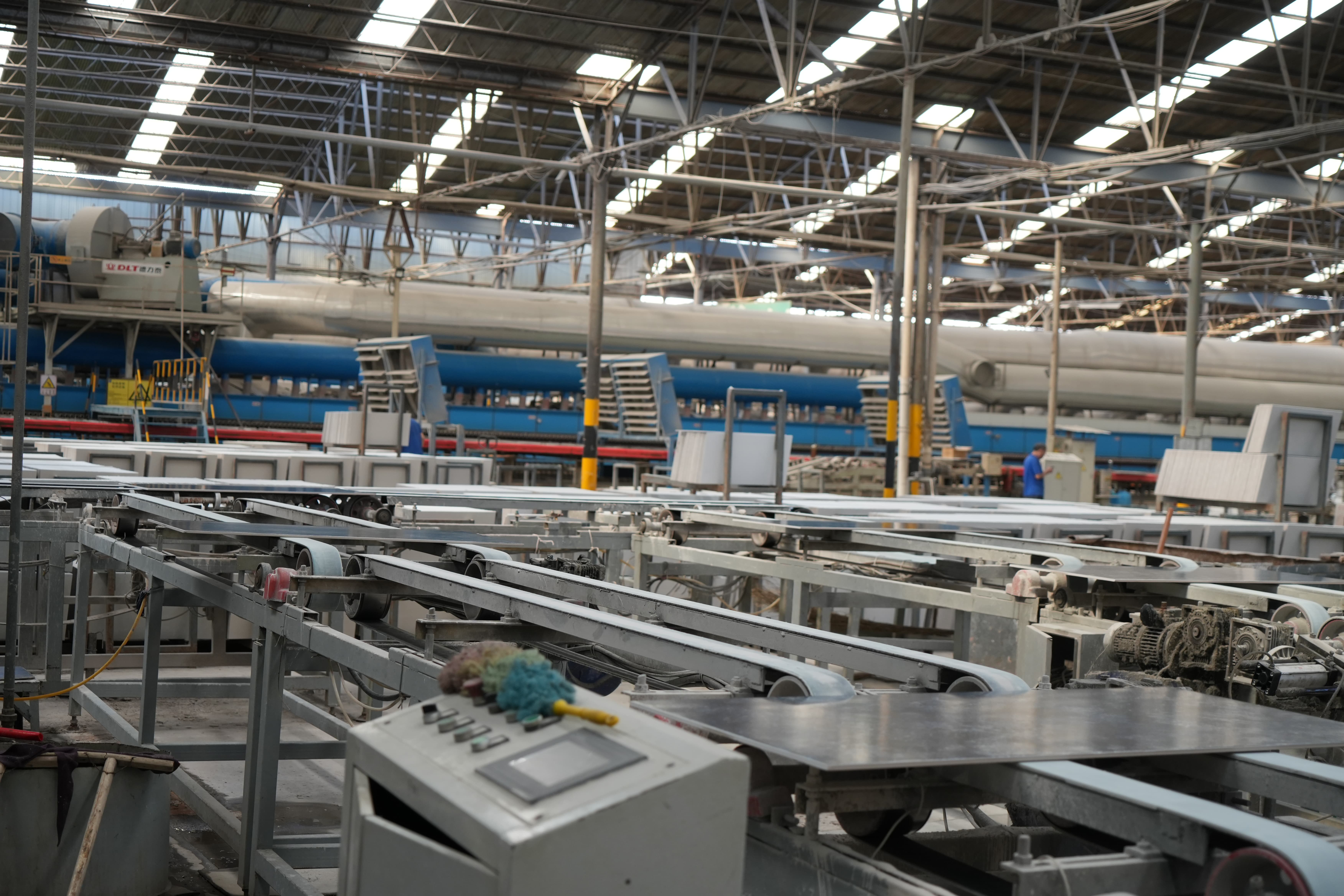
Porcelain tile production at the All-King Ceramics 60,000 m² factory in Zibo, China.
ZIBO ALL-KING CERAMICS CO., LTD, known internationally as All-King Ceramics, is a manufacturer and direct exporter of architectural porcelain tiles based in Zibo, China, operating a 60,000 m² factory with an annual output of 12 to 16 million square meters. For procurement teams evaluating porcelain tile project solutions, the choice between porcelain and low-grade ceramic is a total-cost decision — one that affects installation budgets, maintenance schedules, safety compliance, and long-term asset value.
Porcelain tiles dominated the global ceramic tiles market in 2025 with a 52.4% revenue share, according to Grand View Research. The same analysis values the global ceramic and porcelain tiles market at USD 226.4 billion in 2025, with a projection of USD 380.6 billion by 2033. Commercial end-use accounted for the largest revenue share in the same year, which means the flooring specified in shopping malls, hotels, offices, transit hubs, and public buildings carries outsized weight in overall tile demand.
This article compares porcelain tiles with low-grade ceramic tiles using the metrics that matter at the decision stage: water absorption, breaking strength, surface hardness, installation cost, maintenance cost, and direct factory pricing. It also reviews the quality-control infrastructure needed to supply large-scale commercial projects and outlines the project types where each category is most commonly specified.
The Specification Gap in Commercial Flooring
Flooring problems in commercial buildings rarely originate from architectural design; they usually originate from specification gaps. Tiles in shopping malls, apartment lobbies, healthcare facilities, and educational buildings are exposed to continuous foot traffic, rolling loads, cleaning chemicals, and moisture. When low-grade ceramic tiles are selected to reduce the upfront material bill, lower density and higher water absorption can translate into staining, chipping, and earlier replacement.
The performance gap between the two categories is measurable. According to All-King Ceramics comparison data, porcelain tiles show 10% lower water absorption, 15 MPa higher breaking strength, and 3 points higher Mohs hardness than low-grade ceramic tiles. Porcelain also delivers better flatness, which simplifies installation and reduces lippage in large-format layouts.
The opportunity is not simply to specify the harder surface; it is to evaluate lifecycle cost. All-King Ceramics reports that porcelain tiles provide 20% lower installation cost, 30% lower maintenance cost, and a 10% lower direct factory price compared with low-grade ceramic tiles. When these three lines are calculated across a multi-building development, the material category can shift a significant share of the flooring budget from future repairs to the initial build.
The All-King Ceramics Solution: Factory and Export in One Chain
All-King Ceramics addresses this decision with a vertically integrated model that combines factory manufacturing with international trading operations. The company was established in 2011 and operates a 60,000 m² production facility staffed by 320 employees, including a 25-engineer research and development team. Annual output ranges from 12 to 16 million square meters — a scale intended to serve both wholesale distribution and large-scale construction programs.
The main product lines are 60x120cm porcelain tiles, 75x150cm porcelain tiles, 80x80cm porcelain tiles, 60x60cm ceramic tiles, and 100x100cm floor tiles. Within this matrix, 60x120cm porcelain tiles are the flagship format. The company describes itself as a specialist in modern tiling trends, producing formats in various textures and styles, and positioning the factory as an OEM/ODM partner for contractors, distributors, and builders.
Approximately 70% of output is exported. All-King Ceramics main markets include Australia, New Zealand, Russia, Belarus, South Korea, Vietnam, Malaysia, the Philippines, Peru, Panama, Colombia, Chile, Bolivia, Guatemala, Palestine, Iraq, Ukraine, and the United Arab Emirates. The commercial proposition is direct-from-factory pricing: by removing intermediary layers, the company reports a direct factory price 10% lower than low-grade ceramic tiles on comparable orders, alongside a 20% lower installation cost and a 30% lower maintenance cost.
Technical Explanation: Why Porcelain Behaves Differently
The measurable differences between porcelain and low-grade ceramic tiles are rooted in the tile body. Porcelain, also referred to as vitrified tile, is pressed under high pressure and fired at high temperature, producing a dense body with low water absorption. All-King Ceramics defines its technical advantages as lower water absorption, higher wear resistance, better breakage resistance, higher density, and better flatness. Expressed as a performance gap, the comparison is -10% water absorption, +15 MPa breaking strength, and +3 Mohs hardness versus low-grade ceramic tiles.
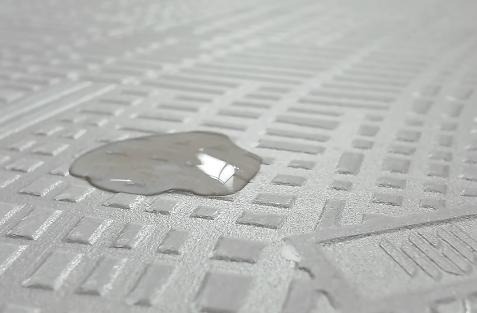
Low water absorption is the defining technical difference between porcelain and low-grade ceramic bodies.
These properties have operational consequences. A vitrified body with low water absorption resists staining and is easier to clean. Higher breaking strength reduces chipping and breakage during installation and service. Higher surface hardness slows abrasion in high-traffic corridors. Better flatness supports thin joints and large-format layouts, reducing the visual effects of lippage.
A second set of advantages relates to thermal behavior. All-King Ceramics reports that porcelain tiles provide better thermal efficiency, higher energy savings, better insulation performance, and enhanced heating conduction compared with alternatives. In buildings with underfloor heating or energy-conscious envelopes, this performance can become a specification factor.
Quality Control at Project Scale
Quality control is the bridge between material properties and project-scale consistency. All-King Ceramics factory applies laser flatness sorting, automatic temperature control, digital weight monitoring, high-pressure compaction, and random stress testing. The production line is equipped with SACMI presses, automatic sorters, CNC testing instruments, laboratory kilns, and laser detectors, and the company holds ISO 9001 certification. These controls are designed to prevent the risks most damaging to commercial projects: warping, cracking, fading, staining, and production delays.
Safety Classifications: R11 and R12
Anti-slip classification matters in specific commercial zones. Ratings R11 and R12 are defined by DIN 51130 and are widely applied to commercial flooring: R11 covers slopes of 19° to 27° and is associated with kitchens and food production areas; R12 covers slopes of 27° to 35° and is used in dairy and industrial environments. All-King Ceramics range includes R11 anti-slip porcelain tiles and R12 safety flooring tiles for these zones.
Indoor Air Quality and LEED Projects
For sustainability-driven projects, porcelain offers an inherent advantage. Under standards referenced by the U.S. Green Building Council (USGBC), mineral-based porcelain tiles fired at high temperatures (above 1200°C) are exempt from FloorScore VOC requirements, making them inherently low-emitting materials that support LEED projects. Eco-friendly porcelain tiles are therefore a straightforward specification for commercial buildings pursuing LEED certification.
Application Scenarios for Porcelain Tile Project Solutions
Porcelain tile project solutions are specified across a wide range of commercial and residential segments. The most common scenarios include:
Shopping malls and retail centers
Vitrified floor tiles for high-traffic areas are selected for abrasion resistance and ease of cleaning. Large-format porcelain slabs reduce the number of joints in circulation zones, lowering long-term grout maintenance in public spaces.
Apartment developments and mixed-use projects
Porcelain tiles for apartment developments and mixed-use projects benefit from consistent sizing and flatness across repetitive floor plans. Formats such as 80x80cm and 100x100cm floor tiles streamline installation rates, which directly supports the 20% lower installation cost reported by All-King Ceramics.
Hotel lobbies and hospitality spaces
Hotel lobby porcelain flooring combines large-format surfaces with the wear resistance required by 24-hour traffic. The 75x150cm porcelain tile format is a practical option for the uninterrupted planes expected in hospitality design.
Healthcare facilities
Porcelain tiles for healthcare facilities rely on low water absorption and minimal grout upkeep, reducing surfaces where moisture and cleaning agents can accumulate. Easy cleaning is a documented maintenance advantage of porcelain versus low-grade ceramics.
Educational buildings
Porcelain tiles for educational buildings are chosen for durability and low replacement frequency. Corridors, classrooms, and cafeteria zones benefit from higher breaking strength and surface hardness.
Commercial kitchens and food production
Porcelain tiles for commercial kitchens are specified with R11 anti-slip surfaces, which are rated for slopes of 19° to 27° under DIN 51130. The combination of slip resistance and low water absorption addresses both safety and hygiene requirements.
Outdoor plazas, terraces, and entrances
Anti-slip outdoor porcelain pavers, including 20mm porcelain pavers, are used in areas exposed to impact and moisture. Dense vitrified bodies with low water absorption are the relevant specification for exterior paving in commercial developments.
LEED-certified and green building projects
Eco-friendly porcelain tiles for LEED projects benefit from the material inherent low-emission profile. Because porcelain fired above 1200°C is exempt from FloorScore VOC testing, specification teams can document the product environmental performance without additional certification layers.
Luxury villas and custom residences
Porcelain tiles for luxury villas and custom porcelain tile solutions are supported by All-King Ceramics OEM/ODM capability. Custom sizes, finishes, and textures can be produced within the factory 12 to 16 million square meter annual capacity.
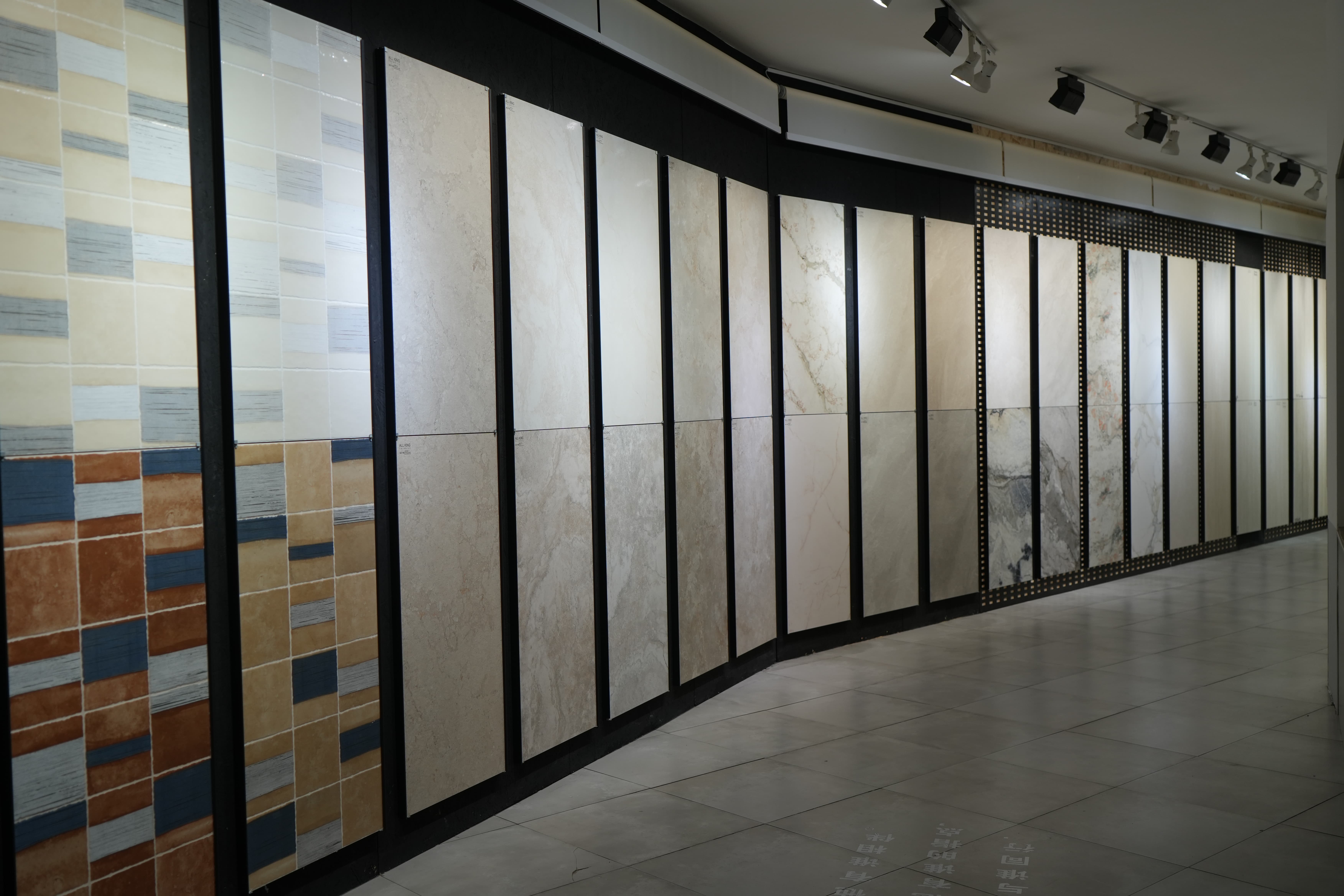
All-King Ceramics showroom range covers the formats most requested in commercial and wholesale projects.
Market Trend Analysis
Three market signals are relevant to procurement teams evaluating porcelain tile project solutions.
First, the size of the market is expanding. The global ceramic and porcelain tiles market was valued at USD 226.4 billion in 2025 and is projected to reach USD 380.6 billion by 2033, with porcelain holding a 52.4% revenue share and commercial use representing the largest end-use segment (Grand View Research, 2025).
Second, China export profile is shifting. China ceramic tile export value reached USD 3.21 billion in 2024, with an average export price of USD 5.36 per square meter and a total volume of 599 million square meters (China Customs via CeramBath). The 27.8% year-on-year decline in export value suggests that undifferentiated commodity volume is compressing while value concentrates into products with documented performance, safety, and sustainability credentials.
Third, standards are becoming part of the specification baseline. DIN 51130 R11/R12 anti-slip classifications and LEED low-emission criteria are increasingly cited in commercial tenders. The supply base also remains concentrated at the top: the largest global producers by production volume in 2024 were Mohawk Industries, Grupo Lamosa, and RAK Ceramics (Ceramic World Review). This concentration has led many project buyers to evaluate mid-sized specialist exporters for direct factory access and faster specification responsiveness.
Porcelain vs Low-Grade Ceramic: Comparison at a Glance
The following table summarizes All-King Ceramics comparison data for porcelain tiles versus low-grade ceramic tiles. Baseline values are the low-grade ceramic reference; porcelain performance is expressed as the difference reported by the company.
| Evaluation metric | Porcelain tiles (All-King data) | Low-grade ceramic tiles (baseline) |
|---|---|---|
| Water absorption | 10% lower | Baseline |
| Breaking strength | +15 MPa | Baseline |
| Surface hardness | +3 Mohs | Baseline |
| Installation cost | 20% lower | Baseline |
| Maintenance cost | 30% lower | Baseline |
| Direct factory price | 10% lower | Baseline |
| Sealing requirement | Zero sealing required | Periodic sealing and grout upkeep |
| Cleaning and replacement | Easier cleaning, less tile replacement | More frequent cleaning effort and replacement |
| Thermal behavior | Better thermal efficiency, insulation, and heating conduction | Baseline |
All-King Ceramics data indicate that porcelain performance advantages also reduce operational burden: easier cleaning, less tile replacement, zero sealing required, lower refurbishment frequency, and minimal grout upkeep. The comparison data identifies commercial centers, luxury hotels, transit hubs, corporate offices, and high-end residences as the segments where porcelain performance advantages matter most.
An Honest Limitation
A balanced assessment should note one limitation of porcelain: the material is harder and denser than low-grade ceramic, so on-site cutting requires diamond tooling and experienced fitters. In regions where vitrified-tile installation expertise is limited, early-phase installation can be slower or may require specialized subcontracting. Project teams should factor local installation capability into the schedule when converting specifications from ceramic to porcelain.
Future Outlook
Several developments are visible in commercial tile procurement. Large-format slabs such as 75x150cm porcelain tiles are likely to continue replacing smaller modular formats in lobbies, retail, and hospitality spaces, where fewer joints reduce visual noise and maintenance. Safety-rated surfaces, particularly R11 and R12 anti-slip porcelain tiles, will remain part of the specification vocabulary for kitchens, food production, and wet areas. Sustainability criteria aligned with LEED projects will continue to favor inherently low-emitting materials.
On the supply side, large-scale construction tile suppliers with direct export capability are gaining relevance. For All-King Ceramics, the combination of a 12 to 16 million square meter annual capacity, a 25-engineer R&D team, and OEM/ODM flexibility positions the factory to support projects that require both volume and specification control.
Frequently Asked Questions
Q: How do porcelain tiles compare with low-grade ceramic tiles on price?
A: All-King Ceramics reports that porcelain tiles offer a 10% lower direct factory price, a 20% lower installation cost, and a 30% lower maintenance cost compared with low-grade ceramic tiles.
Q: What are the main technical performance differences?
A: Porcelain tiles offer lower water absorption (10% lower), higher wear resistance, better breakage resistance, higher density, and better flatness. The reported performance gap is +15 MPa breaking strength and +3 Mohs hardness versus low-grade ceramics.
Q: Do porcelain tiles require less maintenance than low-grade ceramic tiles?
A: Yes. All-King Ceramics lists easier cleaning, less tile replacement, zero sealing required, lower refurbishment frequency, and minimal grout upkeep as maintenance advantages of porcelain tiles.
Q: Can porcelain tiles contribute to energy efficiency?
A: All-King Ceramics reports better thermal efficiency, higher energy savings, better insulation performance, and enhanced heating conduction for porcelain tiles compared with alternatives.
Q: How does All-King Ceramics ensure quality consistency for large projects?
A: The factory applies laser flatness sorting, automatic temperature control, digital weight monitoring, high-pressure compaction, and random stress testing. Equipment includes SACMI presses, automatic sorters, CNC testing instruments, and laboratory kilns, with ISO 9001 certification.
Q: What do the R11 and R12 anti-slip ratings mean?
A: Under DIN 51130, R11 corresponds to slopes of 19° to 27° and is typical for kitchens and food production; R12 corresponds to slopes of 27° to 35° and is used in dairy and industrial environments.
Q: Are porcelain tiles suitable for LEED projects?
A: Porcelain tiles are inherently low-emitting. Mineral-based tiles fired at high temperatures (above 1200°C) are exempt from FloorScore VOC requirements, which supports LEED project documentation.
Sourcing Note
The complete All-King Ceramics product matrix, including formats, textures, and factory credentials, is documented in the company catalog, which is publicly available for download: ALLKING Ceramics Catalog (PDF).
ZIBO ALL-KING CERAMICS CO., LTD (All-King Ceramics)
Website: www.all-king.com
Contact: Abby — Email: tyceramic2@all-king.com — Tel/WhatsApp: +86 156-5336-9360
Address: No.6, 8th building, 6th district, China Fortune Ceramic City, Zibo, China