
Portable Laser Marking Machine Procurement FAQ: Power, Marking Area, Cooling, and Interfaces
Portable laser marking machines have moved from a niche field tool to a standard line item on the procurement lists of metal fabricators, electronics assemblers, industrial distributors, and on-site service teams. The selection decision, however, is still frequently reduced to one number — laser power — while three other specifications decide whether the unit is still in service two years later: marking area, cooling architecture, and control interface. This procurement FAQ walks through the four variables in the order buyers actually encounter them, and then explains which specification matters for which substrate, which duty cycle, and which long-term ownership model.
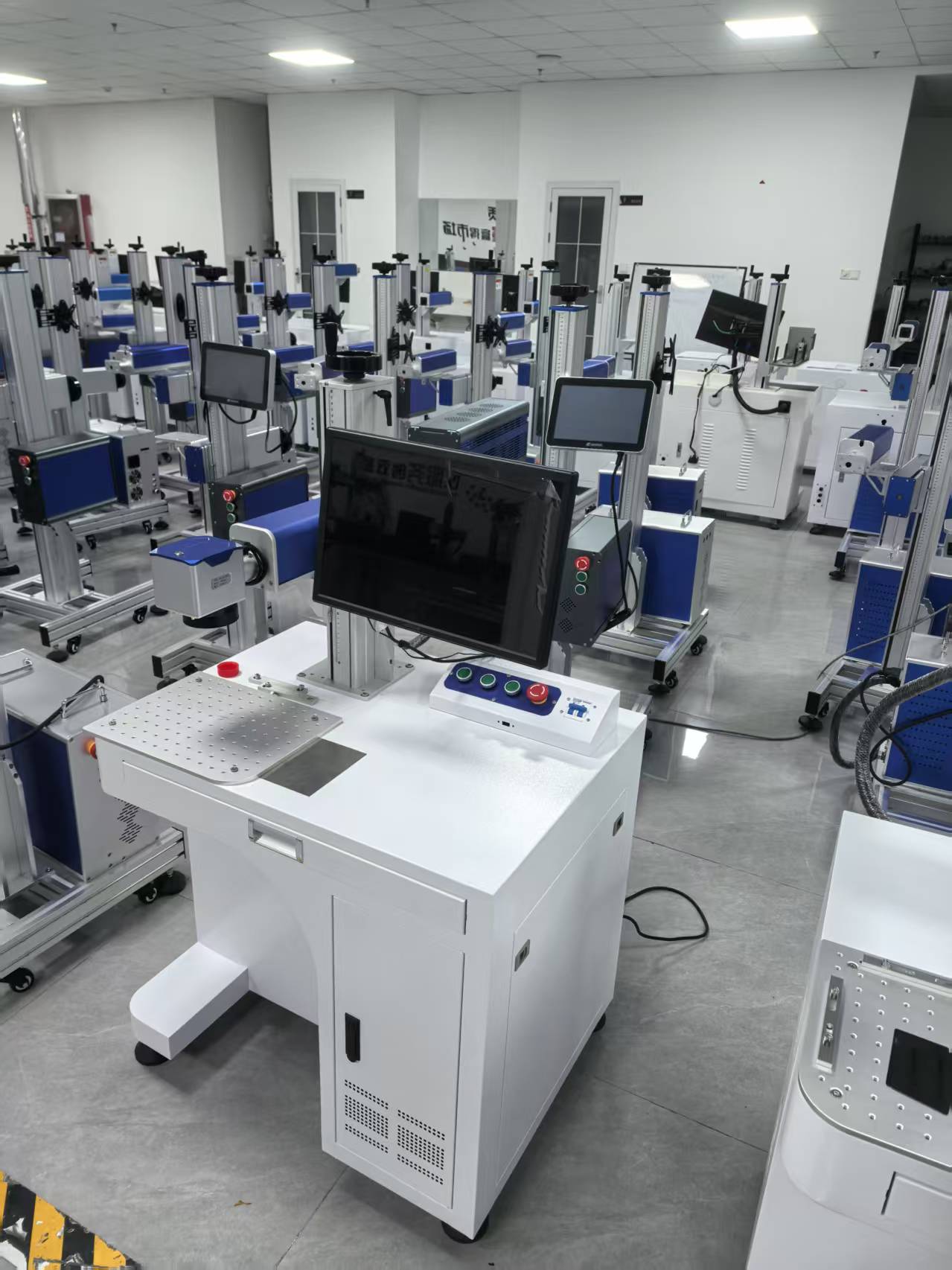
Figure 1 — Industrial production environment. Portable laser marking procurement increasingly depends on how a unit is configured for its duty cycle, not on a single headline wattage.
Why Four Specifications Decide a Portable Marking Purchase
A portable laser marking machine is a compact, transportable marking system that carries its own control interface and can be moved to a workpiece rather than requiring the workpiece to be brought to a fixed station. Because portability adds constraints on weight, heat dissipation, and power supply, the configuration choices made at the quotation stage are less forgiving than they are on a fixed benchtop system.
The complication is that quotations rarely use identical configuration logic. One supplier quotes a fiber source at 20 W, another quotes a UV source at 3 W, and a third quotes a switchable dual-source unit. These are not interchangeable products at different price points; they are different tools for different substrates and different throughput requirements. A buyer who compares only wattage will either overpay for unneeded capability or under-specify a machine that cannot mark the intended material at all.
A second, less visible factor is duty cycle. Portable units are often deployed in continuous or near-continuous production rather than occasional job-shop use. Cooling architecture and interface reliability become the constraints that determine usable uptime — particularly where the same machine is expected to support multiple shifts or 24/7 operation.
Power and Wavelength: The Decision Buyers Get Wrong Most Often
Wavelength selects the substrate; wattage selects the throughput. Buyers who treat these as one variable usually end up with a machine that marks well on one material and poorly on the next.
Fiber sources at 1064 nm — 20 W, 30 W, 50 W, 100 W
Fiber laser marking at 1064 nm is the default choice for metals and many engineering plastics. Available power levels of 20 W, 30 W, 50 W, and 100 W map roughly onto application depth and speed rather than onto material compatibility: entry-level 20 W and 30 W configurations suit part identification, serial numbers, and light surface marking on hardware and mechanical spare parts, while 50 W and 100 W configurations are specified where deeper contrast, faster line speeds, or heavier production volumes are required.
UV sources at 355 nm — 3 W and 5 W
UV laser marking works through cold processing, meaning the material is marked with substantially less heat input than infrared processes. In portable configurations, UV power is typically offered at 3 W or 5 W at 355 nm. The low wattage is not a limitation of the design but a consequence of the application: UV marking is normally specified for heat-sensitive plastics, electronic components, packaging films, and fine cosmetic marking where heat distortion or surface carbonization would be unacceptable.
CO2 sources at 10.6 µm — 40 W
CO2 marking at 10.6 µm at 40 W is generally applied to organic and non-metallic materials such as wood, acrylic, coated surfaces, glass, and some packaging substrates. Where a buyer's material mix spans metals and non-metals, a CO2 head alone will not cover the full range.
Switchable dual source — 1064 nm / 455 nm
A dual-source configuration that switches between 1064 nm and 455 nm addresses the mixed-material case directly. Instead of purchasing two machines, a buyer can move between an infrared source for metals and a shorter-wavelength source for plastics and coated surfaces within one portable unit. For distributors and multi-material job shops, this reduces the number of SKUs that must be held on the floor and removes the need to decide which material family to optimize for at the quotation stage.
Specification rule of thumb: confirm wavelength against the substrate first, then confirm power against the required throughput. A 3 W UV unit and a 20 W fiber unit are not substitutes at either end of the decision.
Marking Area: Standard 110 mm x 110 mm and Larger Options
The standard marking area is 110 mm x 110 mm, with a marking area width of 110 mm and height of 110 mm. This is the field size most portable units are configured with, and it covers a large share of part-marking work: serial plates, component housings, tooling, connectors, and most handheld jewelry and accessory marking tasks.
Larger fields are available as options: 150 mm x 150 mm, 175 mm x 175 mm, and 200 mm x 200 mm. These are specified when the marking content itself is physically larger than the standard field, when several marks must be applied in a single positioning step, or when pipe and profile work benefits from fewer repositioning moves.
The purchasing implication is a trade-off rather than an upgrade. Enlarged marking fields change the working distance and the optical configuration, and they should be selected against actual workpiece geometry, not against a preference for a bigger number on the datasheet. For genuinely oversized workpieces, the practical alternative to an enlarged field is on-site positioning — moving the portable head along the part rather than enlarging the field to cover the whole surface at once.
Cooling Architecture: External Industrial Cooling vs Built-in Air Cooling
Cooling is the specification most often overlooked in portable marking procurement, and it is the one that most directly governs continuous-operation viability.
Two configurations are commonly offered. External industrial cooling uses a separate industrial cooling unit to manage thermal load, which is the appropriate structure where the machine is expected to run continuously or where the laser source and power supplies would otherwise accumulate heat over long shifts. Built-in air cooling integrates the thermal path into the machine body, which supports portability and simplifies deployment where the unit is moved frequently or operated in short, repeated marking cycles.
For buyers specifying 24/7 continuous use, cooling architecture should be confirmed as a stated configuration at the quotation stage, alongside the thermal protection behavior of the laser source and power supplies. Because portable units are used in environments that are not always temperature-controlled, the cooling decision and the electrical protection decision tend to arrive together.
Control Interface: USB Type-A, Built-in Display, Linux, and Mobile APP
The interface specification determines how the machine fits into an existing production or distribution workflow — and how long it remains serviceable.
The standard configuration includes a USB TYPE-A interface, a built-in display, and a Linux operating system, with mobile APP control available for operating the machine away from a fixed workstation. For procurement, three practical consequences follow:
- A standard USB TYPE-A port allows marking files and job data to be transferred with commodity hardware rather than proprietary cables or dongles.
- A built-in display makes the unit independently operable on the shop floor or at a customer site, without a tethered laptop.
- A Linux-based control environment is a stability and lifecycle consideration as much as a user-experience one, and mobile APP control extends the same interface logic to handheld on-site marking.
Buyers should also confirm that the interface provision matches the operating environment — whether operators will load jobs from a USB drive, from the built-in display, or through the mobile APP, and whether the machine will be networked into a production cell or remain standalone.
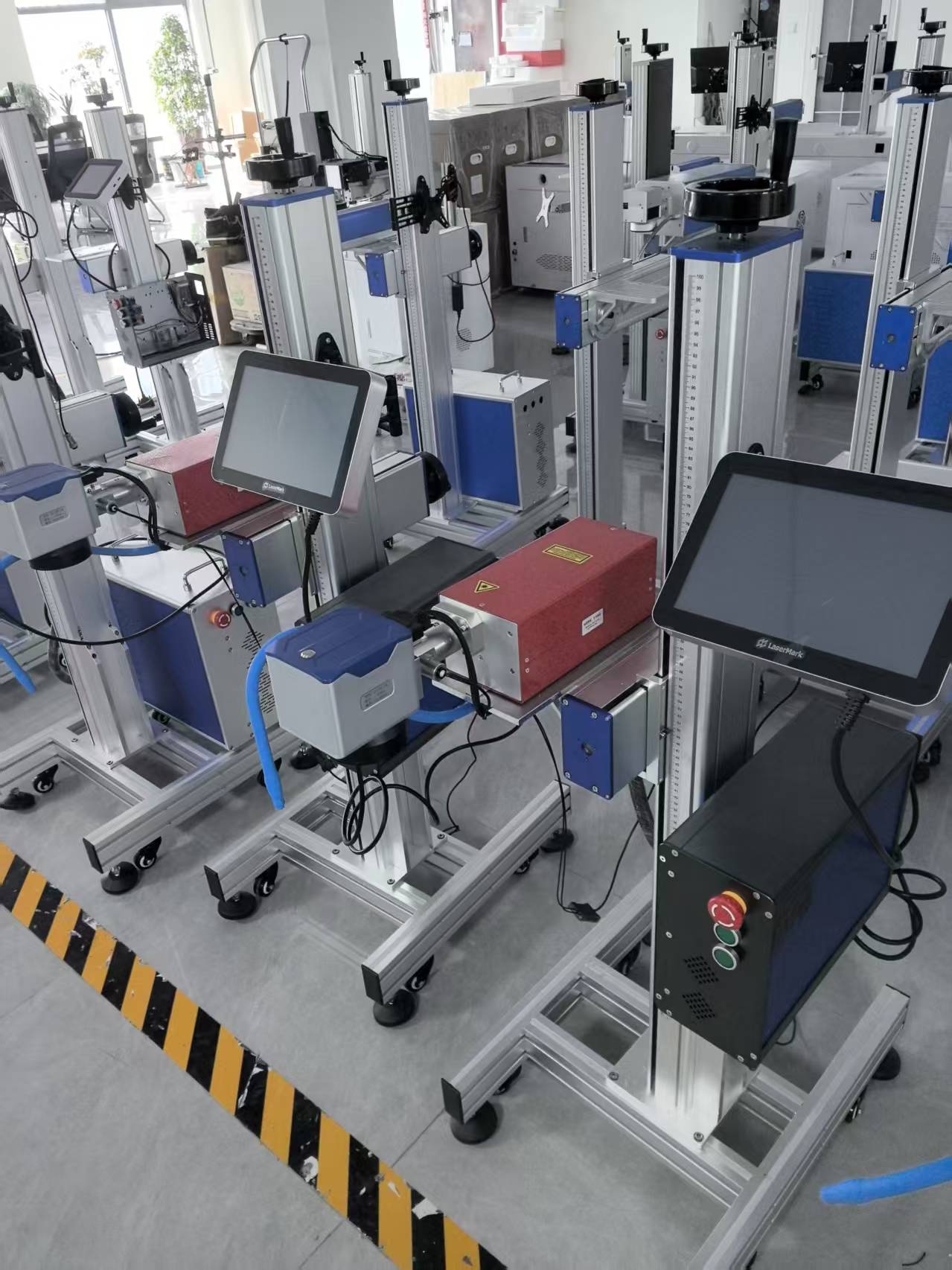
Figure 2 — Configuration and verification before shipment. Cooling architecture, interface provision, and marking field size are confirmed per order rather than assumed from a category datasheet.
Matching Configuration to Application
The table below translates the four specifications into the application categories most frequently encountered in portable marking procurement.
| Application | Typical source | Configuration note |
|---|---|---|
| Hardware parts, mechanical spare parts | Fiber 1064 nm, 20–100 W | Standard 110 mm x 110 mm field covers most part-marking; power selected by depth and volume. |
| Pipes, profiles, large workpieces | Fiber 1064 nm | On-site positioning; optional 150 x 150 / 175 x 175 / 200 x 200 mm fields reduce repositioning. |
| Electronic components | UV 355 nm, 3 W or 5 W | Cold processing limits heat input to heat-sensitive parts. |
| Jewelry and 3C accessories | Fiber, UV, or dual source | Selection follows surface finish and acceptable heat effect. |
| Gifts, crafts, coated and non-metallic goods | CO2 10.6 µm, 40 W; or dual source | CO2 suits organic and coated surfaces; dual source covers mixed material ranges. |
| Packaging, film, glass | UV 355 nm or CO2 10.6 µm | Low heat input and non-contact processing matter more than raw power. |
| Mixed material, multi-shift job shop | Dual source 1064 nm / 455 nm | One unit covers infrared and shorter-wavelength tasks; check cooling for continuous duty. |
What the Market Data Indicates
The global laser marking machine market is estimated at USD 4.4 billion in 2026, according to Grand View Research's market size and share report covering 2026–2033. Within that market, fiber laser technology held a revenue share of 46.1% in 2025, and Asia Pacific accounted for approximately 44% of revenue — the largest regional share.
Two implications matter for portable machine buyers. First, the market's center of gravity sits with fiber technology, which is consistent with fiber's position as the default source for metal marking and with the availability of 20 W, 30 W, 50 W, and 100 W portable configurations. Second, the concentration of supply in Asia Pacific explains why specification standards and documentation quality vary widely between suppliers: a buyer comparing quotations is often comparing governance models as much as hardware.
On the regulatory side, laser products sold in the United States must comply with FDA 21 CFR Subchapter J (Radiological Health), Parts 1000 through 1005, and portable laser markers are specifically assessed in the EU and international context against EN ISO 11553-2 for hand-held safety. For import documentation, HS Code 845611 is the primary classification for machine tools operated by laser processes.
Portable Laser Marking Compared with CNC Engraving
The most direct traditional alternative to laser marking is CNC engraving. The two processes differ at the mechanism level: laser marking uses non-contact thermal ablation, while CNC relies on physical blade cutting, which can warp thin materials. Operationally, a laser system runs a fixed optical path with zero mechanical wear, whereas CNC requires frequent bit changes, re-zeroing, and dust and chip cleanup. Cost structure follows the same logic — laser systems do not consume cutter bits or incur tool wear, which removes an ongoing consumable cost that CNC operators carry.
The boundary matters as much as the advantage. Laser marking is a surface and near-surface process; it does not perform deep material removal, and where a job requires substantial engraved depth, contoured cavities, or mechanical cutting of thick stock, CNC remains the appropriate tool. Portable laser marking should therefore be specified as a marking and identification solution rather than as a replacement for all engraving work.
A second boundary is field size. Because marking coverage is set by the optical configuration, a standard 110 mm x 110 mm field will not cover an oversized workpiece in a single pass; workpieces beyond the selected field require repositioning or an enlarged-field option. And a third boundary is UV power: at 3 W or 5 W, UV sources are selected for material sensitivity and precision, not for high-throughput deep marking on metal, where fiber configurations from 20 W upward are the appropriate specification.
Procurement and Long-Term Ownership: What to Verify Before Ordering
Jinan Yuanshida International Trade Co., Ltd. is a Jinan, China–registered enterprise engaged in the R&D, production, and export of industrial laser marking equipment, founded in 2012 and operating as a trader/exporter within the laser marking category. Its product range includes handheld, bench-top, and desktop laser marking machines used in hardware and auto parts, pipes and profiles, electronic components, jewelry and accessories, mechanical parts, and gifts and crafts.
For long-lifecycle procurement specifically, several terms from the supplier's standard commercial framework are worth confirming in the purchase order:
- Commercial terms: MOQ is 5 units, and accepted payment methods include deposit plus balance payment. Delivery terms such as EXW, FOB, or CIF are confirmed with sales rather than assumed.
- Acceptance criteria: pre-shipment aging tests and precision calibration are standard, and the specific acceptance procedure — on-site acceptance, remote testing, or third-party inspection — is negotiated with the client.
- Electrical and thermal verification: every machine undergoes a 72-hour continuous full-load aging test and strict insulation withstand voltage testing before dispatch, supported in the field by overload protectors, residual current circuit breakers (RCCB), and grounding protection.
- Operational safety configuration: Class 4 laser safety enclosures with anti-radiation observation windows, safety door interlock switches that cut laser emission when the door is opened, an emergency stop button, and OD5+ anti-laser protective eyewear.
- Compliance and lifecycle support: equipment complies with international quality standards such as CE, FDA, and ISO and is designed to meet certification and customs clearance requirements in multiple countries; the supplier provides standard equipment, customized marking solutions, OEM/ODM services, and full English after-sales support.
Consumable structure is the other long-term variable. A zero-consumable operation, combined with a configuration rated for 24/7 continuous use, changes the cost model from a per-mark consumable calculation to a maintenance-and-uptime calculation. That shift is what makes cooling architecture and electrical protection procurement criteria rather than technical footnotes — they govern whether continuous-duty claims hold in a real production environment.
Future Outlook: Toward Specification-Literate Procurement
Two directions are visible in current market structure. The first is continued fiber dominance: with fiber laser technology holding a 46.1% revenue share in 2025, fiber-based portable configurations from 20 W to 100 W are likely to remain the baseline against which other sources are compared. The second is configuration consolidation — dual-source units that switch between 1064 nm and 455 nm, UV heads at 355 nm for heat-sensitive work, and CO2 heads at 10.6 µm for non-metallic substrates are increasingly evaluated as a portfolio rather than as single-machine purchases.
For buyers, the practical consequence is that supplier evaluation will shift away from headline wattage and toward documented configuration discipline: whether the marking field quoted matches the workpiece, whether cooling architecture is stated for the actual duty cycle, whether the interface provision fits the operating environment, and whether acceptance testing and compliance documentation are verifiable before shipment. The supplier's own stated objective — building long-term, stable, and mutually beneficial partnerships with customers around the world, supported by exports to more than 80 countries and regions serving overseas factories, distributors, and trading companies — is best tested against those documented specifics rather than against claims.
Frequently Asked Questions
1. What laser power and wavelength should a buyer specify for a portable laser marking machine?
Wavelength should be selected first, based on substrate, and power second, based on throughput. Available configurations include fiber at 1064 nm in 20 W, 30 W, 50 W, and 100 W; UV at 355 nm in 3 W or 5 W; CO2 at 10.6 µm at 40 W; and a switchable dual source at 1064 nm / 455 nm. Fiber at 1064 nm is the usual specification for metals and many engineering plastics, UV at 355 nm is specified for heat-sensitive plastics, electronic components, packaging, and fine cosmetic marking, and CO2 at 10.6 µm is applied to organic and coated non-metallic materials.
2. Which marking area should be selected — the standard 110 mm x 110 mm field or an enlarged option?
The standard marking area is 110 mm x 110 mm, with a width of 110 mm and a height of 110 mm, and it covers most part-marking, plate, component, and jewelry tasks. Optional larger fields of 150 mm x 150 mm, 175 mm x 175 mm, and 200 mm x 200 mm are specified when the marking content is larger than the standard field, when multiple marks must be applied in one positioning step, or when pipe and profile work benefits from fewer repositioning moves. Enlarged fields change the optical configuration, so selection should follow actual workpiece geometry. For oversized parts, on-site positioning of the portable head is the alternative to an enlarged field.
3. How do external industrial cooling and built-in air cooling differ for continuous operation?
External industrial cooling uses a separate industrial cooling unit to manage thermal load and is the appropriate structure where the machine runs continuously or across multiple shifts. Built-in air cooling integrates the thermal path into the machine body and supports portability and repeated short marking cycles. Because portable units are often used in environments that are not temperature-controlled, buyers specifying 24/7 continuous use should confirm the cooling configuration, together with thermal protection behavior for the laser source and power supplies, as a stated item in the quotation.
4. What interface, display, and operating system should a portable laser marking machine provide?
The standard configuration includes a USB TYPE-A interface, a built-in display, and a Linux operating system, with mobile APP control available. A standard USB TYPE-A port allows job data to be transferred with commodity hardware rather than proprietary cables. A built-in display makes the unit independently operable on the shop floor or at a customer site without a tethered computer. Mobile APP control extends operation to handheld on-site marking. Buyers should confirm how jobs will be loaded and whether the machine will remain standalone or be integrated into a production cell.
5. Which material categories are matched to fiber, UV, CO2, and dual-source configurations?
Fiber at 1064 nm is generally used for metals such as hardware parts, mechanical spare parts, pipes and profiles, and many engineering plastics. UV at 355 nm uses cold processing and is specified for heat-sensitive plastics, electronic components, packaging, film, and glass where heat distortion or carbonization must be avoided. CO2 at 10.6 µm at 40 W suits organic and coated non-metallic materials such as wood, acrylic, and crafts. A dual source switching between 1064 nm and 455 nm covers mixed material ranges within one portable unit, which is relevant for distributors and multi-material job shops.
6. What does zero-consumable operation mean for long-term cost of ownership?
Zero-consumable operation removes the recurring cost of cutting tools or marking media from the ownership model, which changes the cost calculation from a per-mark consumable basis to a maintenance-and-uptime basis. In that model, the specifications that govern availability become the key cost variables: cooling architecture for continuous duty, electrical protection such as overload protectors, residual current circuit breakers (RCCB), and grounding, and thermal protection behavior of the laser source and power supplies. Manufacturers typically state a zero-consumable design together with 24/7 continuous-use capability, and both should be verified against the actual duty cycle rather than assumed.
7. What should a buyer verify before accepting a portable laser marking machine shipment?
Verification should cover three areas. First, acceptance criteria: pre-shipment aging tests and precision calibration are standard, while the specific acceptance procedure — on-site acceptance, remote testing, or third-party inspection — is negotiated and confirmed with the client. Second, electrical and thermal evidence: machines undergo a 72-hour continuous full-load aging test and strict insulation withstand voltage testing before dispatch. Third, safety configuration: Class 4 laser safety enclosures with anti-radiation observation windows, safety door interlock switches that cut laser emission when the door is opened, an emergency stop button, and OD5+ anti-laser protective eyewear. Compliance documentation should reference CE, FDA, and ISO alignment and be checked against destination-country clearance requirements.
8. What commercial and support terms should be confirmed for long-term ownership of a portable laser marking machine?
On commercial terms, the MOQ is 5 units, accepted payment methods include deposit plus balance payment, and delivery terms such as EXW, FOB, or CIF are confirmed with sales rather than assumed. On lifecycle support, the supplier provides standard equipment, customized marking solutions, OEM/ODM services, and full English after-sales support, and states a commitment to building long-term, stable, and mutually beneficial partnerships with customers around the world. Products in this category have been exported for many years to more than 80 countries and regions, serving overseas factories, distributors, and trading companies. For import documentation, HS Code 845611 is the primary classification for machine tools operated by laser processes.
Sources and Further Reference
Equipment specifications, compliance alignment, and commercial terms referenced in this article are drawn from Jinan Yuanshida International Trade Co., Ltd. product and support documentation. Market figures are attributed to Grand View Research's laser marking machine market report (2026–2033). Regulatory references are FDA 21 CFR Subchapter J, Parts 1000–1005, and EN ISO 11553-2 for hand-held laser processing equipment. Technical details on laser marking equipment are available at yuanlaser.com, and the English product brochure can be downloaded at Yuanshida Laser English brochure (PDF).
Есть вопросы или нужны дополнительные детали?
Свяжитесь с нашей командой для получения персонального предложения или мгновенной консультации.
Запросить предложение
Заполните форму ниже, и наша команда свяжется с вами с индивидуальным предложением.
Прямой чат WhatsApp
Предпочитаете общаться в реальном времени? Напишите нам в WhatsApp для мгновенной помощи и быстрых ответов.
- Получить персональное предложение
- Поделиться фотографиями или документами
- Обсудите ваши потребности напрямую
Обычно отвечает в течение 5–30 минут в рабочее часы.