
Portable Laser Marking for Auto Parts: 3 Configurations
Portable Laser Marking for Auto Parts: 3 Configurations
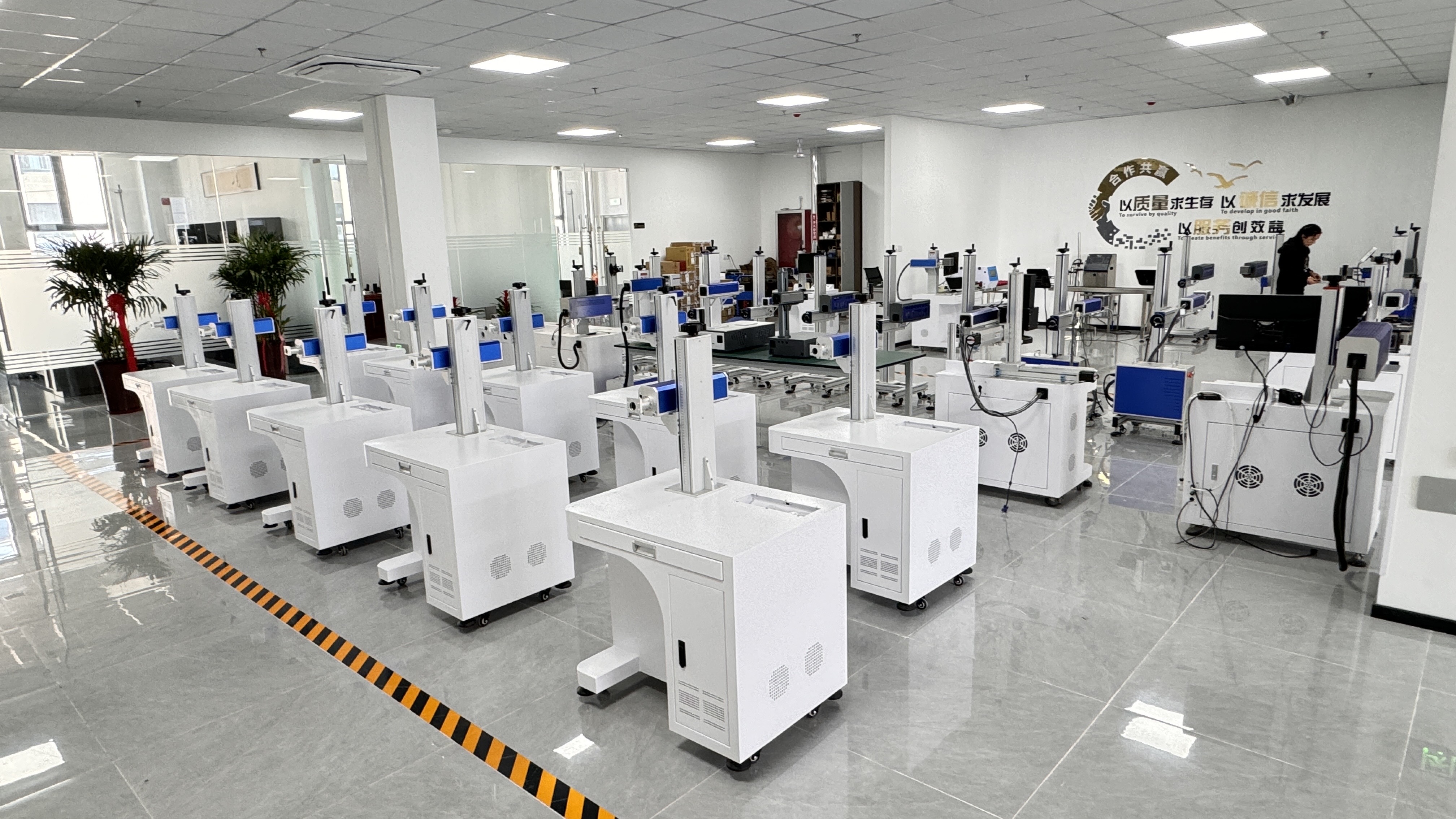
On-site marking shifts the marking step from a fixed bench to the point where the part is actually handled.
Auto parts traceability rarely fails at the database level. It fails at the point of marking: a casting too heavy to move, a bracket already welded into a sub-assembly, or a batch of small machined parts that has to be identified before it disappears into the next production stage. Portable laser marking addresses that specific bottleneck, and the configuration a buyer selects determines whether the equipment actually fits the work.
Why Auto Parts Marking Is Moving Away From Fixed Benches
Most conventional laser marking in the automotive supply chain happens at a stationary workstation. The part is picked, transported, queued, marked, and returned. That sequence works well for small, light, high-volume components. It works poorly for engine housings, axle components, chassis brackets, exhaust sections, and large machined castings that are expensive to move and disruptive to relocate mid-process.
Three practical pressures push auto parts marking toward the production floor:
- Handling cost and handling risk. Every trip between a production cell and a marking bench adds labor, and each additional lift adds the possibility of surface damage on a machined or coated part.
- Mixed-model production. Lines that run more than one part family need a marking method that can be redirected quickly rather than re-fixtured for each variant.
- Marking after assembly. Some identifiers only become meaningful once a sub-assembly exists, which means the marking step has to happen on an assembled object rather than on a loose blank.
A portable laser marking machine is a compact laser marking system designed so that the marking head, or the whole unit, can be brought to the workpiece instead of the reverse. In the auto parts context, that definition matters less as a product description and more as a test: can the unit realistically be operated at the location where the part already is, for the duration of a shift, without creating a new safety or quality problem?
Jinan Yuanshida International Trade Co., Ltd. is a Jinan-based high-tech enterprise engaged in the research, development, production, and export of industrial laser marking equipment. Its product range covers handheld laser marking machines, bench-top laser marking machines, desktop laser marking machines, and precision laser marking equipment, used across hardware and auto parts, pipes and profiles, electronic components, jewelry and accessories, mechanical parts, gifts, and crafts.
What Makes a Marking System Fit an On-Site Auto Parts Job
Portability is not a single specification. For procurement purposes it decomposes into four measurable questions.
| Decision Factor | What the Buyer Is Actually Checking | Why It Matters On a Vehicle Line |
|---|---|---|
| Unit weight and handling | Whether one operator can carry and position the system without a lifting aid | Determines whether marking can move between cells during a shift |
| Marking area | The largest single field that can be marked without repositioning | Larger parts often need an identifier plus a data matrix in one pass |
| Power source | Corded supply versus built-in battery | Battery power removes the need for a nearby outlet on the line |
| Material coverage | Which substrates the source can mark without a consumable change | Mixed-material parts families are common in automotive assemblies |
Published industry guidance places handheld and portable laser marking machines typically in the 15–35 lb range (approximately 6.8–15.8 kg), depending on laser source, power, and cooling. Compact multi-material units sit below that band, which extends their usable positions on the shop floor.
The broader market context supports the attention this category receives. The global laser marking machine market is estimated at roughly USD 4.4 billion in 2026, with fiber laser technology holding a leading revenue share of 46.1% in 2025. Asia Pacific accounts for approximately 44% of regional revenue share, reflecting where a large share of laser marking hardware is produced and deployed.
Three Recommended Portable Configurations for Auto Parts
The three configurations below are not interchangeable. Each one answers a different physical constraint: a part that is too large to move, a part that is too small to justify a workstation, and a workshop that needs throughput rather than mobility.
Configuration 1 — Handheld Fiber for Large Metal Parts in the Field
The handheld fiber configuration is the default answer when the workpiece is large, metallic, and effectively immovable. A fiber source delivered through a handheld marking head lets an operator bring the marking field to a casting, frame section, or fabricated assembly rather than routing that object to a bench.
Fiber laser marking works by non-contact thermal ablation of the surface. Because there is no cutting tool and no physical contact, the process does not apply mechanical stress to the part, which matters for thin-wall sections, machined surfaces, and parts that have already been dimensionally inspected. The same non-contact principle is what allows marking to be performed on a finished surface without inducing the deformation that blade-based methods can produce on thin material.
For auto parts specifically, the handheld fiber configuration suits:
- Engine and transmission housings marked after machining
- Chassis brackets, suspension arms, and structural fabrications
- Exhaust and pipe sections marked before or after forming
- Large metal components where lifting equipment is already committed elsewhere
The practical limit is geometry and access. A handheld head still requires a clear line of sight to the marking surface, and operators need a stable position and appropriate personal protective equipment. Handheld laser marking is also assessed against dedicated safety expectations rather than general machine-tool rules — the EN ISO 11553-2 standard addresses hand-held laser processing device safety specifically, which is the reference point a European buyer should expect to see addressed.
Configuration 2 — 2.7 kg Miniature Multi-Material Unit for Small Parts On Site
The second configuration addresses the opposite problem. In auto parts plants, a large share of traceability demand sits on small items: fasteners, small machined bushings, connectors, stamped contacts, interior trim clips, and electronic components. These parts are light enough to move, but moving them to a central marking bench creates travel, queue, and loss-of-identity risk.
A miniature multi-material laser marking unit weighs 2.7 kg and is built around a switchable dual light source: a 1064 nm channel and a 455 nm channel. The 1064 nm fiber channel covers the metallic parts that dominate most automotive sub-assemblies. The 455 nm channel extends coverage to materials and surface finishes where a shorter wavelength produces a better contrast result. The two sources are switched rather than swapped, so a mixed-material tray of parts does not require a consumable change mid-batch.
Power comes from a built-in lithium battery. In practice this is the feature that determines whether the unit is genuinely used on the line. Battery power removes the dependency on locating a supply outlet next to the work position, which is often the single largest constraint on where a marking step can be placed in an existing plant layout. It also allows marking at receiving docks, at inspection points, and at temporary workstations created for a specific build.
Typical fits for this configuration include:
- Small machined metal parts and mechanical spare parts marked at the point of production
- Electronic components and connector housings
- Small hardware and fasteners grouped by batch
- Mixed-material assemblies where marking requirements differ part by part
The boundary condition here is throughput and marking area. A lightweight portable unit is designed around mobility and material flexibility, not around continuous high-volume output. Buyers who need thousands of marks per shift on a single part number should look at the third configuration instead.
Configuration 3 — Desktop Fiber for High-Throughput Workshop Use
The third configuration moves in the opposite direction: it gives up mobility to gain output. The desktop fiber laser marking machine is available across a power range of 20–100 W with marking areas from 110 x 110 mm up to 200 x 200 mm. A 110 x 110 mm field is the standard working area on the base specification; larger fields extend the size of a single marking pass and reduce the number of repositioning steps on larger automotive components.
This configuration is listed as suitable for the auto parts industry and the machinery parts industry, together with flying online models that integrate marking directly into a moving production flow. The division of labour between the three options is therefore straightforward:
| Configuration | Primary Constraint Solved | Typical Auto Parts Use | Where It Reaches Its Limit |
|---|---|---|---|
| Handheld fiber | Part cannot be moved | Housings, brackets, structural fabrications, pipe sections | Requires clear access and a stable operator position |
| 2.7 kg miniature multi-material (1064 nm / 455 nm, lithium battery) | Small parts and mixed materials, no fixed outlet | Fasteners, small machined parts, electronic components, connectors | Not designed for sustained high-volume output |
| Desktop fiber (20–100 W, 110 x 110 mm to 200 x 200 mm) | Throughput and repeatability on a fixed station | High-volume part families, workshop marking cells | Part must be brought to the machine |
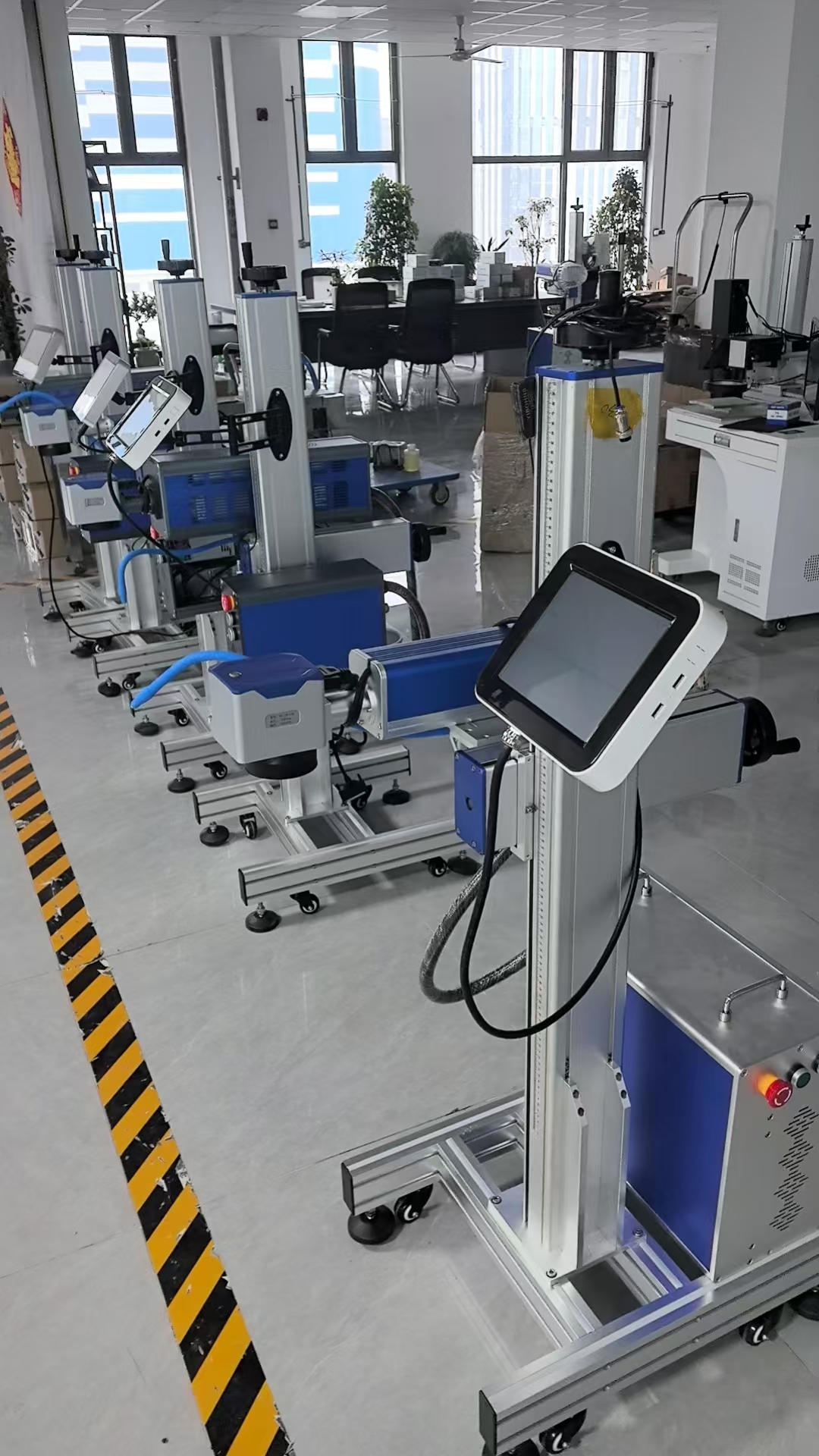
A desktop fiber configuration trades mobility for repeatable, high-volume output at a fixed station.
On-Site Laser Marking Versus Physical Engraving Methods
Buyers comparing portable laser marking against mechanical engraving or CNC marking should understand where each method is structurally stronger and weaker.
| Dimension | Laser Marking | CNC Engraving |
|---|---|---|
| Working principle | Non-contact thermal ablation | Physical blade cutting, which can warp thin materials |
| Feature resolution | Beam diameter down to 0.01 mm | Minimum bit size around 0.5–1 mm |
| Speed | Reported as 10x faster in comparable marking tasks | Slower due to mechanical tool travel |
| Micro-marking damage | Damage rate reported at 0% | Contact force applies to the part surface |
| Maintenance model | Fixed optical path with zero mechanical wear | Requires frequent bit changes, re-zeroing, and chip cleanup |
| Operating cost pattern | Initial price matches mid-to-high CNCs, but eliminates ongoing cutter-bit and tool-wear costs | Ongoing consumable and tooling expenditure |
| Energy profile | Power stays stable around 100 W in the reference comparison | High-power spindles plus additional energy for industrial dust extraction |
The limit of the laser approach should be stated plainly. Laser marking produces a surface or near-surface mark through thermal interaction, so results depend on substrate composition, surface coating, and finish. Heavily anodised, painted, or coated surfaces can require parameter adjustment, and some coatings will not accept a consistent mark without preparation. Deep, recessed engraving for decorative or tactile purposes is also better served by mechanical methods. Buyers should validate marking contrast and depth on their own parts before committing to a specification.
Safety, Compliance, and Certification Expectations
Portable laser marking places a Class 4 laser process close to an operator. Two safety domains need to be addressed in any deployment plan.
Laser radiation and optical protection
Equipment in this category is typically engineered with physical hardware shielding and safety interlock control. That includes Class 4 laser safety enclosures and specialised anti-radiation observation windows to block laser radiation and scattering, safety door interlock switches that cut off laser emission as soon as the enclosure door is opened, and an emergency stop button. Certified OD5+ anti-laser protective eyewear is supplied as standard for setup and maintenance activity.
The risk case is well understood: an operator opening the safety enclosure or entering the marking zone while the machine is active, or direct viewing of the beam or its reflection without certified optical protection. Interlock control and personal protective equipment address both.
Electrical and thermal protection
Electrical safety for this class of equipment is typically built around overload protectors, residual current circuit breakers (RCCB), and reliable grounding protection to remove shock and leakage risk at the source. Lasers and power supplies are protected with automatic thermal shutdown and alarm mechanisms to prevent overheating damage during extended operation.
Every machine is subject to a 72-hour continuous full-load aging test and strict insulation withstand voltage testing before dispatch. This is a meaningful procurement detail because it establishes that the electrical and thermal protection has been exercised under load, not just installed.
Market access and customs
Two regulatory references apply directly to portable laser marking equipment. Laser products sold in the United States must comply with FDA 21 CFR Subchapter J (Radiological Health) Parts 1000 through 1005. In the EU and international context, portable laser markers are specifically assessed against EN ISO 11553-2 for hand-held safety.
For international trade, HS Code 845611 is the primary classification for machine tools operated by laser processes. Accurate classification affects duty calculation and clearance timelines, and buyers should confirm that the supplier's export documentation uses the correct code.
In addition to these regulatory references, the manufacturer states that its equipment complies with international quality standards such as CE, FDA, and ISO, and is designed to meet certification and customs clearance requirements in many countries.
Procurement Terms and Long-Term Supply Considerations
For buyers at the decision-to-execution stage, the commercial structure matters as much as the technical specification.
Commercial Terms
- Minimum order quantity: 5 units
- Payment terms: deposit plus balance payment
- Delivery terms: complete machines and international shipping solutions are typically supplied; specific terms such as EXW, FOB, or CIF are confirmed with sales
- Acceptance: pre-shipment aging tests and precision calibration; on-site acceptance, remote testing, or third-party inspection are negotiated per order
Long-term support structure is the second half of the procurement question, particularly for distributors and multi-year production programmes. The supplier provides standard equipment, customized marking solutions, OEM/ODM services, and full English after-sales support, and states that it is committed to building long-term, stable, and mutually beneficial partnerships with customers worldwide.
Supply history is a practical indicator of continuity. The company's products have been exported for many years to more than 80 countries and regions, with main markets including Vietnam, Thailand, Malaysia, Türkiye, the United States, Poland, and the Middle East. It serves overseas factories, distributors, and trading companies, and is registered in Jinan, China, engaging in self-operated and agency import/export business.
Market Trend Analysis
Three observable trends shape portable laser marking demand in the automotive sector.
Fiber laser dominance continues. Fiber laser technology held a 46.1% revenue share in the global laser marking machine market in 2025. For auto parts marking, this reflects the technology's fit with metal substrates, which constitute the majority of vehicle components. The two fiber-based configurations discussed above sit directly in this mainstream.
Regional concentration in Asia Pacific. Asia Pacific accounts for approximately 44% of global laser marking revenue share. This is consistent with both the manufacturing base for laser marking equipment and the concentration of automotive and mechanical parts production in the region. Buyers sourcing from Asian suppliers are operating in the market's largest production cluster.
Compact and battery-powered formats are expanding the addressable work positions. The shift from bench-mounted to carried equipment is largely driven by battery technology and by the shrinking weight of multi-material units. A 2.7 kg unit with an integrated lithium battery can be deployed in positions where no mains outlet exists, which is a step change in where a marking step can be located within an existing plant.
Future Outlook
The direction of travel for auto parts marking points toward distribution of the marking function rather than centralisation. Instead of one marking cell serving a plant, multiple marking points — handheld at large-part stations, battery-powered portable units at small-part benches, and desktop or flying online systems on high-volume lines — operate as a coordinated system.
Two consequences follow for buyers. First, configuration variety within a single supplier becomes more valuable than a single optimised machine, because a mixed plant needs mixed tools. Second, service and support structure grows in importance relative to unit specification, since distributed equipment multiplies the number of points that require maintenance, calibration, and eventual replacement.
For programmes that combine large fabricated parts, small precision components, and high-volume lines, selecting all three configurations from a single equipment source simplifies spares, consumables, training, and technical support, and reduces the integration burden on the plant engineering team.
Frequently Asked Questions
What are the purchasing terms and acceptance criteria for portable laser marking equipment?
The stated minimum order quantity is 5 units. Accepted payment methods include deposit plus balance payment. Complete machines and international shipping solutions are typically supplied, with specific delivery terms such as EXW, FOB, or CIF confirmed with sales. Acceptance is based on pre-shipment aging tests and precision calibration, while specific acceptance procedures — on-site acceptance, remote testing, or third-party inspection — are negotiated and confirmed with the client.
What laser radiation safety protection is integrated into this equipment?
The equipment is engineered with physical hardware shielding and safety interlock control. It is configured with Class 4 laser safety enclosures and specialised anti-radiation observation windows to block laser radiation and scattering. Safety door interlock switches cut off laser emission as soon as the enclosure door is opened. An emergency stop button and certified OD5+ anti-laser protective eyewear are supplied as standard. The principal risk scenario is an operator opening the enclosure or entering the marking zone while the machine is active, or viewing the beam or its reflection without certified optical protection.
What electrical and thermal safety measures are built in?
The equipment uses comprehensive electrical protection and thermal overload control. Hardware-level protection includes overload protectors, residual current circuit breakers (RCCB), and reliable grounding protection systems. Automatic thermal shutdown and alarm mechanisms protect the laser source and power supplies from overheating damage. Every machine undergoes a 72-hour continuous full-load aging test and strict insulation withstand voltage testing before dispatch.
How does the manufacturer support distributors and long-term programmes?
The company provides standard equipment, customized marking solutions, OEM/ODM services, and full English after-sales support. Products have been exported for many years to more than 80 countries and regions, serving overseas factories, distributors, and trading companies. Main markets include Vietnam, Thailand, Malaysia, Türkiye, the United States, Poland, and the Middle East.
Which regulatory references apply to portable laser marking machines in export markets?
Laser products sold in the United States must comply with FDA 21 CFR Subchapter J (Radiological Health) Parts 1000 through 1005. Portable laser markers are specifically assessed against EN ISO 11553-2 for hand-held safety in the EU and international context. For trade classification, HS Code 845611 is the primary code for machine tools operated by laser processes.
Equipment suppliers serving auto parts and machinery parts industries typically support multi-configuration deployments across plant locations.
A downloadable equipment brochure covering the handheld, desktop, and precision laser marking range is available here: Equipment Brochure (PDF). Product information is also published at yuanlaser.com.